The Art of Conversation: How to Talk to Artists with Confidence and Authenticity (Etiquette Guide)
A comprehensive guide to meaningful conversations with artists. Learn how to break the ice, ask thoughtful questions, avoid common mistakes, build lasting relationships, and support artists beyond buying their work.
By Austin Gallery
Walking into a gallery opening, stepping into an artist's studio for the first time, or approaching a booth at an art fair can feel surprisingly intimidating — even for people who genuinely love art. You might worry about saying the wrong thing, sounding uninformed, or accidentally offending someone who has poured years of their life into the work hanging on the wall. Here's the good news: most artists are thrilled when someone shows real curiosity about what they do. You don't need an MFA or a vocabulary full of art-world jargon. You just need to show up with genuine interest, a willingness to listen, and a handful of good questions. Think of this guide as your socially savvy friend pulling you aside before you walk through that gallery door, coaching you on exactly what to say — and what to avoid.
Why Talking to Artists Matters More Than You Think
Art isn't made in a vacuum. Behind every painting, sculpture, or installation is a human being with a story, a process, and a reason for making the choices they made. When you engage an artist in genuine conversation, you aren't just being polite — you're gaining access to a layer of understanding that no wall label or catalog essay can provide. You learn why the brushstrokes move in a particular direction, why the palette shifted halfway through a series, or what personal experience sparked the entire body of work.
For collectors, these conversations are invaluable. The relationship between a collector and an artist can last decades. Some of the most meaningful collections in the world were built not by people who simply bought what looked good over the sofa, but by individuals who formed deep, sustained relationships with the people making the work. And those relationships almost always started with a single, honest conversation.
If you're new to the gallery scene, our guide to visiting artists' studios covers the logistics of studio visits in detail — but this article is about the human side of the equation: what to say, how to say it, and how to build real connections.
Starting the Conversation: Gallery Openings, Art Fairs, and Studio Visits
At a Gallery Opening
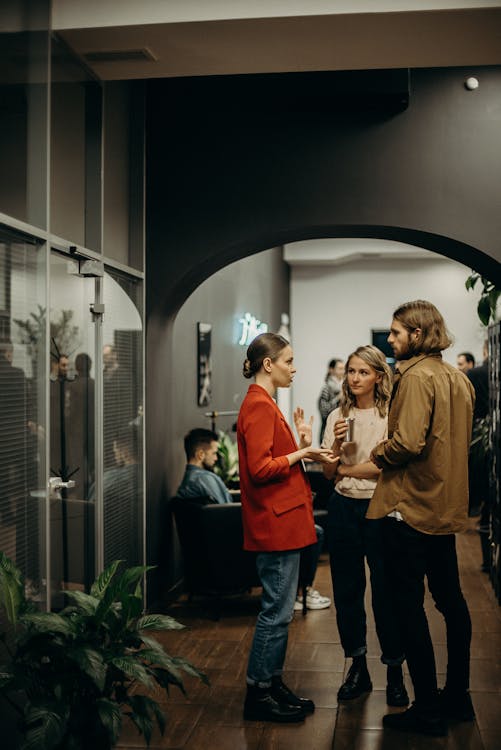
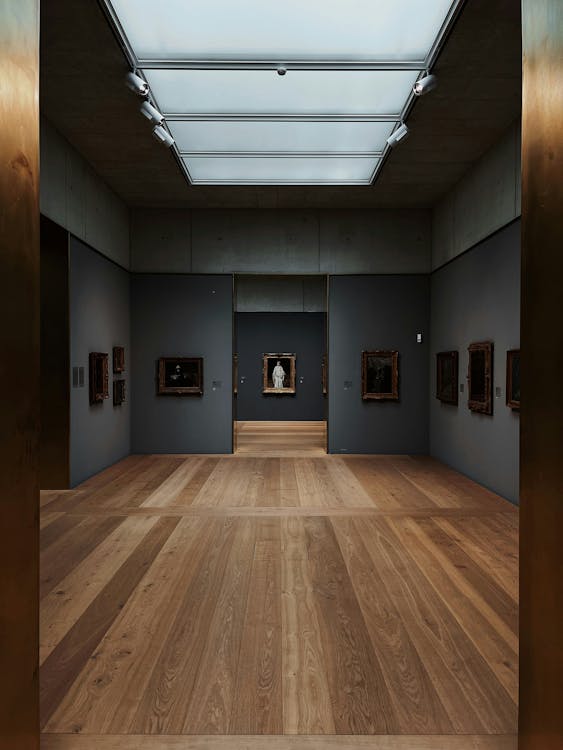
Gallery openings are social events first and foremost. The mood is usually relaxed, there's often wine, and the artist is typically circulating through the room meeting people. This is one of the easiest environments for a first conversation because the context is already established — you're both there because of the art.
The mood is usually relaxed, there's often wine, and the artist is typically circulating through the room meeting people.
A simple, specific opener works wonders. Instead of a generic "I love your work" (which, while nice, doesn't give the artist much to respond to), try something like:
"I keep coming back to this piece — can you tell me about the process behind it?"
"The scale of this work really shifts the feeling of the room. Was that intentional?"
"I noticed you're working with encaustic (or ceramic, or found objects) — what drew you to that material?"
Each of these shows that you've actually looked at the work and you're curious about specific choices. That's the magic formula: observation plus curiosity.
At an Art Fair
Art fairs like The Other Art Fair or Affordable Art Fair are designed for direct interaction between artists and collectors. The energy is faster-paced, and artists are often standing in or near their booths for hours. They appreciate meaningful engagement that goes beyond a passing glance.
If you're exploring fairs as a new collector, our overview of the best art fairs for new collectors will help you navigate the logistics. But in terms of conversation, a fair is an excellent place to ask:
"How does this series relate to the rest of your practice?"
"What's the story behind this particular piece?"
"How long have you been developing this body of work?"
Artists at fairs are used to people browsing. What sets you apart is slowing down and having a real exchange.
During a Studio Visit
A studio visit is the most intimate setting of the three. You've been invited into the artist's working space — the place where ideas become physical objects. This is a privilege, and artists notice when someone treats it as one.
Start by looking around before you start talking. Take in the space: the works in progress, the materials on the table, the sketches pinned to the wall. Then ask questions that reflect what you see:
"I see you have several pieces in different stages — do you usually work on multiple things at once?"
"What's on your studio playlist right now?" (A lighter question, but artists often love this one.)
"Is there a piece in here that felt like a real breakthrough for you?"
Studio visits are where relationships deepen. If you're genuinely interested in an artist's trajectory, this is where you learn the most.
The Questions That Artists Actually Love
Not all questions are created equal. Some open doors to fascinating conversations; others accidentally shut them down. Here are the types of questions that consistently lead to the best exchanges:
About Process
Artists spend an enormous amount of time thinking about how they make things. Asking about process shows respect for the craft, not just the product.
"Walk me through how you start a new piece."
"How do you know when a work is finished?"
"Has your process changed significantly over the years?"
About Inspiration and Ideas
Be specific here. Instead of the broad "What inspires you?" (which can feel like an interview question), try anchoring it to something you've noticed:
"The color relationships in this series feel really deliberate — what were you thinking about when you chose this palette?"
"There seems to be a recurring motif in your work. Is that intentional?"
"Are there other artists or disciplines that influence the way you think about your practice?"
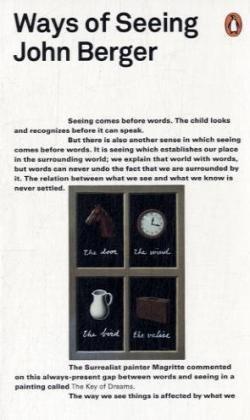
For deeper context on how to read visual choices in artwork, John Berger's classic Ways of Seeing remains one of the most accessible and eye-opening books on how we look at art. It will fundamentally change the way you engage with visual work.
Artists rarely make isolated pieces. Most are working within a series or exploring a theme over time. Asking about the bigger picture shows sophistication:
"Where does this piece sit within the larger series?"
"What prompted you to start exploring this theme?"
"Do you see this body of work as finished, or is it still evolving?"
About Career and Path
For mid-career and emerging artists especially, questions about their journey can lead to incredibly honest and engaging conversations:
Austin Art Insider
Free weekly guide to galleries, exhibitions & collecting in Austin.
"How did you get to this point in your practice?"
"What's been the most surprising part of your career so far?"
"Are there projects or collaborations you're hoping to pursue next?"
What NOT to Say: The Phrases That Make Artists Cringe
Let's get this out of the way with love and directness. There are a handful of things that artists hear regularly that range from mildly annoying to genuinely hurtful. Avoiding these will save you — and them — an awkward moment.
"My kid could do that."
This is the all-time champion of things not to say. Even if a work appears simple, the decisions behind it — the composition, the color, the scale, the concept — are the result of years of training, experimentation, and intentional choice. Simplicity in art is almost always harder to achieve than complexity. If a piece looks effortless, that's usually a sign of mastery, not a lack of skill.
"So, do you have a real job too?"
Many artists do have other sources of income, and that's perfectly normal. But framing their art practice as not a "real job" diminishes the seriousness of their commitment. If you're curious about how they structure their time, try: "Do you work on your art full-time, or do you balance it with other things?"
Asking for a Discount at an Opening
This is a significant etiquette breach. A gallery opening is a celebration of the artist's work. It is not the time to negotiate pricing. If you're interested in a piece, tell the gallery staff you'd like to follow up, or ask for a price list. We'll cover how to discuss pricing gracefully in a later section.
"That's interesting" (said flatly, while already walking away)
If you don't connect with a piece, it's perfectly fine to simply move on. You don't owe every artwork a comment. But a hollow, noncommittal "interesting" can feel dismissive. Silence is often kinder than faint praise.
"What does it mean?"
This one is nuanced. It's not always wrong to ask, but leading with it can put an artist on the spot in an uncomfortable way — as if the work has failed to communicate on its own. A better version: "I'm drawn to this piece. Can you share a little about what you were exploring when you made it?"
How to Read an Artist Statement (Without Your Eyes Glazing Over)
Artist statements can be dense, jargon-heavy, and frankly intimidating. But they're also one of the best tools you have for preparing to talk to an artist.
Here's a quick strategy: read the statement once for the general idea, then look for one or two specific things you can ask about. Does the artist mention a particular influence? A material they're experimenting with? A concept they're wrestling with? Pull one of those threads in conversation, and you'll immediately show that you've done your homework.
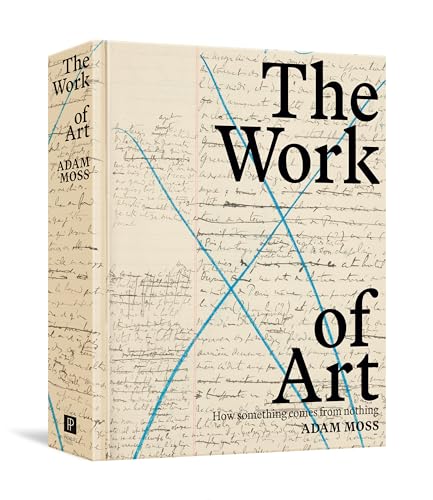
Adam Moss's The Work of Art: How Something Comes from Nothing is a brilliant collection of in-depth conversations with artists about their creative processes. Reading it will give you a feel for the kinds of questions that unlock the most revealing answers — and it's a genuinely enjoyable read.
For a more structured approach to understanding art vocabulary and visual analysis, Approaches to Art: A Journey in Art Appreciation by Ferdinanda Florence is an excellent resource that breaks down the "why" behind artistic decisions in plain, accessible language.
Not every artist you meet is in the same place in their career, and adjusting your approach slightly based on context shows awareness and respect.
Emerging Artists
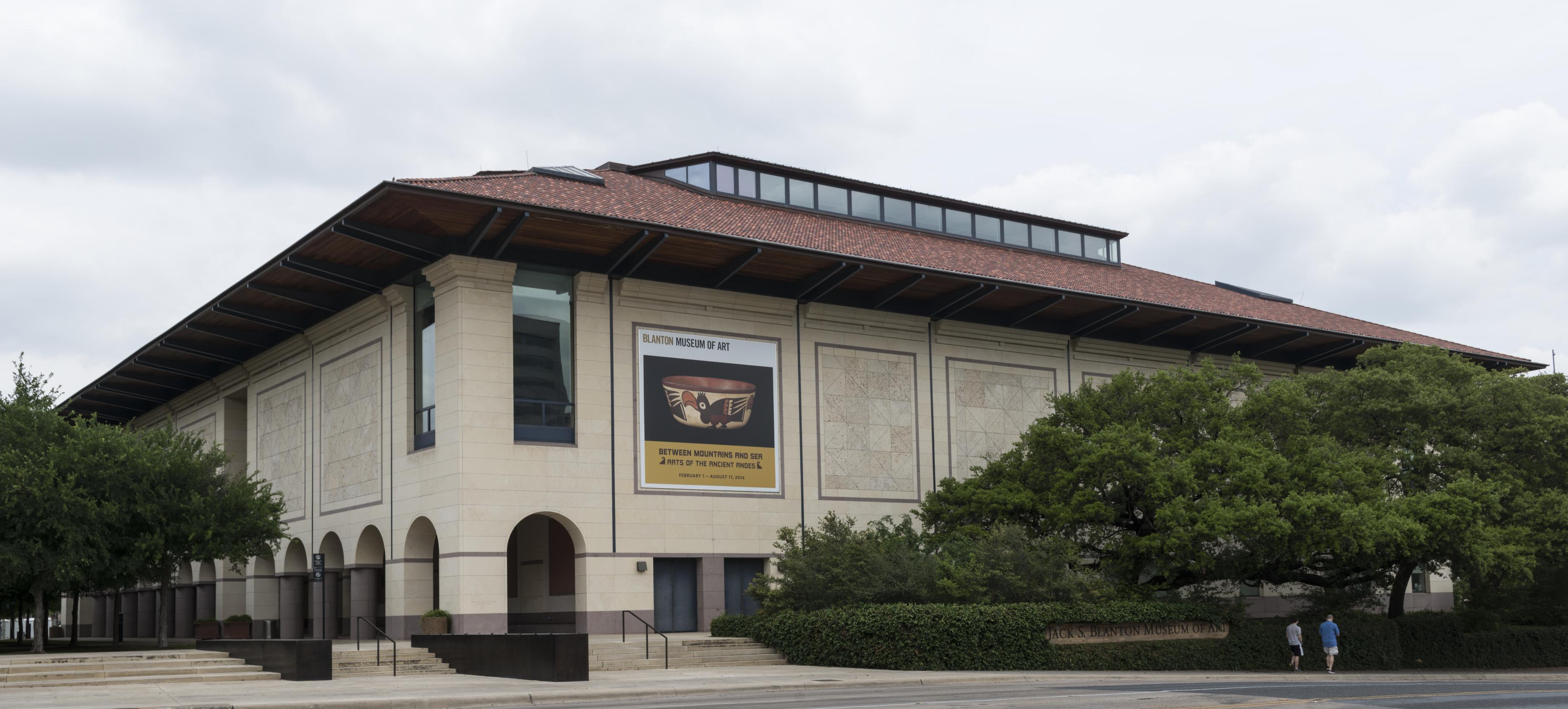
These are artists in the earlier stages of their careers — often recently out of school, or building their exhibition history. They may be showing at smaller galleries, pop-up events, or local art fairs. Emerging artists are frequently eager to talk about their work and grateful for genuine engagement. Don't be shy about asking questions; your interest means a lot. If you're exploring the Austin art scene, our guide to hidden gem galleries in Austin is a great place to discover emerging talent.
Mid-Career Artists
Artists who have been practicing for a decade or more often have a rich body of work and a well-developed perspective on their practice. They appreciate conversations that go deeper than surface-level observations. Asking about the evolution of their work over time or how a current series connects to earlier bodies of work shows that you see them as someone with a sustained vision, not just a single show.
Established Artists
With established artists — those with significant exhibition histories, museum shows, or major collections — the dynamic can feel more formal. But even well-known artists are human, and they respond to sincerity. A specific, thoughtful comment about a particular work or exhibition will always land better than generic praise.
The Difference Between Flattery and Real Engagement
Artists can tell the difference between someone who is genuinely moved by their work and someone who is performing enthusiasm. Flattery sounds like: "Oh my God, everything is SO amazing, you're SO talented!" Real engagement sounds like: "I've been standing in front of this piece for ten minutes. The way the light shifts across the surface — I can't stop looking at it."
The difference is specificity. When you name exactly what you're responding to — a color, a texture, a feeling, a compositional choice — the artist knows you're actually seeing their work. That's the highest compliment you can pay.
Let's normalize this: asking about the price of an artwork is completely fine. Artists and galleries expect it. The key is context and delivery.
At a gallery: Simply ask a staff member, "Could I get the price list for this show?" or "I'm interested in learning more about this piece — is there a price sheet available?" Most galleries have one readily available.
Directly with an artist (at a fair or studio visit): A straightforward "Would you be able to share the pricing for this series?" is perfectly appropriate. Artists who sell directly are accustomed to this question.
What to avoid: Don't open with pricing as your very first question — it can make the interaction feel purely transactional. Spend a few minutes looking and engaging with the work first, then ask. And never, ever ask for a discount at a public event like an opening. If you're buying multiple pieces or building a relationship over time, conversations about pricing flexibility happen naturally and privately.
The best art relationships aren't transactional — they're built over time through consistent, genuine engagement. Here are a few ways to nurture those connections:
Follow their work. Sign up for their newsletter, follow them on Instagram, attend their shows. Artists notice who keeps showing up.
Share their work thoughtfully. If you see a friend who might connect with an artist's work, make the introduction. Word of mouth is one of the most powerful forces in the art world.
Buy the work that moves you. Nothing supports an artist's practice more directly. And when you buy, tell them why you chose that piece. It means more than you might imagine.
Stay in touch. A brief email after a studio visit — "Thank you for having me, I really enjoyed learning about your new series" — goes a long way.
Be patient. Relationships with artists, like any relationship, develop organically. Don't force it. Show up with curiosity and respect, and the connection will grow naturally.
The Art21 interview series is an outstanding resource for seeing how sustained, respectful conversations with artists unfold over time. Watching these interviews will sharpen your instincts for meaningful dialogue.
The Art21 interview series is an outstanding resource for seeing how sustained, respectful conversations with artists unfold over time.
Putting It All Together: Your Conversation Toolkit
Here is your cheat sheet for walking into any art setting with confidence:
Look first, talk second. Spend real time with the work before approaching the artist. Your observations will be better for it.
Lead with specifics. "I noticed..." and "I'm curious about..." are your two best conversation starters.
Ask about process, not just product. How and why are more interesting than what.
Listen more than you talk. The best conversations happen when you give the artist space to share.
Don't perform. You don't need to prove you know about art. Honest curiosity is always more impressive than borrowed expertise.
Respect the setting. Gallery openings, fairs, and studios each have their own rhythms. Read the room.
Follow up. A brief note after meeting an artist turns a single conversation into the beginning of a relationship.
You don't need to be an expert to talk to artists. You just need to be present, curious, and willing to engage with the work — and the person behind it — on a real level. The art world can feel exclusive from the outside, but the truth is that most artists, gallerists, and collectors are people who fell in love with looking at things and never stopped. You're already one of them. Now go start the conversation.
Insider Tip
If you buy directly from an artist, ask about their creative process for that specific piece. Most will share the story — and it becomes part of the artwork's provenance.
Share
Austin Art Insider
Free weekly guide to galleries, exhibitions & collecting in Austin.
Consignment
Have Art You Want to Sell?
Free appraisals, zero upfront fees, nationwide service from Austin, Texas.