Beyond the Wall: A Guide to Austin's Most Iconic Murals (Local Guide)
The definitive guide to Austin's most iconic murals and street art, from the legendary "I Love You So Much" wall to hidden East Austin gems. Includes addresses, best times to visit, photography tips, self-guided tour itineraries, and the stories behind the art.
By Austin Gallery Team
From love letters spray-painted on coffee shop walls to 10-story rainbows downtown, Austin's murals tell the real story of a city that refuses to be ordinary.
Austin has 200+ public murals — from the iconic 'Greetings from Austin' to hidden gems in East Austin alleys
South Congress, East 6th Street, and the HOPE Outdoor Gallery area are the three main mural districts
Many murals are commissioned by local businesses and change seasonally, so the scene is always evolving
Self-guided mural tours are free — just bring comfortable shoes and a camera
Austin's street art scene didn't happen by accident. It grew from the same rebellious spirit that made this city the Live Music Capital of the World, the same "Keep Austin Weird" ethos that has attracted artists, musicians, and misfits for decades. The murals you see today are visual timestamps of a city perpetually in conversation with itself about identity, gentrification, memory, and belonging.
This isn't a list of Instagram spots (though you'll absolutely get great photos). This is a guide to understanding Austin through its walls, with the practical details you need to actually visit, photograph, and appreciate each piece.
Why Austin's Murals Matter
Before we dive into specific locations, it's worth understanding why Austin's mural culture is distinctive.
A City Built on Expression
Austin has never been a typical Texas city. While Houston embraced oil money and Dallas chased corporate headquarters, Austin cultivated weirdness. The University of Texas brought intellectuals and activists. The music scene brought creative energy. The tech boom brought money, but also people who valued expression over conformity.
This cocktail created a city where public art wasn't just tolerated but celebrated. Property owners began commissioning murals. Business districts competed for the most Instagram-worthy walls. Neighborhoods defined themselves through visual identity.
The Tension of Success
Austin's mural scene now faces an interesting paradox: the city's most famous street art exists precisely because Austin embraced counterculture, but that same counterculture is being priced out by the success the art helped create.
Many murals now exist on buildings that cost ten times what they did when the art was painted. Some artists who created iconic Austin murals can no longer afford to live here. The walls tell stories of a city that's changing faster than anyone expected.
Understanding this context makes visiting the murals more meaningful. You're not just looking at paint on brick. You're witnessing the visual record of urban evolution.
The Legendary Three: Austin's Must-See Murals
These are the murals that defined Austin's street art scene. Every visitor photographs them, and for good reason: they're genuinely excellent works of public art with stories worth knowing.
Street parking on James St or paid lots on Congress
Wall Orientation
South-facing
Best Light
Golden hour (5-7pm) or early morning (7-8am)
Crowd Level
HIGH - Expect lines on weekends, especially during SXSW
Accessibility
Sidewalk access, wheelchair accessible
The Story
In 2010, musician Amy Cook picked up a can of red spray paint and wrote four simple words on the green wall beside Jo's Coffee: "i love you so much." It wasn't commissioned art or a planned installation. It was a love letter to Liz Lambert, her partner and the owner of the coffee shop.
What makes this mural significant isn't the artistic complexity but the authenticity. Cook wasn't trying to create an Austin landmark. She was expressing genuine emotion, and Austin responded by making it one of the most photographed spots in the city.
The mural was vandalized in January 2011, painted over in a solid green that erased Cook's declaration. But you can't kill a good love story. Community outcry was immediate, and Cook restored the mural weeks later. It's been carefully protected ever since, with Jo's Coffee taking responsibility for maintenance and preservation.
The lowercase letters and casual spacing remain exactly as Cook originally painted them. No touch-ups have altered the handwriting. What you see today is essentially identical to what appeared on that wall in 2010.
Photography Tips
Stand across the street on the east side of Congress for a full-frame shot that includes the green wall and South Congress context
Early Sunday mornings (7-8am) offer the shortest lines and soft, warm light
Portrait mode on smartphones helps blur the inevitable crowd behind you
Don't fight the line - Jo's Coffee is excellent, and having a drink gives you time to scope out the perfect angle
For couples shots, one person can photograph from across the street while the other poses, then switch
Pro Move: The wall faces south, which means harsh midday light but beautiful golden hour glow. If you want the iconic shot without crowds or harsh shadows, arrive at 7am on a weekday.
While You're There
Jo's Coffee serves some of the best iced coffee on South Congress. Their breakfast tacos are legitimately good, not just tourist-good. Grab a coffee, sit on the patio, and watch the steady stream of visitors photographing the wall. It's one of Austin's best people-watching spots.
2. "Greetings From Austin" at Roadhouse Relics
The 1997 mural by Todd Sanders, Rory Skagen, and Bill Brakhage at Roadhouse Relics
The Details
Info
Details
Address
1720 S 1st Street, Austin, TX 78704
Nearest Cross Street
S 1st St & Annie St
Parking
Free lot at Roadhouse Relics
Wall Orientation
West-facing
Best Light
Late afternoon (3-6pm)
Crowd Level
MEDIUM - More manageable than SoCo
Accessibility
Parking lot access, wheelchair accessible
The Story
This vintage postcard mural predates Instagram, predates smartphones, and nearly predates the internet as we know it. Painted in 1997 by neon artist Todd Sanders with collaborators Rory Skagen and Bill Brakhage, the mural went up before the roof of the fruit stand-turned-gallery was even replaced. In true South Austin fashion, the art came first.
The design was directly inspired by original 1940s Austin postcards that Sanders collected. Each colorful letter contains a hand-painted local landmark: the Congress Avenue Bridge (complete with bat silhouettes), the UT Tower, Barton Springs Pool, the State Capitol, and native Texas flora.
What makes this mural exceptional is the craftsmanship. Look closely at each letter and you'll see meticulous detail, from the tiny swimmers at Barton Springs to the bats flying over Town Lake. This isn't spray-painted street art; it's a carefully composed illustration executed at building scale.
The mural was fully restored in 2013 through community donations and a partnership with Creative Action, an Austin nonprofit. The restoration preserved the original design while repairing weather damage and fading.
Photography Tips
Afternoon light is essential here. The wall faces west, so morning shots will be shadowed and flat
Stand back to get the full postcard effect, or get close for detail shots of individual letters
The parking lot provides plenty of space to position yourself for various angles
Capture the neon sign above the mural, which reads "Roadhouse Relics" in classic Americana style
Golden hour (5-6pm in summer) creates a warm glow that enhances the vintage color palette
Don't Skip This: Go inside Roadhouse Relics after photographing the mural. Todd Sanders' neon art gallery is one of Austin's hidden treasures, filled with custom signs and vintage neon that makes for incredible photographs. Sanders has created work for Willie Nelson, Johnny Depp, Norah Jones, and ZZ Top. His work appears on the cover of Kings of Leon's Mechanical Bull album.
Pro Move: The gallery is free to enter and the staff are friendly. Ask about the history of specific pieces; you'll get stories about rock stars, Hollywood productions, and Austin legends.
3. "Hi, How Are You" - The Daniel Johnston Frog
Guadalupe Street ("The Drag") near the University of Texas campus
The Details
Info
Details
Address
2266 Guadalupe Street (corner of 21st and Guadalupe), Austin, TX 78712
Neighborhood
The Drag, adjacent to UT Austin campus
Parking
Street parking or UT campus garages
Wall Orientation
East-facing
Best Light
Morning (7-10am)
Crowd Level
LOW to MEDIUM
Accessibility
Sidewalk access, wheelchair accessible
The Story
This isn't just a mural. It's a pilgrimage site.
In 1993, outsider artist and musician Daniel Johnston painted his character "Jeremiah the Innocent" on the wall of the Sound Exchange record store. The wide-eyed frog had appeared on Johnston's 1983 cassette album Hi, How Are You: The Unfinished Album, which he recorded in a garage in West Virginia and hand-distributed to anyone who would listen.
Johnston struggled with bipolar disorder throughout his life, and his art became inseparable from his mental health journey. The frog's guileless expression and the simple greeting "Hi, How Are You" captured something profound about human vulnerability and connection.
The mural gained international fame when Kurt Cobain wore a "Hi, How Are You" t-shirt to the 1992 MTV Video Music Awards, the same ceremony where Nirvana performed "Lithium." Tragically, Johnston was in a mental institution at the time and didn't learn about Cobain's endorsement until much later. By the time he did, the t-shirt had become a cult item and the Austin mural had become a destination.
In 2004, the mural nearly met its end when construction crews prepared to demolish the building for a Baja Fresh restaurant. Community outcry was immediate and fierce. The restaurant's owner, himself an art lover, delayed his opening by months and spent additional money to preserve and protect the frog. When he later sold the business, preservation of the mural was written into the sale contract.
Johnston passed away in 2019 at age 58. Austin responded by declaring January 22nd (his birthday) as "Hi, How Are You Day" - a day dedicated to mental health awareness and removing stigma around mental illness. The annual event raises money for mental health organizations and celebrates Johnston's artistic legacy.
Important Update: The original building was demolished in 2023 as part of a development project by American Campus Communities. However, the mural was carefully preserved and relocated to a prominent position within the new development. It remains a protected Austin landmark and continues to receive visitors.
Photography Tips
Morning light works best on this east-facing wall
Capture the context of the Drag and the energy of the UT campus area
Look for memorial items that fans sometimes leave at the base
The character's expression is the focus, so tight shots work as well as wide ones
Overcast days provide soft, even light that brings out the character's details
The Deeper Context: Visiting this mural is different from visiting the others. It's not just a photo opportunity; it's an encounter with art that emerged from struggle and became a symbol of mental health awareness. Take a moment to consider Johnston's legacy and the message behind that simple greeting.
East Austin: Street Art Central
East Austin is where Austin's mural culture began in earnest, and it remains the most concentrated area for street art in the city. The neighborhood has undergone dramatic gentrification over the past two decades, and its walls document that transition.
Photo: East Austin's vibrant mosaic and mural scene — one of dozens of public artworks lining the neighborhood's streets
2000 E Martin Luther King Jr Blvd, Austin, TX 78702
Nearest Cross Street
E MLK Blvd & Chestnut Ave
Parking
Free lot
Wall Orientation
South-facing
Best Light
Morning or overcast days
Crowd Level
LOW to MEDIUM
The Story
This punny love mural has become the romantic alternative to the SoCo scene. Two pieces of toast with butter hearts face each other against a clean white background, with the phrase "You're My Butter Half" in playful lettering.
Created by John Rockwell and the Creative Suitcase team in 2014, the mural was commissioned by United Way of Greater Austin as part of their annual campaign. It quickly transcended its promotional origins to become one of Austin's most-photographed couple's spots.
The mural's appeal lies in its simplicity and warmth. The yellow and cream palette photographs beautifully in soft morning light, and the message is universally romantic without being saccharine.
Photography Tips
The parking lot offers plenty of room to back up for full-frame shots
The south-facing orientation means avoid harsh midday light
Works wonderfully for engagement photos and Valentine's Day content
The clean background makes editing and cropping easy
Queen of Tejano / Selena Loteria Cards at Flat Track Coffee
The Details
Info
Details
Address
1619 E. Cesar Chavez St, Austin, TX 78702
Nearest Cross Street
E Cesar Chavez & Pedernales
Parking
Street parking
Wall Orientation
North-facing
Best Light
Late afternoon or overcast
Crowd Level
LOW to MEDIUM
The Story
This vibrant tribute to Selena Quintanilla-Perez, the Queen of Tejano music, renders the late singer as a traditional Mexican Loteria card. The style blends pop art with folk art, creating an image that's both contemporary and rooted in cultural tradition.
Selena's murder in 1995 devastated the Tejano music community and her millions of fans. Murals like this one serve as ongoing memorials, keeping her image and music alive for new generations who never saw her perform live.
The Loteria card format adds layers of meaning. In Mexican culture, Loteria is both a game of chance and a system of cultural symbols. By rendering Selena as a Loteria figure, the artist places her in the company of archetypal images like La Sirena and El Sol.
While You're There
Flat Track Coffee occupies a converted mechanic's garage and serves excellent third-wave coffee. The industrial aesthetic complements the neighborhood's artistic energy. Grab an espresso and explore the surrounding blocks, which contain numerous smaller murals and wheat-paste installations.
Historic Six Square Mosaic Tiles
The Details
Info
Details
Address
1021 E 11th St, Austin, TX 78702
Neighborhood
Historic Six Square Cultural District
Parking
Street parking
Best Light
Any (reflective surfaces)
Crowd Level
LOW
The Story
The Historic Six Square Cultural District preserves and celebrates East Austin's African American heritage, and these mosaic installations are part of that mission. The neighborhood once formed the heart of Austin's Black community, shaped by decades of segregation and subsequent community building.
The mosaic work incorporates historical imagery and contemporary design, creating visual bridges between past and present. Unlike painted murals, the tile work is permanent and reflective, catching light in ways that change throughout the day.
Cultural Context: Six Square refers to the approximately six square miles that comprised Austin's freedmen's community after the Civil War. Walking through this neighborhood with awareness of its history transforms the experience from art tourism to cultural education.
"We Rise" by Chris Rogers
The Details
Info
Details
Address
East 12th Street and Chicon Streets, Austin, TX 78702
Parking
Street parking
Wall Orientation
Variable
Best Light
Morning to midday
Crowd Level
LOW
The Story
Chris Rogers is one of Austin's most significant contemporary muralists, known for work that engages directly with community identity and social justice. "We Rise" reflects the resilience of East Austin's historically Black community in the face of gentrification and displacement.
Rogers' style combines portraiture with geometric patterns and vibrant color, creating work that's visually striking and politically engaged. His murals don't just decorate spaces; they claim spaces, asserting community presence in neighborhoods experiencing rapid demographic change.
What to Know: East 12th Street was once the heart of Austin's Chitlin' Circuit, where Black musicians performed when they were unwelcome in segregated downtown venues. The street's transformation from that history to its current state is a microcosm of Austin's broader changes.
"Til Death Do Us Part" by El Federico
The Details
Info
Details
Address
E 6th Street & Chicon, Austin, TX 78702
Parking
Street parking
Wall Orientation
Variable
Best Light
Afternoon
Crowd Level
LOW
The Story
Artist Federico Archuleta, known as El Federico, created this Day of the Dead-inspired masterpiece using a combination of stencils and freehand spray painting. A skeleton couple surrounded by flowers declares eternal love in imagery that's both romantic and rebellious.
The Dia de los Muertos aesthetic connects to Austin's significant Mexican-American community and the broader cultural traditions of border Texas. The skeleton figures aren't morbid but celebratory, honoring love that transcends even death.
El Federico's work appears throughout Austin, and this piece exemplifies his ability to blend traditional Mexican imagery with contemporary street art technique.
Big Chiller Blues Tile Mosaic
The Details
Info
Details
Address
East 5th Street, Austin, TX 78702
Parking
Street parking
Best Light
Any (reflective surfaces)
Crowd Level
LOW
The Story
This tile mosaic pays tribute to Austin's blues heritage, connecting the city's visual art scene to its legendary music history. The permanent installation won't fade like painted murals, serving as a lasting monument to the genre that helped shape Austin's identity.
Austin's blues scene developed alongside its country and rock scenes, with clubs on the East Side hosting legendary performers who couldn't play segregated venues downtown. The mosaic acknowledges this history while celebrating the ongoing vitality of Austin blues.
Downtown Austin's murals negotiate between corporate sponsorship and artistic integrity. The results are often more polished than East Austin's street art, with higher production values and more institutional backing.
"Tau Ceti" Rainbow Mural
The Details
Info
Details
Address
Corner of Brazos and 2nd Street, Austin, TX 78701
Height
103 feet (10 stories)
Parking
Nearby parking garages
Wall Orientation
Variable (wraps building)
Best Light
Works in any light due to scale
Crowd Level
LOW
The Story
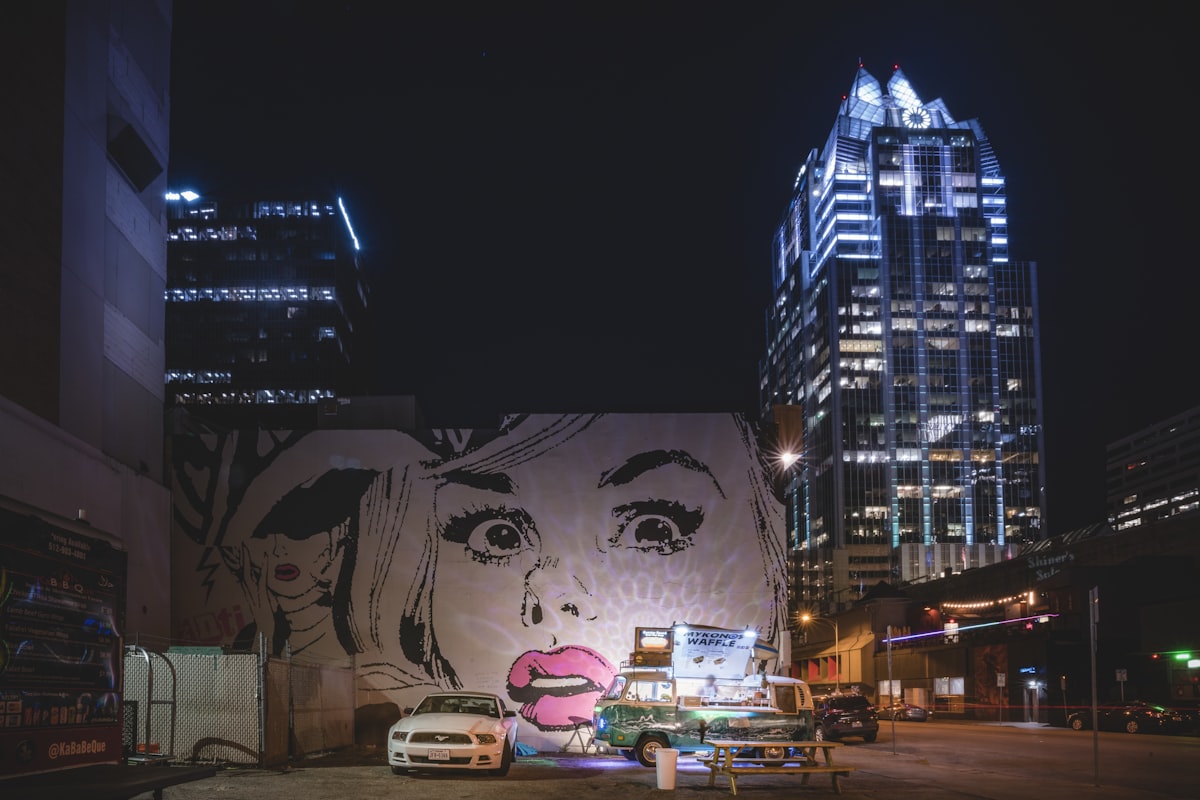
Austin's tallest public artwork climbs 103 feet up a parking structure in the heart of downtown. Completed in November 2018 by artist Josef Kristofoletti, the spectrum-colored masterpiece is named after Tau Ceti, a star in the constellation Cetus that scientists have identified as a potential host for habitable planets.
The scale is genuinely breathtaking. Where most murals exist at human scale, requiring you to stand at a specific distance to appreciate them, Tau Ceti dominates the downtown skyline. You can see it from blocks away, and it remains impressive even from directly beneath.
Austin Art Insider
Free weekly guide to galleries, exhibitions & collecting in Austin.
The rainbow spectrum carries obvious symbolism in a city that has embraced LGBTQ+ rights, though Kristofoletti has stated that the astronomical reference is primary. The colors represent the star's light spectrum as it might appear from Earth.
Photography Tips
Get down low and point your camera up for dramatic perspective
Cross the street to Brazos or 2nd for a full-height capture
Works great at night when downtown lights add atmosphere
Include pedestrians or cars for scale reference that emphasizes the mural's size
The 2nd Street District provides numerous angles and compositions
Angel Wings Mural - "What Lifts You"
The Details
Info
Details
Address
2nd Street District, Downtown Austin
Parking
2nd Street District garages
Wall Orientation
Variable
Best Light
Mid-morning (soft, even light)
Crowd Level
MEDIUM on weekends
The Story
Part of street artist Kelsey Montague's global "What Lifts You" series, this interactive mural invites viewers to stand in front of the wings and become part of the art. Montague has painted similar wings in Nashville, New York, London, and dozens of other cities.
The concept is simple but effective: the wings frame you perfectly for a portrait, transforming passive viewing into active participation. The hashtag #WhatLiftsYou accompanies each installation, creating a social media thread that connects participants across the world.
Austin's version reflects the city's character in its details, with local references worked into the wing design.
Photography Tips
Position yourself with your back against the wall, arms slightly raised
Have your photographer stand directly in front, about 10-15 feet back
Weekday mornings offer the shortest wait times
The soft light of an overcast day works better than harsh sun
Willie Nelson Mural
The Details
Info
Details
Address
407 E 7th St, Austin, TX 78701
Parking
Street or garage
Wall Orientation
South-facing
Best Light
Afternoon
Crowd Level
MEDIUM
The Story
No figure embodies Austin's musical identity more than Willie Nelson. The Red Headed Stranger has called Austin home since the early 1970s, when he left Nashville's restrictive music industry for the creative freedom of Texas.
This downtown mural captures Willie's iconic look: the braids, the bandana, the weathered face of a man who's lived every song he's written. The portrait style is photorealistic, emphasizing the character etched into his features.
Multiple Willie murals exist throughout Austin, making them a potential tour in themselves. This downtown version is among the most prominent and accessible.
South Congress (SoCo) Murals
South Congress has transformed from a gritty strip of motels and pawn shops to one of Austin's premier shopping and dining districts. Its murals reflect that evolution, often commissioned by businesses to attract the Instagram crowd.
Photo: The vibrant South Congress (SoCo) corridor, where murals meet boutiques and live music
Willie Nelson at STAG
The Details
Info
Details
Address
1423 S Congress Ave, Austin, TX 78704
Business
STAG Provisions for Men
Parking
Street parking (difficult)
Wall Orientation
West-facing
Best Light
Late afternoon
Crowd Level
MEDIUM to HIGH
The Story
Another Willie tribute, this one on the wall of STAG Provisions for Men, a high-end menswear shop. The mural depicts Willie mid-performance, guitar in hand, capturing the energy of a live show.
The location makes sense: STAG's aesthetic blends Western heritage with contemporary style, and Willie represents exactly that fusion. The mural draws foot traffic while establishing the store's brand identity.
Tip: If you're photographing the mural, pop into STAG afterward. The store has excellent taste in boots, leather goods, and Texas-made products.
Kendra Scott Wall
The Details
Info
Details
Address
1701 S Congress Ave, Austin, TX 78704
Business
Kendra Scott Jewelry
Parking
Street parking or paid lots
Wall Orientation
Variable
Best Light
Mid-morning
Crowd Level
MEDIUM
The Story
Kendra Scott is an Austin success story: the jewelry designer started her business in 2002 with $500 and grew it into a billion-dollar brand. Her flagship South Congress store features regularly updated mural installations that serve as both art and marketing.
The murals change seasonally and often feature the brand's signature bright colors and geometric patterns. They're unabashedly commercial but professionally executed, providing reliable photo opportunities year-round.
HOPE Outdoor Gallery: The New Location
A Phoenix from the Ashes
The Details
Info
Details
Address
741 Dalton Lane, Austin, TX 78617
Location
Near Austin-Bergstrom International Airport
Size
18 acres
Opened
Late 2025
Website
hopeoutdoorgallery.com
Parking
On-site lot
The History
The original HOPE Outdoor Gallery on Baylor Street was a Austin institution unlike any other. What began in 2010 as a community paint project on an abandoned construction site became one of the most significant graffiti parks in America.
Anyone could paint at HOPE. Bring your own supplies, find an open wall, and create. The result was a constantly evolving canvas where professional artists worked alongside tourists and teenagers, where million-dollar commissions shared space with hastily sprayed declarations of love.
HOPE closed in 2019 when the Baylor Street property was sold for condo development. The community mourned what seemed like the permanent loss of a unique Austin space.
But HOPE, true to its name, persisted.
The New Campus
After six years of planning, fundraising, and construction, HOPE Outdoor Gallery reopened in late 2025 at a new 18-acre campus near Austin-Bergstrom International Airport.
What You'll Find:
Public Practice Walls
The original HOPE's democratic ethos continues. Designated exterior walls are open for public painting, just as they were on Baylor Street. Bring your own supplies or purchase them on-site.
Memorial Wall
Recycled concrete from the original Baylor Street location forms a memorial wall, preserving fragments of the art that couldn't be saved in full. It's a poignant reminder of what was lost and what's been rebuilt.
Aerial "HOPE" Design
The campus layout forms the word "HOPE" when viewed from above, visible to flights arriving at Austin-Bergstrom. It's both artistic statement and wayfinding marker.
Indoor Gallery
A curated gallery space features work from 30+ artists, including many who painted at the original location. Unlike the exterior walls, these pieces are permanent installations.
HOPE Coffee Bar
Coffee, merchandise, and supplies in a space designed for lingering. The aesthetic connects to Austin's broader coffee culture while serving the gallery's community.
Visiting Tips:
Check the website for current hours, which may vary seasonally
Bring sunscreen and water; the campus is largely outdoor
If you want to paint, bring supplies or budget for purchasing them
The drive from downtown takes 20-30 minutes depending on traffic
The view from Dalton Lane provides a striking approach
Best For: Serious art tourists, photographers, those seeking deep exploration
Optimal Start Time: 7:00am
Morning: East Austin (3.5 hours)
Time
Stop
Address
Duration
7:00am
Coffee at Flat Track
1619 E. Cesar Chavez St
30 min
7:30am
Selena Loteria mural
Same location
15 min
7:45am
"You're My Butter Half"
2000 E MLK Blvd
30 min
8:15am
Historic Six Square
1021 E 11th St
30 min
8:45am
"We Rise" by Chris Rogers
E 12th & Chicon
30 min
9:15am
"Til Death Do Us Part"
E 6th & Chicon
30 min
9:45am
Big Chiller Blues mosaic
E 5th St
20 min
10:05am
General East Austin wandering
Various
25 min
10:30am
Break / light snack
-
30 min
Late Morning: South Austin (2 hours)
Time
Stop
Address
Duration
11:00am
"Greetings From Austin"
1720 S 1st St
30 min
11:30am
Roadhouse Relics interior
Same location
20 min
11:50am
Drive to Jo's
-
10 min
12:00pm
"I Love You So Much"
1300 S Congress Ave
30 min
12:30pm
Lunch on SoCo
S Congress Ave
60 min
Afternoon: SoCo & Downtown (2.5 hours)
Time
Stop
Address
Duration
1:30pm
Willie at STAG
1423 S Congress Ave
20 min
1:50pm
Kendra Scott
1701 S Congress Ave
15 min
2:05pm
Drive downtown
-
10 min
2:15pm
"Tau Ceti" Rainbow
Brazos & 2nd St
30 min
2:45pm
Angel Wings "What Lifts You"
2nd Street District
30 min
3:15pm
Willie Nelson downtown
407 E 7th St
20 min
3:35pm
Downtown exploration
-
25 min
4:00pm
Break / coffee
Downtown
30 min
Late Afternoon: The Drag & Optional HOPE (2+ hours)
Time
Stop
Address
Duration
4:30pm
Drive to the Drag
-
15 min
4:45pm
"Hi, How Are You"
2266 Guadalupe St
30 min
5:15pm
Drag exploration
Guadalupe St
30 min
5:45pm
Optional: Drive to HOPE
741 Dalton Lane
25 min
6:10pm
HOPE Outdoor Gallery
Same location
90 min
7:40pm
Dinner near airport
-
-
OR skip HOPE and use the late afternoon for golden hour revisits to favorite murals
Rainy Day Alternative: Indoor Focus (4-5 hours)
Best For: Weather contingency, those seeking air conditioning
Time
Stop
Description
Morning
Roadhouse Relics
Todd Sanders' neon gallery
Mid-morning
The Contemporary Austin
Laguna Gloria if rain stops
Lunch
East Austin
Covered patios
Afternoon
HOPE Indoor Gallery
741 Dalton Lane
Late afternoon
Canopy Art District
Studios and covered galleries
Photography Guide
Understanding Austin Light
Austin sits at 30 degrees north latitude, which means:
Summer: Long days, harsh midday light, golden hour extends from roughly 6-8pm
Winter: Shorter days, softer midday light, golden hour arrives around 4-6pm
Spring/Fall: Ideal photography conditions, moderate light throughout the day
Morning (7-10am)
Best for east-facing murals. The light is warm, soft, and directional. Ideal subjects:
"Hi, How Are You" (east-facing)
"You're My Butter Half" (morning-friendly)
Historic Six Square mosaics (reflective surfaces catch morning light beautifully)
Midday (11am-3pm)
The most challenging time for mural photography. The Texas sun creates harsh shadows and washed-out colors. Strategies:
Seek out north-facing murals (even light, no direct sun)
Use fill flash or reflectors
Focus on detail shots rather than full-wall captures
Take a lunch break and resume in late afternoon
Golden Hour (4-7pm)
The magic time for Austin murals. West-facing walls glow with warm light. Ideal subjects:
"Greetings From Austin" (west-facing, specifically designed for afternoon light)
"Tau Ceti" (catches sunset colors beautifully)
SoCo murals (partially west-facing)
Overcast Days
Photographers' best friend. The cloud cover acts as a giant softbox, providing even, shadow-free light. All murals photograph well on overcast days. If you're visiting Austin specifically for mural photography, a slightly cloudy day is ideal.
Wall Orientations Quick Reference
Mural
Direction
Best Light
"I Love You So Much"
South
Golden hour or overcast
"Greetings From Austin"
West
Late afternoon
"Hi, How Are You"
East
Morning
"You're My Butter Half"
South
Morning or overcast
"Tau Ceti"
Multiple
Any (scale transcends light)
Angel Wings
Variable
Mid-morning
Equipment Recommendations
Smartphone Photography
Most visitors photograph Austin murals with phones, and modern smartphones produce excellent results. Tips:
Clean your lens (seriously, you'd be surprised)
Use HDR mode for high-contrast scenes
Portrait mode works well for posed shots against murals
Grid lines help with composition
Dedicated Cameras
If you're shooting with a camera:
Wide-angle lens (16-35mm equivalent) captures full murals
Standard zoom (24-70mm equivalent) offers flexibility
A polarizing filter reduces glare on sunny days
Tripod not usually necessary due to abundant daylight
Photo Ethics
Austin's art community is welcoming, but please be respectful:
Do:
Credit artists when you know their names (often signed on the mural)
Tag locations and artists on social media
Support the businesses that host murals
Wait your turn at popular spots
Ask permission before photographing people
Don't:
Block traffic or pedestrian flow for your shot
Climb on sculptures or murals
Move memorial items left at the Daniel Johnston mural
Rush others who are photographing
Disparage other visitors' photography styles
Commercial Use
If you're shooting for commercial purposes (advertising, products, publications), be aware that many murals are protected by copyright. The building owner may have granted permission for the mural, but the artist typically retains reproduction rights. For commercial use, contact the artist or their representative.
Supporting Local Artists
Big Medium
Big Medium is the nonprofit organization behind Austin's legendary East Austin Studio Tour and West Austin Studio Tour. These biannual events open hundreds of artist studios to the public, offering direct access to working artists in their creative spaces.
Website: bigmedium.org
What They Offer:
East Austin Studio Tour (November) - 500+ artists, 100+ stops
West Austin Studio Tour (May) - 200+ artists, 80+ stops
Year-round exhibitions at Big Medium gallery
Artist advocacy and professional development
Why It Matters: Many mural artists also maintain studio practices and participate in the tours. If you admired someone's public work, the studio tour might let you meet them, see their process, and potentially acquire original pieces.
Canopy Art District
Address: 916 Springdale Road, Austin, TX 78702
This former Goodwill warehouse has been transformed into a four-acre creative campus with 45+ artist studios, three galleries, a cafe, and ever-changing outdoor murals.
What to Know:
Open Canopy events happen monthly with 57+ studios participating
300+ visitors typically attend, creating a vibrant social atmosphere
Part of the Govalle Cultural District, the only state-designated arts district in East Austin
Studios are sometimes open outside events; check individual artist schedules
The on-site cafe provides a good base for planning your visit
Why Visit: Canopy represents the working side of Austin's art scene. These aren't tourist murals; they're the studios where artists create. Visiting connects you to the source.
Artist Collectives and Co-ops
Austin supports numerous artist collectives that offer exhibitions, events, and opportunities to connect with creators:
Co-Lab Projects - Experimental and installation work
Women & Their Work - Showcasing Texas women artists since 1978
MASS Gallery - Artist-run space for emerging work
Pump Project - Community art center with studios and exhibitions
Peak mural touring season. The summer heat has broken, the light is beautiful, and tourists are fewer than during SXSW season. The East Austin Studio Tour typically occurs in November, adding another reason to visit.
March (Non-SXSW Weeks)
Lovely spring weather and wildflower season. Avoid the weeks of SXSW (usually mid-March), when crowds and prices spike dramatically.
December-February
Cooler temperatures, lowest crowds, and occasional holiday installations add seasonal interest. Austin winters are mild by northern standards.
Times to Avoid
SXSW (Mid-March)
The festival draws hundreds of thousands of visitors. Every mural will have lines, every hotel will be expensive, every restaurant will require reservations. Unless you're attending the festival, avoid this period.
July-August
Peak summer heat (regularly exceeding 100 degrees Fahrenheit) makes outdoor touring genuinely unpleasant. If you must visit in summer, limit outdoor time to early morning and retreat to air conditioning by 11am.
ACL Festival (October)
Austin City Limits Music Festival brings significant crowds, though not at SXSW levels. Zilker Park is inaccessible, and hotels are pricier than usual.
What to Bring
Essential Gear
Comfortable walking shoes - You'll cover 5+ miles if you hit multiple spots
Water bottle - Austin heat is serious (average 95+ degrees in summer)
Sunscreen - Even for quick photo sessions
Portable charger - Your phone battery will drain fast with constant photography
Small crossbody bag - Hands-free for shooting
Nice to Have
Hat or sunglasses - Sun protection that doesn't require reapplication
Snacks - Energy maintenance between stops
Map or app with saved locations - Google Maps allows custom lists
Cash - Some food trucks and small businesses prefer it
What to Leave Behind
Tripod (usually unnecessary, can be cumbersome)
Valuable jewelry or visible expensive items (attracts unwanted attention in some areas)
Tight schedule (leave room for serendipitous discoveries)
Frequently Asked Questions
How many murals does Austin have?
Austin has over 200 documented public murals, with new ones appearing regularly. The highest concentration is in East Austin, followed by South Congress and the downtown 2nd Street District. The scene is constantly evolving — murals are painted over, restored, and created throughout the year.
Austin has over 200 documented public murals, with new ones appearing regularly.
Are Austin murals free to visit?
Yes, all outdoor murals in Austin are free to view and photograph. The only exception is the new HOPE Outdoor Gallery campus, which may charge admission for special events. Street murals are accessible 24/7, though visiting during daylight hours is recommended for safety and photography quality.
What is the most famous mural in Austin?
The "I Love You So Much" mural at Jo's Coffee on South Congress is widely considered Austin's most famous. Created in 2010 by musician Amy Cook as a love letter, it has become the city's most-photographed wall. The "Greetings From Austin" vintage postcard mural (1997) at Roadhouse Relics is a close second.
Can I paint at HOPE Outdoor Gallery?
Yes. The new HOPE Outdoor Gallery campus at 741 Dalton Lane has designated public practice walls where anyone can paint, continuing the democratic tradition of the original Baylor Street location. You can bring your own supplies or purchase them on-site. Check their website for current hours and any restrictions.
What happened to the original HOPE Outdoor Gallery?
The original HOPE Outdoor Gallery on Baylor Street closed in 2019 when the property was sold for condominium development. After six years of planning, the gallery reopened in late 2025 at a new 18-acre campus near Austin-Bergstrom Airport. Recycled concrete from the original site forms a memorial wall at the new location.
When is the best time to photograph Austin murals?
Golden hour (the hour before sunset) provides the warmest, most flattering light for west-facing murals like "Greetings From Austin." Early morning (7-8am) is ideal for east-facing murals and for avoiding crowds at popular spots like Jo's Coffee. Overcast days provide soft, even lighting that works well for all murals.
Do I need permission to photograph murals in Austin?
No permission is needed for personal photography of outdoor public murals. However, commercial use (advertising, publications, products) may require permission from the artist, who typically retains copyright. Always be respectful of other visitors and the surrounding businesses.
Is there a self-guided mural tour in Austin?
This guide includes three self-guided itineraries: a half-day South Austin focus (4-5 hours), a comprehensive full-day tour (8-10 hours), and a rainy day alternative. You can also create your own route using Google Maps — save the addresses from this guide to a custom list for turn-by-turn navigation.
Are Austin murals wheelchair accessible?
Most major murals are on public sidewalks and accessible. The "I Love You So Much" mural, "Greetings From Austin," "You're My Butter Half," and downtown murals all have sidewalk access. Some East Austin murals may be on uneven surfaces. The new HOPE campus was designed with ADA accessibility in mind.
How do I find new murals that aren't in guides?
Follow local artists and Austin art accounts on Instagram. Big Medium's East Austin Studio Tour (November) and West Austin Studio Tour (May) reveal new work annually. The Canopy Art District on Springdale Road rotates outdoor murals regularly. Simply walking East Austin side streets often leads to unlisted discoveries.
Big Medium's East Austin Studio Tour (November) and West Austin Studio Tour (May) reveal new work annually.
Visiting Austin's murals is often the first step on a longer journey with visual art. The accessibility of street art, its presence in everyday spaces rather than intimidating galleries, opens doors that might otherwise remain closed.
If you find yourself moved by what you've seen on Austin's walls, consider taking the next step. Many mural artists also create collectible works at accessible price points. Local galleries curate emerging and established artists whose work could begin your own collection.
Browse Austin Gallery's curated collection of investment-grade artwork from established and emerging Texas artists. Our team can help you find works that connect to the aesthetic sensibilities you discovered on Austin's walls.

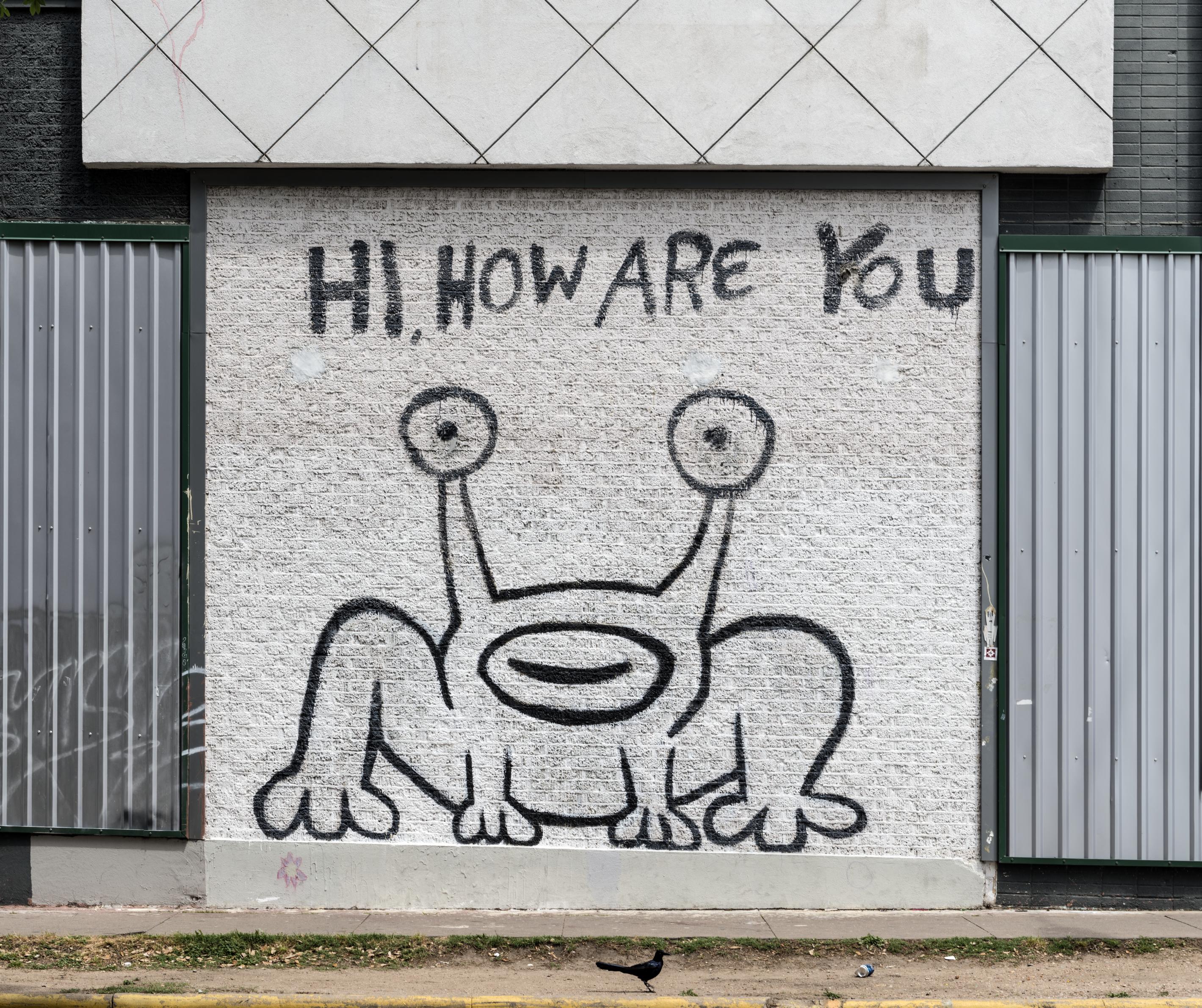
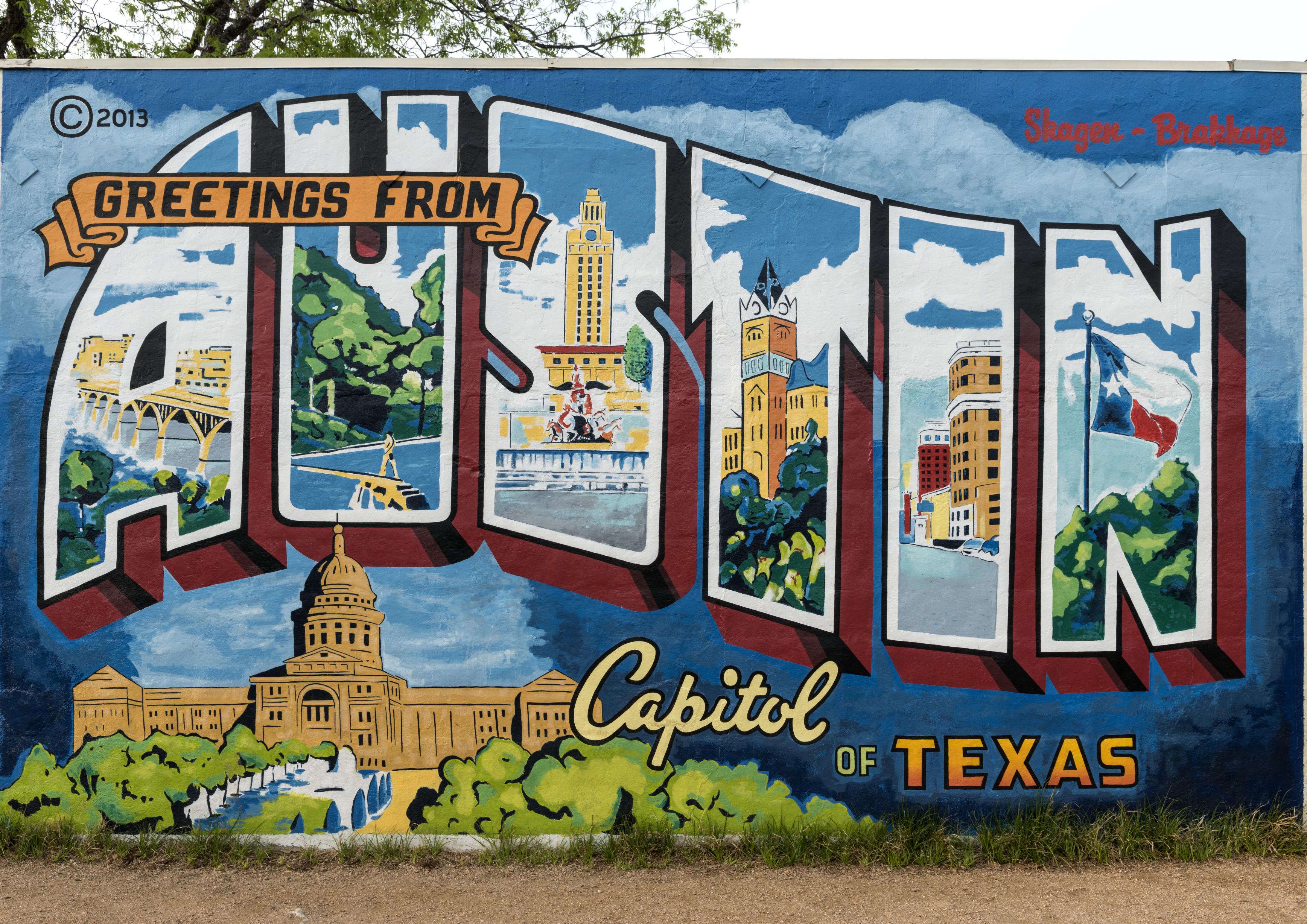
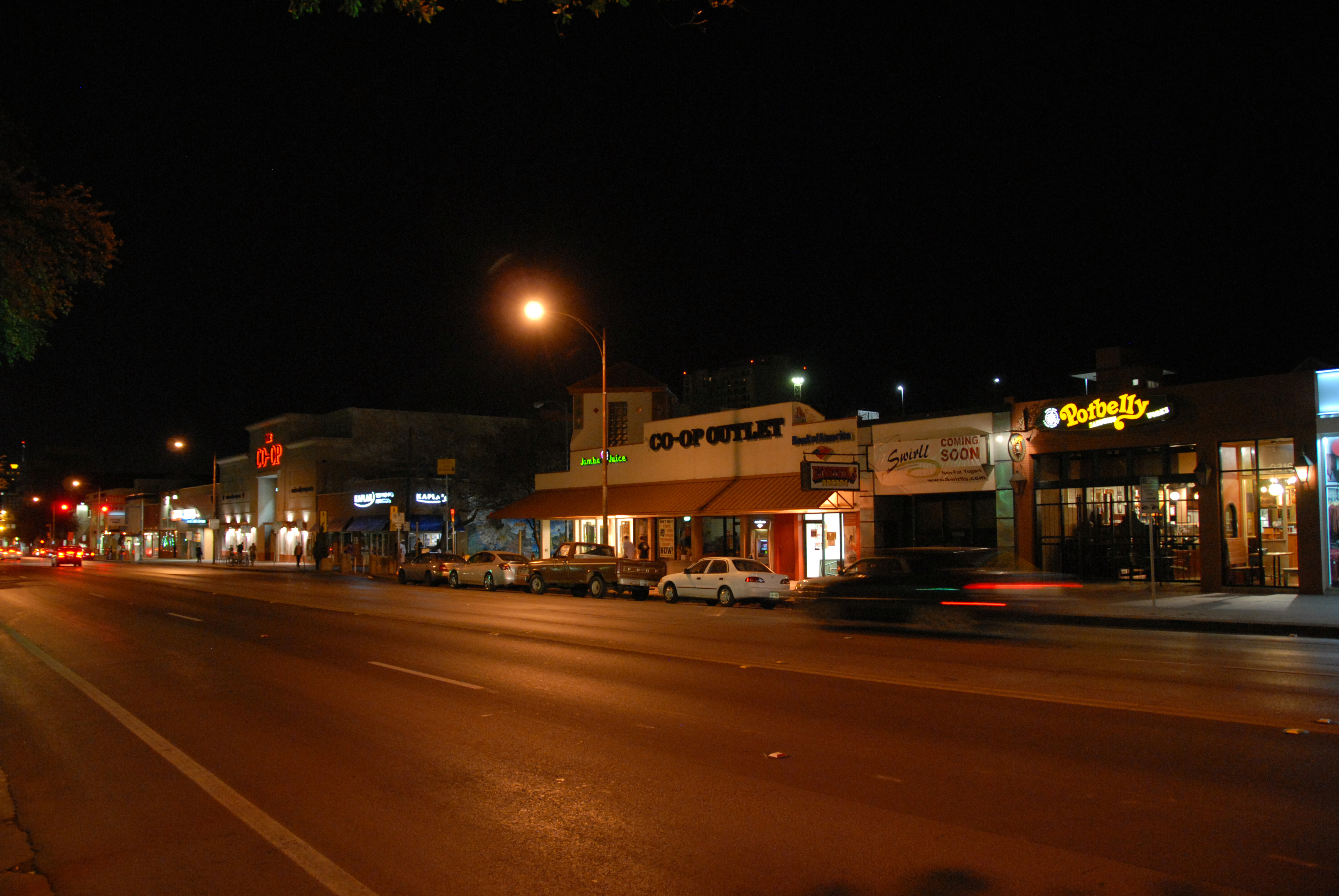
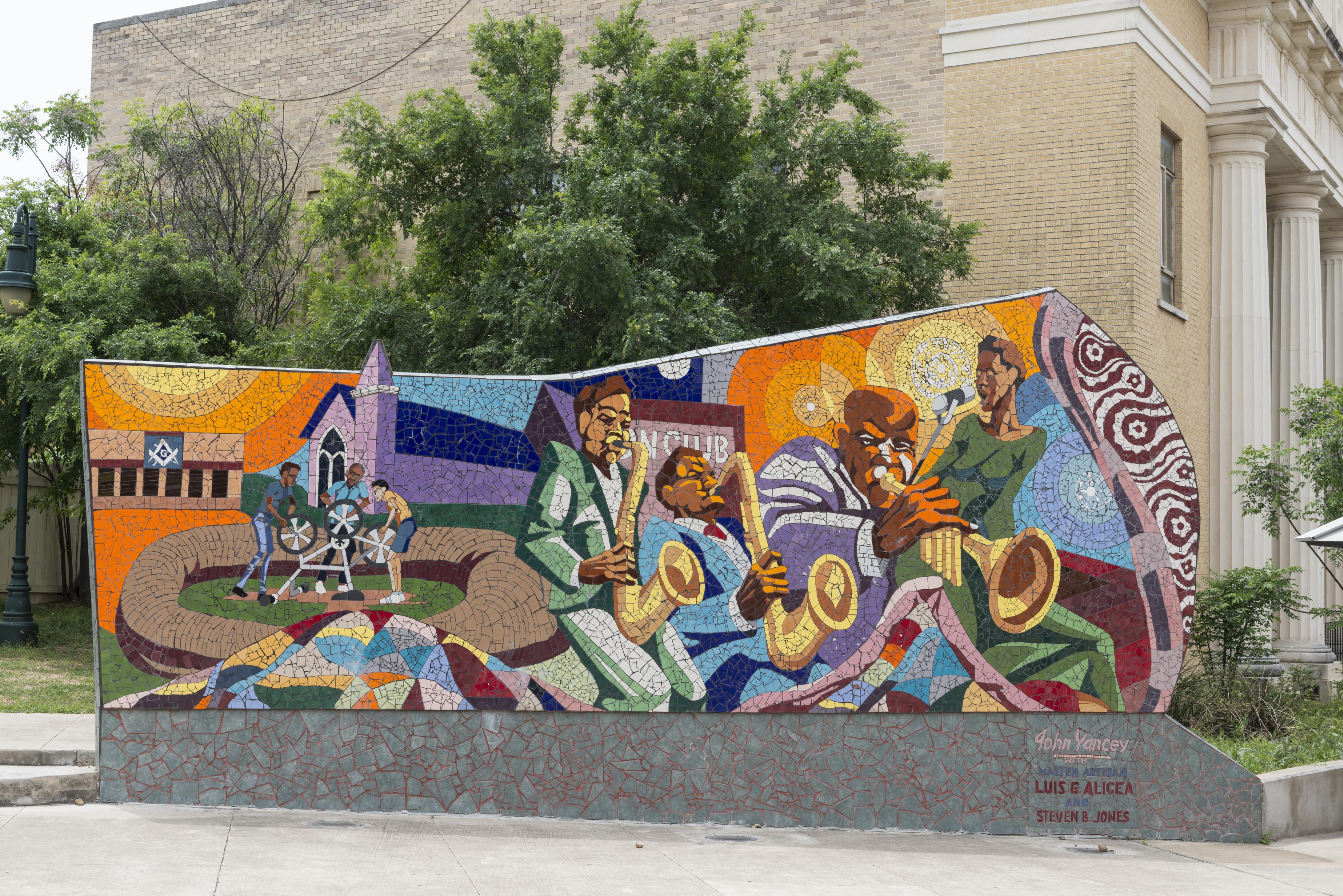 Photo: East Austin's vibrant mosaic and mural scene — one of dozens of public artworks lining the neighborhood's streets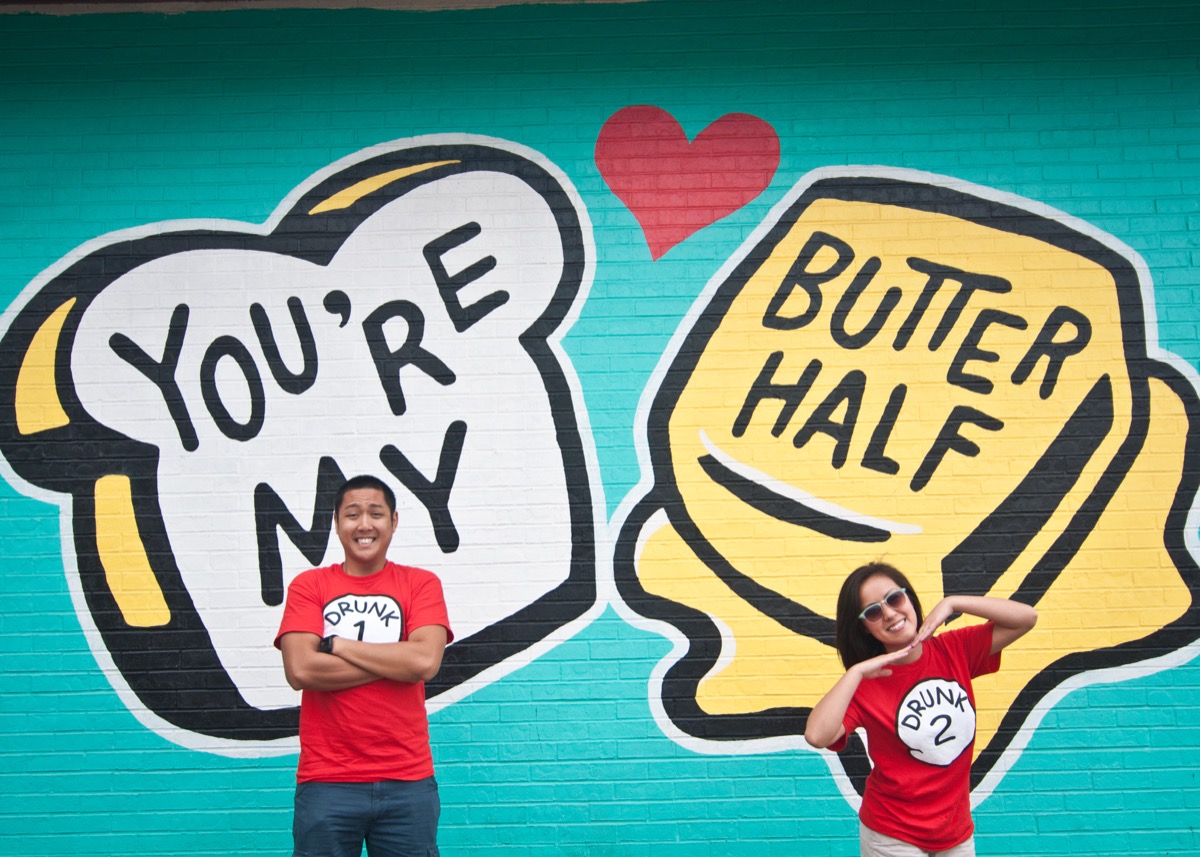
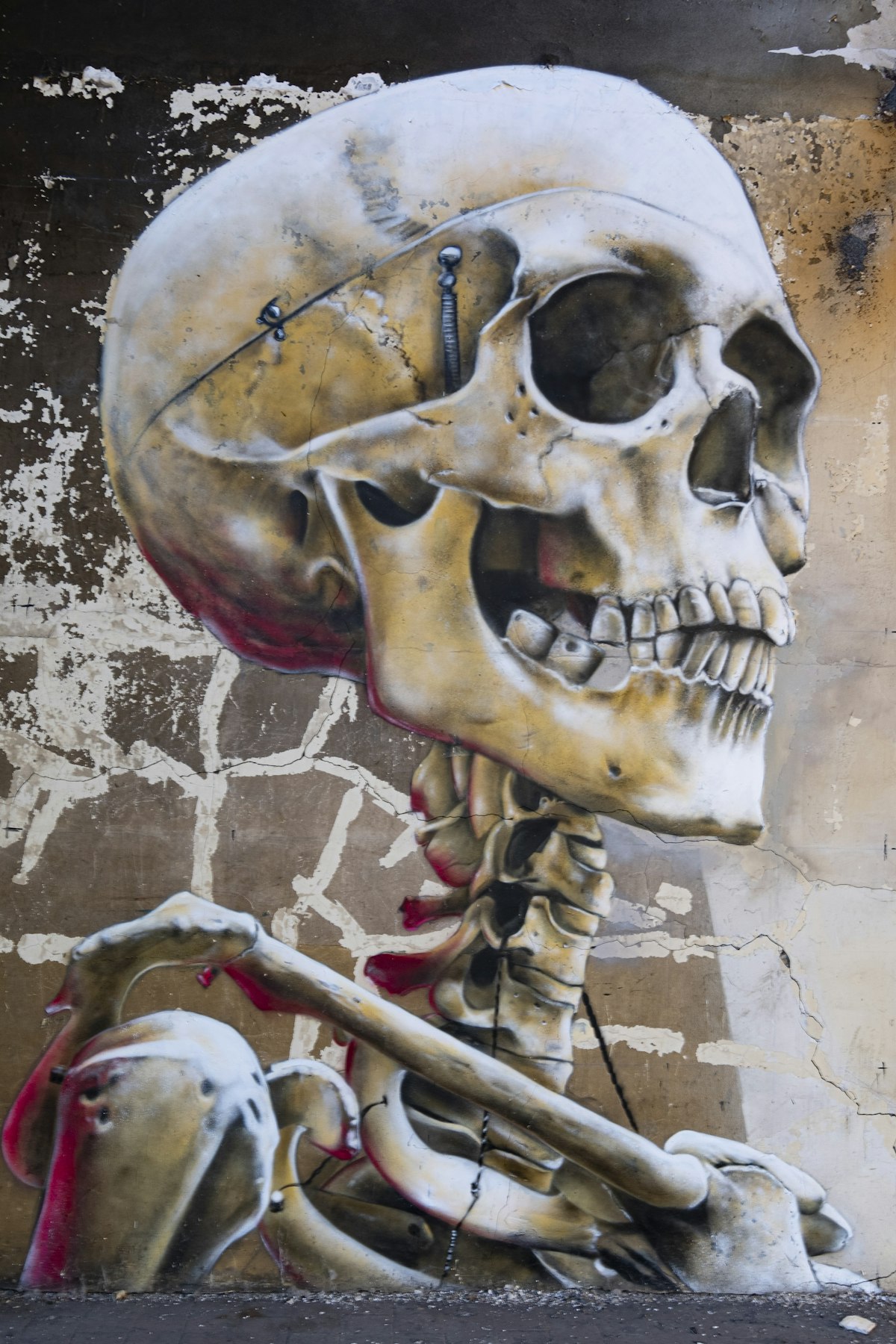
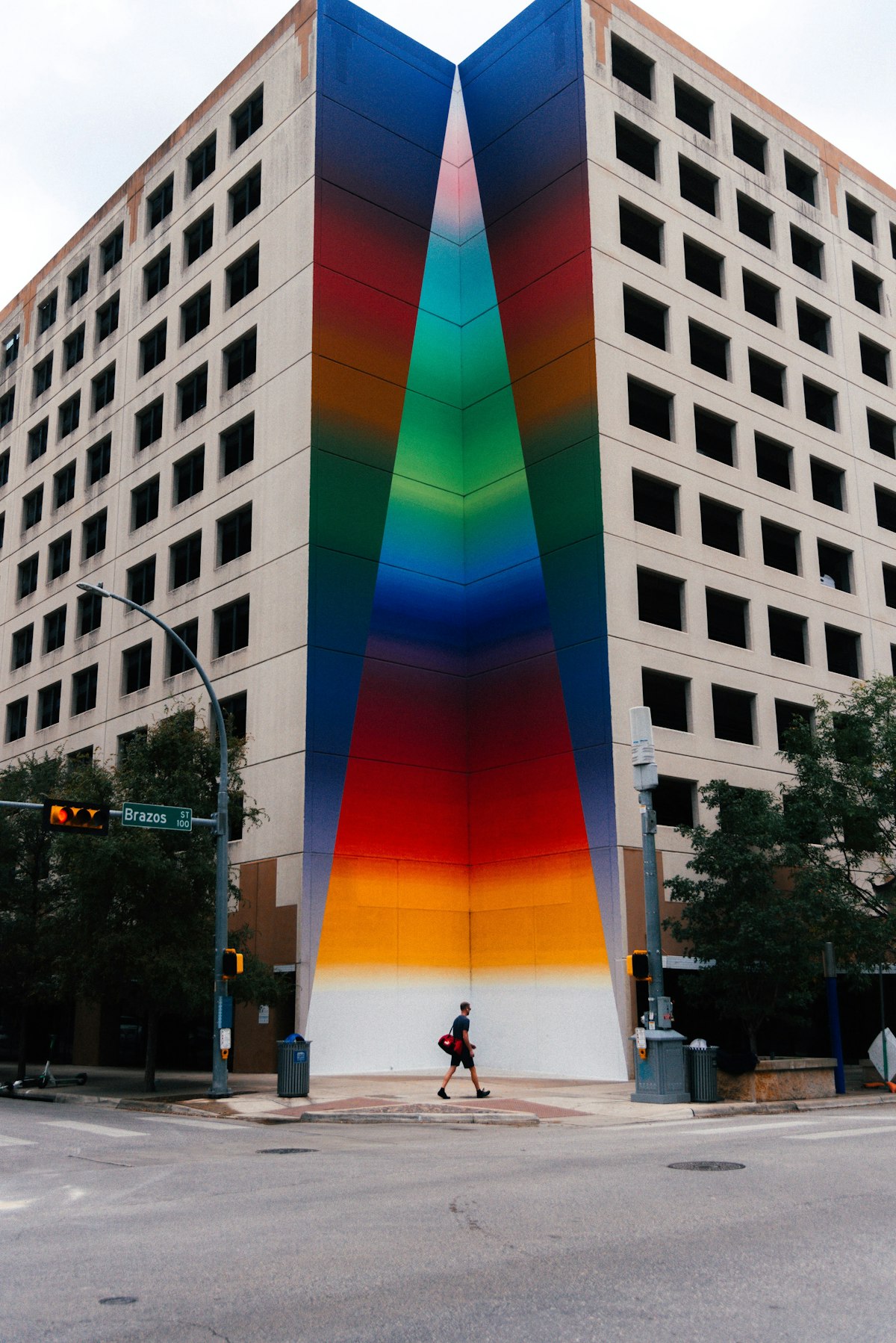
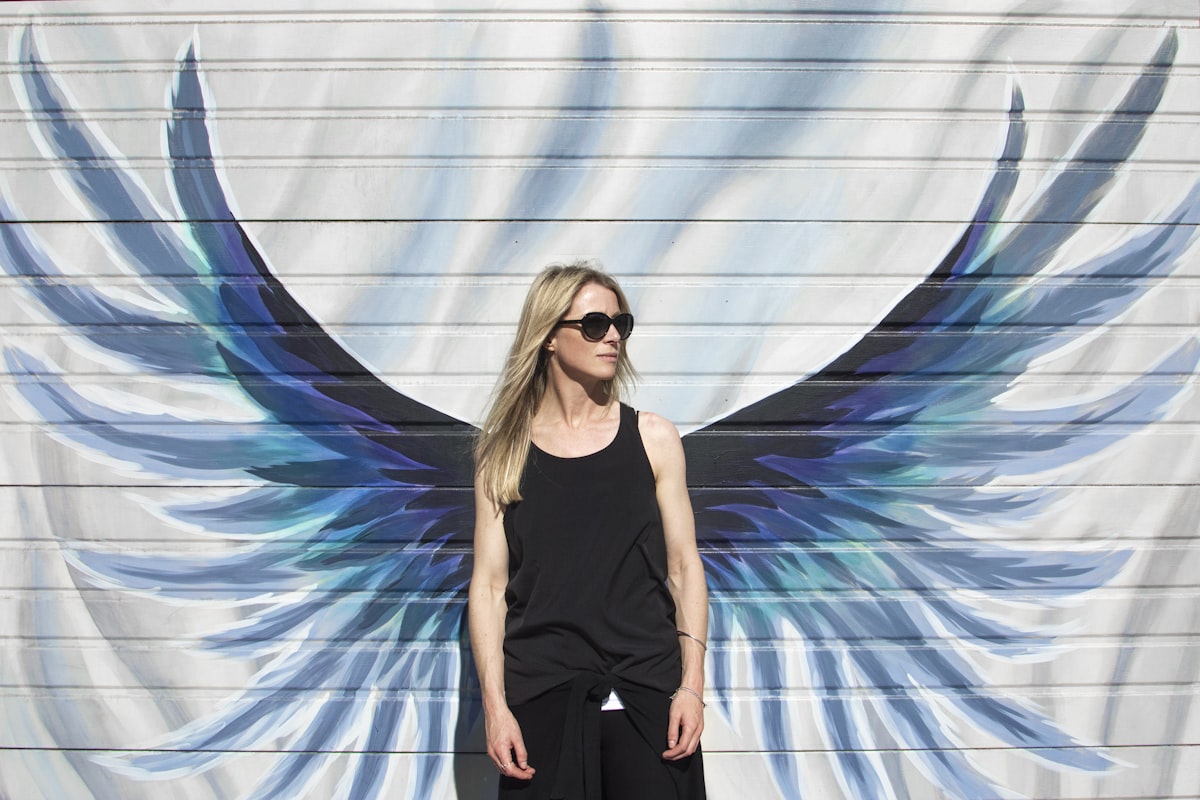
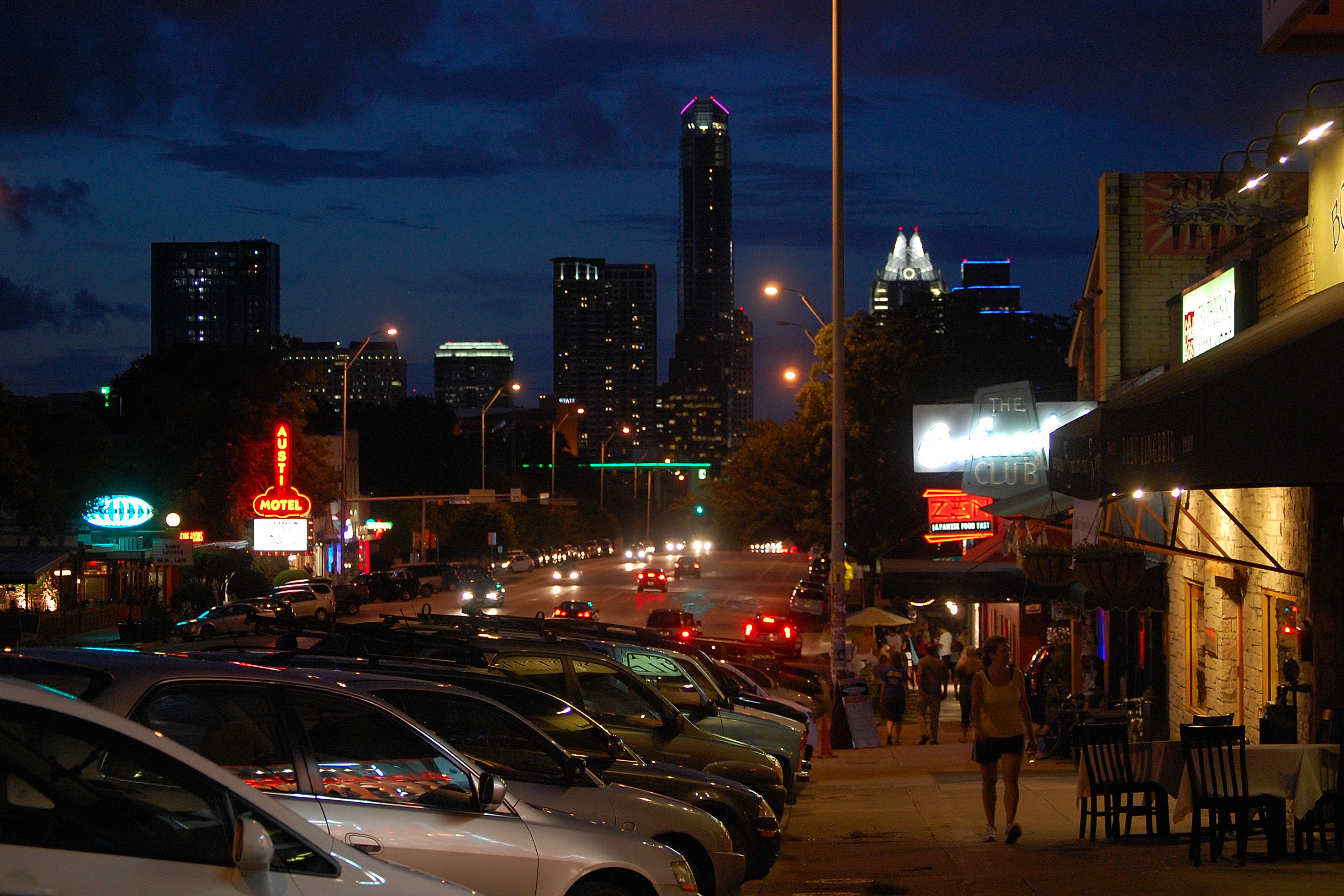 Photo: The vibrant South Congress (SoCo) corridor, where murals meet boutiques and live music