3 Austin Museums You Can't Miss — Blanton, Bullock & the One That Stops Everyone (Local Guide)
The complete guide to Austin's three essential museums: The Blanton (home to Ellsworth Kelly's Austin), The Contemporary Austin (Jones Center and Laguna Gloria sculpture park), and the Bullock Texas State History Museum. Hours, admission, insider tips, and what not to miss.
By Austin Gallery Team
Austin isn't just live music and breakfast tacos. The city has quietly built a world-class museum scene that rivals cities twice its size—anchored by three institutions that every art lover, history buff, and curious traveler should know.
The Blanton Museum of Art houses the largest university art collection in the US — 21,000+ works
The Bullock Texas State History Museum combines art, film, and interactive exhibits across three floors
Both museums offer free or discounted admission days — check websites before visiting
Art museums tell you what a city values. Music venues tell you what it sounds like. But it's the intersection of the two—the creative infrastructure that supports both high culture and grassroots expression—that defines a place.
Austin's museum scene has matured dramatically over the past two decades. What was once a modest collection of university galleries and historical societies has evolved into a sophisticated cultural ecosystem. The additions of major architectural landmarks, internationally significant collections, and programming that rivals coastal institutions have transformed the city's cultural identity.
Three museums anchor this scene. Each offers something the others don't. Together, they provide a comprehensive introduction to art, history, and the creative forces that have shaped Texas.
This guide covers everything you need to plan meaningful visits—not tourist checklist stops, but genuine engagement with extraordinary collections.
The Blanton Museum of Art
Photo: The Blanton Museum of Art, home to nearly 21,000 works and Ellsworth Kelly's iconic "Austin" building
One of the largest university art museums in the country—and home to the only building Ellsworth Kelly ever designed.
Free Admission: Every Tuesday is Moody Family Free Day—the museum opens its doors at no charge to everyone. It's one of the best cultural deals in Texas.
What Makes It Special
The Blanton isn't just a university gallery—it's one of the most significant art museums between the coasts. With nearly 21,000 works spanning antiquity to the present, the collection rivals institutions in cities far larger than Austin.
But what truly sets the Blanton apart is its commitment to showing work that other American museums often overlook. The Latin American modernism collection alone justifies multiple visits. The contemporary holdings consistently surprise. And then there's Kelly's Austin—a work that has become a pilgrimage site for architecture and art lovers worldwide.
The building itself, designed by Swiss architects Herzog & de Meuron (the same firm behind London's Tate Modern), provides museum-quality exhibition spaces that do justice to the collection. Light pours through calculated apertures. Circulation feels intuitive. The architecture serves the art rather than competing with it.
Must-See Highlights
1. Ellsworth Kelly's "Austin"
The artist's only building—and his final masterpiece.
Step out of the main museum building and cross the courtyard to a structure that looks like it belongs in another century. Austin is a 2,715-square-foot stone chapel—though "chapel" feels inadequate for what you'll experience inside.
Kelly, one of the most important abstract artists of the 20th century, spent over two decades refining plans for a building he would never live to see completed. He died in 2015 at age 92. Austin opened in February 2018, realized precisely to his specifications.
The building has no religious affiliation—Kelly was a lifelong atheist. But what he created transcends the secular. The experience is profoundly contemplative, almost devotional in its intensity.
What to expect inside:
The stone exterior gives no hint of what waits within. Step through the heavy doors and you're enveloped in colored light. Kelly designed 33 windows—some clear, others in bold primary colors (red, blue, yellow, green) and secondary hues. The glass casts shifting patterns across the white oak floor and cream-colored walls as the sun moves. No two visits are identical.
At the center of the space stands a "totem"—a 15-foot redwood sculpture in two sections, black and white, that draws your eye upward to the soaring ceiling.
Practical notes:
Photography is strictly prohibited inside the building. No selfies, no photos of the light patterns, no exceptions. This policy exists to preserve the contemplative experience. Phones must be stowed before entry.
Visit at different times of day. Morning light hits the east windows; afternoon transforms the western glass. Overcast days create soft, diffused colors; sunny days produce dramatic, saturated hues.
Spend at least 20 minutes inside. The building rewards patience. Sit in the provided pews. Watch the light change. This isn't something to check off and move on from.
2. Latin American Modernism Collection
Inside the Blanton Museum, whose Latin American modernism collection is among the finest in the United States
One of the most significant collections of its kind in the United States.
The Blanton's Latin American holdings represent decades of thoughtful acquisition and generous gifts. This isn't a token gesture toward diversity—it's a genuine strength that draws scholars and collectors from around the world.
Highlights include:
Diego Rivera — Works spanning his career, from early figurative pieces to his mature style
Frida Kahlo — Rare works that reveal dimensions beyond the heavily commercialized image
Rufino Tamayo — Major paintings from the Mexican master known for combining pre-Columbian imagery with European modernism
Wifredo Lam — The Cuban Surrealist whose work bridged African, Caribbean, and European traditions
Joaquín Torres-García — The Uruguayan pioneer of Constructive Universalism
Why this matters:
American museums have historically underrepresented Latin American art. The Blanton's collection offers a corrective—a chance to understand modernism as a global phenomenon rather than a purely European or North American story. This context changes how you see the rest of the museum.
3. European Old Masters
Centuries of artistic achievement, from Renaissance altarpieces to Baroque drama.
The Blanton's European collection spans the 14th through 19th centuries, with particular strength in Italian and Northern Renaissance works.
Notable holdings:
Sebastiano del Piombo — A contemporary of Michelangelo and Raphael
Peter Paul Rubens — Dramatic Baroque compositions
Canaletto — Vedute paintings of Venice that defined the genre
Jan van Goyen — Dutch Golden Age landscapes
The galleries are arranged to facilitate comparison across schools and periods. Take time to notice how artists working centuries apart addressed similar problems—light, composition, devotional imagery, the human figure.
4. Contemporary Holdings
Where the Blanton engages with art being made now.
The contemporary galleries rotate frequently, showcasing both collection highlights and new acquisitions. Recent years have seen significant additions in video art, installation, and work by BIPOC artists.
Artists to look for:
Brice Marden — Minimalist paintings that reward extended looking
Kara Walker — Powerful works addressing race and history
Glenn Ligon — Text-based work exploring identity and language
Deborah Roberts — Collage work examining Black childhood
Insider Tips
Café by Justine's Brasserie: Opening in 2026, the Blanton's new café will be operated by the team behind Justine's Brasserie, one of Austin's most celebrated French restaurants. Expect quality that matches the collection.
Tuesday strategy: Free admission draws crowds, but the museum is large enough to absorb them. Arrive at 10am or after 3pm for the best experience. Avoid the lunchtime rush.
Saturday nights: The museum stays open until 8pm on Saturdays—one of the few evening options for Austin museum-goers. The building takes on a different character after dark.
Membership math: At $15 per visit, the $70 individual membership pays for itself after five visits. Members skip ticket lines, receive 20% off at the shop, and get invitations to preview events for major exhibitions.
$15
Membership math: At per visit, the $70 individual membership pays for itself after five visits
The shop: Don't dismiss the museum store. The book selection is curated by people who care about art, not just bestsellers. Look for exhibition catalogues, especially from past shows—they're often available at deep discounts.
Parking: The museum garage offers two hours of free parking with validation. Enter from MLK Boulevard. Street parking on campus is nearly impossible on weekdays.
The Contemporary Austin
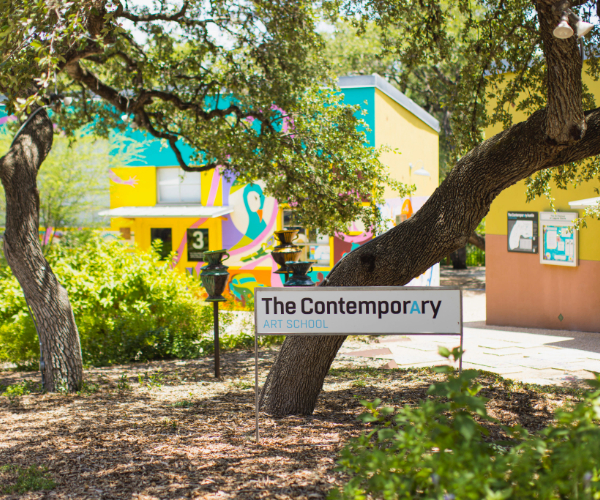
The Contemporary Austin at Laguna Gloria — contemporary sculpture set against Lake Austin's wooded shoreline
Two venues, one institution—where Austin's art scene meets its natural landscape.
The Contemporary Austin operates across two dramatically different locations. The Jones Center downtown provides a traditional gallery experience in a renovated historic building. Laguna Gloria offers sculpture in a 14-acre natural setting on the shores of Lake Austin.
Each venue presents distinct programming. Both are worth your time.
The Jones Center occupies a 1916 building that once housed Austin's oldest department store. The renovation preserved the original facade while creating 8,000 square feet of flexible gallery space across two floors.
What to expect:
Unlike encyclopedic museums that show art from every period, The Contemporary focuses exclusively on living artists and recent work. Exhibitions change regularly—typically every three to four months—meaning repeat visits consistently offer new experiences.
The programming tilts adventurous. Expect installation, video, performance documentation, and work that challenges conventional formats. This isn't art that matches your sofa; it's art that asks questions.
Practical notes:
Congress Avenue location means easy access from downtown hotels and the Capitol area
Thursday evenings combine free admission with extended hours—ideal for after-work visits
Check the website before visiting to confirm current exhibitions
Before you encounter a single sculpture, Laguna Gloria's setting stops you in your tracks. The 14-acre grounds occupy a peninsula jutting into Lake Austin, shaded by heritage oaks and featuring formal gardens that date to the early 20th century.
At the heart of the property stands the 1916 Driscoll Villa, a Mediterranean Revival mansion built by Clara Driscoll—the same Texas heiress who saved the Alamo from demolition. The villa served as her private residence before becoming the original home of the Austin Museum of Art (which later evolved into The Contemporary Austin).
The villa is closed for renovations and stabilization. When it reopens, expect historically informed interiors and exhibitions that engage with the building's history.
Austin Art Insider
Free weekly guide to galleries, exhibitions & collecting in Austin.
The Betty and Edward Marcus Sculpture Park
Monumental art in a natural setting.
The sculpture park spreads across the property's hills, trails, and lakeside areas. Works are commissioned specifically for the site, meaning artists consider the landscape, light, and viewer experience when creating pieces.
Current and recent installations include:
Large-scale installations that frame lake views
Sound works that respond to wind and weather
Sculptural interventions that engage with the existing vegetation
Site-specific commissions that may remain for years or rotate with new programming
The park is designed for exploration. Trails wind through the property, revealing sculptures at unexpected turns. Some works require climbing or walking to reach. Others emerge gradually as you approach from different angles.
Practical notes:
Wear comfortable shoes. The terrain includes hills, stairs, and unpaved paths.
Bring water. Shade is plentiful, but Austin heat demands hydration.
Dogs are welcome on leash—one of the few art venues in Austin with this policy.
Thursdays until 9pm offer the rare opportunity to experience outdoor sculpture in evening light. The summer sunset creates extraordinary conditions.
Spread & Co. Café
Located on-site, Spread & Co. offers coffee, sandwiches, salads, and baked goods with views of the grounds. It's a legitimate cafe, not museum food service. Plan to linger.
Hours: Match Laguna Gloria's schedule. Grab something before you explore, or refuel after.
Combining Both Venues
A single admission covers both the Jones Center and Laguna Gloria for the same day. The venues are about 15 minutes apart by car—doable as a combined excursion, though each deserves dedicated time.
Suggested approach: Visit the Jones Center first (1-2 hours), then drive to Laguna Gloria (2-3 hours). The natural setting provides a contemplative counterpoint to the downtown galleries.
Open seven days a week—unusual for Austin museums.
Admission
Category
Exhibits Only
IMAX Documentary
IMAX Feature
Adults
$15
$10
$15
Seniors (65+)
$11
$9
$13
Military
$11
$9
$13
College Students
$11
$9
$13
Youth (4-17)
$9
$8
$12
Children (0-3)
FREE
FREE
FREE
Free Admission: First Sunday of every month (exhibits only)
Combo tickets available for exhibits + IMAX at reduced rates. Check the website for current packages.
What Makes It Special
Texas has a complicated history. The Bullock doesn't shy away from that complexity.
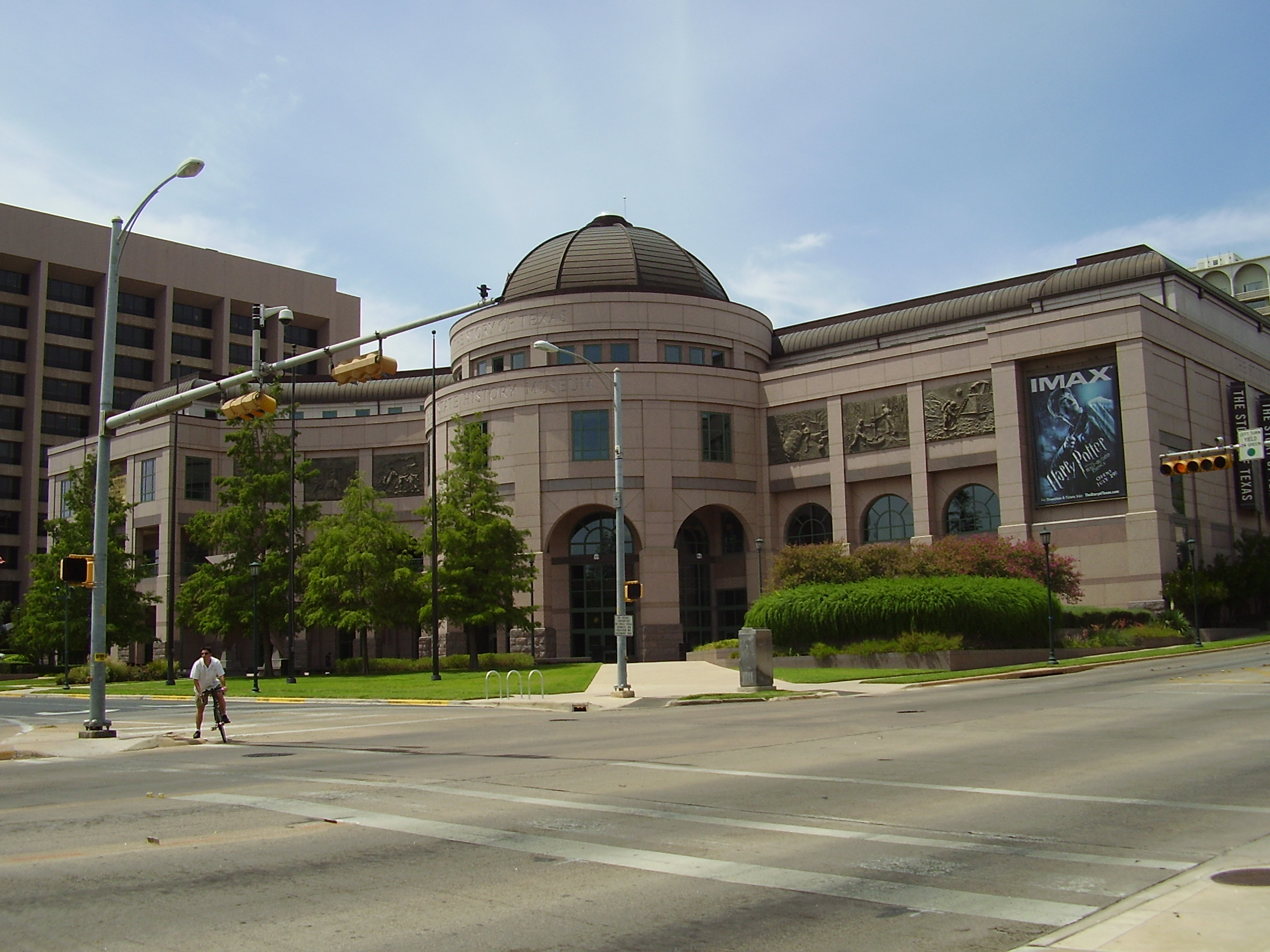
Named for former Texas Lieutenant Governor Bob Bullock (1929-1999), the museum opened in 2001 with a mandate to tell "The Story of Texas"—all of it. That means Comanche nations and Spanish missions. Cotton economy and slavery. Oil booms and civil rights. NASA and immigration. The mythology and the reality.
The building itself, designed by Sprinkle Robey Architects, makes a statement. The grand entrance opens to a three-story atrium anchored by a massive Texas Star—copper-clad and visible from Congress Avenue. The architecture is unabashedly Texan, confident without irony.
The Three Floors
The permanent exhibitions unfold chronologically across three floors, each covering a distinct period in Texas history.
First Floor: Land
Prehistory to early European contact.
Indigenous peoples and their technologies
Arrival of Spanish explorers
Mission system and its consequences
Natural history of the Texas landscape
Highlight: A life-sized diorama of a Caddo village, based on archaeological evidence and showing daily life before European contact.
Second Floor: Identity
Texas Revolution through the early 20th century.
The road to Texas independence
Republic of Texas era
Statehood and the Civil War
Reconstruction and its aftermath
Rise of the cattle industry and railroads
Highlight: Original artifacts from the Alamo and San Jacinto, including weapons, documents, and personal effects. The museum doesn't present these as simple hero narratives—context addresses the contradictions and contested interpretations.
Third Floor: Opportunity
Modern Texas from oil discovery to the present.
Spindletop and the oil boom
Great Depression and Dust Bowl
World War II and the home front
Civil rights movement in Texas
Space exploration and NASA in Houston
Immigration and changing demographics
Technology sector and contemporary Texas
Highlight: An actual Apollo-era command module, on loan from the Smithsonian. Texas's role in the space program receives detailed treatment.
The Texas Spirit Theater
A unique multimedia experience that combines film, special effects, and live theatrical elements to tell Texas stories. Shows rotate throughout the day. The technical production values exceed typical museum theater—this is genuine spectacle designed to complement the exhibition experience.
Duration: Approximately 20 minutes
Note: Included with general admission
IMAX Theatre
Austin's only IMAX—and one of the largest screens in Texas.
The Bullock's IMAX shows both feature films and educational documentaries. The documentary programming tends toward nature, science, and space exploration—content that benefits from the immersive format.
What to know:
The screen stands five stories tall
Sound system designed for genuine IMAX specifications
Tickets can be purchased separately or bundled with exhibits
Evening showings available after museum hours
Programming tip: Documentary screenings (typically during museum hours) cost less than feature films (which run in evenings and weekends). For the IMAX experience without blockbuster prices, catch a documentary.
Insider Tips
Parking reality: The museum garage costs $15 on normal days—steep but convenient. On UT football game days, expect $25 or higher. Street parking is nearly impossible during games. Budget accordingly or take rideshare.
First Sundays: Free admission on the first Sunday of each month draws families. The museum can feel crowded. If you prefer quiet contemplation, choose a weekday.
The gift shop: Surprisingly excellent. Texas-focused books, including academic titles you won't find elsewhere. Quality crafts from Texas makers. Skip the generic souvenirs; look for the curated selections.
Food: The museum cafe offers standard museum fare. For better options, walk down Congress Avenue toward downtown—you're within range of serious restaurants.
Photography: Allowed throughout most of the museum. Tripods and flash may be restricted in some galleries.
Planning your museum visits strategically ensures deeper engagement with Austin's world-class collections
Which Museum for Which Interest?
Your Interest
Best Choice
Why
Contemporary art
The Contemporary Austin
Focused exclusively on living artists
Art history survey
The Blanton
Encyclopedic collection from ancient to contemporary
Architecture
The Blanton (Kelly's Austin)
A once-in-a-lifetime building
Outdoor experience
Laguna Gloria
Sculpture in a natural setting
Texas history
Bullock
The definitive state history museum
Families with kids
Bullock
Most interactive, engaging for all ages
Quiet contemplation
The Blanton or Laguna Gloria
Spacious, less crowded
Date night
The Contemporary Jones Center (Thursday)
Free after 5pm, downtown location
Sample Itineraries
The Art Lover's Day (6-8 hours)
Morning:
10am: Arrive at the Blanton. Start with Ellsworth Kelly's Austin when light is best.
Spend 2-3 hours with the permanent collection.
Coffee at the café (or walk to campus-adjacent options).
Afternoon:
1:30pm: Drive to Laguna Gloria.
Explore the sculpture park at leisure.
Linger at Spread & Co. with lake views.
Evening:
Return downtown for dinner near the Jones Center.
Optional: Thursday evening allows a free visit to Jones Center galleries 5-9pm.
The History Buff's Day (4-5 hours)
Morning:
10am: Arrive at the Bullock. Work through floors chronologically.
Allow 2.5-3 hours for exhibits.
Lunch:
Walk down Congress Avenue for options ranging from casual to upscale.
Afternoon:
2pm: Catch an IMAX documentary.
Browse the museum shop for Texas history books.
The Efficient Overview (4-5 hours)
For visitors with limited time who want a taste of each:
10am-12pm: The Blanton (focus on Kelly's Austin and one collection area)
12:30-2pm: Lunch downtown
2pm-4pm: Choose between Bullock (history) or Jones Center (contemporary art)
Best Times to Visit
Museum
Best Time
Avoid
The Blanton
Tuesday (free), Saturday evening
Midday during school tours
Jones Center
Thursday 5-9pm (free)
Opening weekends for major shows
Laguna Gloria
Weekday mornings, Thursday evenings
Saturday afternoons in spring
Bullock
Weekday mornings
First Sundays (crowded), UT game days
Membership Value Analysis
If you're visiting Austin regularly (or you're a local), memberships pay dividends.
The Blanton
Individual: $70/year
Break-even: 5 visits
Perks: Skip ticket lines, 20% shop discount, member previews
The Contemporary Austin
Individual: $75/year
Break-even: 8 visits
Perks: Covers both venues, reciprocal admission at other museums nationwide
Bullock
Individual: $75/year
Break-even: 5 visits
Perks: IMAX discounts, special event access, quarterly magazine
Pro tip: If you'll only visit once, membership doesn't make sense. But if you're an Austin resident or return regularly, the Contemporary's reciprocal benefits (via the North American Reciprocal Museum Association) extend your membership value to museums across the country.
Bonus Museums Worth Visiting
These three form the core, but Austin's museum scene extends further.
UMLAUF Sculpture Garden & Museum
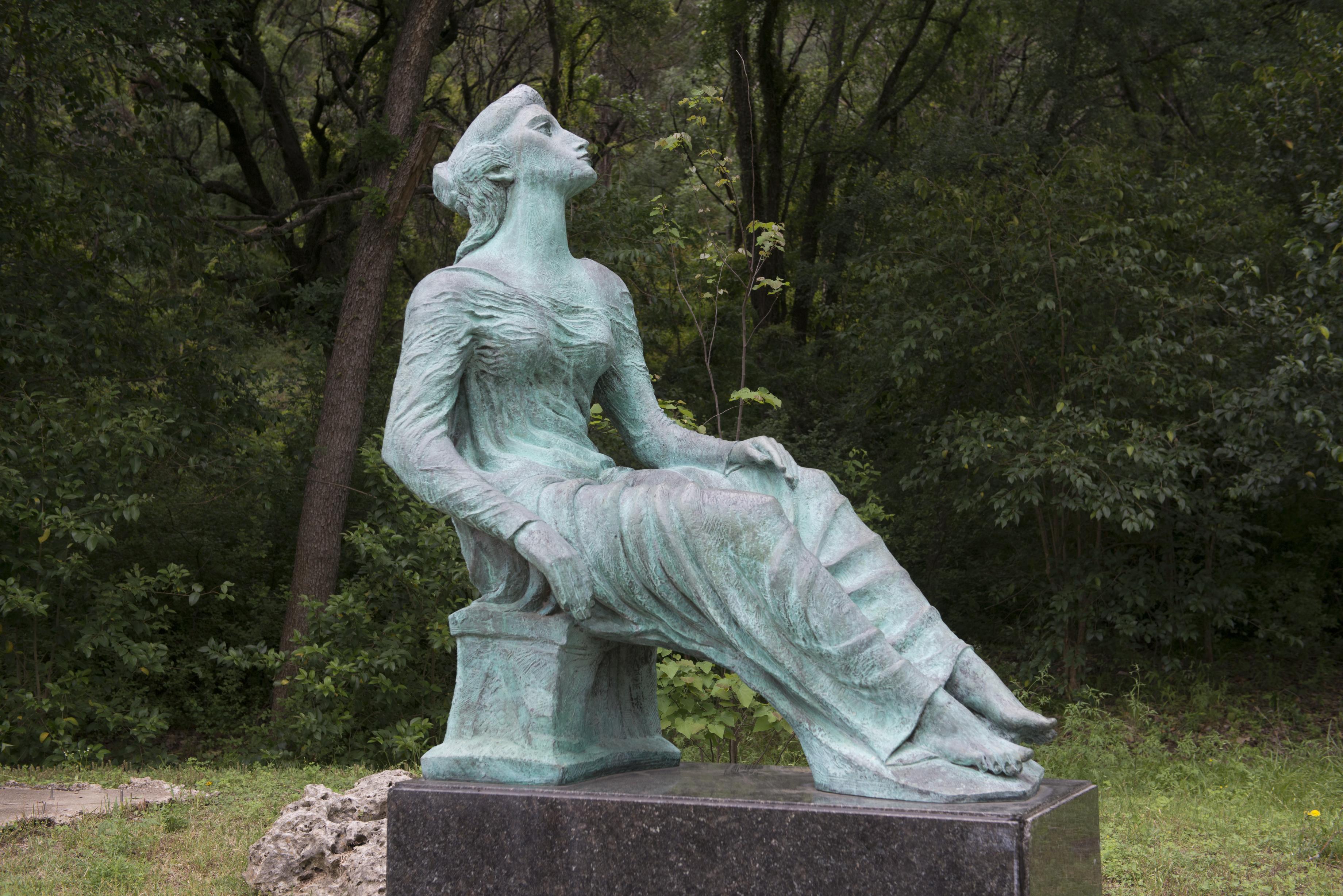
UMLAUF's shaded sculpture garden along Barton Creek
The draw: Works by sculptor Charles Umlauf (1911-1994) displayed in a shaded garden setting near Barton Springs. Unlike most sculpture parks, pieces here can be touched—a rare sensory experience. The intimate scale provides a meditative counterpoint to larger institutions.
Insider tip: Combine with a visit to nearby Barton Springs Pool or the Zilker Botanical Garden.
Mexic-Arte Museum
📍 419 Congress Avenue, Austin, TX 78701
🕐 Thursday-Saturday 12-6pm, Sunday 12-5pm
💵 $7 adults, $4 students/seniors, FREE under 12
The draw: The official Mexican and Mexican-American fine art museum of Texas. Programming spans traditional and contemporary work, with particular strength in prints, photography, and mixed media. Annual Día de los Muertos celebration is a major Austin cultural event.
The draw: The preserved studio of German-born sculptor Elisabet Ney (1833-1907), who created portrait sculptures of Texas legends including Sam Houston and Stephen F. Austin. The building itself—designed by Ney and built in 1892—is the real attraction, a stone fortress filled with plaster casts and original works.
Planning Your Museum Days
Austin's museum district, centered around the UT campus and Congress Avenue corridor
Logistics
Getting around: Austin's museums are spread across the city. The Blanton and Bullock are walkable from each other (about 15 minutes); Laguna Gloria and UMLAUF require driving. Public transit exists but doesn't serve museum districts efficiently.
Parking summary:
Museum
Cost
Notes
The Blanton
FREE (2 hours with validation)
Enter from MLK
Jones Center
Paid street/garage
Downtown Austin rates
Laguna Gloria
FREE
Limited spaces
Bullock
$15-25
UT game days higher
UMLAUF
FREE
Small lot
Austin weather: Outdoor venues (Laguna Gloria, UMLAUF) are best in spring (March-May) or fall (October-November). Summer heat is serious—hydrate, seek shade, and time outdoor visits for morning or late afternoon.
What to Wear
Austin museums are casual. Comfortable walking shoes are essential—you'll cover significant ground. At Laguna Gloria, bring shoes suitable for trails and hills.
The Blanton Museum of Art is widely considered Austin's premier art museum, housing nearly 21,000 works including one of the finest Latin American modernism collections in the US, plus Ellsworth Kelly's "Austin" — the artist's only building and his final masterpiece. For Texas history, the Bullock Texas State History Museum is unmatched. For contemporary art, The Contemporary Austin (Jones Center + Laguna Gloria) leads.
Are there free museum days in Austin?
Yes. The Blanton offers free admission every Tuesday (Moody Family Free Day). The Contemporary Austin offers free admission every Thursday at both the Jones Center and Laguna Gloria. The Bullock occasionally offers free days — check their website. The Elisabet Ney Museum, Mexic-Arte Museum (first Thursday evenings), and the Texas State Capitol are always free.
What is the Ellsworth Kelly building at the Blanton?
"Austin" is a 2,715-square-foot stone building designed by abstract artist Ellsworth Kelly — the only building he ever designed. Completed in 2018 after Kelly's death in 2015, it features 33 colored glass windows that cast shifting light patterns throughout the day. Photography is strictly prohibited inside. It's free with Blanton admission and has become a pilgrimage site for art and architecture lovers worldwide.
"Austin" is a 2,715-square-foot stone building designed by abstract artist Ellsworth Kelly — the only building he ever designed.
How long does it take to visit the Blanton Museum?
Plan 2-3 hours for a thorough visit including the main galleries and Ellsworth Kelly's "Austin" building. Art enthusiasts may want more time, especially for the Latin American and contemporary collections. Visit at different times of day to experience how light transforms Kelly's building.
Is the Bullock Museum good for kids?
Yes. The Bullock is one of Austin's most kid-friendly museums with interactive exhibits, the Texas Spirit Theater (a special effects show), and a giant-screen IMAX theatre showing both documentaries and feature films. The three floors progress from early Texas history to modern times with engaging hands-on elements throughout.
Can I visit the Blanton and Bullock in one day?
Yes — they're only about a 10-minute walk apart, both near the UT campus. Start at the Blanton when it opens at 10am (allow 2-3 hours), then walk to the Bullock for afternoon (2-3 hours). Add the Contemporary Austin's Jones Center downtown (1-2 hours) if you have energy. On Tuesdays, the Blanton is free, making it the ideal day for this combined trip.
What should I see at the Bullock Texas State History Museum?
Don't miss the first-floor exhibit on early Texas history, which includes genuine artifacts from Spanish colonization. The second floor covers the Civil War through the oil boom era. The third floor features modern Texas. The Texas Spirit Theater show is uniquely immersive. Allow 30 minutes before your visit to browse the excellent museum store.
Does the Contemporary Austin have two locations?
Yes. The Jones Center (700 Congress Avenue) is the downtown indoor gallery focused on exhibitions and installations. Laguna Gloria (3809 W 35th Street) is the 14-acre outdoor sculpture park on Lake Austin, also featuring the historic 1916 Driscoll Villa. A single ticket covers both venues on the same day. Both are free on Thursdays.
Where should I park for Austin museums?
The Blanton has a paid visitor lot off MLK Boulevard. Street parking near UT campus is limited on weekdays. The Bullock has a paid garage. The Jones Center has nearby parking garages in the 2nd Street District. Laguna Gloria has a free on-site lot. Consider rideshare for downtown museums.
The Jones Center has nearby parking garages in the 2nd Street District.
Museums inspire acquisition. Seeing great art creates the desire to live with it.
If your museum visits awaken collecting impulses, explore Austin Gallery's curated collection—works selected with the same care these museums bring to their holdings. Whether you're drawn to Texas artists, contemporary voices, or emerging talent, we can help you find pieces that matter.