How to Build Your Eye: Training Yourself to Spot Quality Art (Collector's Training)
A comprehensive guide to developing your eye for quality art. Learn the science of visual perception, practical training techniques, technical quality markers for paintings, prints, and sculpture, red flags to avoid, and exercises to build lifelong connoisseurship.
By Austin Gallery
Whether you have just inherited a collection from a family member or you are standing in a gallery for the first time wondering what separates a masterful painting from a forgettable one, the answer comes down to something deceptively simple: your eye. Not your taste, not your budget, not the opinion of the person standing next to you. Your eye. It is a skill, not a gift, and like any skill it can be trained, sharpened, and refined over time. At Austin Gallery, we work with collectors and consignors every day, and the ones who build the most rewarding collections are the ones who invested time in learning how to really look at art. This guide will walk you through exactly how to do that.
Why "Having an Eye" Matters More Than Having a Budget
You can spend ten thousand dollars on a painting that depreciates the moment you hang it, or you can spend five hundred on a piece that appreciates in both value and meaning over decades. The difference is almost never about price. It is about whether the buyer understood what they were looking at.
Having a trained eye means you can walk into an estate sale, a gallery opening, or an auction preview and quickly assess whether a work has real quality behind it. You will notice things that casual viewers miss: the confidence of a brushstroke, the subtlety of a color relationship, the intelligence of a composition. Over time, these observations compound into genuine connoisseurship.
If you are just starting out, our beginner's guide to art investing covers the financial side of collecting. This article is about something more fundamental: teaching your brain to see.
If you are just starting out, our beginner's guide to art investing covers the financial side of collecting.
The Five Pillars of Quality in a Work of Art
When we evaluate work at Austin Gallery for consignment, we look at five core qualities. These are the same qualities that museum curators, auction house specialists, and experienced collectors have used for centuries.
1. Composition: The Architecture of the Image
Composition is how the artist organized every element within the frame. A strong composition guides your eye through the work in a deliberate way. It creates balance, tension, rhythm, and resolution, often all at once.
Look for these markers of strong composition:
Intentional focal points. Your eye should be drawn somewhere specific, not left wandering aimlessly.
Dynamic balance. The best compositions are not perfectly symmetrical. They achieve balance through the interplay of weight, color, and negative space.
Depth and layering. Even in abstract work, skilled artists create a sense of spatial depth, something in front, something behind, something receding.
Edge awareness. Pay attention to how elements interact with the edges of the canvas. Amateur work often ignores the edges entirely, while accomplished artists treat the boundary as part of the design.
A good exercise: stand in front of a painting and trace the path your eye naturally follows. If it moves through the piece in a satisfying arc, returning to different areas and discovering new details, the composition is working.
2. Color Harmony and Intention
Color is one of the most emotionally powerful tools an artist has, and one of the easiest places to spot the difference between skilled and amateur work.
Quality art demonstrates color intention. Every hue, every value shift, every temperature change is there for a reason. Look for:
Controlled palettes. Strong artists limit their palettes deliberately. A painting that uses every color on the wheel often lacks discipline.
Value structure. Squint at the work until the colors blur. Can you still read the image? If yes, the artist built a strong value structure underneath the color, which is a hallmark of training.
Temperature shifts. Warm and cool colors create spatial depth and emotional resonance. Notice whether shadows lean cool (blues, purples) and highlights lean warm (yellows, oranges), or vice versa. Intentional temperature shifts show sophistication.
Color mixing quality. In paintings, look at how colors are mixed. Muddy, overworked color suggests an artist who struggled. Clean, confident color mixing, even in muted palettes, signals experience.
John Berger's Ways of Seeing remains one of the most transformative books on understanding how we perceive visual art, including color. It will permanently change the way you look at any image.
This is where many new collectors start, and for good reason. Technical skill is often the most visible indicator of quality, though it is not the only one.
In paintings, examine:
Brushwork confidence. Accomplished painters place strokes with authority. Each mark does work. Amateur painters tend to overwork areas, blending and re-blending until the surface looks tired.
Edge quality. Notice the transitions between shapes. Are some edges sharp and others soft? This variety is a sign of training, since beginners tend to make every edge the same.
Surface integrity. Step to the side and look at the painting in raking light. A well-made painting has an intentional surface texture. Cracks, flaking, or uneven varnish may indicate poor materials or aging issues.
In prints and works on paper, look for:
Registration. In multi-color prints, check whether the colors line up precisely. Poor registration is a sign of careless production.
Edition numbering. Original limited-edition prints are numbered (e.g., 12/50). Lower edition numbers do not inherently mean higher value, but the presence of proper numbering, the artist's pencil signature, and the printer's chop mark all indicate a legitimate, intentional print.
Paper quality. Archival, acid-free papers hold up over time. Yellowing, foxing (brown spots), or brittleness suggest either poor materials or improper storage.
In sculpture and three-dimensional work, assess the finish quality, the stability of the piece, and whether joints, welds, or seams are handled intentionally or sloppily.
4. Originality and Artistic Voice
Technical skill alone does not make great art. The fourth pillar is originality: does this work have something to say that feels genuinely its own?
This is harder to evaluate early in your collecting journey, which is exactly why building context matters so much. The more art you see, the more easily you recognize when something is derivative versus when it breaks new ground.
Ask yourself:
Have I seen this exact approach many times before, or does something about it surprise me?
Does the artist have a recognizable voice, a way of working that feels consistent and intentional across multiple pieces?
Is the work in conversation with art history, responding to or building on what came before, rather than simply copying it?
For building this kind of contextual knowledge, E.H. Gombrich's The Story of Art is unmatched. It traces the full arc of art history in clear, engaging prose, giving you the framework to understand where any work fits in the larger story. Our guide to understanding art movements is a useful companion piece.
A technically brilliant painting in poor condition is a problem. Condition assessment is a critical skill that separates confident collectors from those who end up with expensive restoration bills.
Condition red flags to watch for:
Tears, punctures, or dents in the canvas
Flaking or cracking paint (called "craquelure" when it is age-related, which can be acceptable in older works, versus active flaking, which is not)
Discolored or uneven varnish, which can obscure the artist's original color choices
Water damage or tide lines
Fading, especially in works on paper or watercolors exposed to UV light
Poor previous restoration, such as retouching that does not match the surrounding area
Provenance, the documented history of who owned the work and when, is equally important. Strong provenance includes:
Exhibition labels or stamps on the reverse
Gallery labels, stickers, or inventory numbers
Documentation such as receipts, letters, or catalog entries
Continuous ownership history without suspicious gaps
A work with solid provenance from known galleries, auction houses, or collections is far more trustworthy than one with no history. This is especially relevant when evaluating estate collections, where documentation may be scattered or incomplete.
Understanding Mediums: What You Are Actually Looking At
One of the fastest ways to sharpen your eye is to understand the basic differences between artistic mediums. Each has distinct characteristics, and knowing what to expect helps you assess quality within that medium.
Austin Art Insider
Free weekly guide to galleries, exhibitions & collecting in Austin.
Oil Paint
Oil is the classic fine art medium, prized for its richness, depth, and slow drying time, which allows for extensive blending and reworking. Quality oil paintings have:
Luminous depth of color (oils become more transparent over time, creating a glow)
Visible brushwork texture (impasto in thick areas, thin glazes in others)
A characteristic sheen when varnished
Oils require proper stretching, priming, and framing. An oil painting on unprimed canvas or cheap stretcher bars suggests the artist did not invest in their own materials, which should give you pause.
Acrylic Paint
Acrylics dry quickly and can mimic many effects of oil, but they have a distinctly different surface quality. Acrylics tend to sit on top of the surface rather than sinking into it, and they dry to a more uniform, plastic-like sheen. This is not a negative; many outstanding contemporary artists work primarily in acrylic. Just know what you are looking at so you can evaluate it on its own terms.
Watercolor is unforgiving. There is no covering mistakes because the medium relies on the white of the paper showing through transparent washes. For this reason, a truly accomplished watercolor is often a more impressive technical feat than an oil painting of equivalent subject matter. Look for confident, unfussy washes, clean color, and a sense of light created by the paper itself.
Prints and Multiples
Prints encompass a vast range: woodcuts, etchings, lithographs, screen prints, giclees, and more. The key distinction is between original prints (where the artist created the printing matrix as the artwork itself) and reproductions (photographic copies of a painting or drawing).
Original prints are artworks. Reproductions are posters.
Learn to tell the difference by examining the surface closely. Original prints have:
Plate marks (an indentation from the press, visible in etchings and engravings)
Ink texture that sits on top of the paper surface
Pencil-signed edition numbers and the artist's signature below the image
Subtle variations between impressions (no two are perfectly identical)
Reproductions, by contrast, show a uniform dot pattern under magnification (from offset or digital printing) and lack any impression from a press.
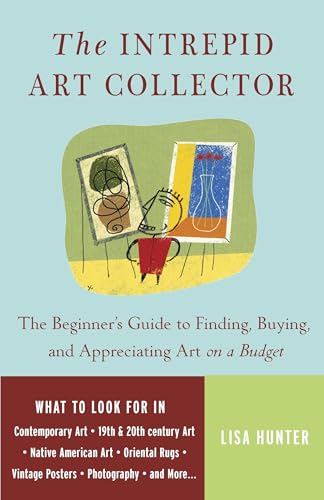
Lisa Hunter's The Intrepid Art Collector has excellent practical checklists for evaluating different mediums, especially for buyers on a budget.
Red Flags: How to Spot Fakes, Reproductions, and Misattributions
As your eye develops, you should also train it to recognize warning signs. The art market, like any market, has its share of misrepresentations.
Common red flags:
Signatures that look "placed on" rather than integrated. A real signature is part of the painting process. A fake signature often sits awkwardly on top of dried paint or varnish.
Provenance that is too vague. "Found in a European collection" with no further detail is not provenance.
Prices that seem too good to be true. A genuine Picasso print does not show up at a garage sale for fifty dollars. Or rather, it can, but the odds are astronomically against it.
Condition inconsistent with age. A painting claimed to be from the 1800s that shows no craquelure, no patina, and has bright modern pigments is almost certainly not what it claims to be.
UV light reveals hidden details. Under ultraviolet light, old varnish fluoresces green, while newer retouching appears dark. Many experienced collectors carry a small UV flashlight to previews.
Inconsistent framing. Quality artwork is typically in quality framing. An expensive painting in a cheap frame (or vice versa) can be a clue that something is off, though this alone is not definitive.
For a deeper understanding of the art market's dynamics, including how to protect yourself from these pitfalls, Doug Woodham's Art Collecting Today draws on interviews with auction house specialists, dealers, and collectors to give you an insider's perspective.
Galleries like Austin Gallery evaluate consignment pieces based on:
Quality of execution
Market demand and comparable sales
Condition and presentation readiness
Artist reputation and exhibition history
Authenticity confidence
When we assess a work for consignment, we are essentially asking: will a knowledgeable collector want to own this? Training your eye to ask the same question is one of the most valuable skills you can develop.
Exercises to Train Your Eye
Reading about art appreciation is useful, but the real learning happens through practice. Here are specific exercises that will accelerate your development.
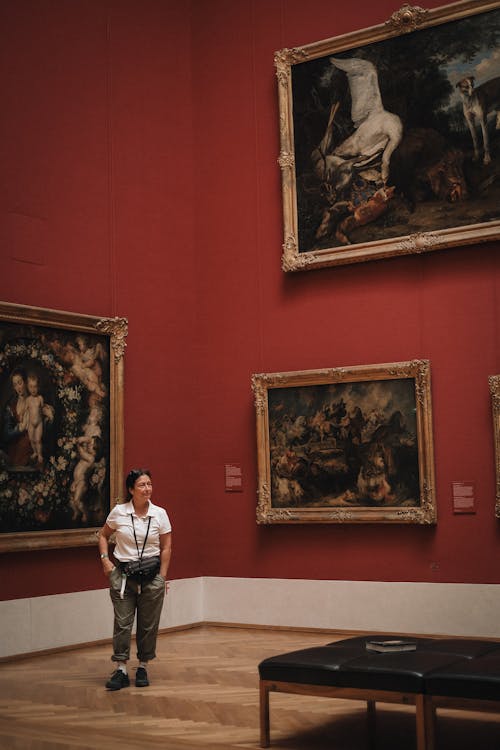
Exercise 1: Museum Visits with a Notebook
Visit a museum and choose one gallery room. Spend at least thirty minutes there. In a notebook, write down:
Which work in the room you are most drawn to and why
Which work you like least and why
Three specific observations about technique, color, or composition in your favorite piece
Do this regularly, and review your notes over time. You will be astonished at how your observations deepen.
Pick an artist and look at ten or more of their works side by side (museum websites and auction records make this easy). You will start to see their consistent qualities, their growth over time, and the difference between their strongest and weakest efforts. This comparative skill transfers directly to evaluating work by unfamiliar artists.
Christie's past auction results and Sotheby's sold lots are invaluable for this exercise. Study the catalog descriptions, too; they are written by specialists and will teach you the vocabulary of connoisseurship.
Exercise 3: Study Auction Catalogs
Major auction houses produce detailed catalogs for their sales, often with scholarly essays, condition reports, and provenance documentation. Reading these catalogs, even for sales you will never bid in, is one of the best educations in art evaluation available. Many are accessible online after the sale.
Exercise 4: Handle Art When Possible
With permission, handle art. Turn a framed work around and look at the back. Pick up a piece of pottery and feel its weight and balance. The more sensory information you gather, the better your instincts become. This is why visiting open studios, art fairs, and galleries where you can get close to the work is so important.
Exercise 5: Read Widely and Consistently
Build a small library of essential references. Beyond the titles already mentioned, Magnus Resch's How to Collect Art is an excellent modern guide that covers the practical and strategic aspects of building a collection in today's market.
Framing is often overlooked, but it tells you a great deal about how the previous owner valued the work.
Quality framing indicators:
Acid-free matting and backing (prevents yellowing and deterioration of works on paper)
UV-protective glass or acrylic (museum glass reduces glare and blocks harmful light)
Proper spacers between the glass and the artwork surface (no glass should touch the art directly)
Solid wood frames rather than lightweight composites
Conservation framing techniques that are reversible and do not damage the artwork
A beautifully framed work in conservation-grade materials tells you the previous owner cared enough to protect their investment. A work crammed into a cheap frame with acidic mat board suggests either ignorance or indifference, and may have caused damage to the piece itself.
Putting It All Together
Training your eye is not a destination. It is a practice. Even after decades in the gallery business, I still see things I missed before, still learn from other collectors and colleagues, still get surprised by a work that challenges what I thought I knew.
The key is to start. Visit galleries and museums. Read. Look at auction results. Handle art. Talk to dealers and artists. Keep a notebook. Be honest about what moves you, even if it is not what you think you are supposed to like.
If you are just beginning to build a collection, our guide to starting a small art collection pairs well with the eye-training exercises above. And if you have inherited a collection and want a professional assessment of what you have, contact Austin Gallery for a complimentary consultation. We are always happy to help you see what you are looking at.
The art world rewards curiosity, patience, and attention. Your eye will develop faster than you think, and once it does, you will never look at a wall the same way again.
Pro Tip
Spend 5 minutes with one painting rather than 30 seconds with ten. Deep looking trains your eye faster than quick scanning.
Spend 5 minutes with one painting rather than 30 seconds with ten.
Share
Austin Art Insider
Free weekly guide to galleries, exhibitions & collecting in Austin.
Consignment
Have Art You Want to Sell?
Free appraisals, zero upfront fees, nationwide service from Austin, Texas.