Austin Gallery

Photography

Best Drones for Beginners 2026: DJI Mini 4K Leads 12 Picks

The sub-249-gram revolution made first drones astonishingly good: real 4K, mechanical gimbals, auto return-to-home, and no FAA registration for recreational flyers. We ranked twelve, from an $80 crash-proof trainer to the 1-inch-sensor Mini 5 Pro, with self-flying picks for people who never wanted to pilot anything.

By Justin ParkJuly 20, 202616 min readHow we research

The short answer: the best drone for beginners in 2026 is the DJI Mini 4K ($229). It weighs under 249 grams, so recreational flyers in the US do not need to register it with the FAA, it shoots true 4K on a mechanical 3-axis gimbal, and it flies itself home when the battery gets low or you get nervous. If you will fly often, the Fly More Combo ($339) adds two more batteries and a bag. If you mostly want footage of yourself, skip piloting entirely with the DJI Neo ($139) or the HOVERAir X1 ($299). The full reasoning, and eight more picks, below.

Best Beginner Drones 2026: Which Should You Buy?

Your situationBuy thisPrice
First real camera drone, best all-around valueDJI Mini 4K$229.00
You know you will fly every weekDJI Mini 4K Fly More Combo$339.00
You want footage of yourself, not a piloting hobbyDJI Neo$139.00
Flying near family, kids, and gatheringsDJI Flip$349.00
Vertical video for Reels and TikTokDJI Mini 3$419.00
One drone for the next five yearsDJI Mini 5 Pro$683.00
Solo athlete who needs chase footageHOVERAir X1 PRO$679.00
Best drone under $200 that is not DJIPotensic ATOM SE$195.45
A kid's first drone, crashes expectedHoly Stone HS440$79.99

Beginner drones in 2026 are astonishingly good, and the reason is a single number: 249 grams. Because US recreational rules draw a registration line at 250 grams, every manufacturer has spent years cramming real cameras, real gimbals, and real safety systems under that weight. The result is a class of sub-$700 aircraft that outfly the professional rigs of a few years ago, led, honestly and by a wide margin, by DJI's Mini line, with self-flying cameras from HOVERAir and value alternatives from Potensic filling in the edges DJI leaves open.

We ranked twelve drones for first-time pilots on image quality, ease of flying, safety systems, honest total cost, and how forgiving they are of the mistakes every new pilot makes. Every link goes to Amazon with our affiliate tag; we earn a small commission, at no cost to you, when you buy through us. The rest of the aerial-and-ground kit lives in our photography gear hub, our action cameras guide, and our gimbals guide.

In a Hurry?

The 3 picks that cover most readers. Tap to read the full review or buy direct.

Best Overall

DJI Mini 4K

DJI Mini 4K

$229.00

True 4K on a mechanical gimbal, under 249g, GPS auto-return. The default first drone.

Best Budget

DJI Neo

DJI Neo

$139.00

Palm-launch self-flying 4K camera that films you. No piloting skill required.

Upgrade Pick

DJI Mini 5 Pro

DJI Mini 5 Pro

$683.00

1-inch sensor and all-direction obstacle avoidance, still under 249 grams.

Best OverallOur Pick

Weight

Under 249 g

Camera

4K UHD, 3-axis mechanical gimbal

Flight time

31 min per battery (listed)

Transmission

10 km (listed)

Safety

GPS auto return-to-home

Pros

  • True 4K on a mechanical 3-axis gimbal at $229
  • Under 249g: no FAA registration for recreational flyers
  • GPS return-to-home and level-5 wind resistance
  • QuickShots automate cinematic moves for new pilots

Cons

  • No obstacle avoidance sensors
  • Single battery limits an outing to one flight

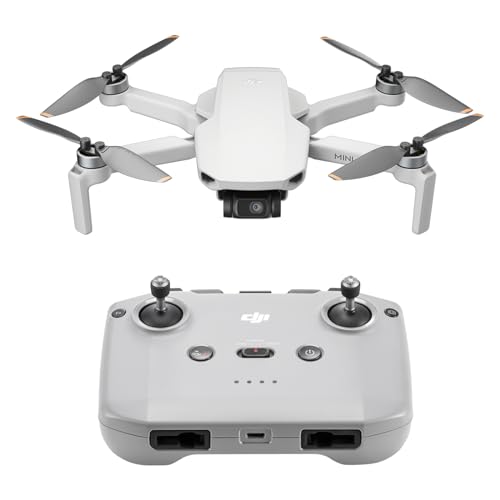
For years the honest advice to beginners was "buy a cheap trainer, crash it, then buy a DJI." The Mini 4K ended that era. At $229 it costs what mediocre trainers cost, but it flies like the premium Minis it descends from: rock-steady GPS hover, a mechanical 3-axis gimbal that irons out wind and stick jitter, and footage that looks composed even when your piloting is not. The first clip a new pilot pulls off this drone is usually the moment they understand why DJI owns this market.

Why the weight matters: the Mini 4K takes off under 249 grams, which keeps it below the FAA's 250-gram registration threshold for recreational flyers in the US. You still need to pass the free online TRUST test and follow the recreational rules, but there is no registration fee or paperwork for the aircraft itself when you fly it recreationally. That single spec is why the entire Mini category exists.

The feature set reads like a wishlist for nervous first-timers. GPS return-to-home brings the drone back automatically on low battery or lost signal. QuickShots (Dronie, Circle, Helix, Rocket) fly preprogrammed cinematic moves at the tap of a button, so your footage looks intentional on day one. Level-5 wind resistance means a gusty afternoon does not end the session. The honest gaps are obstacle avoidance, which no drone at this price has, and battery count: one battery is one flight, and you will want more. That is exactly why our next pick exists. If you plan to shoot ground footage on the same outings, our vlogging cameras guide and camera tripods guide cover the rest of the kit.

Our Pick

The best first drone money can buy, full stop. Real 4K video on a mechanical 3-axis gimbal, a sub-249-gram takeoff weight that keeps recreational flyers out of FAA registration paperwork, GPS auto-return, level-5 wind resistance, and 31 minutes per battery, all for $229. Nothing else at the price comes close to this combination.

Buy this if you want your first drone to shoot footage you would actually show people. The Mini 4K is the entry point to DJI's Mini line, which means the camera rides a true mechanical gimbal instead of relying on electronic smoothing, the video transmission holds a clean feed out to a listed 10km, and the drone flies itself home when the battery runs low or the signal drops. It is the drone we recommend to every beginner who asks.

What we don't like

One battery means roughly 25 real-world minutes of flying per outing unless you buy spares (the Fly More Combo below solves this), there is no obstacle avoidance at this price, and the fixed f/2.8 lens is merely good in low light rather than great.

Best Value BundleBest Value

Weight

Under 249 g

Camera

4K UHD, 3-axis mechanical gimbal

Batteries

3 (93 min total, listed)

Includes

Charging hub, spare props, carry bag

Transmission

10 km (listed)

Pros

  • Three batteries: an hour and a half of total flight
  • Charging hub tops up packs in rotation
  • Bag and spare props included
  • $110 premium is less than buying parts separately

Cons

  • Same no-obstacle-avoidance aircraft
  • Overkill for the fly-twice-a-year owner

The dirty secret of drone ownership is that flight time, not camera specs, decides how much you enjoy it. Twenty-five real minutes goes by shockingly fast when you are learning: a few minutes of nervous hovering, a few QuickShots, one scenic push toward the tree line, and the battery warning is already chirping. The Fly More Combo exists because DJI knows exactly how that first outing goes. Three batteries and the rotating charging hub mean the session ends when you are done, not when the drone is.

The bundle math holds up. Bought separately, two extra batteries, a hub, propellers, and a decent bag would clear the $110 difference with room to spare, and the combo's bag is genuinely good: compact, structured, with cutouts for everything. Our advice tracks how you answered one question at the top of this guide: if flying is going to be a hobby, buy the combo and never think about batteries again; if it is an experiment, buy the solo Mini 4K and upgrade your battery count once the hobby sticks. Either way you are flying the best beginner airframe on the market. Pack it alongside your camera kit in one of our photography backpacks and the whole rig travels as one bag.

Best Value

The same best-in-class beginner drone with the single most important accessory tripled: batteries. Three packs, a charging hub, spare propellers, and a carry bag for $110 over the solo drone. Almost everyone who buys the solo Mini 4K ends up buying batteries anyway; the combo just does the math for you upfront.

Buy this if you already know you will fly regularly. A single battery gives you one roughly 25-minute session and then the outing is over; three batteries turn a trip to the park into a real hour-plus shoot with the hub recharging packs as you go. The included bag also solves the how-do-I-carry-this problem on day one.

What we don't like

It is the same aircraft with the same limitations: no obstacle avoidance and a good-not-great sensor in dim light. And if you genuinely only plan to fly a few times a year, the solo drone plus one spare battery later is the cheaper path.

Best Under $150Best Budget

Weight

135 g

Camera

4K UHD, stabilized

Control

Palm takeoff, app, or optional controller

Modes

Follow, orbit, and auto subject tracking

Safety

Full propeller guards

Pros

  • Real DJI 4K drone for $139
  • Palm takeoff and landing, no controller needed
  • Follows and films you automatically
  • Guarded props are safe around people and pets

Cons

  • Electronic stabilization, not a 3-axis gimbal
  • Light weight means modest wind tolerance

The Neo answers a question most beginners do not realize they are asking: do you want to fly, or do you want footage? A traditional drone makes you the pilot; the Neo makes you the subject. Set it to Follow, toss it off your palm, and it trails you down the trail at a steady distance, framing you against the scenery. When you stop, it hovers and waits. Hold out your hand and it lands. For runners, cyclists, and creators who want third-person shots without a camera operator, this is the cheapest ticket in existence.

DJI made the right compromises to hit $139 and 135 grams. The camera shoots real 4K and the stabilization is respectable, but it is electronic smoothing on a single-axis mount, so expect good social-media footage rather than the glassy cinema look of the Mini line. The full prop guards are the underrated spec: this is the one drone in this guide we would comfortably fly indoors or near a group. If you outgrow it into piloted flying, the Mini 4K is the natural next step; plenty of owners end up with both, one to fly and one that flies itself. Grab a fast microSD card from our SD cards guide either way, because 4K fills small cards quickly.

Best Budget

The cheapest real DJI drone ever made, and a genuinely different idea of what a beginner drone is. The Neo weighs 135 grams, takes off from your palm, follows you automatically, and shoots stabilized 4K, no controller required. It is less an aircraft you pilot and more a flying camera that films you.

Buy this if the thing you actually want is footage of yourself: cycling, skating, hiking, shooting content. Tap a mode on the drone itself, toss it up from your palm, and it orbits, follows, or tracks you and lands back in your hand. Full propeller guards mean it is safe around people, and at 135 grams it is far below any registration threshold for recreational flyers.

What we don't like

Stabilization is single-axis plus electronic, so footage is good rather than Mini-gimbal gorgeous, wind tolerance is modest at this weight, and free-flight range on phone control alone is short. It is brilliant at its job and mediocre if you force it to be a traditional camera drone.

Safest Around PeopleAlso Great

Weight

Under 249 g

Camera

4K UHD, 3-axis gimbal

Guards

Built-in fold-away full prop guards

Sensing

Forward obstacle detection

Transmission

13 km (listed)

Pros

  • Permanently guarded props: safest Mini-class drone
  • Forward obstacle sensing at a beginner price
  • True 3-axis gimbal 4K, unlike toy-grade safe drones
  • Palm takeoff for quick unpiloted clips

Cons

  • $120 over the Mini 4K
  • Guards cost some agility and wind resistance
  • Sensing is forward-only

Every beginner drone pitch skips past the thing beginners actually fear: four spinning blades near their kid's face. The Flip is DJI's direct answer. Its rotors live inside permanently attached guards that fold like an umbrella frame, so the drone that lands in your palm or brushes a shoulder does so with plastic hoops leading, not blades. Add forward obstacle sensing, which the cheaper Minis lack entirely, and the Flip is the drone we point at parents, teachers, and anyone flying where people gather.

What makes it more than a safety gimmick is that the camera is genuinely good: a real 3-axis mechanical gimbal carrying a 4K sensor that produces footage in the same league as the Mini 4K. You give up a little in the air, because the guards add drag and catch wind, and the price steps up to $349. Whether that premium is worth it comes down to where you fly. Empty fields and open shorelines favor the cheaper Mini 4K; backyards, parks, and family beach days favor the Flip. For most nervous first-timers, the guards pay for themselves in confidence, and confident pilots fly more. Pair it with a shoulder-friendly camera strap setup for the rest of your kit and you can run the whole shoot solo.

Also Great

The drone for the beginner whose nightmare is the propellers, not the flying. The Flip wraps all four rotors in permanent fold-away guards, adds forward obstacle sensing, palm takeoff, and a proper 4K camera on a 3-axis gimbal, and still ducks under 249 grams. It is the Mini 4K's cautious, slightly fancier sibling.

Buy this if you will fly around family, at gatherings, or anywhere people wander into frame. The full-coverage guards make contact a non-event rather than an incident, and the forward-facing sensing helps it stop before it meets the tree you did not see. It also palm-launches like the Neo, so quick clips do not even require unfolding the controller.

What we don't like

It costs $120 more than the Mini 4K for similar image quality, the guards add drag that trims agility and wind performance, and obstacle sensing is forward-only, so it will still happily reverse into a branch.

Best Step-Up Camera on a BudgetAlso Great

Weight

Under 249 g

Sensor

1/1.3-inch CMOS, dual native ISO

Flight time

38 min per battery (listed)

Vertical

True 90-degree rotating gimbal

Transmission

10 km (listed)

Pros

  • Larger sensor: visibly better dusk and HDR footage
  • True full-resolution vertical video
  • 38-minute listed flight time
  • Still under 249g

Cons

  • No obstacle avoidance at $419
  • Close enough to Mini 5 Pro pricing to cause doubt

Somewhere between "my first drone" and "my drone is my camera," there is the Mini 3. Its 1/1.3-inch sensor is the meaningful spec: physically larger than the Mini 4K's, with dual native ISO that lets it hold highlight and shadow detail in the high-contrast scenes drones love, sunsets, water glare, city dusk. Side by side at golden hour, the Mini 3's files are the ones you grade; the Mini 4K's are the ones you post as-shot. If you already edit your footage, the difference is worth real money.

The rotating gimbal is the other headline. Every platform that pays creators now favors vertical video, and the Mini 3 is the cheapest DJI that shoots true full-resolution portrait clips instead of cropped ones. Against that, the missing obstacle avoidance keeps it firmly in confident-pilot territory, and its price invites an awkward staring contest with the Mini 5 Pro below. Our take: the Mini 3 is the value sweet spot for social creators who fly carefully, and the 5 Pro is for those who want the safety net too. Either way, our beginner mirrorless guide covers the ground camera that matches this ambition level.

Also Great

The image-quality upgrade that stays friendly. The Mini 3 steps up to a larger 1/1.3-inch sensor with dual native ISO for real HDR footage, stretches flight time to a listed 38 minutes, and rotates its camera for true vertical shooting, the feature social-first creators end up caring about most.

Buy this if your footage is headed for Reels, TikTok, or Shorts. Cropping horizontal drone footage to vertical throws away most of the frame; the Mini 3's gimbal physically rotates ninety degrees and captures full-resolution portrait video. The bigger sensor also buys visibly cleaner golden-hour and dusk footage than the Mini 4K.

What we don't like

Still no obstacle avoidance, which stings more at $419 than at $229, and the price sits close enough to the Mini 5 Pro's territory that committed buyers should read our next two picks before deciding.

Best Upgrade PickUpgrade Pick

Weight

Under 249 g

Sensor

1-inch CMOS

Sensing

Omnidirectional obstacle avoidance

Video

4K HDR

Transmission

Long-range O4 class (listed)

Pros

  • 1-inch sensor: premium-compact image quality
  • Obstacle avoidance in every direction
  • Still under the 249g registration threshold
  • Tracking and automated modes mature and reliable

Cons

  • Serious money for a first drone
  • Single battery in the base package

Every few years a Mini arrives that makes the bigger drones nervous, and this is the current one. A 1-inch sensor used to demand an airframe heavy enough to register, insure, and worry about; the Mini 5 Pro packs it under 249 grams. The practical result is footage with the clean shadows and unclipped skies you otherwise need a much larger drone to get, in a package that still slips into a jacket pocket and, for recreational flyers, still avoids FAA aircraft registration.

For beginners specifically, the omnidirectional obstacle sensing is the bigger deal than the sensor. New pilots rarely crash flying forward; they crash drifting sideways or backward while staring at the framing on their phone. The Mini 5 Pro watches all of it and brakes before contact. That is worth real money in avoided repairs and avoided fear. The honest question is whether a first-timer should spend $683 at all, and our answer is: only if you already know footage is the point. If you are still deciding whether drones are for you, start with the Mini 4K and trade up later; DJI resale values are famously kind. If the footage is the job, buy this and skip the middle step. Round out the kit with a proper high-speed SD card, because 4K HDR bitrates punish slow storage.

Upgrade Pick

A 1-inch sensor and all-direction obstacle avoidance in a sub-249-gram airframe. The Mini 5 Pro is the first Mini that shoots like DJI's big Air-series drones while keeping the registration-free weight class, and its omnidirectional sensing is the feature that saves beginners from their most expensive mistakes.

Buy this if you want one drone for the next five years. The 1-inch sensor is the same class of chip that premium compact cameras use, which means clean low-light footage, real dynamic range, and files that hold up in serious edits. Meanwhile the obstacle sensing watches every direction, so the classic beginner disaster, backing into a branch while framing a shot, mostly stops being possible.

What we don't like

It is three Mini 4Ks worth of money, the advanced modes have a learning curve, and the drone-only package leaves you one battery deep; the Fly More Combo below fixes that at a price.

Austin Art Insider

Free weekly guide to galleries, exhibitions & collecting in Austin.

Best Buy-Once KitAlso Great

Weight

Under 249 g

Sensor

1-inch CMOS

Remote

DJI RC 2 with built-in screen

Batteries

3, with charging hub

Includes

Carry bag, spare props

Pros

  • Screen remote: no phone, perfect sunlight visibility
  • Three batteries and hub for full sessions
  • Everything in one purchase and one bag
  • Same class-leading 1-inch-sensor aircraft

Cons

  • Nearly $1,000 all-in
  • Screen remote is comfort, not new capability

There is a version of drone ownership where you never think about gear again, and this is what it costs. The Fly More Combo with the RC 2 is DJI's everything box for the Mini 5 Pro: the aircraft, a remote with its own bright screen, three batteries, the rotating charge hub, spare propellers, and the bag that carries it all. Nothing to add, nothing to forget at home, no phone dying at the trailhead because it spent the morning as a drone monitor.

The screen remote deserves its own paragraph. Phone-based flying works, but it means mounting and unmounting your phone every session, dismissing texts mid-maneuver, and fighting glare on sunny days, which is to say, most drone days. The RC 2 boots in seconds, stays visible at noon, and turns the whole rig into an appliance: unfold, power, fly. Whether that plus two extra batteries is worth the $306 over the solo Mini 5 Pro is a question about how often you will fly; weekly flyers should not hesitate, monthly flyers can start solo and add pieces later. Committed aerial shooters eventually build this kit either way. The rest of our photography gear hub covers what to put in the bag next to it.

Also Great

The no-more-purchases package: the Mini 5 Pro plus DJI's RC 2 remote with a built-in screen, three batteries, hub, and bag. The screen remote is the sleeper upgrade, freeing your phone and staying readable in sunlight that turns phone screens into mirrors.

Buy this if you have decided aerial footage is part of your creative work and you would rather make one purchase than four. The RC 2's integrated screen means no phone mounting, no notification interruptions mid-flight, and no squinting; three batteries mean a real shooting session; and everything fits the included bag.

What we don't like

It is nearly a thousand dollars, which buys a lot of Mini 4K and lessons; and if you already own a bright modern phone, the screen remote is a comfort upgrade rather than a capability one.

Best Self-Flying CameraAlso Great

Design

Folds to pocket size, full prop cage

Launch

Palm takeoff and landing

Modes

10+ autonomous flight paths

Camera

Stabilized HDR video

Skill

None required

Pros

  • Zero-skill palm launch and auto flight paths
  • Fully caged props: safest around people
  • Folds to pocket size, always with you
  • Follow modes genuinely track well

Cons

  • Image quality trails the DJI Minis
  • Not a pilotable long-range drone
  • Modest wind tolerance

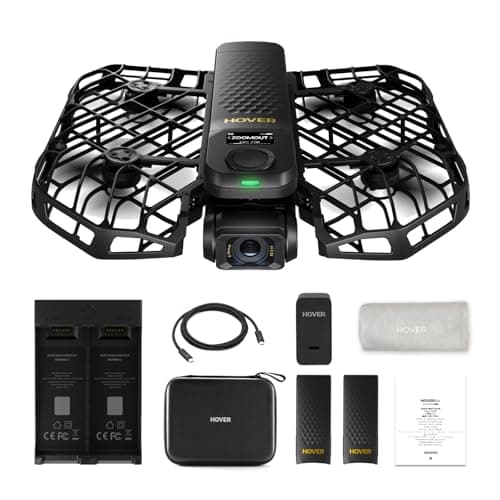
HOVERAir looked at the drone market and made a bet: most people do not want to fly, they want to be filmed. The X1 is that bet in hardware. It is the size of a folded phone, the props live inside a full protective cage, and the interface is a tiny screen on the aircraft itself: pick Follow, Orbit, Zoom Out, or another preset, place it on your palm, and let go. It films the move, returns, and lands on your hand. The entire experience takes less explaining than a toaster.

Against the DJI Neo, its obvious rival, the X1 wins on approachability and safety (the full cage beats the Neo's guards, and the onboard mode screen beats app fiddling) while the Neo wins on ecosystem and controller-optional piloted flight. Against any traditional drone, both lose on image quality and range and win on the fact that your family will actually use them. We think the X1 is the best pure self-flying camera for casual creators, the wedding-weekend, kids-soccer, group-hike crowd, and its footage, while a step below Mini-class, is well past good enough for the feeds it is destined for. Serious content creators should compare it against the vlogging camera picks too, since a ground camera plus the X1 covers nearly every angle.

Also Great

The drone for people who never wanted a drone. The X1 folds to phone size, launches from your palm, flies ten preset camera moves entirely by itself, and lands back in your hand, with fully caged propellers and zero piloting skill required. It is the strongest non-DJI idea in this entire guide.

Buy this if you want aerial shots of yourself and your people with literally zero learning curve. Pick a mode on the little onboard screen, toss it, and the X1 orbits the picnic, follows the hike, or rises for the reveal shot, then comes back. The full cage around the props makes it the most person-safe aircraft here, comfortable to hand-launch with kids around.

What we don't like

Video tops out below the DJI Minis in resolution and stabilization polish, wind tolerance is limited, and there is no real free-flight range; this is a self-flying camera, not a drone you pilot toward the horizon.

Best for Sports & Follow FootageAlso Great

Camera

4K video

Follow speed

Up to 42 km/h

Modes

10+ autonomous paths

Design

Caged props, palm launch

Skill

None required

Pros

  • Fast enough to follow bikes, skis, and sprints
  • True 4K capture
  • Same zero-skill caged-prop format
  • No camera operator needed for training footage

Cons

  • Mini 5 Pro money without its image quality
  • Short per-battery sessions

The knock on self-flying cameras has always been pace: brilliant for a stroll, useless the moment you clip into pedals. The X1 PRO is HOVERAir closing that gap. Forty-two kilometers per hour of tracking speed covers most amateur cycling, all trail running, and a satisfying amount of ski terrain, and the tracking logic is aggressive enough to hold frame through turns rather than politely losing you. For solo athletes, this is the entire pitch: pro-looking chase footage with nobody else on the trail.

The price demands honesty. At $679 you are inside DJI Mini 5 Pro territory, and the DJI shoots better-looking video in every condition while also being an actual pilotable drone. What it cannot do is chase you down a singletrack descent while you ignore it completely, and that is the entire reason this product exists. Buy the X1 PRO if autonomous sports footage is the mission; buy the Mini 5 Pro if you want an aerial camera you compose with. They are different tools that happen to share airspace. Whichever you choose, our gear guides philosophy applies: match the tool to the shot you actually take, not the spec sheet.

Also Great

The self-flying idea, built for speed. The X1 PRO shoots real 4K and chases subjects at up to 42 km/h, which finally makes autonomous follow footage work for cycling, skiing, and trail running instead of just walking pace. For athletes who train alone, it is a camera operator that never gets tired.

Buy this if your footage moves fast. The standard X1 and DJI Neo lose fast cyclists and skiers; the PRO's 42 km/h chase speed and sturdier airframe keep the frame locked on you through descents and sprints. It keeps the palm launch, the full prop cage, and the no-pilot-needed workflow that make the format brilliant.

What we don't like

At $679 it costs Mini 5 Pro money without Mini 5 Pro image quality or piloted range, and battery life per pack remains modest, so serious sessions need spares.

Best Non-DJI Budget TrainerAlso Great

Weight

Under 249 g

Camera

4K with electronic stabilization

Flight time

62 min total, 2 batteries (listed)

GPS

Position hold + auto return

Motors

Brushless

Pros

  • GPS, auto-return, and brushless motors under $200
  • Two batteries in the box
  • Quick, honest handling that teaches real stick skills
  • Under 249g

Cons

  • EIS footage clearly trails gimbal-equipped rivals
  • App and range polish behind DJI

Before the Mini 4K existed, the ATOM SE was the obvious first drone, and it is still the strongest case for spending less. Potensic ships the fundamentals DJI charges more for: GPS position hold so the drone parks itself in a hover, automatic return-to-home, brushless motors that survive years of use, and a second battery in the box, which DJI has never once included at this price. For a new pilot the arithmetic is friendly: more flights per charge cycle, more crashes survivable, less money at risk while your thumbs learn.

The gap is the camera, and it is not subtle. The ATOM SE stabilizes electronically, so footage that looks fine on a calm evening picks up micro-jitter the moment wind arrives, where the Mini 4K's mechanical gimbal simply erases it. Our framing: if footage is the goal, the $34 stretch to the Mini 4K is the best money in this guide; if flying is the goal and footage is a bonus, the ATOM SE gives you two batteries, honest handling, and change from $200. It is also simply reassuring that a competent non-DJI option exists at all, and Potensic is the brand carrying that flag well right now.

Also Great

The best drone in this guide that does not say DJI on it, at the trainer price point. GPS hold, auto return, brushless motors, a two-battery kit totaling a listed 62 minutes, and 4K capture with electronic stabilization, all under 249 grams and under $200.

Buy this if you want maximum stick time per dollar and full manual flying practice. The ATOM SE's Sport mode is quicker and more direct than DJI's beginner tuning, which makes it a genuinely fun trainer for the pilot who wants to learn flying as a skill, with GPS and auto-return as the safety net rather than the main event.

What we don't like

Electronic stabilization instead of a gimbal means footage stays a clear step behind even the Mini 4K, especially in wind, and the app and transmission polish trail DJI's by a noticeable margin.

Best Non-DJI with a Real GimbalAlso Great

Weight

Under 249 g

Camera

4K video, 8K photo, 3-axis gimbal

Transmission

10 km (listed)

Tracking

Visual subject tracking

Extras

Vertical shooting mode

Pros

  • True mechanical 3-axis gimbal under $400
  • 8K stills and vertical mode
  • Subject tracking included, not upsold
  • The credible non-DJI choice

Cons

  • Ecosystem polish and resale trail DJI
  • Priced against the excellent Mini 3

The ATOM 2 is what healthy competition looks like: Potensic stopped making cheaper drones and started making better ones. The headline is the gimbal, a real three-axis mechanical unit of the kind that used to be DJI's moat at this weight. Footage off the ATOM 2 has the floating steadiness that no electronic stabilization quite fakes, and the 8K photo mode plus native vertical shooting show a spec sheet aimed squarely at the Mini 3, sometimes over it.

Living with it reveals where the remaining gap sits: software. DJI's app is smoother, its transmission degrades more gracefully at range, its automated modes are more polished, and a used Mini holds value the way a used Potensic does not. None of these are dealbreakers; all of them are real. So the recommendation splits cleanly. Shopping purely on footage per dollar with no brand preference: the ATOM 2 earns its place and undercuts the equivalent DJI kit. Wanting the most refined total experience: the Mini 3 and Mini 5 Pro above remain the safer money. Either way, this is the strongest the non-DJI side of the market has looked in years, and that competition benefits every buyer on this page.

Also Great

The most serious DJI alternative in the class: a true 3-axis mechanical gimbal, 4K video, 8K stills, subject tracking, and a listed 10km transmission range, under 249 grams. This is Potensic building a Mini 3 competitor and mostly landing it.

Buy this if you want gimbal-smooth footage without joining the DJI ecosystem, or if the DJI-alternative question matters to you on principle. The ATOM 2's stabilized footage genuinely competes with Mini-class output, and features like vertical shooting and tracking arrive at a price DJI charges more for.

What we don't like

The app experience, transmission reliability at the edges, and resale value all still favor DJI, and at $399.99 it sits close to the proven Mini 3.

Best Crash-Proof First TrainerBudget Trainer

Camera

1080P (WiFi FPV)

Assist

Altitude hold, one-key takeoff/land

Design

Foldable, guarded props

GPS

None

Best for

Indoor practice, kids, first crashes

Pros

  • Crashes are consequence-free at $80
  • Steady altitude hold for indoor practice
  • Teaches real stick skills before GPS dependence
  • Folds small, spare parts cheap

Cons

  • Footage is a toy camera, full stop
  • No GPS: drifts outdoors, no auto-return

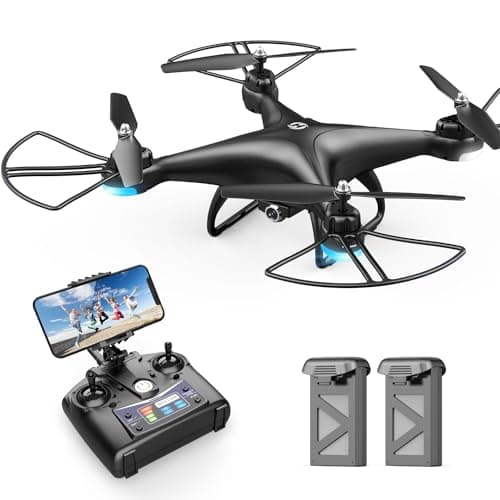
There is an old flight-instructor line: you want your worst landing to happen in the cheapest aircraft. That is the whole case for the HS440. Every new pilot overbanks a turn, loses orientation, and meets a wall or a hedge in their first hours; the only question is whether that moment costs $80 of forgiving plastic or a gimbal repair on a camera drone. As a dedicated crash budget, this Holy Stone is the best value in the guide.

It is also, quietly, a better teacher than the smart drones. GPS drones like the Minis hover themselves, which is wonderful for footage and terrible for learning; the HS440 holds altitude but leaves horizontal control entirely to you, so your thumbs actually learn orientation, the skill that saves expensive drones later when GPS drops or wind pushes. Buy it alongside, not instead of, a real camera drone: a common and genuinely sensible pairing is the HS440 for the living room and a Mini 4K for the sky. For the kid-gift use case specifically, nothing else here is as correctly matched to the job.

Budget Trainer

The learn-to-fly beater. Eighty dollars buys altitude hold, headless mode, one-key takeoff, and a 1080P camera in a foldable frame that shrugs off the crashes every new pilot is going to have. It exists so your first ten mistakes cost nothing that matters.

Buy this for a kid, a classroom, or your own living room off-season practice. The HS440 hovers steadily indoors, survives wall taps and carpet landings, and teaches stick orientation, the actual hard part of flying, without GPS holding your hand. When its pilot graduates to a Mini, the skills transfer completely.

What we don't like

The 1080P camera is for fun, not footage, there is no GPS so it drifts outdoors in any breeze, and build quality is exactly what $80 implies. This is a trainer, and it should only be bought as one.

Head-to-Head

How the top picks compare

The two matchups that settle most beginner-drone shopping carts: the piloted pick against the self-flying pick, and the value flagship against the premium one.

DJI Mini 4K vs DJI Neo: Fly It, or Let It Fly You?

DJI's two ideas of a first drone, $90 apart.

DJI Mini 4K

DJI

Winner

DJI Mini 4K

Real piloted camera drone: 3-axis gimbal, GPS, 10km range

$229.00
Check Price →
DJI Neo

DJI

DJI Neo

Palm-launch self-flyer that tracks and films you automatically

$139.00
Check Price →

Our verdict

Winner: DJI DJI Mini 4K. The Mini 4K wins for most buyers because it is simply more drone: a mechanical 3-axis gimbal against the Neo's electronic smoothing, kilometers of transmission range against the Neo's stay-close design, thirty-plus minute batteries against the Neo's short hops, and footage you can grade against footage you post as-is. It is a camera platform; the Neo is a camera trick, albeit a genuinely delightful one. But the Neo wins two scenarios outright, and they are common ones. If you want to be in the shot, hiking, cycling, family days, the Neo films you with zero pilot attention while the Mini 4K demands someone on the sticks. And if the drone is for someone who will never study a controller, the Neo's palm launch and guarded props make it the aerial camera they will actually use. Our rule of thumb: buy the Mini 4K if the sentence 'I want to fly' feels true, buy the Neo if the true sentence is 'I want footage of us,' and note that the pair together still costs less than one Mini 5 Pro.

Buy the DJI

you want to pilot, compose shots, and keep footage worth editing.

Buy the DJI

you want automatic footage of yourself with zero learning curve.

DJI Mini 4K vs DJI Mini 5 Pro: Is the 1-Inch Sensor Worth Triple?

The $229 default against the $683 endgame.

DJI Mini 4K

DJI

DJI Mini 4K

90% of the beginner experience at a third of the price

$229.00
Check Price →
DJI Mini 5 Pro

DJI

Winner

DJI Mini 5 Pro

1-inch sensor, omnidirectional obstacle avoidance

$683.00
Check Price →

Our verdict

Winner: DJI DJI Mini 5 Pro. On pure merit the Mini 5 Pro wins, and anyone who edits their footage will see why in the first clip: the 1-inch sensor holds sunset highlights and shadow detail the Mini 4K's smaller chip clips away, and the omnidirectional obstacle avoidance converts the most common category of beginner crash into a polite automatic stop. It is the better aircraft in every measurable way, and for a buyer who already knows aerial footage will be part of their creative work, paying once beats upgrading later; DJI's own trade-in and resale market softens the number further. The Mini 4K's counterargument is arithmetic rather than engineering. Three times the price is not three times the experience: the cheaper drone flies the same airspace, obeys the same fingers, and produces footage that delights everyone who is not comparing files side by side. Our honest guidance: undecided beginners and gift buyers should take the Mini 4K and spend the difference on batteries and outings, while photographers, videographers, and anyone whose work already lives in a color grade should go straight to the 5 Pro without the intermediate stops.

Buy the DJI

you are still discovering whether drones are your thing.

Buy the DJI

footage is the mission and you would rather buy once.

How we
chose

We evaluated beginner drones the way first-year owners actually live with them, weighting the things that decide whether the hobby sticks:

  • Footage you would show someone. Sensor size, stabilization type (mechanical gimbal versus electronic smoothing), and how footage holds up in wind and mixed light. A beginner drone that produces shaky video gets abandoned by spring.
  • Forgiveness. GPS hover, auto return-to-home, obstacle sensing, propeller protection, and what a typical first-month mistake costs to repair. We weight safety systems far more heavily for this audience than we would for experienced pilots.
  • Regulatory simplicity. We strongly favor sub-249-gram aircraft, which recreational US flyers do not need to register with the FAA, and we say clearly when a pick sits outside that comfort zone.
  • Honest total cost. Listed price plus the batteries, cards, and bags you will realistically buy in the first month. A cheap drone with one battery is often a more expensive hobby than a bundle.
  • Real prices and listings only. Every product here is pulled from Amazon's live catalog with its current price and image at publish time; we never list a product we cannot verify. Prices move, especially on DJI gear, so treat the numbers as the price at our last check.

Share this guide

Share

Common Questions

Frequently Asked Questions

Have art
to sell?

Austin Gallery specializes in selling inherited art, estate collections, and fine art with zero upfront fees. Get a free evaluation today.