Austin Gallery
Photography GearJune 29, 2026Updated June 29, 202615 min read

The Best Mirrorless Cameras for Beginners (2026)

Your first interchangeable-lens camera is where photography becomes a craft. From the $499 Canon EOS R100 to the 40MP Fujifilm X-T50 — best overall, best budget, best for video, and best for learning, matched to what you actually want to shoot.

By Justin Park · How we research

Your first mirrorless camera is the moment photography stops being a phone feature and starts being a craft: interchangeable lenses, real control over light, and image quality a phone can't touch. But the entry-level field is crowded — Canon, Sony, Nikon, Fujifilm, Panasonic, and OM System all want your first $500 to $1,500 — and the "best beginner camera" depends entirely on whether you want to shoot photos, vlog, freeze action, or learn the fundamentals.

This guide covers the best mirrorless cameras for beginners in 2026 — from the $499 Canon EOS R100 to the 40MP Fujifilm X-T50 — across every major brand. We explain APS-C vs. Micro Four Thirds, why the lens system matters more than the body, and how to match a camera to what you actually want to shoot, so you buy the right first camera once. Every pick is verified and linked to Amazon with live pricing.

In a Hurry?

The 4 picks that cover most readers. Tap to read the full review or buy direct.

Our Pick

Canon EOS R50

Canon EOS R50

$849.99

The best all-around first camera.

Best Budget

Canon EOS R100

Canon EOS R100

$499.00

A real system for under $500.

Best for Video

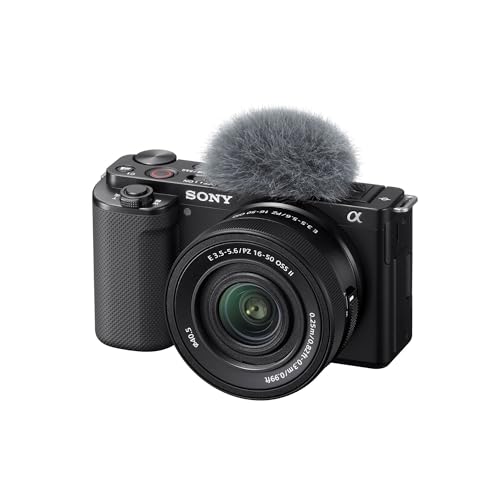
Sony ZV-E10

Sony ZV-E10

$798.00

Built for vlogging and YouTube.

Best for Learning

Fujifilm X-T30 II

Fujifilm X-T30 II

$1,149.00

Dials and film-sim color that teach.

Best Overall for BeginnersOur Pick

Sensor

24.2MP APS-C

Video

4K (uncropped)

AF

Dual Pixel CMOS AF II

Best for

Most first-time buyers

Pros

  • Excellent subject-tracking autofocus (people, animals, vehicles)
  • Genuinely beginner-friendly menus and guided UI
  • Uncropped 4K and a fully articulating screen
  • Small, light, and grows with Canon's RF lens system

Cons

  • RF-S lens selection still maturing
  • No in-body stabilization
For most people buying their first mirrorless camera, the Canon EOS R50 is the right answer: it pairs an approachable, guided interface with autofocus genuinely inherited from Canon's pro bodies, so it locks onto eyes — human or animal — and holds them. You get uncropped 4K, a flip-out screen for selfies and vlogging, and a body small enough to carry all day. It's the safe, smart default that won't frustrate you as a beginner or feel limiting once you've learned.

Our Pick

The best balance of approachability, autofocus, and image quality for a first camera — buy this if you read one entry.

Best BudgetBest Value

Sensor

24.1MP APS-C

Video

4K (cropped)

Mount

Canon RF

Best for

Tightest budget

Pros

  • The cheapest real interchangeable-lens mirrorless camera
  • 24MP APS-C sensor — the same resolution as cameras costing double
  • Light, simple, and easy to learn on
  • Opens the door to Canon's RF lens ecosystem

Cons

  • Fixed (non-tilting) screen
  • Cropped 4K and simpler autofocus than the R50
If budget is the deciding factor, the Canon EOS R100 is the most camera you can get into a real system for the money. It shares the 24MP APS-C resolution of pricier bodies and produces images far beyond any phone, for under $500 with a lens. You give up the articulating screen and the R50's smartest autofocus, but as a first camera to learn fundamentals on — and a gateway to RF lenses — it's outstanding value.
Best for Vlogging & VideoBest for Video

Sensor

24.2MP APS-C

Video

4K

Screen

Fully articulating

Best for

YouTube & vlogs

Pros

  • Designed for video first — flip-out screen and a Product Showcase mode
  • Excellent built-in directional mic with wind muff included
  • Sony's superb real-time eye autofocus
  • Lightweight, with a background-defocus button for that creamy look

Cons

  • No viewfinder (composes on the screen only)
  • Rolling shutter on fast pans
The Sony ZV-E10 is the beginner camera built explicitly for creators: the screen flips to face you, the mic is genuinely good out of the box, and a one-press Product Showcase mode pulls focus to whatever you hold up. Sony's class-leading eye autofocus keeps you sharp while you move. It drops the viewfinder to keep the price and size down, so it's a video-and-content tool more than a viewfinder photographer's camera — but for YouTube, vlogs, and reels, it's the one.
Best Step-Up (Action & Speed)Best for Action

Sensor

24.2MP APS-C

Burst

Up to 23 fps

AF

Subject-detect tracking

Best for

Sports, wildlife, kids

Pros

  • Fast burst shooting freezes action and play
  • Pro-grade subject-detection autofocus
  • Bigger grip and more external controls than the R50
  • Uncropped 4K30 video

Cons

  • Costs more than the R50/R100
  • No in-body stabilization
The Canon EOS R10 is the pick for a beginner who already knows they'll shoot movement — kids' sports, pets, wildlife, anything fast. Its burst speed and subject-detecting autofocus come straight from Canon's enthusiast line, so it tracks and freezes action that would defeat a cheaper body. The deeper grip and extra dials also make it more satisfying to grow into. Spend up to the R10 if speed matters; otherwise the R50 saves you money.
Check Price on Amazon →$1,149.00 · Canon
Best Autofocus All-Rounder

Sensor

24.2MP APS-C

AF

Real-time Eye AF

Video

4K

Best for

Stills + video balance

Pros

  • Reference-grade real-time eye autofocus
  • Excellent image quality and color
  • Compact body with a tilting screen and viewfinder
  • Huge native and third-party E-mount lens selection

Cons

  • Menus are dense for a beginner
  • Kit lens is the weak point — upgrade early
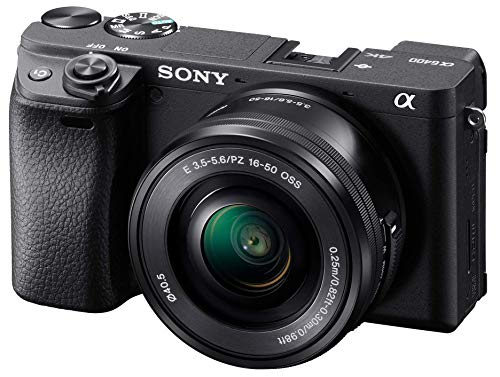
The Sony a6400 has been the autofocus benchmark in this class for years: its real-time eye tracking simply doesn't miss, on people or pets, stills or video. It packs a viewfinder, a tilting screen, and superb image quality into a pocketable body, and sits on the enormous E-mount lens ecosystem. The menu system is busier than Canon's friendly UI, so it rewards a beginner willing to learn — but you're buying focus performance that outclasses the price.
Best Compact for Content

Sensor

20.9MP APS-C

Video

4K

Screen

Fully articulating

Best for

Travel & everyday carry

Pros

  • Nikon's smallest, lightest mirrorless — easy to carry everywhere
  • Deep, comfortable grip despite the small size
  • Fully articulating screen and a good on-camera mic
  • Lovely Nikon color straight out of camera

Cons

  • No viewfinder
  • Smaller Z DX lens lineup than Canon/Sony APS-C
The Nikon Z30 is the camera you'll actually bring along — tiny and light, but with a grip that makes it feel secure in the hand. It's pitched at content creators (articulating screen, no viewfinder, strong video), and it delivers Nikon's pleasing color and a clean, uncomplicated experience. The Z DX lens range is still growing, but for travel, everyday shooting, and creators who compose on the screen, it's a charming, capable first camera.

Austin Art Insider

Free weekly guide to galleries, exhibitions & collecting in Austin.

Best for Learning PhotographyEnthusiast Pick

Sensor

26.1MP APS-C

Controls

Physical dials

Color

Film simulations

Best for

Learning the craft

Pros

  • Tactile shutter-speed and exposure dials teach the exposure triangle
  • Fujifilm's renowned film-simulation color (JPEGs you'll love straight out)
  • Beautiful retro design and excellent build
  • Sharp 26MP sensor and a great electronic viewfinder

Cons

  • Pricier than the entry Canon bodies
  • Smaller grip suits smaller hands better
The Fujifilm X-T30 II is the camera for someone who wants to truly learn photography. Instead of hiding settings in menus, it puts shutter speed and exposure on physical dials, so you see and feel how the exposure triangle works. Add Fujifilm's celebrated film simulations — color profiles so good many shooters never edit — and you get a camera that's a pleasure to use and a genuine teacher. It costs more than a Canon R100, and it's worth it for the engaged beginner.
Check Price on Amazon →$1,149.00 · Fujifilm
Best Compact System (with IBIS)

Sensor

20MP Micro Four Thirds

Stabilization

5-axis in-body

Video

4K

Best for

Smallest full-featured kit

Pros

  • In-body image stabilization — sharper handheld shots and smoother video
  • Micro Four Thirds lenses are tiny, light, and affordable
  • Classic dial-led design with a built-in viewfinder
  • Genuinely pocketable whole-system size

Cons

  • Smaller sensor than APS-C (a touch less low-light reach)
  • 20MP is plenty but below the APS-C bodies
The OM System E-M10 Mark IV is the pick when total system size matters. Its smaller Micro Four Thirds sensor means the lenses are remarkably small and cheap, so a full kit — body plus two or three lenses — fits where a single APS-C zoom would. It also adds 5-axis in-body stabilization the APS-C starters lack, steadying handheld shots and video. The sensor gives up a little low-light reach, but for travel and a compact do-everything kit, it's a delight.
Check Price on Amazon →$699.99 · OM SYSTEM

Head-to-Head

How the top picks compare

The two choices that decide which first camera is right for you.

Canon EOS R50 vs. Sony ZV-E10

Friendliest all-rounder vs. video-first creator camera.

EOS R50

Canon

Winner

EOS R50

Best all-around, viewfinder + photos

$849.99
Check Price →
ZV-E10

Sony

ZV-E10

Built for vlogging & YouTube

$798.00
Check Price →

Our verdict

Winner: Canon EOS R50. If you want one camera to do everything — photos, travel, the occasional video — the Canon R50 wins: it has a viewfinder for shooting in bright light, the friendliest interface for a beginner, and superb autofocus. The Sony ZV-E10 is the better buy if your main goal is video: it drops the viewfinder but adds a better mic, a Product Showcase mode, and a creator-first layout. Choose by your primary use — viewfinder photographer → R50; vlogger → ZV-E10.

Buy the Canon

Buy the R50 for a do-everything first camera with a viewfinder.

Buy the Sony

Buy the ZV-E10 if you're mainly shooting video, vlogs, and reels.

APS-C vs. Micro Four Thirds

Bigger sensor vs. smaller, lighter system.

EOS R50 (APS-C)

Canon

Winner

EOS R50 (APS-C)

Bigger sensor, deepest lens range

$849.99
Check Price →
E-M10 IV (MFT)

OM System

E-M10 IV (MFT)

Tiny lenses, in-body stabilization

$699.99
Check Price →

Our verdict

Winner: Canon EOS R50 (APS-C). For most beginners, APS-C is the mainstream choice — a larger sensor for better low-light and background blur, plus the deepest lens selections (Canon RF, Sony E). Micro Four Thirds earns its place when size is everything: the smaller sensor lets lenses shrink dramatically, so a whole multi-lens kit stays pocketable, and bodies like the E-M10 IV add in-body stabilization the APS-C starters lack. Want maximum quality and lens choice → APS-C. Want the smallest, lightest full system to travel with → Micro Four Thirds.

Buy the Canon

Buy APS-C for the best image quality and the biggest lens ecosystem.

Buy the OM System

Buy Micro Four Thirds for the smallest, lightest system with built-in stabilization.

How we
chose

Every camera here is genuinely available on Amazon with verified live pricing and real product imagery, chosen for beginner-friendliness, autofocus, image quality, and value.

  • Organized by use — overall, budget, video/vlogging, action, and learning — because the right first camera depends on what you want to shoot, not just specs.
  • You're buying a system, not a body — the lens mount you choose today shapes every purchase for years. We note each camera's mount and lens-ecosystem maturity.
  • Autofocus is the beginner's best friend — modern subject- and eye-tracking AF means more keepers while you're still learning; we flag where it's class-leading.
  • Kit lenses get you started, not finished — every pick comes with a capable kit zoom, but we note where an early lens upgrade pays off most.

Austin Gallery may earn a commission from purchases made through links on this page, at no cost to you. It never changes our rankings.

Share this guide

Share

Common Questions

Frequently Asked Questions

The Full Guide

The Complete Beginner Mirrorless Camera Buyer's Guide

Every camera we recommend — sorted by overall, budget, video, action, learning, and compact systems. Find the right first camera for how you shoot.

Have art
to sell?

Austin Gallery specializes in selling inherited art, estate collections, and fine art with zero upfront fees. Get a free evaluation today.