Austin Gallery
Photography GearJuly 14, 202614 min read

Best Vlogging Cameras 2026: 8 Picks from $379 to $1,098

The DJI Osmo Pocket 3 rewrote the category — a 1-inch sensor on a real gimbal, in a pocket. We ranked it against Sony's ZV line, Canon's V-series, GoPro, and Insta360, weighted for creators who document their work: studio sessions, process videos, and walk-and-talks.

By Justin Park · How we research

If you just want the answer: the DJI Osmo Pocket 3 ($439.00) is the best vlogging camera of this generation — a 1-inch sensor on a mechanical gimbal in a pocketable body, and the consensus choice of the creator community for good reason. If you're starting a channel in earnest, the Creator Combo ($549.00) bundles the wireless mic and battery handle you'd buy within months anyway. For a desk-bound start, the Canon PowerShot V10 ($379.00) is the least expensive real-sensor option, and at the top of the ladder the Sony ZV-E10 II ($1,098.00) is the pick that grows into a full camera system.

We built this guide for the creators we know best: artists and makers documenting their work. The camera that films your studio process on Tuesday should handle a walking gallery-tour vlog on Saturday — around here, that might mean an East Austin studio crawl — and the picks below are weighted for exactly that double life. Two principles sort the field. First, stabilization decides who can move: mechanical gimbals (Pocket 3) walk; digital stabilization (Sony, Canon) prefers to sit. Second, sensor size decides low light and depth, and dim studios and evening events punish small chips. Every camera here is honestly labeled on both.

Prices are Amazon listings at the time of writing and move often. Every link goes to Amazon with our affiliate tag — we earn a small commission, at no cost to you, when you buy through us. Rounding out a kit? See our camera tripods, SD cards, and beginner mirrorless guides.

In a Hurry?

The 4 picks that cover most readers. Tap to read the full review or buy direct.

Best Overall

DJI Osmo Pocket 3

DJI Osmo Pocket 3

$439.00

A 1-inch sensor on a mechanical gimbal, in your pocket — the generation's best.

Best Value

Canon PowerShot V10

Canon PowerShot V10

$379.00

Real-sensor desk vlogging with a built-in stand — zero rigging, zero fuss.

Best Bundle

Pocket 3 Creator Combo

Pocket 3 Creator Combo

$549.00

The top pick plus the wireless mic and battery handle you'd buy anyway.

Best to Grow Into

Sony ZV-E10 II

Sony ZV-E10 II

$1,098.00

APS-C sensor and interchangeable lenses — the pick with a future tense.

Best OverallOur Pick

Sensor

1-inch CMOS (listed)

Video

4K up to 120fps (listed)

Stabilization

Mechanical 3-axis gimbal

Screen

2-inch rotating touchscreen (listed)

Tracking

Face/object tracking

Pros

  • Mechanical gimbal — walking footage looks tripod-smooth
  • 1-inch sensor embarrasses phone and action-cam footage
  • Rotating screen makes selfie framing instant
  • Genuinely pocketable; the camera you'll actually carry

Cons

  • Fixed lens, no optical zoom
  • Gimbal head needs a case in transit
  • Best audio requires adding a mic

Every few years a product reshuffles its category; for vlogging cameras, the Osmo Pocket 3 is that product. The formula: take the 1-inch sensor class that made premium compacts like the ZV-1 credible, mount it on a true mechanical gimbal — the kind of stabilization that used to mean a $300 accessory swinging a full camera around — and shrink the whole assembly to the size of a candy bar. The result is footage with a specific look: buttery walking shots, no digital-stabilization warp, real subject separation from a sensor far larger than any phone's.

Why stabilization is the spec that matters for vlogging: most vlog footage is handheld, moving, one-take. Digital stabilization (what phones and action cams use) crops your frame and can wobble on fine detail; a mechanical gimbal physically floats the sensor, so you keep the full frame and the footage looks deliberate rather than rescued. It's the difference between "shot on the move" and "shot with a crew."

For artists and makers, the use case is almost unfairly good: stand it on a desk with the screen flipped, let face tracking hold your framing while both hands work, then grab it for a walking studio tour without changing anything. The limitations are honest — fixed focal length, a gimbal head you shouldn't toss bare into a tote, low light that's merely good — and none of them touch the core proposition. At $439 it's not just the best vlogging camera of this generation; it's one of the easiest recommendations we've ever made in a gear guide. If you'll want the mic and extra battery anyway, skip ahead to the Creator Combo.

Our Pick

The best vlogging camera of this generation, and it isn't close. The Osmo Pocket 3 puts a genuine 1-inch sensor on a mechanical 3-axis gimbal in a device that fits in a jacket pocket — footage that looks tripod-smooth while you walk, talk, and paint, with a rotating screen that flips to selfie framing in one twist. It solved the problems vlogging cameras spent a decade half-solving.

Buy this if you want to document your work — studio sessions, process videos, gallery visits, walk-and-talks — without carrying a rig. The gimbal makes handheld footage look stabilized-in-post without the crop or warp of digital stabilization, face tracking keeps you framed while your hands are busy, and the whole thing deploys from pocket to recording in about two seconds. It's the camera you'll actually have with you, which is the camera that grows a channel.

What we don't like

The lens is fixed — no zoom beyond digital crop — and the gimbal head demands a little care in a crowded bag (a case is the sensible first accessory). Low light is good for the size but a full-frame camera it is not. Audio is decent built-in and excellent only once you add a mic, which is the argument for the Creator Combo below.

Best ValueBest Value

Sensor

1-inch CMOS (listed)

Video

4K (listed)

Lens

Fixed 19mm-equivalent wide (listed)

Extras

Built-in stand, flip-up screen, stereo mics

Stabilization

Digital

Pros

  • Cheapest 1-inch sensor camera here
  • Built-in stand — no tripod, no rigging
  • Canon color science straight out of camera
  • Genuinely beginner-friendly controls

Cons

  • Digital-only stabilization — weak for walking shots
  • Modest battery life
  • Fixed arm's-length framing

Canon looked at how beginner vloggers actually film — camera propped on a stack of books, talking at a desk — and built exactly that device. The V10 is barely bigger than a deck of cards, with a flip-up screen for self-framing, a built-in kickstand that replaces a tripod, and a 1-inch sensor that delivers the background blur and low-light competence phones still fake. The onboard stereo mics are better than they have any right to be at this size, which matters because audio, not video, is what makes beginner content feel amateur.

The compromise is mobility. Stabilization is digital-only, and walk-and-talk footage shows it — this is the anti-Pocket-3 in that one respect. Battery life suits sessions, not days out. But judge it on its actual mission: for a painter narrating at an easel, a maker filming a bench, or anyone whose content happens within six feet of a flat surface, the V10 delivers real-camera image quality with literally zero setup for $379. That's the value pick, honestly defined. When your content starts moving, that's your signal to step up the ladder on this page.

Best Value

The simplest honest camera on this page. The V10 is a palm-sized block with a 1-inch sensor, a flip-up screen, a surprisingly capable stereo mic, and a built-in stand — designed for one job: set it down, flip the screen, talk. For desk vloggers and beginners it's the least intimidating way into real-camera footage.

Buy this if your vlog happens at a desk, easel, or countertop and you want better-than-phone footage with zero rigging. The kickstand is built into the body, the wide 19mm-equivalent lens frames you at arm's length, and Canon's color science flatters skin straight out of camera. It's also the cheapest path to a 1-inch sensor here.

What we don't like

Stabilization is digital-only, so walking footage is where it falls furthest behind the Pocket 3. Battery life is modest, there's no headphone jack, and the fixed wide lens means you're always at arm's-length framing. It's a stationary-first camera — know that going in.

Best Ready-to-Film BundleAlso Great

Camera

Osmo Pocket 3 (1-inch CMOS, 4K/120fps)

Includes

DJI wireless mic, battery handle, case accessories (listed)

Stabilization

Mechanical 3-axis gimbal

Audio

Wireless mic with wind protection (listed)

Pros

  • Wireless mic — the biggest single quality upgrade
  • Battery handle for all-day shoots
  • Cheaper than assembling the pieces later
  • Same class-leading camera as our top pick

Cons

  • $110 over the bare camera
  • Unnecessary for silent process-video creators
  • Locks you into DJI's mic system

There's a pattern in Pocket 3 ownership: buy the camera, love the footage, notice the audio is merely fine, buy the mic, notice the battery ends before the day does, buy the handle. The Creator Combo is DJI acknowledging the pattern and pricing it kindly — the same camera bundled with the wireless microphone and battery handle that most owners acquire within months anyway, for less than the à-la-carte total.

The microphone is the headline. On-camera audio from any vlogging camera degrades with distance and dies outdoors; a wireless mic clipped to your collar delivers consistent, close, wind-protected voice no matter where the camera sits — across the studio, on a shelf, at the end of a selfie grip. For talking-head and tutorial content, viewers forgive soft video long before they forgive bad audio. The battery handle is less glamorous and just as practical. The honest counsel: if your channel is voiceless process clips, save the $110 and buy the standalone; if you'll speak to camera regularly, this is the correct first purchase, not an upgrade. Round it out with a tripod from our tripods guide and fast storage from our SD card guide.

Also Great

The Pocket 3 plus everything you were going to buy anyway. The Creator Combo bundles the same camera with a DJI wireless microphone, a battery handle for longer shoots, and carrying accessories — the exact upgrade path nearly every Pocket 3 owner walks, priced below buying the pieces separately.

Buy this instead of the standalone Pocket 3 if you're starting a channel rather than testing the waters. The wireless mic is the single biggest quality jump available to a new creator — clean voice audio from across the room, wind-protected outdoors — and the battery handle turns a filming afternoon into a filming day. If you know you're serious, the combo is the cheaper way to end up where you're going.

What we don't like

It's $110 more than the camera alone, and if your content is silent process footage with music over it, the mic may sit in a drawer. The kit also commits you to DJI's mic ecosystem rather than letting you choose a third-party microphone.

Best Compact with ZoomAlso Great

Sensor

20.1MP 1-inch (listed)

Lens

18–50mm equivalent zoom (listed)

Autofocus

Real-time tracking + Product Showcase

Video

4K (listed)

Stabilization

Digital

Pros

  • Real optical zoom — rare in this class
  • Sony autofocus + Product Showcase mode
  • Bright, detailed footage from the 1-inch sensor
  • Two generations of creator-feature refinement

Cons

  • $947 — premium price for the compact class
  • Digital-only stabilization
  • Short battery life; carry spares

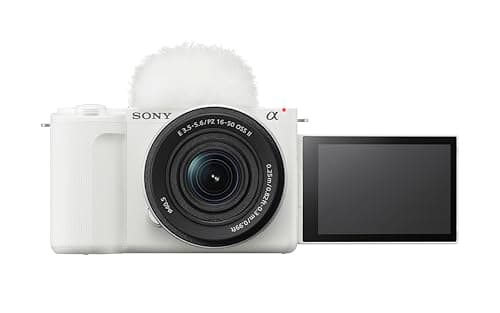
Sony invented the modern vlogging compact with the original ZV-1, and the II is that idea with its rough edges sanded off. The wide end of the new 18–50mm-equivalent zoom finally fits arm's-length selfie framing (the original's 24mm was forever slightly too tight), while the long end reaches a genuinely flattering 50mm for sit-down segments — a range no fixed-lens rival on this page can touch. Underneath, Sony's real-time tracking autofocus remains the reference: it simply does not lose your face.

The creator features have aged from gimmicks into workflow. Product Showcase mode is the standout for makers — hold a brush, a print, a ceramic piece up to the lens and focus snaps to it instantly, no tapping, then back to your face when you lower it. For artists doing show-and-tell content, that one feature can justify the camera. What doesn't flatter it: the price sits near four figures while stabilization stays digital, so the Pocket 3 walks away from it — literally — on moving footage, and the small battery is a running joke in the ownership community (buy two spares, thank us later). Choose it for what it is: the best static-and-showcase compact, from the company whose autofocus you'll never think about again. If you're eyeing this price range, also weigh the mirrorless route in our beginner mirrorless guide.

Also Great

The most camera-shaped answer in the compact class. The ZV-1 II pairs a 1-inch sensor with an actual 18–50mm zoom, Sony's class-leading autofocus, and creator features (product showcase mode, background-defocus button) refined over two generations of listening to YouTubers. The pick if you want framing flexibility the fixed-lens rivals can't offer.

Buy this if you show things to the camera — artwork, products, materials — as much as you show yourself. Product Showcase mode instantly racks focus from your face to whatever you hold up, the wide-to-normal zoom covers cramped-room selfies through flattering sit-down framing, and Sony autofocus is still the most trustworthy in the business. A serious tool in a jacket pocket.

What we don't like

At $947 it costs more than twice the Pocket 3 while offering weaker stabilization (digital, with crop) for walking shots, and battery life is famously slim — spares are mandatory. It's the static and semi-static specialist at a mobile camera's price.

Best to Grow IntoAlso Great

Sensor

26MP APS-C (listed)

Mount

Sony E-mount (interchangeable lenses)

Video

4K (listed)

Autofocus

Real-time tracking AF

Kit

16–50mm power zoom included (listed)

Pros

  • APS-C sensor — a size class above every rival here
  • Interchangeable lenses: upgrades, not replacements
  • Sony's reference-grade autofocus
  • Oversampled, detailed 4K

Cons

  • No in-body stabilization
  • Largest and priciest pick on the page
  • Kit lens is merely a starting point

Every other camera in this guide is a finished object; the ZV-E10 II is a beginning. Its APS-C sensor has roughly three times the area of the 1-inch chips in the compacts here, and sensor area is the honest currency of image quality — cleaner shadows in a dim studio, softer background falloff behind your face, more latitude when you grade. Wrap that sensor in Sony's E-mount, the most populated lens ecosystem in mirrorless, and the upgrade path runs from a $200 f/1.8 prime through cinema glass without ever changing bodies.

For working artists, there's a quiet double duty here: the camera that vlogs your process on Tuesday shoots gallery-grade documentation of the finished work on Friday — one tool, both jobs. The caveats are the mirror image of the strengths. No in-body stabilization means walk-and-talks lean on digital Active mode (fine, cropped, not gimbal-smooth), the body-plus-lens package needs a bag rather than a pocket, and at $1,098 it's the ceiling of this page. Our test: if you've read this far into this entry, you're probably the buyer. Casual documenters should take the Pocket 3 and never look back; image-quality obsessives should start here, because they'd end up here anyway. More on this camera class in our beginner mirrorless guide.

Also Great

The vlogging camera that's secretly a camera system. The ZV-E10 II pairs a large APS-C sensor — a full size class above everything else here — with Sony's E-mount, meaning the kit lens is just the first lens. The pick for creators who can feel themselves outgrowing compacts before they've bought one.

Buy this if image quality is the point and you're willing to carry a real camera to get it. The APS-C sensor delivers cleaner low light and genuinely cinematic depth of field, 4K comes oversampled and detailed, and when your taste develops, a $200 prime lens transforms the camera instead of replacing it. It's the only pick here with a future tense.

What we don't like

In-body stabilization is absent — handheld walking footage relies on digital Active mode and stabilized lenses, so the Pocket 3 still wins on the move. It's also the biggest, priciest thing on this page, and the kit zoom is the weakest lens you'll ever mount on it.

Austin Art Insider

Free weekly guide to galleries, exhibitions & collecting in Austin.

Best Hybrid Photo/VideoAlso Great

Sensor

22.3MP 1.4-inch CMOS (listed)

Lens

16–50mm equivalent f/2.8–4.5 (listed)

Video

4K/60p with cooling fan (listed)

Autofocus

Dual Pixel CMOS AF II

Bundle

Includes bag + 64GB card (listed)

Pros

  • 1.4-inch sensor — larger than the compact norm
  • Cooling fan enables long uninterrupted recording
  • 16mm ultra-wide: roomiest selfie framing here
  • Excellent 22MP stills — a true hybrid

Cons

  • New listing — minimal Amazon review history yet
  • Digital-only stabilization
  • Near ZV-E10 II money without the lens mount

The V1 is Canon deciding the creator-compact category deserves real engineering instead of a parts-bin remix. The sensor is the tell: a 1.4-inch chip, a size Canon essentially built for this camera, meaningfully larger than the 1-inch class the ZV-1 II and V10 share. Then the practical touches stack up — an ultra-wide 16mm starting point that fits you and your studio wall in a handheld frame, and an honest-to-goodness cooling fan, which sounds absurd in a compact until your first hour-long workshop recording sails past the point where fanless rivals thermally tap out.

The hybrid case is what earns it this slot. Most vlogging cameras shoot afterthought stills; the V1's 22.3 megapixels through Dual Pixel autofocus produce photographs you'd deliver — artwork documentation, event coverage, print-worthy process shots. One caveat we take seriously: this bundle is a new Amazon listing with only a few ratings at press time, so unlike the six-figure track records elsewhere in this guide, you're leaning on the photo press's warm reception of the V1 itself rather than deep owner history. With digital-only stabilization it's another static-first tool, priced a lens short of the ZV-E10 II. But as a single pocket camera for a creator who genuinely shoots both formats, it's the most complete object on this page.

Also Great

Canon's serious answer to the creator compact — and a genuinely clever one. The V1 slots a 1.4-inch sensor (larger than the 1-inch standard, smaller than APS-C) behind an ultra-wide 16–50mm zoom, adds a cooling fan for unlimited-length 4K recording, and shoots 22MP stills that embarrass every other compact here. One camera for the vlog and the portfolio.

Buy this if you split time between video and photography and want one pocketable tool for both. The 16mm ultra-wide end is the most generous selfie framing on this page, the cooling fan means hour-long recording sessions without thermal shutdown — a real limitation on compact rivals — and Canon's color needs no grading to look finished.

What we don't like

This bundle listing is new to Amazon with only a handful of ratings so far (the V1 itself has been warmly reviewed by the photography press since launch). Stabilization is digital-only like its Sony rival, and the sensor, while larger than 1-inch, still isn't the APS-C of the ZV-E10 II at a similar street price.

Best for Action & OutdoorsAlso Great

Video

5.3K60 (listed)

Photo

27MP (listed)

Build

Waterproof without housing (listed)

Stabilization

HyperSmooth digital

Bundle

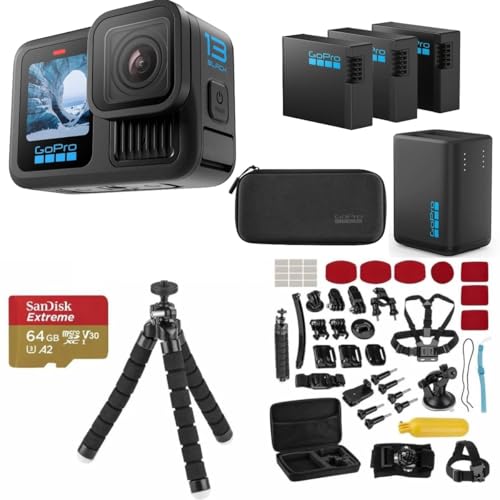
3 batteries, dual charger, 64GB SD, accessory kit (listed)

Pros

  • Survives everything — water, dust, drops, heat
  • Best-in-class digital stabilization
  • Bundle solves battery life out of the box
  • Mounts to helmets, easels, handlebars, anything

Cons

  • Small sensor lags indoors and at dusk
  • Ultra-wide look is wrong for talking heads
  • Built-in audio is merely serviceable

Every camera above this one on the page has a list of conditions it politely declines; the GoPro's list is empty. The HERO13 Black is waterproof without a case, shrugs off drops and dust, and clamps to helmets, handlebars, tree branches, and easel legs via the most mature mounting ecosystem in photography. Its HyperSmooth stabilization remains the standard every phone maker chases — digital, yes, but executed so well that sprinting footage looks gimbal-carried.

For the Austin creator, the use cases write themselves: a time-lapse clamped to the easel at a Barton Creek plein-air session, handlebar footage of the ride to the studio, mural progress from scaffolding where you would never hang $1,000 of Sony. This particular bundle earns its pick over the bare camera by bundling the fix for GoPro's eternal weakness — three batteries and a dual charger — plus a card and mounting kit. The physics bill comes due indoors: the small sensor that makes it indestructible makes dim-room footage noticeably noisier than anything else here, and the wide action-cam perspective distorts sit-down framing. It's the second camera for most creators, and the first camera for the ones whose content lives outside.

Also Great

The camera for vlogs that would destroy every other camera on this page. The HERO13 Black shoots stabilized 5.3K, survives water, dust, drops, and Texas summer, and mounts to anything — and this bundle stacks three batteries, a dual charger, an SD card, and an accessory kit onto the standard package. The pick when your content happens outdoors, in motion, or in the rain.

Buy this if your creative life includes the conditions cameras fear: plein-air painting trips, mural work on scaffolding, river days, bike commutes to the studio. HyperSmooth stabilization is the best digital stabilization in the industry, the waterproof body needs no housing, and three batteries with a dual charger solves the classic GoPro complaint before you unbox it.

What we don't like

The small sensor is the trade for the small body: indoor and evening footage falls visibly behind the 1-inch-and-up cameras here, and the ultra-wide action look isn't right for sit-down talking heads. Audio is serviceable, not studio-grade.

Best 360 CameraAlso Great

Video

8K 360 (listed)

Trick

Invisible selfie stick effect

Build

Waterproof (listed)

Battery

135 min (listed)

Workflow

Shoot first, reframe in app

Pros

  • Captures every angle — frame the shot afterward
  • Invisible-stick third-person footage of yourself
  • One planted camera covers a whole studio session
  • Waterproof and genuinely rugged

Cons

  • Reframed crops trail dedicated 4K cameras in sharpness
  • Editing step is mandatory, files are huge
  • Wrong tool for simple talking heads

Solo creators face a stupid, stubborn problem: someone has to hold the camera, and there's no one else in the room. The X4's answer is to stop choosing shots at all. Its twin lenses record a complete 8K sphere — everything, in every direction, simultaneously — and afterward you pan, track, and zoom a virtual camera through the footage. The signature move is the invisible selfie stick: hold or plant the stick and the software erases it, producing floating third-person shots of you painting, throwing, or walking that read like a hovering camera operator.

For process documentation, one planted X4 replaces a multi-camera setup: the same session yields a wide of the studio, a push-in on the brushwork, and a reaction cut of your face, all decided in the edit. The honest physics: each final frame is a crop of the sphere, so per-pixel sharpness lands below a dedicated 4K camera — perfect for Reels and process reels, short of cinematic. And the mandatory reframe-and-export step is either a creative playground or a chore, depending on your temperament. As the only camera here that manufactures impossible shots for a crew of one, it earns its slot — usually as the wildly capable second body next to a Pocket 3.

Also Great

The camera that removes the camera operator. The X4 records everything in 8K 360, and you choose your shots afterward — reframing in the app as if a drone pilot and a camera crew had followed you around. The invisible-selfie-stick trick produces impossible third-person footage of yourself working, and no other camera type can do it.

Buy this if you create alone and want footage of yourself that looks like someone else shot it. Plant it on the included-ecosystem stick in the middle of the studio and it captures every angle at once — you, the canvas, the room — then you direct the 'camera moves' in post. It's also the most forgiving camera ever made: framing mistakes don't exist when you capture everything.

What we don't like

The reframed output is a crop of the 360 sphere, so final image quality trails a dedicated 4K camera — think excellent social footage, not cinema. The shoot-first-frame-later workflow adds an editing step some creators grow to resent, and 8K files are enormous.

Head-to-Head

How the top picks compare

The two matchups buyers actually agonize over: the pocket gimbal against Sony's compact, and the action-camera civil war.

DJI Osmo Pocket 3 vs Sony ZV-1 II: The New Way or the Camera Way?

A gimbal-stabilized fixed lens against a zoom compact with reference autofocus — at half the price.

DJI Osmo Pocket 3

DJI

Winner

DJI Osmo Pocket 3

Mechanical gimbal, rotating screen, the footage that moves

$439.00
Check Price →
Sony ZV-1 II

Sony

Sony ZV-1 II

18–50mm zoom, Product Showcase, Sony autofocus

$947.00
Check Price →

Our verdict

Winner: DJI DJI Osmo Pocket 3. The Pocket 3 wins for most creators, and the price gap makes it decisive. Both carry 1-inch-class sensors, so baseline image quality is a wash — which leaves the differences that shape actual footage. The Pocket 3's mechanical gimbal produces walking shots the Sony's digital stabilization cannot approach, its rotating screen makes solo framing instant, and at $439.00 it costs less than half the Sony's $947.00. The ZV-1 II's rebuttal is real for a specific creator: an actual optical zoom for framing flexibility, and Product Showcase mode that snaps focus to whatever you hold up — the show-and-tell feature makers love. If your content is static, product-forward, and framing-sensitive, the Sony justifies itself. For everyone else — and especially anyone whose vlogs move — the Pocket 3 delivers the more modern experience with $500 left over for a mic, a tripod, and a very nice dinner.

Buy the DJI

your footage moves, or you want the best value in serious vlogging.

Buy the Sony

you shoot static show-and-tell content and want zoom framing control.

GoPro HERO13 Black vs Insta360 X4: Which Adventure Camera for a Creator?

The indestructible standard against the shoot-everything 360 workflow.

GoPro HERO13 Black (Bundle)

GoPro

GoPro HERO13 Black (Bundle)

5.3K60, best-in-class stabilization, dead-simple workflow

$439.00
Check Price →
Insta360 X4

Insta360

Winner

Insta360 X4

8K 360 capture, invisible stick, frame shots after the fact

$424.99
Check Price →

Our verdict

Winner: Insta360 Insta360 X4. For the solo creator this guide serves, the X4 takes it — narrowly, and for one reason: it solves the no-camera-operator problem nothing else can touch. Planted once, it captures every angle of a studio session or outdoor paint day simultaneously, and the invisible-stick effect manufactures third-person footage of yourself that would otherwise require a second person. The GoPro's case is legitimate and different: per-pixel image quality from its dedicated lens beats the X4's reframed crops, its workflow is film-and-post simple with no mandatory editing step, and its stabilization remains the industry reference. Choose by temperament as much as content. If you want footage tonight with zero post-production, the GoPro; if you'll trade an editing step for shots a crew of one shouldn't be able to get, the X4. Tie-breaker: creators who already own any conventional camera get more new capability from the 360 — the GoPro overlaps with what a Pocket 3 does, the X4 doesn't overlap with anything.

Buy the GoPro

you want maximum per-pixel quality and a no-editing workflow.

Buy the Insta360

you create alone and want impossible third-person shots of yourself.

How we
chose

We ranked vlogging cameras on the jobs creators actually hire them for, using listed manufacturer specifications, published expert reviews, and owner consensus:

  • Stabilization, weighted heavily. Most vlog footage is handheld and moving. Mechanical gimbal stabilization outranks digital; we say plainly which cameras can walk and which should sit.
  • Sensor size as the image-quality anchor. From the V10's 1-inch chip to the ZV-E10 II's APS-C, sensor area predicts low-light and depth-of-field performance better than any marketing spec.
  • Audio path. Viewers forgive soft video, never bad sound. We noted built-in mic quality and how each camera reaches wireless-mic-grade audio.
  • Friction to filming. Deploy time, self-framing screens, battery reality, and whether the camera fits the pocket you'll actually be wearing — the camera you carry beats the camera you own.
  • The artist's double duty. We favored cameras that also document finished work well (stills quality, color accuracy), because our readers ship portfolios, not just vlogs.

Share this guide

Share

Common Questions

Frequently Asked Questions

Have art
to sell?

Austin Gallery specializes in selling inherited art, estate collections, and fine art with zero upfront fees. Get a free evaluation today.