Austin Gallery

Photography

Best Action Cameras 2026: Osmo Action 5 Pro Leads 12 Picks

The three-way war between DJI, GoPro, and Insta360 produced the best action cameras ever made. We ranked twelve of them, flat, 360, and wearable, from a $70 pool-bag starter to the 8K flagships, with an honest wildcard for the buyers who never needed the armor at all.

By Justin ParkJuly 20, 202616 min readHow we research

The short answer: the best action camera of 2026 is the DJI Osmo Action 5 Pro ($309, Essential Combo). Its 1/1.3-inch sensor finally makes action footage survive bad light, and its battery life leads the class. The GoPro HERO13 Black bundle ($439) remains the ecosystem king, the Insta360 X5 ($549.99) owns 360 capture, and the Osmo Action 4 ($199) is the value steal. The full field of twelve, ranked, below.

Best Action Cameras 2026: Which Should You Buy?

Your situationBuy thisPrice
One rugged camera for everything, mixed lightDJI Osmo Action 5 Pro$309.00
Multi-day trips, long shoots, cold weatherOsmo Action 5 Pro Adventure Combo$389.00
Flagship image quality on a $200 budgetDJI Osmo Action 4$199.00
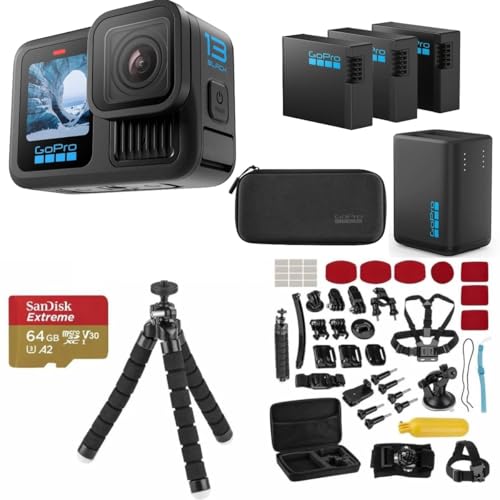
You own GoPro mounts, shoot in bright lightGoPro HERO13 Black bundle$439.00
You talk to the camera as much as you rideInsta360 Ace Pro 2$389.99
Never miss the shot: capture everything, frame laterInsta360 X5$549.99
360 capture on a helmet, minimum weightInsta360 X4 Air$399.99
Hands-free wearable POV, no visible cameraInsta360 GO 3S$379.99
Kids, beaters, and boat bags under $100AKASO EK7000$69.99
Travel and family, no crashes or submersionDJI Osmo Pocket 3$439.00

The action camera market finally has a real three-way fight. GoPro's decade of dominance met DJI's big-sensor assault and Insta360's angle-of-attack creativity, and 2026 buyers inherit the spoils: larger sensors that survive dim light, batteries that outlast the adventure, 8K 360 capture, and budget options that would have been flagships five years ago. The ranking below reflects how these cameras actually perform across a year of mixed shooting, not one sunny launch week.

We ranked twelve cameras on image quality across real light conditions, stabilization, battery endurance, durability, and honest value, including 360 and wearable formats where they beat the classic box design at its own game. Every link goes to Amazon with our affiliate tag; we earn a small commission, at no cost to you, when you buy through us. The rest of the creator kit lives in our photography gear hub, our beginner drones guide, and our gimbals guide.

In a Hurry?

The 3 picks that cover most readers. Tap to read the full review or buy direct.

Best Overall

DJI Osmo Action 5 Pro

DJI Osmo Action 5 Pro

$309.00

Big 1/1.3-inch sensor, class-leading battery, 4K/120. The complete action camera.

Best Value

DJI Osmo Action 4

DJI Osmo Action 4

$199.00

Last year's flagship sensor at a budget price. The smartest $199 in the category.

Best 360

Insta360 X5

Insta360 X5

$549.99

8K in every direction, invisible selfie stick, replaceable lenses. Never miss the shot.

Best OverallOur Pick

Sensor

1/1.3-inch CMOS

Video

4K/120fps

Screens

Dual OLED touchscreens

Storage

47GB built-in + microSD

Waterproof

Rated for depth without a case (listed)

Pros

  • Large sensor: the best low-light footage in class
  • Battery endurance that embarrasses older action cams
  • 47GB internal storage saves forgotten-card days
  • Magnetic quick-release mounting is genuinely fast

Cons

  • GoPro's accessory ecosystem is still broader
  • Neutral color profile needs a light grade for punch

Action cameras spent a decade competing on frame rates while every buyer's actual footage died at sunset. DJI won this generation by fixing that instead. The Osmo Action 5 Pro's 1/1.3-inch sensor is the same class of chip DJI puts in its Mini drones, and the result is the first action camera whose dusk, dawn, forest-shade, and indoor footage you keep rather than apologize for. Add 4K at 120fps for slow motion, RockSteady stabilization that irons out singletrack, and subject tracking borrowed from the drone division, and the spec sheet reads like the category's wishlist.

The quiet killer feature is endurance. Between the big battery, efficient processor, and cold-weather tolerance, the 5 Pro shoots multiples of what the classic action cams of a few years ago managed, and the 47GB of built-in storage has rescued every owner who has ever arrived at the trailhead with the microSD still in their laptop.

Choosing it over the GoPro HERO13 below comes down to what you shoot. GoPro still owns the accessory aisle and its punchy straight-out-of-camera color; DJI owns image quality when light gets difficult, battery life, and the magnetic mount workflow. We think most buyers are better served by the DJI, which is why it leads this guide, and the Essential Combo at $309 is the sensible configuration: camera, battery, and the core mounts, with the Adventure Combo below for anyone who wants the multi-battery kit. Pair it with a fast card from our SD cards guide; 4K/120 is merciless on slow storage.

Our Pick

The best all-around action camera you can buy in 2026. The Osmo Action 5 Pro pairs a large 1/1.3-inch sensor with 4K/120 capture, class-leading battery endurance, dual bright OLED touchscreens, 47GB of built-in storage, and subject tracking, and it does the one thing GoPros historically fumble: keep shooting in dim light without turning to mush.

Buy this if you want one rugged camera for everything: trail runs, ski days, pool days, bike commutes, travel b-roll. The big sensor means dawn starts and dusk descents stay usable, the battery runs multiples of what older action cams managed in the cold, and the magnetic quick-release mounts move it between helmet, chest, and tripod in seconds.

What we don't like

GoPro's mount ecosystem and third-party accessory universe is still larger, DJI's color profile out of camera is more neutral than GoPro's punchy default (a taste question), and the app requires the usual DJI account sign-in ritual.

Best Stabilized AlternativeWildcard

Sensor

1-inch CMOS

Video

4K/120fps

Stabilization

3-axis mechanical gimbal

Screen

Rotating 2-inch touchscreen

Tracking

Face and object tracking

Pros

  • 1-inch sensor: the best image quality on this page
  • Mechanical gimbal beats every electronic stabilizer here
  • Instant vertical shooting via rotating screen
  • Pocketable and always ready

Cons

  • Not waterproof, not crash-rated
  • Gimbal head is a fragile part to baby

Here is the question that saves people $400 mistakes: is your action waterproof action, or is it just life moving quickly? Action cameras are armored for impacts and depth, and they pay for that armor with small sensors and electronic stabilization. The Osmo Pocket 3 makes the opposite trade: no armor, and in exchange, a 1-inch sensor, the largest on this page by far, floating on a true mechanical 3-axis gimbal. Walking tours, kids' birthdays, restaurant light, night markets: the Pocket 3's footage in these settings is not slightly better than an action cam's, it is a different sport.

It has quietly become the default camera of the travel-creator class for exactly this reason, and its rotating screen, which flips the sensor to native vertical for Reels and TikTok, shows how completely DJI understood the audience. We put it in this guide because half the people searching 'best action camera' describe Pocket 3 use cases when you ask what they will film. If your footage involves handlebars, surf, or snow, buy the Osmo Action 5 Pro and mount it hard. If it involves airports, strollers, and golden-hour walks, buy this and thank the wildcard slot. It also anchors the phone-free tier of our gimbals guide, where its gimbal-with-built-in-camera idea competes against gimbals you add a camera to.

Wildcard

The wildcard that wins more carts than any camera on this page. The Osmo Pocket 3 is not an action camera: it is a 1-inch sensor riding a real mechanical gimbal in a pocket stick. If your 'action' is travel, family, and city walking rather than impacts and submersion, it films all of it better than anything above.

Buy this if you were shopping action cameras because they are small and stabilized, not because you need waterproof crashproofing. The 1-inch sensor embarrasses every action cam in low light, the mechanical gimbal makes walking footage look like a tracking shot, and the rotating screen flips to vertical capture instantly.

What we don't like

It is not waterproof or crash-rated, so genuine impact sports are disqualified, and the gimbal head demands the gentle handling a bare action cam never asks for.

Best Full KitAlso Great

Sensor

1/1.3-inch CMOS

Video

4K/120fps

Batteries

3, with charging case

Extras

Extension rod, quick-release mounts

Storage

47GB built-in + microSD

Pros

  • Three batteries plus a case that charges on the go
  • Same best-in-class camera as our top pick
  • Extension rod included for POV and selfie framing
  • Cheaper than buying the pieces separately

Cons

  • $80 premium wasted if you never drain battery one

Every action camera review ends with the same footnote, so let us promote it to the headline: you will want more batteries. Cold mornings, 4K/120 slow motion, and long days all tax the pack, and the Adventure Combo is DJI acknowledging the pattern. Three batteries cover a full ski day or a weekend of travel shooting, and the charging case is smarter than it sounds: it charges the spares from its own cell while you shoot, so a backpack becomes a rolling power station without hunting outlets.

The math mirrors every bundle in this guide: bought separately, the batteries, case, and rod comfortably exceed the $80 difference. So the question is honest usage. Commuters, pool parents, and short-burst shooters should keep the $80 and buy the Essential Combo; travelers, skiers, and anyone who has ever watched a battery icon die at the best light of the day should take the Adventure Combo and never think about power again. Either way you are buying the best action camera of the generation. If your shooting leans more talking-to-camera than action, cross-shop our vlogging cameras guide before committing; the overlap is bigger than the marketing admits.

Also Great

The same class-leading camera with the battery problem pre-solved: three packs, a charging case that tops them up in your bag, and an extension rod. For $80 over the Essential Combo, it is the configuration for anyone whose adventures outlast a single charge.

Buy this if your typical outing is measured in days or full afternoons rather than hours: ski trips, bikepacking, travel weeks, long shoots. The charging case is the piece that changes behavior; dead batteries go in, charged ones come out, and the camera effectively never stops.

What we don't like

It is $80 more for accessories you may not need if you shoot in short bursts near power, and the kit's value depends entirely on you actually draining multiple batteries.

Best ValueBest Value

Sensor

1/1.3-inch CMOS

Video

4K/120fps

Stabilization

RockSteady

Waterproof

Rated without a case (listed)

Kit

Essential Combo mounts included

Pros

  • Same sensor class as the current flagship for $199
  • 4K/120 and strong stabilization
  • Real low-light capability at a budget price
  • Uses the same magnetic mount system as the 5 Pro

Cons

  • Battery endurance well behind the 5 Pro
  • No internal storage backstop

The best value in any camera category is usually last year's excellent thing, and the Action 4 is the purest current example. When it launched, its 1/1.3-inch sensor was the disruption that forced the whole class upmarket; now that same sensor sells for $199 in the Essential Combo. The footage, stabilization, and waterproofing that earned rave reviews did not expire when the 5 Pro shipped. In good light and honest daylight, clips from the two are hard to tell apart.

What the extra $110 for the 5 Pro buys is everything around the footage: substantially longer battery life, the 47GB internal storage, brighter screens, and subject tracking. Those are real, daily-felt advantages for heavy users, and invisible ones for the family that films pool jumps and bike rides ten weekends a year. Our advice is unusually clean here: heavy users buy the 5 Pro, everyone else buys the Action 4 and a spare battery, and nobody in either camp will feel cheated. The shared magnetic mount ecosystem means an upgrade later carries all your accessories forward, which is exactly how a value pick should retire.

Best Value

Last generation's near-flagship at a $199 clearance-tier price, with the same headline 1/1.3-inch sensor as the 5 Pro. The Action 4 gives up the newer model's battery gains, internal storage, and tracking, and keeps the thing that matters most: big-sensor image quality that still beats budget cameras hollow.

Buy this if you want flagship-grade footage at half the flagship's street presence. The sensor is the spec that shows up in your clips, and the Action 4 shares it with the 5 Pro. For casual and first-time action cam buyers, this is the smartest $199 in the category.

What we don't like

Battery life is a clear step behind the 5 Pro, there is no built-in storage safety net, and DJI will retire it eventually; buy it as a knowing bargain, not as the latest thing.

Best GoProAlso Great

Video

5.3K60, 27MP stills

Stabilization

HyperSmooth

Batteries

3 Enduro + dual charger (bundle)

Storage

64GB SD included

Lens

HB-series lens mod compatible

Pros

  • 5.3K capture and reference-grade stabilization
  • Best out-of-camera color in the class
  • Unmatched mount and accessory ecosystem
  • Bundle fixes the battery weakness upfront

Cons

  • Low-light footage trails the big-sensor DJI
  • App pushes subscription upsells

GoPro invented this category, and the HERO13 Black is the most complete expression of its formula: maximum resolution, maximum smoothness, maximum ecosystem. 5.3K at 60 frames gives you crop room no 4K rival can match, HyperSmooth remains the stabilization other brands get compared to, and the color profile is the one that made action footage look like energy-drink commercials in the first place. The HB-series lens mods, ultra-wide and macro attachments that snap over the stock lens, are an expansion path no competitor offers.

The honest comparison with our top pick has two halves. Where light is plentiful, ski slopes at noon, surf lineups, summer trails, the GoPro's output is arguably the best-looking in the guide without touching an editor. Where light is scarce, the physics of its smaller sensor assert themselves and the Osmo Action 5 Pro pulls visibly ahead. Ecosystem is the tiebreaker: a decade of GoPro mounts in your gear bin is a real asset, and this bundle, with three Enduro batteries, the dual charger, and a 64GB card included at $439, is the right way to buy in. First-timer with no mounts and mixed-light ambitions: take the DJI. GoPro loyalist or bright-light shooter: the HERO13 will not disappoint you. Either camera earns its place in a serious gear kit.

Also Great

The definitive GoPro, bundled properly: HERO13 Black with three Enduro batteries, dual charger, and a 64GB card. 5.3K60 capture, HyperSmooth stabilization that remains the reference, the punchiest straight-out-of-camera color in the class, and the deepest mount and accessory ecosystem ever built around a camera.

Buy this if you live inside the GoPro ecosystem or want to: every helmet, every harness, every third-party clamp on earth fits it, the new HB-series lens mods extend it further, and GoPro's color science makes footage look finished the moment it leaves the card. The three-battery bundle addresses the brand's historic weakness out of the box.

What we don't like

The smaller sensor gives up real ground to the Osmo Action 5 Pro once light drops, and even with Enduro packs, battery endurance trails DJI's. GoPro's subscription upsells inside the app remain persistent.

Best Low-Light ChallengerAlso Great

Sensor

1/1.3-inch, Leica co-engineered lens

Video

8K capture

Screen

Large flip-up touchscreen

Batteries

2 (bundle)

Waterproof

Rated without a case (listed)

Pros

  • 8K gives serious reframing headroom in the edit
  • Flip-up screen is the best selfie-framing solution in class
  • Big sensor and Leica optics: real low-light chops
  • Dual-battery bundle priced under the GoPro

Cons

  • Chunkier than rivals on a helmet
  • Smallest accessory ecosystem of the big three
  • 8K workflow taxes storage and editing hardware

Insta360 spent years being the weird 360 brand, then quietly built a conventional action camera good enough to worry both giants. The Ace Pro 2's formula is straightforward: match DJI's big-sensor advantage, borrow Leica's optical credibility, raise the resolution ceiling to 8K, and add the one physical feature action cameras always lacked, a proper flip-up screen for framing yourself. For the creator who narrates their adventures to camera, that screen alone justifies the purchase; guessing at framing is how a decade of action-cam vlogs got their signature crooked horizon.

In use, the 8K number is less about delivering 8K and more about the edit: shoot wide, then crop to a punchy 4K frame, stabilize further, or pull a vertical cut for Shorts without visible quality loss. That workflow flexibility is something our vlogging camera picks offer and traditional action cams historically did not. The costs are physical bulk on a helmet, an accessory catalog that trails GoPro's badly, and files that will make an aging laptop wheeze. Verdict: third place overall, first place for self-filming creators, and the strongest evidence yet that this category is now a genuine three-way fight.

Also Great

The third flagship, and the one spec-sheet shoppers underestimate. The Ace Pro 2 pairs a 1/1.3-inch sensor and Leica co-engineered optics with 8K capture, a big flip-up screen that vloggers love, and a dual-battery bundle at $389.99. On image quality it trades blows with the DJI; on framing flexibility it beats everyone.

Buy this if you film yourself as much as your surroundings. The large flip-up screen turns the Ace Pro 2 into a legitimate vlogging rig on a mountain, something neither the GoPro nor the DJI matches as gracefully, and the 8K headroom lets you reframe and punch in during the edit without losing sharpness.

What we don't like

It is bulkier than the GoPro and DJI, the mount ecosystem is the smallest of the big three, and 8K files demand fast cards and a patient computer.

Austin Art Insider

Free weekly guide to galleries, exhibitions & collecting in Austin.

Best 360 CameraAlso Great

Video

8K 360

Lenses

User-replaceable

Low light

Class-leading for 360 (listed)

Trick

Invisible selfie stick effect

Waterproof

Rated without a case (listed)

Pros

  • Shoot first, frame later: never miss the moment
  • Invisible-stick third-person shots look like drone footage
  • Replaceable lenses fix the category's fatal flaw
  • Best-in-class 360 low light

Cons

  • Every clip needs a reframing pass in the edit
  • Premium price

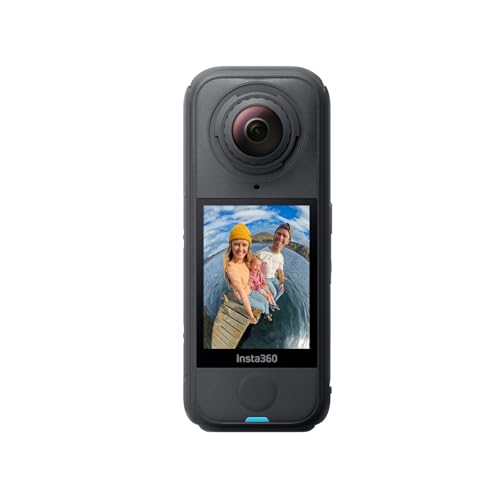
A 360 camera is the only camera that cannot miss the shot, and the X5 is the first one without a big asterisk attached. Previous generations traded away too much: soft output, hopeless low light, and front lenses that one pebble could end permanently. The X5 answers all three, with 8K capture that survives reframing into crisp flat video, sensors that keep twilight rides usable, and lenses you can swap yourself for the price of a lens cap rather than a replacement camera.

The invisible selfie stick remains the category's party trick and still stuns people who have not seen it: the stick is erased where the two lenses' views meet, leaving a floating third-person camera orbiting you mid-ride. It is the closest thing to drone footage you can get in places drones cannot go, indoors, in crowds, on trails under canopy, and it pairs beautifully with an actual drone from our beginner drones guide for the angles each does best. The honest cost is the edit: every 360 clip is a decision waiting to be made, and creators who just want ready-to-post footage will be happier with the flat cameras above. For everyone who edits, the X5 is the most creatively liberating camera in this entire guide.

Also Great

The best 360 camera ever made. The X5 shoots 8K in every direction at once, so you frame the shot after the fact, erases its own selfie stick for impossible third-person angles, handles low light far better than any 360 camera before it, and, critically, has user-replaceable lenses, ending the category's scratched-lens heartbreak.

Buy this if you would rather capture everything and direct the camera later. Motorcyclists, skiers, travel creators, and anyone filming chaotic family moments get the superpower of never missing the action because the camera was pointed wrong, plus drone-like orbit shots with no drone.

What we don't like

Reframing every clip is a real editing commitment, flat-lens cameras still win on single-direction detail, and $549.99 is flagship-plus money.

Best Lightweight 360Also Great

Video

8K 360

Weight

165 g

Lenses

User-replaceable

Trick

Invisible selfie stick effect

Best for

Helmet and travel-light shooters

Pros

  • Full 8K 360 workflow at 165 grams
  • Replaceable lenses like the flagship
  • $150 cheaper than the X5
  • Barely noticeable on a helmet

Cons

  • Gives up low-light ground to the X5
  • Lighter build, lighter ruggedness

The X4 Air answers the most common objection to 360 cameras, which was never the concept; it was the lump on the helmet. At 165 grams the Air weighs about what two golf balls do, and mounted on a bike helmet or hat brim it simply stops registering, which changes how often it comes along, which changes how much footage you actually get. The capture pipeline is the real thing: 8K spherical video, reframed in the same app as the X5, with the same invisible-stick effect and the same replaceable-lens insurance.

What the $150 savings costs you is margin. The X5's larger sensors keep evening footage alive where the Air's start to grain over, and the flagship's build takes crashes and weather with more shrug. If your 360 ambitions run to golden-hour rides, travel days, and family chaos, the Air is genuinely all the camera the job needs, and its weight means it will be there for more of those moments. If you ride at dawn, ski in storms, or sell your footage, spend up. Both slot into a creator kit alongside a compact tripod that doubles as a 360 selfie stick base.

Also Great

The 360 experience at 165 grams and $150 less. The X4 Air keeps 8K 360 capture, the invisible selfie stick, and replaceable lenses in a body light enough to forget on a helmet or hat brim. For everyone tempted by the X5 but flinching at its price or heft, this is the smart middle path.

Buy this if weight is the enemy: helmet mounts, hat mounts, long hikes, travel carry-ons. At 165 grams it disappears in ways the X5 does not, and the core magic, shoot everything, frame later, erase the stick, is fully intact at $399.99.

What we don't like

Low-light performance and ruggedness trail the X5, and the lighter build feels it; this is the 360 camera for fair-weather adventures more than storm-chasing.

Best Budget 360Budget 360

Video

5.6K 360

Photos

16.6MP 360, PowerPano

Waterproof

Yes (listed)

Mounts

Standard GoPro ecosystem

Best for

First 360 camera on a budget

Pros

  • Full 360 workflow for $229
  • Uses existing GoPro mounts
  • Waterproof without a housing
  • PowerPano stills are an underrated bonus

Cons

  • 5.6K reframes soft next to 8K rivals
  • Weak in low light
  • Older platform in GoPro's lineup

Every interesting format needs a cheap on-ramp, and for 360 video the GoPro MAX is it. Yes, it is the elder statesman of this guide, and yes, its 5.6K spherical resolution reframes to flat clips that look a generation behind the Insta360s above, because they are. But the concepts you are really buying, capture everything, direct the shot afterward, erase the stick, export impossible angles, are all here, working, for $229 on a platform that clips into the crate of GoPro mounts half the population already owns.

We recommend it in one specific situation: curiosity at a controlled price. If reframing footage turns out to bore you, as it does some shooters, you are out a fraction of flagship money and still own a waterproof panoramic camera with GoPro's PowerPano party trick. If it hooks you, you will know precisely which X5 features you are paying for when you upgrade, and the MAX becomes the loaner or the backup. Buyers who already know they love the format should skip straight to the X5 or X4 Air; this pick is for the 360-curious, and at this price it serves them perfectly.

Budget 360

The cheapest legitimate ticket into 360 shooting. The GoPro MAX is an older camera at a clearance price: 5.6K spherical video, full waterproofing, GoPro's mount ecosystem, and the same shoot-everything workflow, at $229. Its resolution shows its age, and its price forgives it.

Buy this if you want to find out whether 360 shooting suits you before committing Insta360 X5 money. The MAX teaches the whole workflow, spherical capture, reframing, over-capture exports, for the price of a mid-tier flat camera, and it snaps onto every GoPro mount you may already own.

What we don't like

5.6K spherical reframes to noticeably softer flat video than the 8K generation, low light is weak by modern standards, and GoPro has newer 360 hardware above it in the lineup.

Best Tiny POV CameraAlso Great

Video

4K

Size

Thumb-sized capsule + Action Pod

Storage

128 GB built-in

Mounting

Magnet pendant, clip, pivot stand

Best for

Wearable, hands-free POV

Pros

  • Genuinely wearable: the camera people forget you have
  • Magnetic mounting opens angles no rival can reach
  • Action Pod adds a screen and vlog-style control
  • 128GB built in, no card required

Cons

  • Small sensor struggles in dim light
  • Short runtime on the bare capsule
  • Proprietary accessory system

The GO 3S answers a question the rest of this guide does not ask: what if the camera just was not there? Every other pick announces itself, on a helmet, on a stick, in your hand. The GO 3S hides: a capsule that magnets to a shirt via a pendant, clips to a cap brim, or sticks to any steel surface, filming stabilized 4K from angles that look impossible because no visible camera occupies them. For makers, cooks, parents, and commuters, this is the difference between footage of the thing and footage interrupted by holding a camera at the thing.

The Action Pod, a charging case with a flip screen that remote-controls the capsule, is the system's second act, turning the wearable into a passable desk vlogging camera and solving the bare capsule's short runtime. The compromises are honest small-camera physics: dim light gets noisy fast, and the proprietary mounts mean you buy into Insta360's little ecosystem. Our take: the GO 3S is a brilliant second camera and a niche first one. If it is your only camera, one of the flagships above serves more situations; if you already own a main shooter from this guide or our mirrorless guide, the GO 3S adds angles nothing else on the market can, at any price.

Also Great

The action camera you wear instead of mount. The GO 3S is a 4K camera the size of a thumb that magnets to your shirt, clips to a hat, or perches anywhere a normal camera cannot, with a screened Action Pod case that turns it into a tiny vlogging rig. No other camera here disappears like this one.

Buy this for hands-free POV without the helmet-mounted-appliance look: cooking videos, dog walks, workshop builds, kid chasing, cycling commutes. The magnetic pendant hangs it at chest height under a shirt, and one tap captures the moment your hands were too busy to film.

What we don't like

Physics is undefeated: the tiny sensor trails every full-size camera here once light drops, battery life on the bare unit is short (the Pod extends it), and the small mount ecosystem is proprietary.

Best Budget with TouchscreenBudget Pick

Video

4K/30fps

Screens

Front + rear touchscreen

Stabilization

EIS 2.0

Waterproof

With included housing

Extras

Wrist remote included

Pros

  • Dual screens at a $119.99 price
  • Perfectly good bright-light 4K footage
  • Remote and mount kit in the box
  • Cheap enough to treat carelessly

Cons

  • 4K capped at 30fps
  • Needs its housing for water sports
  • Budget sensor shows in dim light

The budget action cam used to be a footage lottery; AKASO is the brand that made it a safe bet. The Brave 7 LE is their best-balanced card: a real front screen for framing yourself, responsive rear touchscreen, honest 4K30 that looks clean in daylight, stabilization that smooths bike paths and pool decks, and a wrist remote in the box. Nothing about it is flagship, and everything about it works, which at $119.99 is the entire assignment.

Understand what the missing money buys elsewhere and you can shop this tier with confidence: the flagships above add bigger sensors (low light), higher frame rates (slow motion), housing-free waterproofing, and mount ecosystems. If your footage happens at noon at the lake, most of that premium is invisible in the result. Our specific advice: this is the right camera for kids and casual memory-keeping, the wrong camera for anyone who already knows they want to edit and grade. And if $119.99 is still more than the job requires, the EK7000 below runs the same play for $50 less. Either way, add a decent microSD card; budget cameras are the most sensitive of all to slow storage.

Budget Pick

The best action camera under $150. The Brave 7 LE brings dual screens for selfie framing, 4K30 capture, electronic stabilization, and a remote control at $119.99, a feature list the big brands charged triple for not long ago. It is the budget pick with the fewest asterisks.

Buy this for teenagers, pool bags, bike handlebars, and anyone who wants adventure footage without adventure-flagship anxiety. The front screen makes framing yourself trivial, and the price makes loss, theft, and wipeouts a shrug instead of a claim.

What we don't like

4K tops out at 30fps, electronic stabilization and the small sensor mean footage lives a clear tier below the flagships, and the waterproofing relies on the included housing rather than the bare body.

Best Under $100Budget Pick

Video

4K/30fps

Photos

20MP

Waterproof

131ft with included housing (listed)

Extras

Remote + mount kit included

Best for

Kids, beaters, risky mounting spots

Pros

  • A working 4K action camera for $69.99
  • Housing, remote, and mounts all in the box
  • GoPro-pattern mounts fit everything
  • Zero anxiety about loss or damage

Cons

  • No meaningful stabilization
  • Needs bright light to look good
  • Dated interface

Some products persist because nothing needs replacing at their price, and the EK7000 is the action-cam example. It records real 4K30 that looks perfectly respectable in sunshine, survives 131 feet underwater inside its included housing, and ships with a remote and enough mounts to rig a small film production, for $69.99. Its million-strong ownership base is not confused; they bought exactly what they needed and no more.

The use cases practically write themselves. It is the camera for the eight-year-old who wants to film cannonballs, the one zip-tied somewhere a flagship should never go, the glovebox camera, the loaner. What it is not is a stealth flagship: without real stabilization, handheld and helmet footage keeps its shake, and cloudy days flatten the image quickly. Buyers who will notice those things have eleven better options above. Buyers who will not, and that is an enormous, happy group, should stop scrolling and spend the $69.99. This is the cheapest camera we have ever been able to recommend without crossing our fingers, and it makes a genuinely great gift alongside anything from our gear guides.

Budget Pick

The people's action camera. The EK7000 has spent years as the default answer to 'cheapest camera that actually works,' and at $69.99 with a waterproof housing, remote, and mount kit, it remains exactly that: honest daylight 4K30 for one-fifth of flagship money.

Buy this as a first camera for a kid, a beater for the boat, or a set-and-forget mount camera you would never risk a flagship on. The included housing survives real depth, the mounts fit the GoPro pattern, and the whole kit costs less than one flagship battery bundle.

What we don't like

No stabilization worth the name, a dated sensor that wants bright sun, and menus from a simpler era. It is a $70 camera that behaves like a $70 camera, which is precisely its charm.

Head-to-Head

How the top picks compare

The two matchups that decide most action-camera purchases: the new king against the old one, and the 360 flagships against each other.

Osmo Action 5 Pro vs GoPro HERO13 Black: The Title Fight

DJI's big sensor against GoPro's big ecosystem.

DJI Osmo Action 5 Pro

DJI

Winner

DJI Osmo Action 5 Pro

Largest sensor in class, best low light, longest battery

$309.00
Check Price →
GoPro HERO13 Black (Bundle)

GoPro

GoPro HERO13 Black (Bundle)

5.3K60, HyperSmooth, unmatched mount ecosystem

$439.00
Check Price →

Our verdict

Winner: DJI DJI Osmo Action 5 Pro. The DJI wins on the fundamentals that show up in a year of real footage. Its 1/1.3-inch sensor holds dawn, dusk, shade, and indoor light where the GoPro's smaller chip surrenders to noise, and low light is where adventure footage actually happens: first chair, last run, campfire, forest canopy. Battery endurance compounds the advantage, and at $309 for the Essential Combo it undercuts the GoPro bundle by $130. The HERO13's case remains genuinely strong in three places: its 5.3K60 capture out-resolves the DJI with crop room to spare, its color science produces the most share-ready footage in the class without an edit, and its mount ecosystem, a decade deep and supplemented by the HB-series lens mods, means there is a GoPro accessory for problems you have not had yet. Our ruling: first-time buyers and mixed-light shooters take the DJI and never look back, while GoPro veterans with mount collections and bright-light habits stay loyal with zero regret. The fact that this is now a close fight is itself the news; five years ago it would have been a coronation.

Buy the DJI

you shoot in mixed and fading light and want the longest battery.

Buy the GoPro

you own GoPro mounts already or shoot mostly in bright sun.

Insta360 X5 vs X4 Air: Which 360 Camera Earns the Premium?

The 360 flagship against its featherweight sibling.

Insta360 X5

Insta360

Winner

Insta360 X5

Best 360 low light, toughest build, replaceable lenses

$549.99
Check Price →
Insta360 X4 Air

Insta360

Insta360 X4 Air

Full 8K 360 workflow at just 165 grams

$399.99
Check Price →

Our verdict

Winner: Insta360 Insta360 X5. The X5 wins the head-to-head on capability: its larger sensors keep twilight and indoor spheres clean where the Air's start to grain, its build tolerates the crashes and weather that 360 cameras on helmets inevitably meet, and its low-light edge widens exactly when footage gets interesting, at dawn patrol and dusk descents. Replaceable lenses on both models neutralize what used to be the category's biggest ownership risk, so the decision is purely light, weight, and money. And that is where the Air makes its stand: at 165 grams it is barely a third of the mounting burden, which in practice means it comes along more often, and a 360 camera's whole value is being present when the unmissable happens. At $150 less, it delivers the identical 8K workflow, invisible-stick effect, and app pipeline. Our ruling mirrors the use case: committed 360 shooters, low-light riders, and anyone monetizing footage should pay for the X5's margins, while travel-light creators, helmet-mounters, and first-time 360 buyers get almost the whole experience from the Air and can bank the difference toward the fast microSD card this format demands.

Buy the Insta360

you shoot at dawn and dusk, crash sometimes, or sell your footage.

Buy the Insta360

weight decides whether the camera comes along at all.

How we
chose

We judged action cameras the way a year of ownership judges them, not the way a launch-day demo reel does:

  • Image quality across real light. Noon footage flatters everything; we weight dawn, dusk, forest shade, and indoor capture heavily, which is where sensor size separates the field and where this generation's DJI and Insta360 hardware pulled ahead.
  • Stabilization and horizon behavior. Electronic stabilization quality, horizon lock, and how footage holds together on rough ground at speed.
  • Endurance. Battery life in realistic mixed shooting, cold-weather behavior, and how sanely each system recharges in the field. Bundles earn credit for solving this honestly.
  • Durability and mounting. Housing-free waterproof ratings, crash tolerance, and the depth of each brand's mounting ecosystem, where GoPro's decade of accessories still counts for real points.
  • Honest value and verified listings. Every product here is pulled from Amazon's live catalog with its current price and image at publish time. Prices move; treat numbers as our last check, and never buy an action camera the week before a holiday sale without checking.

Share this guide

Share

Common Questions

Frequently Asked Questions

Have art
to sell?

Austin Gallery specializes in selling inherited art, estate collections, and fine art with zero upfront fees. Get a free evaluation today.