How to Ship Art Without Damage: Step-by-Step Packing Guide (2026)
The complete guide to shipping art safely. Learn DIY packing techniques, when to hire professionals, carrier comparisons, insurance options, international shipping requirements, and detailed cost breakdowns for protecting your art in transit.
By Austin Gallery
Packing materials cost $4 to $7 for a small work on paper, $11 to $27 for a framed piece in a mirror box, $15 to $30 for a large canvas in a telescoping box, and $150 to $400 for a professional custom crate. Every scenario runs on the same principle: acid-free next to the art, rigid support against flexing, and an inner box inside an outer box. Updated July 2026.
What it costs to ship art, by what you are shipping
What you are shipping
Method
Materials per shipment
Small works on paper (under 18 x 24 in)
Tissue, rigid stiffener, flat or padded mailer
$4 to $7 budget, $11 to $17 professional grade
Framed works, small to medium
Mirror or picture box, corner protectors, double-boxed
$11 to $17 budget, $20 to $27 heavy duty
Large canvas, unframed, under 48 x 60 in and under $2,000 value
Telescoping box
$15 to $30
Large canvas, moderate value or multiples
DIY wooden crate
$40 to $80
Large canvas, high value or gallery and auction bound
Professional custom crate
$150 to $400
Frequent shippers and traveling shows
Airfloat StrongBox, reusable
$200 to $500
Sculpture and 3D objects
Double-box with a foam insert
$38 to $85 with a DIY insert; $200 to $600 and up for a full custom crate
Standard carrier coverage rarely exceeds $100 for artwork, which means on anything worth more than that, insurance is not optional.
Our companion guide on how to pack and ship art safely covers the step-by-step process. This guide is the product list: the specific boxes, padding, tape, and archival materials for every scenario above, with real prices and direct purchase links.
Key Takeaways
Always use acid-free materials when wrapping original artwork for shipping
Double-box method is the gold standard — inner box with padding, outer box with more padding
Insurance is essential: standard carrier coverage rarely exceeds $100 for art
Flat art should be sandwiched between rigid cardboard or foam board, not bubble wrap alone
At Austin Gallery, we ship hundreds of artworks per year to buyers nationwide. Every recommendation below comes from hard-won experience: products that survived cross-country ground shipping in July heat, overnight air freight for auction deadlines, and everything in between. We have also included budget and professional-grade options for each category, because a $30 print does not need the same packaging investment as a $5,000 oil painting.
We have also included budget and professional-grade options for each category, because a $30 print does not need the same packaging investment as a $5,000 oil painting.
Essential Supplies Every Art Shipper Needs
Before diving into scenario-specific recommendations, here is the baseline kit that belongs in every art shipping station. These are the materials you will reach for regardless of what you are packing.
Acid-Free Tissue Paper
Every artwork -- framed or unframed, canvas or paper -- should have a layer of acid-free tissue between it and any other material. Standard tissue paper and newspaper contain acids that transfer to art surfaces, causing yellowing, foxing, and staining that is often irreversible.
Lineco Acid-Free Interleaving Tissue is the conservator's standard. Buffered to actively neutralize acids, this tissue works as a first-contact layer over paint surfaces, between stacked prints, and as wrapping for unframed works. A single pack contains enough sheets for dozens of shipments. At roughly $15-20 per pack, it is the cheapest insurance you can buy for your artwork.
$15
At roughly -20 per pack, it is the cheapest insurance you can buy for your artwork
Oils from your hands are a slow-acting enemy of art on paper, unvarnished paintings, and gilded frames. Always handle artwork with clean cotton gloves, especially during the packing process when you are repeatedly touching surfaces.
Archival cotton gloves cost just a few dollars per pair and should be treated as disposable -- swap to a fresh pair any time they get dusty or damp. Keep a box at your packing station and make gloving up a reflex before touching any artwork.
Bubble Wrap
Bubble wrap provides the shock absorption layer between your artwork and the outside world. For art shipping, you want small-bubble wrap (3/16-inch bubbles) rather than large-bubble. Small bubbles distribute impact force more evenly and conform better to frame edges and corners.
Duck Brand Bubble Wrap Roll (12 in. x 30 ft.) is widely available, affordable at around $7-10 per roll, and perforated every 12 inches for clean cuts. For larger operations, buy in bulk from ULINE (item BW316S12P) where 175-foot rolls drop the per-foot cost significantly.
Critical rule: Never let bubble wrap touch the artwork surface directly. Always place acid-free tissue or glassine between the art and the bubble wrap. The plastic can off-gas and leave circular impressions on paint and paper, especially in warm shipping conditions.
Packing Tape
Pro Tip
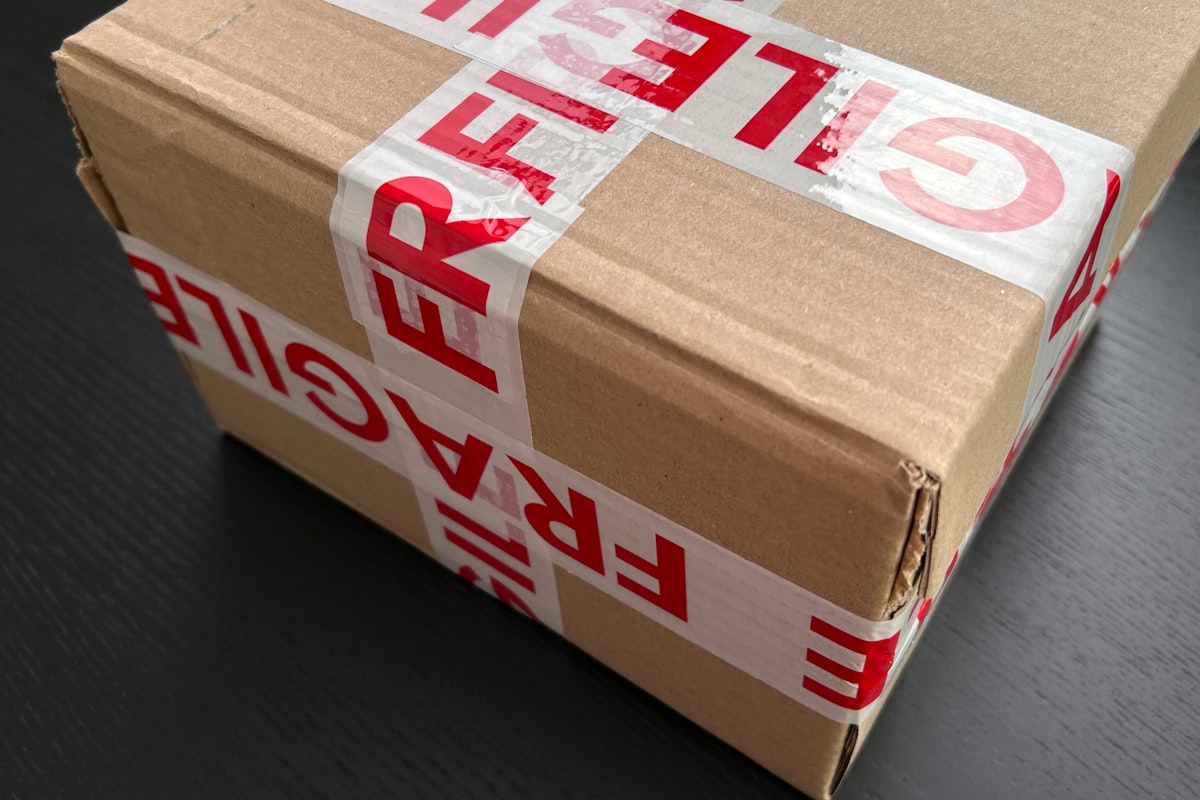
Mark packages "FRAGILE — ORIGINAL ARTWORK" on all sides, and add "DO NOT BEND" for works on paper. Carriers handle labeled packages more carefully.
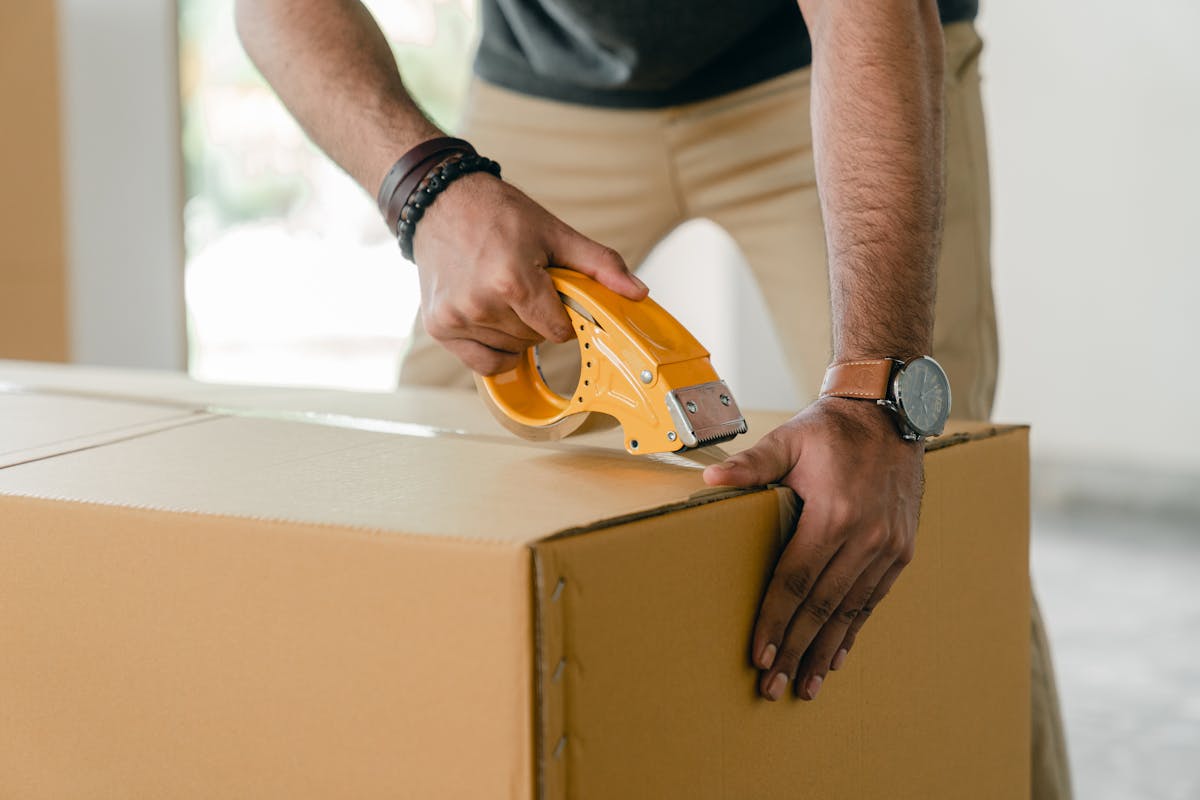
Not all tape is created equal. Cheap tape splits, loses adhesion in temperature extremes, and leaves residue. For art shipping, use a heavy-duty, 2.6-mil or thicker shipping tape.
Scotch Heavy Duty Shipping Packing Tape (6-Pack) is the standard in our shipping room. The solvent-free adhesive holds in both heat and cold, the 1.88-inch width covers box seams properly, and a 6-pack at around $18-22 keeps your cost per roll under $4. Always tape along every seam -- top, bottom, and side flaps -- and add an extra strip of reinforcing tape across the center of the top and bottom.
Frame corners are the most vulnerable point during shipping. Even a small impact can crack mitered joints, chip gilding, or dent metal frames. Cardboard corner protectors wrap around each corner and absorb the blow.
Golden State Art Cardboard Corner Protectors (100-Pack) are adjustable to fit frames from 1 inch to 2.1 inches deep, fold together in seconds without tools, and cost roughly $12-15 per hundred. That is about $0.60 per frame for meaningful corner protection. These are the protectors we use at Austin Gallery for every framed work we ship.
For higher-value pieces, layer foam corner protectors over the cardboard ones for double protection. Foam corner protectors (24-pack) run about $10-14 and are reusable if your shipping volume warrants it.
Ship art on Monday or Tuesday. Weekend warehouse storage exposes packages to temperature extremes that can damage oil paintings and watercolors.
Works on paper under roughly 18 x 24 inches -- prints, drawings, watercolors, photographs -- are the simplest and least expensive category to ship safely.
What You Need
Acid-free tissue paper (wrapping layer)
Rigid stiffener boards (two pieces, slightly larger than the artwork)
Flat mailer or portfolio mailer
Packing tape
Product Recommendations
Stiffener boards: Use two pieces of rigid corrugated cardboard or foam core cut 1-2 inches larger than the artwork on all sides. Sandwich the tissue-wrapped work between them and tape the edges shut. For archival-grade stiffening, acid-free corrugated board from Hollinger Metal Edge is ideal, but for single shipments, clean corrugated cardboard works fine.
Mailer: For standard sizes (11x14, 16x20), a flat rigid mailer keeps the package stiff and protected. For higher value works, step up to a self-sealing art mailer with built-in stiffeners and padded interior.
Austin Art Insider
Free weekly guide to galleries, exhibitions & collecting in Austin.
Cost Breakdown
Item
Budget Option
Professional Grade
Tissue wrap
$0.50/sheet (Lineco bulk)
$0.50/sheet (same product)
Stiffener
$1-2 (cut from free cardboard)
$4-6 (acid-free corrugated board)
Mailer
$2-4 (rigid flat mailer)
$6-10 (padded art mailer)
Tape
$0.50
$0.50
Total per shipment
$4-7
$11-17
For bulk print shipping -- estate collections with dozens of works on paper -- consider investing in an Itoya Original Art Profolio for organization and a flat file for staging. Our guide on art storage solutions covers long-term storage in detail.
Framed artwork up to about 30 x 40 inches is the bread and butter of art shipping. The frame adds weight, fragility (glass or acrylic glazing), and dimensional complexity. This is where proper materials make the difference between a claim and a clean delivery.
What You Need
Acid-free tissue paper
Corner protectors (cardboard and/or foam)
Bubble wrap
Mirror box or picture box
Packing tape
"Fragile" and "This Side Up" labels
The Mirror Box Method
A mirror box is a telescoping two-piece box designed specifically for flat, fragile items. One piece slides over the other, creating an adjustable, double-walled container. This is the professional standard for shipping framed art.
Sizing: The box should be 2-3 inches larger than the frame on all sides to allow room for padding. Too tight and you risk pressure on the frame edges; too loose and the piece shifts during transit.
Step-by-Step Packing
Put on cotton gloves
Lay acid-free tissue over the glass or acrylic face
Apply an X of painter's tape over the glazing (this holds shards in place if glass breaks)
Attach cardboard corner protectors to all four corners
Wrap the entire frame in 2-3 layers of bubble wrap, bubble side out
Place the wrapped frame inside the mirror box
Fill any gaps with crumpled acid-free tissue or clean kraft paper
Tape all seams with heavy-duty shipping tape
Cost Breakdown
Item
Budget Option
Professional Grade
Tissue + gloves
$1.50
$1.50
Corner protectors (4)
$0.60 (cardboard)
$2.50 (foam + cardboard)
Bubble wrap
$2-3
$2-3
Mirror/picture box
$5-10 (single)
$12-18 (heavy-duty)
Tape + labels
$1.50
$1.50
Total per shipment
$11-17
$20-27
Mirror boxes are available at U-Haul locations, Home Depot, and in bulk from ULINE (search "mirror boxes"). Buying in packs of 5-10 drops the per-unit cost significantly compared to single-box retail pricing.
Shipping Scenario 3: Large Canvases (Over 36 Inches)
Large canvases present unique challenges: standard boxes do not fit them, the surface area increases vulnerability to flex damage, and the shipping cost escalates quickly with dimensional weight pricing.
Telescoping Box Method
For unframed canvases up to about 48 x 60 inches, the telescoping box method works well. Combine two mirror boxes or large flat boxes by sliding one inside the other, creating a custom-sized container. Use corner protectors on the stretcher bar corners, wrap in bubble wrap, and ensure the canvas surface faces inward with tissue protection.
When You Need a Custom Crate
For canvases over 60 inches in either dimension, framed large works, or artwork valued above $5,000, a custom wooden crate is the professional standard. Crates provide:
Rigid, impact-resistant outer shell
Internal foam padding custom-fitted to the artwork
Protection against stacking, fork-lift handling, and drops
Insurance compliance for high-value shipments
Custom crate cost: Expect $150-$400 for a standard large painting crate from a professional crate builder. Companies like Masterpak and Airfloat Systems specialize in art shipping containers and offer both stock and custom solutions.
DIY Crating for Large Canvases
If you are shipping multiple large works and want to reduce costs, you can build crates yourself with:
1/4-inch or 3/8-inch plywood panels
1x2 or 1x3 lumber for framing
2-inch foam insulation board (closed-cell polyethylene, not polystyrene)
Deck screws (avoid nails -- vibration loosens them)
Acid-free tissue as the first contact layer
Build the crate 3-4 inches larger than the artwork on all sides. Line the interior with foam, wrap the artwork in tissue and bubble wrap, and secure it so it cannot shift in any direction. A well-built DIY crate costs $40-$80 in materials and provides better protection than any cardboard solution.
Cost Breakdown: Large Canvas Shipping
Method
Material Cost
Best For
Telescoping box
$15-$30
Unframed canvases under 48x60 in., value under $2,000
DIY wooden crate
$40-$80
Multiple large works, moderate value
Professional custom crate
$150-$400
High-value works, gallery/auction shipments
Airfloat StrongBox (reusable)
$200-$500
Frequent shippers, traveling exhibitions
Shipping Scenario 4: Sculpture and 3D Objects
Sculpture is the most challenging art form to ship. Every piece has a unique geometry, weight distribution, and set of fragile points. There is no universal box solution -- each shipment requires custom problem-solving.
Double-Boxing Method
For smaller sculptures (under 30 pounds, under 24 inches in any dimension):
Wrap the sculpture in acid-free tissue, paying special attention to protruding elements
Wrap in 3-4 layers of bubble wrap, securing with tape
Place in an inner box with 2-3 inches of foam or crumpled paper on all sides
Place the inner box inside a larger outer box with 2-3 inches of cushioning between them
The sculpture should not shift or rock when you shake the outer box
The air gap between the two boxes is critical -- it absorbs the initial shock of a drop before the force reaches the inner box and the artwork.
Custom Foam Inserts
For valuable or complex sculptures, have a custom foam insert cut to cradle the piece. Closed-cell polyethylene foam (brand names include Ethafoam, Plastazote, and Volara) is the archival standard. It does not off-gas, does not absorb moisture, and can be carved or routed to match any contour.
Professional foam cutting services like FoamOrder can create custom inserts from your measurements. For DIY inserts, buy 2-inch polyethylene foam sheets and use a hot wire cutter or sharp utility knife to carve the cavity.
Cost Breakdown: Sculpture Shipping
Item
Typical Cost
Acid-free tissue + bubble wrap
$5-$10
Inner box
$5-$15
Outer box
$8-$20
Custom foam insert (DIY)
$20-$40
Custom foam insert (professional)
$50-$150
Full custom crate (professional)
$200-$600+
Where to Buy Art Shipping Supplies
Amazon
Best for: individual purchases, small quantities, fast delivery. All of the products linked in this guide are available on Amazon with Prime shipping. For one-off shipments, Amazon's pricing is competitive and the convenience is unmatched.
ULINE
Best for: bulk purchases, commercial shipping operations. ULINE offers the widest selection of shipping boxes, tape, bubble wrap, and foam in standardized art-shipping sizes. Their mirror boxes, flat mailers, and foam sheets are specifically designed for the art and framing industry. Minimum orders and shipping costs mean ULINE makes the most sense when you are buying for 10+ shipments at a time.
Local Art Supply Stores
Best for: specialty archival materials, advice, immediate pickup. Stores like Blick Art Materials and Jerry's Artarama carry acid-free tissue, glassine, portfolio cases, and archival boards. Staff can often advise on packing techniques and may carry local crating referrals.
U-Haul and Home Depot
Best for: boxes only, same-day pickup. Both carry mirror boxes and picture boxes at reasonable single-unit prices. They do not carry archival materials, so you will still need a separate source for tissue, gloves, and foam protectors.
The three major carriers all offer programs specifically designed for art and high-value shipments:
FedEx Custom Critical: White-glove service with climate-controlled vehicles, GPS tracking, and dedicated handling. Best for high-value works where standard freight is too risky.
UPS Art Shipping: The UPS Pack & Ship program includes professional packing at The UPS Store locations. Convenient for one-off shipments when you would rather have professionals handle the packing.
USPS Priority Mail: The most affordable option for small, lightweight works on paper. Priority Mail includes $100 of insurance; additional coverage is available up to $5,000.
For high-value shipments or large collections, specialized art logistics companies provide end-to-end service including crating, climate-controlled transport, insurance, and installation:
Cadogan Tate: International art logistics with offices in major art market cities
Crozier Fine Arts: Storage, transport, and installation for galleries, museums, and private collectors
Insurance: Do Not Skip This Step
Standard carrier insurance caps out at $100-$1,000 depending on the service level. For artwork, that is almost never enough. You have two options:
Declared value coverage through the carrier (additional cost per $100 of declared value, typically $0.80-$2.50 per $100)
Third-party shipping insurance through providers like Arta or your existing fine arts insurance policy
For a detailed breakdown of art insurance options, including transit, storage, and exhibition coverage, see our complete guide to art insurance.
Pro tip: Document the condition of every artwork before packing. Photograph the front, back, all four edges, and any existing damage. This documentation is essential for filing insurance claims and proves the artwork's condition at the time of shipping.
The Complete Shopping List
Here is everything referenced in this guide, organized by priority:
Shipping costs depend on the size, weight, and distance. A small framed work (under 20x24 inches) typically costs $30-$60 via UPS or FedEx Ground with proper packing materials. Medium framed works (up to 36x48 inches) run $60-$150. Large canvases or crated works can cost $150-$500+ depending on whether you use standard freight or white-glove art logistics services. Packing materials add $10-$30 per shipment on top of the carrier fee.
Can you ship art through USPS?
Yes, USPS is a solid option for small, lightweight works on paper such as prints, drawings, and photographs. Priority Mail includes $100 of built-in insurance, and you can purchase additional coverage up to $5,000. USPS is generally the most affordable carrier for flat packages under 2 pounds. For framed works or anything over 20x24 inches, UPS and FedEx offer better handling and tracking options.
How do you pack a framed picture for shipping?
Start by taping an X across the glass with painter's tape to hold shards in place if the glass breaks. Wrap the frame in acid-free tissue paper, then attach cardboard corner protectors to all four corners. Wrap the entire piece in 2-3 layers of small-bubble bubble wrap with the bubbles facing outward. Place the wrapped frame inside a mirror box (a telescoping two-piece box) with 2-3 inches of clearance on all sides, and fill gaps with crumpled kraft paper or tissue. Tape all seams with heavy-duty shipping tape.
Does bubble wrap damage paintings?
Bubble wrap can damage paintings if placed directly against the paint surface. The plastic may off-gas chemicals that react with paint and varnish, and the bubble pattern can leave circular impressions on soft or tacky surfaces, especially in warm shipping conditions. Always place a layer of acid-free tissue paper or glassine between the artwork surface and the bubble wrap. With that protective barrier in place, bubble wrap is one of the most effective cushioning materials for shipping art.
Should I insure artwork for shipping?
Yes, always insure artwork for its full appraised or sale value. Standard carrier insurance caps out at $100-$1,000, which rarely covers the cost of fine art. You can purchase declared value coverage through UPS or FedEx (typically $0.80-$2.50 per $100 of value) or use a third-party shipping insurance provider. Document the artwork's condition with photographs before packing -- front, back, and all edges. This documentation is essential for filing successful insurance claims.
Document the artwork's condition with photographs before packing -- front, back, and all edges.
Final Thoughts
Shipping art safely is not complicated, but it is unforgiving of shortcuts. A $2 sheet of acid-free tissue prevents a stain that destroys a $2,000 print. A $12 pack of corner protectors saves you from a $500 insurance claim on a cracked frame. The investment in proper materials is always a fraction of the cost of damage.
If you are preparing artwork for consignment with Austin Gallery, we handle all packing and shipping for works in our care. But if you are shipping artwork to us, to a buyer, or to another gallery, this guide gives you the same materials and methods our shipping team uses every day. Start with the must-have supplies, match your box and padding to the scenario guides above, and your artwork will arrive exactly as it left.
For step-by-step packing instructions with photos, read our complete art packing and shipping walkthrough. And if you have questions about shipping artwork for consignment, contact us -- we are always happy to help.
One level up: insuring the business behind the boxes
Per-shipment insurance protects the parcel. If shipping art is a regular part of how you earn, protect the operation too: NEXT Insurance quotes small business liability and property coverage online in minutes, and premiums are a deductible business expense you can track in QuickBooks. The full business setup lives in our full guide to turning your art into a business.
Share
Austin Art Insider
Free weekly guide to galleries, exhibitions & collecting in Austin.
Consignment
Have Art You Want to Sell?
Free appraisals, zero upfront fees, nationwide service from Austin, Texas.