Austin Gallery

Photography Gear

Best Instant Cameras of 2026: Instax vs Polaroid, Tested

Phones killed photography's scarcity; instant cameras sold it back. The Instax Mini 12 leads 11 verified picks from Fujifilm, Polaroid, and Kodak, with the film costs computed per shot, the three formats settled, and the gift traps flagged before you wrap one.

By Justin ParkJuly 20, 202616 min readHow we research

The best instant camera is the Fujifilm Instax Mini 12 ($79.95): foolproof automatic exposures, a selfie mode people actually use, and the cheapest film per shot of any instant system, about $0.91 a frame verified. Instant cameras were supposed to die twice, killed by digital and then by phones, and instead they became the healthiest corner of consumer photography, because they solve the problem phones created: billions of photos, none of them anywhere. A print you can hold, hand to a friend, or stick on the fridge turns out to be the point. The market splits into three camps, Fujifilm's reliable Instax family, Polaroid's moody revival, and Kodak's digital-print hybrids, and the right pick depends on print size, film budget, and how much unpredictability you find romantic.

These are the 11 best instant cameras of 2026, judged on keeper rate, film cost per shot (we did the math on every system), print character, and gift-worthiness, with every price and ASIN verified live on Amazon. Every link goes to Amazon with our affiliate tag; we earn a small commission, at no cost to you, when you buy through us. Stepping up to real glass instead? Start with our beginner mirrorless guide and vlogging cameras guide.

Which Instant Camera Should You Buy? The 60-Second Decision

Find your buyer in the left column and the answer follows. Every pick is reviewed in depth below.

Your situationBuy thisFilm / print costPrice
Most people, most giftsInstax Mini 12~$0.91/shot$79.95
Gifting: film + case includedMini 12 Gift Bundle~$0.91/shot$129.95
Hate wasting film; want dialsInstax Mini EvoPrint only keepers$234.00
The iconic big square PolaroidPolaroid Now Gen 3~$2.12/shot$159.99
Manual modes, double exposuresPolaroid Now+ Gen 3~$2.12/shot$179.99
Fits in an actual pocketPolaroid Go Gen 3~$1.32/shot$109.99
Group photos and eventsInstax Wide 400~$1.75/shot$175.95
Square film, zero complexityInstax Square SQ1~$1.41/shot$197.79
Kids, crafts, sticker printsKodak Printomatic~$0.49/sheet$64.99
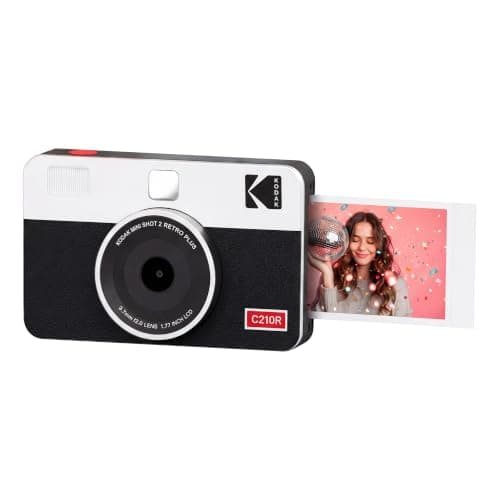
Best-looking prints per dollarKodak Mini Shot 3~$0.37/print$129.99
Cheapest quality 2-in-1Kodak Mini Shot 2~$0.37/print$109.99

In a Hurry?

The 3 picks that cover most readers. Tap to read the full review or buy direct.

Best Overall

Instax Mini 12

Instax Mini 12

$79.95

Foolproof exposures and the cheapest film per shot in instant photography.

Best Premium

Instax Mini Evo

Instax Mini Evo

$234.00

Hybrid genius: shoot digital, preview, and print only the keepers.

Best Budget

Kodak Printomatic

Kodak Printomatic

$64.99

Sticker-back prints at 49 cents a sheet: the kid and crafts champion.

Best OverallOur Pick

Film

Instax Mini (about $0.91 per shot, verified)

Exposure

Fully automatic

Close-up

Twist-lens close-up mode + selfie mirror

Power

2 AA batteries

Pros

  • Automatic exposure: almost no wasted film
  • Cheapest film per shot of any instant system
  • Selfie mirror and close-up mode built in
  • The default gift camera for good reason

Cons

  • Small credit-card prints
  • No manual control at all

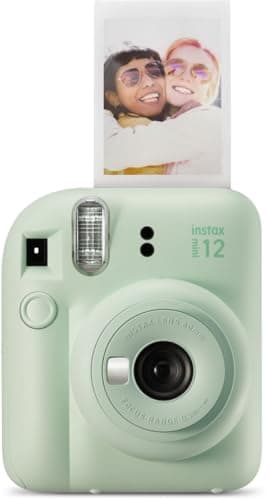
Instant photography's dirty secret is that the camera is the cheap part; the film is the subscription, and every wasted frame is money sliding out of the slot. The Instax Mini 12's genius is that it almost never wastes one. Automatic exposure reads the light and adjusts, the flash fires only when needed, and twisting the lens to close-up mode simultaneously corrects framing through the viewfinder. The result is the highest keeper rate of any sub-$100 instant camera, which quietly makes it the cheapest to actually live with.

The math that picks this camera: Instax Mini film runs about $0.91 per shot in the standard twin pack we verified ($18.17 for 20). Polaroid i-Type film runs about $2.12 per shot ($16.95 for 8). Same fridge door, same happy kid, less than half the ongoing cost. If the camera will be used more than twice a year, film price is the spec that matters most, and Instax Mini wins it outright.

The prints are the size of a credit card, the body is cheerful plastic in pastel colors, and there is nothing to adjust, which describes both its limits and its audience perfectly. This is the camera for birthdays, weddings, dorm walls, diaper-bag documentation, and every gift exchange we cover in our teen girls gift guide and Secret Santa guide. Photographers who want control or bigger film have five other picks below; everyone else can stop reading here and be entirely happy.

Our Pick

The best instant camera for most people, and it is not close. The Mini 12 auto-exposes every shot, flashes when it should, focuses down to selfie distance with a twist of the lens, and runs on the cheapest instant film you can buy. It is the camera that made instant photography foolproof.

Buy this for anyone from age eight to eighty who wants photos they can hold, hand over, and stick on a fridge. Automatic exposure means no ruined dark shots, the close-up mode and selfie mirror handle the way people actually use these cameras, and Instax Mini film costs roughly half what Polaroid film does per shot, which matters enormously once the camera gets loved.

What we don't like

The credit-card-size prints are charming but small, the plastic body feels like the toy it partially is, and there is zero manual control. All three are the point, not the flaw.

Best Gift BundleBest Value

Includes

Mini 12 camera, 20 prints of film, case

Film

Instax Mini twin pack included

Exposure

Fully automatic

Power

2 AA batteries

Pros

  • Complete gift: shoots the day it is opened
  • Case protects it in real backpack life
  • Small premium over separate pieces
  • Same foolproof Mini 12 underneath

Cons

  • 20 shots go fast at a party
  • Bundle colorways vary by stock

Here is the scene this bundle prevents: it is 9 a.m. on a birthday, the camera is unwrapped, and there is no film in the house. Instant cameras are the rare gift with a consumable dependency, and the number one regret in gift reviews across the category is forgetting the film. Fujifilm's official bundle packages the Mini 12 with a 20-print twin pack and a fitted case, which converts the gift from a promise into an activity.

Everything we wrote about the Mini 12 above applies unchanged, since it is the identical camera. What the bundle adds is logistics: film in the box, protection for the inevitable backpack-and-sleepover circuit, and one checkout instead of three. We list it separately because the two purchases genuinely serve different intents, buying for yourself versus wrapping something complete, and the second intent is enormous in this category: instant cameras are perennial top performers in our white elephant guide and stocking stuffers guide seasons. One practical tip from experience: if the recipient is a teenager, add a second twin pack anyway. Twenty frames is one Friday night.

Best Value

The same best-in-class camera, wrapped for gifting. This official bundle adds a twin pack of film and a protective case, which solves the classic instant-camera gift fail: a camera under the tree with nothing to shoot. Hand it over and the first twenty photos happen that day.

Buy this when the Mini 12 is a gift, full stop. A bare instant camera is a gift certificate for a second purchase; this one is complete out of the box, and the case matters more than it sounds because these cameras travel to parties in backpacks. The bundle premium over buying pieces separately is small enough to ignore.

What we don't like

Twenty shots vanish in one enthusiastic afternoon, so gift-givers going to a birthday or wedding should still toss an extra twin pack in the cart. Same zero-control camera underneath, of course.

Best Premium / HybridUpgrade Pick

Type

Hybrid digital + Instax Mini printer

Effects

10 lens effects x 10 film effects

Printing

Print-on-demand, plus prints from phone

Storage

microSD card slot

Pros

  • Preview first: print only the keepers
  • Effectively slashes film cost per kept print
  • Beautiful retro body with real dials
  • Prints photos from your phone as a bonus

Cons

  • Triple the price of the Mini 12
  • Modest sensor by smartphone standards

The Mini Evo answers the question every instant photographer eventually asks: why am I paying a dollar for photos of my thumb? As a hybrid, it decouples shooting from printing. You shoot freely on a digital sensor, review on the rear screen, and feed film only to the frames that earned it. Blinks, bad light, and closed eyes cost nothing; the twin pack in the slot becomes twenty guaranteed keepers instead of twenty coin flips.

Fujifilm wrapped that logic in the best-feeling body in the category: a rangefinder-styled brick of dials where a real lens ring cycles ten lens effects and a film-advance-style lever commits the print. Add the microSD slot (grab one from our SD cards guide) and the app that prints straight from your phone's camera roll, and the Evo doubles as the household Instax printer. The counterargument is philosophical and real: choosing your prints is efficient, but the unrepeatable single-shot gamble is precisely the romance some people buy instant cameras for, and the Evo engineers that romance out. Budget-minded romantics should buy the Mini 12 and embrace the chaos; deliberate shooters graduating from our beginner mirrorless guide will find the Evo is the instant camera that finally respects them.

Upgrade Pick

The thinking adult's instant camera. The Evo is a hybrid: it shoots digitally, shows you the image on a screen, and prints only the frames you choose, which changes the economics and the keeper rate of instant photography completely. Gorgeous retro body, ten lens effects, ten film effects, and it prints from your phone too.

Buy this if you love instant prints but resent instant waste. Because you preview before printing, every sheet of film becomes a chosen photograph rather than a gamble, and the effective cost per kept print plummets. The dials and shutter feel of the retro body make it the instant camera photographers actually enjoy carrying, and the smartphone-print feature turns it into a tiny photo lab for your camera roll.

What we don't like

It is around three times the price of a Mini 12, the digital sensor is modest by phone standards, and purists will note that previewing removes the one-shot magic that makes instant photography feel like a dare.

Best PolaroidAlso Great

Film

Polaroid i-Type (about $2.12 per shot, verified)

Includes

Camera + 16 color photos

Focus

Autofocus, 2-lens system

Development

10-15 minutes, shield from light

Pros

  • The iconic full-size square Polaroid frame
  • Gen 3 autofocus and flash are genuinely reliable
  • Film included: shoots on arrival
  • Prints with real painterly character

Cons

  • Film costs over twice Instax per shot
  • Slow development, less predictable results

Instax may have won the market, but Polaroid still owns the noun, and the Now Gen 3 is the camera that justifies the mystique. The full-size square print is simply a different object than a credit-card Instax: big enough to frame, weighty in the hand, with that chemical depth of color that makes ordinary afternoons look like album covers. Three generations in, the Now finally pairs that film with electronics worthy of it: a two-lens autofocus system that picks close-up or distance correctly, and exposure that no longer sacrifices every backlit shot.

The honest ledger: i-Type film is the most expensive habit in this guide at roughly $2.12 a frame verified, the image takes ten-plus minutes to bloom and wants to develop face-down away from light, and one shot in eight will still surprise you, sometimes wonderfully, sometimes not. Polaroid people consider that the poetry; Instax people consider it the bug. Know which person you are buying for. As an object and a gift it is superb, a fixture of our cozy gifts guide thinking, and the film-included bundle spares the recipient the classic empty-camera disappointment. For the same look with app-powered creative control, the Now+ below adds the toolkit.

Also Great

The real thing. Polaroid's Now Gen 3 shoots the big square white-bordered frame every instant photo is measured against, with autofocus, accurate flash, and 16 shots of film in the box. The prints are moody, painterly, and unmistakable in a way Instax never quite matches. You pay for that character per shot.

Buy this if the point is the iconic square print: the chunky border, the deep saturated look, the photograph that feels like an object. The Gen 3 fixed the autofocus and exposure reliability that frustrated earlier Nows, this bundle includes film so it works on arrival, and the body itself has genuine shelf presence between uses.

What we don't like

I-Type film costs about $2.12 per shot verified, photos take 10 to 15 minutes to fully develop and want shielding from light as they do, and results are gloriously unpredictable compared to Instax. That is the brand, but budget for it.

Best for Creative ControlAlso Great

Film

Polaroid i-Type (about $2.12 per shot, verified)

Control

Bluetooth app: manual shutter, aperture, double exposure

Includes

Camera + 16 color photos

Extras

Tripod modes, light painting, self-timer

Pros

  • Real manual modes on real instant film
  • Double exposures and light painting built in
  • Only $20 over the standard Now
  • Film included in the bundle

Cons

  • Best features require the phone app
  • Experiments cost $2 per press

There is a moment in every creative hobby where the automatic tool starts saying no, and the Now+ exists for the photographer who has hit it. Tethered to Polaroid's app, the camera opens modes no point-and-shoot instant offers: aperture priority for controlling depth, manual shutter speeds long enough for light painting, double exposure for layering a face over a skyline, and tripod-aware settings for genuinely sharp night frames on chemical film. These are darkroom tricks, executed on a medium that develops in your hand.

The practical trade is app dependency: the magic modes live on your phone, which interrupts the raise-and-shoot immediacy that defines the category, and the standard Now remains the better pure party camera. The financial trade is starker and worth saying out loud to anyone learning on it: at roughly $2.12 per verified frame, a failed double exposure costs more than a coffee. But that constraint is also the pedagogy, every frame demands intent in a way digital never will, and for an art student or the kind of creative photographer we write for in our street art photography guide, the Now+ turns instant film from a toy into a tool. At only $20 over the standard model with film included, ambition has rarely been priced so reasonably.

Also Great

The Polaroid for people who want to drive. The Now+ takes the Gen 3 body and adds Bluetooth app control: aperture priority, manual shutter down to long exposures, double exposure, tripod modes, and light painting. It is the closest thing to a creative instant system Polaroid makes at a sane price.

Buy this if the person shooting it already knows what a long exposure is, or wants to learn. The app unlocks the modes that turn expensive film into deliberate art: double exposures for portrait experiments, tripod-assisted night shots, aperture control for depth. For a photography student or a film-curious hobbyist, the $20 premium over the standard Now is the easiest yes in this guide.

What we don't like

The creative modes live in the phone app, which adds friction to a medium whose charm is immediacy, and every experiment still costs $2 a frame, so the learning curve is literally priced.

Best Pocket SizeAlso Great

Film

Polaroid Go film (about $1.32 per shot, verified)

Size

Smallest Polaroid format, pocketable

Includes

Camera + 16 color photos

Extras

Selfie mirror, self-timer

Pros

  • Genuinely pocketable: it actually gets carried
  • Full Polaroid look in miniature
  • Film included in the bundle
  • Irresistible as a gift object

Cons

  • Film pricier than Instax for smaller prints
  • Fixed focus, tiny viewfinder

The best camera is the one you have with you, and the Go is the only camera in this guide engineered around that cliche. It is small enough to ride in a jacket pocket unnoticed, which changes what gets photographed: not staged parties but actual life, the parking lot sunset, the friend mid-laugh, the diner booth. Its miniature prints, complete with the white border and dreamy Polaroid chemistry, have become their own aesthetic on journals, laptop lids, and bedroom mirrors.

Assess it honestly as a photographic instrument and it is the least capable pick here: fixed focus, a squinty viewfinder, exposure that prefers generous daylight. Assess it as a companion object and it is arguably the most successful, because the Mini 12 stays home in a drawer while the Go is in a pocket at the moment worth keeping. The bundle includes sixteen shots, and refills run about $1.32 a frame verified, a real premium over Instax Mini that you pay for the badge and the size. It is a staple answer in our teen gift guide for exactly these reasons: charm-per-cubic-inch, no setup, instant delight. Precision shoppers should scroll up; the Go's buyers were never going to read the spec table anyway.

Also Great

The smallest Polaroid ever made, now in its third generation. The Go shrinks the entire white-border experience to something that genuinely fits in a jacket pocket, prints tiny square photos with full Polaroid character, and comes bundled with 16 shots. Pure portable charm, with film costs to match its bigger siblings.

Buy this for the person who would actually carry it: the Go disappears into a bag or pocket in a way no full-size instant camera does, which means it comes along to the concert, the hike, and the Tuesday nothing-in-particular. The miniature prints have the same chemical romance as big Polaroids and make irresistible journal, mirror, and locker decorations.

What we don't like

Go film runs about $1.32 per shot verified, which is pricier than Instax Mini for smaller prints, and the tiny viewfinder plus fixed focus make it the least precise shooter here. It trades accuracy for adorability, knowingly.

Austin Art Insider

Free weekly guide to galleries, exhibitions & collecting in Austin.

Best Big PrintsAlso Great

Film

Instax Wide (about $1.75 per shot, verified)

Print size

Twice the width of Instax Mini

Exposure

Automatic

Extras

Close-up lens support, self-timer via angle adjustment

Pros

  • Prints big enough for whole groups
  • Automatic exposure keeps keeper rate high
  • The event and party format
  • Fujifilm film supply is cheap-ish and everywhere

Cons

  • Physically large; lives in a bag, not a pocket
  • Film about double Mini per shot

Every Mini owner discovers the same limit at the same moment: eight people at a birthday dinner, one credit-card frame, and a choice about which four friends exist. Instax Wide is Fujifilm's answer, film double the width of Mini, and the Wide 400 is the current flagship for shooting it. Groups fit. Rooms fit. A landscape keeps its sky. The prints land closer to classic Polaroid dimensions than anything else Fujifilm makes, with the exposure automation that keeps Instax keeper rates high.

The camera around that film is straightforwardly practical: auto exposure tuned for flash-filled interiors, a close-up attachment for detail shots, and an unapologetically chunky body that telegraphs its event-camera purpose. That size is the honest cost, this is a camera you bring on purpose, not one you happen to have, and Wide film at roughly $1.75 a verified frame doubles the Mini habit. Our placement advice: the Wide 400 is the best second instant camera in the guide, the one the household Mini 12 grows up into for parties, reunions, and holidays, and a genuinely inspired gift for the family archivist who already scans everything through the machines in our photo scanners guide. First-camera buyers should start smaller; hosts should start here.

Also Great

The group-photo machine. Instax Wide film is twice the width of Mini, big enough to fit an entire dinner table, a wedding party, or a landscape with air around it, and the Wide 400 is the modern camera built for it: auto exposure, close-up support, and Fujifilm reliability in a body that means business.

Buy this if your instant photos usually contain more than two people. Mini frames crop groups mercilessly; Wide frames let everyone in with context to spare, which is why event hosts, teachers, and family documentarians gravitate here. It is the instant camera for the Thanksgiving table shot that actually includes the table.

What we don't like

It is genuinely large, a two-hands camera that will not slip into any pocket, and Wide film runs about $1.75 per shot verified, nearly double Mini. Big prints, big camera, bigger budget.

Best Square FormatAlso Great

Film

Instax Square (about $1.41 per shot, verified)

Format

Square, white-border classic composition

Interface

Twist for on, twist again for selfie mode

Exposure

Fully automatic

Pros

  • Square format with Instax dependability
  • Simplest interface in the entire guide
  • Film meaningfully cheaper than Polaroid
  • Gorgeous terracotta body

Cons

  • No timer, no modes, no overrides
  • Priced near far more capable cameras

The square is photography's most confident aspect ratio, no landscape-or-portrait decision, just subject and border, and the SQ1 is the easiest way to shoot it on real film. Fujifilm's square format gives you the Polaroid-style composition with Instax chemistry underneath: fast development, consistent color, and a keeper rate Polaroid's lovely, moody film cannot match. At about $1.41 per verified shot, the film also undercuts i-Type by a comfortable third.

The camera itself is an exercise in subtraction. There is one control: twist the lens to wake it, twist further for selfie and close-up mode. No menus, no buttons to explain, nothing to set wrong, which makes the SQ1 the camera we point at the most design-minded and least gadget-tolerant buyers, the aesthete who wants beautiful square objects to come out of a beautiful terracotta object. The criticism writes itself: nearly $200 for a camera with no features is a strange spec-sheet proposition when the hybrid Evo sits at $234. But that comparison misreads the buyer. This is the anti-app camera, the one for the person curating a gallery wall of square frames like the displays in our gallery wall guide, and its simplicity is the entire product. It does one elegant thing every single time.

Also Great

The Polaroid look with Instax reliability. The SQ1 shoots Fujifilm's square format, that classic white-bordered composition, with the dead-simple automatic exposure that makes Instax the dependable branch of the family. Twist to on, twist again for selfie mode, and the square just works.

Buy this if you want square prints, the format that flatters portraits, food, and anything composed like an album cover, without Polaroid's cost per shot or developmental drama. Square film splits the difference on price at about $1.41 per verified shot, and the SQ1's two-twist interface is the simplest of any camera in this guide, period.

What we don't like

It is minimalist to a fault, no self-timer, no modes, no exposure compensation, and its price hovers near the fancier hybrid options, which makes it a deliberate simplicity purchase rather than a bargain.

Best Under $70Best Budget

Type

5MP digital camera + Zink printer

Print cost

About $0.49 per sheet (50-pack, verified)

Prints

2x3 inch, sticky-backed

Design

No film loading, no development wait

Pros

  • Cheapest camera and cheapest prints here
  • Sticker-back prints are a kid superpower
  • Shoot-in-volume economics
  • Nearly indestructible simplicity

Cons

  • Zink quality is flat next to real film
  • No preview screen despite being digital

Be clear about what the Printomatic is not, and it becomes the easiest recommendation in the guide. It is not a film camera: Zink (zero-ink) prints are thermally activated dye crystals in the paper itself, and their output is closer to a tiny inkjet photo than to the chemical bloom of Instax or Polaroid. What it is: a $65 camera whose prints cost about 49 cents each in the verified 50-sheet pack, peel into stickers, and emerge dry and finished in seconds.

That combination makes it the correct answer for a specific and giant audience: children. A seven-year-old does not evaluate tonal depth; a seven-year-old takes forty photos of the dog and sticks them on everything, and the Printomatic is the only camera here where that behavior costs under $20 instead of forty dollars. The same volume economics serve scrapbookers, teachers, and party crafts. The trade-offs are genuine, no preview screen, flat colors, plasticky build, but they are trade-offs against cameras costing twice as much feeding film costing twice as much. In our Secret Santa guide price brackets it is the instant camera that actually fits the budget, and for family gifting alongside the board games in our kids board games guide, it is the photography equivalent: cheerful, durable, and priced for enthusiasm.

Best Budget

The cheapest way into instant prints, and secretly the cheapest to keep shooting. The Printomatic is a simple 5MP digital camera that prints sticky-backed Zink photos at roughly 49 cents a sheet verified, half the ongoing cost of Instax Mini. For kids, crafts, and guilt-free volume shooting, it is the value play.

Buy this for younger kids, classrooms, scrapbookers, and anyone who will shoot in volume. Zink paper is ink-free and each print peels into a sticker, which children treat as a superpower, and at about $0.49 per verified sheet nobody polices the shutter button. There is no film-loading ritual and nothing chemical to shield or wait for.

What we don't like

Zink prints are dye-based, not film: image quality is flat and inkjet-like compared to real instant film's chemistry, colors run cooler, and nobody will mistake the output for a Polaroid. It is a printer that photographs, not a film camera.

Best Print Quality Per DollarAlso Great

Type

2-in-1: camera + Bluetooth phone printer

Process

4PASS dye-sublimation, laminated

Print size

3x3 inch square

Refill cost

60-sheet cartridge $21.99 (verified)

Pros

  • Best print quality under $150
  • Laminated prints survive wallets and water
  • Doubles as a phone photo printer
  • Cheap, predictable cartridge refills

Cons

  • Multi-pass printing lacks the magic reveal
  • Basic camera sensor; the printer is the star

Everyone fixates on the camera; Kodak quietly won on the print. The Mini Shot 3 uses 4PASS dye-sublimation, the same process family as professional photo kiosks: the paper passes under the head four times, laying yellow, magenta, cyan, and a laminate seal. The resulting 3x3 square prints are the best-looking output in this guide's budget tier, sharper than any Zink, more consistent than any chemical film, and laminated against water, sunlight, and pocket abuse.

The 2-in-1 design is the practical masterstroke. Shoot on the camera when the moment calls for it, or pair your phone over Bluetooth and print the good photo you already took, which is, let us be honest, where the good photo usually lives. As the household print station for a family camera roll, it earns counter space that single-purpose instant cameras never quite justify. And the sticker-shock math runs in reverse here: the verified 60-sheet 4PASS cartridge costs $21.99, about 37 cents a print, making this the cheapest quality print in the entire guide. What you give up is theater: prints assemble in mechanical passes rather than developing in your hand, and the onboard camera is modest. For the magic, buy film. For the photographs, this is the budget king, and a dark-horse star of our work from home gifts guide desks.

Also Great

The quality sleeper of the budget tier. The Mini Shot 3 uses 4PASS dye-sublimation, a real lamination-layered photo process, not Zink, so its square 3x3 prints are sharper, richer, and more durable than anything else under $150 here. It is also a Bluetooth photo printer for your phone, and refills push per-print cost impressively low.

Buy this if print quality per dollar is your metric. 4PASS prints resist water and fingerprints, colors are genuinely photographic, and the 60-sheet cartridge economics undercut every film system in this guide. The 2-in-1 trick matters too: shoot on the camera or print any photo from your phone over Bluetooth, which makes it double as the family's snapshot printer.

What we don't like

Prints emerge in stages as the paper passes back and forth, which lacks film's magic reveal, the camera's own sensor is basic, and the retro body is charming plastic rather than premium anything.

Best Cheap 2-in-1Also Great

Type

2-in-1: camera + Bluetooth phone printer

Process

4PASS dye-sublimation, laminated

Print size

2x3 inch

Refill cost

60-sheet cartridge $21.99 (verified)

Pros

  • 4PASS laminated quality at the lowest price
  • Prints from phone over Bluetooth
  • Classic wallet-photo format
  • Same cheap cartridge economics

Cons

  • Smaller prints, less shelf presence
  • Only $20 from the better Mini Shot 3

Sibling products this close usually exist to make the expensive one look reasonable, but the Mini Shot 2 stands on its own math. It shares the 3's entire value proposition: 4PASS dye-sublimation prints that are laminated, waterproof-ish, and genuinely photographic; Bluetooth printing from your phone's camera roll; and cartridge refills, the same verified $21.99 for 60 sheets, that make each print cost less than a gumball. The difference is format: 2x3 rectangles, the shape of a wallet photo, instead of 3x3 squares.

Choosing between them is a one-question quiz: do you want prints shaped like classic snapshots or like album covers? The rectangle suits portraits and wallet-keeping; the square has more display presence on fridges and cork boards. Beyond that, buy on price that day. Our slight lean is toward the 3 for its extra real estate, but as the least expensive door into print quality that embarrasses Zink and undercuts film, the Mini Shot 2 is a shrewd pick, particularly as a starter for a tween photographer whose enthusiasm will outrun any film budget. Pair either Kodak with a proper strap from our camera straps guide and it will survive the childhood it is about to have.

Also Great

The Mini Shot 3's formula at a smaller size and price. Same 4PASS laminated print quality, same shoot-or-print-from-phone flexibility, in a 2x3 rectangular format for $20 less. If credit-card prints suit you better than squares, this is the same excellent value one notch down.

Buy this if the Mini Shot 3 appeals but you prefer the classic 2x3 wallet-photo shape, or simply want the cheapest entry into laminated 4PASS quality. Everything that makes the 3 compelling, the durable prints, the Bluetooth phone printing, the cheap cartridges, carries over intact.

What we don't like

The smaller prints have less presence than the 3x3 squares, and the price gap to its bigger sibling is narrow enough that most buyers should just get the 3.

Head-to-Head

How the top picks compare

The two showdowns that decide most instant camera purchases: the brand war, and the shoot-everything versus print-the-keepers philosophy.

Instax Mini 12 vs Polaroid Now Gen 3: The Brand War, Settled

The reliable economist against the moody icon.

Instax Mini 12

Fujifilm

Winner

Instax Mini 12

Foolproof exposures, film at ~$0.91 a shot

$79.95
Check Price →
Polaroid Now Gen 3 Bundle

Polaroid

Polaroid Now Gen 3 Bundle

The iconic big square print, film included

$159.99
Check Price →

Our verdict

Winner: Fujifilm Instax Mini 12. The Instax wins for most buyers on cold arithmetic: half the purchase price, less than half the film cost per shot, faster development, and an exposure system that turns amateurs into people with full fridges instead of drawers of muddy failures. For gifts, kids, parties, and anyone who will shoot casually, it is simply the better product. The Polaroid wins something the spreadsheet cannot see: its big square print is the photograph as cultural object, with a depth and unpredictability that produces the occasional frame you would genuinely hang on a wall, and the Gen 3's improved autofocus makes the gamble fairer than it used to be. Our rule: if the recipient has ever said the word aesthetic unironically, or the photo will be displayed rather than handed around, Polaroid earns its premium. Everyone else buys the Instax, shoots twice as much for the same money, and never looks back.

Buy the Fujifilm

you want reliability, volume, and the lowest cost per memory.

Buy the Polaroid

the iconic square print itself is the reason you are here.

Instax Mini 12 vs Mini Evo: Shoot Everything or Print the Keepers?

Fujifilm's two philosophies of instant, head to head.

Instax Mini 12

Fujifilm

Instax Mini 12

Pure one-shot instant magic, lowest entry price

$79.95
Check Price →
Instax Mini Evo

Fujifilm

Winner

Instax Mini Evo

Preview first, print only winners, plus phone printing

$234.00
Check Price →

Our verdict

Winner: Fujifilm Instax Mini Evo. For an adult buying their own camera, the Evo wins, and the more you shoot the more decisively it wins. Previewing before printing converts every sheet of film into a chosen photograph, which roughly doubles your effective film budget, and the retro dials, effect combinations, and print-from-phone feature make it a camera you keep reaching for after the novelty month ends. Over a couple of years of regular use, the film savings genuinely erode the $154 price gap. The Mini 12 wins two specific scenarios: gifts and kids, where its lower price, simpler operation, and indestructibility matter more than efficiency, and purists, for whom the unrepeatable click-and-pray single shot is the whole romance, a romance the Evo's screen quietly kills. Decide based on the shooter: deliberate adults take the Evo, everyone under sixteen and every gift under $150 takes the Mini 12, and both end up with full photo albums.

Buy the Fujifilm

it is a gift, a kid's camera, or the one-shot gamble is the charm.

Buy the Fujifilm

you shoot often and want every frame of film to be a keeper.

How we
chose

We judged instant cameras the way they actually get used: at parties, by kids, as gifts, on film budgets:

  • Keeper rate first. A wasted frame costs real money, so automatic exposure quality, flash behavior, and focus reliability outweighed feature lists. Cameras that protect your film ranked higher.
  • Film cost, verified. We computed current per-shot costs for every system from live Amazon prices rather than repeating stale figures, and we ranked ongoing cost as heavily as purchase price.
  • Print character. Chemical film, Zink, and dye-sublimation produce genuinely different objects. We describe each honestly instead of pretending film look and print quality are the same axis.
  • Gift-worthiness. A huge share of instant cameras are gifts, so out-of-box completeness, setup friction, and explain-over-the-phone simplicity all counted.
  • Verified availability. Every ASIN, price, and image was verified live through Amazon's catalog API at publish time.

Share this guide

Share

Common Questions

Frequently Asked Questions

Have art
to sell?

Austin Gallery specializes in selling inherited art, estate collections, and fine art with zero upfront fees. Get a free evaluation today.