Key Takeaways
- Yasui Sotaro bridged Japanese and Western painting traditions, studying in Paris before returning to transform Japanese modern art
- His portraits and still lifes blend Post-Impressionist color with Japanese compositional sensibility
- Yasui's works are held by major Japanese museums and rarely appear on the Western market
In the history of modern Japanese art, few figures loom as large as Yasui Sotaro. A central figure in the Yōga (Western-style painting) movement, Yasui spent years studying in Paris before returning to Japan to create a body of work that bridged European realism with subtle Japanese sensibility.
In This Article
His paintings and prints—refined portraits and still lifes executed with quiet precision—shaped 20th-century Japanese art and continue to command respect from collectors and scholars worldwide.
From Kyoto to Paris: Formation of a Master
Yasui Sotaro was born on May 17, 1888, in Kyoto, Japan's ancient capital and a center of traditional Japanese arts and culture. This origin in a city steeped in aesthetic tradition would shape his artistic sensibilities throughout his life.
Yasui Sotaro was born on May 17, 1888, in Kyoto, Japan's ancient capital and a center of traditional Japanese arts and culture.
His formal artistic training began in Kyoto, where he absorbed both traditional Japanese approaches to art and the Western techniques that were increasingly influential in Meiji-era Japan. But it was his journey to Paris that would prove transformative.
In Europe, Yasui immersed himself in the traditions of European realism, studying the work of the Old Masters while also absorbing the innovations of Post-Impressionism and early modernism. He learned to see with new eyes while never entirely abandoning his Japanese perspective.
The Yōga Movement
Yasui returned to Japan as a leader of the Yōga movement—a term that literally means "Western-style painting." This movement, which emerged during the Meiji period of rapid modernization, sought to incorporate European artistic techniques and approaches into Japanese art.
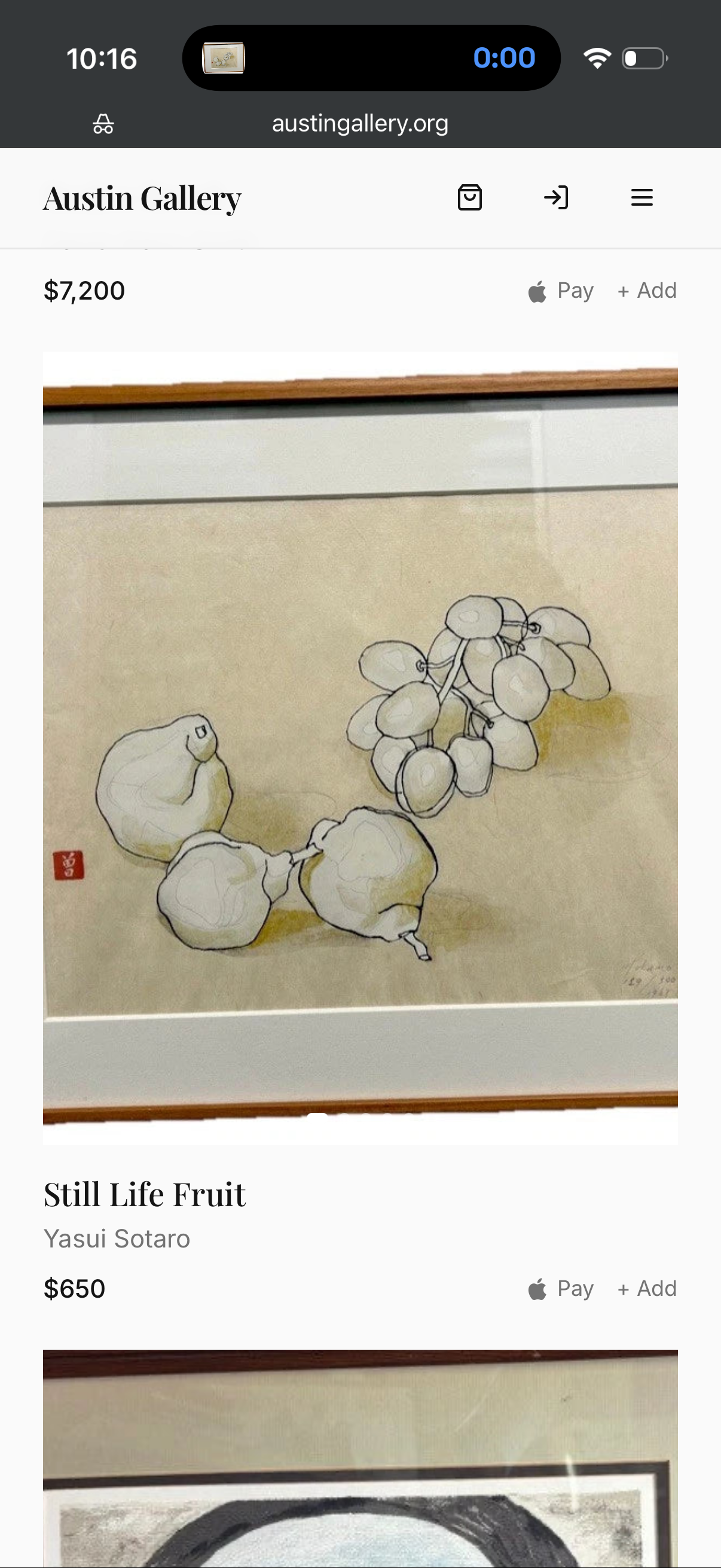 "Still Life Fruit" (1968) - Signed and numbered lithograph 159/300. Available in our collection.
For Yōga artists like Yasui, this was not mere imitation of Western models but a complex negotiation between traditions. The goal was to master European techniques while maintaining something distinctly Japanese in sensibility and vision.
Yasui achieved this balance with remarkable success. His still lifes, while clearly indebted to European traditions, possess a restraint and quietude that speaks to Japanese aesthetic values.
Understanding Japanese Art
The Still Life: Yasui's Signature Subject
While Yasui painted portraits, landscapes, and figures throughout his career, his still lifes represent perhaps his most distinctive contribution. In these quiet arrangements of fruit, flowers, and everyday objects, Yasui found a subject perfectly suited to his gifts.
The still life offered Yasui a controlled environment for exploring the interaction of form, light, and color. Unlike portraiture, which must account for the personality and presence of a sitter, or landscape, which depends on weather and time of day, the still life allows the artist complete control over every element.
Yasui's still lifes typically feature simple arrangements: a few pieces of fruit on a plate, flowers in a vase, objects grouped on a tablecloth. This simplicity allows the viewer to appreciate the subtlety of his observation and technique.