Reference · Updated September 2026
How much does a pottery wheel cost?
Pottery wheel prices by tier, built from Amazon prices checked on September 8, 2026 rather than guesses, plus the part every price guide skips: the bats, clay, tools, stool, and firing that turn a wheel into a working setup.
By the Austin Gallery editors · September 8, 2026
The quick answer
A pottery wheel costs $30 to $150 for a tabletop wheel, about $160 for a 14 inch beginner floor wheel, $629 for a US-brand mid-range wheel, and $1,149 to $2,340 for a studio wheel (Speedball Clay Boss, Shimpo VL-Whisper, Brent EX). A complete home setup before firing runs $150 to $340 on the beginner tiers. Prices were verified on Amazon on September 8, 2026 and move often.
The short answer to “how much is a pottery wheel” is that the market has split into two very different products that share a name. Under $170 you get imported tabletop and light floor wheels with small DC motors. Above $600 you get the wheels that community studios run all day. There is almost nothing in between on Amazon right now, and the price tables below reflect that gap instead of papering over it. Every price on this page is a single listing we checked on September 8, 2026, so you can see exactly where each tier begins.
Pottery wheel prices by tier
| Tier | Typical range | Verified on Amazon | What you get |
|---|---|---|---|
| Tabletop and mini wheels | $30 to $150 | $30.40 to $149.99 | Hand-sized or 8 to 11 inch heads, 350 W or less, 120V plug. Practice, kids, small pieces. |
| Beginner floor wheels | $150 to $400 | $159.90 | Full 14 inch head, 450 W, adjustable table. The first wheel most home potters buy. |
| Mid-range wheels | $400 to $900 | $629.00 | US-brand build (Speedball Artista), 1/3 HP, 25 lb centering capacity, real parts support. |
| Studio wheels | $900 and up | $1,149.00 to $2,340.00 | 1/2 HP and up, 100 lb or more centering capacity, cast frames, decades-long service life. |
The “typical range” column is the band each class of wheel is sold in across retailers. The “verified” column is what we actually found in stock on Amazon on September 8, 2026. Note the beginner tier: on Amazon it is effectively one product at $159.90, the 14 inch VEVOR, because nothing else with a full-size head is listed between that and the $629 Speedball Artista.
Every wheel we priced, cheapest to most expensive
| Wheel | Price | Wheel head | Tier |
|---|---|---|---|
| VEVOR Mini Pottery Wheel, 2 turntables | $30.40 | 2.6 and 3.9 in | Tabletop |
| VEVOR Mini Pottery Wheel, 0 to 320 RPM | $36.90 | 2.6 and 3.9 in | Tabletop |
| Alldeer Mini Pottery Wheel Kit | $59.99 | Mini | Tabletop |
| National Geographic Pottery Wheel for Kids | $69.99 | Small | Tabletop |
| VEVOR 11 in Pottery Wheel, 350 W | $81.90 | 11 in | Tabletop |
| VEVOR 25 cm Pottery Wheel, 350 W | $92.90 | 25 cm (about 10 in) | Tabletop |
| VEVOR 11 in Pottery Wheel, 0 to 6 in adjustable | $103.61 | 11 in | Tabletop |
| National Geographic Hobby Pottery Wheel Kit | $149.99 | 8 in | Tabletop |
| VEVOR 14 in Pottery Wheel, 450 W, height adjustable | $159.90 | 14 in | Beginner |
| Speedball Artista, 1/3 HP | $629.00 | 11 in | Mid-range |
| Speedball Clay Boss, 1/2 HP | $1,149.00 | 14 in | Studio |
| Shimpo VL-Whisper | $1,800.00 | 14 in | Studio |
| Brent EX | $2,340.00 | 14 in | Studio |
Amazon prices, buy box confirmed, September 8, 2026. Links are affiliate links; we may earn a commission at no cost to you. Head sizes are from the listing titles.
What drives the price of a pottery wheel
Motor horsepower and torque. The 350 W tabletop wheels are roughly 0.47 HP on paper (746 W equals one horsepower, so 350 divided by 746 is 0.47), but the number that matters is torque under load: how hard you can lean on the clay before the head slows. The Speedball Artista is rated 1/3 HP with a 25 lb centering capacity; the Clay Boss is 1/2 HP and rated for 100 lb. That capacity rating, not the wattage, is the spec that separates a $160 wheel from a $1,149 one.
Wheel head. Serious wheels use a 14 inch cast aluminum head with bat pins. The tabletop wheels use 8 to 11 inch heads, some without pins, which limits the size of the bats and the pots. A 14 inch head is the studio standard and is the first thing to look for once you are past the mini tier.
Frame and drive. Studio wheels put the motor under a welded or cast frame with adjustable legs and a direct or belt drive built to be rebuilt. Shimpo's VL-Whisper is priced at $1,800 largely for its direct-drive motor, which is close to silent. Imports use a lightweight stamped frame that you cannot brace against, which is why they feel wobbly when centering heavier clay.
Brand and parts. Brent, Shimpo, and Speedball have sold parts for their wheels for decades, which is exactly why a used one holds value. The import brands are cheaper partly because there is no parts channel: when a controller board fails out of warranty, the wheel is done. We break down the individual models in our guide to the best pottery wheels and our VEVOR pottery wheel review.

The beginner floor wheel
Best First BuyThe only full-size (14 inch head) wheel we found on Amazon under $600 in September 2026. Adjustable 0 to 6 inch table height, 450 W motor, splash pan included. The wheel to buy if you already know you want to throw.

The mid-range step up
An 11 inch head and 25 lb centering capacity from a US brand that still stocks parts. Works on a tabletop or on Speedball's optional leg set, and it is the wheel many teaching studios buy for student stations.
The hidden costs: what a wheel does not include
A wheel on its own throws nothing. Here is what else you need and what each item cost on September 8, 2026, again from Amazon listings.
| Item | Verified cost | Why it matters |
|---|---|---|
| Bats (removable throwing discs) | $12.99 for one 12 in Speedball bat; $30.99 for a set of three; $39.95 for a 12 in bat with six 7 in inserts | Almost every wheel above ships with zero or one bat. You want at least three to throw a session without waiting for pots to firm up. |
| Splash pan | Included with the VEVOR and Speedball wheels listed above; $104.88 for a Brent replacement pan | Check the listing before you buy. Losing or cracking a pan on a studio wheel is a real replacement cost. |
| Stool | $77.57 (NPS 18 in adjustable steel) to $145.00 (Shimpo adjustable potter's stool) | A floor wheel needs a seat at the right height. A kitchen chair works for a tabletop wheel on a table. |
| Clay | $44.95 to $45.00 per 25 lb box of cone 6 stoneware | A beginner goes through a 25 lb box in a few weeks of practice, and the first box mostly goes back in the reclaim bucket. |
| Tools | $9.99 (18 piece basic kit) to $22.99 (42 piece pottery kit) | Needle tool, ribs, wire cutter, sponge, trimming loops. The cheap kit covers the wheel; the larger kit adds trimming and carving tools. |
| Firing | $329.90 and up for a small 120V kiln; $2,695.00 for a 240V Skutt KM818; or pay a studio per piece | The cost most people forget. Nothing you throw is finished until it is fired twice. |
The line that changes the math is firing. A thrown pot has to be bisque fired and glaze fired, and a kiln is a bigger purchase than the wheel: the smallest 120V kiln we verified is $329.90, and a 240V studio kiln like the Skutt KM818 is $2,695.00 before an electrician wires the circuit. We work through all of it, including the electricity per firing, in how much does a kiln cost and kiln electrical requirements. The alternative is to pay a studio to fire your work, which is how most home throwers start.
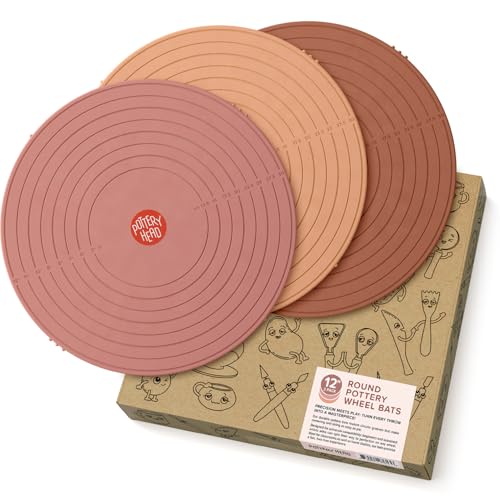
The first accessory to add
Three 12 inch bats with centering rings, so you can lift a wet pot off the wheel and keep throwing. Drilled for the standard 10 inch bat pin spacing; check that your wheel head has pins.
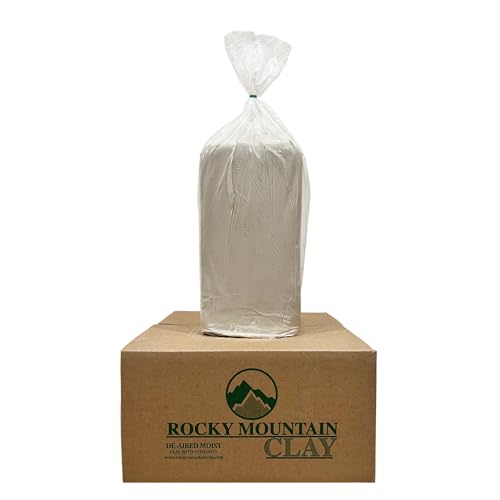
Clay for the first month
A smooth, forgiving mid-fire stoneware that throws well for beginners and fires in any cone 6 kiln or studio. Expect to reclaim most of the first box.
Used vs new
The used market splits the same way the new market does. Studio wheels hold value. A Brent, Shimpo, or Speedball wheel with a decade of studio use usually still centers fine, parts are still sold, and you will often find one for well under half of the $1,149 to $2,340 new price when a studio or school updates its equipment. Check that the head spins true, the pedal responds smoothly across its full range, and the motor does not bog under a hand pressed on the head.
Budget wheels do not. A used $160 import saves you maybe $60 and costs you the return window and the warranty, which is the single most valuable thing about buying that class of wheel new. If the budget is tight, buy the new $81.90 tabletop wheel rather than a used $160 one.
Total cost to start throwing at home
Three real shopping carts using the verified prices above. Each one includes the wheel, bats, tools, clay, and a seat. None includes firing, which is added in the section that follows.
| Line | Minimum kit | Comfortable beginner | Buy once |
|---|---|---|---|
| Wheel | VEVOR 11 in, 350 W: $81.90 | VEVOR 14 in, 450 W: $159.90 | Speedball Artista: $629.00 |
| Bats | One Speedball 12 in bat: $12.99 | Set of three 12 in bats: $30.99 | Bat system with six inserts: $39.95 |
| Tools | 18 piece basic kit: $9.99 | 42 piece pottery kit: $22.99 | 42 piece pottery kit: $22.99 |
| Clay | One 25 lb box: $44.95 | One 25 lb box: $44.95 | Two 25 lb boxes: $89.90 |
| Stool | Kitchen chair: $0 | NPS 18 in adjustable: $77.57 | Shimpo potter's stool: $145.00 |
| Subtotal before firing | $149.83 | $336.40 | $926.84 |
The arithmetic: the minimum kit is $81.90 + $12.99 + $9.99 + $44.95 = $149.83. The comfortable beginner cart is $159.90 + $30.99 + $22.99 + $44.95 + $77.57 = $336.40. The buy-once cart is $629.00 + $39.95 + $22.99 + $89.90 + $145.00 = $926.84. Add a bucket, a few sponges, and a wire cutter if your tool kit lacks one; those are single-digit dollars.
Then add firing. Route one: a kiln. The smallest 120V kiln we verified is $329.90 and plugs into a wall outlet, which covers test tiles and small pieces. A real pottery kiln starts at $2,695.00 (Skutt KM818) and needs a 240V circuit, so the true buy-once total with a kiln is in the $3,600 to $4,000 range before the electrician. Route two: a studio firing service, which is a per-piece or per-shelf fee and no capital cost. For most home throwers in year one, route two wins, and the Austin studios we list nearly all fire outside work.

If you want your own firing
A small plug-in kiln for test tiles, jewelry, and pieces you can hold in one hand. It will not fire a mug-sized load, but it is the cheapest way to own the whole process. See the kiln cost guide before buying.
Which tier should you buy?
Not sure you will like it: the $81.90 to $103.61 tabletop wheels. They teach centering and pulling on a pound of clay, and if the hobby does not stick you are out less than a class fee. Sure, and throwing at home: the $159.90 14 inch VEVOR, then put the savings into clay and studio firing. Ready to commit for years: the Speedball Artista at $629.00 if you want a compact wheel with a parts channel, or a used Brent or Shimpo if one turns up locally. Teaching, production, or large work: the Clay Boss at $1,149.00 or the VL-Whisper at $1,800.00, both of which will outlast the shed you put them in.
Once the wheel is home, the two reference pages potters use most are the kiln cone temperature chart, for what your clay and glaze need to be fired to, and the clay shrinkage and absorption chart, for why the finished mug is smaller than the one you threw. And if you would rather learn on someone else's wheel first, see the best pottery classes in Austin.
Frequently asked questions
How much is a pottery wheel for a beginner?
On Amazon in September 2026, the cheapest wheel a beginner can actually learn to center on is a 350 W, 11 inch VEVOR at $81.90. The wheel most home potters start on, a 14 inch, 450 W floor model with an adjustable table, is $159.90. A US-brand beginner wheel with parts support, the Speedball Artista, is $629.00. Wheels under $70 are mini turntables sized for hand-held pieces, not for learning to throw a mug.
How much does a professional pottery wheel cost?
In September 2026, studio wheels on Amazon ran from $1,149.00 for the Speedball Clay Boss (1/2 HP, 100 lb capacity) to $1,800.00 for the Shimpo VL-Whisper and $2,340.00 for the Brent EX. These are the wheels in community studios and university programs, built around a cast frame and a motor rated for continuous daily use, and a used one with 20 years on it is often still a good buy.
What is the cheapest pottery wheel?
The cheapest working electric wheel we found on September 8, 2026 was the VEVOR Mini Pottery Wheel at $30.40, a two-turntable kit with 2.6 and 3.9 inch heads. It is a real motorized wheel, but at that size it throws pieces the size of a shot glass. The cheapest wheel with a usable head for cups and small bowls is the 11 inch VEVOR at $81.90.
Is a $100 pottery wheel worth it?
For learning whether you like throwing, yes. A $80 to $105 tabletop wheel with an 11 inch head and a 350 W motor will center a pound or two of clay and teach the basic skills. What you give up is torque under heavy pressure, a stable frame you can lean into, quiet operation, and a parts channel if it fails. Most people who stick with the hobby replace it inside a year, which is why the $159.90 14 inch wheel is the better first buy if you are already sure.
How much does it cost to start pottery at home?
Using September 8, 2026 Amazon prices, the minimum kit (an 11 inch wheel, one bat, a basic tool set, and a 25 lb box of clay) comes to $149.83. A more comfortable beginner setup with a 14 inch wheel, three bats, a full tool kit, clay, and an adjustable stool is $336.40. Neither number includes firing, which is either a kiln (from $329.90 for a small 120V kiln, or $2,695.00 for a 240V Skutt KM818 before electrical work) or a studio firing fee per piece.
Should I buy a used pottery wheel?
For studio-grade wheels, often yes. A Brent, Shimpo, or Speedball wheel is built for decades and parts are still made, so a used one for a fraction of the $1,149 to $2,340 new price is frequently the best value in the hobby. For the sub-$200 import wheels, buying used saves little and gives up the return window, which matters more on those models.
Do pottery wheels come with everything you need?
No. Every wheel we verified ships with a splash pan and, in some cases, one bat and a handful of small tools. You still need clay, more bats, a stool for a floor wheel, a water bucket, and a way to fire the work. Budget the wheel as roughly half of the real starting cost.
Do I need a kiln to use a pottery wheel?
You need access to one, not necessarily your own. Wheel-thrown clay has to be bisque fired and then glaze fired to become usable pottery. Many potters throw at home and pay a local studio to fire their work. Our kiln cost guide covers both routes with the arithmetic.
Austin Gallery is an Amazon affiliate. Product links on this page are affiliate links, and we may earn a commission at no cost to you. Prices were read from the Amazon Product Advertising API on September 8, 2026 and will change. See our full affiliate disclosure.