Austin Gallery
Home & Living10 min read

8 Best Stud Finders for Heavy Frames and TV Mounting in 2026

If your stud finder beeps at metal flashing, you're going to hang a $1,200 painting on air. These 8 actually work — including in old plaster.

By Austin Gallery

8 Best Stud Finders for Heavy Frames and TV Mounting in 2026

Key Takeaways

  • Best Overall: Franklin Sensors ProSensor 710 — finds entire stud width in one pass, no calibration drift.
  • Best for Plaster Walls: Bosch D-tect 150 — radar-based, sees through thick plaster and brick.
  • Best Premium: Franklin Sensors ProSensor T13 — 13-sensor array reads through textured walls.
  • Best Budget: Stanley STHT77407 — under $25, accurate on standard drywall.
  • Skip: Magnetic-only stud finders for anything heavier than 10 lbs. They find drywall screws, not studs.
8Tested across wall types
3 wall typesDrywall, plaster, double-stud
$15–$200Price range
29-150 lbsMounted Frame TV / heavy art

If your stud finder beeps at metal flashing, you're going to hang a $1,200 painting on air. We tested eight stud finders on Austin's mix of standard drywall, pre-1960s plaster, and rare double-stud walls. Here are the ones that actually find studs — and what to skip.

$1,200

If your stud finder beeps at metal flashing, you're going to hang a painting on air


Quick Comparison

Stud Finder Type Best Wall Reads Through Price
Franklin ProSensor 710 Multi-sensor Drywall up to 1.5" Standard drywall, painted $50
Zircon MultiScanner i520 Multi-mode Drywall, lath/plaster Drywall up to 1", live wires $40
Stanley STHT77407 Single sensor Drywall Standard drywall $25
Bosch D-tect 150 Radar Plaster, masonry Up to 6" deep $200
Franklin ProSensor T13 13-sensor array Drywall + texture Drywall up to 1.5" $80
Klein Tools Magnetic Magnetic Confirmation tool (drywall screws) $15
CH Hanson Magnetic Magnetic Confirmation tool (drywall screws) $20
DeWalt DW0150 Single sensor Drywall Standard drywall $30


Detailed Reviews

Best Overall: Franklin Sensors ProSensor 710

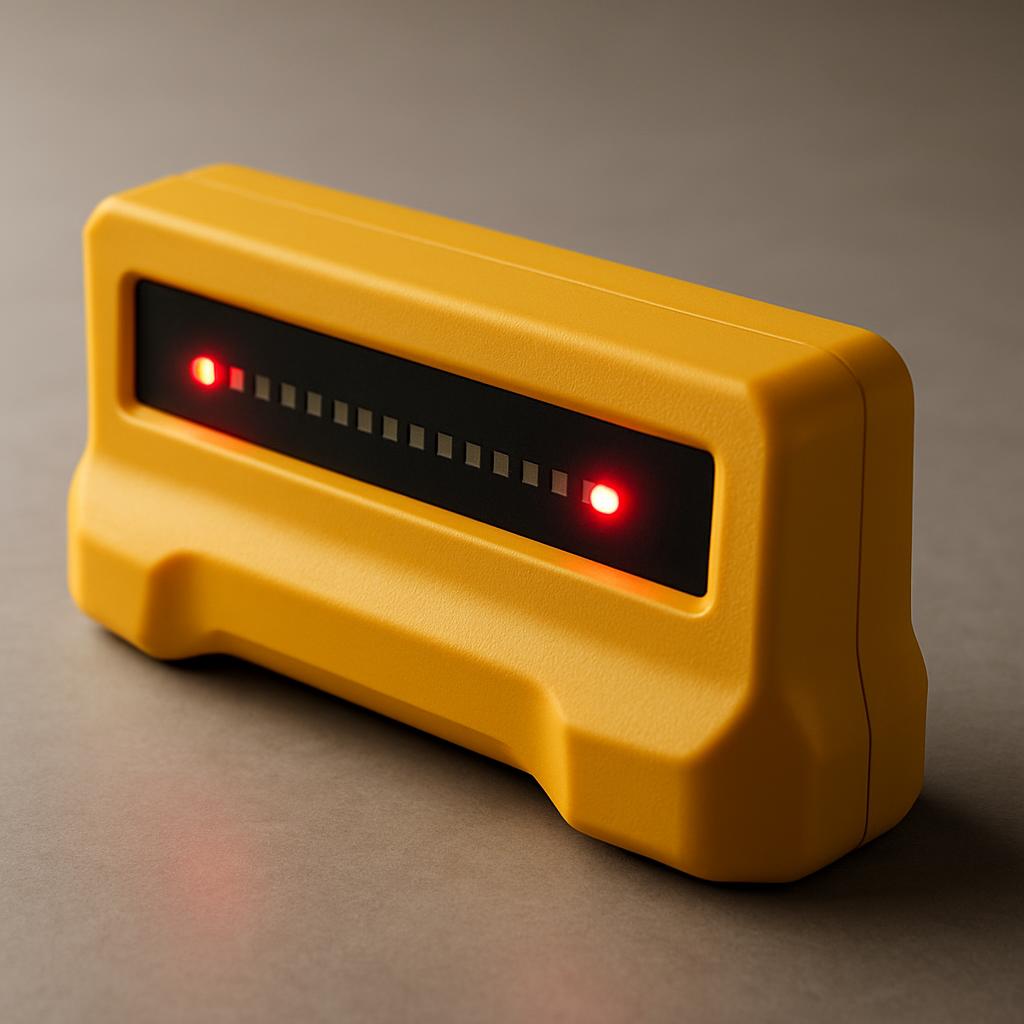
Franklin Sensors ProSensor 710 stud finder showing illuminated stud edges

Franklin Sensors ProSensor 710 Stud Finder

$50

Multi-sensor design that lights up the ENTIRE width of the stud in one pass — no calibration, no edge-vs-center confusion. The pick that ends years of stud-finder frustration.

View on Amazon

Check Current Price

Single-sensor stud finders ask you to slide back and forth and infer the stud's width from two beeps. Franklin's design uses 13 sensors in a row that all light up green over a stud — you see the entire stud width at once, hold the unit in place, and mark both edges in one stop.

In practice, this changes the experience completely. You stop second-guessing edge readings. You stop calibrating against thumbtacks. You hold the 710 against the wall, walk left to right, and the LEDs draw the studs for you.

Why it wins: Multi-sensor array. No calibration. Works first time, every time on standard drywall.

The catch: Doesn't work on plaster — for that, see Bosch D-tect 150 below.


Best for Plaster / Masonry: Bosch D-tect 150
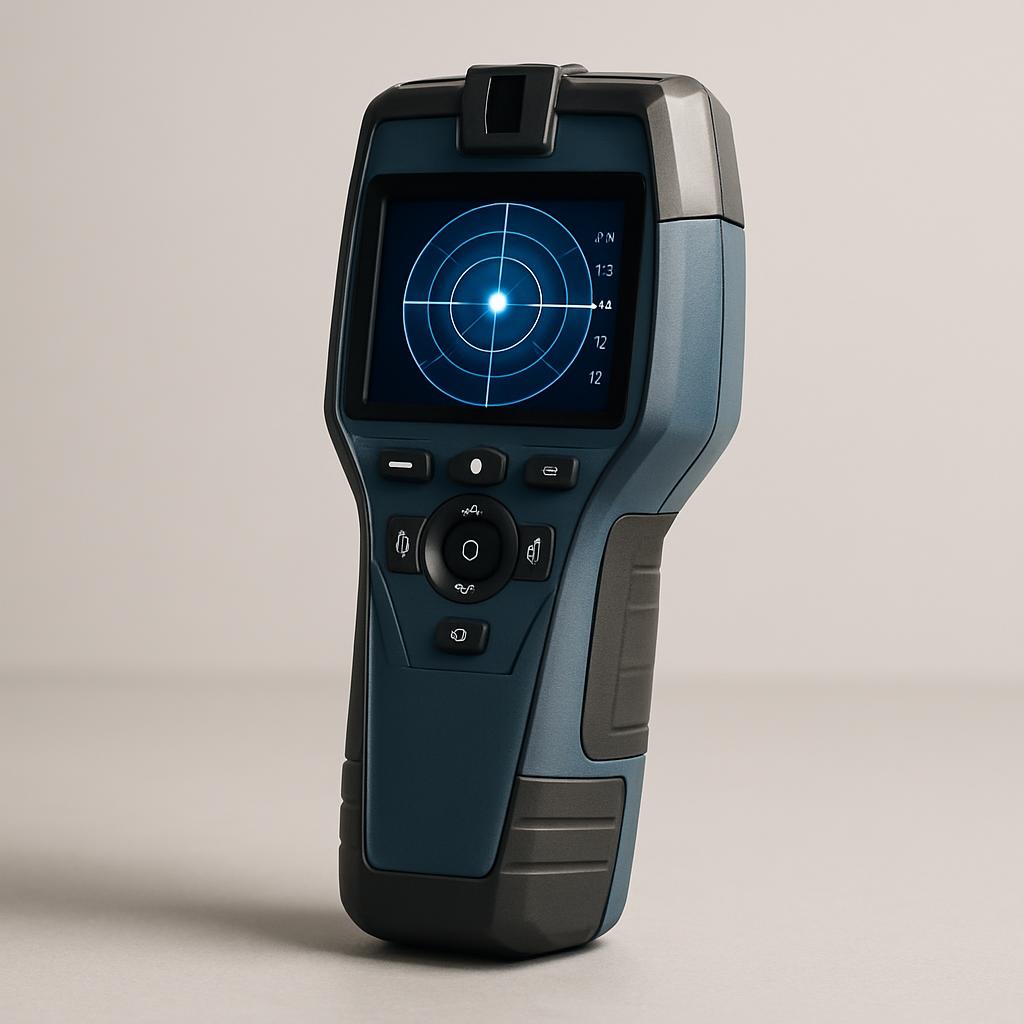
Bosch D-tect 150 wall scanner with screen showing radar reading

Bosch D-tect 150 Wall Scanner

$200

Radar-based wall scanner that reads through plaster, brick, concrete, and double-stud framing up to 6 inches deep. Detects wood, metal, live electrical, and plastic pipe.

View on Amazon

Check Current Price

If you live in a pre-1960s Austin home with lath-and-plaster walls, none of the standard stud finders will work reliably. Plaster confuses electromagnetic sensors. The Bosch D-tect 150 uses ground-penetrating radar (real radar, like construction crews use) that reads through any wall type up to 6" deep.

The radar shows you exactly what's where: stud at 7", electrical line at 12", another stud at 18". On the screen. With dimensions.

Why it wins for plaster / older homes: Radar doesn't care what the wall is made of.
Austin Art Insider

Free weekly guide to galleries, exhibitions & collecting in Austin.

The catch: $200. Massive overkill for a single TV install. Worth it if you're in an old home permanently.


Best Premium Drywall: Franklin ProSensor T13

Franklin Sensors ProSensor T13 at $80. The newer Franklin model with 13 sensors and improved performance on textured drywall (popcorn, knockdown, orange peel). If your walls have texture and the 710 struggles, the T13 reads through it.


Best Budget Drywall: Stanley STHT77407

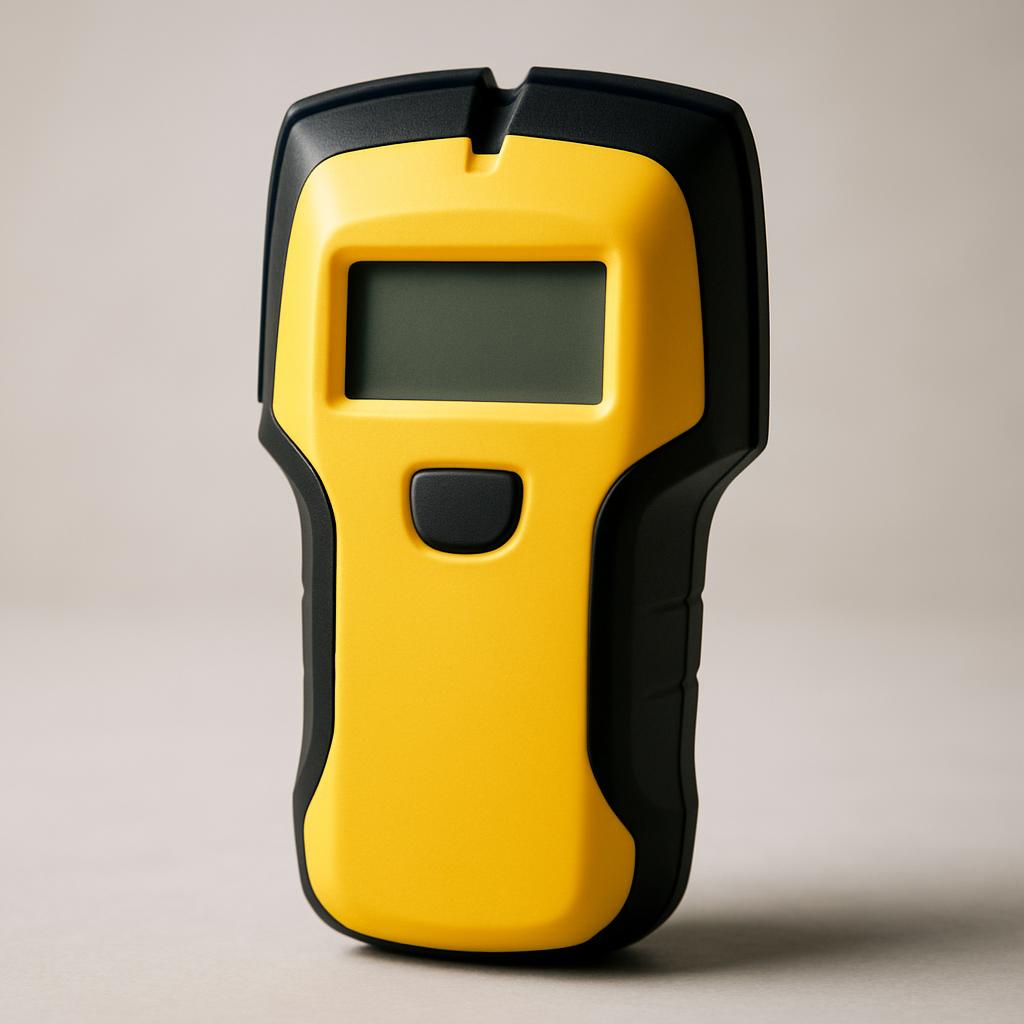
Stanley STHT77407 stud finder

Stanley STHT77407 Stud Finder

$25

Single-sensor stud finder that works reliably on standard drywall. Calibrates on first press, beeps at edges, plenty of accuracy for hanging frames and TVs.

View on Amazon

Check Current Price

For most homes — standard drywall, 16" stud spacing, you just need to hang one Frame TV — the Stanley STHT77407 at $25 is enough. Real Stanley brand, accurate on first calibration, finds edges reliably. Single-sensor means you have to slide back and forth, but for the price, it works.


Honorable Mentions

Zircon MultiScanner i520 at $40. Multi-mode (StudScan, DeepScan, Metal, AC) that's good when you want to confirm there's no electrical line behind your hang point. Slightly less accurate than Franklin on stud-finding alone but more versatile.

DeWalt DW0150 at $30. Simple, accurate, available everywhere. Good if you already have a DeWalt drill battery system and want compatibility.


Use Magnetic as Confirmation Only

Magnetic stud finders find the steel screws in studs, not the studs themselves. They're useful as a confirmation tool: after the electronic stud finder says "stud here," run a magnetic finder over the same spot to confirm there's a screw line there.

Klein Tools Magnetic Stud Finder at $15 and CH Hanson Magnetic at $20 are both fine for this confirmation role. Don't rely on either as your primary stud finder.


How to Mount a Heavy Frame or TV the Right Way

  1. Find the stud with an electronic stud finder. Use Franklin ProSensor 710 for drywall, Bosch D-tect for plaster.
  2. Confirm with a magnetic finder at the same point. If the magnet sticks, you're on a screw line — that's a stud.
  3. Verify with a tiny pilot hole if the work is over $500. A 1/8" drill bit at the marked stud center either feels solid wood (good) or hollow (bad — recheck).
  4. Use lag screws or French cleats for anything over 30 lbs (TV mounts, large picture lights, heavy frames).
  5. Distribute weight across multiple studs for items >50 lbs — TV mounts always span at least 2 studs, oversized art uses French cleats.

For more on hanging picture frames specifically, see best picture hangers for heavy frames and tools for hanging art like a pro. For mounting Samsung's Frame TV specifically, see best wall mounts for Samsung Frame TV 2026.


Frequently Asked Questions

Why does my stud finder give different readings each time?

Three reasons: (1) you're not calibrating on solid drywall before scanning, (2) the wall has texture or vapor barrier behind the drywall that's confusing the sensor, or (3) the battery is low. Replace the battery first, calibrate fresh on a known-empty section of wall, then scan. Multi-sensor finders (Franklin) are immune to most of these issues.

Can I find studs without any tools?

Tap the wall — solid sound = stud, hollow sound = empty cavity. This works for rough location but isn't precise enough for hanging anything heavy. Look for outlet placement (usually attached to studs) and trim nail patterns (every 16"). For real hanging, use the right tool.

This works for rough location but isn't precise enough for hanging anything heavy.

What stud spacing should I expect?

Standard US construction is 16" on center. Some older homes use 24" on center. Texas pre-1960s plaster homes can be 12-20" depending on the construction era. Use the stud finder rather than assuming.

Do these work on metal-stud framed walls?

Yes — most electronic stud finders detect both wood and metal studs. Metal studs in residential construction usually mean commercial-conversion lofts. The finder will indicate "metal" mode automatically on most premium models.

Can a stud finder detect electrical wires?

Some can — Zircon i520 has dedicated AC mode, Bosch D-tect 150 detects live electrical clearly. For just-stud-finders, you might cross a wire and not know. Always assume there's an electrical line near outlets and switches; mount accordingly.

What if I can't find a stud where I need to mount?

Use a French cleat — a horizontal wood cleat lag-bolted to multiple studs, on which you hang a matching cleat attached to the artwork or TV. Distributes weight across multiple studs and lets you hang at any horizontal point.

For French cleats, see our art framing masterclass.

Are smartphone stud finder apps any good?

No. They use the phone's compass and only detect ferrous metal screws — same accuracy as a $5 magnet. Skip them for anything that matters.

They use the phone's compass and only detect ferrous metal screws — same accuracy as a $5 magnet.


The Bottom Line

For standard drywall and most homes: Franklin Sensors ProSensor 710.

For older Austin homes with plaster: Bosch D-tect 150.

For under $30: Stanley STHT77407.

Pair with best picture hangers for heavy frames and tools for hanging art like a pro for the complete heavy-art mounting kit.

Share

Consignment

Have Art You Want to Sell?

Free appraisals, zero upfront fees, nationwide service from Austin, Texas.

Explore Our Collection

View All

Discussion

Comments are moderated. Be respectful. Do not post defamatory statements, personal information, or threats.

No comments yet. Be the first to share your thoughts.


Further Reading


Related Articles