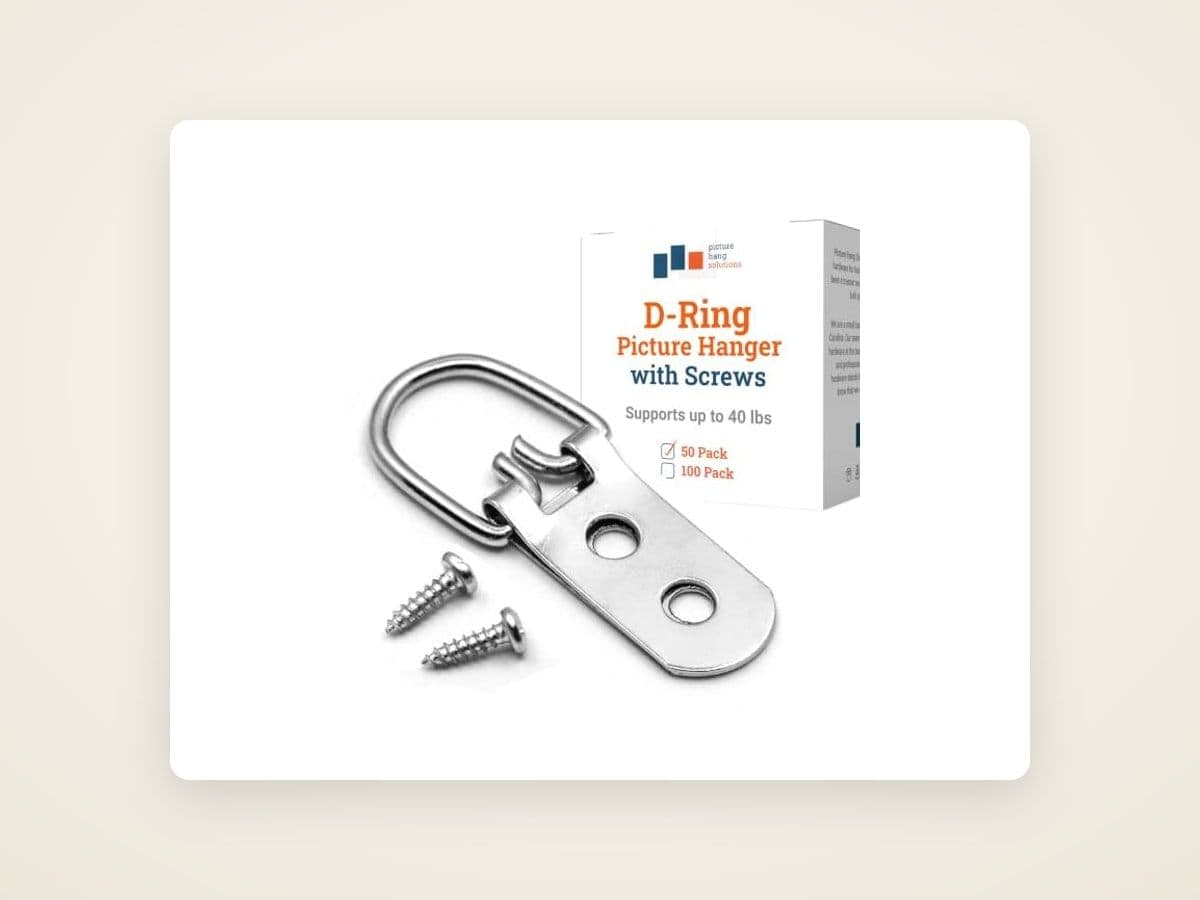
Most picture hangers fail because they were rated for the frame's listed weight, not what is actually hanging on the wall. A 30 pound oil painting in a heavy mahogany frame ends up at 40 pounds once you add glass, mat, dust cover, and the frame itself. The wire and nail combo that came taped to the back of your frame is usually rated for about 12 pounds. That is why you keep finding paintings on the floor.
In This Article
- Pick your hanger by frame weight and wall type
- How weight ratings actually work (and why packaging lies)
- Under 10 lb: small prints and photos
- 10 to 25 lb: the snap toggle zone
- 25 to 50 lb: find a stud
- 50 lb and up: French cleat territory
- Plaster, brick, and other difficult walls
- The frame side: wire, D-rings, and why old hardware fails
- The kit we keep in the gallery van
- Common mistakes that put paintings on the floor
- When to call a professional
- A note for consignors
- Frequently Asked Questions
- Keep exploring: the hanging and display series
- The Heavy Frame Hanger Shortlist
We hang art for a living. Between exhibitions, client installs, and consignment intake, our team puts pieces on walls nearly every working day, and the hardware below is what we actually reach for. Numbers here are real world numbers, not packaging numbers.
Key Takeaways
- Plastic drywall anchors are not the answer for anything over 15 lb. The wall fails before the anchor does. See our full guide to how much weight drywall can hold.
- Find a stud and use a stud rated screw for anything over 25 lb. A #10 wood screw into a stud holds 100+ lb easily.
- For heavy frames over 50 lb, use a French cleat or a two point hanging system. Single point hanging fails as wood ages and wire stretches.
- Never trust the wire on the back of an old frame. Replace it before hanging. A few dollars of new D-rings and braided steel wire is cheaper than restoring a damaged painting.
- The right kit for under $100 covers 95% of residential art hanging: stud finder, drill, snap toggles, French cleat, D-rings, and wire.
Pick your hanger by frame weight and wall type
This is the whole decision in one table. Weigh the frame on a bathroom scale (hold it, subtract yourself), find your wall type, and the table tells you what to buy. Each pick links to the full explanation below.
| Hung weight | Drywall | Plaster | Brick or masonry |
|---|---|---|---|
| Under 10 lb | Angled finishing nail or no damage strips | Picture rail hook or adhesive strips | Brick clip, no drilling |
| 10 to 25 lb | Snap toggle anchor | Toggle bolt through the lath | Tapcon screw with masonry bit |
| 25 to 50 lb | Stud + #10 screw, toggle only if no stud | Stud if you can find one, long toggle if not | Sleeve anchor into the brick, not the mortar |
| 50 lb and up | French cleat into studs | French cleat into studs, always | French cleat on sleeve anchors |
Two rules ride on top of the table. First, pick hardware rated for at least twice the actual hung weight. Second, the frame side matters as much as the wall side: pair whatever you choose with proper D-rings and braided wire, because factory hardware is the most common failure point we see.
How weight ratings actually work (and why packaging lies)
Picture hanger packaging shows the failure point: the weight at which the hanger separates from the wall under a static load. That number is not the right number for a home, for three reasons.
Static load is not real load. A painting on a wall experiences vibration from door slams, HVAC cycling, and footsteps, plus thermal movement on exterior walls and humidity driven changes in the frame. The sustained real world capacity is roughly half the static rating.
The wall is the variable. A 50 lb rated anchor in standard half inch drywall holds about 25 lb in real use. The same anchor in plaster, lath, or pre 1960s drywall behaves completely differently. The rating assumes a perfect substrate.
Frame weight is not just frame weight. Add glass, mat board, dust cover, hardware, and the painting itself. A "20 lb frame" can easily hit 30 lb hung. Conservation glazing is worth that weight, by the way: our guide to museum glass and UV framing materials explains what the extra pounds buy you.
The practical rule we use on every install: pick hardware rated for at least 2x the actual hung weight, and if you cannot estimate the weight, weigh the frame before you start.
Under 10 lb: small prints and photos
Stick on strips and hooks work fine here, and they are the right call in rentals. Use the largest size that fits the frame back, follow the cure time on the package, and accept a re hang every 18 to 24 months as the adhesive ages. We keep a full roundup of no damage picture hangers for renters with honest weight limits for every strip and hook style.
For frames under 10 lb on drywall you own, the humble finishing nail at a 30 degree upward angle is still the fastest answer. No anchor needed. It holds reliably until the wall gets renovated.
Getting the height right matters more than the hardware at this weight. The museum rule is 57 inches from floor to the artwork's center: our guide on how high to hang art covers the exceptions for furniture, stairs, and tall ceilings.
10 to 25 lb: the snap toggle zone
This is where most residential art lives, and where most failures happen, because this is the range where people still reach for plastic anchors. The right answer on drywall is a toggle style hollow wall anchor rated for 50 lb (the 2x rule), set at the marked height.
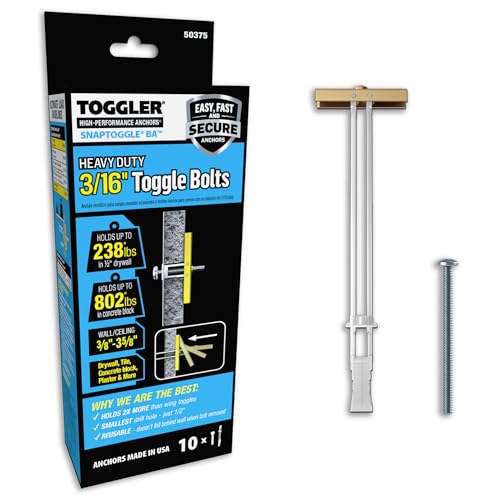
TOGGLER SNAPTOGGLE BA Toggle Anchors with Bolts (10-Pack)
Snap toggles beat the classic butterfly toggle because the metal channel stays in the wall when you remove the bolt, so you can rehang or adjust without starting over. The plastic twist anchors sold at hardware store entrances fail under sustained load. Do not use them for art.
Tools needed: drill, half inch bit, level, pencil. Total cost is about $30 if you own nothing, close to zero if you own a drill.
$30
Total cost is about if you own nothing, close to zero if you own a drill
Austin Art Insider
Free weekly guide to galleries, exhibitions & collecting in Austin.
One aside: mounting a TV uses the same wall anchor logic as a heavy frame. If you are hanging Samsung's The Frame or a kitchen TV, see our complete kitchen TV guide for 2026 for stud mounts and articulating arms.
25 to 50 lb: find a stud
Find a stud. Period. A #10 wood screw or a French cleat driven into a stud holds 100+ lb and never fails. This is the weight class where stud finding stops being optional.
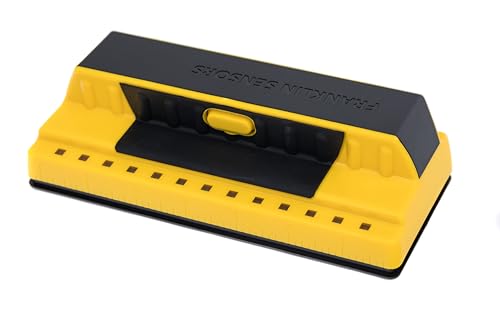
Franklin Sensors ProSensor 710
The Franklin ProSensor is what we carry because it shows both edges of the stud, and the center of the stud is the only place a screw develops full strength. A $15 magnetic finder also works: it locates the drywall screws, and the stud center is directly behind them.
If the stud refuses to be where the art needs to go, use a high rated snap toggle and accept the limitation, or shift the layout. When we plan a wall of frames we set spacing first and hardware second: our gallery wall spacing guide shows the 2 to 3 inch grid logic we use, and the home gallery wall setup guide walks the full pipeline.
50 lb and up: French cleat territory
Two point hanging is non negotiable at this weight. A single point fails over time as the wood settles, the wire stretches, or the anchor loses purchase.

Hillman Hangman Picture Hanging System (6-Inch)
The right answer is a French cleat: a beveled strip mounted to the wall (into studs, always) with a matching beveled strip on the back of the frame. The frame slides on from above. Weight distributes across the entire cleat, vibration is dampened, and the painting cannot fall unless you actively lift it off. This is the same principle behind the museum grade picture hanging systems we recommend for collectors who rearrange often.
For very large or irregular pieces (relief sculpture, mosaic, framed textiles), use two cleats or a cleat plus a stabilizing peg at the bottom.
Plaster, brick, and other difficult walls
Featured Picks
A few special cases worth knowing:
- Plaster over lath (pre 1940s homes): drill a pilot hole first, then use a toggle bolt that opens behind the lath. Plastic only anchors crack plaster. In historic houses with original picture rail molding, skip the wall entirely: picture rail hanging systems hang art from the rail with zero new holes, which is exactly what those rails were built for.
- Concrete or brick: masonry anchor plus masonry bit. Tapcons or sleeve anchors, drilled slowly, into the brick rather than the crumblier mortar joint.
- Pre 1980s drywall: thinner and softer than modern board. Treat all ratings as 70% of stated.
- Tile or glass: do not drill unless you have to. Use a rail system dropped from above, or adhesive rated for the surface.
The frame side: wire, D-rings, and why old hardware fails
Half the failures we see are not the wall. They are the sawtooth hanger stapled into soft pine, or 40 year old wire that fatigued and snapped.
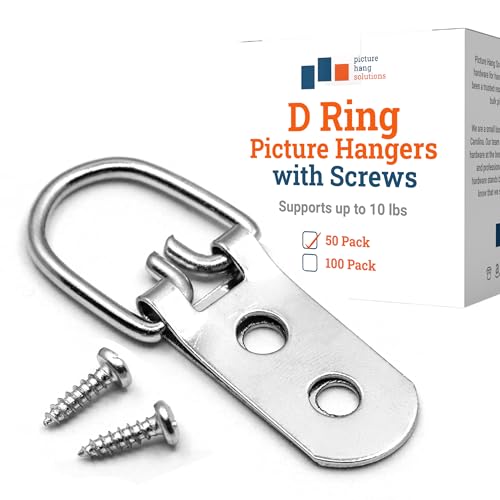
Picture Hang Solutions Heavy-Duty D-Rings (50-Pack)
The fix costs almost nothing: two D-rings rated for the weight, screwed into the frame's vertical rails (the strongest wood), joined by braided stainless wire with the ends wrapped back at least three turns. On heavy frames, skip the wire and hang both D-rings directly on two wall hooks so nothing can pivot. If the frame itself is the weak point (loose corners, crumbling backboard), rebuild it first. Our art framing masterclass covers how a proper frame package goes together, layer by layer.
The kit we keep in the gallery van
For most homes, a complete picture hanging kit comes in under $80 and covers 95% of installations:
- Stud and level tools: magnetic or sensor stud finder, bubble or laser level, tape measure
- Drilling and driving: cordless drill, bit set including 5/32, 3/16, and 1/2 inch, Phillips bit
- Anchors and fasteners: snap toggles (50 lb rated), #10 x 2.5 inch wood screws with washers, a 100 lb French cleat kit
- Frame side: D-rings, braided steel wire, felt bumpers for the bottom corners
We covered the specific tools, with the exact models on our install cart, in the 8 tools for hanging art like a pro. Once the piece is up, light it properly: our roundup of the best picture lights for artwork covers hardwire, plug in, and battery options at gallery grade color accuracy.
Common mistakes that put paintings on the floor
A short list of what we fix most often on house calls:
- Hanging on the wire that came with the frame. Old wire fatigues. Replace it before hanging anything you care about.
- Single point hanging on a heavy piece. Always two D-rings plus wire, or a cleat. A single nail concentrates the entire load at one point.
- Using a hollow wall anchor when a stud was two inches away. The stud is always stronger. Find it.
- Skipping the felt bumpers. Without them the frame rocks, scuffs paint, and works the hanger loose. A dab of museum putty at the bottom corners keeps the frame straight and adds a surprising amount of hold.
- Hanging in direct sunlight. Not a hanger problem, but a destroyed painting problem. UV damage is cumulative and irreversible. Move the piece or upgrade the glazing.
- Trusting the packaging number. Rated weight is a lab number. Halve it for real walls, then double your hardware.
When to call a professional
For pieces over $5,000 in value, oversized canvases, anything going over a stairwell, or any installation that means drilling into masonry or tile, professional installation is cheap insurance. Austin has several art handlers who do residential installs by the hour, typically $100 to $150. A gallery or framer can usually refer you to the installer they actually use, which is the referral worth having.
For everything else, the kit above and an hour of patience handle it. If you are new to this, hang a 10 lb test frame in the spot first, leave it a week, and confirm nothing is moving before you commit the real piece.
A note for consignors
When you send a piece to us for consignment, we handle all hanging, photography, and display logistics on the gallery side. You do not need to remove hardware or prep the back. We document the existing hanging hardware, replace anything inadequate, and use museum grade installation methods on every piece.
If you are storing pieces between hangings, our art storage guide covers climate, materials, and what to avoid so frames and canvases survive the wait.
Frequently Asked Questions
What is the best picture hanger for heavy pictures?
For heavy pictures on drywall, the best hangers by weight class are: a snap toggle anchor rated to 50 lb or more for frames in the 10 to 25 lb range, a #10 wood screw driven into a wall stud for 25 to 50 lb, and a French cleat anchored into two studs for anything over 50 lb. The French cleat is what galleries and museums use for heavy work because it spreads the load across the full width of the cleat and cannot be knocked off the wall. Whatever you choose, pick hardware rated for at least twice the actual hung weight and replace the factory wire with rated D-rings and braided steel wire.
How do you hang a heavy picture on drywall?
Weigh the picture first. If it is under 25 lb, drill a half inch hole where you want the hook, insert a snap toggle anchor, and thread the bolt through a heavy duty hook. If it is over 25 lb, find a stud with a stud finder and drive a #10 wood screw into the stud center, or mount a French cleat across two studs for anything over 50 lb. Do not use plastic expansion anchors for heavy pictures on drywall: the drywall crushes around them under sustained load and the anchor pulls out, usually months later rather than immediately.
If it is under 25 lb, drill a half inch hole where you want the hook, insert a snap toggle anchor, and thread the bolt through a heavy duty hook.
How much weight can a picture hanger hold?
It depends on the hanger and the wall. A standard nail and hook holds 5 to 10 lb in drywall. A rated OOK style professional hook holds 20 to 50 lb. A snap toggle holds up to 265 lb in perfect half inch drywall, but treat real world capacity as about half of any package rating. A screw into a wood stud holds 100 lb or more, and a French cleat across two studs holds 200 lb and up. The wall is almost always the limit, not the hanger, which is why the same hardware carries very different loads in drywall, plaster, and brick.
Can you hang a heavy picture without a stud?
Yes, up to a point. A snap toggle style anchor grips the back of the drywall with a metal channel and will safely carry frames in the 25 to 50 lb range where no stud is available. Multi pin no stud hangers also spread heavy loads into plain drywall. Past about 50 lb, we do not recommend hollow wall hanging at all: shift the piece to align with a stud, use a picture rail system that carries the load from the wall top, or have an installer mount a cleat with the right anchors. A heavy frame that tears out of hollow drywall takes a chunk of the wall with it.
What do galleries use to hang heavy art?
Galleries use two systems almost exclusively: French cleats screwed into studs for heavy individual pieces, and rail based hanging systems (a track at the ceiling line with adjustable cables) for walls that change often. Both spread weight across multiple fasteners and both allow fine adjustment after the piece is up. At Austin Gallery we cleat anything over 50 lb, hang mid weight work on two point D-ring setups, and use rail systems on walls we rehang every show.
At Austin Gallery we cleat anything over 50 lb, hang mid weight work on two point D-ring setups, and use rail systems on walls we rehang every show.
Keep exploring: the hanging and display series
- The 8 tools for hanging art like a pro, the gallery install kit under $200
- Best no damage picture hangers for renters
- Best picture hanging systems for collectors who rearrange
- Best picture rail systems for plaster and historic homes
- How high to hang art, the 57 inch rule and its exceptions
- Gallery wall spacing, the grid logic behind walls that look right
- Museum putty to keep every frame straight
- Best picture lights for artwork once the piece is up
- Museum glass and archival framing to protect what you hang
- The art hanging masterclass, the complete technique guide
The Heavy Frame Hanger Shortlist
The specific products we keep coming back to. Each link is affiliate: clicking through and buying supports the work we do here at no cost to you.


