Austin Gallery
Studio & ToolsOctober 17, 2026Updated October 17, 202614 min read

The Best Glass Fusing Kilns for Home (2026): Electric and Microwave

A 120V digital glass kiln for real fusing and slumping, a 16 in kiln for platters, and a $31 microwave kiln for pendants. Bullseye's schedules, COE 90 vs 96, and startup costs with the math.

By · How we research

★ Our Top Pick

Skutt FireBox 8 LT Digital Glass Kiln

Skutt FireBox 8 LT Digital Glass Kiln

8 x 8 in digital glass kiln on a standard 120V outlet.

$1,500.00rated 4.6/5 in our review

Not sure yet? Compare all 7 picks below ↓

The best glass fusing kiln for most home artists is the Skutt FireBox 8 (about $1,500 at the time of writing): an 8 x 8 in digital glass kiln that runs on a standard 120V outlet. For plates and platters, step up to the 16 in Hot Shot 16G (about $2,819). To try fusing for under $60, start with a microwave kiln kit like the WICAND (about $57) and make pendants.

The split that matters is control. A microwave kiln has none: you fire in bursts and watch. An electric glass kiln has a programmable controller that ramps, holds at fusing temperature, and cools slowly through the anneal range, which is what keeps fused glass from cracking. Pendants survive without that. Coasters, plates, and slumped bowls do not.

Below: four electric glass kilns, a tabletop kiln for jewelry, two microwave kilns, Bullseye's own fusing schedule, COE 90 vs 96, and a startup cost table with real prices. Jen-Ken and Evenheat make excellent glass kilns but sell through dealers rather than Amazon, so they appear in the spec table without links. For stained glass tools and solder, see our stained glass supplies guide. Product links go to Amazon with our affiliate tag; we may earn a small commission at no cost to you.

Best Glass Fusing Kiln for Most Home StudiosOur Pick

Power

115V, 15A, 1725W (Skutt rating)

Plug

NEMA 5-15, standard grounded outlet

Chamber

8 x 8 in opening, 4.5 in deep

Max temp

2000°F (Skutt rating)

Controller

Digital, programmable

Pros

  • Runs on a household 120V outlet, no electrician
  • Digital controller holds a real anneal
  • Heats to fusing temperature fast in a small chamber
  • Skutt dealer network for elements and service

Cons

  • Small chamber limits plates and platters
  • Twenty times the price of a microwave kiln
  • Shelf and furniture sold separately

A small electric kiln with a programmable controller is what makes glass fusing repeatable. Glass does not just need heat; it needs a controlled cool through the anneal range around 900°F, or finished pieces crack days later. A microwave kiln cannot do that. The FireBox 8 can, and it does it on a standard household circuit.

Circuit check: 15 amps is the whole budget of a 15A circuit. Put the kiln on an outlet with nothing else running on that breaker, and never use an extension cord. Our kiln electrical requirements guide explains 120V vs 240V and how to read your panel.

Budget for a primed shelf and kiln paper on day one. Our kiln shelves and furniture guide covers sizes that fit an 8 in chamber.

Our Pick

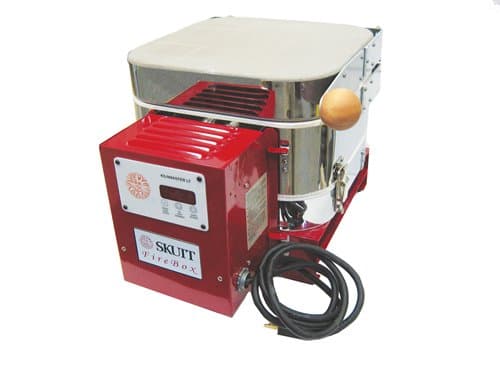
The FireBox 8 is the small glass kiln we would buy first. It plugs into a normal grounded 120V outlet (NEMA 5-15, per Skutt), fires to 2000°F, and its 8 x 8 in chamber fits pendants, coasters, tiles, and small slumped dishes. About $1,500 at the time of writing, sold on Amazon through a Skutt dealer.

Buy it if you want real, repeatable fusing and slumping at home with a digital controller, and your pieces are 7 in or smaller.

What we don't like

The 8 x 8 in footprint caps you at small work. If you already know you want 10 to 14 in plates, skip ahead to the Hot Shot or a 14 in Evenheat.

Best for Fusing Plus Jewelry and Metal ClayAlso Great

Power

120V, 1680W (per listing)

Chamber

About 8 x 7.75 x 5.75 in (retailer listings)

Max temp

2000°F (per listing)

Controller

Sentinel Touch Xpress (per listing)

Pros

  • One kiln for glass, metal clay, and enamel
  • Touchscreen controller stores your schedules
  • Paragon parts and support are easy to find

Cons

  • Small chamber, small pieces only
  • Several SC2 versions exist, so read the listing title before you buy

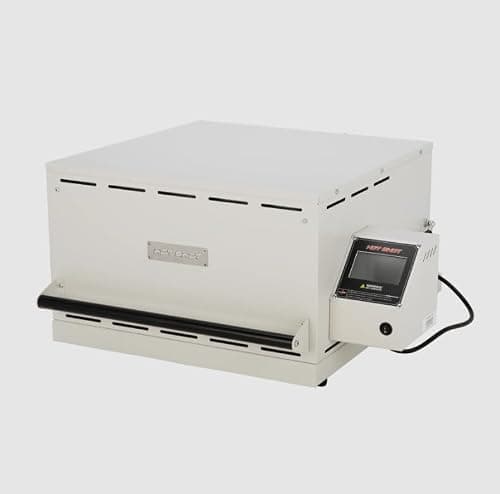
The SC2 is a jewelry kiln that fuses, where the FireBox 8 is a glass kiln first. For pendants and cabochons that difference barely matters. For anything flat and wider than about 7 in, neither kiln is the right tool. Paragon also sells the SC2 in a fiber version with a Sentry 3 controller; it appeared on Amazon at about $1,700 at the time of writing.

Also Great

The SC2 is the small kiln to buy if glass is one of several things you fire. It is a 120V, 1680W, 2000°F kiln with an interior of about 8 x 7.75 x 5.75 in per retailer listings, and Paragon pitches it at jewelry, enameling, metal clay, and small glass. About $1,550 at the time of writing with the touchscreen controller.

Buy it if you make fused glass pendants and also fire silver metal clay, enamels, or bead annealing, and want one bench kiln for all of it.

What we don't like

The chamber is slightly smaller than the FireBox 8. Retailers list the amp draw anywhere from 12 to 14A, so confirm your circuit against the label on the kiln you receive.

Best 120V Kiln for Plates and PlattersBest for Platters

Power

120V, 15A, 1800W (retailer listings)

Chamber

16 x 16 x 6 in

Max temp

1700°F (Hot Shot manual)

Controller

TAP touchscreen

Design

Clamshell lid, top elements

Pros

  • Largest chamber you can run on a household circuit
  • Clamshell lid makes loading and checking easy
  • Retailers note preset schedules for COE 90 and 96

Cons

  • Glass only, not for pottery
  • Expensive next to the small kilns
  • Fewer long-term owner reports

Chamber width, not temperature, is what limits most home glass artists. A 16 in shelf takes a 14 in platter with room around the edges, or a dozen pendants at once. That changes the economics of selling fused pieces, because one firing does the work of four in an 8 in kiln.

Plan the circuit carefully: at 15A, this kiln needs a dedicated 20A circuit in practice. Our kiln cost guide covers what an electrician typically charges if you need one added.

Best for Platters

When you outgrow pendants, the next useful size is a 16 x 16 x 6 in chamber, and the Hot Shot 16G gives you that on 120V. Hot Shot's manual lists a 1700°F max for the 16 in 120V model, retailers list 15A and 1800W, and the clamshell lid lifts the whole top so loading a full shelf is easy. About $2,819 at the time of writing.

Buy it for 12 to 14 in plates, slumped bowls, wall panels, and production batches of coasters or jewelry on one shelf.

What we don't like

1700°F is plenty for glass but not for ceramics, so this is a glass only kiln. It is a newer model with fewer owner reviews than Skutt or Paragon.

Austin Art Insider

Free weekly guide to galleries, exhibitions & collecting in Austin.

Best All-in-One Glass Studio Kit

Kiln

Delphi EZ-Pro 15-6 fiber kiln

Chamber

15 in round, 6.5 in deep (Delphi)

Controller

Pre-programmed EZ-Pro

Glass

90 COE kit components

Pros

  • Everything to start in one order
  • 15 in chamber fits real plates
  • Preset programs for beginners

Cons

  • Costs more than buying the pieces yourself
  • Glass only, not for pottery

A kit saves the most time on the things beginners get wrong: compatible glass, shelf release, and a first schedule. If you already own a glass cutter and know your COE, buying the kiln and supplies separately usually costs less. If you are starting from zero, the bundle removes a dozen decisions.

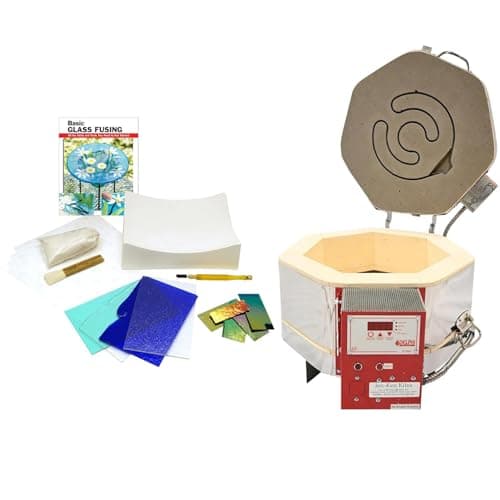
Delphi's Studio in a Box bundles a 15 in round fiber kiln (the EZ-Pro 15-6, 6.5 in deep, with a pre-programmed controller per Delphi) with 90 COE glass and the tools to start. About $2,415 at the time of writing. It is the easiest path for someone who wants to open one box and start fusing.

Buy it if you are new to fusing, want a 15 in chamber, and would rather not pick glass, cutters, and shelf supplies piece by piece.

What we don't like

You pay for the convenience, and the included glass locks you into 90 COE to start. Check the circuit rating on the listing; the similar Jen-Ken 15-6 required a 20A circuit.

Best Tabletop Kiln for Pendants and Metal Clay

Type

Tabletop digital kiln

Max temp

2200°F (per listing)

Uses

Jewelry, metal clay, enamel, small glass fusing

Pros

  • Digital temperature control at a low price
  • Small enough for a desk
  • Doubles as a test kiln

Cons

  • Pendant-sized chamber
  • Not for slumping

For jewelry-scale fusing, temperature control matters more than chamber size. A controller lets you hit a tack fuse on purpose and hold an anneal, which is the main thing a microwave kiln cannot do. If pendants are all you plan to make, this covers it for well under half the price of the 8 in kilns.

The RapidFire Pro-L is a small digital tabletop kiln, listed for jewelry, metal clay, enameling, glass fusing, and test firing up to 2200°F, and made in the USA per the listing. About $650 at the time of writing. It is the step between a microwave kiln and a full glass kiln.

Buy it if you make fused pendants and cabochons, want a digital controller, and do not have $1,500 for a FireBox or SC2.

What we don't like

The chamber is tiny, so it is pendants and test tiles only. It is not a slumping or plate kiln.

Check the RapidFire Pro-L on Amazon →$649.95 · Tabletop Furnace
Best Microwave Kiln Kit for BeginnersBest Budget

Type

Ceramic fiber microwave kiln

Includes

Kiln, papers, cutter, file, gloves, COE 90 glass

Best

Pendants and cabochons

Pros

  • Everything to start for under $60
  • Fires in minutes
  • Includes compatible COE 90 glass

Cons

  • No controller or anneal
  • Pendant size only
  • Results depend on your microwave

A microwave kiln trades control for speed and price. You fire in short bursts at full power, peek, and pull the kiln when the glass rounds over, then let it cool closed on a heat-safe surface. Small pieces usually survive that cool, but thick or wide ones crack, which is why microwave kilns stay in pendant territory. Delphi says its own Fuseworks microwave kiln (4.5 in diameter) is not designed for slumping or casting molds, and the same limit applies here.

Best Budget

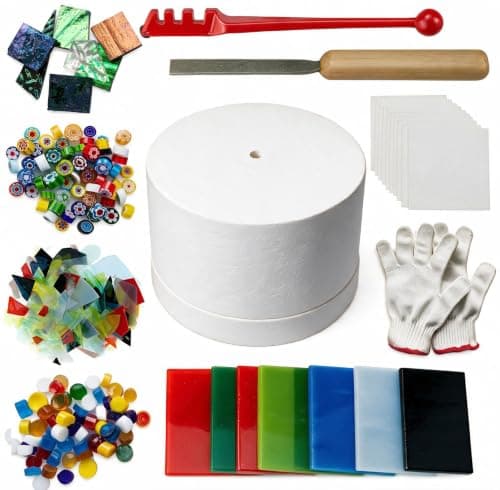
A microwave kiln is the cheapest way to see if you like fusing. This WICAND kit includes a large microwave kiln, kiln papers, a glass cutter, a diamond file, gloves, and five bags of COE 90 fusing glass, for about $57 at the time of writing. Expect pendants, earrings, and cabochons, nothing bigger.

Buy it to try fused glass jewelry for the price of a dinner out, or as a quick-test tool next to an electric kiln.

What we don't like

No temperature reading or anneal control, so results vary with your microwave's wattage. Dedicate an old microwave to it; the kiln gets hot enough to scorch a turntable.

Best Microwave Kiln Alone

Type

Ceramic fiber microwave kiln

Firing time

6 to 8 minutes (per listing)

Best

Pendants and earrings

Pros

  • Cheapest way in
  • Large size for a microwave kiln

Cons

  • No temperature control
  • Not for slumping or plates

Use COE 90 or COE 96 glass, never both in one piece. The Delphi 6 in clear 90 COE squares (about $42 for four at the time of writing) are a good base layer to cut into pendant blanks.

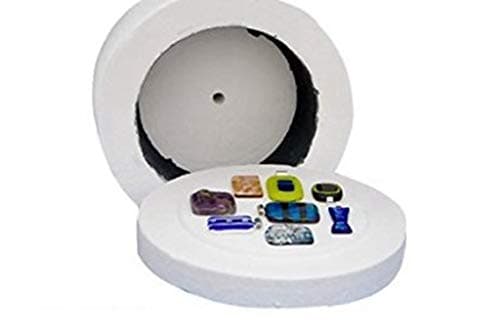
If you already own glass and a cutter, buy the kiln alone. The Hensom large ceramic fiber kiln lists fusing in 6 to 8 minutes for pendants and earrings, for about $31 at the time of writing.

Buy it if you have fusible glass and tools already, or want a second microwave kiln to fire two batches.

What we don't like

Same limits as every microwave kiln: no anneal control, small pieces only, and you need a dedicated microwave.

Head-to-Head

How the top picks compare

The first decision for a new fuser: microwave kiln or electric glass kiln.

Microwave Kiln vs Electric Glass Kiln

A microwave kiln is cheap and fast but has no control; an electric kiln ramps, holds, and anneals on a program.

Skutt FireBox 8

Skutt

Winner

Skutt FireBox 8

Programmable fuse, slump, and anneal on 120V

$1,500.00
Check Price →
WICAND Microwave Kiln Kit

WICAND

WICAND Microwave Kiln Kit

Pendants in minutes for under $60

$56.99
Check Price →

Our verdict

Winner: Skutt Skutt FireBox 8. The electric kiln wins for anyone who plans to keep fusing. Controlled heating and a real anneal let you make coasters, dishes, and slumped pieces that do not crack, and you can repeat a result. The microwave kiln is the right buy for a weekend experiment or if pendants are all you want to make.

Buy the Skutt

you want to make anything bigger than jewelry, or sell your work.

Buy the WICAND

you want to test the hobby or only make pendants and earrings.

How we
chose

We did not fire these kilns ourselves. Here is how we picked them:

  • Manufacturer specs first. Voltage, amps, chamber size, and max temperature come from Skutt's spec table, Hot Shot's user manual, Delphi's listing, and Evenheat's spec sheets. Where only retailer listings were available (the Paragon SC2), we say so.
  • Glass kilns, not just kilns. We favored top-element, wide-and-shallow kilns with glass programs, and 120V models a home studio can plug in.
  • Schedules from the glass maker. Every temperature in the schedule tables comes from Bullseye's published guides, not from forum posts.
  • Credible brands. Amazon lists many no-name "jewelry kilns." We stuck to Skutt, Paragon, Hot Shot, Delphi, and the RapidFire line, plus microwave kilns where only small brands exist.
  • Live listings and prices. Every product was checked live on Amazon on the day of publication. Kiln prices move, so treat them as a snapshot.

Kilns get hot enough to start fires. Follow the manufacturer's clearance and electrical instructions, and never leave a firing kiln unattended for long stretches.

Share this guide

Share

Common Questions

Frequently Asked Questions

Have art
to sell?

Austin Gallery specializes in selling inherited art, estate collections, and fine art with zero upfront fees. Get a free evaluation today.