There is a growing body of evidence, rigorous and peer-reviewed, that art does not merely decorate our lives. It alters them. Not in the abstract, motivational-poster sense, but in ways that researchers can now measure with brain scans, cortisol assays, and longitudinal wellbeing surveys. And yet the most compelling evidence is not found in any journal. It is found in the voice of a collector who tells you, with complete sincerity, that a single painting changed the course of their life. This article is about both kinds of evidence, the scientific and the deeply personal, and about why the act of collecting art may be one of the most transformative things a human being can do.
In This Article
Key Takeaways
- Living with art has proven benefits for mental health, creativity, and quality of life
- A collection doesn't need to be expensive to be transformative — it needs to be personal
- Art collecting connects you to a community of creators, curators, and fellow enthusiasts
At Austin Gallery, we see this transformation unfold constantly. A family walks in to consign an inherited collection and ends up in tears telling us what those paintings meant to their mother. A first-time buyer hangs a piece above their bed and tells us weeks later that they wake up differently now. These are not exaggerations. They are the quiet, cumulative reality of what it means to live with art that matters.
What Happens in Your Brain When You Look at Art
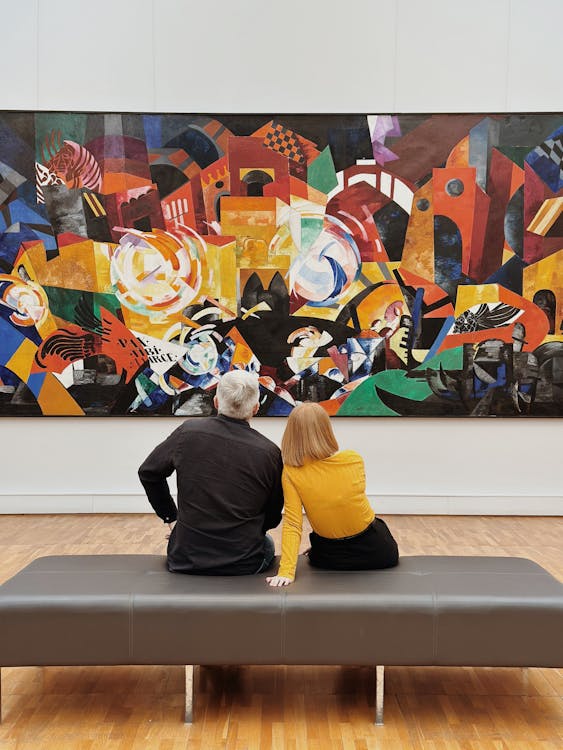
The neuroscience of aesthetic experience has advanced remarkably in the past two decades, and the findings are striking. Professor Semir Zeki, the founder of neuroaesthetics at University College London, has demonstrated through fMRI imaging that viewing art you find beautiful activates the medial orbito-frontal cortex, a region associated with pleasure, reward, and desire. This is the same neural circuitry that responds to romantic love and to music that gives you chills. When a painting stops you cold, your brain is not just registering visual information. It is experiencing a form of reward that evolution has reserved for the things that matter most.
A landmark study by Kawabata and Zeki found that the orbito-frontal cortex showed significantly stronger activation when participants viewed paintings they considered beautiful compared to those they rated as ugly or neutral. The brain, it turns out, has strong opinions about beauty, and it rewards you chemically when you pay attention.
The Cortisol Connection
Perhaps even more remarkable is the research on stress reduction. A study conducted by Angela Clow and Cathrine Fredhoi at the University of Westminster found that London office workers who visited an art gallery for just thirty-five minutes during their lunch break experienced a significant drop in salivary cortisol levels. The reduction was equivalent to what would normally take five hours of natural diurnal decline. Thirty-five minutes of looking at art accomplished what the rest of the afternoon could not.
This is not fringe science. In 2019, the World Health Organization published a scoping review of over 3,000 studies examining the relationship between the arts and health. Their conclusion was unequivocal: engagement with the arts plays a significant role in preventing illness, promoting health, and managing and treating conditions across the entire lifespan. The report, authored by Daisy Fancourt and Saoirse Finn, identified improvements in psychological wellbeing, reductions in depression and anxiety, increased social engagement, and enhanced quality of life as consistent outcomes of arts engagement.
If you are just beginning to explore the world of art collecting, our guide to starting a small art collection can help you take the first step toward bringing these benefits into your daily life.
The Moment a Piece Changes Everything
Every collector has a story about the piece that changed them. Not the most expensive one. Not the most prestigious. The one that landed like a quiet earthquake.
Sometimes it is a painting encountered at an estate sale, tucked behind stacks of forgotten things, that speaks so directly to something private and unspoken that the collector cannot leave without it. Sometimes it is a photograph in a gallery that captures a feeling the viewer has carried for years but never been able to articulate. The art does not create the feeling. It reveals it. And in that revelation, something shifts.
Psychologist Mihaly Csikszentmihalyi, known for his research on flow states, studied art collectors extensively and found that the most meaningful acquisitions were those tied to moments of intense personal resonance. Collectors described these pieces not as possessions but as encounters, as meetings with something or someone that understood them. The emotional weight of these experiences often exceeded that of major life events. A painting purchased on a trip abroad could evoke an entire chapter of a life. A drawing bought during a difficult period could become a symbol of survival and resilience.
This is the kind of experience we explore in depth in our post on the joy of collecting, where we examine how the act of building a collection shapes who you become.
Finding the One
Collectors talk about this with remarkable consistency. You walk into a room full of art, and one piece pulls you. You try to be rational. You walk away. You come back. You think about it that night. You think about it the next morning. By the third day, you know. Experienced collectors learn to trust this pull, because it is almost never wrong. The piece that calls to you is the piece that has something to teach you, something you might not understand until months or years later when you look up from your morning coffee and see it differently for the hundredth time.
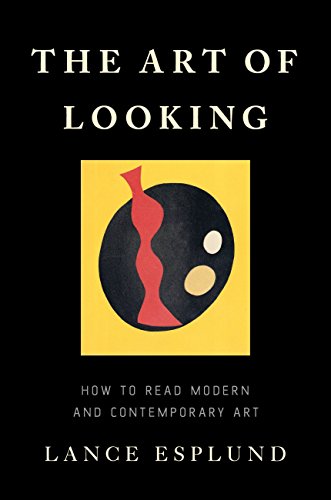
Lance Esplund captures this phenomenon beautifully in The Art of Looking: How to Read Modern and Contemporary Art, where he argues that great art demands not just a glance but a relationship. The more you look, the more the work reveals, and the more you learn about your own capacity for perception and feeling. It is one of the best books available for anyone who wants to deepen their experience of visual art, whether they have been collecting for decades or are standing in their first gallery.
The Art of Looking: How to Read Modern and Contemporary Art
Art as a Bridge Between Generations
One of the most profound dimensions of art collecting is its ability to connect people across time. A painting that hung in your grandmother's living room is not just a decorative object. It is a portal. It carries the light of her house, the conversations that happened in its presence, the taste and sensibility of a person who is no longer here to explain themselves. When you inherit that painting, you inherit a piece of her inner world.
At Austin Gallery, we handle estate collections with particular care because we understand this. When families consign inherited art to us, they are entrusting us with something that carries meaning far beyond market value. We have seen pieces that traveled from Europe in the 1940s, works that were wedding gifts in the 1960s, collections assembled by grandparents whose taste was decades ahead of their time. Every one of these objects is a story waiting to be continued by its next owner.
The National Endowment for the Arts' 2022 Survey of Public Participation in the Arts found that more than half of all American adults engaged in creating or performing art, demonstrating that arts participation remains deeply woven into the fabric of American life. But the survey also revealed something less quantifiable: that the arts serve as a primary vehicle for intergenerational connection. Families who share art experiences, whether visiting galleries together, discussing inherited pieces, or simply living in a home where art is present and valued, report stronger bonds and richer communication.
The Legacy of Estate Art
There is a reason estate art carries a different energy than something bought new. It has been lived with. It has absorbed years of light and attention. The patina on a frame, the slight mellowing of a canvas, the gallery labels on the back, these are not imperfections. They are evidence of a life. When you acquire estate art, you are not just buying an object. You are entering a conversation that has been going on for decades, sometimes centuries. You are the next voice in that conversation.
For collectors who care about provenance and story, estate art offers something that the primary market cannot: depth of history, authenticity of lived experience, and the knowledge that someone before you loved this piece enough to keep it for a lifetime.

The Mindfulness of Daily Looking
In a culture of infinite scrolling and disposable content, a painting on your wall is a radical act of stillness. It does not refresh. It does not update. It does not compete for your attention with notifications and algorithms. It simply waits. And when you stop to look at it, really look, something happens that is increasingly rare in modern life: you are fully present.
Research on mindfulness and visual attention has consistently shown that sustained engagement with a single visual stimulus, exactly the kind of looking that art demands, activates the brain's default mode network in ways that reduce anxiety and promote reflective thought. A study in the journal PLOS ONE found that participants who engaged in slow, deliberate looking at paintings reported increased feelings of calm, curiosity, and emotional clarity compared to those who viewed the same images briefly.
Living with art teaches you to slow down. Not in the vague, self-help sense, but in the concrete, daily practice of pausing, noticing, and allowing yourself to be affected by something that asks nothing of you except your attention. Over the years, this practice compounds. Collectors frequently describe a heightened awareness of visual beauty in the world around them, an ability to notice light, color, and composition in everyday life that they trace directly to their years of living with art.
How Collecting Builds Community
Top Picks on Amazon
Art collecting may begin as a solitary passion, but it inevitably becomes communal. Collectors find each other. They attend the same gallery openings, the same art fairs, the same estate sales. They share recommendations and discoveries. They argue passionately about what is good and what is overrated. They form friendships rooted in a shared commitment to seeing, feeling, and understanding.
In Austin, this community is particularly vibrant. From the galleries on South Congress to the artist studios in East Austin, from the seasonal art markets to the established institutions, there is a network of people who care deeply about visual art and who welcome newcomers with genuine enthusiasm. Collecting connects you to this network in a way that passive consumption never can.