Key Takeaways
- Artists who treat their work as a business keep dramatically more of what they earn. The IRS treats a "hobby" and a "business" completely differently, and the difference is worth thousands of dollars a year.
- You do not need a gallery's permission to start. You need a channel that fits your work, prices that cover your real costs, and a legal structure that protects you.
- An LLC is the standard first move: it separates your personal assets from your art business, makes you look professional to galleries and collectors, and takes about 15 minutes to start online.
- Almost everything you buy to make and sell art can be a legitimate business deduction once you are operating as a business: paint, canvas, your camera, part of your home studio, booth fees, even the miles you drive to an art fair.
- Keep your records clean from day one. A separate bank account and simple bookkeeping software will save you real money at tax time and real panic in an audit.
We sell art for a living. Original paintings, prints, sculpture, estate pieces, work from living Texas artists. We photograph it, price it, insure it, pack it, ship it, and answer for it when something goes wrong. So when we say this guide is about the business of art, we mean the parts we do every single day, written down for the artist who wants to stop giving their work away and start running a real practice.
This is a long guide on purpose. Bookmark it. It covers where the money actually is when you sell online, how to price so you are not quietly paying collectors to take your work, how to set up a legal business entity, and, in the most detail, the tax side: what you can deduct, what the IRS expects from you, and how artists accidentally leave money on the table every April.
One thing before we start: we are a gallery, not a law firm or an accounting firm. Everything below is education from operators, not legal or tax advice for your specific situation. When real money is moving, a CPA who knows creative businesses is worth every dollar.
First, the mindset shift: you are not "trying to sell some art," you are opening a shop
The single biggest difference between artists who make money and artists who do not is not talent. It is that one group treats the work like a business: they know their costs, they price deliberately, they follow up with buyers, they keep records, and they file taxes like a business owner.
That shift matters for a very practical reason. The United States tax code is generous to businesses and stingy with hobbies. A business deducts its expenses before paying tax. A hobby generally cannot. Same paint, same canvas, same booth fee at the same art fair, completely different tax outcome depending on how you have set yourself up and how you behave.
So the plan in this guide runs in a specific order:
- Pick your sales channels and understand what each one really pays.
- Price your work like a business.
- Form the business itself (this is faster and cheaper than most artists think).
- Set up the money plumbing: bank account, bookkeeping, taxes.
- Protect it with insurance.
- Buy the gear that makes you look professional, and deduct it properly.
Where the money actually is: the honest map of selling art online
Every channel takes a cut, either in fees or in your time. Here is how they compare from where we sit.
Your own website. Highest margin, slowest start. Platforms like Shopify or Squarespace cost roughly $20 to $40 a month, payment processing runs around 3 percent, and everything else is yours. The catch: nobody visits a new website. Your own store works when you already have an audience from Instagram, fairs, or a mailing list. Almost every serious artist should have one anyway, because it is the only channel you fully control.
Marketplaces (Etsy and friends). Fast start, real traffic, real fees, brutal competition. Expect listing fees plus transaction and payment fees that commonly total somewhere in the 10 to 13 percent range once everything is counted, and read the current fee schedule before you list because platforms adjust them. The buyers are there, but so are a million other sellers. Marketplaces reward strong photography, clear niches, and volume.
Print on demand. You upload an image, the platform prints and ships mugs, posters, and tees, and you collect a royalty that is usually a small slice of the sale. Zero inventory risk, low dollars per sale. Fine as passive icing. Rarely a living by itself.
Social selling. Instagram and TikTok are where collectors discover artists now. The sale itself usually finishes by DM, invoice, or a link to your site. Free to start, costs you consistency instead of cash. The artists we feature who sell well on social treat it like a shop window: real work, in progress and finished, posted steadily, with prices findable.
Online galleries and consignment. You hand over marketing, photography, and the collector network in exchange for a commission, commonly anywhere from 30 to 50 percent. That sounds steep until you price your own time honestly. A good consignment partner earns their cut by selling work you would not have sold, at prices you would have been talked down from. This is literally what we do: if you have finished work and no time to sell it, our consignment program exists for exactly that, and you pay nothing unless the work sells.
Commissions. Custom work for a specific buyer, usually at your best margins. Commissions flow from every other channel once people can find you. Take a deposit. Always take a deposit.
The right answer for most working artists is a stack: your own site as home base, one marketplace or social channel for discovery, and a gallery or consignment relationship for the higher-ticket work.
Underpricing is the most common way artists quietly lose money. Here is the floor, and we mean floor:
(Materials + a wage for your hours + a share of your overhead) x a margin that leaves room for fees.
Worked example. A 16 x 20 acrylic:
- Materials: canvas, paint, varnish, wire: $38
- Your time: 6 hours at even a modest $25 per hour: $150
- Overhead share (studio costs, software, insurance, website, spread across your monthly output): $30
- Floor cost: $218
If you sell that painting for $200 at a fair, you paid the buyer $18 to take it, before the booth fee. Price it at $435 to $500 and suddenly there is room for a marketplace's cut, a future gallery's commission, and profit that funds the next body of work. Collectors do not respect prices that apologize. Neither do galleries.
$200
If you sell that painting for at a fair, you paid the buyer $18 to take it, before the booth fee
If you sell that painting for $200 at a fair, you paid the buyer $18 to take it, before the booth fee.
Two practical rules we give artists constantly: keep your prices consistent across channels (nothing burns a collector like finding the same piece cheaper on Etsy than in a gallery), and raise prices when you are selling more than about half of what you make. Scarcity with steady demand is exactly when a raise sticks.
Here is where we stop talking about art and start talking about the machine around it.
Operating as "just me" means you are a sole proprietor by default. It works, but it has two problems. First, there is no legal wall between your art business and your personal life: if a shipped piece injures someone, if a workshop student gets hurt in your studio, if a commission dispute goes legal, your personal assets are in the conversation. Second, it reads as a hobby, to galleries, to wholesale buyers, and, importantly, to the IRS if your deductions are ever questioned.
A single-member LLC (limited liability company) fixes both for very little money and very little effort:
- Liability protection. The LLC, not you personally, sells the art, signs the consignment agreements, and ships the work. Kept properly separate, its debts and legal problems stay its own.
- Legitimacy. "Bluebonnet Studio LLC" on an invoice, a business bank account, and a resale certificate change how galleries, suppliers, and the tax authorities treat you. We see it from the gallery side: artists with an entity and clean paperwork are simply easier to do business with.
- Tax flexibility. By default a single-member LLC is taxed exactly like a sole proprietorship (simple), but the structure gives you options later, like an S corporation election once profits justify it.
- A clean container for everything else in this guide. The bank account, the bookkeeping, the insurance policy, and the deductions all attach naturally to the entity.
Start your art LLC today
- We used an online formation service for our own entities because it is faster than the state website and it bundles the paperwork artists forget: the EIN (your business's tax ID number, needed for a bank account), the operating agreement, and registered agent service.
- Bizee will form your LLC online. You pick your state, they file the paperwork, and packages start at $0 plus your state's required filing fee. It takes about 15 minutes of your time.
- While you are at it, get the EIN. It is how you open the business bank account that makes everything else in this guide work.
- Form your LLC with Bizee here, then come back for the tax section. That is where the money is.
Could you file directly with your state instead? Absolutely, and if you enjoy government web forms, nothing is stopping you. The point is not which door you walk through. The point is that a working artist selling online should not be doing it as an unprotected default sole proprietor any longer than necessary.
One honest note: an LLC protects you from business liabilities. It does not reduce your taxes by itself, and it does not protect you from your own negligence. It is the foundation, not the whole house.
The tax deep dive: how artists keep more of what they earn
This is the section to read twice. It is also the section where we repeat: education, not advice. Bring specifics to a CPA.
Hobby or business? The IRS cares, a lot
The IRS distinguishes between an activity engaged in for profit (a business) and a hobby. The difference is brutal in practice: a business reports income and deducts its ordinary and necessary expenses; a hobby must generally report all its income while deducting essentially nothing against it under current law. Selling $8,000 of paintings that cost you $5,000 to make feels very different when you are taxed on $3,000 versus taxed on $8,000.
There is a well-known safe harbor: an activity that turns a profit in at least three of the last five years is presumed to be a business. But new artists rarely start profitable, and you do not need the safe harbor if you can show profit intent through your behavior. The IRS looks at factors like:
- Do you operate in a businesslike manner: records, a separate bank account, invoices, a real pricing method?
- Do you put in regular time and effort to make it profitable?
- Do you depend on the income, or adjust your methods when something is not selling?
- Do you have expertise, or seek it out (workshops, advisors, this guide counts as effort, not expertise)?
- Are your losses normal startup losses, or year after year with no course correction?
Notice what those factors describe: everything in this article. The LLC, the bank account, the bookkeeping, the deliberate pricing. Running your art like a business is not just good practice, it is the evidence that you are one.
The artist's deduction list
Once you operate as a business, expenses that are ordinary and necessary for making and selling your work reduce your taxable income. For a working artist that typically includes:
- Materials and supplies. Paint, canvas, paper, clay, glazes, ink, brushes, solvents, gesso, varnish. For most small artists using cash-basis accounting, supplies are deductible when you buy them for use in your work. If you produce inventory at scale, the accounting can get more nuanced, which is a good CPA conversation, but the everyday supply run is the most straightforward deduction you have.
- Equipment. Easels, kilns, printing equipment, computers, tablets, and the camera you photograph work with. Smaller purchases can typically be expensed immediately (there is a de minimis election that lets most small businesses write off items up to $2,500 each in the year of purchase), and larger equipment can often be expensed under Section 179 rules rather than depreciated slowly. Translation: the year you buy the big kiln is usually the year it reduces your taxes.
- Your home studio. If a space in your home is used exclusively and regularly for the art business, you can generally deduct a share of your housing costs, or use the simplified method: a flat $5 per square foot up to 300 square feet. The word doing the work in that sentence is "exclusively." A guest room that is half easels and half guests does not qualify. A converted garage that is all studio does.
- Selling costs. Marketplace fees, payment processing, website hosting, your domain, gallery photography, booth fees at fairs and markets, tent and display fixtures, business cards, and advertising, including the boosted Instagram post.
- Shipping and packaging. Boxes, glassine, foam corners, tape, labels, postage, and insurance on shipments. If you ship art, this category is bigger than you think, and it is all deductible.
- Education and research. Workshops, courses, reference books, museum memberships used for professional development. Reasonable and business-connected is the standard.
- Travel and mileage. Driving to fairs, galleries, supply runs, and installs is business mileage, deductible at the IRS standard mileage rate for the year (look up the current rate; it changes). Keep a log: date, destination, purpose, miles. An app or a notebook in the glovebox both work. Overnight travel for a show (lodging, part of meals) can qualify too, with records.
- Professional services and insurance. The CPA, legal help with contracts, your bookkeeping software subscription, and your business insurance premiums, which we cover below, are all deductible operating costs.
What you cannot deduct: your own time. That $150 of labor in the pricing formula is not an expense on your return; it becomes your profit. Also, watch the line between business and personal. The dinner after the gallery opening with your spouse is not a business meal. Auditors read Schedule C line items on art businesses with a practiced eye, and clean records beat creative categories every time.
How the tax actually gets paid
As a sole proprietor or single-member LLC, your art profit lands on Schedule C of your personal return. Two things surprise first-year artists:
As a sole proprietor or single-member LLC, your art profit lands on Schedule C of your personal return.
Self-employment tax. On top of income tax, net self-employment earnings are subject to Social Security and Medicare taxes, roughly 15.3 percent up to the annual Social Security wage cap. Nobody is withholding it for you the way an employer would. It arrives all at once at filing time if you have not planned.
Quarterly estimated taxes. The IRS expects tax as you earn, not once a year. If you will owe more than about $1,000 for the year, you generally need to make estimated payments (Form 1040-ES) in April, June, September, and January. The working rule we like: move 25 to 30 percent of every art sale into a separate tax sub-account the day the money lands. If that turns out to be too much, April becomes a pleasant surprise instead of a crisis.
The 1099-K note. Payment platforms and marketplaces issue 1099-K forms reporting your gross sales to the IRS. The reporting thresholds have bounced around in recent years, so do not build a strategy around not receiving a form. The rule that never changes: report your income whether or not a form shows up. The forms exist to check your math, not to define your obligation.
Sales tax is a different animal
Income tax goes to the IRS. Sales tax goes to your state, and it is about where your buyer is, not where you are.
- Selling in person in your state (fairs, studio visits): you generally need your state's sales tax permit and you collect tax on those sales. In Texas, the Comptroller issues the Sales and Use Tax Permit; we hold one ourselves for exactly this reason, and applying online is free.
- Selling through marketplaces: most states now have marketplace facilitator laws, meaning Etsy, Amazon, and similar platforms collect and remit sales tax on your marketplace sales for you. That is one genuine convenience of the fee.
- Selling through your own website: you are the collector of record for states where you have nexus (a presence or enough sales). For a small artist that usually means your home state; the big multi-state thresholds only matter once volume gets serious.
The permit also gets you a resale certificate in most states, which lets you buy materials that go into work for resale without paying sales tax on them at the register. Frame moulding, canvas, and glass add up.
The bookkeeping that holds it all together
Every dollar of deduction above survives on one condition: you can show the record. The system does not need to be fancy. It needs to exist, and it needs to be separate from your groceries.
- Open a business bank account the week your LLC paperwork arrives. Every art dollar in, every art expense out, nothing else. Commingling funds is how deductions die and how LLC protection gets pierced.
- Use real bookkeeping software. A spreadsheet works until the month it doesn't. We use QuickBooks across our own businesses because it connects to the bank account, categorizes expenses as they happen, tracks mileage from your phone, and hands your CPA a clean year instead of a shoebox. The subscription is itself a deductible business expense, which we have always found pleasingly circular. Set up QuickBooks for your art business here.
- Photograph receipts the day you get them. Software with a receipt-capture app makes this a ten-second habit. Paper fades; audits do not.
- Reconcile monthly. Fifteen minutes with coffee, first of the month. You will price better, buy smarter, and file faster because you actually know your numbers.
Insurance: the part everyone skips until the first disaster
We bought business insurance for our own gallery the same week we started holding other people's art, and the education was fast: homeowner's policies generally do not cover business activity, business property, or business liability. If you sell at a fair, teach in your studio, or ship valuable work, you are running risks your personal policies were never built for.
What a working artist actually needs to think about:
- General liability. A visitor trips over your easel at a fair, a student burns a hand in your studio, a shipped crate damages property. This is also the policy behind the "certificate of insurance" (COI) that better art fairs, markets, and venues require before they let you set up a booth. No COI, no booth, at many of the shows worth doing.
- Business property. Your equipment, materials, and finished inventory, at the studio and sometimes in transit, on a business policy rather than your homeowner's.
- Professional add-ons as you grow. Commissioned work disputes, teaching, restoration side work: each has coverage designed for it.
Cover the business you just built
- For small creative businesses, the modern path is buying online: you answer questions about what you do, get a quote in minutes, and download your certificate of insurance the same day.
- NEXT Insurance specializes in small business coverage and writes policies for artists, photographers, and craft sellers, with general liability that can produce the COI art fairs ask for, online, without a phone tree.
- Premiums are a deductible business expense, and a quote costs nothing: get an instant quote from NEXT here.
Sizing it honestly: a basic general liability policy for a small studio practice often lands in the hundreds per year, not thousands. Weigh that against one booth incident or one damaged commission and it is some of the cheapest peace of mind in this whole guide.
The gear that makes you look professional (and pays for itself)
Everything below is a legitimate business purchase for a selling artist, and every link is to a gear category we have researched for this guide.
Photography, because your photos are your storefront. Online, nobody buys the painting; they buy the photograph of the painting. A camera on a stable tripod (a modest aluminum one is fine to start), one decent LED light, and true-to-life color will outsell a better painting shot badly, every time. Flat work under 13 x 19 can skip the camera entirely: a quality flatbed like the Epson Perfection scanner captures paintings and drawings with zero glare and perfect edges. We wrote a full walkthrough in our guide to photographing artwork and our scanner roundup for artists.
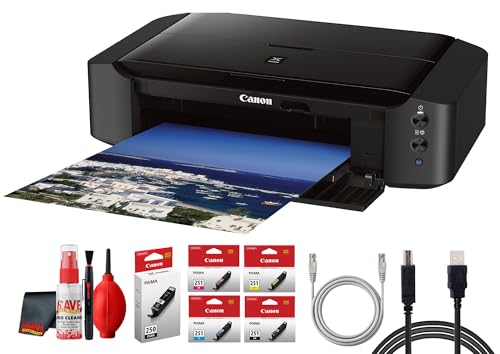
Prints, the margin machine. One original becomes fifty archival prints. A 13-inch pigment printer like the Canon wide-format pays for itself in a few print runs, or start with a print shop and no hardware at all. Our print selling starter kit covers the whole pipeline, papers and pricing included.
Packing and shipping, where reputations are won. Collectors remember how the work arrived. The kit: glassine paper against the surface, foam corner protectors on frames, bubble wrap over that, rigid art boxes, and archival tape where anything touches the work. The full checklist with sizes lives in our packaging and shipping supplies guide.
Fairs and markets. If in-person selling is in your plan, the booth kit (tent, weights, walls, lighting, square reader, and the folding cart that saves your back) is its own purchase and its own deduction. We built the list in our art fair booth gear guide.
Your first 30 days, in order
- Days 1 to 3: the entity. File the LLC with Bizee, order the EIN with it. While the state processes, write down your pricing formula and set your floor prices.
- Days 3 to 7: the plumbing. Open the business bank account (bring the EIN and formation documents). Connect it to QuickBooks. Apply for your state sales tax permit if you will sell in person or from your own site; it is free in many states, including Texas.
- Week 2: protection and product. Get the insurance quote, buy the general liability policy if fairs or students are anywhere in your plan. Photograph or scan your ten best pieces properly.
- Week 3: the storefront. Launch the simplest possible site: ten works, prices visible, an about page with your face, and a way to pay. Post the first work-in-progress sequence to Instagram the same day.
- Week 4: the pipeline. List three pieces on one marketplace. Email five local galleries or consignment programs with your best three images and one paragraph. (If you are in Central Texas, we would like to see them.) Set the monthly bookkeeping date on your calendar. Move 25 percent of your first sale into the tax sub-account and feel extremely adult about it.
Thirty days, one real business. The paint budget is now a line item, the studio corner is now square footage, the drive to the fair is now mileage, and every one of those facts is worth actual dollars next April.
FAQ: the questions artists actually ask us
Do I really need an LLC to sell art online?
Legally, no; you can sell as a sole proprietor tomorrow. Practically, the LLC is cheap insurance for your personal assets, it strengthens your position that this is a business rather than a hobby, and it is the container that makes the bank account, bookkeeping, and insurance clean. Most artists who are serious about selling form one early. Bizee's $0-plus-state-fee package removes most of the excuse.
Can I write off art supplies if I have not sold anything yet?
If you are genuinely operating as a business (profit intent, businesslike behavior, records), startup losses are normal and expenses are generally deductible, subject to the hobby-loss rules discussed above. Years of losses with no course correction is where trouble starts. Document the effort: the listings, the fair applications, the price changes. That is what profit intent looks like on paper.
How much should I set aside for taxes?
A working default is 25 to 30 percent of net profit, covering federal income tax plus self-employment tax for most modest brackets. Your CPA can tune it after your first profitable quarter. The habit of moving it on sale day matters more than the exact percentage.
Do I charge sales tax on every sale?
In-person sales in your state: generally yes, with your state permit. Marketplace sales: the platform usually collects for you under marketplace facilitator laws. Your own website: you collect for states where you have nexus, which for most small artists means their home state. Rules vary by state, so verify yours.
What insurance does an artist selling at fairs actually need?
General liability is the one venues ask about, because it produces the certificate of insurance most established fairs require. If you hold inventory or equipment of real value, business property coverage matters too. An online small business insurer like NEXT can quote both in minutes.
Is consignment worth giving up 40 or 50 percent?
Sometimes it is the best money in this list. The right consignment partner sells work you were not going to sell, at prices you were not going to ask, to collectors you were never going to meet, while you are in the studio making more work. The wrong one lets your art gather dust. Ask any gallery how they market, how they price, how they insure consigned work, and how often they pay out. If the answers are vague, keep your art. If you want to see how we answer those questions, our consignment page lays it out.
When should I switch from hobby to business officially?
The honest answer: the day you start selling with any regularity, because at that point you already owe tax on the income either way, and only the business gets the deductions. The setup in this guide costs a morning and less than most artists spend on a single frame order.
This guide is educational and reflects how we run our own art business in Texas. It is not legal, tax, or insurance advice; rules change and situations differ, so confirm specifics with a licensed professional before acting. Some links above are affiliate links, meaning we may earn a commission at no extra cost to you when you use them. We only link services we use ourselves or would put our own name behind.
Ready to sell instead of setting all this up first? That is literally our job: consign with Austin Gallery and we handle the photography, pricing, marketing, insurance, and shipping while you keep making work.