Reference · October 2026
How long does acrylic paint take to dry?
Touch dry, ready for the next layer, and ready to varnish are three different clocks. This chart gives all three by layer thickness and by product, from the paint makers' own published tests.
By Travis Moher · Published October 28, 2026
The quick answer
A thin layer of acrylic paint is dry to the touch in about 10 to 30 minutes, and a thick impasto layer in 1 hour to a full day. Dry to the touch is not dry through: Golden says to wait about 3 to 9 days before varnishing thin work and 1 to 2 weeks for impasto. Slow-drying Golden OPEN acrylics take 24+ hours to touch dry and 30 days before varnish.
Acrylic drying time by layer thickness
Thickness is the biggest variable. Golden's technical notes say very thin films can feel dry within seconds, thick films may take a full day or more to skin over, and films 1/4 inch or thicker can take months and even years to dry completely.
| Layer | Touch dry | Next layer | Dry through / varnish | Source |
|---|---|---|---|---|
| Thin wash or glaze | Seconds to a few minutes | As soon as it is touch dry | A few days through; 1 to 3 days on canvas | Golden Drying Technical Notes |
| Normal brush layer (about 6 mil) | About 10 to 30 minutes | About 30 minutes (Golden Heavy Body) | 3+ days to lock down; varnish after 2 days to a week more | Golden OPEN sheet, W&N, Golden varnish guide |
| Thick layer or impasto | 1 to 2 hours; a full day or more to skin over | Once the skin is firm, often the next day | Several weeks; wait 1 to 2 weeks before isolation coat or varnish | W&N, Golden Drying Technical Notes, Golden varnish guide |
| Very thick (1/4 inch or more) | A day or more | Next day at the earliest | Months to years to dry completely | Golden Drying Technical Notes |
| Acrylic pour | Hours (varies with depth) | 72 hours before another pour or moving it | At least 3 days to cure; longer for deep pours | Golden Color Pouring Medium sheet |
“Normal brush layer” is Golden's 6 mil test film, which Golden describes as roughly a thin brushstroke. Touch dry range combines Golden Heavy Body (about 30 minutes) with Winsor & Newton's thin film figures (10 to 20 minutes for Galeria, 20 to 30 for Professional). Thick layer times are Winsor & Newton's (an hour or more for Galeria, an hour or two for Professional) and Golden's skin-over note.
Acrylic drying time by product
Brands do not test the same way, so treat this as each maker's own number, not a lab comparison. The Golden rows come from one test: a 6 mil film on gessoed cards at 70°F and 30% relative humidity.
| Paint or additive | Touch dry | Working time | Cure / varnish | Basis |
|---|---|---|---|---|
| Golden Heavy Body | About 30 min | About 10 min (wet under 5 min) | Locked down in 3+ days | Golden test, 6 mil film, 70°F, 30% RH |
| Golden Fluid | No separate figure published | Same pigment load as Heavy Body, thinner | Use the Heavy Body row as a starting point | Golden Fluid Acrylics page |
| Golden OPEN | 24+ hours | 1 to 3 hours workable; reopen to about 12 hours | Locked down 14+ days; varnish after 30+ days | Golden test, 6 mil film, 70°F, 30% RH |
| Golden OPEN + Heavy Body, 1:1 | 3 to 5 hours | 15 to 30 min workable; reopen 1 to 2 hours | Locked down 10+ days | Golden test, 6 mil film |
| Liquitex Professional | No touch dry figure published | Not published | 72 hours to 2 weeks before varnish, by thickness | Liquitex varnish product page |
| Winsor & Newton Professional Acrylic | 20 to 30 min thin; 1 to 2 hours thick | More than 30 min on the palette | Not published | Winsor & Newton |
| Student grade (Winsor & Newton Galeria) | 10 to 20 min thin; an hour or more thick | Not published | Not published | Winsor & Newton |
| With Golden Retarder (3 to 10%) | Slower | No skin for up to 6 hours, depending on conditions | May need a longer wait before varnish | Golden technical notes, Golden Waterborne Varnish |
| With Liquitex Slow-Dri Medium | Slower | Open time extended by 40% | Not published | Liquitex |
“Not published” means we could not find the figure on the maker's own site, so we left it blank rather than guess. Golden publishes no separate drying row for its Fluid line; Golden says Fluids carry the same pigment load as Heavy Body at a thinner, heavy-cream viscosity.
Free to use
Put this chart on your site
Teaching an acrylics class or writing a painting tutorial? Copy the snippet below to embed the quick chart on your own page. It is self-contained and renders anywhere. Please keep the small credit link.
Click inside the box, select all (⌘A / Ctrl-A), and copy.
When you can varnish an acrylic painting
Golden puts an isolation coat (a clear, permanent acrylic layer) between the paint and a removable varnish. Its timing depends on how thick the paint is. For thin layers, wait a day or two before the isolation coat, then another 2 days to a week before varnish. For thick impasto, wait a week or two. Golden also says the isolation coat should cure at least 1 day before varnish.
| Paint | Before isolation coat | Before varnish |
|---|---|---|
| Thin layers (standard acrylics) | A day or two | Another 2 days to a week after the isolation coat |
| Thick impasto areas | A week or two | After the isolation coat has cured at least 1 day |
| Golden Waterborne Varnish | At least 72 hours | 24 hours between varnish coats |
| Golden OPEN | At least 2 weeks | At least 30 days from the last paint layer |
| Liquitex permanent varnishes | Not required | Paint fully dry: 72 hours to 2 weeks; 24 hours between coats |
Two warnings from Golden. Retarder and glazing liquid may need a longer wait than the usual 72 hours before an isolation coat. And Golden's own pages do not agree to the day: its varnish guideline says a day or two before an isolation coat on thin work, while its Waterborne Varnish sheet says at least 72 hours. When in doubt, use the longer number.
What speeds up or slows down drying
- Humidity. Golden says water leaves the paint more slowly above 75% relative humidity, and names 70 to 85°F with humidity under 75% as ideal for drying.
- Temperature. Warm and dry speeds things up. Below 49°F (9°C), Golden says the polymer cannot properly form a film, which can lead to cracking or poor adhesion. Do not leave fresh work in a cold car or garage.
- Airflow. Moving air pulls water off the surface. A fan speeds drying; covering the palette slows it.
- Surface. Absorbent grounds wick water out of the paint and shorten working time. Golden ranks raw or absorbent surfaces fastest, gessoed panels in the middle, and non-absorbent surfaces like acrylic sheet slowest.
- Additives. Golden Retarder at 3 to 10 percent holds off a skin for up to 6 hours. Liquitex says its Slow-Dri Medium extends open time by 40 percent.
Ready to shop
Slow the paint down, then protect the finished piece. Affiliate links, so we may earn a commission at no cost to you.
 Golden Retarder, 8 fl ozGolden says 3 to 10 percent keeps a mass of paint from skinning for up to 6 hours. Stay under 15 percent or the film stays tacky.about $17 · Check price
 Golden OPEN Acrylic, Titanium White, 8 oz jarThe slow-drying line: 1 to 3 hours workable in Golden's own test. Mix 1:1 into regular white to land in between.about $22 · Check price
 Golden Isolation Coat, 8 fl ozThe clear layer Golden recommends between finished paint and varnish, so the varnish can be removed later without touching the paint.about $14 · Check price
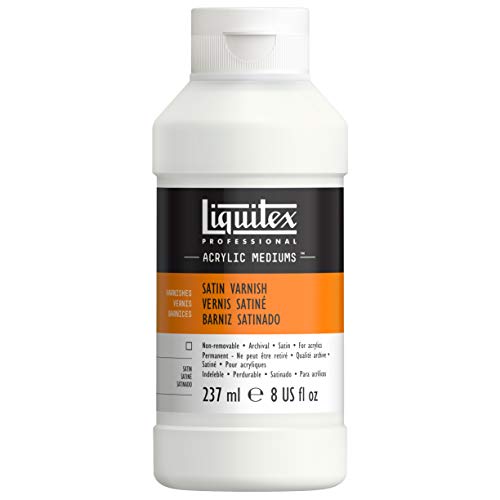 Liquitex Professional Satin Varnish, 8 ozA brush-on acrylic varnish. Liquitex says to wait 72 hours to 2 weeks first, and 24 hours between coats.about $19 · Check price
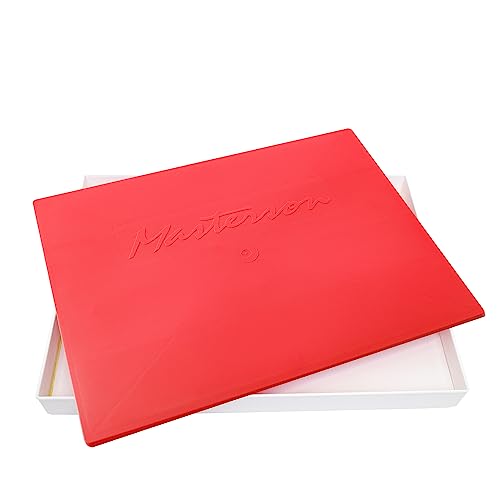 Masterson Sta-Wet Premier Palette, 16 x 12 inA wet sponge, membrane paper, and an airtight lid keep paint workable on the palette between sessions.about $27 · Check price
Prices are Amazon listing prices checked October 28, 2026.
How to tell if acrylic paint is dry
Touch the thickest spot, not the edge. Golden defines touch dry as a film with no more than a slight surface tack, and notes that reworking the paint after that point can damage the film. For layering, touch dry is enough. For varnish, framing behind glass, or stacking canvases, wait for the cure times above.
Acrylic also shifts color as it dries. Winsor & Newton says acrylics usually darken in tone because the binder changes from white to transparent, so mix a touch lighter than you want when matching a color.
Ready to paint?
Sources
- Golden Artist Colors, OPEN Acrylic Colors. The 6 mil drying test for OPEN, Heavy Body, and a 1:1 mix; OPEN isolation coat and varnish timing.
- Golden, Drying: Technical Notes. Thin vs thick films, retarder percentages, temperature and humidity, the 49°F film formation minimum.
- Golden, Varnish Application Guidelines. Wait times before isolation coat and varnish for thin and impasto acrylics.
- Golden, Waterborne Varnish. 72 hour minimum, longer with retarder or glazing liquid, 24 hours between coats.
- Golden, Color Pouring Mediums. 72 hour cure for pours and the 65 to 75°F, 50% RH ideal.
- Golden, OPEN: Controlling Drying Times and Golden Fluid Acrylics. Airflow, surface absorbency, and Fluid vs Heavy Body.
- Winsor & Newton, Understanding the drying times of our acrylic paints and Winsor & Newton, Drying times and colour shift. Galeria and Professional Acrylic thin and thick film times, and why acrylic darkens as it dries.
- Liquitex, Professional Matte Varnish, Liquitex, Varnishing Acrylics, and Liquitex, Slow-Dri Medium.
Questions
How long does acrylic paint take to dry?
A thin layer of acrylic paint is dry to the touch in about 10 to 30 minutes. Golden measured its Heavy Body acrylics touch dry in about 30 minutes at a thin 6 mil film, and Winsor & Newton gives 10 to 20 minutes for thin Galeria films. Thick layers take an hour to a day to skin over, and the film keeps drying underneath for days to weeks.
How long should acrylic paint dry before varnishing?
Golden says to wait a day or two before an isolation coat on thin paintings, then another two days to a week before varnish, and a week or two for thick impasto. Liquitex says 72 hours to two weeks depending on thickness. Golden OPEN acrylics need at least 30 days.
How long does an acrylic pour take to dry?
Golden recommends at least 3 days (72 hours) before adding another pour or moving the piece, with ideal conditions of 65 to 75°F and relative humidity above 50 percent. Deep pours can take longer, and Golden does not recommend force drying them.
Can I use a hair dryer to dry acrylic paint faster?
Warm, moving air speeds drying, and Golden says high temperature with low humidity encourages faster drying. Keep the paint above 49°F (9°C), the temperature below which Golden says the acrylic polymer cannot form a proper film. For pours, Golden advises against force drying.
How do I make acrylic paint dry slower?
Add a retarder or slow-dry medium, or switch to a slow-drying line. Golden says 3 to 10 percent of its Retarder keeps paint from skinning for up to 6 hours. Golden OPEN acrylics stay workable for 1 to 3 hours in Golden's test. A stay-wet palette keeps paint fresh on the palette.
Is acrylic paint waterproof when dry?
Once a normal layer is touch dry it no longer re-wets easily, and Golden's test puts Heavy Body at about 30 minutes to touch dry and 3 or more days to lock down. Until it has cured, a thick film is still soft and releasing water, so wait before varnishing or stacking work.
Keep reading
- How long does oil paint take to dry: the same chart for oils, where the answer is days and months instead of minutes.
- The best acrylic paint sets: student and artist grade sets ranked.
- Gifts for painters: a stay-wet palette is on the list for a reason.
Drying times are the manufacturers' published figures, cited above with their test conditions. Your studio's temperature, humidity, airflow, and paint thickness will move them. Austin Gallery may earn a commission from product links on this page at no cost to you.