The Best Vrbos in Houston, by Neighborhood
Houston is 600 square miles of city, which makes the rental-area decision the whole ballgame. Montrose bungalows, Heights Victorians, EaDo lofts, Medical Center practicality, downtown towers, and Galleria high-rises are six different trips at America's friendliest big-city prices. This guide ranks them so you book the right one.
No fake listings, no "this exact bungalow has the best porch in Montrose" bait. We cover the neighborhoods, the logistics, and the real math, then hand you a live search.
How to Choose Your Houston Neighborhood
Two minutes of orientation before the rankings.
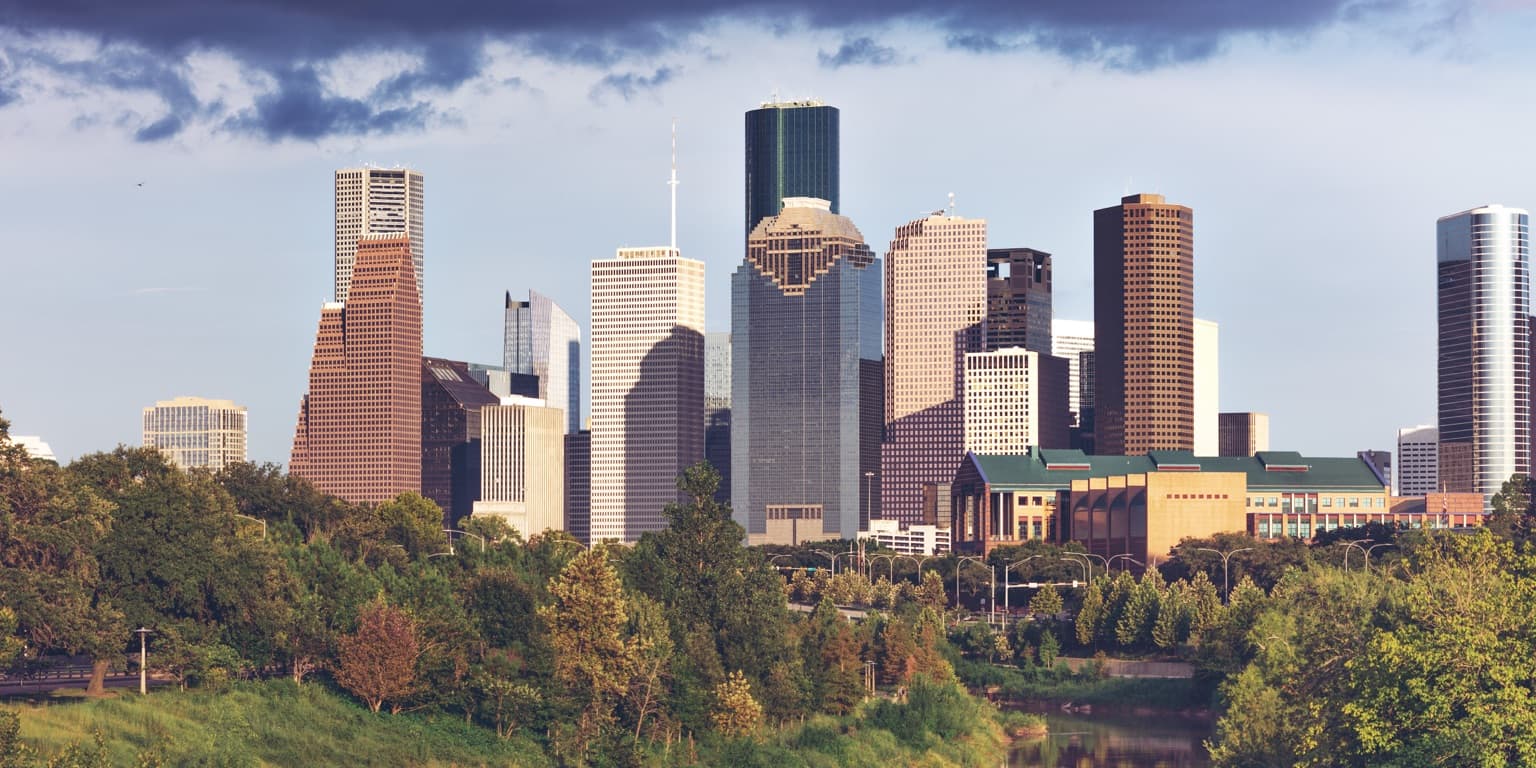
Visitor Houston lives almost entirely inside the 610 Loop, a ring the city long ago outgrew but never culturally left. Inside it: Montrose and the Museum District to the southwest of downtown, the Heights to the northwest, EaDo to the east, the Medical Center and Hermann Park to the south, and downtown in the middle. The Galleria's second skyline sits just outside the loop's west edge. Distances between these zones run 10 to 20 driving minutes, which is Houston's version of adjacent.
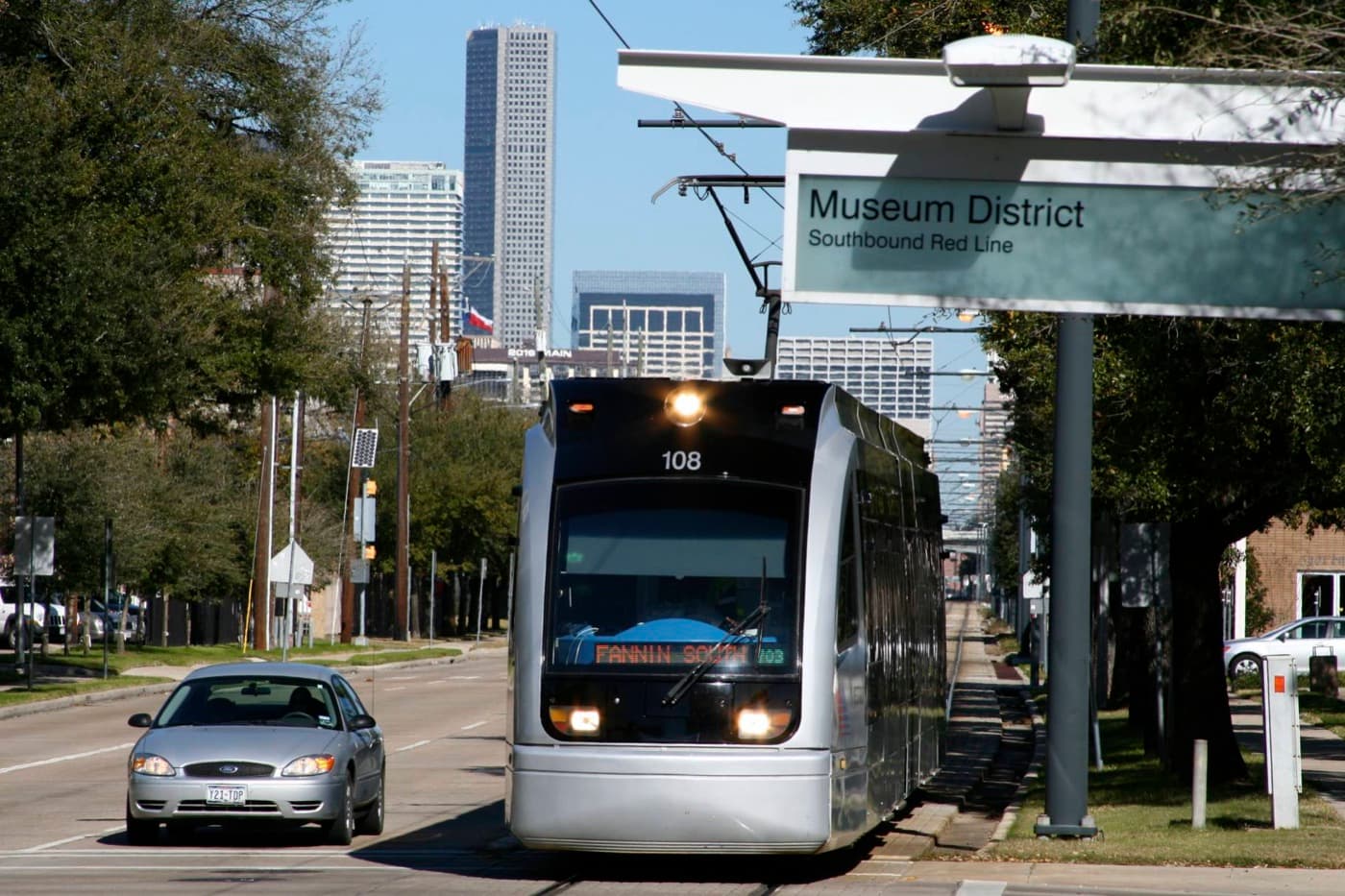
Two facts shape every booking. First, Houston is a bargain: America's fourth-largest city rents its best neighborhoods at $110 to $325 a night, a fraction of coastal-city pricing. Second, the city runs on cars, with one honorable exception, the METRORail Red Line stitching downtown, the Museum District, and the Medical Center into an actual transit corridor.
We ranked for the realistic leisure weekend: museums, food (the city's great argument), a game or show, and minimal windshield time. Character and walk-to-dinner density scored up; interchangeable comfort scored down.
Pick Your Neighborhood in 30 Seconds
Six areas, six different trips. Match yours, then read that section.
| Area | The trip it's for | Typical band | Search |
|---|---|---|---|
| Montrose + Museum District | Art, food, and the Menil | $130-300/nt | Vrbo → |
| The Heights | Victorian porches, brunch pace | $130-325/nt | Vrbo → |
| EaDo | Stadium nights, loft value | $110-280/nt | Vrbo → |
| Medical Center zone | Hospital stays, park mornings | $110-250/nt | Vrbo → |
| Downtown | Theater and ticket weekends | $120-300/nt | Vrbo → |
| Galleria + Uptown | Shopping-anchored comfort | $120-300/nt | Vrbo → |
Price bands are the ranges listings typically show; rodeo and event weeks run higher. The live listing total is always the truth.
Montrose + the Museum District
Montrose is where Houston keeps its personality: a leafy inner-loop quarter of 1920s bungalows, vintage shops, dive bars beside tasting-menu rooms, and a century-deep bohemian streak, bordered by the Museum District's nineteen institutions and Hermann Park. For a visitor, it solves Houston's defining problem, sprawl, better than anywhere else: stay here and the Menil Collection, the Museum of Fine Arts, the Rothko Chapel, and a hundred good meals sit within a short walk, bike, or five-minute drive.
The art anchor alone justifies the ranking. The Menil, free, oak-shaded, one of the great private collections in America, sits inside a Montrose residential neighborhood like it grew there, with the Rothko Chapel's fourteen brooding canvases a block away. Down the boulevard, the MFAH's campus and the Contemporary Arts Museum hold the formal end, with Hermann Park, the zoo, and the Miller Outdoor Theatre's free shows behind them.
Rentals are bungalows, garage apartments, and townhomes threaded through residential streets, which means quiet nights a block off busy corridors. Food is the other headline: Houston is arguably America's most exciting eating city right now, and Montrose is its densest concentration of the argument.
- ·The Menil and Rothko Chapel, unhurried, ideally on a weekday morning
- ·Museum District day: MFAH, then Hermann Park's paddle boats
- ·Eat ambitiously; Montrose corridors reward zero chain meals
- ·Buffalo Bayou Park's skyline views, ten minutes north
Walkable by Houston standards still means crossing some hostile arterials, and summer humidity will edit your afternoon plans. Rental inventory here is boutique-scale bungalows, not towers; the good ones book ahead.
The Heights
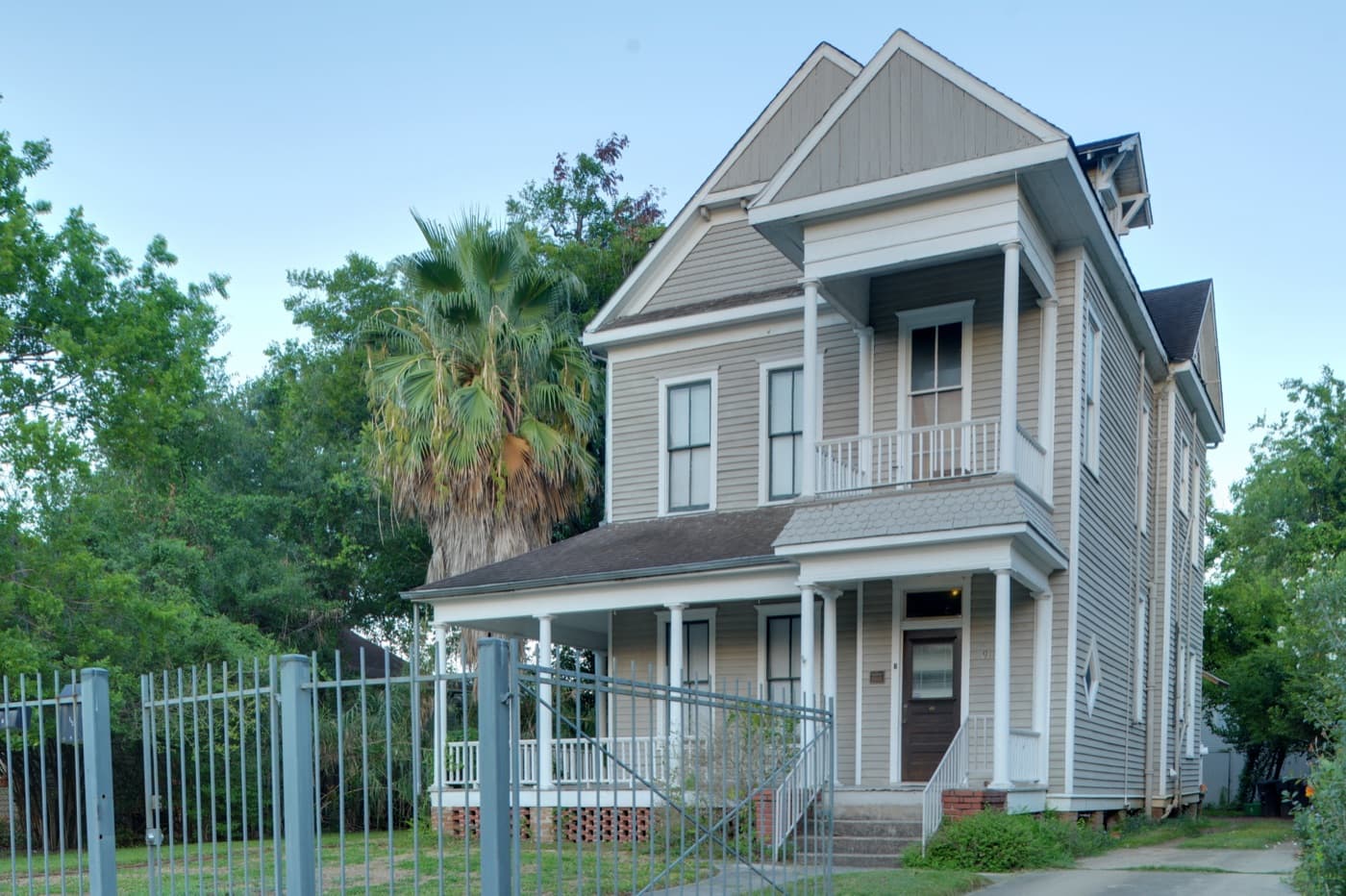
The Houston Heights was a Victorian streetcar suburb before Houston swallowed it, and it kept the bones: gingerbread-trimmed houses on oak-lined avenues, a walkable spine along 19th Street's boutiques and cafes, and the White Oak and Heights hike-and-bike trails stitching it to the bayou system. Of all Houston neighborhoods it feels most like a small town that happens to have a skyline view.
Rentals mirror the housing stock: restored Victorian cottages, craftsman bungalows, and the tasteful new construction that filled the gaps, many with the porches the neighborhood is famous for. The weekend here runs at brunch pace, 19th Street browsing, an antique mall hour, patio dinners along the Studewood and White Oak corridors, with downtown and Montrose each about ten minutes away when you want them.
The Heights edges below Montrose only because its museum-and-landmark load is lighter; as a place to simply stay, eat, and stroll, it is arguably the most pleasant base in the city.
- ·19th Street's boutique-and-bakery crawl
- ·Bike the Heights trail down to Buffalo Bayou Park
- ·Antique and vintage malls; the Heights hoards well
- ·First Saturday arts markets when the dates align
Part of the historic district's charm-preservation includes odd liquor rules rooted in its dry-town past (some restaurants run club memberships); it affects nothing much, but surprises people. Nightlife here is mellow by design.
EaDo
EaDo, East Downtown, is Houston's warehouse quarter mid-transformation: block after block of murals (the annual street-art festivals keep repainting the district), breweries and bars in converted industrial sheds, and the stadiums that give it its pulse, the Dynamo and Dash's soccer ground in its heart, with the Astros' downtown ballpark and the Rockets' arena just across the highway. On a match or game night the whole district moves in one direction, and staying inside it is the point.
The rental stock is the newest on this list: industrial-conversion lofts and three-story townhomes built in the last decade, often with rooftop decks aimed at the skyline. Prices run below Montrose and the Heights for newer square footage, which makes EaDo the value-with-style pick.
Beyond game nights, you are borrowing adjacency: downtown's rail spine, the original Ninfa's on Navigation in the neighboring East End (where the fajita was popularized), and ten-minute access to almost everything inner-loop. The district's own daytime scene is still filling in, which is exactly why it is affordable.
- ·Build the stay around a Dynamo, Astros, or Rockets night
- ·Mural-hunt the district on foot or bike; it repaints yearly
- ·Brewery afternoon in the converted warehouses
- ·Ninfa's on Navigation, a genuine Tex-Mex landmark, next door
EaDo is transitional block by block: a stylish loft can face a working warehouse or an empty lot, and street life thins outside event nights. Check the immediate surroundings on the map, and price the trade honestly; that is where the discount comes from.
The Medical Center zone
The Texas Medical Center is the largest medical complex on earth, a city of hospitals with its own skyline, and the rental market around it serves a real and underserved trip: families accompanying patients, visiting medical professionals, and long-stay travelers who need a kitchen, laundry, and calm more than they need nightlife. Listings here compete on practicality, weekly and monthly rates, hospital-shuttle proximity, parking, and it is the one Houston zone where that competition works entirely in your favor.
The location carries hidden leisure value. Hermann Park sits immediately north: the zoo, the Japanese garden, the golf course, and the Miller Outdoor Theatre's free summer shows are the neighborhood's front yard, and the METRORail Red Line runs from the medical complex straight through the Museum District to downtown, making this, quietly, one of the most transit-connected bases in Texas.
For a pure tourism trip it ranks mid-list, the immediate blocks are institutional, but for its actual constituencies it is the only correct answer, and the park-and-rail adjacency keeps hard weeks humane.
- ·Hermann Park mornings: zoo early, pedal boats after
- ·Ride the Red Line to the museums or downtown instead of parking
- ·Miller Outdoor Theatre free performances in season
- ·The MFAH is two rail stops away for restorative hours
Evenings are institutional-quiet and dinner options thin near the complex itself; Rice Village and Montrose, ten minutes away, fill the gap. Book units with recent reviews; the long-stay market includes some tired inventory.
Downtown Houston
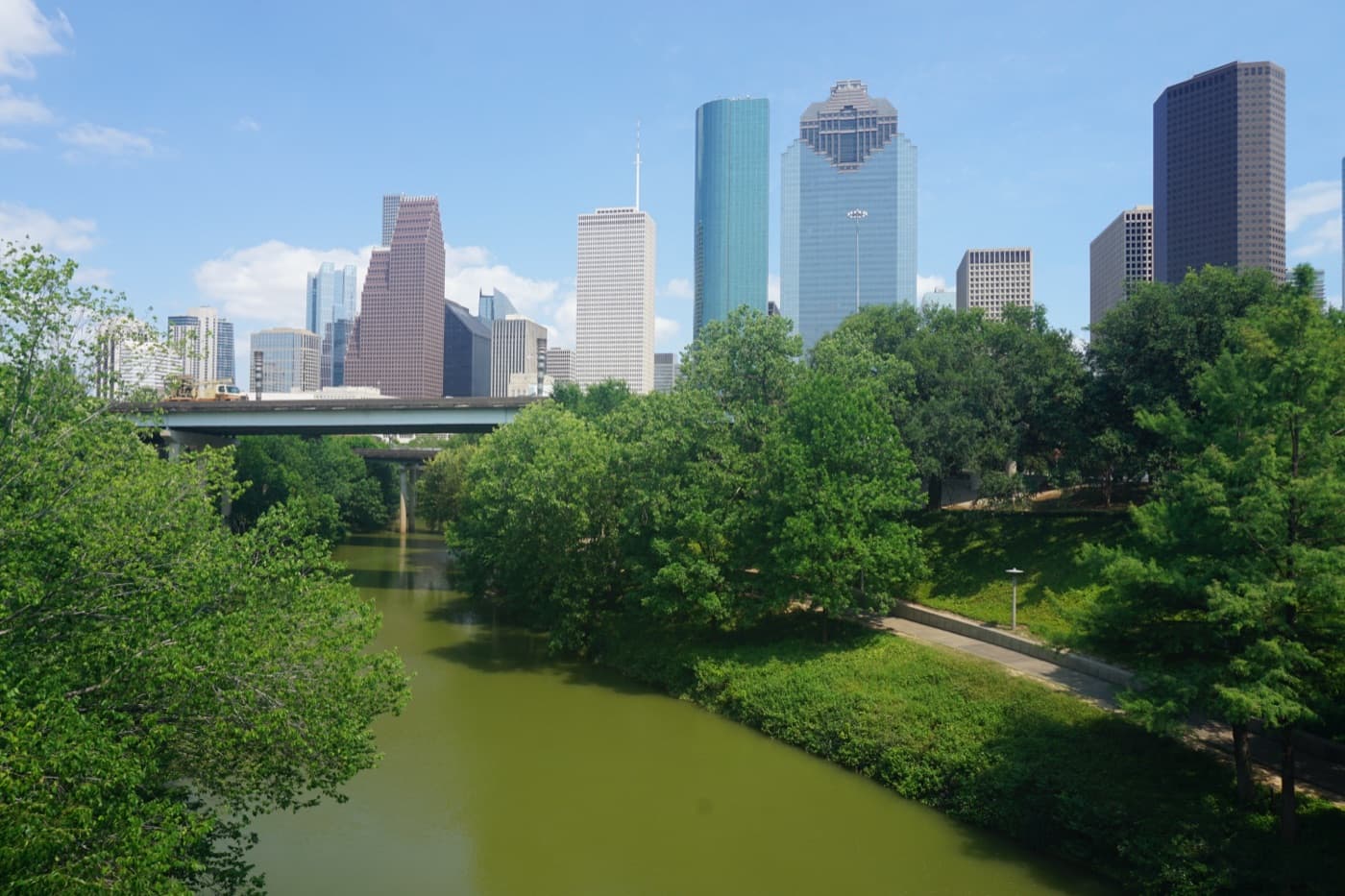
Downtown Houston runs on events: a Theater District whose resident opera, ballet, symphony, and Alley Theatre give it one of the country's larger concentrations of performing-arts seats, the Astros' ballpark and Rockets' arena drawing their crowds, and Discovery Green's programmed lawn linking the convention center to the skyline. Rent a high-rise condo or converted-office loft here when the trip is built around tickets.
The neighborhood's famous quirk is vertical: seven miles of air-conditioned pedestrian tunnels connect the towers below street level, an entire weekday city that closes with the office crowd. Above ground, Market Square's bars and restaurants hold the historic corner, and Buffalo Bayou Park's trails start at downtown's edge.
Like most American downtowns it exhales after hours outside event nights and Market Square's radius; the trick is to book it for what it is, the ticketed weekend's most convenient bed, and borrow Montrose and EaDo, minutes away, for the rest.
- ·A Theater District night; the resident companies are the real thing
- ·Astros game, then Market Square's patios
- ·Walk or bike Buffalo Bayou Park from the downtown end
- ·Discovery Green's calendar usually has something free
Parking is a paid line item almost everywhere, and street-level quiet on non-event nights surprises visitors expecting Manhattan. Rodeo season in late winter and big conventions can spike prices citywide, downtown first.
The Galleria + Uptown
Uptown is Houston's second skyline, built around the Galleria itself, the ice-rink-equipped retail city that remains one of the largest malls in America, and the Post Oak Boulevard corridor's hotels, towers, and steakhouses. The rental market is high-rise condos with full amenity decks, pools, gyms, valet-adjacent parking, at prices that undercut comparable hotel suites on the same boulevard.
The trip this zone serves is unapologetic: shopping-anchored weekends, quinceanera and wedding parties near the corridor's venues, and visiting families who want a comfortable tower base between errands. Memorial Park, Houston's vast running-and-golf green with its new land-bridge prairie, sits just northeast, and the Gerald D. Hines Waterwall Park's 64-foot fountain semicircle is the neighborhood's one genuine postcard.
It ranks last among the six not because it fails but because it is interchangeable: comfortable, generic, and disconnected from the food-and-culture Houston that justifies the trip. Stay here for the mall and the tower pool; drive fifteen minutes east when you get hungry for the real city.
- ·The Galleria with a strategy; it is a city, not a mall
- ·Waterwall Park photos at golden hour
- ·Memorial Park's loop, the city's communal morning ritual
- ·Steakhouse night on Post Oak; the corridor does it properly
Traffic around the Galleria at peak retail hours is its own weather system, and the zone's restaurants skew expense-account. If the trip is not shopping-shaped, every other area on this list gives you more Houston per dollar.
Costs, Rodeo Season, and When to Book
Houston's ordinary weekends barely need lead time, 1 to 3 weeks finds good inventory in every zone, and fees typically add $75 to $175 per booking. The exceptions are the city's mega-events: the Houston Livestock Show and Rodeo, three weeks of late February and March that constitute one of the largest annual events in the country, plus marquee sports weekends and the biggest conventions, all of which tighten and raise the whole inner-loop market. Book those windows a month or more out.
Seasonally, October through April is prime; summer discounts are real and honestly earned by the humidity. Hurricane-season flexibility (peak late August and September) is the standing Gulf-city advice: prefer flexible cancellation and travel-aware plans in those weeks.
Houston Rental Questions, Answered Straight
What is the best area to stay in Houston?
+
Montrose and the Museum District for most visitors: bungalow rentals within reach of the Menil Collection, the Rothko Chapel, the MFAH campus, Hermann Park, and the densest great-food corridors in the city. The Heights is the runner-up for pure pleasantness; EaDo wins for stadium trips; the Medical Center zone for hospital stays.
How much does a Houston Vrbo cost per night?
+
Houston is one of the cheapest big-city rental markets in America: most inner-loop listings run about $110 to $325 a night, with garage apartments and EaDo lofts at the low end and large Heights houses at the top. Fees typically add $75 to $175 per booking. Rodeo season (late February into March) and major events push everything up.
How far is Houston from Austin?
+
About 165 miles, or roughly 2.5 to 3 hours by car down Highway 71 or I-10 depending on route and traffic. It is a comfortable weekend distance, and pairing a Houston city stay with a Galveston beach day (an hour farther) makes a natural combined trip.
Do I need a car in Houston?
+
Almost certainly yes. Houston is the archetypal driving city, and the neighborhoods on this list sit 10 to 20 minutes apart by car. The exceptions are narrow: the METRORail Red Line genuinely connects downtown, the Museum District, and the Medical Center, and a Montrose or Heights stay can do car-light days on foot and bike. Plan on wheels and enjoy the exceptions.
Is Montrose or the Heights better for a weekend?
+
Montrose if the weekend is museums, art, and the widest food range; it borders the Museum District and holds the Menil and Rothko Chapel. The Heights if the fantasy is a Victorian porch, boutique browsing, and brunch pacing. They are ten minutes apart, so either base day-trips the other easily; Montrose simply has more to walk to.
Where should I stay for a Texans game or the rodeo?
+
Both happen at the NRG complex south of the Medical Center. The Medical Center zone is the closest sensible rental area, with the added trick that the rail line runs from the museums straight toward the stadium area. Rodeo season in late February and March is Houston's biggest annual event; book weeks ahead and expect citywide price bumps.
Is Houston worth visiting for food alone?
+
Yes, and increasingly that is the trip: the combination of size, immigration depth, and cheap kitchens has made Houston one of the country's most exciting eating cities, from Viet-Cajun crawfish to some of the best Tex-Mex, West African, and South Asian food in America. Base in Montrose or the Heights and treat every meal as an event; the city will keep up.
When is the best time to visit Houston?
+
October through April. Fall and spring are genuinely pleasant, and even January runs mild. Summer (June through September) is a heat-and-humidity commitment best planned around air-conditioned anchors, museums, malls, and the tunnel system. Hurricane season's peak, late August and September, deserves flexible bookings.
Houston's island: pair a city stay with West End beach houses or Seawall condos, an hour south.
The other giant metro: Uptown, Bishop Arts, the Stockyards, and Arlington ranked.
Riverwalk condos, King William historic homes, and the theme-park zone ranked.
The hub guide: Hill Country, lakes, rivers, coast, wine country, and the in-town staycation.
Vrbo links on this page are commissionable through the Expedia Group creator program. Your price is unchanged; we earn a small commission on completed bookings.