Austin Gallery
Studio & ToolsSeptember 30, 2026Updated September 30, 202613 min read

The Best Fume Extractors for Art Studios (2026): Laser, Solder, and Resin

Laser smoke, flux smoke, and resin vapor are three different problems. We matched the right extraction to each, from a $90 duct fan to studio arm systems, and explain what carbon filters can and cannot do.

By Austin Gallery · How we research

★ Our Top Pick

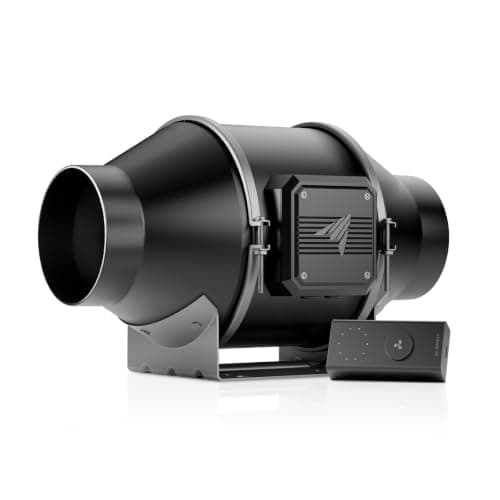
AC Infinity CLOUDLINE S4 4-Inch Inline Duct Fan

AC Infinity CLOUDLINE S4 4-Inch Inline Duct Fan

Duct laser smoke outdoors. 226 CFM, 26 dBA, no filters to replace.

$89.99rated 4.7/5 in our review

Not sure yet? Compare all 12 picks below ↓

For a laser engraver, the best fume extractor is an inline fan and a duct to the outdoors, and the AC Infinity CLOUDLINE S4 (about $90 at the time of writing) is our pick. For stained glass and jewelry soldering, put a benchtop absorber like the Hakko FA-400 (about $82) right beside the joint. For resin, move room air out a window and wear an organic vapor respirator.

Those are three different problems, and most "best fume extractor" lists blur them together. A laser makes a lot of smoke and gas continuously; the only complete solution is to send it outside, and recirculating purifiers are the fallback for rooms where that is impossible. Soldering makes a small plume of flux smoke right under your face, so capture distance matters more than power. Resin makes vapor and odor rather than smoke.

Below: two duct fans, four laser purifiers for rooms without a window, four soldering extractors from Hakko and Weller, and the resin setup. Premium industrial brands such as BOFA are sold through industrial distributors rather than Amazon, so they are not listed here. If you are still picking a laser, see our best laser engravers guide. Every product link goes to Amazon with our affiliate tag; we earn a small commission, at no cost to you, when you buy through us.

Best for Laser Engravers (Vent Outdoors)Our Pick

Type

Inline duct fan (exhaust)

Duct

4 in

Airflow

226 CFM (AC Infinity rating)

Noise

26 dBA (AC Infinity rating)

Control

Speed controller included

Pros

  • Removes smoke and odor completely by sending it outside
  • No filters to buy, ever
  • Quiet, with variable speed
  • About a tenth the cost of a laser smoke purifier

Cons

  • Needs a window or wall vent within duct reach
  • Ducting and a window kit are extra
  • Pulls conditioned air out of the room

For laser work, venting outdoors beats any recirculating filter, and it is also the cheapest option. Laser smoke is a mix of fine particles, tar-like condensates, and gases from whatever you are burning. A filter has to catch all of it and eventually fills up; a duct simply sends it outside. That is why Glowforge's own requirement is its filter or an openable window within 8 ft, and why most CO2 shops run a duct fan rather than a purifier.

How to set it up: laser exhaust port, then a short run of 4 in aluminum duct, then the S4, then the rest of the duct to a window insert. Mount the fan near the outside end so the duct inside the room is under negative pressure; a small leak then pulls room air in rather than pushing smoke out.

Pair it with the AC Infinity 4 in aluminum ducting, 25 ft (about $22 at the time of writing). If your laser has a 6 in port or you run a larger CO2 tube, step up to the S6 below. Our best laser engravers guide notes which machines ship with an exhaust fan and which need one.

Our Pick

The best fume extractor for most laser engravers is not a filter at all. It is a quiet inline fan pulling smoke through a duct and out a window, and the AC Infinity CLOUDLINE S4 is the one we would buy. AC Infinity rates it at 226 CFM and 26 dBA with a speed controller, for about $90 at the time of writing. Nothing to replace, nothing to saturate.

Buy the S4 if your laser (diode or small CO2) has a 4 in exhaust port or adapter and sits within a duct run of a window or wall vent. It is also the booster to add when a laser's built-in exhaust fan struggles on a long duct.

What we don't like

You need a path outdoors: a window insert or a wall vent. It moves air; it does not clean it, so it only works when the far end of the duct is outside.
Best Inline Fan for CO2 LasersAlso Great

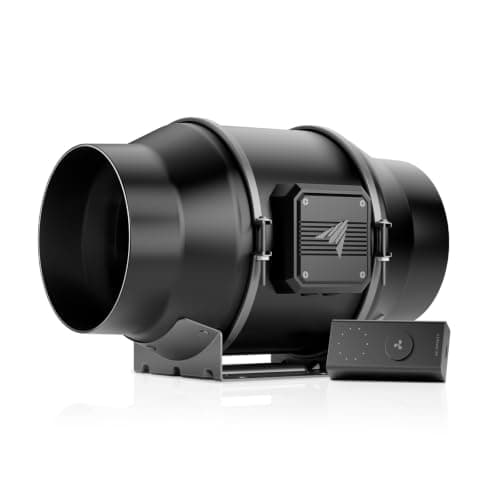
Type

Inline duct fan (exhaust)

Duct

6 in

Airflow

425 CFM (AC Infinity rating)

Noise

30 dBA (AC Infinity rating)

Control

Speed controller included

Pros

  • Nearly double the airflow of the S4
  • Handles long duct runs and bends
  • Still quiet for its size

Cons

  • Bulkier 6 in duct
  • More than a small diode needs

CO2 lasers make more smoke per minute than diodes because they cut faster and deeper. A 6 in fan keeps up with that on a real duct run. If your laser has a 4 in port, a 4 to 6 in reducer at the fan lets you use the bigger fan on the smaller outlet. Keep the duct as short and straight as your room allows; every bend costs airflow.

Also Great

The S6 is the same idea with nearly twice the air: 425 CFM and 30 dBA by AC Infinity's rating, on 6 in duct, for about $99 at the time of writing. It is the right fan for desktop and larger CO2 lasers, long duct runs, or a small studio where a laser and a soldering bench share one exhaust.

Buy the S6 for a CO2 laser, a duct run longer than about 10 ft, or any setup with bends that choke a 4 in fan.

What we don't like

6 in duct is bulkier and harder to route through a window insert. Overkill for a small enclosed diode.

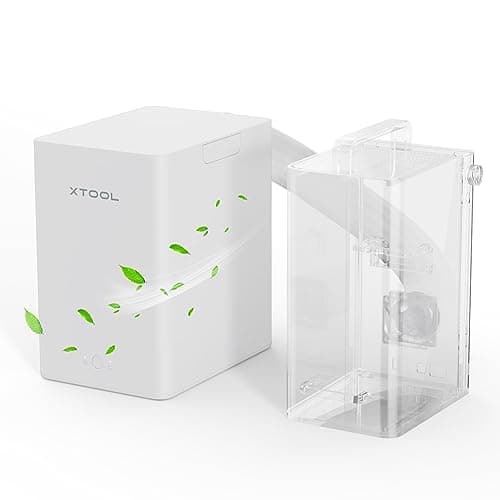
Best Filter for Enclosed Diode Lasers (No Window)Best Filter

Type

Recirculating laser purifier

Filtration

3-layer, including HEPA (per listing)

Made for

xTool M2, F2, F1, M1 Ultra

Pros

  • Lets a small laser run with no window
  • Made to fit xTool's exhaust ports
  • Particle and odor stages in one unit

Cons

  • Replacement filters add running cost
  • Not for CO2 or heavy cutting

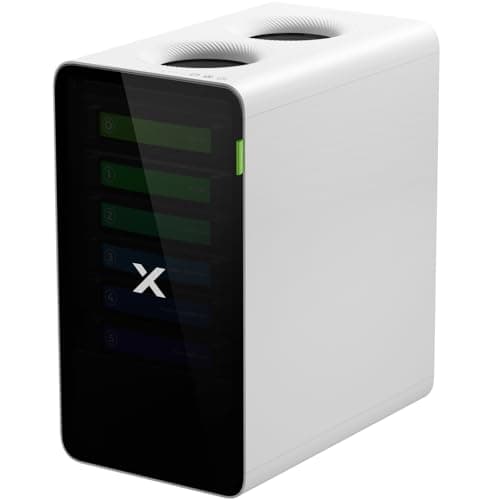
Buy a purifier because you cannot vent, not because it is better than venting. A good laser purifier stacks a pre-filter for the sticky condensates, a HEPA stage for fine particles, and activated carbon for odor and gases, and xTool's desktop unit does that at a size that fits next to an M2 or F2. Watch the filter indicator and replace media on schedule; a loaded carbon stage stops removing odor well before it looks dirty.

Best Filter

When venting outdoors is impossible, a purpose-built laser purifier is the fallback. xTool's Desktop Smoke Purifier is listed for the M2, F2, F1, and M1 Ultra, uses three-layer filtration with a HEPA stage, and costs about $299 at the time of writing. It is sized for small enclosed diode and galvo machines, not for CO2.

Buy it if you own a small xTool laser that lives in an interior room, an apartment, or a shared studio where no duct can reach a window.

What we don't like

Filters are consumables and add a running cost. It is sized for light-duty engraving; heavy cutting of wood and leather will load it fast.

Austin Art Insider

Free weekly guide to galleries, exhibitions & collecting in Austin.

Best Purifier for Larger Lasers

Type

Recirculating laser purifier

Filtration

6-layer with cyclone pre-separator (per listing)

Made for

Diode, fiber, and CO2 lasers

Pros

  • Cyclone stage extends filter life
  • Sized for larger lasers
  • No window required

Cons

  • Expensive to buy and to run
  • Venting outdoors is still better for CO2

This is the honest ceiling for recirculating filters in a home studio. The cyclone stage spins out heavier particles before they reach the filters, which is the main thing that keeps running costs sane on a high-output laser. If you are spending this much to avoid a hole in a window, get a quote for a wall vent first; it is often cheaper over two years of filters.

The AP2 is xTool's larger purifier, listed for diode, fiber, and CO2 machines, with a cyclone pre-separator and six-layer filtration. About $919 at the time of writing. It is the purifier to buy if you run an S1 or a desktop CO2 where venting is truly impossible.

Buy it for a 20W to 40W diode or a desktop CO2 laser in a room with no outdoor route, and only after you have ruled out a window or wall vent.

What we don't like

It costs about ten times an inline fan and still needs filters. For a CO2 laser used heavily, even a large purifier is second best to a duct.

Budget Filter for Creality Lasers

Type

Recirculating laser purifier

Filtration

2-layer (per listing)

Noise

68 dB (per listing)

Made for

Creality Falcon A1

Pros

  • Cheapest brand-made laser purifier
  • Three speeds
  • Direct fit for the Falcon A1

Cons

  • Only two filter stages
  • Light-duty only

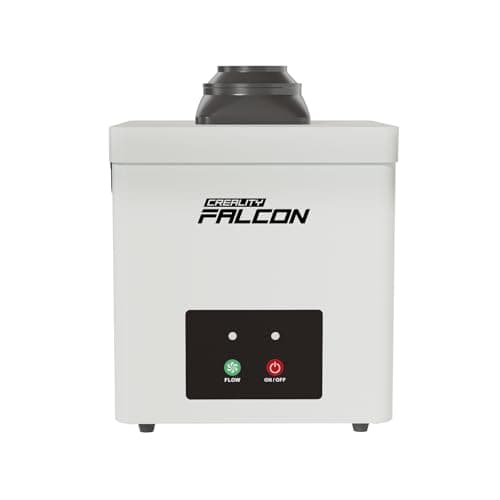
If you bought a budget enclosed laser, this is the matching budget purifier. Keep expectations to engraving and light cutting, and plan for replacement filters. For anything heavier, the inline fan at the top of this page does more for half the money if you have a window.

Built for the Creality Falcon A1, this two-layer purifier lists 68 dB and three fan speeds for about $180 at the time of writing. It is the lowest-cost purpose-made laser filter from a major laser brand.

Buy it with a Falcon A1 in a room without a window, for light engraving work.

What we don't like

Two filter layers is the minimum; it will load quickly on heavy cutting. Check fitment before buying for a non-Creality machine.

For the Glowforge Aura

Type

Recirculating laser filter

Media

Activated carbon cartridge

Made for

Glowforge Aura

Pros

  • Direct fit for the Aura
  • Meets Glowforge's ventilation requirement

Cons

  • Cartridge running cost
  • Not a substitute for venting when you can vent

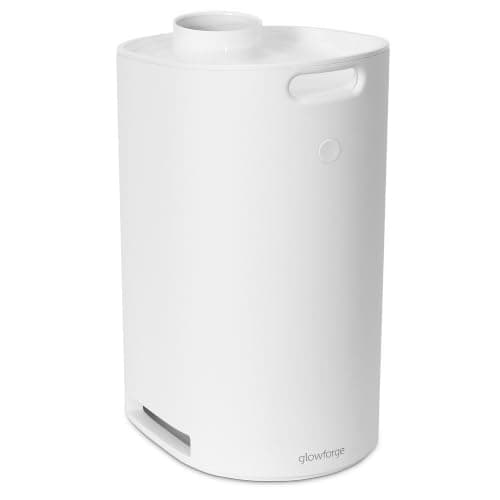
Glowforge owners without a window have one sanctioned option, and this is it. If you are still choosing a machine, our xTool vs Glowforge comparison counts the filter as part of the Aura's real price.

Glowforge requires this filter or an openable window within 8 ft of an Aura. It uses an activated carbon cartridge and costs about $399 at the time of writing.

Buy it for a Glowforge Aura in a room with no window.

What we don't like

Replacement cartridges are an ongoing cost, and a window vent remains the better option where possible.

Best for Soldering (Stained Glass and Jewelry)Best for Soldering

Type

Benchtop smoke absorber

Filter

Activated carbon (replaceable)

Build

ESD-safe versions available

Best

Flux smoke at the bench

Pros

  • The standard hobby and electronics bench absorber
  • Cheap replacement filters widely available
  • Small enough for a crowded glass bench

Cons

  • Must sit close to the work
  • Carbon only, no HEPA stage

The smoke you see when you solder is mostly burning flux, not metal. Rosin-based flux fumes are a known respiratory irritant and sensitizer, which is why stained glass teachers insist on moving that plume away from your face. At soldering temperatures, lead does not vaporize meaningfully; the lead risk in stained glass is from hands and surfaces, so wash your hands and keep food off the bench.

Placement matters more than power: a small absorber a few inches from the joint captures more than a big one across the table. Angle it so it pulls the plume sideways and away from your breathing zone.

Our stained glass supplies guide covers the iron, solder, and flux that go with it.

Best for Soldering

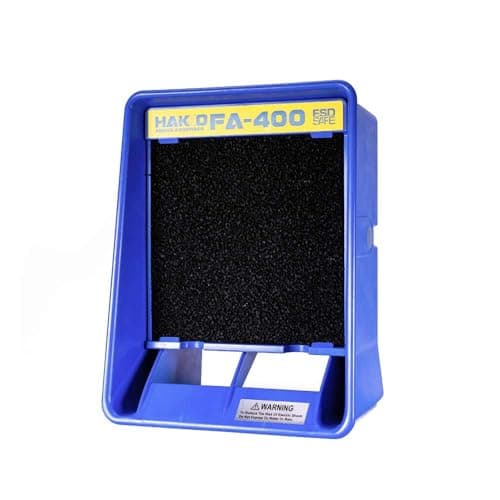
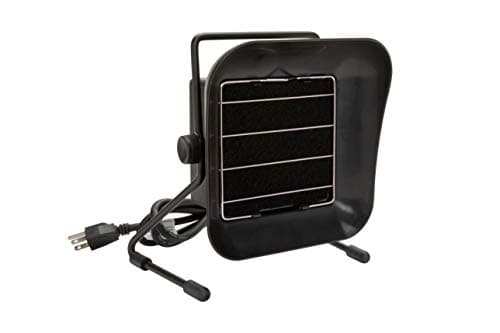
For stained glass and jewelry soldering, a benchtop absorber placed close to the joint is the right tool, and the Hakko FA-400 is the long-running standard. It pulls flux smoke away from your face through an activated carbon filter, for about $82 at the time of writing.

Buy it if you solder copper foil or lead came for stained glass, or solder jewelry findings, at a bench for an hour or more at a time.

What we don't like

It is a short-range tool: it has to sit within a few inches of the work to capture smoke. The carbon filter needs regular replacement, and it is not a particle HEPA filter.

Best Budget Solder Absorber

Type

Benchtop smoke absorber

Power

120V

Filter

Activated carbon (WSA350F)

Pros

  • Low price from a major soldering brand
  • Genuine replacement filters sold in packs

Cons

  • Carbon only
  • Short capture range

The WSA350 and the Hakko FA-400 do the same job. Either is a large step up from soldering with nothing. Buy a pack of genuine WSA350F carbon filters with it so you actually change them.

Weller's WSA350 is the other long-standing benchtop absorber, a 120V fan with an activated carbon filter, about $75 at the time of writing. Choose between it and the Hakko on price and on which filters you can reorder easily.

Buy it for occasional stained glass or jewelry soldering sessions.

What we don't like

Carbon filter only, and like every benchtop absorber it needs to sit close to the work.

Best Filtered Solder Extractor (Particles and Gas)Upgrade Pick

Type

Benchtop fume extractor

Filtration

EPA E10 particle filter + activated carbon granules

Brand

Weller Zero Smog line

Pros

  • Particle and gas filtration, not carbon alone
  • Built for all-day bench use

Cons

  • Pricier to buy and refilter

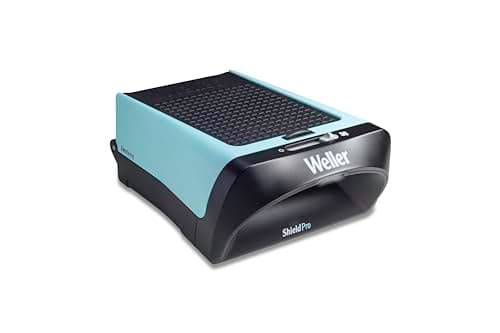
Carbon catches the gases; it does not catch fine particles. A particle stage in front of the carbon, as on the Shield Pro, handles both, and it protects the carbon from clogging. For a studio that solders every day, this is the level worth paying for.

Upgrade Pick

The Shield Pro steps up from carbon-only absorbers with an EPA E10 particle filter plus activated carbon granules for gases, per Weller's replacement filter listing. About $251 at the time of writing. It is the one to buy if you solder daily or teach a class.

Buy it for daily stained glass or jewelry production, a teaching studio, or anyone who has already reacted to flux smoke.

What we don't like

Three times the price of a basic absorber, and its filters cost more too.

Best Studio System With an Extraction Arm

Type

Central fume extraction unit

Intake

Positionable arm (1 arm kit included)

Filters

Included

Pros

  • Arm puts the intake exactly at the joint
  • Studio-grade capacity

Cons

  • High cost
  • Extra arms cost more

An arm-mounted intake is the professional answer to the placement problem. Instead of moving a box around the bench, you swing the nozzle to where the smoke rises. For a home studio, the FA-400 above is enough.

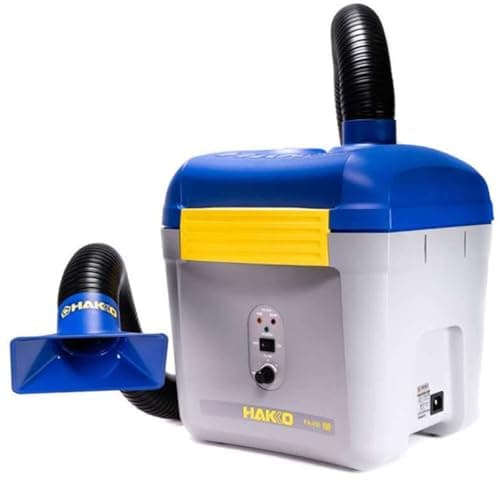
The FA-430 is a floor or under-bench extraction unit with filters and a positionable arm that brings the intake right to the work. About $1,056 at the time of writing. It is what a shared jewelry or glass studio should run instead of a row of benchtop fans.

Buy it for a teaching studio, a production jewelry bench, or a shared glass shop.

What we don't like

Expensive, and more arms are sold separately. Far more than a home hobbyist needs.

Best for a Resin Room (Exhaust With Carbon)

Type

Inline fan + carbon filter kit

Duct

4 in

Includes

Fan, speed controller, carbon filter, ducting

Pros

  • Complete kit, no parts hunting
  • Works as exhaust or as a room scrubber

Cons

  • Carbon filter saturates and needs replacing
  • Not a substitute for PPE

For resin, ventilation and gloves do more than any extractor. Epoxy art resins are low-odor but can cause skin sensitization with repeated contact, and UV resin and some casting resins smell strongly while curing. A fan moving room air to a window is the first step. Our resin art kits guide covers the resins themselves.

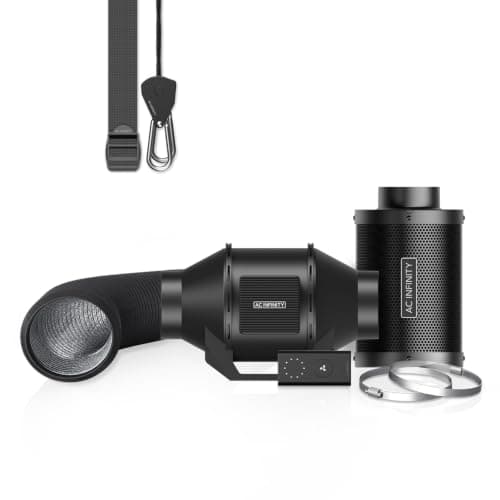
Resin work does not make smoke, it makes vapor and odor, so what helps is steady air exchange. This kit pairs an AC Infinity inline fan with a carbon filter, speed controller, and ducting for about $159 at the time of writing. Run it as exhaust to a window, with the carbon filter cutting odor at the outlet, or as a room scrubber when there is no window.

Buy it for a dedicated resin, UV resin, or 3D printing corner where odor lingers between pours.

What we don't like

In recirculating mode it reduces odor but does not replace fresh air or a respirator for people sensitive to resin.

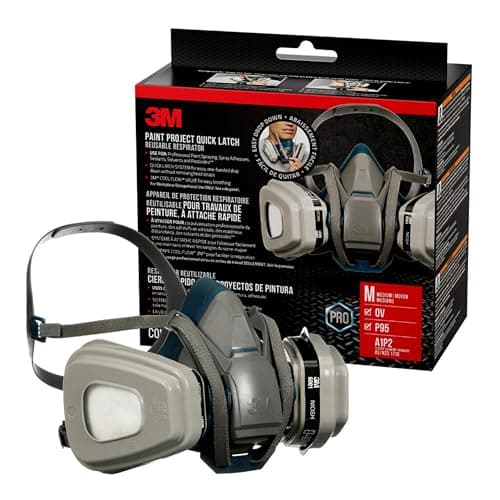
Best Personal Protection for Resin

Type

Reusable half-face respirator

Protection

P95 particulate + organic vapor (per listing)

Latch

Quick Latch drop-down

Size

Medium

Pros

  • Protects the person, not just the room
  • Handles resin vapor and sanding dust

Cons

  • Needs a proper fit
  • Cartridges are a running cost

Extractors protect the room; a respirator protects you. For resin work, wear it while mixing, pouring, and sanding, and store the cartridges sealed between sessions so they do not load up sitting on the shelf.

A half-face respirator with organic vapor cartridges is the one piece of protection that goes with you from the pour table to the sanding bench. This 3M 6502 kit comes with P95/OV protection for about $50 at the time of writing.

Buy it if you pour resin regularly, sand cured resin, or already notice headaches or irritation from resin odor.

What we don't like

It only works if it seals: beards break the seal. Cartridges must be replaced on schedule, and it is not rated for laser smoke from PVC or other plastics you should never laser.

Head-to-Head

How the top picks compare

The decision most laser owners face: vent it, or filter it.

Inline Duct Fan vs Laser Smoke Purifier

A fan sends smoke outside with no consumables; a purifier cleans it in the room and needs filters.

AC Infinity CLOUDLINE S4

AC Infinity

Winner

AC Infinity CLOUDLINE S4

Removes everything by venting outdoors, no filters

$89.99
Check Price →
xTool Desktop Smoke Purifier

xTool

xTool Desktop Smoke Purifier

Works in rooms with no route outdoors

$299.00
Check Price →

Our verdict

Winner: AC Infinity AC Infinity CLOUDLINE S4. The duct fan wins whenever you have a window or wall within reach. It costs about a third as much, never needs filters, and removes gases a saturated carbon filter lets through. The purifier is the right buy only when venting is impossible: an interior room, a rental you cannot modify, or a shared space with no exterior wall.

Buy the AC Infinity

your laser can reach a window or wall vent with a duct run.

Buy the xTool

there is truly no route outdoors from where the laser must live.

How we
chose

Fume extraction is a safety purchase, so we held this page to a few rules:

  • Match the tool to the contaminant. Laser smoke, flux smoke, and resin vapor need different solutions. We picked separately for each rather than ranking one list.
  • Venting first. Where a duct to the outdoors is possible, we recommend it over any filter, because it removes everything and has no consumables.
  • Specs from the maker. Airflow and noise for AC Infinity fans come from AC Infinity's published ratings. Filter stages for purifiers come from the manufacturer's listing and are labeled "per listing."
  • Credible brands only. Amazon has hundreds of unbranded "fume extractors" with unverifiable HEPA claims. We stuck to AC Infinity, xTool, Creality, Glowforge, Hakko, Weller, and 3M.
  • Verified listings. Every product was checked live on Amazon on the day of publication. Prices move, so treat them as a snapshot.

This guide is general studio advice, not an industrial hygiene assessment. For a commercial shop or classroom, follow your local code and the laser or material maker's instructions.

Share this guide

Share

Common Questions

Frequently Asked Questions

Have art
to sell?

Austin Gallery specializes in selling inherited art, estate collections, and fine art with zero upfront fees. Get a free evaluation today.