Austin Gallery

Board Games

Best Family Board Games (2026): Tested Picks for Every Age at the Table

The best family game night isn't about a bigger box — it's about games that teach in five minutes, play in an evening, and are genuinely fun for kids and adults at once. These modern 'gateway' games make Monopoly feel like a relic. Sorted by what your family needs.

By Justin ParkUpdated June 5, 202614 min readHow we research

The secret to a great family game night isn't a bigger box or a longer rulebook — it's finding games that are easy to teach, quick to play, and genuinely fun for kids and adults at the same time. The good news: board games have had a quiet renaissance, and there's now a whole category of "gateway games" built to do exactly that. They make Monopoly and Sorry feel like relics.

These are the best family board games of 2026 — tested favorites that bridge ages, fit in an evening, and earn "let's play again." We've sorted them by what your family needs: an all-ages anchor, quick games for school nights, big-group games for gatherings, and picks for younger kids. Every link goes to Amazon with our affiliate tag — we earn a small commission, at no cost to you, when you buy through us. For more, see our complete board games guide by type and age.

In a Hurry?

The 3 picks that cover most readers. Tap to read the full review or buy direct.

Best Overall

Ticket to Ride

$40

Teaches in five minutes, fun for ages 8–80 — the gateway game to buy first.

Best Quick Game

Kingdomino

$21

Award-winning, genuinely strategic, and over in 15 minutes. Unbeatable value.

Best Big-Group

Codenames

$25

Plays with 4–8+, bridges generations — the holiday-gathering MVP.

Best Overall Family GameOur Pick

Players

2–5

Time

30–60 min

Ages

8+

Type

Gateway / route-building

Pros

  • Teaches in five minutes
  • Fun for kids and adults alike
  • Beautiful, quality components
  • The definitive gateway game

Cons

  • Under-7s want the First Journey version
  • Route competition at 5 players

If there's one game that proves modern board games have left Monopoly in the dust, it's Ticket to Ride. You draw colorful train cards and spend them to claim railway routes between cities, racing to complete secret destination tickets. That's it — and yet it's tense, satisfying, and endlessly replayable. The rules genuinely take five minutes, a game fits in under an hour, and it works beautifully across a wide age range, which is exactly what a family game needs.

Why "gateway game" matters: Ticket to Ride is the classic gateway — a game designed to be easy to learn but far richer than roll-and-move classics, built to win over people who think they don't like board games. If your family's only experience is Monopoly and Sorry, this is the game that changes their mind. Start here.

For families with younger kids, Ticket to Ride: First Journey (below) scales it down to ages 6+. But for most families, the standard game is the one — quick, beautiful, and fun for everyone at the table.

Our Pick

The perfect family game — and the one we'd hand any family first. You collect train cards and claim railway routes across a map; the rules take five minutes to teach, a game runs under an hour, and it's genuinely fun whether you're 8 or 80. The gateway game that's launched a million game nights.

Buy this if you buy one family game. It hits the sweet spot every family game needs: simple enough for kids (ages 8+), engaging enough for adults, quick to learn, and never boring. Beautiful components, easy setup, and it plays great at 2–5. The safest possible first purchase.

What we don't like

Younger kids (under 7) may need the simpler First Journey version (also in this guide). And at 5 players the board gets competitive for routes — which most families enjoy, but sensitive young kids can find frustrating.

Most Beautiful & EasyAlso Great

Players

2–4

Time

30–45 min

Ages

8+

Type

Abstract / tile-drafting

Pros

  • Beautiful, tactile resin tiles
  • Simple rules, real depth
  • Excellent at 2 players too
  • Award-winning modern classic

Cons

  • Penalty mechanic frustrates some young kids
  • Quiet, thoughtful (not rowdy)

Azul is the game that converts skeptics through sheer beauty. You take turns drafting sets of gorgeous, chunky resin tiles and placing them to complete rows on your player board, building a mosaic and scoring for clever placement. The rules are simple enough to teach a child in minutes, but the decisions — what to take, what to leave your opponents — have genuine strategic bite that keeps adults hooked.

It's tactile in a way photos can't convey (the tiles feel wonderful), plays in well under an hour, and shines at every count from 2 to 4 — making it a superb parent-and-kid game as well as a family one. The only caution: a small penalty for taking tiles you can't use can frustrate very young or sensitive players. For families who enjoy a calm, beautiful, brain-tickling game, Azul is close to perfect.

Also Great

Gorgeous, tactile, and deceptively simple. You draft beautiful resin tiles to fill your board like a mosaic — easy to learn, satisfying to hold, and quick to play. The game that wins over people who 'don't like board games' the moment they touch the tiles.

Buy this for a family game that looks as good as it plays. The chunky tiles make it tactile and appealing to kids, the rules are simple (ages 8+), and the strategy has real depth for adults. It's also a perfect 2-player game for a parent and child, and stunning on the table.

What we don't like

There's a 'take what you don't want' penalty that can trip up very young or sensitive players, and it's a quieter, more thoughtful game than a rowdy party pick. Best for families who enjoy a calm, brainy challenge.

Check Azul on Amazon →$34 · Next Move Games
Best Quick GameBest Value

Players

2–4

Time

15–20 min

Ages

8+

Type

Tile-laying / family

Pros

  • Plays in 15 minutes
  • Simple but genuinely strategic
  • Award-winning, budget price
  • 'My First' version for younger kids

Cons

  • Light — not a main-event game
  • Best at 3–4

Kingdomino proves a great family game doesn't need to take an hour or cost a fortune. You draft and connect domino-shaped tiles to build a 5×5 kingdom, matching terrain types and placing crowns to score — and the whole thing is over in about 15 minutes. It won the Spiel des Jahres (the board-game world's top award) for good reason: it's effortless to teach, genuinely strategic, and fast enough that nobody loses interest.

That speed makes it ideal for school nights, younger kids, and 'just one more' situations, and there's a 'My First Kingdomino' edition (in our kids guide) for ages 4+. It's a lighter game, so dedicated strategists will want something heavier for a main event — but as the perfect quick opener, closer, or whole-evening filler for a family, and at this price, it's one of the best values in gaming.

Best Value

Big fun in a 15-minute box. You connect domino-style tiles to build your kingdom, matching terrains to score — dead simple, genuinely strategic, and over fast enough for 'one more game.' An award-winning gem that punches way above its low price.

Buy this for fast, repeatable family fun on a budget. At 15 minutes a game and ages 8+ (with a 'My First' version for younger), it's perfect for school-night game time and short attention spans, while still giving everyone a real puzzle to solve. Tremendous value.

What we don't like

It's a lighter game, so strategy fans will want something meatier for a main event — but as a quick, everyone-can-play opener or closer, that's exactly the point. Best at 2–4 (a touch better at 3–4).

Check Kingdomino on Amazon →$21 · Blue Orange Games
The Classic GatewayAlso Great

Players

3–4 (6 with expansion)

Time

60–90 min

Ages

10+

Type

Gateway / trading

Pros

  • Trading makes it social & dynamic
  • Different every game (modular board)
  • The defining modern classic
  • Expandable to 5–6 players

Cons

  • Longer & meatier than Ticket to Ride
  • Dice luck can frustrate
  • Better for 10+

CATAN is the game that, in the 1990s, showed the world board games could be deep, social, and endlessly replayable — and it's still a superb family game today. You collect resources (wood, brick, wheat, ore, sheep), trade them with other players, and spend them to build roads, settlements, and cities across a modular hex island that's different every game. The trading is the magic: it makes every turn social, with deals, alliances, and good-natured haggling.

It's a notch longer and more involved than Ticket to Ride, and the dice add luck that can occasionally frustrate, so it's best for families with kids around 10 and up. But for a family ready to graduate to a richer game — one with negotiation, table talk, and real strategic depth — CATAN is the modern classic that earns its reputation. Add the 5–6 player expansion for bigger families.

Also Great

The game that started the modern board-game boom. You gather and trade resources to build settlements and cities across a modular island — with negotiation, a little luck, and real strategy. A bona fide modern classic and a brilliant family game for slightly older kids.

Buy this for families with kids 10+ who are ready for a meatier game with trading and table talk. The negotiation ("I'll give you wheat for ore") makes it social and dynamic, and the modular board means it's different every time. The gateway game that defined the genre.

What we don't like

It's a step up in length and complexity from Ticket to Ride, the dice introduce luck that can frustrate, and 'getting shut out' is possible — so it's better for ages 10+ than young children. Plays best at 3–4.

Check CATAN on Amazon →$40 · CATAN Studio
Best Card GameAlso Great

Players

2–5

Time

15 min

Ages

8+

Type

Card-drafting / filler

Pros

  • Cheap, tiny, travel-friendly
  • Cute art kids love
  • Teaches clever drafting painlessly
  • 15-minute games

Cons

  • Light filler (not a main event)
  • Drafting takes a round to click

Sushi Go! packs a genuinely clever game into an adorable, pocket-sized box. Everyone starts with a hand of sushi cards, keeps one, and passes the rest — round after round — building a meal that scores in fun ways (collect sets of sashimi, grab the most dumplings, save dessert for last). It's the gentlest possible introduction to 'drafting,' a core modern mechanic, and kids pick it up in a round or two while adults enjoy the light strategy.

Games take 15 minutes, the art is charming, and the whole thing fits in a bag — making it ideal for travel, restaurants, and quick family rounds. It's a light, luck-tinged filler rather than a main event, and if you want more players and variety, Sushi Go Party expands the concept. But as a cheap, cheerful, all-ages card game to keep on hand, the original is a delight.

Also Great

Adorable, tiny, and surprisingly clever. You 'draft' sushi cards passed around the table to build the best meal — quick to learn, cute enough for kids, and smart enough for adults. A pocket-sized, travel-friendly card game that's pure family fun.

Buy this for a cheap, portable, all-ages card game. The card-drafting (pick one, pass the rest) teaches kids a genuinely clever mechanic painlessly, games take 15 minutes, and the art is delightful. Perfect for travel, restaurants, and quick rounds — and it's tiny.

What we don't like

It's light and luck-tinged, so it's a filler rather than a main event, and card-drafting takes a round or two for young kids to 'get.' For more variety and players, Sushi Go Party expands it — but the original is the easy, cheap entry.

Best Tile-LayingAlso Great

Players

2–5

Time

35–45 min

Ages

7+

Type

Tile-laying / gateway

Pros

  • Intuitive, build-together tile-laying
  • Different landscape every game
  • Great gateway for ages 7+
  • Hugely expandable

Cons

  • Scoring takes a game to grasp
  • Quiet & cerebral

Carcassonne is one of the friendliest gateway games ever made — a game where you literally build the board as you play. On your turn you draw a single tile and place it to extend a shared medieval landscape of cities, roads, monasteries, and fields, then optionally place one of your little wooden 'meeples' to claim a feature and score it. The shared creation is genuinely satisfying, and no two games look alike.

It's intuitive enough for kids around 7 and up, while the decisions of where and when to commit your limited meeples give adults real strategy. Scoring (especially the end-game fields) takes a play or two to click, and it's a calmer, more thoughtful experience than a rowdy game night — but for families who enjoy building something together, Carcassonne is a beloved classic that's endlessly expandable once you're hooked.

Also Great

Build a medieval landscape together, one tile at a time. You draw and place tiles to form cities, roads, and fields, then claim them with your 'meeples' to score. Simple, satisfying, and different every game — a beloved gateway classic that plays great with families.

Buy this for a relaxed, build-as-you-go family game. The tile-laying is intuitive for kids (ages 7+), the shared landscape is satisfying to create, and the strategy of where to place your meeples gives adults plenty to think about. A gentle, replayable modern classic.

What we don't like

Scoring takes a game or two to fully grasp, and the field-scoring at the end can confuse newcomers. It's also a quieter, more cerebral game. Many families add an expansion once they're hooked.

Austin Art Insider

Free weekly guide to galleries, exhibitions & collecting in Austin.

Best for Big Family GroupsAlso Great

Players

2–8+

Time

15–30 min

Ages

10+

Type

Word / team party

Pros

  • Scales to large family groups
  • Bridges generations easily
  • Quick, hilarious, replayable
  • Picture version for younger kids

Cons

  • Clue-giving suits older players
  • Vocabulary-based (ages 10+)

Codenames is the game to reach for when the whole family is together. The table splits into two teams; each team's 'spymaster' gives one-word clues to get their teammates to guess the right words on a 5×5 grid of cards — while avoiding the other team's words and the dreaded assassin. It's brilliantly simple, sparks constant laughter and debate, and produces those unforgettable moments where a clever (or disastrous) clue sends everyone into hysterics.

Its superpower is scale: it plays wonderfully from 4 to 8 and informally with even more, making it the ideal game for holidays, reunions, and big mixed-age gatherings where simpler games run out of seats. The spymaster role works best for older kids and adults, and it leans on vocabulary (so ages 10+), but a picture-based version covers younger players. For getting an entire family laughing together, few games do it better.

Also Great

The word game that gets the whole extended family talking. Two teams race to identify their agents from one-word clues — clever, hilarious, and endlessly replayable. Scales to large groups, making it the perfect game for holidays and big family gatherings.

Buy this for big groups and mixed ages. Codenames plays great with 4 to 8+ (and informally even more), bridges generations effortlessly, and creates those 'how did you not get that clue?!' moments that become family legend. The go-to for holidays and gatherings.

What we don't like

The clue-giver role suits older kids and adults (younger kids do better guessing or on a team), and it leans on vocabulary, so it's best for ages 10+ — though Codenames also has a picture version for younger players.

Check Codenames on Amazon →$25 · Czech Games Edition
Best Easy StrategyAlso Great

Players

2–4

Time

30 min

Ages

10+

Type

Engine-building / gateway

Pros

  • Intuitive engine-building loop
  • Chunky, satisfying gem tokens
  • Easy to teach, quick to play
  • Quietly addictive

Cons

  • Quiet, low direct interaction
  • Best at 2–3 players

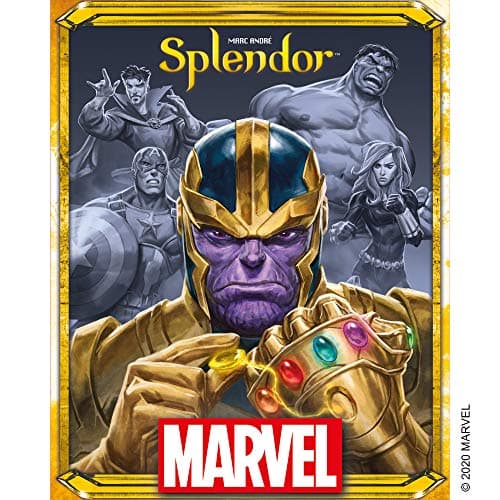
Splendor is the cleanest introduction to 'engine-building' — the deeply satisfying loop of making your turns more powerful over time. You collect chunky gem chips, spend them to buy development cards, and those cards give permanent discounts on future cards, so your buying power snowballs until someone reaches 15 prestige points. There's barely a page of rules, yet the decisions are genuinely engaging, and the heavy poker-chip-style gems are a tactile delight that kids gravitate to.

Games run about 30 minutes, it teaches in minutes (ages 10+), and the strategy rewards planning without ever feeling heavy. The trade-off is interaction: it's a quieter, more parallel game than the negotiation-driven Catan or the route-blocking Ticket to Ride, so families who love table talk may prefer those. But for a fast, elegant, quietly addictive family strategy game, Splendor is a modern gateway gem.

Also Great

Satisfying engine-building with almost no rules. You collect gem chips to buy cards that give discounts on future cards, snowballing toward victory — easy to teach, quick, and quietly addictive. The gateway to 'engine-building,' with weighty poker-chip gems kids love.

Buy this for a family that wants light strategy without a rulebook. The satisfying 'build an engine that grows' loop is intuitive for kids 10+ and genuinely clever for adults, games run 30 minutes, and the chunky gem tokens are a tactile joy. A modern gateway favorite.

What we don't like

It's quiet and solitaire-ish (less direct interaction than Catan or Ticket to Ride), so families who love negotiation may prefer those. Best at 2–3 players (a bit slower at 4).

Best for Younger FamiliesAlso Great

Players

2–4

Time

15–20 min

Ages

6+

Type

Kids gateway / route-building

Pros

  • Real gateway gameplay for ages 6+
  • Short 15–20 minute games
  • Kids genuinely compete and win
  • Bridges to the full game

Cons

  • Older kids/adults outgrow it
  • Simpler than the full game

Ticket to Ride: First Journey is how you get a 6-year-old playing a genuinely good board game — not a dumbed-down kids' product, but the real thing, sized right. It keeps the heart of Ticket to Ride — collect matching train cards, spend them to claim colorful routes across a map, complete your tickets — while simplifying the rules and shortening games to 15–20 minutes so younger kids can follow, compete, and win on their own merits.

It's the ideal first 'real' board game for a young family: more engaging than Candy Land, simpler than the full Ticket to Ride, and a perfect on-ramp to the gateway games the whole family will play for years. Older kids and adults will naturally move up to the standard version (and should), but as the bridge from kids' games to family games, First Journey is the best there is.

Also Great

Ticket to Ride scaled down for little ones. Same beloved claim-the-routes gameplay, simplified for ages 6+ and a 15–20 minute play time — so younger families get the real gateway-game experience without the wait or complexity. The perfect first 'real' board game.

Buy this for families with kids 6–8 who aren't quite ready for the full Ticket to Ride. It keeps everything fun about the original — collecting cards, claiming colorful routes — in a shorter, simpler package, so the youngest players can genuinely compete and win.

What we don't like

Older kids and adults will outgrow it and want the full game (this is deliberately simpler). It's a bridge, not a forever-game — but it's the best bridge there is to 'grown-up' gateway games.

Head-to-Head

How the top picks compare

The two questions families ask most — which gateway game first, and what suits younger kids.

Ticket to Ride vs CATAN

The two great gateway games — simpler and faster, or deeper and more social.

Days of Wonder

Winner

Ticket to Ride

Simpler, faster, ages 8+

$40
Check Price →

CATAN Studio

CATAN

Deeper, social trading, ages 10+

$40
Check Price →

Our verdict

Winner: Days of Wonder Ticket to Ride. For most families, Ticket to Ride wins as the first gateway game: it's simpler, faster (under an hour), works for ages 8+, and has almost no luck-driven frustration — easier to love for everyone at the table. CATAN is the deeper, more social game, built around resource trading and negotiation that makes every turn a conversation, but it runs longer, adds dice luck, and is better for kids 10+ who can handle a meatier game and the occasional bad roll. Start with Ticket to Ride to win the whole family over; add CATAN when they're hungry for something richer with more table talk. Many families happily own both — they scratch different itches.

Buy the Days of Wonder

you want the easiest first game for all ages.

Buy the CATAN Studio

your kids are 10+ and want trading and depth.

Ticket to Ride vs First Journey

The full game for ages 8+, or the simpler version for ages 6+.

Days of Wonder

Winner

Ticket to Ride

The full game, ages 8+

$40
Check Price →

Days of Wonder

First Journey

Simpler & shorter, ages 6+

$28
Check Price →

Our verdict

Winner: Days of Wonder Ticket to Ride. Buy by your youngest player's age. If your kids are 8 or older, get the full Ticket to Ride — it's the forever-game the whole family will play for years, and there's no reason to settle for the simpler version. If your youngest is 6–7, First Journey is the right call: it delivers the real claim-the-routes experience in a shorter, simpler form they can genuinely follow and win, then they graduate to the full game in a year or two. The only mistake is buying the full game for a 5-year-old (too complex) or First Journey for a family of teens (too simple). Match the box to the kid.

Buy the Days of Wonder

your youngest player is 8 or older.

Buy the Days of Wonder

your youngest is 6–7 years old.

How we
chose

We chose these the way a family that actually plays would — judging games on the things that make or break family night:

  • Easy to teach. A great family game explains in five minutes; we favored games anyone can learn fast, no rulebook re-reads.
  • Fun across ages. The hardest test — fun for an 8-year-old and a grandparent at once. Every pick clears it.
  • Right length. Family games should fit an evening (15–60 minutes), not consume it. We flagged quick games for school nights.
  • Replayable. Modular boards, drafting, and variety mean these don't get stale after three plays.
  • Scaled by age and group. We noted who each game suits — younger kids, big gatherings, ready-for-more — so you buy the right one.

Share this guide

Share

Common Questions

Frequently Asked Questions

Have art
to sell?

Austin Gallery specializes in selling inherited art, estate collections, and fine art with zero upfront fees. Get a free evaluation today.