Austin Gallery

Board Games

Best Board Games for Adults 2026: 10 Games Worth Owning

Ten games, ten jobs, zero shelf trophies: the crowd converter, the two-player duel, the big-table savior, and the deep end. Every pick proven over years of real game nights, with a framework for matching the game to the evening you actually host.

By Justin ParkJuly 18, 202616 min readHow we research

Somewhere in the last two decades, board games grew up. The hobby that once meant Monopoly grudge matches now produces elegant 30-minute strategy games, gorgeous tile puzzles, and party games that make a dinner table louder than the playoffs. The problem is volume: thousands of new titles ship every year, and the difference between a shelf trophy and a game your group actually requests is enormous. This guide is the second kind only: ten games, each the best at a specific job, every one proven over years of real adult game nights.

How to Choose a Board Game for Adults

Match the game to the evening you actually host, not the one you imagine. This is the framework we use before recommending anything:

Your typical nightBuy this firstPriceWhy
Mixed group, some non-gamersTicket to Ride$39.99Five-minute teach, real tension, 2-5 players
Six or more peopleCodenames or 7 Wonders$24.97 / $56.32Both scale past the point other games break
Just the two of you7 Wonders Duel$29.59Built exclusively for head-to-head play
Talkers and dealmakersCATAN (6th Edition)$41.71Trading keeps everyone in it on every turn
Calm, cozy, no conflictCascadia or Azul$31.99Beautiful puzzles with zero attacking
Serious strategy appetiteTerraforming Mars$64.37The deep end: 2-3 hours, endless replay

Two rules of thumb from years of running game nights: first, teach time is the tax every game pays before the fun starts, so for any group that gathers monthly or less, stay under a ten-minute teach (everything here except Terraforming Mars qualifies). Second, player count claims on boxes are optimistic; the counts in our table are the ones that actually feel good. These are the best board games for adults in 2026, ranked by the job each does best. Every link goes to Amazon with our affiliate tag; we earn a small commission, at no cost to you, when you buy through us. Our full library of picks by genre lives at the board games hub.

In a Hurry?

The 3 picks that cover most readers. Tap to read the full review or buy direct.

Best Overall

Ticket to Ride

Ticket to Ride

$39.99

The proven crowd converter: five-minute teach, real tension, 2-5 players.

Best for Big Groups

Codenames

Codenames

$24.97

Two teams, one rule, up to a dozen players, and the best table talk in gaming.

Best Deep Strategy

Terraforming Mars

Terraforming Mars

$64.37

The destination game: 200+ unique cards and the best crescendo in the hobby.

Best OverallOur Pick

Players

2-5

Play time

30-60 minutes

Age

8+

Weight

Light strategy, gateway

Pros

  • Five-minute teach, real strategic tension
  • Scales cleanly from 2 to 5 players
  • 2025 refresh with updated components
  • The proven crowd converter

Cons

  • Turn decisions can feel light for veterans
  • Congested at a full 5 players

Every great game shelf starts somewhere, and for most adults the correct somewhere is a train map of North America. Ticket to Ride hands you a fistful of colored cards and a simple ambition: build routes between cities, complete the secret tickets in your hand, and quietly pray nobody claims the one link between Nashville and Atlanta you have been saving up for. The rules fit on an index card. The feelings do not. There is genuine, tablewide gasping the first time somebody steals a critical route, and that moment converts more skeptics into board gamers than any other game we know.

Why it tops a list for adults specifically: the failure mode of "adult game night" is a rulebook that eats the first forty minutes. Ticket to Ride respects the evening. You teach it during the first drink, finish a full game before the second, and the loser demands a rematch. Depth sneaks in later: route blocking, ticket risk management, and the long-corridor math reveal themselves over the first half dozen plays.

The 2025 refresh is the version to buy: same design, cleaner graphics, better inserts. At $39.99 it sits right at the center of the hobby's price range, and it earns the spot. If your household is strictly two people, its little sibling on our couples games list may fit better, but for a shelf that has to serve real gatherings, start here.

Our Pick

Two decades in, Ticket to Ride is still the game we hand to adults who think they do not like board games. Collect train cards, claim routes across a map of North America, connect your cities before someone cuts you off. The 2025 refresh keeps the formula and modernizes the components. It is the single safest purchase on this page.

Buy this if your group is a mix of gamers and definitely-not-gamers. The rules take five minutes, a full game takes under an hour, and the tension of watching someone eye the route you need never gets old. It scales from 2 to 5 players, so it covers both a quiet Tuesday and a full dinner party.

What we don't like

Veteran gamers will eventually want more decisions per turn than draw-or-claim offers. And at exactly 5 players the board gets congested enough that a bad first seat can sting. Neither dents its status as the best first purchase for an adult shelf.

Check Ticket to Ride on Amazon →$39.99 · Days of Wonder
Best for 5+ PlayersAlso Great

Players

3-7

Play time

30 minutes

Age

10+

Weight

Medium card drafting

Pros

  • Plays 7 people in 30 minutes, no downtime
  • Rich civilization-building arc every game
  • New edition cleaned up cards and rules

Cons

  • Icon-dense; first game needs the reference card
  • Wrong purchase for two players (get Duel)

The dirty secret of strategy board games is that most of them break somewhere north of four players: turns stretch, phones emerge, someone starts doing dishes. 7 Wonders' solution is simultaneity. Everyone holds a hand of cards, picks one, passes the rest, and reveals together. Three rounds of this and you have drafted an entire ancient civilization: resources, armies, science, monuments, and the wonder itself rising in stages. A seven-player game genuinely finishes in half an hour, a claim we would not believe if we had not timed it.

Underneath the speed is a real card-drafting brain-burner. That hand you pass along contains everything your neighbor needs, so every pick is both construction and denial. Military only compares you to adjacent players, so grudges stay local and delicious. The New Edition's larger cards and cleaned-up icons soften the game's one real barrier, the symbol-dense learning curve, though your first play will still involve pointing at the reference sheet like tourists at a subway map. Worth it. For groups that top out at four or five, Ticket to Ride or CATAN serve better; for the standing six-person crew, nothing else comes close.

Also Great

The strategy game that laughs at player counts. Because everyone drafts cards and builds their civilization simultaneously, 7 Wonders plays seven people in the same 30 minutes it plays three. No other serious strategy title solves the big-table problem this elegantly.

Buy this if your game nights regularly seat five, six, or seven, which is precisely where every other strategy game on this page taps out or slows to a crawl. Everyone is always acting, nobody waits, and the civilization you build feels genuinely yours by the end.

What we don't like

The iconography is a language: expect to consult the reference sheet constantly on game one and occasionally on game five. And with two players you should buy 7 Wonders Duel below instead, full stop.

Most Beautiful GameAlso Great

Players

2-4

Play time

30-45 minutes

Age

8+

Weight

Light-medium, abstract drafting

Pros

  • Gorgeous components, gallery-worthy table presence
  • Deep drafting decisions in a 40-minute game
  • Plays great at every count from 2 to 4

Cons

  • Penalty scoring can bite new players
  • Zero theme, if story matters to you

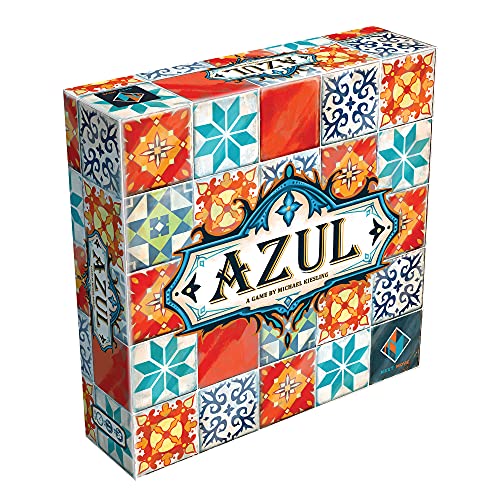
We run an art gallery, so believe us when we say Azul is the game we recommend most to people who buy things because they are beautiful. It is inspired by the azulejos, the painted ceramic tiles of Portuguese palaces, and the physical product honors the source: thick, glossy, satisfyingly heavy tiles you draft from shared circles and slot into your mosaic wall. It photographs like a design object. It plays like a knife fight conducted through interior decorating.

The tension is in the draft. Every tile you take is a tile someone else wanted, and every tile you cannot place spills into a penalty row that eats your score. Good players read the whole table; great players force opponents to swallow six blue tiles they never wanted. That it does all this in under 45 minutes, with rules a first-timer absorbs in one round, is why it swept the hobby's awards and never left print. It anchors our strategy games list too, and it belongs on this one for a simpler reason: adults keep saying yes to playing it.

Also Great

The game people pick up off the shelf because it looks like art, then keep playing because it plays like chess with candy. Azul's chunky resin tiles and mosaic boards make it the best-looking game in the mainstream hobby, and the drafting puzzle underneath is sharp enough to hold serious players.

Buy this if presentation matters at your table, or if your group likes thinky games without direct conflict. There is real bite in denying an opponent the tiles they need, but nobody attacks your board. It is also the pick for households that appreciate a game that looks stunning left out on the coffee table.

What we don't like

The scoring has a cruelty streak: overdrafting tiles costs you points, and a new player can get punished before they understand why. Teach the penalty row clearly on game one.

Check Azul on Amazon →$31.99 · Asmodee
Best for Big GroupsAlso Great

Players

4-8+ (two teams)

Play time

15-30 minutes

Age

10+

Weight

Party word game

Pros

  • Scales to any group size that fits the room
  • One-minute teach, endless replay
  • The best post-game arguments in the hobby
  • Cheapest pick on this page

Cons

  • Flat with fewer than four players
  • Clue-giving pressure is not for everyone

Here is the test of a great adult game: does the room keep talking about it after the box closes? Codenames wins that test every single time. One person per team sees which of the 25 word cards belong to their side and gives one-word clues to steer teammates toward them and away from the opposing agents, the innocent bystanders, and the single assassin card that ends the game instantly. "Ocean, three." Watch three grown adults argue about whether SOUND is an ocean word. That argument is the game, and it is glorious.

We rank it here rather than on party duty alone because it is the utility player of an adult shelf: it fills the awkward gap between "we have seven people" and "every good game caps at five." It costs less than a delivery pizza, sets up in ninety seconds, and the word deck is functionally inexhaustible. For a deeper bench of games built for crowds, our party games guide starts here and goes louder; word lovers should also see our word games roundup, where Codenames reigns as well.

Also Great

The best party-scale game ever printed, full stop. Two teams, a grid of 25 words, and one clue-giver per side trying to link their agents with a single word and a number. Codenames turns a room of adults into rival intelligence agencies for an hour, and it works from 4 players to a dozen.

Buy this if your gatherings run past four people, because almost nothing else on this page does. It handles arbitrary team sizes, welcomes people who refuse to learn rules (there is one rule), and produces the best table talk in gaming when a clue lands or catastrophically does not.

What we don't like

It needs a minimum of four to sing, and the clue-giver seat is genuinely stressful for some people. A few players will always prefer to guess and never give.

Check Codenames on Amazon →$24.97 · CGE Czech Games Edition
The Modern ClassicAlso Great

Players

3-4 (base game)

Play time

60-90 minutes

Age

10+

Weight

Medium, trading and building

Pros

  • Negotiation-driven play no other pick here offers
  • Modular board, different every game
  • 6th edition components are the best yet
  • The most recognized name in the hobby

Cons

  • Dice droughts can sideline a player
  • Needs exactly 3-4 without expansions

Before CATAN, the average American game closet held Monopoly, Risk, and resentment. After CATAN crossed over from Germany in the late nineties, it built the entire modern hobby: the idea that a game could involve real decisions, finish in ninety minutes, and keep everyone engaged until the end because trading never stops being your turn. When an opponent rolls an eight and you hold the ore, you are in the game no matter whose turn it is. That single design choice is why it sold tens of millions of copies.

The 6th edition matters if you are buying today: refreshed art, better organized components, and clearer rulebooks, with the same island underneath. Our honest read three decades on: the trading core still shines, the dice can still humble you, and the robber still ends friendships on a schedule. It earns its slot as the shelf's social centerpiece. If your group skews toward wanting deeper systems and less luck, graduate next to Terraforming Mars below, or browse the heavier end of our strategy roundup.

Also Great

The game that started the modern board game era, still pulling adults into three-hour Friday nights thirty years later. Roll for resources, trade sheep for brick like your mortgage depends on it, and build the best settlements on the island. The 6th edition is the nicest CATAN has ever looked.

Buy this if your group loves to negotiate. CATAN's engine is the trading, and a table of adults haggling over wheat is the game at its best. It is also the most culturally load-bearing title here: everyone has heard of it, many have played it, and owning it means never explaining what board games are anymore.

What we don't like

Dice can be cruel: settle on the wrong numbers and you may spend an hour watching. It also plays 3-4 in the base box, so pairs and six-person parties need expansions or another pick.

Best 30-Minute StrategyAlso Great

Players

2-4

Play time

30 minutes

Age

10+

Weight

Light-medium engine builder

Pros

  • Compounding-engine satisfaction in half an hour
  • Heavy, casino-grade gem chips
  • Three-minute teach, real decisions

Cons

  • Quiet, low-interaction play pattern
  • Theme is wallpaper

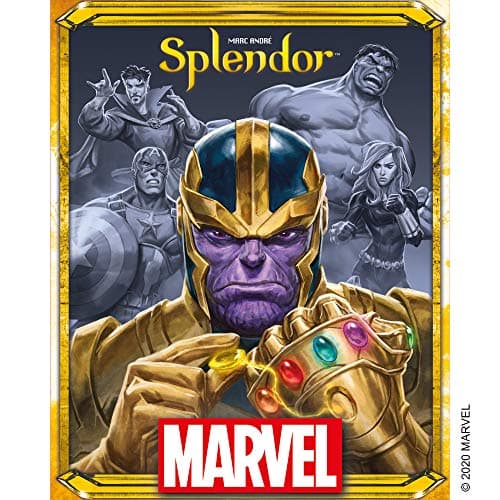
Splendor is what happens when a designer strips an economic strategy game down to its engine and ships only the engine. On your turn you do exactly one thing: take gems, or spend gems to buy a card. Every card you buy grants a permanent discount on future cards, which means the game is a compounding-interest simulator wearing a Renaissance costume, and the moment mid-game when your tableau starts paying for cards outright, no chips needed, hits a neuron nothing else on this page reaches.

Its virtue for adults is friction-free depth. There is no board to set up, no rules refresher after a month away, no downtime because turns take fifteen seconds. It has become our default answer to "we have 40 minutes and functioning brains, what do we play?" The trade-off is solitaire-ish quiet, which we consider a feature on a weeknight and a limitation on a Saturday. Buy it alongside a louder game, not instead of one, and it will hit the table more than anything else you own. It is a fixture of our strategy games guide for the same reason.

Also Great

The purest engine-builder in the hobby: collect gem chips, buy cards that make future cards cheaper, and feel your little economy compound until you are buying palaces with pocket change. Splendor is the weeknight game, the lunch-break game, the one-more-round game.

Buy this if the phrase 'satisfying escalation' means anything to you. Turn one you can afford almost nothing; turn twenty your tableau pays for everything. It teaches in three minutes, plays in thirty, and the poker-weight gem chips are a genuine pleasure to stack while pretending to think.

What we don't like

Player interaction is thin: you race, you occasionally snipe a card, but mostly you tend your own garden. Groups that want table talk should look at CATAN or Codenames first.

Austin Art Insider

Free weekly guide to galleries, exhibitions & collecting in Austin.

Best Relaxed GameAlso Great

Players

1-4

Play time

30-45 minutes

Age

10+

Weight

Light-medium tile drafting

Pros

  • Zero-conflict play that still rewards skill
  • Excellent solo mode, rare on this list
  • Award-winning design, nature-forward art

Cons

  • Too gentle for competitive tables
  • Scoring cards need a play or two to absorb

Somewhere along the way, adult game night picked up a reputation for requiring either bluffing, betrayal, or a spreadsheet. Cascadia is the counter-argument. You draft a hexagonal habitat tile paired with a wildlife token, place both into your growing landscape, and try to build corridors of forest and mountain while arranging bears in pairs and hawks in splendid isolation. It is pattern-building the way knitting is pattern-building: absorbing, tactile, and quietly competitive only if you want it to be.

Do not mistake gentle for shallow. The tile-and-token pairing mechanism forces constant small compromises, the shared market punishes autopilot, and chasing all five animals' scoring conditions at once is a real puzzle. It took the Spiel des Jahres, the industry's biggest prize, for exactly this blend of welcome and depth. It is also the best solo game on this page by a mile, which matters for households of one or two. If cooperation rather than calm is the itch, our co-op games guide covers the games where the table wins or loses together.

Also Great

The calmest great game ever made. Draft habitat tiles and wildlife tokens, grow a little Pacific Northwest of your own, and score for elk herds and salmon runs. Cascadia won the hobby's top award by proving a game can be gentle and still give you plenty to chew on.

Buy this if your ideal game night ends with everyone more relaxed than they started. There is no attacking, no take-that, no way to ruin anyone's evening: just a lovely spatial puzzle that scales from solo (genuinely good alone) to four players. It is our first recommendation for mixed groups where someone is game-shy.

What we don't like

Sharks at the table will find the interaction too polite, and the wildlife scoring cards take a game or two before you internalize the patterns without rechecking the reference.

Best for Two PlayersAlso Great

Players

2 only

Play time

30 minutes

Age

10+

Weight

Medium head-to-head drafting

Pros

  • The gold standard of two-player strategy
  • Three victory paths keep every game tense
  • Highest owner rating on this page (4.9)

Cons

  • Strictly two players
  • Sudden-death losses sting early on

Most "great for two" claims on game boxes are marketing; this one is a design. 7 Wonders Duel replaced its parent's pass-the-hand drafting with a pyramid of overlapping cards on the table, some face up, some hidden until uncovered. Taking a card reveals what lies beneath, which means every pick hands your opponent information and opportunity. It is drafting turned into a knife duel, and it is brilliant.

The masterstroke is the pair of instant-win conditions. Push military hard enough and your soldiers simply walk into the enemy capital: game over, points irrelevant. Collect six different science symbols and technology wins outright. Both threats loom over every single turn, so the comfortable heads-down engine building of most two-player games never gets to happen: ignore your rival for three turns in Duel and you will not get a fourth. Thirty minutes, thirty dollars, and the best pound-for-pound strategy experience two adults can share. Our couples games guide ranks it against the field, and it wins there too.

Also Great

Not a two-player patch of 7 Wonders but a ground-up redesign, and arguably the best head-to-head strategy game money can buy. A shared pyramid of cards, three ways to win, and thirty minutes of pure dueling tension. Its 4.9 rating is the highest on this page for a reason.

Buy this if your primary gaming unit is two people: a couple, roommates, a standing Thursday rival. The military and science tracks mean you can lose instantly if you ignore your opponent, which keeps both players locked in from the first card to the last.

What we don't like

It is exactly two players, no more, ever. And the sudden-death victories can feel brutal until you learn to see them coming, which is itself the skill.

Best Gateway ClassicAlso Great

Players

2-5

Play time

35 minutes

Age

7+

Weight

Light tile placement

Pros

  • Simplest teach on this page: draw, place, done
  • The map you build is different every night
  • Sneaky depth in meeple placement and farms

Cons

  • Farm rules trip up first games
  • Tile draws add real luck

There is a reason Carcassonne has outsold nearly everything in the hobby for a quarter century: it made "your turn" mean one perfect, comprehensible act. Draw a landscape tile. Add it to the growing map so the roads and cities line up. Optionally, place one of your seven meeples on the thing you just built to claim it. That is the entire game, and from those three sentences emerges a nightly territorial struggle over half-built cities and contested cloisters that ends with a sprawling, one-of-a-kind map of medieval countryside covering the table.

The adult appeal is the ritual of it. Carcassonne is a game you play while talking about your week, until suddenly you are not talking anymore because someone placed a tile that threatens to merge their city into yours. The infamous farmers, meeples laid down in fields to score completed cities at game's end, are where casual play quietly becomes vicious strategy; every longtime group has a farm-scoring grudge that predates some of its marriages. Cheap, endlessly expandable, and equally right for two people or five. It shares shelf-anchor duty with the picks on our family games list, and no adult shelf should skip it.

Also Great

Draw a tile, place a tile, build medieval France together one road and city at a time. Carcassonne is the most tactile gateway game ever designed, and the finished map at the end of every play is a little collaborative artwork your table made by accident.

Buy this if you want the softest possible on-ramp for a hesitant partner or friends who freeze at rulebooks. One tile, one decision, maybe one meeple: that is a whole turn. Then buy it for yourself when you discover farm scoring and realize the soft little game has a shark living in it.

What we don't like

Farm scoring is the one rules wrinkle that confuses every new player, and tile luck can occasionally decide a close game. Teach farms in game two, not game one.

Check Carcassonne on Amazon →$31.99 · Z-Man Games
Best Deep StrategyAlso Great

Players

1-5

Play time

120-180 minutes

Age

12+

Weight

Heavy engine builder

Pros

  • 200+ unique cards; enormous replay depth
  • Theme and mechanics genuinely fused
  • Strong solo mode included
  • The 'forever game' for a committed group

Cons

  • 2-3 hour commitment with the wrong crowd
  • Utilitarian components for a $60+ box

Every list like this needs an answer to the question "okay, but what do the obsessives play?" This is that answer. Terraforming Mars hands each player a corporation and a shared planet with three global parameters: temperature, oxygen, and ocean coverage. When the last parameter maxes out, the game ends and the corporation that contributed most, while building the most lucrative engine along the way, wins. Getting there involves asteroid strikes, imported greenhouse gases, moss that only survives above a certain temperature, and a deck of more than two hundred distinct project cards that makes every play a different puzzle.

What earns the three-hour runtime is how the systems interlock. Cards have requirements tied to the terraforming state, so the planet itself is a clock that opens and closes strategies as it warms. Your income compounds generation over generation, and the endgame sprint, when engines built over two hours all fire at once, is the best crescendo in modern gaming. Honest caveats: the learning curve is a staircase, not a ramp, and the spartan components have launched a thousand upgrade kits. But for a group ready to graduate, this is the graduation. Campaign-hungry tables should also see our legacy games guide, where games remember what you did to them last week.

Also Great

The premium pick, and the destination game on this page. You are a corporation spending generations making Mars habitable: raising oxygen, warming the planet, flooding basins, and playing from a deck of 200+ unique project cards. Two to three hours of the richest engine building in print.

Buy this when the gateway games have done their work and your group starts asking for 'something meatier.' The card deck's variety means no two games develop alike, the science-grounded theme actually connects to the mechanisms, and the arc of terraforming a planet over three hours delivers a payoff light games cannot.

What we don't like

It is long, the learning curve is real, and the base-game components (thin mats, loose cubes) are famously humble for the price. Nobody cares by turn three, but know before you buy.

Check Terraforming Mars on Amazon →$64.37 · Stronghold Games

Head-to-Head

How the top picks compare

The two forks that actually decide a first purchase: which gateway, and which crowd-pleaser.

Ticket to Ride vs CATAN: Which Classic First?

The two most famous gateway games, head to head.

Ticket to Ride

Days of Wonder

Winner

Ticket to Ride

Faster teach, plays 2, smoother first night

$39.99
Check Price →
CATAN (6th Edition)

CATAN

CATAN (6th Edition)

Trading and negotiation no other gateway offers

$41.71
Check Price →

Our verdict

Winner: Days of Wonder Ticket to Ride. Ticket to Ride wins the first-purchase question on logistics alone: it teaches in half the time, finishes reliably inside an hour, plays two people on a quiet night where CATAN's base box demands three, and its worst-case experience (someone blocks your route) is milder than CATAN's (the dice ignore your numbers for an hour while the robber camps on your wheat). CATAN's case is the ceiling rather than the floor: no gateway game generates conversation, alliances, and table theater like open trading, and for a group of natural negotiators it produces the better stories. Our guidance: buy Ticket to Ride first because its floor is so high, then add CATAN the moment your group proves it shows up regularly, because its peaks are worth the variance. Households that already know they love dealmaking can reverse the order with a clear conscience.

Buy the Days of Wonder

you want the safest first night and sometimes play with just two.

Buy the CATAN

your group loves negotiating and reliably seats three or four.

Azul vs Cascadia: Which Beautiful Puzzle?

The two loveliest low-conflict games on the page.

Azul

Asmodee

Winner

Azul

Sharper competition, stunning tiles, faster bite

$31.99
Check Price →
Cascadia

AEG

Cascadia

Gentler table, great solo mode, plays 1-4

$31.99
Check Price →

Our verdict

Winner: Asmodee Azul. Same price, same length, same audience of adults who want beauty and brains without warfare, but the two games sit at different temperatures. Azul runs warmer: its shared tile draft means every take denies someone else, and deliberately dumping tiles an opponent must swallow is a legal, encouraged act of villainy. That edge, plus components you could display in a gallery, gives it the win for most tables; the game simply generates more electricity. Cascadia wins two specific and common situations: any household that plays solo (its single-player mode is excellent, Azul has none), and tables with a player who genuinely dislikes even polite aggression, since Cascadia contains none at all. If you often play alone or your table bruises easily, take Cascadia and be happy. Everyone else, take Azul, and expect it to be the game guests comment on before it is even unboxed.

Buy the Asmodee

you want gorgeous components with a competitive edge underneath.

Buy the AEG

you play solo sometimes or your table prefers zero conflict.

How we
chose

We judge adult board games the way real game nights judge them:

  • The re-request test above all. A great game gets asked for by name a month later. Every pick here has passed that test across multiple groups over multiple years; no flavor-of-the-season titles made the cut.
  • Teach time as a tax. We weight the minutes between opening the box and the first interesting decision. Nine of ten picks teach in under ten minutes.
  • Honest player counts. We report the counts where each game sings, not the range printed on the box, and we picked the ten so that every real table size from 1 to 8+ has a best answer.
  • Downtime and engagement. Games where you wait through other people's turns died in committee. Simultaneous play, constant trading, or fifteen-second turns kept picks alive.
  • Longevity and print health. Every pick is an evergreen in active print with years of stable owner ratings, not a Kickstarter comet. Prices and availability verified at publish via Amazon's live catalog.

Share this guide

Share

Common Questions

Frequently Asked Questions

Have art
to sell?

Austin Gallery specializes in selling inherited art, estate collections, and fine art with zero upfront fees. Get a free evaluation today.