Most homeschool art curricula are built for an audience that doesn't really exist — a parent who has time to plan a 30-week studio sequence, a budget for materials, and the patience to evaluate technical progress. The Austin families we've talked to have something different. They want their kids to actually make art, see real art in person, and build a portfolio that means something — without requiring the parent to become an art teacher.
This is a practical curriculum framework specifically for Austin homeschool families. It assumes you have a kid between K and 12, an Austin-area home, no formal art training yourself, and the willingness to leverage what the city already offers instead of recreating it at the kitchen table.
Key Takeaways
- Austin's museums and cultural sites do most of the heavy lifting for free — the Blanton, Bullock, LBJ Library, and Umlauf all have programming for homeschoolers, and most of it is free or under $10.
- Curriculum should be three layers: regular making at home, weekly skill-building (often outsourced), and bi-weekly real-world art exposure (museums, studios, public art).
- Don't buy the expensive curricula until age 10+. Younger kids need free play with quality materials, not structured instruction.
- Build a portfolio early — by age 12, a kid heading toward dual-credit art courses at ACC or a magnet program needs documented work. Start the portfolio at age 8.
- The TEFA $2,000 Education Savings Account covers most of this — including supplies, instruction, and museum memberships when properly documented.
$2,000/yrTEFA funding per student — covers supplies, instruction, museums
$0–10Cost of most Austin museum homeschool programming
Age 8When to start building a real portfolio
20–40 hr/yrRealistic art instruction time for a typical homeschooler
The three-layer framework
If you try to teach art the way a magnet school teaches art, you'll burn out before October. Homeschool art works when it's organized into three weight classes:
If you try to teach art the way a magnet school teaches art, you'll burn out before October.
Layer 1 — Daily making at home (10–20 min, every day). A kid sketching, painting, sculpting, or making something with their hands every day is more important than any structured curriculum. The point is not technical progress — it's consistent making. A sketchbook, a pencil, and proximity. We covered the budget-friendly art supplies that actually hold up for the home setup.
Layer 2 — Weekly skill-building (1–2 hours/week). This is where structured instruction goes. For most families it's outsourced — a co-op art class, a private lesson with a local artist, a community studio class. The reason to outsource is not that you can't do it; it's that the kid hears feedback from someone who isn't their parent, which matters more than you'd think.
Layer 3 — Bi-weekly real-world exposure (2–3 hours every 2 weeks). Museum visits, public art tours, gallery openings, studio tours. This is where Austin's infrastructure makes you look like a hero with very little planning.
Build all three layers and you have an art education that easily exceeds what most public schools deliver. Skip any one and the curriculum gets thin.
Layer 1 — What kids should actually have at home
Forget the 200-piece sets at Target. The right home kit for a homeschool art program is shorter, higher quality, and replaceable.
For ages 4–8:
- Heavy white paper (60–80 lb), at least 9×12, in a stack of 50 or more
- Crayola crayons (24 colors max — more is overwhelming) and Crayola colored pencils
- Tempera paint (washable, primary colors plus black and white) and chunky brushes
- Air-dry clay (skip the kiln for now — Crayola Air-Dry or DAS work)
- A real apron, not a smock — kids do better art when they're not protecting their clothes
For ages 8–12:
- Strathmore drawing pad (60 lb), 11×14
- Prismacolor or Faber-Castell colored pencils, 24-color set (these last for years and the color is significantly better than Crayola)
- Watercolor sets — Prang or Sakura Koi pan sets are the entry-grade we recommend. Avoid the dollar-store sets; they pigment poorly and frustrate kids.
- Sharpie ultra-fine pens for line work
- A real sketchbook, hardcover, that they keep
For ages 12+:
- Move to artist-grade materials in their preferred medium
- Add a portfolio folder (Itoya Art Profolio, 11×14 or 14×17) for storage and presentation
- Consider one class in a specific medium per semester at this age — pottery, life drawing, printmaking — at one of the adult and teen art classes in Austin (some accept teens 14+)
The total cost for a complete home setup at any age is $80–150. It will last a year. Restock from there.
$80
The total cost for a complete home setup at any age is –150
Layer 2 — Where to outsource the skill-building
Austin has more options than most cities. Pick one, commit for a semester, then evaluate.
Co-op art classes (typically included with co-op membership):
Austin Art Insider
Free weekly guide to galleries, exhibitions & collecting in Austin.
- Most of the major Austin homeschool co-ops we listed in the Austin homeschool guide include art instruction in their core curriculum. Quality varies wildly. Visit before committing.
Community studios with kids' programs:
- Feats of Clay — pottery and ceramics, ages 6+
- Atelier Dojo — drawing and painting, structured curriculum, ages 7+
- Pump Project (East Austin) — printmaking and contemporary art for older kids
- Canopy workshops — quarterly programming, mixed media
Pottery specifically: Austin's pottery scene is one of the strongest in the South. We covered the best pottery classes in Austin with kids' programs flagged. Pottery is also one of the few skill-builders that works well from age 6 through high school.
Private lessons with working artists: $40–80/hour in the Austin metro. The advantage is direct mentorship from someone who actually makes a living from art. Find them through the Canopy or Pump Project member directories, or ask at any of the studios above.
Drawing and painting specifically: the best drawing classes in Austin covers options for both kids and adults.
Layer 3 — Free Austin art exposure
This is the layer where Austin pays you back most. The infrastructure here is genuinely world-class for a city this size, and most of it is free or under $10. A reasonable bi-weekly rotation:
Free or under $10:
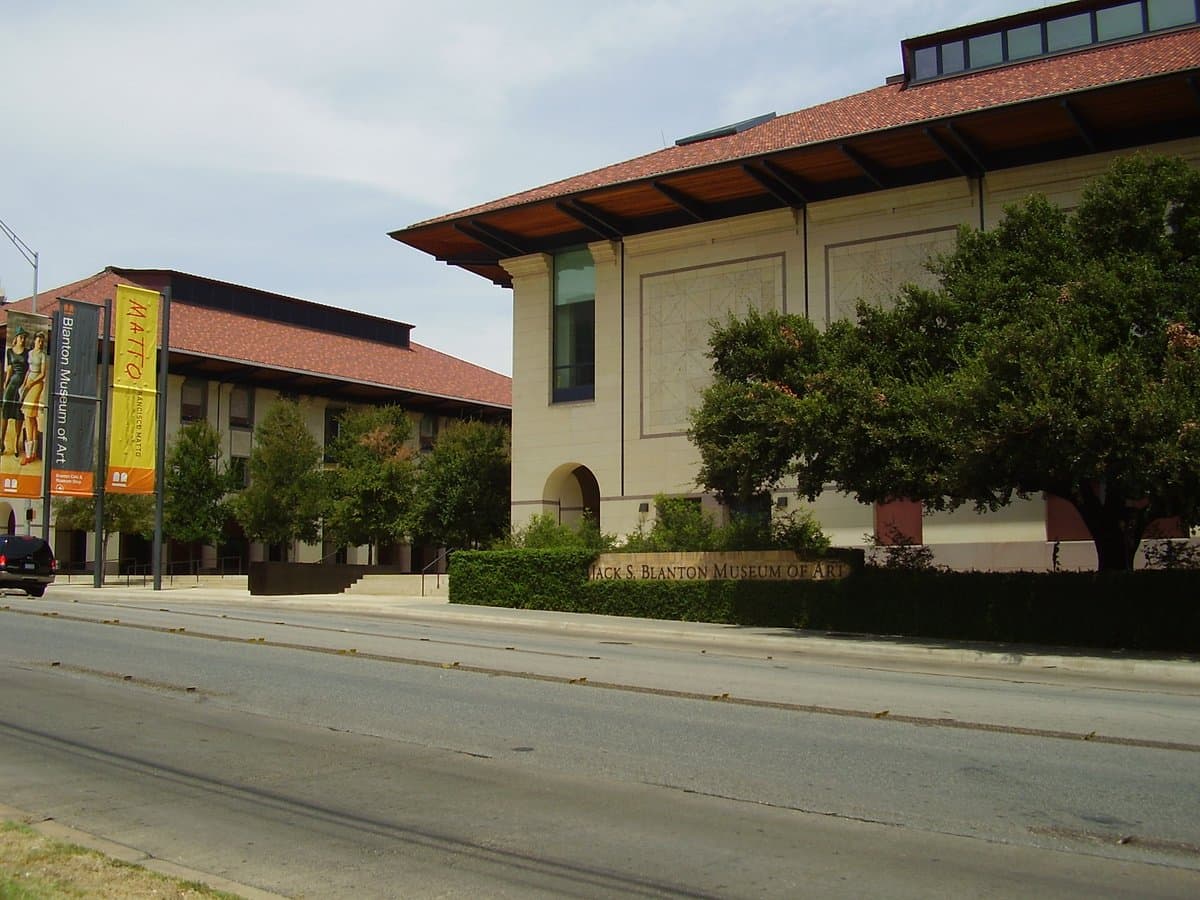
- Blanton Museum of Art — free for kids under 18, dedicated homeschool programming several times a year. The James Turrell Skyspace alone is worth four visits.
- Bullock Texas State History Museum — free first Sunday of every month, dedicated homeschool days throughout the year. The IMAX is paid; the museum proper isn't always.
- LBJ Presidential Library — free, including the Robert C. Smith art collection on the upper floor. Most homeschool families don't realize this exists.
- Umlauf Sculpture Garden & Museum — $5 for kids, free for under-6, and the outdoor garden is one of the best plein-air drawing locations in Austin.
- Mexic-Arte Museum — free admission Sundays, strong programming on contemporary Latin American art
- Austin Bergstrom Airport — yes, the airport. We wrote about the 30+ artworks at ABIA — it's a free museum-grade collection that nobody talks about.
Worth the admission:
- The Contemporary Austin (Laguna Gloria) — $10 adults, free under-12. Laguna Gloria's outdoor sculpture park is the right pairing with Umlauf for sculpture-focused units.
- The Contemporary Austin (Jones Center) — same pricing, contemporary exhibitions
Public art and self-guided:
A reasonable rotation: one museum visit per month, one mural/public-art outing per month, plus the EAST and WEST studio tours twice a year. That alone is a stronger art history and contemporary exposure than 90% of public-school art programs.
Building the portfolio (start at age 8)
By the time a homeschooled kid is applying to dual-credit art at ACC, considering a fine-arts magnet, or thinking about a pre-college art program, they need a portfolio. The portfolio gets built over years, not months. The right time to start is age 8.
What to keep:
- One representative piece per quarter (don't keep everything — you'll drown in it)
- Photographs of three-dimensional work (sculpture, ceramics, large pieces)
- The sketchbook itself, at the end of each year
- A short artist statement once they're 12 or older
Storage: an Itoya Art Profolio in 11×14 or 14×17 holds 24 pieces in archival sleeves. Add a cardboard portfolio folder for oversized work. Photograph everything before storing — we wrote a guide on photographing framed art for sales that doubles as portfolio documentation.
By age 14, the kid should have:
- A bound or boxed portfolio with 15–25 pieces across at least 3 mediums
- An artist statement (one paragraph is fine)
- Documentation of any classes, workshops, or public art events they've contributed to
This is enough for ACC dual credit, the UT pre-college program, and most fine-arts magnet applications.
Using TEFA funding for art
The Texas Education Freedom Act puts $2,000 per student per year into a state-managed Education Savings Account. The funds cover a wide range of educational expenses — including art supplies, instruction, and museum memberships when properly documented.
What we've seen approved in 2026:
- Supplies from approved vendors (Blick, Dick Blick, most major art-supply retailers)
- Private lessons with documented invoices
- Studio class fees from registered providers
- Museum memberships at any 501(c)(3) institution
- Pre-college art programs (UT, ACC, regional summer programs)
What's NOT typically approved: Amazon purchases of supplies (no clear vendor receipt), informal "lesson" arrangements without tax documentation, museum admission tickets (membership yes, single tickets no).
A simple year-long structure
For a family that wants a starting framework:
Fall semester: weekly co-op or studio class + bi-weekly museum/sculpture-park visit + daily 15-min sketchbook. End of semester: choose 2 pieces for portfolio.
Spring semester: continue the class (or rotate to a different medium), add the EAST or WEST studio tour weekend, continue daily sketchbook. End of semester: choose 2 more pieces for portfolio.
Summer: rest from formal instruction. Visit one museum per month. Daily sketchbook continues. Maybe a weeklong art camp (Blanton, Pump Project, and Umlauf all run them in June/July).
That's the framework. Adjust to the kid's interests, the family's calendar, and the budget. Don't overthink it — Austin's infrastructure is so strong that even a modest plan executed consistently produces a real art education.
If you want to talk through what's working for your specific family, email us at t@austingallery.org. We've also covered kid-friendly art galleries and museums in Austin for the youngest end of the spectrum, the complete Austin Homeschool Guide for the broader picture, and The Austin World School Guide for families taking the homeschool on the road.
If you want to talk through what's working for your specific family, email us at t@austingallery.org.
The kid who makes things daily, builds skills weekly, and sees real art bi-weekly will be ahead of nearly every public-school peer by the time they're choosing a high school path. The infrastructure is here. Use it.