The $200 Painting That's Better Than Your West Elm Print (Local Guide)
The art market has a dirty little secret: the best stuff in Austin costs less than your couch. Original, signed, one-of-a-kind paintings by working artists — for the price of mass-produced wall decor.
By Austin Gallery
The art market has a dirty little secret: the best stuff in Austin costs less than your couch.
Not a reproduction. Not a poster from Target. An original, signed, one-of-a-kind painting by a working artist who shows in galleries and sells to collectors. For less than what you paid for that West Elm sectional that everyone else on your block also owns.
The difference between a home with original art and a home without it is the difference between a place that looks like a Pottery Barn catalog and a place that looks like a person actually lives there.
The Bottom Line
Original art in Austin starts at $50 (prints) and $200 (paintings) — not $5,000
Studio tours offer 30-50% below gallery retail because you're cutting out the middleman
Most galleries offer payment plans — that $500 painting is $125/month
The single best investment: replace one piece of mass-produced wall decor with one original
The $200 Painting vs. The $200 Print From West Elm
Let's do the math on what you're actually buying.
Want art that earns its place on the wall AND tunes in to the morning news? Samsung's "The Frame" displays gallery-quality artwork when off and turns into a 4K QLED TV when on. We covered it (plus 11 more picks across every budget) in the 2026 kitchen TV guide.
The West Elm print ($200): A machine-reproduced image on paper, produced in quantities of thousands, framed in a factory in China. Zero chance of appreciation. Identical to the one hanging in your coworker's apartment. Your guests will not comment on it. It fills wall space the way elevator music fills silence — technically present, spiritually absent.
The $200 original painting from EAST ($200): A one-of-a-kind work on canvas, made by a human being who thought about color and form and what they wanted to say. Signed. Potentially appreciating in value as the artist's career develops. Your guests will ask about it. You'll have a story to tell. It's the beginning of a collection, not the end of a decorating decision.
Same money. Completely different experience.
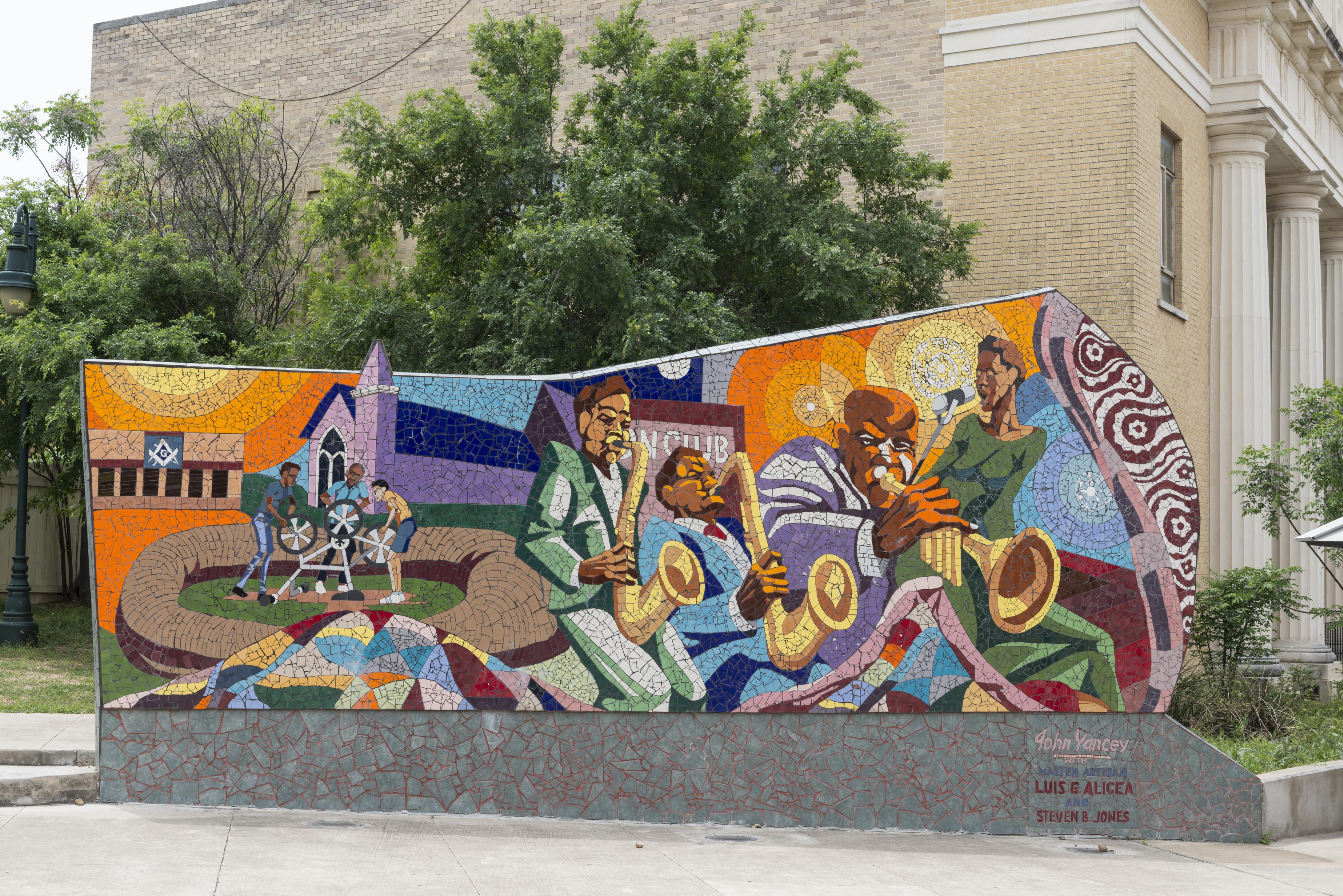
East Austin — where hundreds of artists sell original work at studio prices
Where the Deals Actually Are
The East Austin Studio Tour (November) — Best Prices of the Year
This is the cheat code. Every November, 500+ artists open their studios and sell directly to visitors. No gallery takes a 50% cut, so prices are dramatically lower.
50%
No gallery takes a cut, so prices are dramatically lower
What $300 buys you at EAST:
A 16×20" original oil painting by an emerging artist with gallery exhibitions on their resume
A pair of limited edition screen prints by a mid-career printmaker
A hand-thrown ceramic sculpture you'll never see replicated
What $300 buys you at West Elm:
A "limited edition" print that's limited to however many they can sell
The Studio Tour is the single best event of the year for new collectors. Mark November on your calendar.
Gallery Consignment — Previous Owners, Current Value
When a collector trades up or an estate is settled, galleries sell the work at below-retail prices. Austin Gallery's consignment collection regularly features signed works from $200-700 by artists with documented exhibition histories. You're buying the same quality that originally sold for more — from someone who's ready to let it go.
Flatbed Press — Museum-Quality Prints for Real
Flatbed Press is Austin's serious printmaking studio. They produce original limited edition prints (not reproductions — actual prints pulled from plates and stones by the artist). Editions of 20-50 means what you buy is genuinely scarce. Prices: $150-600 for work that hangs in Texas museums.
Austin Art Insider
Free weekly guide to galleries, exhibitions & collecting in Austin.
Thrift Stores and Estate Sales — The Treasure Hunt
This requires patience and a developing eye, but the payoff is real. Austin Goodwills, estate sales (EstateSales.net), and antique malls on South Lamar surface original paintings for $20-100. Most are forgettable. Some are genuinely good. One in a hundred is a find that a gallery would price at ten times what you paid.
The trick: look for real canvas (not paper prints), check for signatures, and trust your gut. If something stops you, it's worth $20 to find out why.
The Payment Plan Secret
Here's something galleries won't advertise but will happily offer: interest-free payment plans.
A $500 painting at $125/month for four months is a coffee a day. Most Austin galleries will do this for any piece over $300. You just have to ask. It's not embarrassing — it's how the majority of non-wealthy collectors build their collections.
The gallery would rather sell the piece on a plan than not sell it at all. The artist would rather have their work in someone's home than on a gallery wall. Everyone wins.
Buy unframed, frame later. A $250 painting plus a $80 DIY frame from our framing guide beats a $400 framed painting you feel lukewarm about.
Think small and impactful. Three 8×10" paintings at $150 each create a more interesting gallery wall than one mediocre 24×36" piece for $450. Small works often show an artist's most experimental, interesting impulses.
Buy the artist, not the subject. If an artist's $800 painting is out of budget, ask if they have smaller studies, works on paper, or prints. Most do, and those smaller pieces will appreciate if the artist's career grows.
Go to openings for the intel. Gallery openings are free. Attend five before buying anything. You'll develop taste, learn the market, and figure out what you actually respond to — not what you think you should like. Read our gallery opening guide to know what to expect.
What Not to Do
Don't buy "investment art" at this price point. Under $500, buy what you love. Period. Investment considerations only matter above $5,000, and even then, aesthetic pleasure should lead.
Don't buy from a hotel art sale. Those "original oil paintings" at the Hilton ballroom are factory-painted in Dafen, China and marked up 5x. You can spot them by the suspiciously good deals, the identical brushwork across different "artists," and the salesman who won't tell you where the gallery is.
Don't buy because you feel pressured. No legitimate gallery or artist will pressure you. If someone is creating urgency ("this is the last one," "prices go up Monday"), walk out.
Don't frame cheap. A $200 painting in a $15 frame looks like a $15 painting. Budget $50-100 for decent framing, or do it yourself with our step-by-step guide.
More affordable than almost any major city. Austin's studio culture means direct artist access at studio prices year-round, not just during fairs. Original paintings by emerging artists with gallery representation start at $200-500 — a fraction of what you'd pay in New York, LA, or even Dallas.
Austin's studio culture means direct artist access at studio prices year-round, not just during fairs.
What's the difference between a print and an original?
An original is a one-of-a-kind work made entirely by the artist's hand. A print can be either an original print (pulled from a plate/stone by the artist in a small edition — this is real art with real value) or a reproduction (a photograph of an artwork printed on paper — this is a poster). Ask which you're buying.
Will affordable art appreciate in value?
Some will, most won't, and nobody can predict which. The artists who appreciate most are the ones who continue exhibiting, get into museum collections, and build institutional support. Buying from artists who are already showing in galleries (not just at markets) gives you the best odds. But again: under $500, buy for love, not speculation.
How do I know if art is fairly priced?
Compare. Visit 10 galleries and note prices for similar-sized works by artists at similar career stages. After a month of looking, you'll develop calibration — you'll instinctively know when something is priced right, high, or (rarely) underpriced.
After a month of looking, you'll develop calibration — you'll instinctively know when something is priced right, high, or (rarely) underpriced.