London possesses an aesthetic quality that no other city can quite replicate. It's a place where Georgian townhouses stand shoulder-to-shoulder with brutalist masterpieces, where centuries-old pubs share streets with cutting-edge galleries, and where every corner seems composed for a photograph. As someone who has spent considerable time exploring the city's most photogenic locations, I've assembled this guide to help you experience London at its most visually stunning—a carefully curated day that moves through the city's diverse aesthetic landscapes.
This isn't your typical tourist itinerary. Rather, it's a journey designed for those who appreciate beauty in its many forms: the weathered patina of historic buildings, the theatrical grandeur of the West End, the warm glow of legendary hotel bars, and the vibrant chaos of the city's most atmospheric neighborhoods.
Morning: The South Bank and Borough Market
Start Time: 9:00 AM
Begin your aesthetic journey on the South Bank, where London's riverside presents some of its most compelling visual contrasts. The morning light hits the Thames with particular beauty, casting long shadows across the embankment and illuminating the Gothic towers of Tower Bridge in the distance.
Begin your aesthetic journey on the South Bank, where London's riverside presents some of its most compelling visual contrasts.
The Thames Path: A Study in Contrasts
The South Bank stretch of the Thames Path offers one of London's finest urban walks. Here, you'll encounter the distinctive juxtaposition that defines modern London: the Victorian engineering marvel of Tower Bridge against the glass-and-steel towers of the City, the medieval outline of the Tower of London opposite the sleek curves of City Hall.
According to the Thames Landscape Strategy, the South Bank has been a center of entertainment and commerce since Roman times, with Southwark serving as London's original "entertainment district" outside the strict regulations of the medieval City [1]. This history of spectacle and commerce continues today, making the area one of London's most vibrant.
Shakespeare's Globe Theatre
Shakespeare's Globe, a faithful reconstruction of the 1599 original, stands as a testament to Elizabethan theatrical architecture.
No aesthetic tour of London would be complete without pausing at Shakespeare's Globe Theatre. Opened in 1997, this painstaking reconstruction of the 1599 original was the vision of American actor and director Sam Wanamaker, who spent over 20 years championing its creation [2].
The building itself is an architectural marvel—the only thatched roof permitted in London since the Great Fire of 1666. The oak frame was constructed using traditional methods: no nails or screws, only wooden pegs. The lime plaster walls, the galleried tiers, the open-air yard—every element has been researched and recreated to evoke the Elizabethan theatrical experience.
Even if you don't attend a performance, the exterior alone is worth photographing. The half-timbered facade, the hand-crafted details, the way it sits incongruously yet perfectly among the modern buildings of Bankside—it's London at its most wonderfully contradictory.
Borough Market: London's Oldest Larder
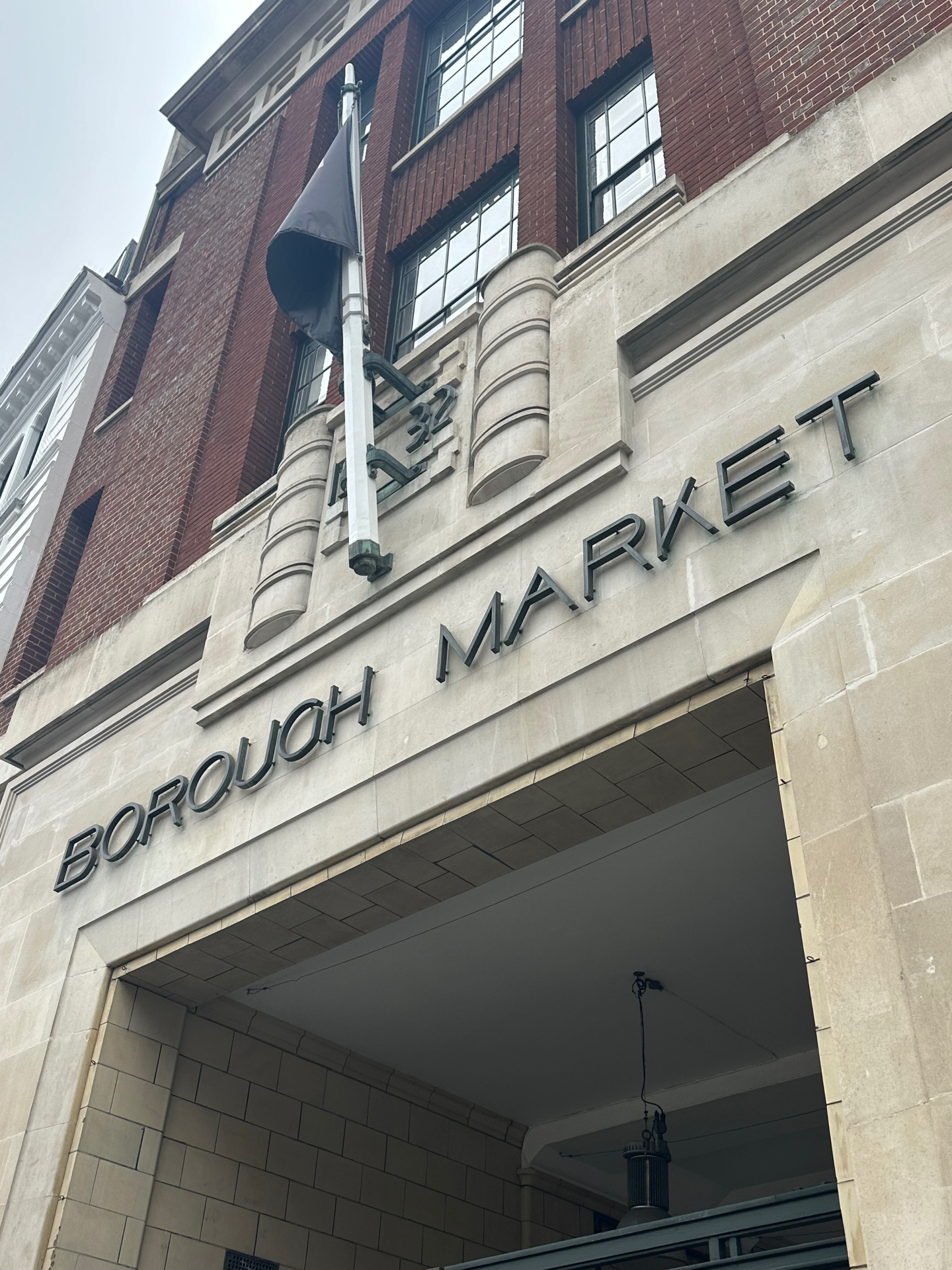 The Art Deco entrance to Borough Market, where Londoners have traded food for over a thousand years.
A short walk from the Globe brings you to Borough Market, whose aesthetic appeal extends far beyond its culinary offerings. The market has occupied this site in some form since 1014, making it one of London's oldest food markets [3]. The current structure dates primarily from the Victorian era, though the elegant Art Deco entrance shown here was added in the 1930s.
The market's visual appeal lies in its layered history: Victorian ironwork supporting glass canopies, Georgian brick walls bearing centuries of patina, and the constant movement of vendors and visitors creating an ever-changing tableau. Arrive before 10 AM for the best light and the most atmospheric photographs, before the midday crowds transform the space.
Aesthetic Highlights at Borough Market:
- The flower stalls near the main entrance, bursting with seasonal blooms
- The cheese vendors with their carefully arranged wheels and wedges
- The Victorian wrought-iron columns and glass roof
- The view down Stoney Street toward the Shard
Late Morning: Crossing to the West End
Time: 11:30 AM
From Borough Market, take the Northern Line from London Bridge to Leicester Square. This short journey deposits you in the heart of London's theatrical district, where the aesthetic shifts from Victorian industrial to Georgian elegance and theatrical glamour.
Soho: London's Most Photogenic Neighborhood
Soho represents perhaps London's most concentrated collection of visual interest. Within its tight grid of streets, you'll find everything from Georgian townhouses to neon-lit nightclubs, from ancient pubs to contemporary galleries. The neighborhood has been home to successive waves of immigrants—French Huguenots, Greeks, Italians, Chinese—each leaving their mark on the area's character [4].
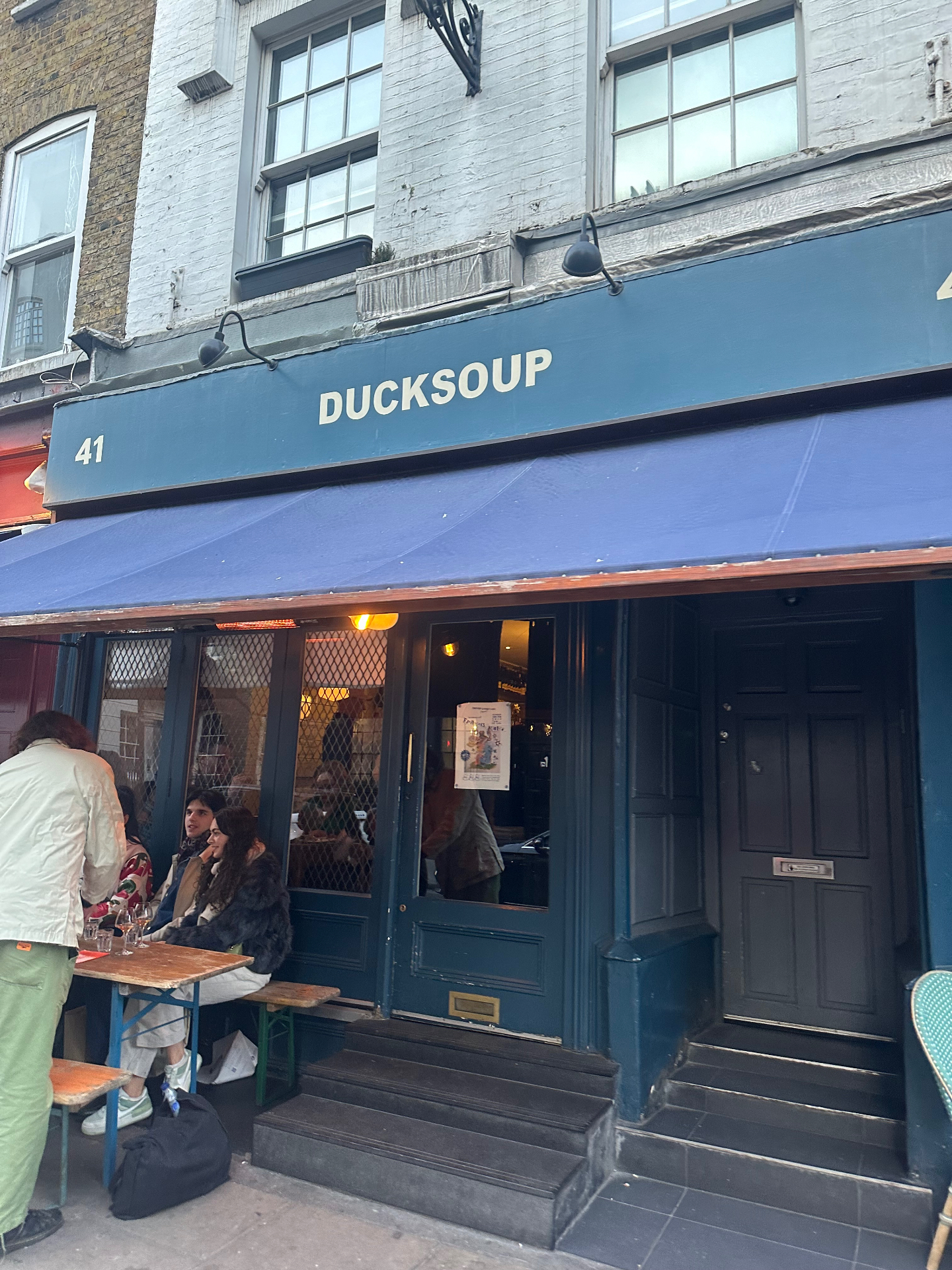 Ducksoup on Dean Street exemplifies Soho's aesthetic: simple, understated, deeply stylish.
Ducksoup on Dean Street represents the new Soho aesthetic perfectly. Opened in 2011, this wine bar occupies a narrow Georgian building with a slate-blue facade that photographs beautifully in any light. The restaurant specializes in natural wines and simple, ingredient-driven cooking, but its appeal extends beyond the menu. The exterior—with its vintage lettering, traditional awning, and weathered brickwork—captures something essential about London's ability to make the new feel timeless.
The street-side seating, the brass number "41" above the door, the way the warm interior light spills onto the pavement in early evening—these details contribute to an aesthetic that feels both contemporary and rooted in history.
The French House: A Soho Institution
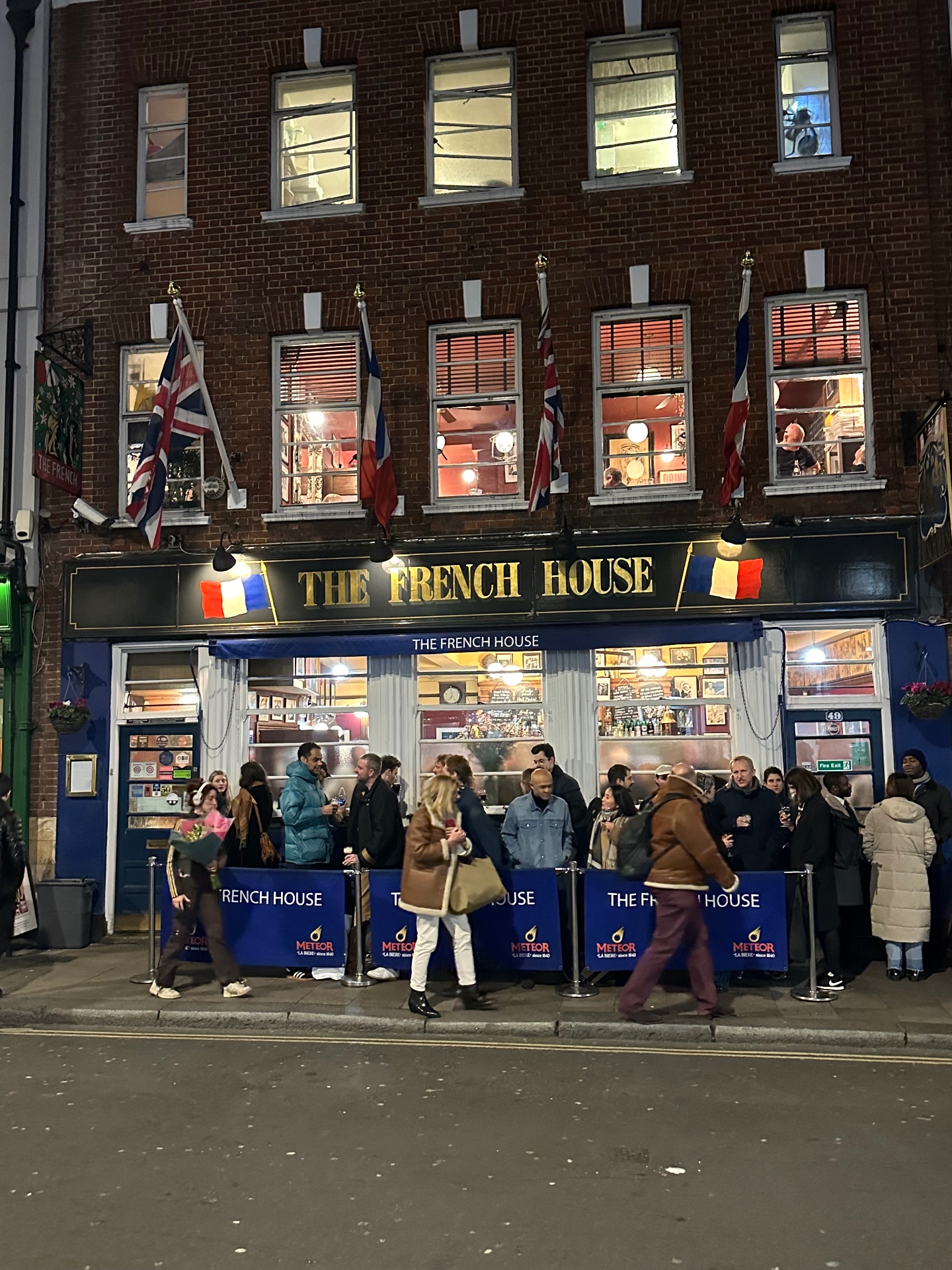 The French House on Dean Street, where Charles de Gaulle drafted his famous appeal to the French people during World War II.
Just down Dean Street stands The French House, a pub whose aesthetic and historical significance place it among London's most important drinking establishments. The building dates to at least the 1891, though the current incarnation as "The French House" emerged during World War II, when it served as an unofficial headquarters for the Free French Forces in exile [5].
The pub's facade is a masterclass in traditional British pub design: the painted brick, the brass signage, the French and British flags flying above, the warm glow of the interior visible through Victorian-style windows. Inside (though sadly not photographed), you'll find walls covered with photographs and memorabilia, no music, and a strict policy against mobile phones—an aesthetic choice that preserves the conversational atmosphere that attracted Dylan Thomas, Francis Bacon, and countless other artists and writers.
Notable facts about The French House:
- Charles de Gaulle wrote his famous "À tous les Français" appeal here in 1940
- The pub serves only half-pints of beer, a tradition dating to rationing during WWII
- The upstairs dining room has maintained the same basic format since the 1960s
Chinatown: London's Most Vibrant Quarter
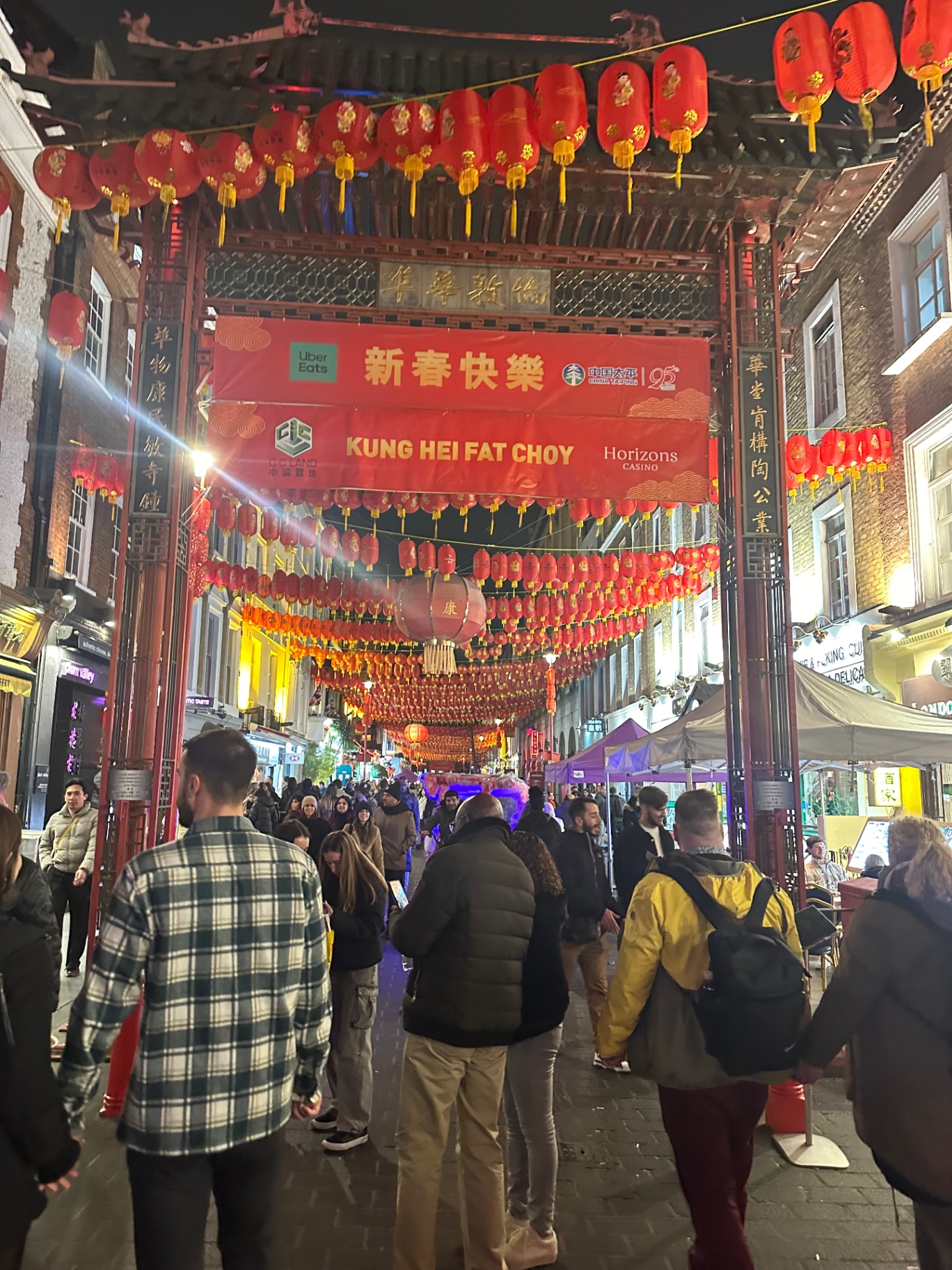 London's Chinatown comes alive at night, hundreds of red lanterns illuminating Gerrard Street.
Just a short walk from Dean Street, London's Chinatown presents a dramatically different aesthetic. Centered on Gerrard Street, this area has been the heart of London's Chinese community since the 1970s, though Chinese settlement in London dates to the late 18th century [6].
The visual impact of Chinatown is immediate and overwhelming: the ceremonial gates (paifang), the red lanterns strung across the streets, the Chinese characters adorning every storefront. During Chinese New Year celebrations, the area transforms into one of the largest outside Asia, with dragon dances, fireworks, and festivities attracting hundreds of thousands of visitors.
For aesthetic purposes, Chinatown photographs best at night, when the lanterns glow against the darkness and the neon signs create a kaleidoscope of color. The contrast with the Georgian streets of Soho, just steps away, exemplifies London's remarkable visual diversity.
Afternoon: Mayfair and the Art of Luxury
Time: 2:00 PM
From the democratic pleasures of Soho, our aesthetic journey takes us to Mayfair—London's most exclusive neighborhood. The shift is immediate and striking: the narrow, characterful streets of Soho give way to broad Georgian avenues lined with white stucco mansions, luxury boutiques, and some of the world's finest hotels.
Dukes Hotel: Where Ian Fleming Invented the Martini
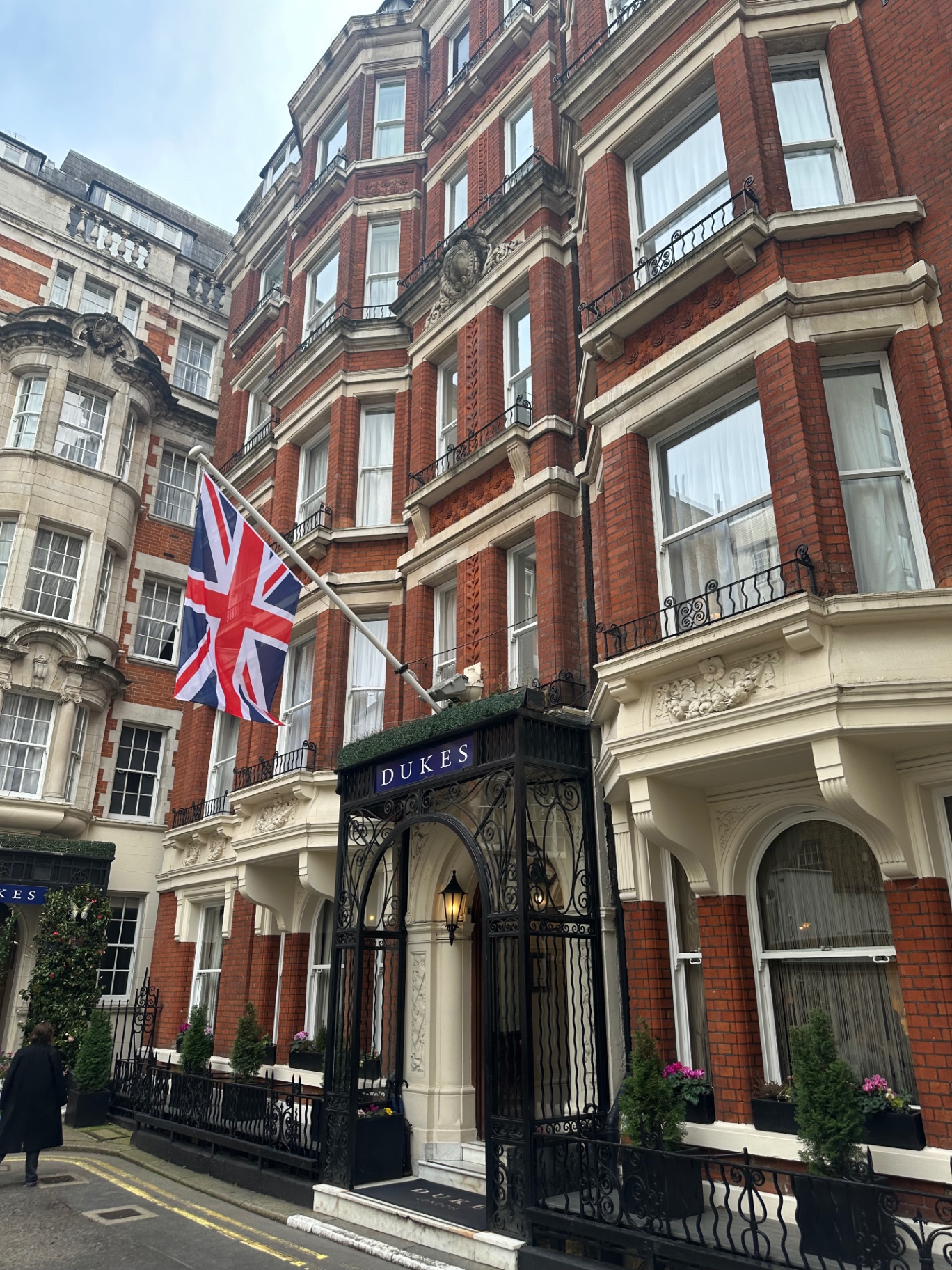 Dukes Hotel in St. James's, hidden down a gas-lit courtyard and home to what many consider the world's finest martinis.
Tucked down a cobblestone courtyard in St. James's, Dukes Hotel represents a distinctly English approach to luxury: understated, refined, and steeped in history. The building—a converted 1908 private townhouse—maintains an air of discretion that has attracted royalty, diplomats, and, most famously, Ian Fleming [7].
Fleming was a regular at Dukes Bar, where head barman Alessandro Palazzi creates martinis tableside with theatrical precision. It was here, according to hotel lore, that Fleming conceived the famous "shaken, not stirred" instruction for James Bond's cocktail. The hotel's facade—the red brick, the Union Jack, the elegant ironwork entrance—suggests the kind of refined English luxury that inspired much of Bond's world.
The aesthetic appeal of Dukes lies in what it doesn't do: no flashy signage, no obvious grandeur, just quiet excellence in a gas-lit courtyard that feels like stepping back a century.
Claridge's: Art Deco Magnificence
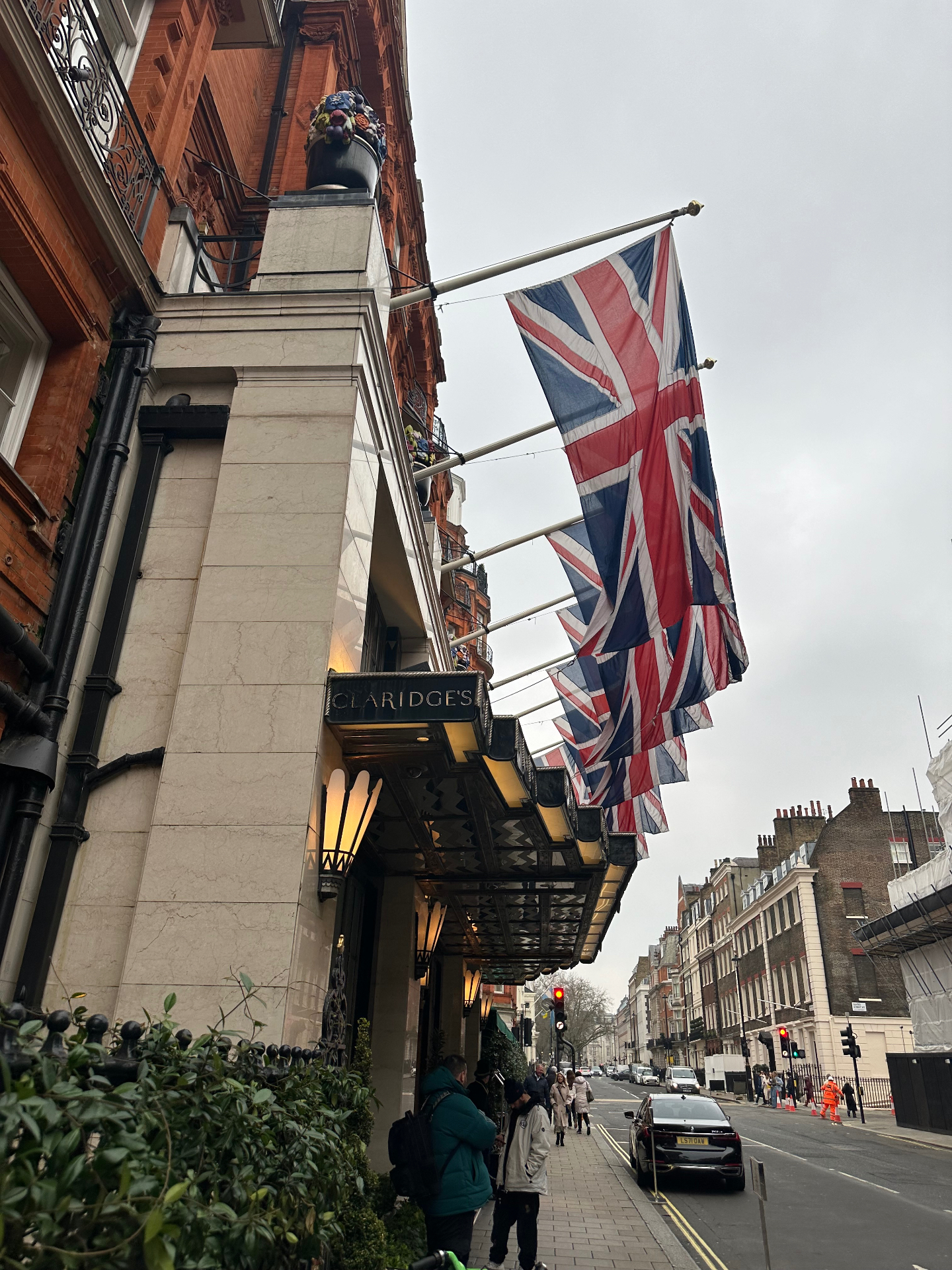 Claridge's Art Deco entrance on Brook Street, Union Jacks flying—perhaps London's most elegant hotel exterior.
If Dukes represents English understatement, Claridge's embodies English grandeur. This Mayfair institution has been hosting royalty and celebrities since 1856, and the current Art Deco building, completed in 1929, stands as one of London's finest examples of the style [8].
The exterior alone justifies a visit: the black-and-white checkerboard canopy, the gleaming brass doors, the row of Union Jacks that identify the hotel from blocks away. The building occupies an entire block on Brook Street, its Portland stone facade and geometric details creating a powerful visual presence.
Every December, Claridge's commissions a different designer to create its Christmas tree—previous contributors include Karl Lagerfeld, Jony Ive, and Burberry. This tradition speaks to the hotel's ongoing commitment to aesthetic excellence, marrying tradition with contemporary design.
Claridge's Bar: The Art of the Martini
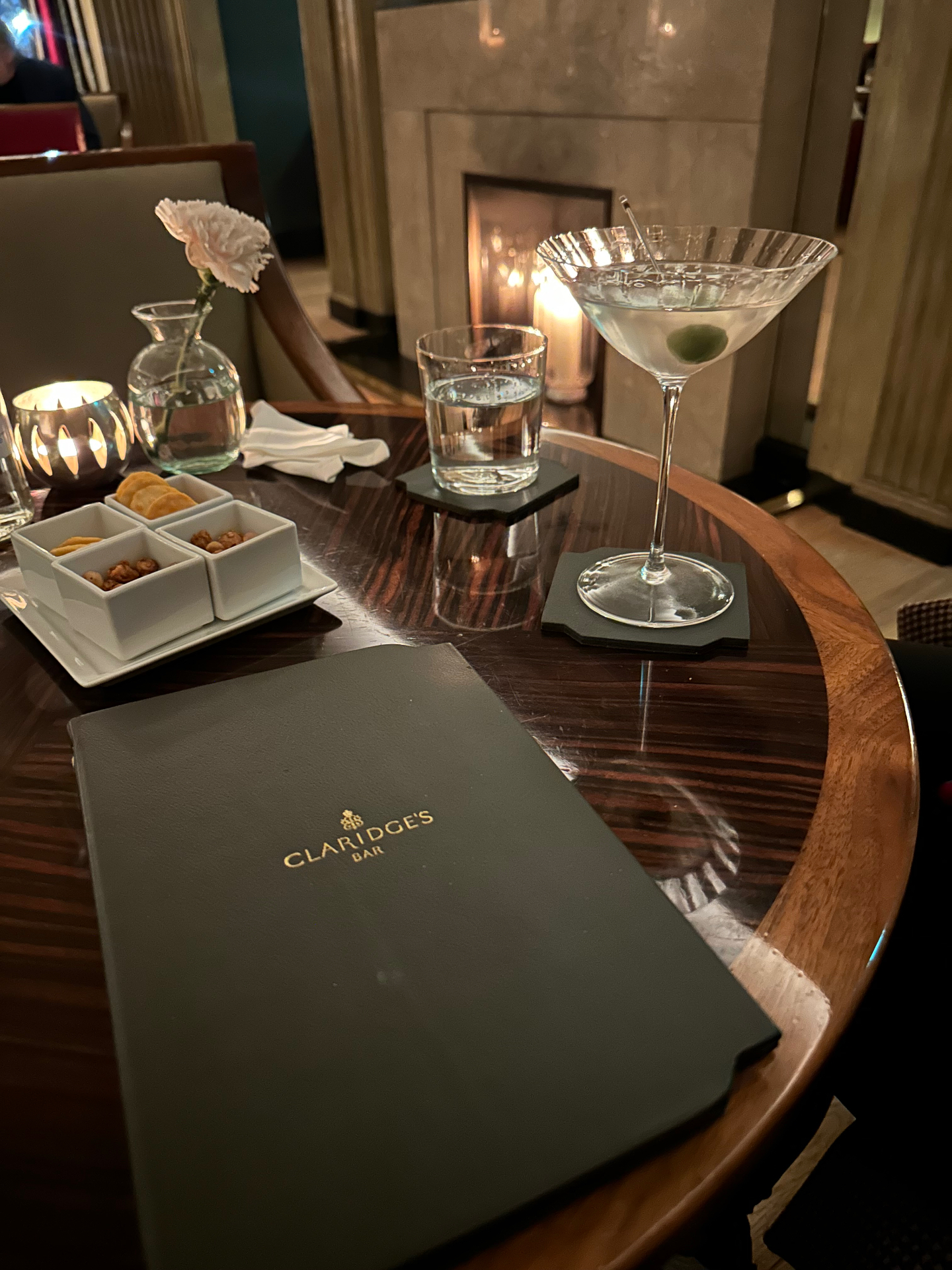 A martini at Claridge's Bar, where Art Deco elegance meets contemporary sophistication.
Inside Claridge's Bar, the aesthetic reaches its apotheosis. Redesigned by David Collins in 1998, the bar combines Art Deco elements—the geometric patterns, the lacquered surfaces, the jade-green accents—with modern sophistication. The room glows with the warm light of table lamps, the fire crackles in its marble surround, and every surface gleams with careful attention.
Claridge's serves what many consider London's finest martini, presented with the same ceremony as at Dukes but in a radically different setting. The drink arrives in a crystal coupe, cold and luminous, accompanied by house-made snacks in porcelain dishes. The menu—a green leather folder with gold lettering—suggests the seriousness with which Claridge's approaches hospitality.
This is London luxury at its most refined: never ostentatious, always elegant, with details that reveal themselves slowly over the course of an evening.
Evening: West End Theatre
Time: 7:00 PM
No aesthetic day in London would be complete without experiencing the West End—the world's greatest concentration of professional theatre, spanning from 19th-century music halls to contemporary black-box venues.
The West End: A Heritage of Spectacle
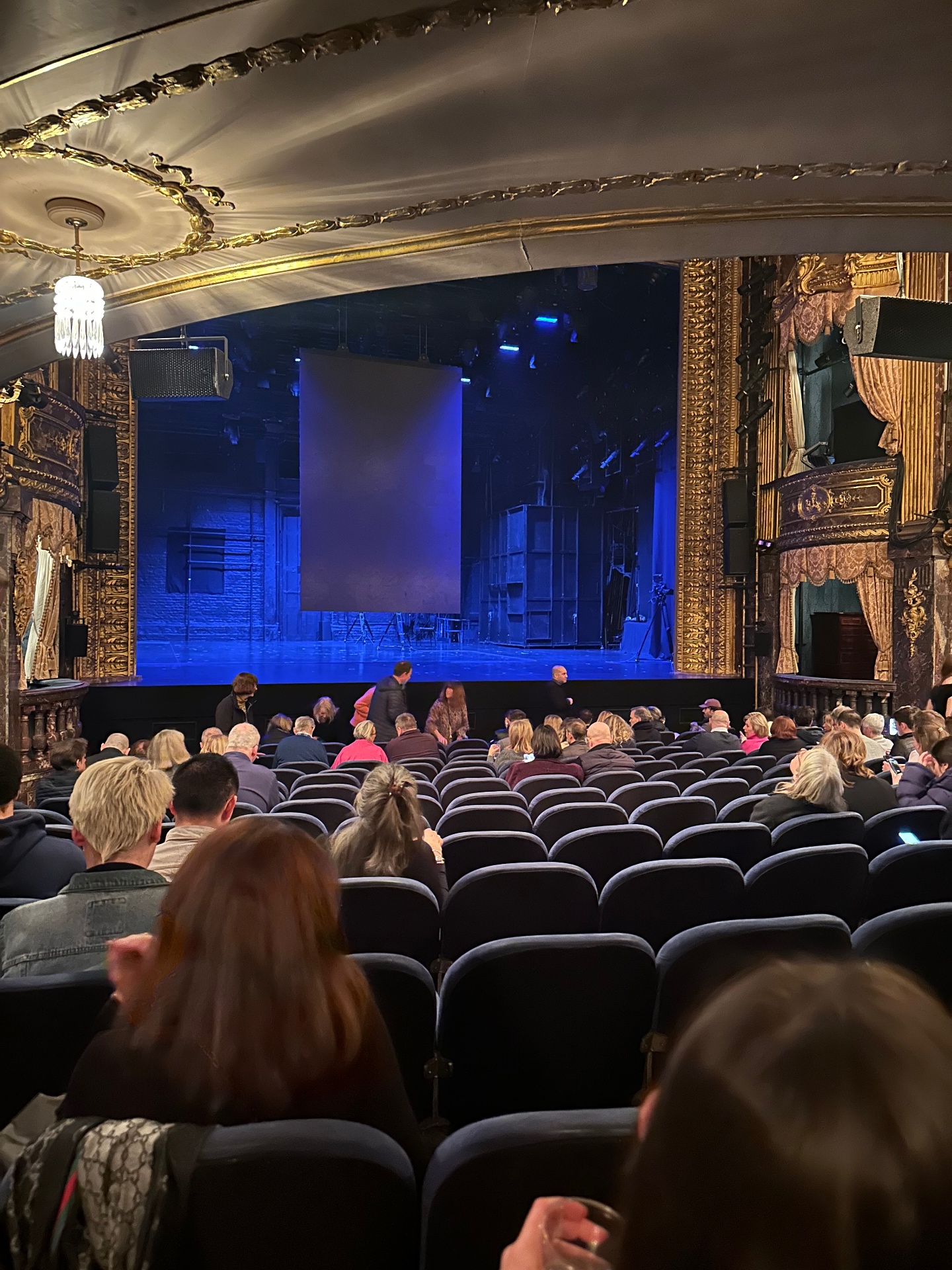 The gilded interior of a West End theatre, where Victorian theatrical architecture meets contemporary performance.
London's Theatreland encompasses more than 40 venues in the West End, many of which date to the Victorian and Edwardian eras [9]. These buildings represent some of London's finest decorative architecture: the gilded plasterwork, the red velvet curtains, the ornate boxes and chandeliers.
The theatre pictured here exemplifies the genre: the proscenium arch frames the stage like a painting, while the auditorium itself becomes part of the spectacle. The ceiling medallions, the golden arabesques, the gas-lamp-style fixtures (now electric)—every surface has been designed to create an atmosphere of anticipation and wonder.
Beyond the architecture, West End theatre offers an aesthetic experience unavailable anywhere else in the world. The concentration of talent, the quality of production, the sheer variety of offerings—from Shakespeare to contemporary drama to musical theatre—make London the world's theatrical capital.
Aesthetic Tips for West End Theatre:
- Book stalls or dress circle seats for the best view of both stage and auditorium
- Arrive early to appreciate the building's architecture before the show
- Consider matinee performances for natural light through the domed ceilings
- Check for pre-show drinks in theatre bars, many of which retain original Victorian features
The Art of the London Aesthetic
What makes London uniquely beautiful? The question has occupied artists, writers, and visitors for centuries. Having spent this day moving through the city's diverse aesthetic landscapes, certain themes emerge.
Layered History
London's aesthetic power derives largely from its layered history. Unlike cities rebuilt after war or designed according to master plans, London has grown organically over two millennia. Roman walls support medieval churches; Georgian townhouses adjoin Victorian railway stations; Art Deco hotels face glass-and-steel towers. This layering creates visual complexity and endless discovery.
The Patina of Age
London embraces age in a way that many cities do not. The weathered brick, the worn stone, the brass polished by generations of hands—these marks of time are valued rather than erased. The French House's vintage signage, Borough Market's Victorian ironwork, the Globe's oak frame darkened by decades of exposure—all possess a beauty that cannot be manufactured.
Democratic Grandeur
Perhaps most distinctively, London mixes grandeur with accessibility. Claridge's welcomes afternoon tea guests alongside royal visitors; The French House serves writers and tradespeople at the same bar; Borough Market caters to celebrity chefs and everyday shoppers. This democratic quality—the sense that London's beautiful spaces belong to everyone—distinguishes the city from more exclusive capitals.
Weather as Aesthetic Element
Finally, London's famously changeable weather contributes to its aesthetic character. The morning mist over Tower Bridge, the dramatic clouds building over the South Bank, the rain-slicked streets of Soho reflecting neon signs—these atmospheric conditions create visual effects impossible in sunnier climates. Learning to appreciate London's weather, rather than fighting against it, is key to understanding its beauty.
Getting Around
The itinerary outlined here can be accomplished largely on foot, with one Tube journey:
- South Bank walk: 2 miles
- Northern Line: London Bridge to Leicester Square (4 minutes)
- Soho to Mayfair walk: 0.5 miles
- Mayfair to Theatreland walk: 0.5 miles
Best Times to Visit
- Spring (April-May): Mild weather, cherry blossoms in parks, longer days
- Autumn (September-October): Golden light, fewer tourists, comfortable temperatures
- Winter (December): Christmas decorations, festive atmosphere, dramatic light
Booking Recommendations
- Borough Market: No booking required; arrive before 10 AM for best atmosphere
- Ducksoup: Book via their website; lunch easier than dinner
- The French House: No bookings accepted; arrive early for seating
- Dukes Bar: Essential to book; request table by fireplace
- Claridge's Bar: Walk-ins possible but booking recommended
- West End Theatre: Book well in advance for popular shows; day seats available for budget visitors
Recommended for Your Kitchen
References and Further Reading
[1] Thames Landscape Strategy. "A Hundred Year Vision for the Thames." Thames Landscape Strategy Partnership, 2023.
[2] Shakespeare's Globe. "Our Story." Shakespeare's Globe Trust, 2024. shakespearesglobe.com
[3] Borough Market. "Our History." Borough Market Ltd, 2024. boroughmarket.org.uk
[4] Tames, Richard. "Soho Past." Historical Publications, 1994.
[5] The French House. "History." The French House Soho, 2024.
[6] Museum of London. "Chinese London: Migration, Settlement and Community." Museum of London, 2022.
"Chinese London: Migration, Settlement and Community." Museum of London, 2022.
[7] Dukes London. "Our Heritage." Dukes Hotel, 2024. dukeshotel.com
[8] Claridge's. "Our History." Claridge's London, 2024. claridges.co.uk
[9] Society of London Theatre. "The History of London Theatre." SOLT, 2024.
All photographs in this article were taken by Austin Gallery during our travels through London. For more cultural guides and art world insights, explore our blog or visit our gallery of fine art from around the world.


