
A silver-haired woman in a yellow dress sits in a ladderback rocker, hands working a patchwork quilt that spills from her lap onto the hardwood floor. Beside her, a sewing basket. A yellow mug on a dark table. A potted plant on the windowsill. Every object chosen, every detail kept.
In This Article
Key Takeaways
- Signed vintage oil on canvas by a confident figurative painter working in the American Realist tradition
- Warm, intimate domestic scene depicting a woman quilting — a subject that intersects fine art, folk tradition, and African American cultural history
- Original oak strip frame, ready to hang — 22 × 17 inches framed
- Priced at $550 — an accessible entry point for figurative and genre painting collectors
The Painting
The Quilter. Oil on canvas, 22 × 17 inches framed.
This painting does what the best figurative work does: it makes you feel like you've walked into someone's life. Not as an intruder, but as a guest who has been expected.
The woman doesn't look up. She doesn't need to. Her attention belongs entirely to the quilt taking shape beneath her hands — a patchwork of cream, sage, ochre, rose, and slate blue that reads like a textile autobiography. Each square carries the ghost of a garment, a curtain, a tablecloth. The quilt is both art object and family archive.
The artist positions her subject with the quiet authority of someone who understood this scene from the inside. The figure doesn't pose — she inhabits. The rocking chair, the sewing basket at her feet, the window light falling across her silver hair — these aren't props arranged for artistic effect. They're the furniture of a real life, observed with care and rendered with respect.
The Artist's Hand
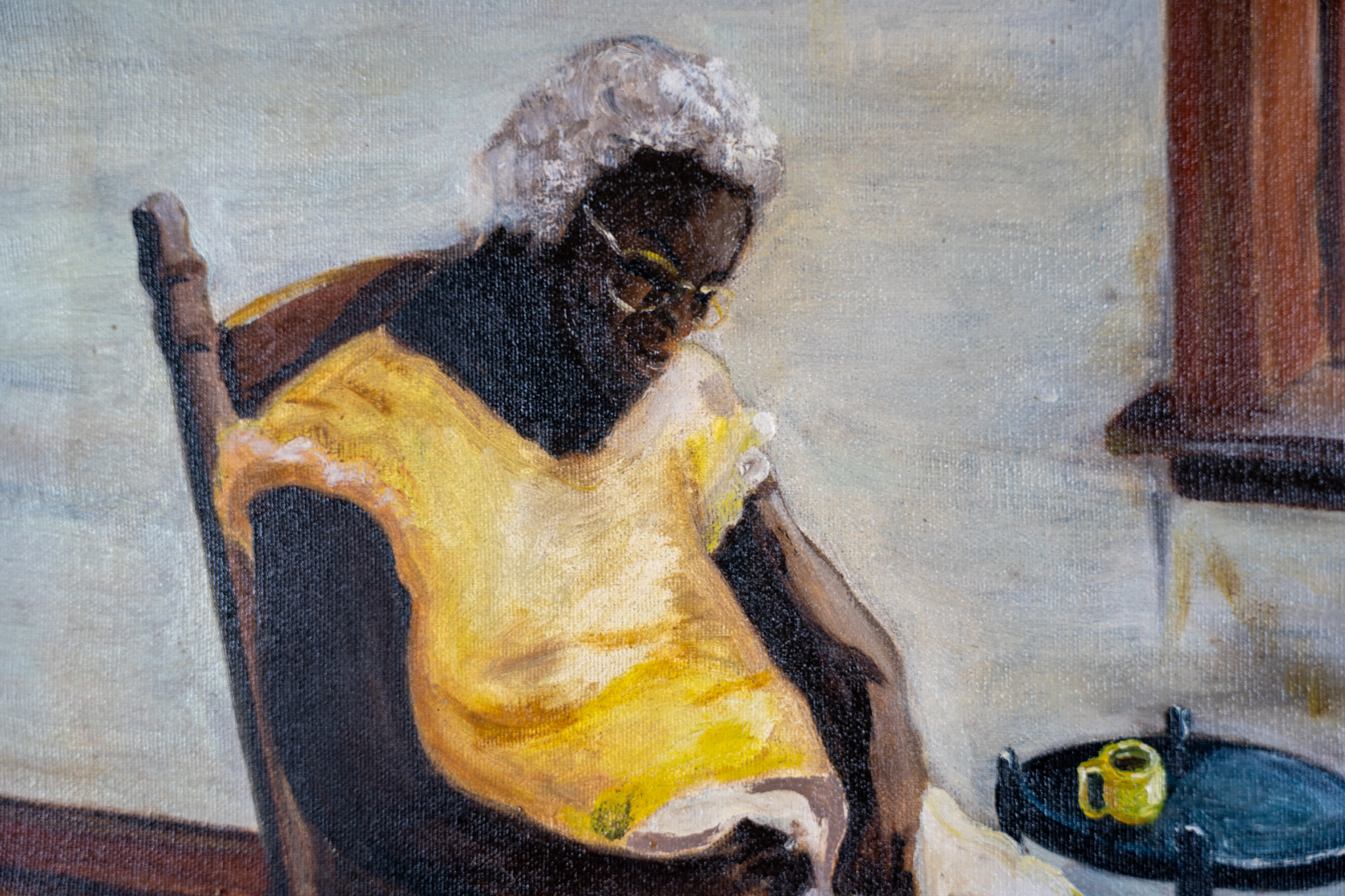 Detail — the handling of the figure's face, glasses, and yellow dress shows confident, direct brushwork.
The artist painted with directness. The yellow dress is built in warm, assured strokes — cadmium and ochre blended on the canvas rather than on the palette. The woman's dark skin is rendered with tonal sensitivity, moving from deep umber in the shadows to warm brown where the light catches her arms and face. Her wire-rimmed glasses are painted in two quick, precise strokes of gold.
The quilt itself is a painting within a painting — each patchwork square handled with distinct color and texture, creating a mosaic of soft color that cascades from the woman's lap to the floor. The sewing basket at her feet, with its lidded compartments of thread and fabric scraps, is painted with the kind of detail that suggests the artist knew exactly what was inside.
The background is deliberately simplified — pale walls, warm wood tones — to keep attention where it belongs: on the woman and her work.
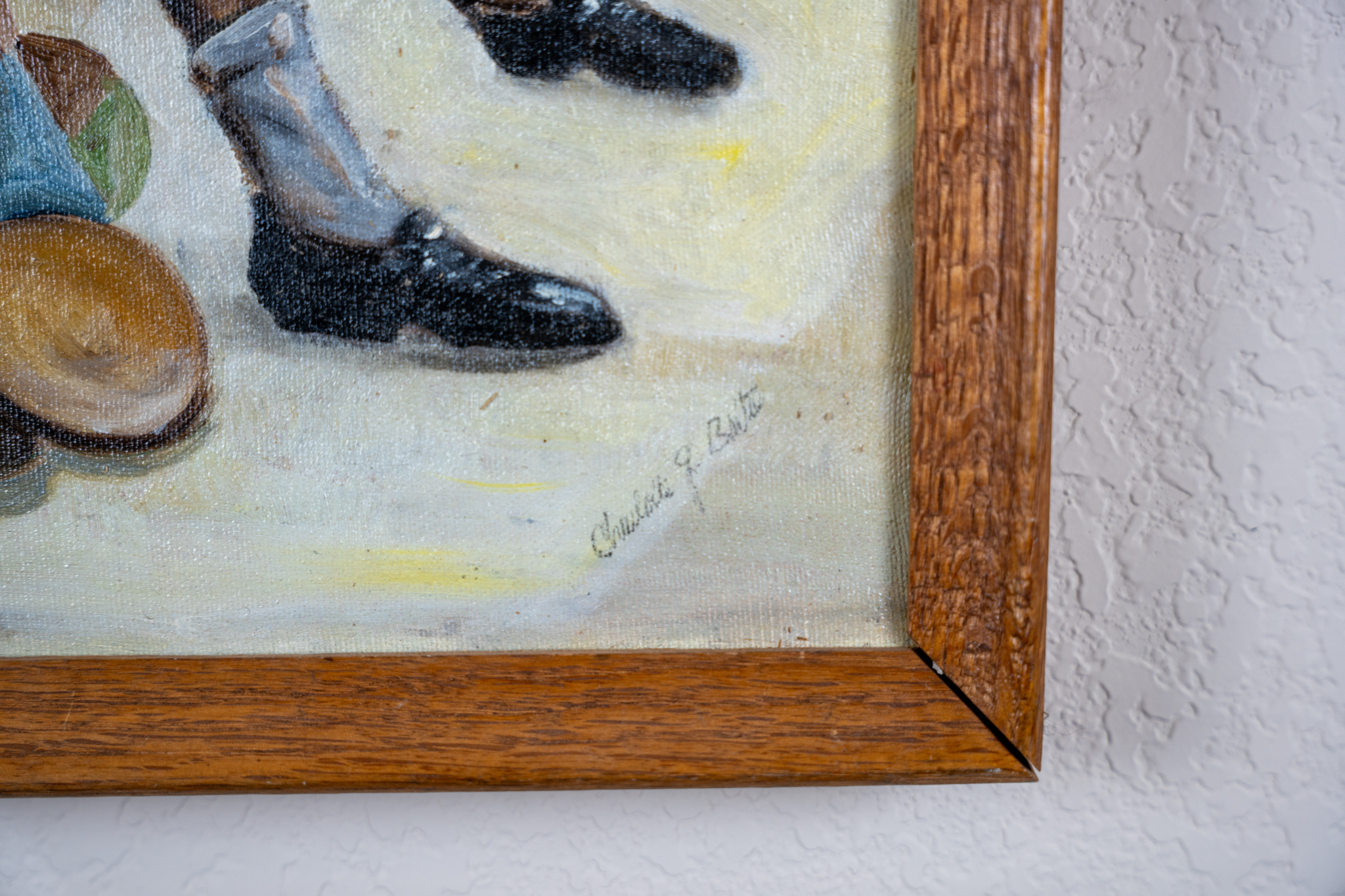 Signed lower right by the artist
Why This Painting Matters
Genre painting — scenes of everyday life — has a long and distinguished history in Western art. From Vermeer's lacemaker to Winslow Homer's cotton pickers, artists have found profound beauty in the act of ordinary work.
This painting belongs to that tradition, but it carries additional weight. The quilting tradition in African American culture runs deep — from the coded quilts of the Underground Railroad (a claim debated by historians but culturally resonant) to the extraordinary quilts of Gee's Bend, Alabama, which hang in the Whitney Museum and the Museum of Fine Arts Houston. A painting of a Black woman quilting is not merely a domestic scene. It's a portrait of artistic production, of cultural transmission, of beauty made from what's at hand.
The artist seems to have understood this. She didn't sentimentalize her subject or reduce her to a type. She painted a specific woman in a specific room doing specific work — and in that specificity found something universal about making, keeping, and the quiet persistence of craft.


