Selling Art · Design & Furniture
How to Sell Designer & Vintage Furniture
That teak credenza or lounge chair could be worth real money. How to tell what you have, spot a reproduction, avoid the pickers, and sell designer and vintage furniture for what it's actually worth.
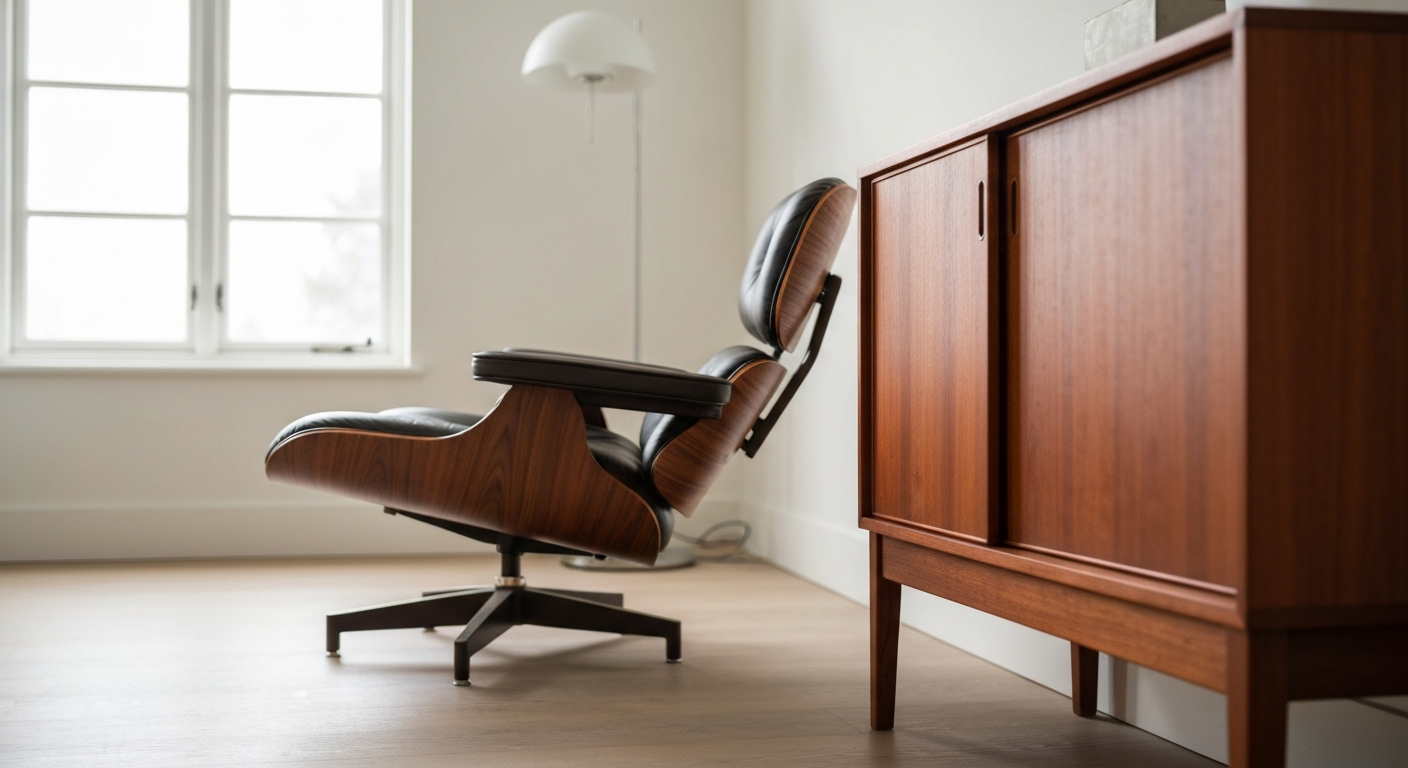
That credenza in the dining room, the lounge chair a parent bought in the sixties, the teak dresser you almost donated to make space: mid-century and designer furniture is where people quietly lose the most money. The instinct is Facebook Marketplace or a garage sale, and that is exactly how a four-thousand-dollar lounge chair gets sold for three hundred to a picker who flips it by the weekend. Good design has a real, active collector market, and the right piece sold the right way can be worth a genuine sum. Here is how to tell what you have, what it is worth, and how to sell it without getting picked off.
At a Glance
- What drives value
- Designer, authenticity, original condition, rarity
- Worst move
- A quick Marketplace sale to a reseller who flips it
- The repro risk
- Mid-century modern is full of unlicensed knockoffs
- Best route for quality
- Curated consignment or a design auction
- Start here
- A free, no-obligation valuation
First, find the label: is this a designer piece?
The difference between a two-hundred-dollar lookalike and a four-thousand-dollar original is usually a label you never thought to look for. Check the least obvious places: the underside of seats and tabletops, the back panel, inside drawers, the frame rails, and the bottom of case pieces.
You are hunting for a maker's label or stamp (Herman Miller, Knoll, Eames, Cassina, and the like), a "Made in Denmark" or Danish control stamp on Scandinavian teak and rosewood, branded medallions or foil labels, and any designer signature or model number. Photograph every label, stamp, and joint clearly. Note the materials honestly, too: solid teak, rosewood, and walnut hold value, while veneer over particleboard usually does not. If you can name the maker and confirm the piece is authentic, you are most of the way to a real number. If you cannot find a mark, that does not mean it is worthless, but it does mean you want an expert eye on it.
A curator's tip
Do not throw away labels, tags, or old receipts, and do not refinish anything before you know what it is. A faded foil label under a chair is worth more to the right buyer than a fresh coat of oil.
Authentic vs. reproduction: the mid-century minefield
No category has more fakes than mid-century modern. For every real design icon there are a dozen unlicensed knockoffs that look almost identical in a photo and are worth a fraction of the price.
A few tells. Authentic pieces carry the correct maker's label and consistent construction: the right woods and veneers, proper hardware, clean period-correct joinery. Reproductions often give themselves away with off proportions, wrong materials (plywood where there should be solid wood, chrome where there should be brushed aluminum), missing or suspiciously crisp labels, and modern screws or glue. And watch the language: "in the style of" and "attributed to" are seller code for not authenticated. When real money is on the line, authentication matters more than anything else, and it is exactly what a knowledgeable gallery or specialist confirms before a piece is listed.
'In the style of' is seller code for 'not the real thing.' The label is the difference between a few hundred dollars and a few thousand.
What actually drives the value
Four things, in order of weight.
1. The designer and maker. A documented piece by a collected designer, made by the original manufacturer, is the whole ballgame.
2. Authenticity. Original and licensed beats reproduction every time, no exceptions.
3. Condition and originality. Here is the counterintuitive part: original finish and original upholstery, even honestly worn, often beat a refinished or reupholstered piece, because collectors prize originality. A well-meant refinish can quietly cut the value.
4. Rarity and provenance. Rare models, early production, desirable colorways, and a paper trail all push the number up. Size matters too, since a large case piece costs more to ship than a chair, and that factors into what a buyer will pay.
The lowball trap
Furniture is where the pickers live. "We buy mid-century" ads, estate-sale flippers, and Marketplace lowballers make their money on exactly one thing: sellers who do not know what they have. They will offer a friendly flat cash number, haul the piece away the same day, and relist it for five or ten times as much by the next weekend.
The tell is always the same. If someone is in a hurry to pay cash and take it now, they usually know something about the value that you do not. A real designer piece deserves a real valuation before it goes anywhere.
The fastest reality check
Search the piece plus the word 'sold' on the major design marketplaces before you accept any offer. Seeing what real examples actually closed at, not what they are listed for, is the quickest way to know if an offer is fair.
Where to sell, honestly compared
Four sensible routes, and the right one depends on the piece and your timeline.
Curated consignment. A gallery or design dealer authenticates the piece, prices it, markets it to collectors and interior designers, and takes a commission only when it sells. Best for quality, authenticated pieces where reaching the right buyer matters, with no upfront cost.
Design auction. Good for rare, high-end, documented pieces with an auction record, but you pay seller's fees and results can swing.
Vetted design marketplaces. Strong reach for authenticated design, but you handle the listing, buyer questions, and freight shipping yourself, and the reputable ones vet sellers first.
Local estate sale or Marketplace. Fast and easy, but you will almost always leave money on the table with anything genuinely valuable.
For a real designer or mid-century piece, curated consignment usually nets the most with the least hassle. Here is how ours works, including nationwide pickup and shipping.
How a proper valuation works
A real valuation is not a guess off one photo. It weighs the designer and maker, authenticity, the specific model and production run, condition and originality, and recent comparable sales (what pieces actually closed at, not hopeful asking prices).
One distinction saves people from disappointment: for selling you want fair market value, what a willing buyer will actually pay, not the replacement value you would see on an insurance quote, which runs higher and is not what you receive. You do not need a formal written appraisal just to sell. A knowledgeable valuation is enough to price it right and list it, and we offer that as a free, no-obligation appraisal.
The part people underestimate: moving it
Furniture is bulky, heavy, and easy to damage, and shipping is the reason so many great pieces get sold locally for far too little. A case piece may need blanket-wrap freight, a lounge chair needs careful crating, and a careless move means scratches, cracked veneer, or torn upholstery that erase value.
A good consignment gallery handles the assessment, safe transport, and insurance, and reaches buyers who are used to shipping design nationwide. If you sell privately, price in professional furniture shippers for anything valuable, and never assume a buyer will simply "come pick it up" without it affecting your number.
Measure before you list
Note exact dimensions and whether a piece breaks down. Buyers and shippers ask first, and a credenza that fits through a standard doorway is easier to sell than one that does not.
Timeline and patience
Designer furniture can sell quickly when it is a sought-after model priced correctly, or take a while for a specific high-value piece to find the right collector or designer. Priced to the real market and shown to the right audience, good design sells. Rushing it to a local cash buyer is what costs you money. Knowing your own timeline up front helps whoever sells it choose the right venue and the right price.
How consigning furniture and design works
The process mirrors selling any fine object. You send photos and details (maker, any labels, dimensions, condition). The gallery authenticates it, gives you an honest value and a suggested price, agrees terms in writing (commission, length, who handles the move and insurance), and takes it from there. The piece is marketed to collectors and designers, and you are paid your share once it sells and the payment clears. No upfront cost, and it comes back if it does not sell within the term.
This is exactly the work we are expanding into at Austin Gallery: not just paintings, but the designer furniture, sculpture, and rare objects worth treating like art. Send a few photos for a free quote and we will tell you honestly what you have and what it is worth.
How to start, in five steps
- 1
Find and photograph the label
Undersides, drawers, back panels, and frame rails, plus the overall piece and any maker's stamp.
- 2
Note the details
Maker, designer, model if known, materials, exact dimensions, and condition.
- 3
Get a free valuation
Before you list it or accept any offer, find out what it is actually worth.
- 4
Choose your venue
Consignment for value, a design auction for rare documented pieces, a vetted marketplace if you will handle freight.
- 5
Ship it right
Use professional furniture movers or a gallery that arranges insured freight.
The short version
Do
- ✓Hunt for the maker's label before assuming it is worthless
- ✓Keep original finish and upholstery until you know the value
- ✓Authenticate anything high-value before you sell
- ✓Check comparable sold prices, not asking prices
- ✓Use proper furniture freight for valuable pieces
Don't
- ✕Sell to the first Marketplace or estate flipper offering cash
- ✕Refinish or reupholster a designer piece before valuing it
- ✕Trust 'in the style of' as proof of anything
- ✕Assume veneer and particleboard hold collector value
- ✕Let a buyer 'just pick it up' without checking the real number first
Questions, answered
How do I know if my furniture is a valuable designer piece?
How can I tell if my mid-century piece is authentic or a reproduction?
How much is my vintage or designer furniture worth?
Where is the best place to sell designer or mid-century furniture?
Should I refinish or reupholster before selling?
Can I sell a whole estate of furniture at once?
How long does it take to sell designer furniture?
Can I sell inherited furniture I know nothing about?
Sell With Austin Gallery
Sell Your Designer Furniture
Send us a few photos and we'll tell you honestly what your piece is worth and how to sell it for the most. Free, no obligation, no upfront cost, and we arrange insured shipping.
Get a Free Quote →Free appraisal · Zero upfront fees · Fully insured · Nationwide from Austin, Texas
Keep Reading
Consignment
Consign Your Art & Objects
Fine art, sculpture, designer furniture, and rare collectibles. Zero upfront fees, insured, nationwide. Send photos for a free quote.
Selling Art
How to Sell a Sculpture
Bronze, metal, and garden art: value it, avoid the lowball buyers, and sell it right.
Appraisal
Free Art Appraisal
Find out what your piece is actually worth, with no obligation.