Framing Reference
How to Frame a Jersey: Frame Sizes, Depth and Steps
Most adult football and hockey jerseys fit a 32 x 40 inch frame, basketball and soccer jerseys a 28 x 34, and youth jerseys a 24 x 30, with about 1.75 to 2 inches of interior depth for a folded jersey. Stitch the jersey to the backing through its seams, never glue it, and glaze with UV-filtering acrylic.
By Travis Moher · Published November 25, 2026
A jersey is a textile, and framing it follows textile rules: support it evenly, hold it without adhesive, keep it off the glazing, and keep light off the dyes and any signature. The decisions are the frame size, the depth, and how the jersey is folded, and all three depend on the sport.
Jersey frame size chart
| Jersey | Frame size | Interior depth | Notes |
|---|---|---|---|
| Adult football (L to XL) | 32 x 40 in (81 x 102 cm) | 1.75 in | 3 in mat border; college and high school often 28 x 34 |
| Adult hockey (52 to 56) | 32 x 40 in | 1.75 in | Size 58 and goalie cuts need 34 x 42 |
| Adult basketball (S to XL) | 28 x 34 or 32 x 40 in | 1.5 in; 2 in if signed | Basketball is often framed flat |
| Adult baseball | 28 x 34 or 32 x 40 in | 1.5 in replica; 1.75 in wool or flannel | Heavier vintage fabric needs more depth |
| Adult soccer (S to L) | 28 x 34 in (71 x 86 cm) | 1.5 in | 2.5 in mat border |
| Youth | 24 x 30 or 28 x 34 in | About 1 in | Measure large youth sizes; they approach adult widths |
Sizes and depths from Custom Picture Frames' jersey frame guide. Frame sizes are the custom frame size; ready-made cases often list the outside dimensions, so check the inside size.
The depth rule
Give a folded jersey 1.75 to 2 inches of interior depth, and add depth for every object you put with it. That is the rule we use. Custom Picture Frames says a folded jersey alone typically needs 1.75 inches, lists folded jerseys in its 2 inch tier, moves a jersey with extras to 2.5 inches, and uses 3.5 inches when a helmet, cap or ball shares the box. Too shallow and the fabric presses on the acrylic, which flattens it and can transfer ink from a signature. For more on depth across frame types, see our picture frame dimensions guide.
Shadow box vs flat mount
| Method | How | Best for |
|---|---|---|
| Shadow box, stitched and folded | Jersey steamed, folded to a set shape and stitched to a mat-wrapped board inside a deep frame | Game-worn and signed jerseys, displays that must last |
| Flat mount, full spread | Jersey laid flat with sleeves out, stitched to the backing | Basketball jerseys and sleeveless tops; needs the largest frame (about 32 x 40) |
| Ready-made jersey case on a hanger | Jersey hangs on a supplied hanger inside a lockable case | Quick, reversible display of replicas |
| Folded small in a standard shadow box | Jersey folded to show the number and name only | Small walls; size the shadow box to the folded shape plus a border |
How to fold it, by sport
Framebridge's defaults are a good starting point. Football: back out, sleeves hanging loose. Baseball: front out, sleeves folded over the top. Basketball: framed flat, back out. Soccer: back out, sleeves folded forward. Hockey: back out, the long sleeves folded along the sides. Its framers steam-press the jersey and fold it to roughly 32 x 32 inches before stitching. If the signature is on the front, show the front.
Steps
- 1.Measure. Lay the jersey flat and fold it the way you want to show it. Measure that shape, then pick the frame from the chart, leaving room for a mat border.
- 2.Clean and press. Wash a replica if needed; never wash a signed or game-worn jersey. Steam out creases on low heat, keeping the steamer well away from any signature.
- 3.Make a stiffener. Cut foam board to fit inside the jersey so it holds the shape. Custom Picture Frames' kits supply a stiffener board for this.
- 4.Fold. Fold sleeves and hem behind the stiffener to the shape you chose, keeping the name, number and signature flat and centered.
- 5.Stitch. Tack the jersey to the backing with needle and thread through the seams, collar and hem, not through the face fabric. No glue, tape or pins.
- 6.Glaze and close. Use framer's-grade UV-filtering acrylic. Check that nothing touches it, add any photo or nameplate, and close the back.
- 7.Hang it right. A 32 x 40 shadow box is heavy. Use two hangers rated well above its weight and keep it out of direct sun; see how to hang a heavy picture.
Jersey display cases to buy
For replicas and quick displays, a ready-made case is the simple route. These are verified live listings at the prices shown when we checked. Listing sizes are usually outside dimensions, so compare the inside size with your folded jersey.

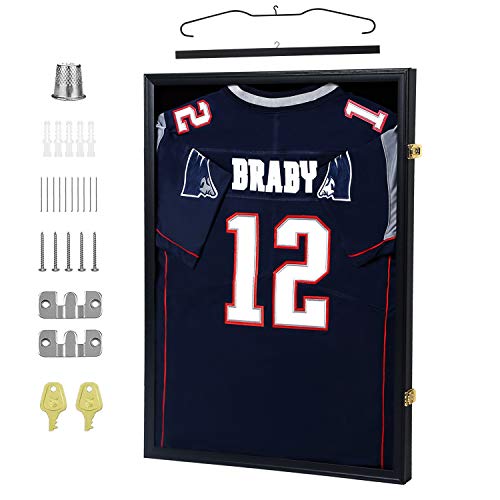
Best overall case
Lockable case with a plexiglass front, backboard and hanging hardware, from an established frame maker. Sized for football, baseball and soccer jerseys.
Best with photos
Mat with two photo windows and an autograph slot, for a jersey shown with game photos.
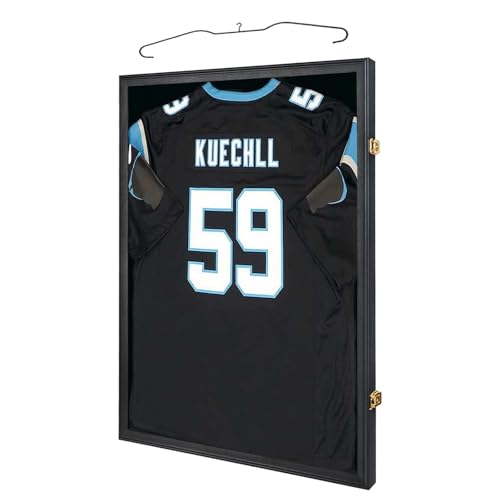
Best budget
Hanger-style case listed with UV-protective acrylic, sized up to a 2XL shirt. Reversible: the jersey just hangs.
For a game-worn or signed jersey, skip the hanger case and use a stitched custom shadow box. Our custom framing cost guide explains how framers price by size, and acrylic vs glass covers why acrylic wins at this size.
Free to use
Put this jersey frame chart on your site
Writing about sports memorabilia or framing? Embed our jersey frame size chart for your readers. Copy the snippet below; it renders a clean table anywhere. The only ask: keep the small credit link to Austin Gallery.
Click inside the box, select all (Cmd-A or Ctrl-A), and copy. Includes one credit link back to this page.
Exceptions and distinctions
- •Oversize hockey. Size 58 and goalie-cut jerseys are wider and need about 34 x 42.
- •Vintage wool and flannel. Heavier fabric needs the deeper 1.75 inch or 2 inch frame and gentle handling; never steam old wool hard.
- •Full spread is huge. Sleeves out, an adult jersey needs about 32 x 40 or more; folding is what makes 28 x 34 work.
- •Hanger cases are display, not preservation. A jersey on a hanger pulls at the shoulders over years. For long display, stitch it to a board.
- •Keep the paperwork. Store any certificate of authenticity outside the frame with your records; our art inventory template has fields for it.
Frequently asked questions
What size frame do I need for a jersey?
Most adult football and hockey jerseys fit a 32 x 40 inch frame, basketball and baseball 28 x 34 or 32 x 40, soccer 28 x 34, and youth jerseys 24 x 30 or 28 x 34, according to Custom Picture Frames. Oversize hockey (size 58 and goalie cuts) needs about 34 x 42. Measure the jersey folded the way you plan to show it before you buy.
How deep should a jersey shadow box be?
A folded jersey by itself needs about 1.75 to 2 inches of interior depth. Add depth for extras: Custom Picture Frames recommends 2.5 inches for a jersey with extra items and 3.5 inches when a helmet, cap or ball goes in with it. Thin 1 inch frames work only for youth or lightweight jerseys.
How do you fold a jersey for a frame?
It depends on the sport and what you want to show. Framebridge displays football, hockey, soccer and basketball jerseys back out (name and number), and baseball jerseys front out with sleeves folded over the top; hockey sleeves fold along the sides. Its framers steam the jersey and fold it to roughly 32 x 32 inches before stitching.
Should you pin or stitch a jersey in a frame?
Stitch it. Use needle and thread through seams and hems, not the face fabric, and tack it to a fabric-covered or foam-core board. Stitching holds the jersey without glue or adhesive, which would stain fabric and lower the value of a signed jersey. Pins can rust and leave holes.
Do you need UV protection when framing a jersey?
Yes. Jersey dyes and signatures fade with light. Use UV-filtering acrylic, which is lighter and safer than glass at 28 x 34 to 32 x 40 inches, and do not hang the frame in direct sun. Conservation-grade glazing is labeled as blocking 97 percent or more of UV.
How much does it cost to frame a jersey?
Ready-made jersey display cases on Amazon run about $32 to $60 at the time of writing (see the picks on this page). Custom shadow box framing is priced by size and options such as UV acrylic, matting and stitching; get a quote on the exact size from a framer or an online custom framer before deciding.
How do you frame a signed jersey?
Fold so the signature is in the open, never under a fold or against the glazing. Use UV-filtering acrylic, a frame with at least 1.75 to 2 inches of depth so fabric does not press on the signature, and stitching instead of adhesive. For a valuable autograph, use a professional framer and keep the certificate of authenticity with your records.
Sources
- Custom Picture Frames: Jersey frames (frame sizes and depths by sport, oversize hockey)
- Custom Picture Frames: Shadow box depths (1.75 in folded jersey, 2.5 in with extras, 3.5 in with helmet or cap)
- Custom Picture Frames: Shadow box ideas (stitch through seams, UV acrylic, padded backing)
- Framebridge: How to frame a jersey (steam, fold to about 32 x 32, stitch; folding by sport)
- Tru Vue: Optium Acrylic (UV-protection labeling threshold of 97 percent)
Sizes are published framer figures as of November 2026; cuts vary by maker and year, so measure your jersey. Prices are Amazon prices at the time of writing and change often. Austin Gallery may earn a commission from links on this page at no cost to you.
More gallery reference guides
Cite this guide
Writers, framers, designers and students are welcome to quote this page. If you use one number, use this one:
Most adult football and hockey jerseys fit a 32 x 40 inch frame, basketball and soccer jerseys a 28 x 34, and youth jerseys a 24 x 30, with about 1.75 to 2 inches of interior depth for a folded jersey.
Suggested citation:
Austin Gallery, "How to Frame a Jersey: Frame Sizes, Depth and Steps," updated November 2026. https://www.austingallery.org/blog/how-to-frame-a-jersey
More free charts: the Austin Gallery reference library.