The Best Vrbos Near Big Bend, by Base
Big Bend country is the size of a small state with the population of a small town, and where you sleep decides what your trip is. Terlingua, Study Butte, Lajitas, Marfa, and Alpine are five different Wests, from a ghost-town porch to an art-world outpost 80 miles from the park gate. This guide sorts them with the distances stated plainly.
No invented listings, no pretending Marfa is next to the park. We cover the bases, the seasons, and the desert's terms, then hand you a live search for each one.
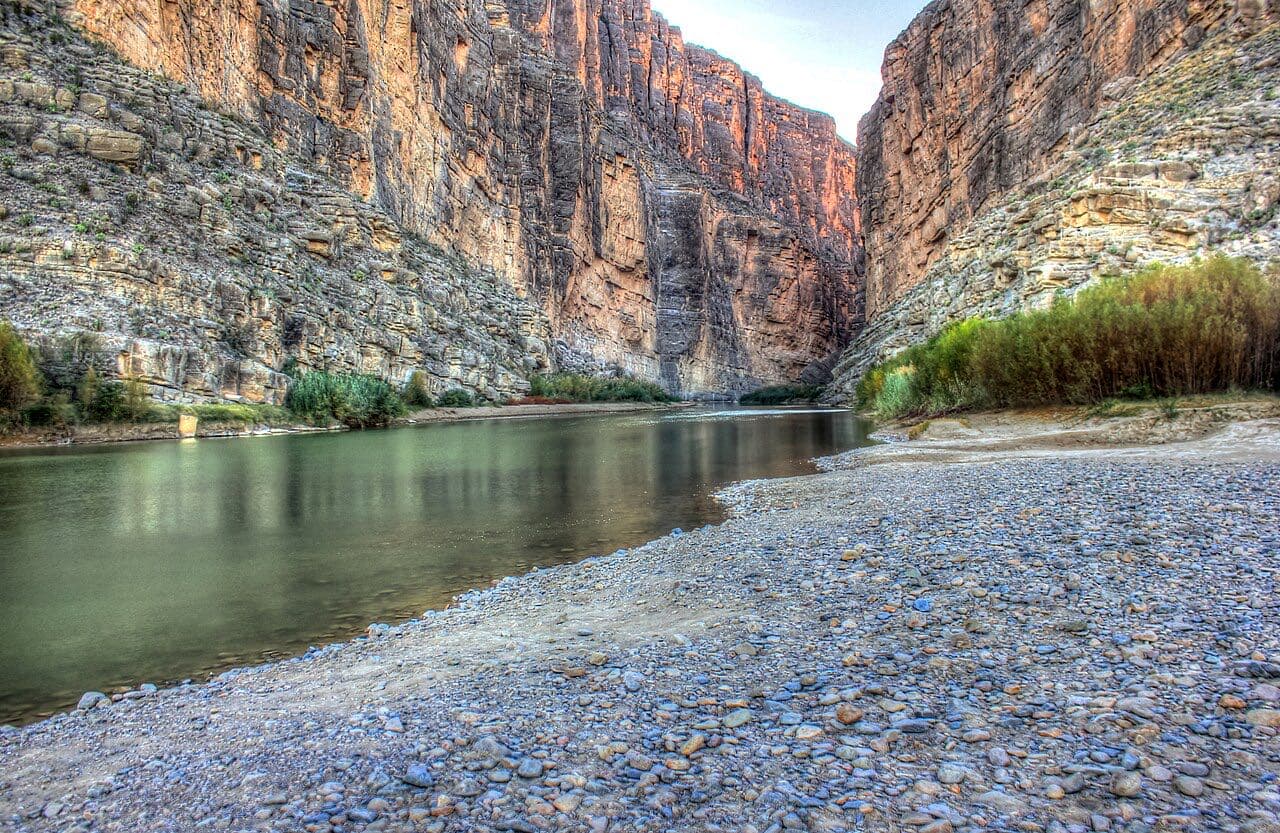
Photo: Yinan Chen via Wikimedia Commons (Public domain)
How Big Bend Country Actually Works
Two minutes of map-reading that saves you from the classic first-timer mistake.
Everything out here is further apart than the map implies. From Austin or DFW the drive runs six-and-a-half to eight hours; from the last real city, the towns spread across distances that would swallow entire Hill Country counties. The park itself is huge, an hour corner to corner, and the lodging clusters split into two camps: the desert-floor bases at the park's edge, Terlingua, Study Butte, Lajitas, and the highland towns, Marfa and Alpine, 80-plus minutes north.
The classic first-timer mistake is booking Marfa for a park trip or Terlingua for an art trip. The right frame is a loop: this is a four-to-seven-night region, with park days staged from the south and the art-and-observatory circuit staged from the north. Every price below is a typical range listings show, every drive time approximate, and the desert's terms, no services for long stretches, thin cell coverage, glorious dark, apply to all of it.
Pick Your Base in 30 Seconds
Five bases, five different Wests. Match the trip you actually want, then read that section.
| Base | To the park | The trip it's for | Search |
|---|---|---|---|
| Terlingua | 15-20 min | Ghost-town casitas, park days, porch sunsets | Vrbo → |
| Study Butte | At the gate | Max park hours, families, bigger houses | Vrbo → |
| Lajitas | ~35 min | Resort comfort, River Road, recovery days | Vrbo → |
| Marfa | 80-100 min | Art pilgrimage with a park day attached | Vrbo → |
| Alpine | ~90 min | Loop hub, real-town services, value | Vrbo → |
Drive times to the park's west entrance, approximate. Interior park destinations add real time on top.
Terlingua Ghost Town casitas
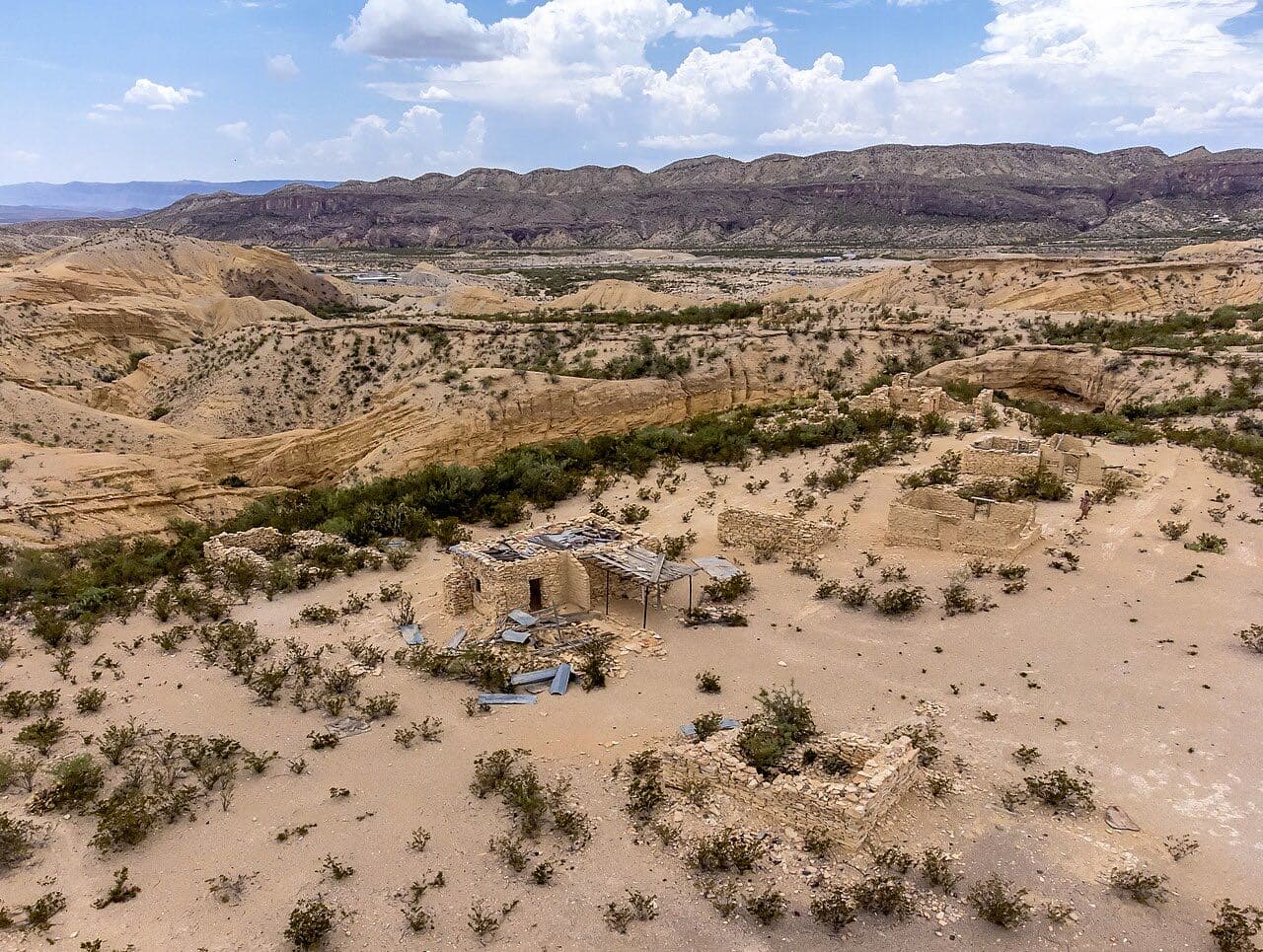
Photo: Lars Plougmann via Wikimedia Commons (CC BY-SA 2.0)
Terlingua is a quicksilver-mining ruin that refused to finish dying, and it has become the soul of the Big Bend trip: stone casitas and adobe rebuilds scattered among century-old ruins, all facing the Chisos Mountains across twenty miles of desert. Evenings run on a fixed liturgy, sunset from the porch of the Starlight Theatre and the trading company next door, where locals, river guides, and tourists share the bench like it is a civic institution, because it is.
The rental stock leans small and characterful: one-and-two-bedroom casitas, dome houses, the occasional architectural oddity, most with the two amenities that matter out here, a shaded porch and a dark sky. This is not group-compound country; big parties should look toward Study Butte or split across two casitas.
As a base it is genuinely practical: the park's west entrance is 15 to 20 minutes out, river outfitters for Santa Elena Canyon trips are at hand, and the ghost town's restaurants, few but real, are the best dinner bench within an hour.
- ·Sunset on the Starlight porch, the region's town square
- ·Santa Elena Canyon at dawn via the park's west side
- ·Walk the ghost town ruins and the old cemetery, respectfully
- ·Stargaze from your porch; this is certified dark-sky country
Terlingua is rustic on purpose: gravel roads, water hauled or hard-won, spotty cell service, and casitas where the charm is the amenity. If your group needs a bathtub, bars of LTE, and a late-night grocery, this is not that, and the people who love it love it for exactly that reason.
The Study Butte park-gate zone
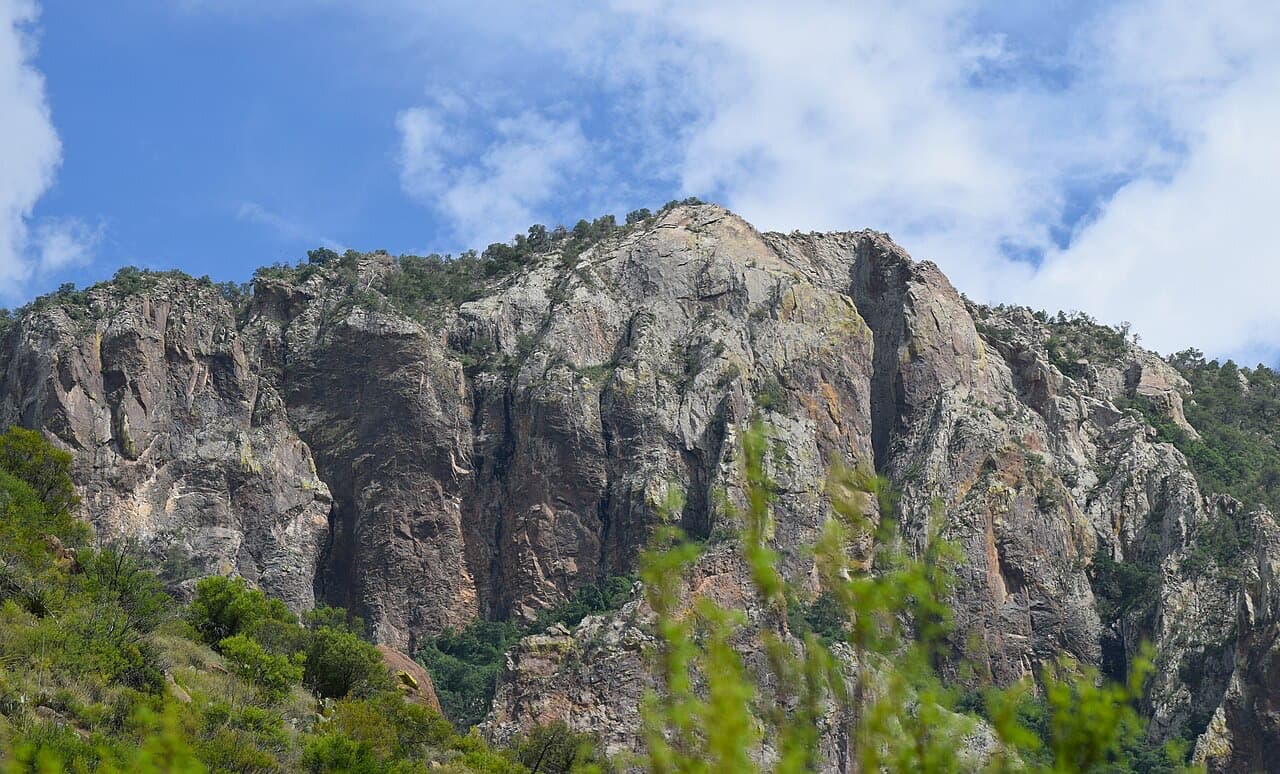
Photo: John Manard via Wikimedia Commons (CC BY-SA 2.0)
Study Butte is Terlingua's workaday neighbor at the junction where Highway 118 meets the park road, and it is the closest real lodging cluster to Big Bend's west entrance. The pitch is arithmetic: park days out here are won and lost on drive time, and staying at the gate converts an hour a day of highway into an hour a day of trail.
The inventory runs more conventional than the ghost town's, modern houses, manufactured homes done up nicely, and multi-bedroom places that actually fit a family or two, plus the area's gas stations and general stores for the daily resupply. It is the sensible-shoes base, and in Big Bend logistics, sensible shoes win.
Position matters inside the park too: from this side, Santa Elena Canyon, the Ross Maxwell Scenic Drive, and the Chisos Basin road are all natural day trips, and Terlingua's dinner-and-sunset scene is five minutes back up the road when the day ends.
- ·Dawn starts into the park before the day heats up
- ·Ross Maxwell Scenic Drive to Santa Elena, the west side's classic
- ·Chisos Basin evening for the Window view
- ·Terlingua porch time, five minutes away, when the day ends
Study Butte is a supply junction, not a postcard: what it lacks in ruin-romance it repays in beds, fuel, and proximity. Book it for the park, not the ambiance, and let Terlingua handle the evenings.
Lajitas
Lajitas is the sentence nobody expects to read about this desert: a golf resort on the banks of the Rio Grande, complete with spa, stables, and a beer-drinking goat for a mayor. The community around the resort holds condos and homes that rent to travelers who want Big Bend's landscape with an actual thread count.
Its secret weapon is position on FM 170, the River Road, which runs west from here through Big Bend Ranch State Park in what is regularly and fairly called the most beautiful drive in Texas. Staying in Lajitas puts that drive, the state park's canyons, and river put-ins at your doorstep, with the national park still only 35-ish minutes east.
The right way to use it: as the soft landing in a hard landscape. Pair two or three big park days out of the east with a Lajitas back-half of golf, spa, horseback, and River Road wandering, and the trip covers both registers of West Texas.
- ·Drive FM 170 through Big Bend Ranch State Park, both directions
- ·A round on the desert course, or the spa if the trail won
- ·Horseback out of the resort stables at golden hour
- ·Meet the mayor. He drinks beer. He is a goat.
Lajitas is a bubble by design: prices run resort-grade, dining options are the resort's, and the nearest anything else is Terlingua, 20 minutes east. If the ghost-town grit is the point of your trip, this is its opposite; if the grit is what you need recovering from, it is perfect.
Marfa
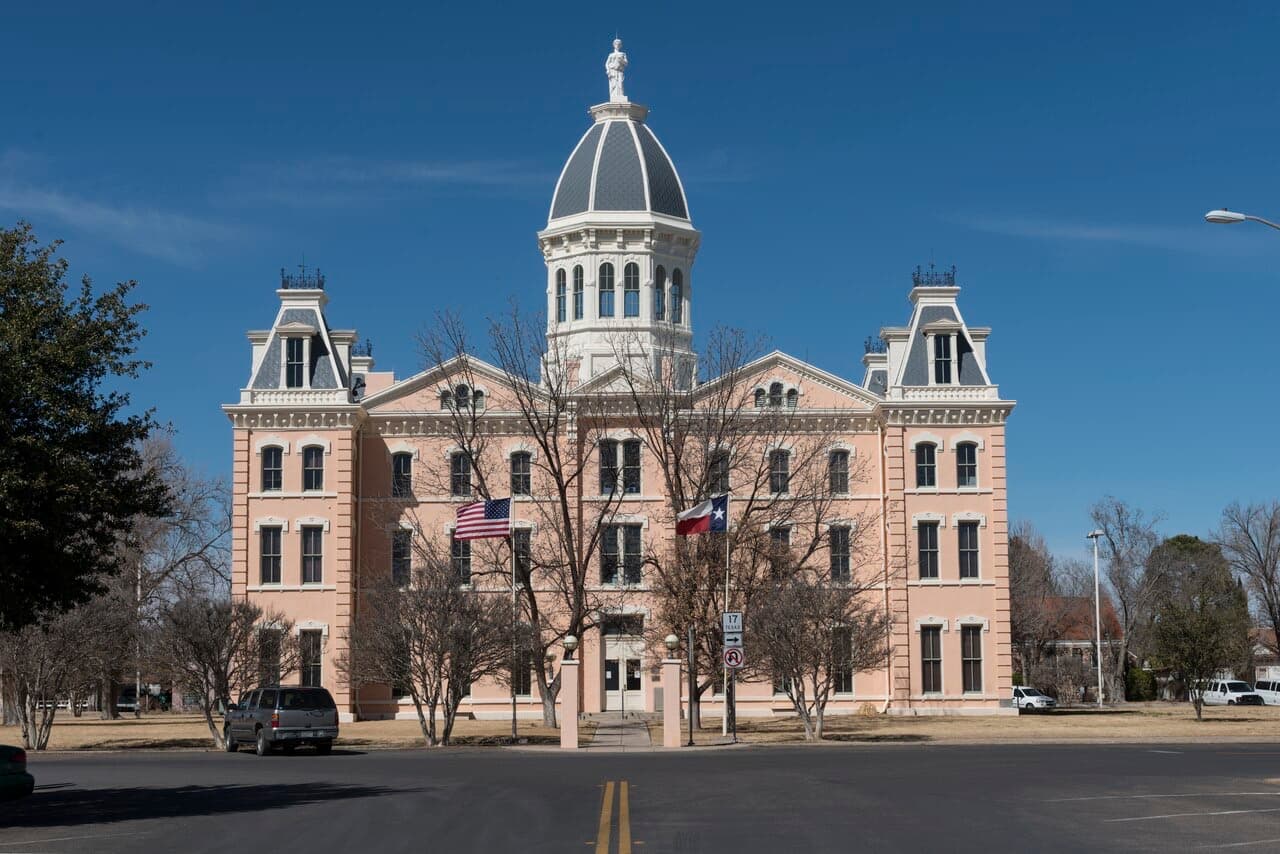
Photo: Carol M. Highsmith via Wikimedia Commons (Public domain)
Marfa is the high-desert cattle town Donald Judd turned into a pilgrimage: the Chinati Foundation's artillery-shed installations, galleries and bookstores at frontier density, food trucks with lines worth their myth, and the unexplained Marfa Lights flickering out on the viewing platform east of town. It is one of the strangest and most photogenic small towns in America, and its rental stock matches, adobes and bungalows renovated to magazine spec.
Be clear-eyed about the map: Marfa is a destination near Big Bend, not a base for it. The park's west entrance is 80-plus minutes away and the Chisos Basin further, which makes daily park commutes a grind. The trip that works is a West Texas loop, Marfa for art and evenings, then a Terlingua-side base for the park days.
What Marfa does better than anywhere else out here is the in-between hours: gallery mornings, the drive out to the Judd works, sunset at the lights platform, and the peculiar pleasure of a town where the grocery store and the art world share a block.
- ·Chinati Foundation tour, booked ahead; it sells out
- ·The Marfa Lights viewing platform after dark
- ·Gallery-and-bookstore circuit downtown
- ·Day-trip the tri-town loop: Fort Davis, Alpine, back by dusk
Marfa is small, popular, and priced accordingly: weekends around Chinati Weekend and festivals book out months ahead, restaurant hours are famously idiosyncratic, and the park is a real drive away. Treat it as its own destination sharing a trip with Big Bend, not as Big Bend lodging.
Alpine
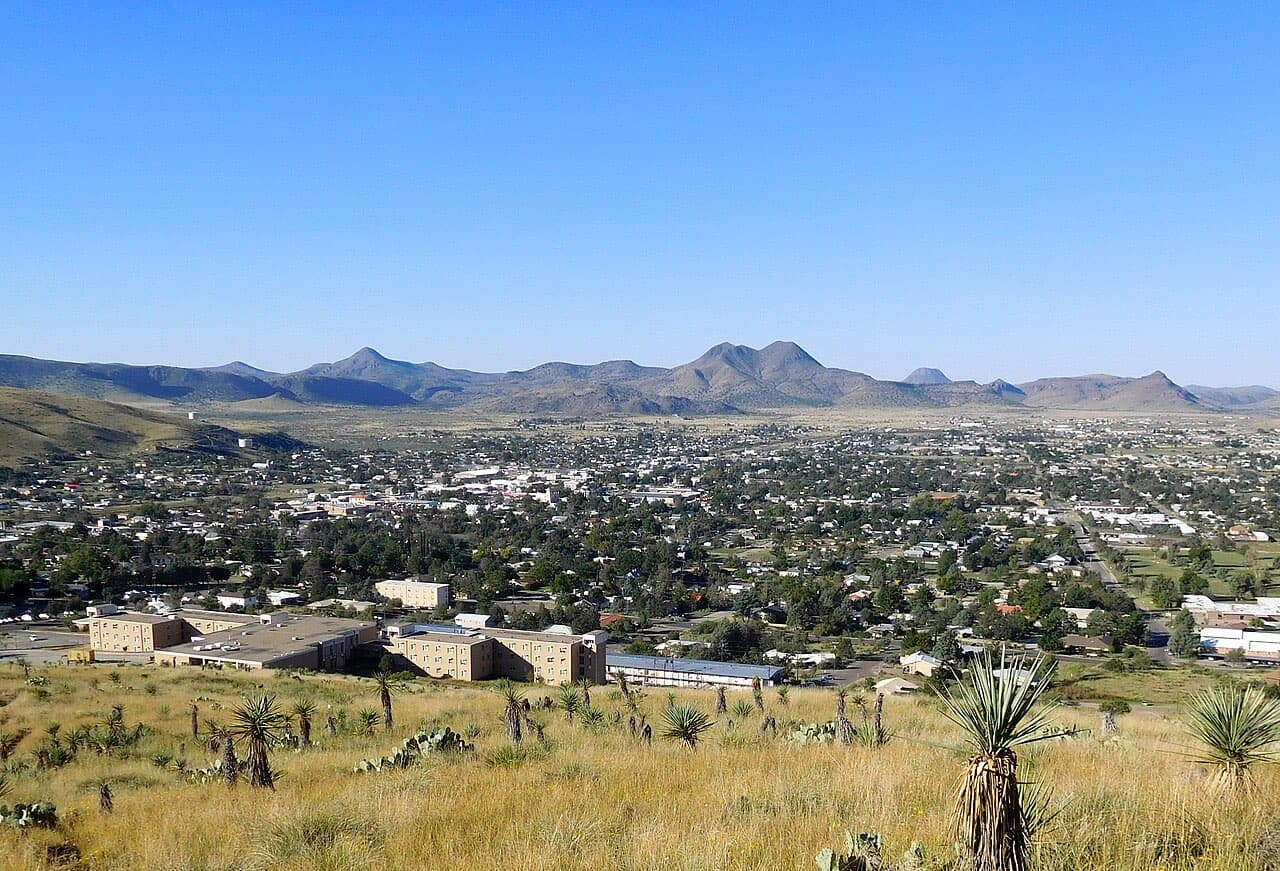
Photo: Patriarca12 via Wikimedia Commons (CC BY 4.0)
Alpine is the biggest town in the Big Bend region and its logistical heart: a real grocery store, a hospital, the Amtrak stop, Sul Ross State University on the hill, and a main street of murals, galleries, and cafes that works without trying to be Marfa. For travelers stitching together the full West Texas loop, it is the base that makes everything else reachable.
The rental market here is the region's value tier: bungalows and ranch houses at prices Terlingua charges for casitas, with actual services attached. Groups mixing park people with non-park people do well in Alpine, since the non-hikers get a walkable town while the hikers stage south.
Alpine also anchors the region's own attractions: the Museum of the Big Bend, the McDonald Observatory's star parties 40 minutes away in the Davis Mountains, and Fort Davis's frontier fort, all easier from here than from anywhere south. In summer, Alpine's mile-high elevation runs noticeably cooler than the desert floor.
- ·McDonald Observatory star party, reserved ahead
- ·Museum of the Big Bend on the Sul Ross campus
- ·Mural walk and cafe circuit downtown
- ·Stage the loop: Marfa 25 minutes west, park 90 south
Alpine is a real town rather than an experience, and the park is a genuine 90-minute commute, too far for more than a day or two of it. Use Alpine as the loop's hub and the value sleep, not as your park basecamp.
Dark Skies, No Services: What Out Here Really Means
The absences are the product. This region holds some of the darkest night skies in the lower 48, Big Bend is a certified dark-sky park, and the towns keep their lights low on purpose, which is why a porch and a blanket outperform any paid activity in West Texas. The same remoteness means the practical stuff is on you: fuel up at every town because stations run 60-plus miles apart, carry more water than feels reasonable, download offline maps before you lose signal, and expect most of the park to have no cell coverage at all.
Timing is the other honesty. October through April is the season; summer on the desert floor regularly tops 100 and compresses hiking into the first hours of daylight. Peak windows, spring break, Thanksgiving through New Year's, and Marfa's festival weekends, book out months ahead across all five bases, because the bed supply out here is genuinely finite. This is the least spontaneous trip in Texas, and the most worth planning.
What It Costs and When to Book
By Texas-destination standards the nightly rates are gentle, Terlingua casitas $150 to $350, Alpine houses from $125, Marfa and Lajitas topping out around $450 to $500, but the booking windows are not. For spring break or the winter holidays, shop 3 to 5 months ahead; for Chinati Weekend in Marfa, longer. The gift seasons are the quiet ones: late April to May and September, when the desert is hot but livable, the towns are yours, and prices ease.
Budget the trip, not just the room: this is a tank-of-gas-a-day region, park entry and Chinati tours are line items, and groceries hauled from Alpine beat resupplying at desert-store prices. The drive is the real cost of Big Bend, which is exactly why it stays this empty and this good.
Big Bend Lodging Questions, Answered Straight
Where do you stay when visiting Big Bend National Park?
+
For park-first trips, base in Terlingua or Study Butte, 15 to 20 minutes from the west entrance; Terlingua for ghost-town character, Study Butte for conventional houses and supplies. Lajitas adds resort comfort 20 minutes further west. Marfa and Alpine are 80-plus minutes out and work as loop stops, not daily park bases.
Is Terlingua or Marfa better?
+
They are different trips sharing a desert. Terlingua is the park's porch: ruins, casitas, river guides, and the Starlight at sunset, with Big Bend 20 minutes away. Marfa is an art-world outpost 80-plus minutes from the park: Chinati, galleries, and design-forward rentals. Park-centric trips pick Terlingua; art-centric trips pick Marfa; the best week does both.
How far is Marfa from Big Bend National Park?
+
About 80 to 100 minutes to the park's west entrance near Study Butte, and further to the Chisos Basin or Rio Grande Village. It is a beautiful drive, but as a daily commute it eats your park hours, which is why most itineraries pair a Marfa stay with separate nights down in the Terlingua area.
When is the best time to visit Big Bend?
+
October through April. Fall and spring bring warm days and cold clear nights; winter is mild by day and genuinely cold after dark. Summer on the desert floor regularly tops 100 degrees and limits hiking to dawn, though the high Chisos and mile-high Alpine run cooler. Spring break and the Thanksgiving-through-New-Year window are the crowd peaks; book those months ahead.
How much does a Vrbo in Terlingua cost?
+
Typical ranges: ghost-town casitas and small houses about $150 to $350 a night, larger Study Butte houses $150 to $400, Lajitas resort-area places $250 to $500, Marfa rentals $200 to $450, and Alpine the value tier at $125 to $300. Peak windows, spring break, Thanksgiving, the winter holidays, and Marfa's festival weekends, run higher and book earliest.
Is there cell service in Terlingua and Big Bend?
+
Assume not. Coverage in Terlingua and Study Butte is carrier-dependent and patchy, and most of the park has none at all. Download offline maps before you leave Alpine, tell someone your hiking plan, and treat any rental's wifi claim as a bonus rather than a promise. The disconnection is half of why people come.
Do you need a 4x4 for Big Bend?
+
No for the classic trip: the park's paved roads, Terlingua, Marfa, and FM 170 are all fine in any car. Yes if you want the backcountry, the River Road through the park's interior, Old Ore Road, and Big Bend Ranch's rough routes want high clearance and real planning. Whatever you drive, fuel up at every opportunity; stations are far apart out here.
Why is the Big Bend area famous for dark skies?
+
The region holds some of the darkest measured night skies in the lower 48, and Big Bend National Park is a certified International Dark Sky Park, with the surrounding communities protecting the darkness by ordinance and habit. On a moonless night the Milky Way casts shadows. A porch, a blanket, and no plans is the best-value activity in West Texas.
Where West Texas sits among the coast, lakes, rivers, and Hill Country.
The halfway-west trip: canyon country you can reach in one tank.
The two-hour version of getting away, when seven hours is too many.
The full menu of escapes, from day passes to desert loops.
Vrbo links on this page are commissionable through the Expedia Group creator program. Your price is unchanged; we earn a small commission on completed bookings.