Austin Gallery
Studio & ToolsJuly 11, 202614 min read

Best Sewing Machines 2026: 9 Picks from $190 to $1,495, Starter to Semi-Industrial

For quilters, garment makers, and textile artists: nine machines ranked by stitch quality, fabric handling, and decade-long durability, from the $189.99 Singer workhorse to Juki's $1,495 studio flagship.

By Justin Park · How we research

If you just want the answer: the Brother CS7000X ($249.99) is the best sewing machine for most people in 2026: 70 stitches, an automatic threader, a quilting table, and a hard case, at a price that has made it the default first machine in every sewing community. On a tighter budget, the Singer Heavy Duty 4411 ($189.99) is the metal-framed workhorse. And at the top, quilters graduate to the Juki TL-2010Q ($1,199.00), a semi-industrial straight-stitch machine, while the Juki HZL-F600 ($1,495.00) is the one-machine studio flagship with factory-grade fabric feeding.

One decision organizes this whole market: computerized or mechanical. Computerized machines (the Brother, the Bernette B38, the Juki F600) give you precise digital stitch control, needle positioning, and conveniences like automatic thread cutting; mechanical machines (the Singers, the Janome HD3000) trade all of that for simplicity, punch, and decades-long service life. The second decision is honesty about your work: quilters need harp space, a wide table, and feeding quality; garment makers need stitch formation and buttonholes; textile artists adding embroidery need a hoop and a design workflow, which is where the Brother SE700 ($545.18) combo earns its place.

We built the ladder from $189.99 to $1,495.00 with quilters, garment makers, and textile artists in mind, the same makers our embroidery kit and rug tufting guides serve. Rankings are based on listed specifications, category research, and the long-running consensus of sewing communities and repair technicians rather than hands-on lab testing. Prices are Amazon listings at the time of writing and move often. Every link below goes to Amazon with our affiliate tag; we earn a small commission, at no cost to you, when you buy through us.

In a Hurry?

The 4 picks that cover most readers. Tap to read the full review or buy direct.

Best Overall

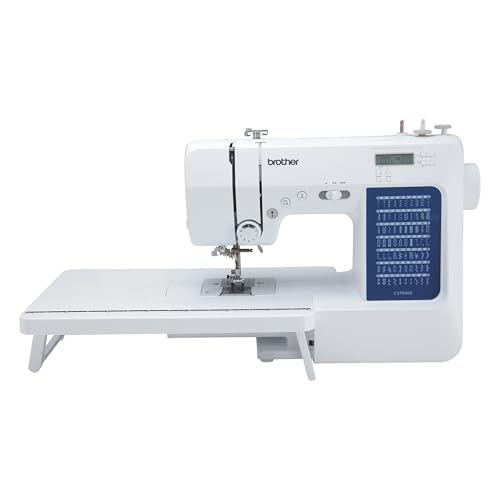
Brother CS7000X

Brother CS7000X

$249.99

70 stitches, quilting table, hard case: the consensus first machine.

Best Under $200

Singer Heavy Duty 4411

Singer Heavy Duty 4411

$189.99

Metal frame, 1,100 spm: the budget machine that sews like one twice the price.

Best for Quilters

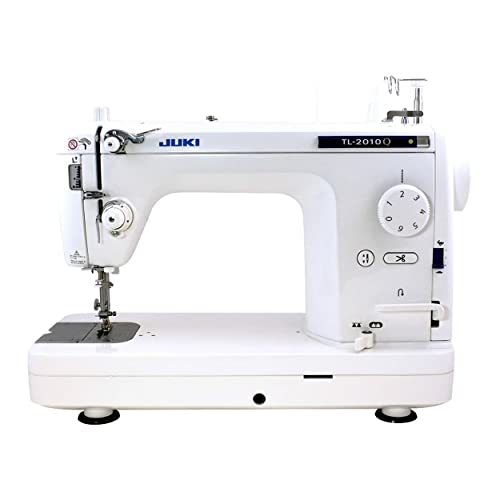
Juki TL-2010Q

Juki TL-2010Q

$1,199.00

Semi-industrial straight stitch: the machine quilters graduate to.

Best Money-No-Object

Juki HZL-F600

Juki HZL-F600

$1,495.00

Industrial box feed plus 225 stitches: the one-machine studio.

Best OverallOur Pick

Type

Computerized

Stitches

70 built-in, 7 one-step buttonholes (listed)

Speed

~850 spm (listed)

Quilting kit

Wide table + walking-foot-friendly

Extras

Auto threader, drop-in bobbin, hard case

Pros

  • 70 stitches, wide table, and hard case at a value price
  • Auto threader and drop-in bobbin are beginner gold
  • The consensus community recommendation for years

Cons

  • Light build vibrates at full speed
  • Not the machine for daily heavy canvas

If you want to read one recommendation and stop, buy the Brother CS7000X. This is the machine sewing teachers point students toward and quilting forums recommend by reflex, because Brother packed the entire on-ramp into one box: a listed 70 stitches covering construction, stretch, quilting, and decorative work; an automatic needle threader that ends the squinting; a drop-in bobbin that resists the jams that make beginners quit; and, the quiet star, a detachable wide table that supports real quilt wrangling.

Computerized means consistent. On a computerized machine, stitch length, width, and buttonholes are set digitally and repeat identically every time, and features like needle up/down positioning and speed limiting become possible. Mechanical machines trade that convenience for durability and simplicity. The head-to-head below tackles the choice directly; the short answer is that most home sewists in 2026 are better served starting computerized.

The honest limits: a light body that hums and shimmies at top speed, and a duty cycle built for home sewing rather than upholstery canvas. Within its lane, which is 90% of what home machines are asked to do, nothing at $249.99 comes close.

Our Pick

The one most people should buy. A listed 70 built-in stitches, automatic needle threading, drop-in bobbin, a wide table for quilting, and a hard case, at a price that embarrasses machines costing twice as much. It is the best-selling machine in America for the simplest reason: it does nearly everything well.

Buy this if you want one machine that grows with you from first hem to first quilt. Beginners get the forgiving essentials (automatic threader, jam-resistant drop-in bobbin, speed slider), improvers get 70 stitches, one-step buttonholes, and a detachable wide table that makes lap quilts genuinely manageable. It is the default recommendation in every sewing community for a reason.

What we don't like

The plastic-bodied build is light, which means some vibration at speed and a machine that will not love daily heavy canvas work; that is what the Janome and Juki below are for. Listed 850 stitches-per-minute is adequate, not fast.

Best Budget WorkhorseBest Under $200

Type

Mechanical

Stitches

11 built-in, 4-step buttonhole (listed)

Speed

~1,100 spm (listed)

Frame

Heavy-duty metal interior frame (listed)

Extras

Accessory kit included

Pros

  • Metal frame and strong motor at the floor price
  • 1,100 spm is faster than machines at twice the price
  • Nothing digital to learn or fail

Cons

  • Only 11 stitches, 4-step buttonhole
  • No automatic needle threader

The Singer Heavy Duty line is the pickup truck of budget sewing, and the 4411 is the base trim that proves the point. What $189.99 buys is structure: a rigid metal interior frame that does not flex when you feed it thick seams, a motor Singer lists as substantially stronger than standard, and a listed 1,100 stitches per minute that outruns everything else on this page short of the Juki. Denim hems, canvas totes, layered repairs: the jobs that stall lightweight machines are this one's diet.

What it does not buy is refinement. Eleven stitches cover the practical bases and no more, the buttonhole is the old four-step dance, and you thread the needle yourself. That spartan sheet is also why there is so little to go wrong. If you want features and finesse, spend $60 more on the Brother CS7000X; if you want a simple hammer that sews fast and shrugs at thick fabric, this is the best sub-$200 machine on Amazon.

Best Under $200

The cheapest machine here that feels like a machine. A metal frame, a listed 1,100 stitches per minute, and a motor Singer rates well above standard, with just 11 stitches and zero computer. For hems, repairs, dog beds, and denim, it is the honest budget buy.

Buy this if your sewing is practical (hems, curtains, repairs, tote bags, the occasional pair of jeans) and you would rather have raw punch than stitch variety. The heavy-duty line's stiff metal frame keeps seams straight at speed, and its simplicity means less to learn and less to break.

What we don't like

Eleven stitches and a four-step buttonhole are genuinely spartan, and there is no automatic threader at this trim level. Loud and vibrating at full speed is part of the personality.

Best Heavy-Duty StarterThe Muscle Pick

Type

Mechanical

Stitches

32 built-in, 1-step buttonhole (listed)

Speed

~1,100 spm (listed)

Frame

Heavy-duty metal interior frame (listed)

Extras

Auto threader, extension table, HD accessories

Pros

  • Heavy-duty frame plus real conveniences
  • Extension table bundled at this price
  • Fast, confident through denim and layers

Cons

  • Loud and vibration-prone at full speed
  • Mechanical dials lack computerized precision

The 4452 is what happens when the pickup truck gets the comfort package. You keep the Heavy Duty essentials (the listed metal frame, the stronger motor, the 1,100 stitches per minute) and add the things daily sewists actually miss on the 4411: an automatic needle threader, a one-step buttonhole, 32 stitches instead of 11, and a set of heavy-duty accessories aimed squarely at thick work. This bundle adds the extension table, which turns wrestling a quilt top or a set of curtains into merely handling them.

At $249.99 it lands on exactly the same price as the Brother CS7000X, and that collision is the most useful comparison in home sewing: the same money buys mechanical muscle here or computerized versatility there. Our full verdict is in the head-to-head below, but the one-line version: fabric-heavy practical sewists take the Singer, everyone else takes the Brother. Either way, this is the strongest version of the mechanical argument at a starter price.

The Muscle Pick

The 4411's fully loaded sibling: 32 stitches, a one-step buttonhole, an automatic threader, heavy-duty accessories, and in this bundle an extension table, at the same $249.99 as our best overall. It is the mechanical counterweight to the Brother, and the head-to-head below settles which philosophy fits you.

Buy this if you want heavy-duty muscle and the conveniences the 4411 strips out. The listed 32 stitches and one-step buttonhole cover garment work, the automatic threader saves your eyes, the included walking-foot-style accessories help with thick layered projects, and the extension table steadies big items like curtains and quilt tops.

What we don't like

Same brute-force personality as every Heavy Duty: loud, vibey at speed, and mechanical stitch selection with no digital precision. Stitch quality on fine, slippery fabrics is workmanlike rather than beautiful.

Best for Garment MakersThe Swiss Apprentice

Type

Mechanical

Stitches

23 built-in, 1-step buttonhole (listed)

Speed

~700 spm class (listed)

Design

Swiss-designed, Bernina entry line

Extras

Semi-auto threader, accessory feet

Pros

  • Noticeably refined stitch quality on garments
  • Swiss design pedigree at an accessible price
  • Simple, durable mechanical operation

Cons

  • Spec sheet trails same-price computerized rivals
  • Modest speed; no hard case included

Every sewing niche has a brand people whisper about, and for garment makers that brand is Bernina; the Bernette B35 is its accessible handshake. The pitch is not features (a listed 23 stitches is half what cheaper machines advertise) but execution: tension that behaves across fabric weights, a stitch that looks as tidy on the wrong side as the right, and controls with the damped, precise feel that Swiss design is famous for. If your projects are worn rather than displayed, those qualities matter more than a stitch menu you will never scroll past.

It is a deliberate machine: moderate listed speed, mechanical dials, no automation beyond a semi-automatic threader. The value question is honest: the $249.99 Brother wins every spec column but the one garment sewists feel every seam. For quilters and dabblers, buy the Brother. For the person making clothes they intend to wear proudly, the B35 at $399.00 is the first machine that sews like the hobby's upper floors.

The Swiss Apprentice

Bernina's entry brand, and it shows where it counts: stitch quality. The B35 is a listed 23-stitch mechanical machine designed in Switzerland with the balanced, even stitch formation garment sewists obsess over, plus a semi-automatic threader and a generous accessory set. Fewer features than rivals; finer seams.

Buy this if you sew clothes and care how the inside of the garment looks. Dressmakers live in straight stitch, zigzag, and buttonholes, executed beautifully on everything from viscose to wool coating, and that narrow excellence is exactly what the B35 offers. It is also the gateway to Bernina presser-foot compatibility and the dealer ecosystem.

What we don't like

On raw spec-per-dollar it loses badly to the Brother: fewer stitches, mechanical controls, no hard case. You are paying for stitch formation and build feel, which is a connoisseur's trade at a beginner's price point.

Austin Art Insider

Free weekly guide to galleries, exhibitions & collecting in Austin.

Best Buy-It-For-Life MechanicalThe Heirloom Workhorse

Type

Mechanical

Stitches

18 built-in, 1-step buttonhole (listed)

Body

Aluminum frame construction (listed)

Extras

Auto threader, hard cover, HD needle set

Service

Simple, technician-friendly mechanics

Pros

  • Repair-shop favorite: built to be serviced, not replaced
  • Aluminum body sews thick fabric with composure
  • No electronics to fail in year eight

Cons

  • Modest 18-stitch menu
  • Durability costs more than features at this price

Ask a sewing machine repair technician what to buy and the conversation gets short: a mechanical Janome, usually this one. The HD3000 is engineered on the old logic: an aluminum body for rigidity, mechanical linkages that a shop can adjust rather than motherboards it can only replace, and tolerances that keep the stitch consistent after years of denim hems and canvas projects. It is the machine for people who noticed that their grandmother's all-metal classic still runs while newer machines cycled through the landfill.

Living with it is refreshingly boring: a listed 18 stitches selected by dial, an automatic threader, a one-step buttonhole, a hard cover, and confident feeding through thick layered seams. What you give up against same-price computerized machines is the entire convenience column: no needle up/down, no speed slider, no stitch memory. That is the deal at $529.00: fewer features than a $250 machine, more machine than a $900 one, and a service life measured in decades.

The Heirloom Workhorse

The machine repair technicians recommend. A listed 18 stitches of pure mechanical reliability in an aluminum-bodied workhorse that sews denim, canvas, and decades of daily projects without complaint. No screen, no motherboard, nothing that ages: the closest thing modern sewing has to a vintage all-metal classic.

Buy this if you want to buy once. The HD3000 is the standard answer when sewists ask repair shops what still gets built properly: an aluminum body, simple serviceable mechanics, and Janome's reputation for tolerances. It is the right machine for daily practical sewing, costume work, home dec fabric, and anyone who distrusts electronics in a tool they want for 25 years.

What we don't like

Eighteen stitches and zero computerization is the whole point, but quilters will miss needle up/down and a bigger stitch menu, and the price buys durability rather than features. It is also not a true industrial: continuous upholstery work still belongs to heavier iron.

Best Sewing + Embroidery ComboTextile Artist Pick

Type

Computerized sewing + embroidery combo

Embroidery field

4x4 in (listed)

Designs

135 built-in + wireless import (listed)

Stitches

103 sewing stitches (listed)

Interface

Color LCD touchscreen

Pros

  • Real embroidery and real sewing in one machine
  • Wireless design transfer and touchscreen editing
  • The consensus entry point for machine embroidery

Cons

  • 4x4 field limits design size
  • Stabilizers and threads add an ongoing budget line

The SE700 is the machine that turns sewists into small businesses. Machine embroidery is the craft world's most requested superpower (names on gifts, logos on merch, labels on quilts, dense decorative stitching on fiber art), and Brother's combo formula delivers it without demanding a dedicated machine: pop off the embroidery unit and a fully modern computerized sewing machine with a listed 103 stitches is underneath. The color touchscreen previews and edits designs, and wireless transfer means downloaded or self-digitized designs load without card readers or cables.

Its boundary is printed on the hoop: a listed 4x4-inch field, which suits monograms, patches, labels, and motifs but forces re-hooping or splitting for jacket backs. Treat that as the tier line it is: outgrowing 4x4 profitably is the sign to graduate to a dedicated embroidery machine. Meanwhile, pair it with our hand embroidery kit guide for the full needlework arsenal. At $545.18, no machine opens more creative doors per dollar on this page.

Textile Artist Pick

Two machines in one box: a full computerized sewing machine plus a real embroidery unit with a 4x4-inch field, a color touchscreen, and wireless design transfer. For textile artists, small makers, and anyone monogramming their way into a side business, it is the category's default and deservedly so.

Buy this if embroidery is part of the plan: personalizing gifts, embellishing quilt labels, stitching patches and merch, or adding machine embroidery to fiber art. You get a listed 135 embroidery designs and 103 sewing stitches, load your own designs over Wi-Fi, and still have a genuinely capable everyday sewing machine when the hoop comes off.

What we don't like

The 4x4-inch listed embroidery field is the format's honest ceiling: bigger designs mean re-hooping or a bigger, far pricier machine. Embroidery also brings its own consumables budget (stabilizer, threads, bobbins) that newcomers should expect.

Best Computerized Step-UpSwiss Tech Pick

Type

Computerized

Stitches

394 built-in incl. alphabets (listed)

Extras

Auto thread cutter, memory, LCD (listed)

Design

Swiss-designed, Bernette flagship line

Speed

~820 spm class (listed)

Pros

  • Automatic thread cutter and deep convenience set
  • Huge stitch library with memory functions
  • Bernina-school stitch quality, computerized

Cons

  • Less US community mindshare than Brother/Janome
  • Quilters eyeing raw power should read the Juki review

Somewhere north of the starter tier, sewing machines stop competing on stitch counts and start competing on the moments between stitches, and that is the B38's territory. The automatic thread cutter (tap a button, both threads trimmed, ready for the next seam) is the feature owners say they cannot go back from. Add programmable needle up/down, settings memory, a knee-lifter option that frees both hands, and the listed 394-stitch library with alphabets, and an afternoon of sewing simply has less friction in it.

Underneath the convenience is the Bernette/Bernina design school: balanced stitch formation and a solid, damped feel that its plasticky price-peers lack. The case against it is contextual rather than intrinsic: Brother and Janome own the US conversation at this tier, and the Juki below offers a very different, rawer kind of excellence for $300 more. But as an all-around computerized machine for the several-projects-a-month sewist, the B38 at $899.00 is the quiet sophisticate of this list.

Swiss Tech Pick

The Swiss take on the fully loaded computerized machine. The B38 is Bernette's flagship: a listed 394 stitches, an LCD with memory functions, automatic thread cutter, knee lifter compatibility, and the stitch quality of the Bernina school, for sewists who have outgrown starter plastic but do not need industrial iron.

Buy this if you sew constantly and want the conveniences that compound: automatic thread cutting at seam's end, needle up/down, memory for stitch settings, and a huge listed stitch library that covers garment construction, quilting, and decorative work. It is the sensible landing spot between the $250 starter tier and four-figure dealer machines.

What we don't like

The name is quiet in the US, so resale and community familiarity trail Brother and Janome, and at this price the Juki TL-2010Q looms one row down for buyers who value power over stitch variety.

Best for Serious QuiltersThe Semi-Industrial

Type

Semi-industrial straight stitch

Speed

~1,500 spm (listed)

Body

Aluminum die-cast (listed)

Quilting

Large harp, knee lifter, thread trimmer

Feed

Industrial-style, walking-foot friendly

Pros

  • Flawless straight stitch through any sane stack
  • 1,500 spm with industrial-grade feeding
  • The quilting community's perennial grail machine

Cons

  • No zigzag or buttonholes at all
  • Heavy, loud, and happily stationary

The TL-2010Q is what happens when a company that builds actual industrial machines makes one for a living room, and refuses to compromise the important part. Juki deleted every stitch but one and spent the entire budget making that one perfect: a listed 1,500 stitches per minute driven through industrial-style feed dogs, tension that holds from muslin to eight layers of denim, and an aluminum body that turns speed into a hum instead of a shake. Quilters call machines like this a grail for a reason: free-motion work on the big listed harp space, with the knee lifter and thread trimmer doing the choreography, feels closer to longarm quilting than to home sewing.

The two-machine strategy is the open secret of serious sewing rooms. Almost no one owns a TL-2010Q alone: it pairs with a modest zigzag machine (the $249.99 Brother above is the classic partner) that handles buttonholes and stretch. Together the pair costs less than one premium dealer machine and out-sews it at both jobs. If your output is quilts, bags, jeans, and home dec, this is the endgame configuration.

At $1,199.00 it is a specialist's purchase and proud of it. For garment-first sewists it is the wrong machine. For quilters, it is the last straight-stitch machine most owners ever buy.

The Semi-Industrial

One stitch, mastered. The TL-2010Q sews straight stitch only, at a listed 1,500 stitches per minute through an aluminum body with industrial-style feeding, a huge harp space, and dead-consistent tension. It is the machine serious quilters graduate to and then keep forever.

Buy this if you quilt seriously or sew heavy materials constantly and you have (or will keep) another machine for zigzag and buttonholes. The single-stitch design is the point: everything (the feed, the tension, the needle system) is optimized for one perfect straight stitch through many layers, with the extended work area and knee lifter that make free-motion quilting a pleasure.

What we don't like

Straight stitch only is a genuine lifestyle commitment: no zigzag, no buttonholes, no stretch stitches. It is also loud in the industrial way and heavy enough that it lives on its table.

Best Money-No-Object All-RounderThe Studio Flagship

Type

Computerized, full-featured

Stitches

225 incl. alphabets (listed)

Feed

Industrial box feed system (listed)

Quilting

Large work area, knee lifter, float function

Extras

Auto threader, thread trimmer, sensor buttonholes

Pros

  • Industrial box feed: flawless fabric handling
  • Genuinely excellent at quilting AND garments
  • Automatic conveniences at every step

Cons

  • Four-figure price with quiet brand cachet
  • Quilting purists can pay less for the TL-2010Q

Most premium home machines are consumer electronics wearing a sewing hat; the HZL-F600 is a factory machine wearing a cardigan. Juki builds a huge share of the world's industrial sewing equipment, and this flagship inherits the technology that matters most from that world: box feed, which moves the feed dogs in a rectangular path so fabric travels flat and un-shifted instead of rocking through an oval. The practical result, owners and reviewers agree, is the thing money is spent to get: identical, unpuckered stitches on silk, stretch, denim, and six-layer quilt sandwiches, without babying.

Who should spend $1,495 on a sewing machine? The one-machine studio. If you quilt and make garments and do decorative work, the F600's listed 225 stitches, wide table, knee lifter, and automatic trimming genuinely replace two machines, and its price undercuts the dealer-brand flagships it competes with by thousands. If you only quilt, buy the TL-2010Q and pocket $296. If you sew occasionally, the $249.99 Brother remains the answer, and we would rather tell you that than upsell you.

With a listed 900 stitches per minute, sensor buttonholes, and Juki's reputation for running decades, the F600 is the ceiling of this guide and the rare flagship that earns the word: the machine a textile artist buys once, then stops thinking about machines.

The Studio Flagship

Juki's industrial DNA in a do-everything computerized body. The HZL-F600 pairs a listed 225 stitches, a box feed system borrowed from Juki's factory machines, a large work area, and automatic everything (threader, cutter, buttonhole sensing) into the one machine on this page with no meaningful weakness.

Buy this if you want a single machine at the top of the home tier: quilters who also make garments, textile artists who ask one machine to do piecing, construction, decorative work, and home dec, and anyone furnishing a serious studio in one decision. The box feed is the differentiator: fabric moves without shifting or shrinking stitches, on chiffon and on canvas alike.

What we don't like

It is a four-figure machine whose name means little outside sewing circles, and buyers who mostly quilt can get Juki's best trick (the feeding and straight-stitch quality) for $296 less in the TL-2010Q, if they accept single-stitch life.

Head-to-Head

How the top picks compare

The two decisions that sort every sewing machine buyer: the philosophy question at $249.99, and the graduation question above $1,000.

Brother CS7000X vs Singer Heavy Duty 4452: Computerized or Mechanical at $249.99?

The identical price makes this the cleanest philosophy test in home sewing.

Brother CS7000X

Brother

Winner

Brother CS7000X

70 stitches, auto features, quilting table: maximum versatility

$249.99
Check Price →
Singer Heavy Duty 4452

SINGER

Singer Heavy Duty 4452

Metal frame, 1,100 spm, extension table: maximum muscle

$249.99
Check Price →

Our verdict

Winner: Brother Brother CS7000X. The Brother wins for most buyers because versatility compounds and muscle is only needed sometimes. Its 70 stitches, digital precision, needle positioning, and quilting table cover every project a developing sewist will attempt for years, and its automatic conveniences keep beginners sewing instead of troubleshooting. The Singer's case is real but narrower: a listed metal frame, a faster 1,100 stitches per minute, and more composure through denim and canvas, all with dial-simple mechanics that will outlive the Brother's electronics. So audit your project list honestly. Mostly quilting, garments, crafts, and variety: Brother, and it is not close. Mostly hems, repairs, bags, home dec, and thick practical fabric: the Singer will feel like the truer tool. Owning both eventually is a well-worn path; starting with the Brother is the better bet.

Buy the Brother

your sewing is varied: quilting, garments, crafts, decorative work.

Buy the SINGER

your sewing is heavy and practical: denim, canvas, repairs, home dec.

Juki TL-2010Q vs Juki HZL-F600: Which Premium Juki for Your Studio?

The single-stitch specialist versus the do-everything flagship, $296 apart.

Juki TL-2010Q

JUKI

Juki TL-2010Q

1,500 spm semi-industrial straight stitch: the quilter's grail

$1,199.00
Check Price →
Juki HZL-F600

JUKI

Winner

Juki HZL-F600

225 stitches plus industrial box feed: no weaknesses

$1,495.00
Check Price →

Our verdict

Winner: JUKI Juki HZL-F600. As the single machine in a studio, the HZL-F600 wins: its listed 225 stitches, sensor buttonholes, and automatic conveniences handle garments, quilts, and decorative work, while its industrial box feed delivers the flat, unpuckered fabric handling that is the whole reason to spend four figures on a Juki. The TL-2010Q beats it at exactly one thing (pure straight-stitch performance at a listed 1,500 spm) and if that thing is your life, meaning piecing and quilting are the overwhelming majority of your sewing, the specialist is $296 cheaper and marginally better at your actual job. The trap to avoid is buying the TL-2010Q as an only machine and discovering you need buttonholes in week two. One machine for everything: F600. A dedicated quilting engine beside an existing zigzag machine: TL-2010Q.

Buy the JUKI

quilting dominates your sewing and you own a zigzag machine already.

Buy the JUKI

you want one premium machine to do everything without compromise.

How we
chose

We ranked sewing machines on what determines daily satisfaction and decade-long ownership, drawing on listed manufacturer specifications, sewing community consensus, and the consistent testimony of repair technicians:

  • Stitch quality over stitch quantity. A machine that forms one balanced, consistent stitch on varied fabrics beats one advertising 200 mediocre ones. This lens is why the Bernette and Juki machines rank where they do despite quieter spec sheets.
  • Feeding and fabric handling. How a machine moves fabric (standard feed dogs, walking-foot friendliness, or Juki's industrial box feed) decides puckering, shifting, and thick-seam behavior, and separates the tiers of this list more than any other spec.
  • Duty matched to maker. Quilters, garment sewists, and textile artists stress different parts of a machine. We matched each pick to its real constituency and said plainly when a cheaper pick serves a given maker better.
  • Serviceability and lifespan. We weighted metal frames, mechanical simplicity, and repair-shop reputation (the Janome HD3000's calling cards) against the convenience of electronics, and flagged where each philosophy wins.
  • Honest value laddering. Every step up the price ladder must buy a capability the previous rung lacks: muscle at $190, versatility at $250, stitch refinement at $399, longevity at $529, embroidery at $545, convenience at $899, and industrial performance at $1,199 and $1,495.

Share this guide

Share

Common Questions

Frequently Asked Questions

Have art
to sell?

Austin Gallery specializes in selling inherited art, estate collections, and fine art with zero upfront fees. Get a free evaluation today.