Austin Gallery
Home & KitchenJuly 22, 202615 min read

Best Rice Cookers 2026: Zojirushi to the $37 Aroma

Eleven machines across the category's three real technology tiers: the Neuro Fuzzy consensus king, the $89.99 Cuckoo that captures most of the magic, Korea's pressure flagship for the other texture tradition, and honest budget picks from $28.99. Every price verified in stock.

By Justin Park · How we research

Which Rice Cooker Should You Actually Buy?

Your situationBuy thisPrice
Rice is a staple, you want the consensus bestZojirushi Neuro Fuzzy 5.5-Cup$265.96
Smart cooking at a sane priceCuckoo 6-Cup Micom$89.99
Rice is a weekly side, keep it cheapAroma Digital 4-Cup$36.97
Dinner and rice from one machineTiger JBV with Tacook$109.99
Korean textures and serious brown riceCuckoo Twin Pressure Induction$354.49
The absolute texture ceilingZojirushi Induction 5.5-Cup$419.95
Cooking for one or two, simplyZojirushi 3-Cup Classic$55.99
Feeding a crowd on a budgetAroma 20-Cup Digital$39.99

Rice cookers are the clearest example in the kitchen of a category where the technology tiers are real: thermostat machines that boil until done, micom machines that think, and induction and pressure flagships that produce rice the lower tiers physically cannot. This guide covers eleven machines across all three tiers, Japanese, Korean, and American brands, every one verified in stock at a real price.

The one-line version: the Zojirushi Neuro Fuzzy ($265.96) is the best rice cooker for households where rice is a staple, the Cuckoo 6-Cup Micom ($89.99) is the value pick that gets you most of the way there, and the $36.97 Aroma is the honest answer for weekly-side kitchens. Every link goes to Amazon with our affiliate tag; we earn a small commission, at no cost to you, when you buy through us.

Finishing the counter? The air fryer guide, blender guide, and toaster oven guide cover the rest of the modern kitchen's countertop lineup.

In a Hurry?

The 3 picks that cover most readers. Tap to read the full review or buy direct.

Best Overall

Zojirushi Neuro Fuzzy

Zojirushi Neuro Fuzzy

$265.96

The two-decade consensus pick, still uncontested at its job.

Best Value

Cuckoo 6-Cup Micom

Cuckoo 6-Cup Micom

$89.99

Real fuzzy-logic rice at a third of flagship money.

Best Budget

Aroma Digital 4-Cup

Aroma Digital 4-Cup

$36.97

America's best-seller: honest rice, delay timer, $37.

Best OverallOur Pick

Capacity

5.5 cups uncooked, 1.0L

Logic

Neuro fuzzy: adjusts heat and time per batch

Menus

White, sushi, porridge, sweet, brown, semi-brown

Keep warm

Extended, genuinely holds 12 to 24 hours

Pros

  • The best white rice a non-induction machine makes
  • Keep-warm that actually keeps rice good
  • Decades-long durability reputation

Cons

  • 45 to 60 minute standard cycle
  • Serious money for a single-purpose appliance

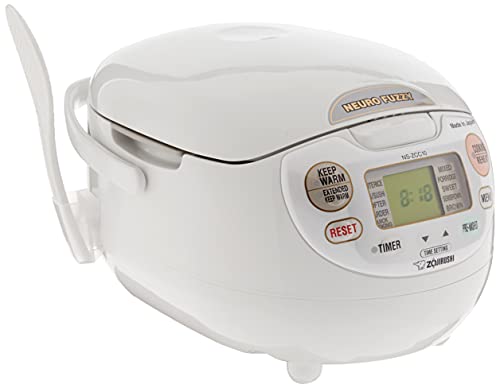
Some appliances have fans; the Neuro Fuzzy has a two-decade consensus. Ask a Japanese grandmother, a food scientist, and an internet forum to name one rice cooker and this is the machine all three land on. The reason is what fuzzy logic actually does: instead of running a fixed program, it measures how this batch, this water, this quantity is behaving and adjusts temperature and timing continuously, the way an attentive cook would. The result is rice with distinct, glossy, fully cooked grains, every batch, for years.

Why rice people spend this much: for a rice-staple household, the cooker touches more meals than any other appliance in the kitchen. At five batches a week, the Neuro Fuzzy costs about a dime a batch over a decade, and Zojirushis routinely outlast the decade. Cost per perfect batch is the honest math, and it is tiny.

The trade is time: great rice wants soaking and steaming, and this machine refuses to skip them (a quicker setting exists and is fine, not transcendent). If dinner-speed matters more than the last ten percent of texture, the $89.99 Cuckoo below is the value answer, and the induction Zojirushi above it is where the last ten percent itself lives. The head-to-head against Korea's pressure-cooking champion further down is the category's best rivalry.

Our Pick

The most recommended rice cooker on earth, and after two decades the consensus still holds. Fuzzy logic that adjusts heat and timing as the batch actually cooks, a keep-warm that holds rice fresh for a day, and per-grain consistency that makes white rice taste like a different food. The forever appliance of the rice world.

Buy this if rice is a staple, not a side: households cooking rice several times a week, short-grain devotees, anyone who has eaten rice from one of these at a friend's house and quietly resented their own machine since. Settings for white, sushi, porridge, sweet, semi-brown, and brown rice all deliver, and the extended keep-warm genuinely works overnight.

What we don't like

It is slow by design, forty-five minutes to an hour for regular white rice, because the soak and steam phases are where the quality comes from (the quick setting trades some of it back). And $265.96 for a rice-only appliance is a values statement your household either shares or does not.

Best Value MicomBest Under $100

Capacity

6 cups uncooked, 12 cooked

Logic

Micom fuzzy logic, multi-menu

Pot

Premium nonstick inner pot

Origin

Korea's leading rice cooker brand

Pros

  • True fuzzy-logic cooking under $90
  • Family-size capacity, quality inner pot
  • The best rice-per-dollar ratio in this guide

Cons

  • Keep-warm trails the Zojirushi standard
  • Chatty by default

The most useful thing to know about the rice cooker market is that the middle is where the value lives, and Cuckoo owns the middle. Below about fifty dollars, machines boil water until a thermostat clicks, one program, take it or leave it. The Cuckoo's micom brain is the real technology tier: it soaks, adjusts, steams, and rests, and the rice it makes belongs to the same species as the Zojirushi's, distinct grains, proper texture, no crusty bottom layer unless you ask for one.

Whether the Neuro Fuzzy is worth three times the price is the fairest question in this guide, and the honest answer is: for daily-rice households, over a decade, probably yes; for everyone else, this is ninety dollars extremely well spent, and the remaining $176 buys a lot of good short-grain rice. Pair it with the counter builds in our air fryer and blender guides and the whole kitchen upgrades for what the flagship alone costs.

Best Under $100

Korea's biggest rice cooker brand at its sweet spot: real micom fuzzy-logic cooking, multiple grain programs, and Cuckoo's excellent nonstick inner pot, for under ninety dollars. The gap to the $266 Zojirushi is real but far smaller than the price gap, which makes this the smart-money pick.

Buy this if you want genuinely smart rice cooking, not a dumb boil-and-switch, at a defensible price. The micom brain handles white, brown, and porridge properly, the 6 cup capacity fits families, and Cuckoo's build quality has earned Korean-market loyalty that rivals Zojirushi's Japanese standing.

What we don't like

The voice announcements are enthusiastic (they can be turned down), the keep-warm is good rather than legendary, and against the Neuro Fuzzy's texture ceiling it finishes a clear but honorable second.

Best BudgetThe $37 Workhorse

Capacity

4 cups uncooked, 8 cooked

Programs

White, brown, steam, delay timer

Extras

Steam tray included

Claim

America's best-selling rice cooker line

Pros

  • Everything a casual rice household needs for $37
  • Delay timer and steam tray at the price floor
  • Compact, simple, proven at massive scale

Cons

  • Texture ceiling well below micom machines
  • Thin inner pot, hand-wash it

Millions of American kitchens make their rice in this exact machine, and the crowd has a point. The Aroma does the whole basic job: measure, rinse, press white or brown, come back to cooked rice and a warm holding mode, with a delay timer that makes weeknight logistics work and a steam tray that quietly cooks the broccoli above the rice. At $36.97 it is one of the highest utility-per-dollar appliances anywhere in the kitchen.

What it does not do is the micom magic: no adaptive soak, no per-batch adjustment, and you taste the difference most in brown rice and in leftovers, where the Cuckoo and Zojirushi tiers pull away. Our head-to-head below runs the Aroma against the Tiger to answer the real question, does three times the money buy three times the rice, with a more interesting answer than you might expect.

The $37 Workhorse

America's best-selling rice cooker for a reason: $36.97 buys digital controls, white and brown programs, a steam tray, a delay timer, and rice that is reliably good if never poetic. The definition of the honest budget appliance.

Buy this if rice is a weekly side rather than a daily staple, or it is your first rice cooker and you are calibrating how much you care. The delay timer means rice finishes when you get home, the steam tray cooks vegetables above the rice, and the whole thing costs less than two takeout orders.

What we don't like

This is thermostat-plus-timer cooking, not fuzzy logic: results are consistent but the texture ceiling is visibly lower, brown rice especially. The nonstick pot is thin and wants gentle washing to last.

Best Mid-Range JapaneseThe Dependable

Capacity

5.5 cups uncooked

Logic

Micom multi-program

Tacook

Synchronized steam tray for mains

Brand

Japan's other century-old rice name

Pros

  • Japanese micom quality near $100
  • Tacook steams dinner above the rice
  • Tiger durability record

Cons

  • Half-step below Zojirushi texture
  • Utilitarian design and labeling

Tiger has been making rice equipment in Japan for over a century, and the JBV is its argument that great rice should not require flagship prices. The micom cooking is genuinely good, closer to the Zojirushi than the price suggests, and the Tacook system is the feature that earns the counter spot: a BPA-free tray sits above the rice, and the same steam cycle that cooks the grain cooks the chicken, fish, or vegetables above it. Rice-plus-protein from one button is a legitimate weeknight superpower.

Against the $89.99 Cuckoo it is a coin flip on rice and a preference call on features: Tacook meal-cooking versus Cuckoo's slightly better pot and price. Against the $37 Aroma, the head-to-head below settles it properly. For the household that wants one machine to quietly make dinner rather than just its starch, this is the specialist.

The Dependable

Japan's other legendary rice brand at its most practical: real micom cooking, Zojirushi-adjacent quality, and the clever Tacook tray that steams a protein or vegetables above the rice while it cooks, one machine producing dinner's two halves simultaneously.

Buy this if you want Japanese-tier rice with an extra trick: the Tacook synchronized-cooking plate turns the cooker into a one-button meal machine, chicken and rice, salmon and rice, from one cycle. Micom logic covers white, brown, and porridge properly at a hundred-dollar street price.

What we don't like

The keep-warm and texture ceiling sit a visible half-step below the Neuro Fuzzy, and the Tacook workflow has a learning curve of a few meals. Menu labels are small and the aesthetic is pure function.

Best Induction FlagshipThe Ceiling

Heating

Full induction, whole-pot even heat

Capacity

5.5 cups uncooked

Logic

Fuzzy logic on top of induction

Menus

White, sushi, brown, GABA brown, more

Pros

  • The most even, refined rice a home machine makes
  • GABA brown and full specialty menu
  • Flagship Zojirushi build and longevity

Cons

  • $419.95 is enthusiast-only money
  • Refinement over the Neuro Fuzzy is subtle

Every heat-plate rice cooker, even the great ones, cooks slightly unevenly, hotter at the bottom, and induction is the engineering answer. The NP-HCC10XH turns the whole inner pot into the heating element, so the batch cooks as one uniform mass: no gradient, no bottom firmness, each grain at the same doneness as its neighbors. Stack it with fuzzy logic on top and you have the best rice a countertop machine currently produces.

The buying truth is that this is an enthusiast purchase in the exact way flagship espresso machines are, and our espresso guide makes the same argument at the same tier: past the consensus pick, money buys increments that only devoted palates cash. The Neuro Fuzzy at $154 less is the rational stop for nearly everyone; this is for the households where rice is the meal's soul and the increment is the point.

The Ceiling

The texture ceiling of the category: induction heating warms the entire pot as one surface instead of pushing heat up from a bottom plate, and the evenness shows in every grain. If the Neuro Fuzzy is the consensus, this is what the consensus upgrades to.

Buy this if rice is central enough to your table that the difference between excellent and perfect is worth $154: multi-generational rice households, short-grain perfectionists, people who notice the bottom-versus-top texture variance in plate-heated machines and are bothered by it.

What we don't like

It is $419.95 for rice, the cycle is as unhurried as every serious Zojirushi, and below the daily-staple threshold the induction advantage is a refinement most palates will not isolate. The gray finish is handsome; the price is the price.

Best Korean PressureThe Rival Crown

Heating

Induction plus twin pressure system

Capacity

6 cups uncooked

Brown rice

Pressure-cooked, dramatically better

Modes

Pressure and no-pressure per batch

Pros

  • Pressure texture Japanese machines cannot make
  • Transforms brown rice completely
  • Choose fluffy or chewy batch by batch

Cons

  • Gasket and valve cleaning is real upkeep
  • Deepest learning curve in this guide

Japan and Korea disagree about perfect rice, and the disagreement is mechanical. Japanese flagships cook at atmospheric pressure for distinct, upright grains; Korean flagships cook under pressure for a denser, glossier, subtly sweeter bowl, and each country's machines are optimized for its answer. The Cuckoo Twin Pressure is the Korean answer at full strength: induction evenness underneath, twin-pressure control on top, and a brown-rice program that produces the single biggest quality jump any machine in this guide offers over its budget rivals.

The head-to-head against the Neuro Fuzzy below is the category's real title fight, and it genuinely comes down to which texture tradition owns your palate. The practical notes: budget cleaning minutes for the pressure hardware, and give yourself a week with the manual, this machine has depth the Zojirushi deliberately avoids.

The Rival Crown

Korea's flagship philosophy in full: induction heat plus switchable pressure cooking that makes rice the Japanese machines structurally cannot, glossier, chewier, sweeter, and turns brown rice from a compromise into a first choice. The Zojirushi's only true rival.

Buy this if your rice ideal runs Korean or you eat serious brown rice: pressure cooking gelatinizes the grain more completely, producing the lush, slightly chewy texture Korean households prize and cutting brown rice to white-rice cook times with far better results. Twin pressure lets you choose fluffy or chewy per batch.

What we don't like

More moving parts than any Zojirushi, gaskets and pressure valves that want actual cleaning, and the interface's depth takes a manual-reading weekend. Voice guidance, again, is enthusiastic.

Austin Art Insider

Free weekly guide to galleries, exhibitions & collecting in Austin.

Best Feature Set Under $90The Modern Mid

Capacity

10 cups uncooked, party scale

Pot

Ceramic-coated, PFAS-conscious

Functions

18, rice through slow cook

Keep warm

24 hours

Pros

  • Ceramic pot for the nonstick-averse
  • Big 10 cup capacity at $89.99
  • Multi-grain and multi-function flexibility

Cons

  • Rice texture below the true micom tier
  • Control panel busier than the job requires

Cosori builds appliances the way software companies build apps, fast iterations, modern materials, feature checklists, and its rice cooker is exactly that product. The ceramic pot answers the nonstick question the legacy brands mostly have not, the capacity is genuinely large, and the function spread makes it the multi-tool of this guide: quinoa Monday, steel-cut oats Tuesday, a soup held warm Wednesday.

The comparison to hold in mind is the Cuckoo at the same $89.99: the Cuckoo makes meaningfully better rice; the Cosori makes more different things and makes them in a ceramic pot. Rice-first households should take the Cuckoo without hesitation. Households where rice shares the rotation with grains and batch cooking, and where the pot's chemistry matters, have found their machine, and its air fryer sibling at the top of our air fryer guide makes the brand case well.

The Modern Mid

The kitchen-brand challenger: 10 cup capacity, 18 functions, a 24 hour keep-warm, and a ceramic-coated pot that skips conventional nonstick chemistry, from the same company whose air fryer tops our other guide. Not a rice specialist, and a very good generalist.

Buy this if you want big capacity and modern materials at the Cuckoo's price: the ceramic inner pot is the draw for nonstick-averse households, the 10 cup size handles meal prep and gatherings, and the 18 programs cover grains, oatmeal, soup, and slow-cook duty beyond rice.

What we don't like

Rice purism is not the mission: texture lands between the Aroma and the true micom tier rather than beside the Cuckoo. Eighteen functions also means a busier control panel than a rice-first machine needs.

Best Small SimpleThe Little Classic

Capacity

3 cups uncooked

Control

Single-switch simplicity

Keep warm

None, serve on finish

Build

Classic Zojirushi quality

Pros

  • Zojirushi calibration at $55.99
  • Perfect single-person and couple size
  • Decades-proven simple mechanism

Cons

  • No keep-warm mode
  • One program, white rice is the specialty

Before fuzzy logic, Zojirushi got famous by calibrating simple machines better than anyone, and this little cooker is that era still on sale. One switch, a properly engineered thermostat, a quality pot, and white rice that embarrasses digital machines twice its price, at a scale built for the households every other rice cooker ignores: one person, two people, a small apartment, a desk-side office kitchen.

The no-keep-warm quirk is the honest limitation: this machine believes rice should be eaten when ready, which is either charming or disqualifying depending on your schedule. For solo cooks assembling a first real kitchen, this plus picks from our toaster oven guide covers a lot of life per dollar; for set-it-at-noon households, the Aroma's delay timer is the better bet at twenty dollars less.

The Little Classic

Zojirushi's one-switch classic: no fuzzy logic, no menu, just the brand's build quality and heat calibration in a tiny single-person machine that has been quietly perfect for decades. The best small-batch rice under sixty dollars.

Buy this if you cook one to three cups for one to two people and want Zojirushi reliability without Zojirushi flagship pricing. The single lever does white rice extremely well for a non-micom machine, the size lives happily on any counter, and the included steam tray earns its slot.

What we don't like

One program means brown rice and specialty grains are approximations, and there is no keep-warm mode at all, rice wants serving when it finishes. Small households only; three cups uncooked is the hard ceiling.

Best Simple WorkhorseThe Restaurant Trick

Capacity

5.5 cups uncooked

Control

Single lever, zero electronics

Keep warm

Proper multi-hour hold

Pedigree

The small-restaurant standard

Pros

  • Restaurant-proven thermal engineering
  • Nothing digital to fail, ever
  • Excellent white rice and real keep-warm

Cons

  • White rice only, effectively
  • Costs micom money without micom menus

Walk into a family-run restaurant's kitchen and odds are good a Tiger JNP is steaming in the corner, because businesses that cook rice a hundred times a week choose differently than spec sheets do. They choose the machine with no board to fry, no buttons to wear, a heat design refined across decades, and a keep-warm that holds service-quality rice through a dinner rush. That machine is this one, in the home size.

The philosophical opposite of the Cuckoo flagship's depth, the JNP is a bet that one thing done perfectly beats twelve things done well, and for white-rice-centric households it pays off daily. If your table wants brown rice, porridge, or grain diversity, spend the same money on the micom Tiger or the Cuckoo; if it wants white rice reliably forever, this is the last cooker you will buy.

The Restaurant Trick

The machine you have eaten from without knowing it: Tiger's conventional JNP line is the quiet standard of small restaurants everywhere, a one-lever cooker whose thermal engineering is so dialed that it beats most digital machines while outliving all of them.

Buy this if you want maximum reliability with minimum interface: no menus, no firmware, no beeping, just a lever, a legendary thermal design, and a keep-warm that holds properly for hours. This is the buy-it-once pick for people who find the Neuro Fuzzy's electronics to be a liability rather than a feature.

What we don't like

White rice is the entire repertoire, brown rice merely happens rather than succeeds, and $134.99 for a one-trick machine only makes sense once you understand the trick is done perfectly, forever.

Best Big-Batch BudgetThe Crowd Feeder

Capacity

10 cups uncooked, 20 cooked

Modes

Rice, slow cook, steam, delay timer

Mission

Crowds and meal prep

Price

$39.99

Pros

  • Crowd-scale capacity for $39.99
  • Slow-cook and steam bonus modes
  • Same proven Aroma simplicity

Cons

  • Big batches want serious fluffing
  • Bulky for everyday small cooking

Some rice math is just volume math: six people, or five lunches, or one potluck, and suddenly capacity beats refinement. The big Aroma is the value answer to that math, twenty cooked cups from a machine costing less than the groceries going into it, with a delay timer for logistics and a slow-cook mode that moonlights on chili duty.

Texture expectations should match the price tier, and big batches amplify the basic-thermostat evenness limits, fluff from the bottom and it is fine. The upgrade path for crowd cooks who catch the quality bug is the Cuckoo's 6 uncooked cups or, at the top, the Korean pressure flagship. But for feeding many people well on a real budget, this is forty dollars doing the work of a catering line.

The Crowd Feeder

Twenty cooked cups for forty dollars: the potluck, meal-prep, and big-family machine. Same honest Aroma cooking as its smaller sibling, doubled capacity, plus slow-cook and steam modes that make it a legitimate multi-tool at the price of a pizza night.

Buy this if your rice events are measured in people rather than cups: weekly meal prep, church potlucks, a six-person household, taco night for the team. The 10 cup uncooked capacity feeds a crowd from one cycle, and the delay timer and steam functions carry over from the line.

What we don't like

Big cheap batches cook less evenly than small ones, expect to fluff thoroughly, and the same thermostat-tier texture ceiling applies. It is also a large object for a kitchen that only occasionally cooks large.

The Absolute FloorBest Under $30

Capacity

3 cups uncooked, 6 cooked

Control

One switch, cook and warm

Extras

Steaming basket included

Price

$28.99

Pros

  • A working rice cooker for under $30
  • Steaming basket included
  • Simple enough for any shared kitchen

Cons

  • Bottom-crust and dry-edge tendencies
  • The texture floor of this guide

Every guide needs its floor marked honestly, and in rice cookers the floor is a $28.99 machine that genuinely works. Rinse, add water to the line, click the lever: what comes out is real cooked rice, better than most stovetop attempts and infinitely better than none, with steamed vegetables riding above if you use the basket. For a dorm kit built from our dorm essentials guide, or any kitchen where the rice budget is lunch money, it is the right buy.

Knowing the floor also calibrates the ladder: eight dollars more buys the Aroma's digital brain and delay timer, sixty more buys the Cuckoo's genuinely different rice, and the tiers above that are for households where rice is identity, not just starch. Start where your rice life actually is.

Best Under $30

The one-switch floor of the category: $28.99, a lever, a light, a steaming basket, and cooked rice twenty-five minutes later. Zero sophistication, zero pretense, and for dorms, offices, and first kitchens, zero problem.

Buy this where the mission is simply cooked rice at minimum spend: student kitchens, break rooms, RVs, a backup for the machine that died on taco night. The 3 cup uncooked capacity covers two to four servings and the included basket steams vegetables over the batch.

What we don't like

This is boil-and-click cooking with everything that implies: a bottom layer that toasts if you linger, keep-warm that dries the pot's edges over an hour, brown rice on hard mode. The floor is the floor.

Head-to-Head

How the top picks compare

The two matchups that define the category: the Japan-versus-Korea title fight at the top, and the does-three-times-the-money-matter question at the bottom.

Zojirushi Neuro Fuzzy vs Cuckoo Twin Pressure: The Title Fight

Japan's atmospheric consensus against Korea's pressure flagship, $89 apart.

Zojirushi NS-ZCC10 Neuro Fuzzy

Zojirushi

Winner

Zojirushi NS-ZCC10 Neuro Fuzzy

The fluffy, distinct-grain Japanese ideal, perfected

$265.96
Check Price →
Cuckoo Twin Pressure Induction

CUCKOO

Cuckoo Twin Pressure Induction

Pressure textures and transformed brown rice Japan's machines cannot make

$354.49
Check Price →

Our verdict

Winner: Zojirushi Zojirushi NS-ZCC10 Neuro Fuzzy. The Zojirushi wins the general recommendation because its ideal, glossy, distinct, fluffy grains, matches what most American tables mean by perfect rice, and because it delivers that ideal with less money, less maintenance, and no learning curve: no gaskets to scrub, no pressure valves, no manual weekend. The Cuckoo wins two specific and important cases outright: households whose palate runs to Korean cuisine's denser, chewier bowl, where the pressure texture is not a variant but the point, and serious brown rice eaters, for whom pressure cooking is a genuine transformation rather than an upgrade. The honest tiebreaker is your pantry: mostly short-grain white for Japanese and general dinners, buy the Zojirushi; a rotation heavy on brown rice or Korean meals, the Cuckoo repays its premium and its upkeep. Nobody loses this fight; you just have to know which rice you actually eat.

Buy the Zojirushi

your ideal bowl is fluffy and distinct, and zero-maintenance matters.

Buy the CUCKOO

Korean textures or frequent brown rice define your table.

Aroma Digital vs Tiger JBV: Does 3x the Money Buy 3x the Rice?

The $37 best-seller against the $110 Japanese micom, and where the gap really lives.

Aroma Digital 4-Cup

AROMA

Aroma Digital 4-Cup

Everything a casual rice kitchen needs, at the floor price

$36.97
Check Price →
Tiger JBV-A10U Micom with Tacook

Tiger

Winner

Tiger JBV-A10U Micom with Tacook

Real micom cooking plus one-cycle rice-and-main meals

$109.99
Check Price →

Our verdict

Winner: Tiger Tiger JBV-A10U Micom with Tacook. The Tiger wins, but not three times over, and the shape of the gap is the useful finding. On plain white rice eaten fresh, the two are closer than the prices suggest; the Aroma is genuinely fine. The Tiger pulls away everywhere else: brown rice (micom staging turns the Aroma's dense results into something worth choosing), leftovers and keep-warm (micom rice reheats and holds dramatically better), consistency across batch sizes, and the Tacook tray cooking a protein above the rice, which effectively replaces a second pan every weeknight. So the answer to the money question: casual, white-rice, eat-it-fresh kitchens keep the $73 and buy the Aroma with confidence; households eating rice three-plus times a week, eating brown rice, or living off leftovers cross the micom line and never come back. Frequency, not snobbery, is the variable.

Buy the AROMA

rice is a fresh-eaten weekly side and $37 should cover it.

Buy the Tiger

rice runs three-plus nights a week, or brown rice and leftovers are life.

How we
chose

How we picked eleven machines from a category spanning $29 to $420:

  • Technology tiers made explicit. The thermostat, micom, and induction-pressure tiers produce objectively different rice, so we organized the guide around them and picked the best machine at each, rather than pretending a $29 switch machine competes with fuzzy logic.
  • Rice traditions respected. Japanese atmospheric and Korean pressure machines are optimized for different ideals, not ranked on one scale. We picked the flagship of each tradition and explained the fork honestly.
  • Staple-frequency framing. Every recommendation names the rice life it fits, daily staple, weekly side, crowd cooking, solo bowls, because the right spend tracks how many meals the machine touches, not appliance enthusiasm.
  • Verified live prices and stock. Every product was checked against Amazon's live catalog data at publish time: real price, in stock, real product images. No list-price fiction.
  • Longevity and upkeep counted. Zojirushi and Tiger's decade-plus records, Cuckoo's gasket maintenance reality, and thin budget pots all factored into the recommendations as owning costs, not footnotes.

Share this guide

Share

Common Questions

Frequently Asked Questions

Have art
to sell?

Austin Gallery specializes in selling inherited art, estate collections, and fine art with zero upfront fees. Get a free evaluation today.