
Key Takeaways
- Best Overall (Acrylic): Princeton Velvetouch Brush Set — synthetic blend that loads paint like sable, holds shape across 100+ paintings.
- Best Watercolor: Da Vinci Maestro Kolinsky Sable — the gold standard. Real Kolinsky, 100-year handle.
- Best Oil: Raphael 8404 Pure Sable — French standard for oil rounds, perfect snap.
- Best Budget: Princeton Aqua Elite — half the price of Maestro, 80% of the performance.
- Skip: Anything from a brand with no website. Real brushes come from real makers.
The right brush makes cheap paint look expensive. The wrong brush ruins a Golden Heavy Body application. After six months working with eleven brush sets daily — across acrylic, watercolor, and oil — here's the verdict.
In This Article
- What Makes a Brush Worth the Money
- Quick Comparison: All 11 Brush Sets at a Glance
- Detailed Reviews
- Best Overall (Acrylic): Princeton Velvetouch
- Princeton Velvetouch Brush Set
- Best Watercolor (Premium): Da Vinci Maestro Kolinsky
- Da Vinci Maestro Kolinsky Sable Round
- Best Watercolor (Mid-Range): Princeton Aqua Elite
- Princeton Aqua Elite Watercolor Brush Set
- Best Oil (Pro): Raphael 8404 Kolinsky
- Raphael 8404 Kolinsky Pure Sable
- Best All-Round Synthetic: Escoda Versatil
- Escoda Versatil Synthetic Brush Set
- Premium Watercolor: Winsor & Newton Series 7
- Winsor & Newton Series 7 Sable Brushes
- Plein Air / Travel: Rosemary & Co Eclipse
- Rosemary & Co Eclipse Brush Set
- Watercolor Synthetic (Da Vinci): Cosmotop Spin
- Da Vinci Cosmotop Spin Round Brush
- Budget / Student: Grumbacher Goldenedge + Loew-Cornell
- Acrylic Workhorse: Trekell Golden Taklon
- Trekell Golden Taklon Synthetic Brush Set
- How to Care for Brushes (So They Last 100+ Paintings)
- Frequently Asked Questions
- The Bottom Line
What Makes a Brush Worth the Money
Three things separate professional brushes from junk:
- Snap. The bristles return to a point or edge after every stroke. A good round brush comes to a single hair-tip after every loaded pull. A bad brush splays and stays splayed.
- Carrying capacity. A pro brush holds and releases paint evenly. A bad brush either dumps everything in the first inch or holds nothing past the first stroke.
- Durability. A pro brush survives 100+ paintings without losing shape. A cheap brush is unusable after 20.
Material matters less than people think — a good synthetic (Princeton Velvetouch, Aqua Elite, Escoda Versatil) is genuinely better than a bad sable. Brand reputation is the right shortcut.
Quick Comparison: All 11 Brush Sets at a Glance
| Brand | Material | Best For | Set Includes | Price |
|---|---|---|---|---|
| Princeton Velvetouch | Synthetic blend | Acrylic, multimedia | 4-piece set | $35 |
| Princeton Aqua Elite | Synthetic | Watercolor | 6-piece set | $50 |
| Da Vinci Cosmotop Spin | Synthetic | Watercolor (sable alt) | Single round | $25–45 |
| Da Vinci Maestro Kolinsky | Pure Kolinsky sable | Watercolor (pro) | Single round | $80–250 |
| Rosemary & Co Eclipse | Synthetic | Watercolor, plein air | 5-piece set | $80 |
| Escoda Versatil | Synthetic | Watercolor, all-rounder | 4-piece set | $90 |
| Raphael 8404 Kolinsky | Pure Kolinsky | Oil rounds (pro) | Single round | $40–120 |
| Winsor & Newton Series 7 | Pure Kolinsky | Watercolor (premium) | Single round | $60–250 |
| Grumbacher Goldenedge | Synthetic blend | Watercolor, students | 6-piece set | $30 |
| Loew-Cornell Soft Comfort | Synthetic | Acrylic (large) | 6-piece set | $25 |
| Trekell Golden Taklon | Synthetic taklon | Acrylic, oil | 7-piece set | $45 |
Detailed Reviews
Best Overall (Acrylic): Princeton Velvetouch
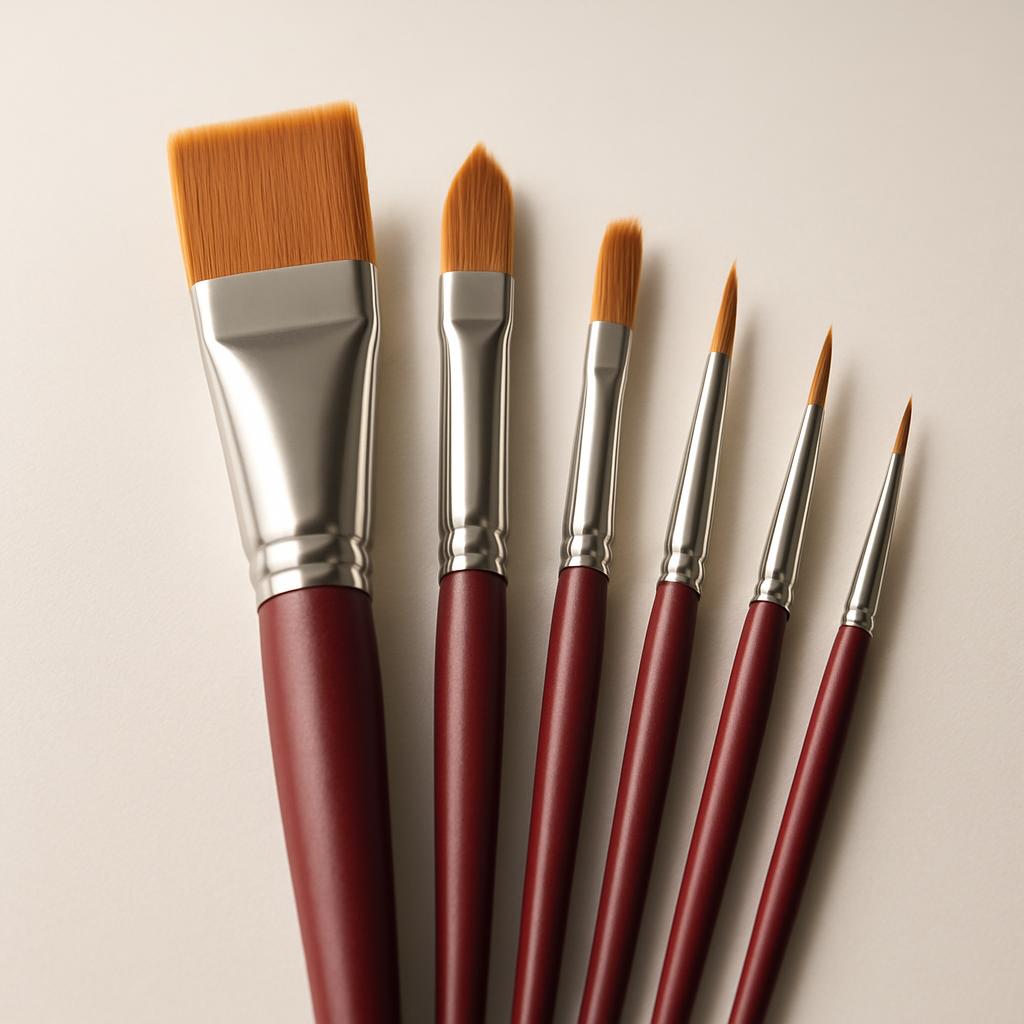
Princeton Velvetouch Brush Set
$35 (4-piece set)
Synthetic blend that loads paint and holds shape like an artist-grade sable, but rinses clean and survives heavy acrylic use. Our default acrylic brush.
View on Amazon
Check Current PricePrinceton Velvetouch is the reason most painters can stop buying expensive sables for acrylic work. The synthetic blend genuinely loads paint like sable — you can charge a Velvetouch with thinned acrylic and watch it release evenly through a long pull, the way a sable would. It also holds shape: after 100+ paintings ours still came to a point.
For acrylic specifically, synthetic is actually preferable to sable. Acrylic is rough on natural hair (it dries fast and bonds), so even pro acrylic painters use synthetic. Velvetouch is the synthetic worth buying.
Why it wins: Sable-like performance, synthetic durability, fair price.
The catch: Not the right brush for thinned-watercolor washes — for that, get the Aqua Elite below.
Best Watercolor (Premium): Da Vinci Maestro Kolinsky
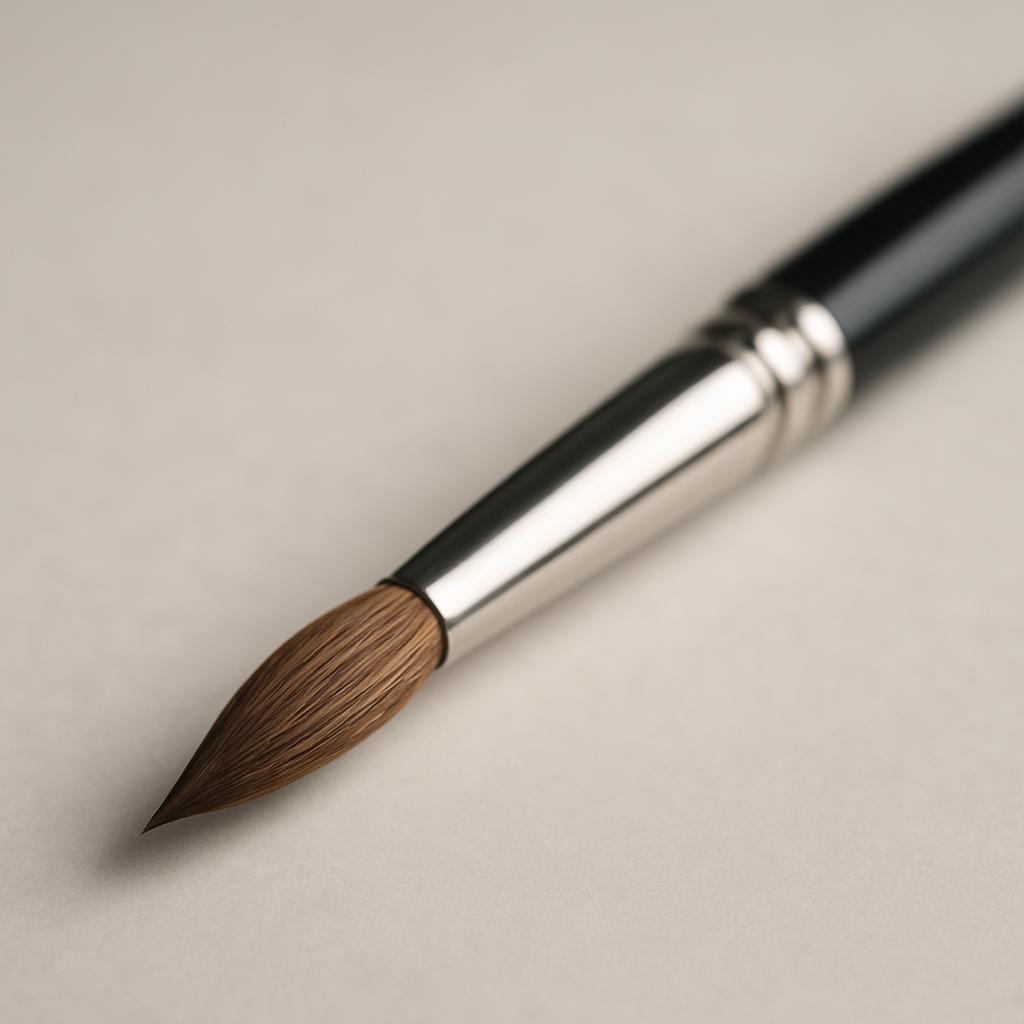
Da Vinci Maestro Kolinsky Sable Round
$80–250 depending on size
The pro standard for watercolor. Pure Kolinsky sable from Russian winter pelts. Perfect snap, massive carrying capacity, comes to a hair-fine point that holds a 6-inch wash without dipping.
View on Amazon
Check Current PriceIf you can only own one watercolor brush, make it a Da Vinci Maestro size 8 or 10. The carrying capacity is the gift — a single load of pigment lets you paint a wide, even wash without re-dipping. Snap is perfect; the brush returns to a fine point after every stroke. The handle is balanced; the ferrule is seamless.
This is a brush that, with care, lasts 20+ years. We've used Maestros that are 15 years old and still come to a perfect point.
Why it wins: Best watercolor brush in production. Period.
The catch: $80 for a small size 6 is real money. And $250 for a size 10 is a serious commitment. But you'll only buy one in your lifetime.
Best Watercolor (Mid-Range): Princeton Aqua Elite
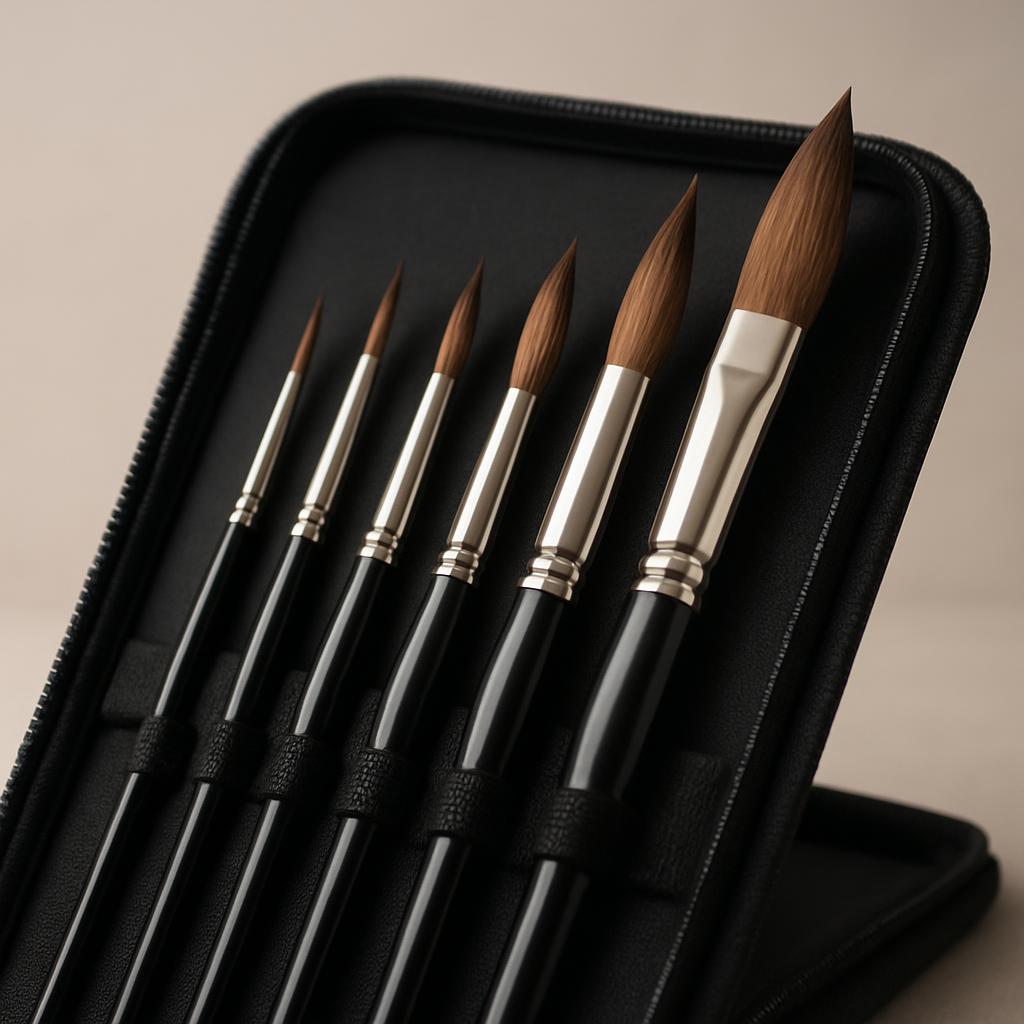
Princeton Aqua Elite Watercolor Brush Set
$50 (6-piece set)
Synthetic squirrel/sable hybrid that performs at 80% of the Maestro for a fifth of the cost. The right starter watercolor brush.
80%
Synthetic squirrel/sable hybrid that performs at of the Maestro for a fifth of the cost
View on Amazon
Check Current PriceIf you don't want to spend $80 on a single brush, the Aqua Elite is the right starter. Princeton's synthetic approximates squirrel/sable performance — slightly less carrying capacity than real Kolinsky, but excellent point retention and durability. A six-piece set costs less than a single small Maestro.
Why it wins for mid-range: Real watercolor performance at a starter price.
Best Oil (Pro): Raphael 8404 Kolinsky
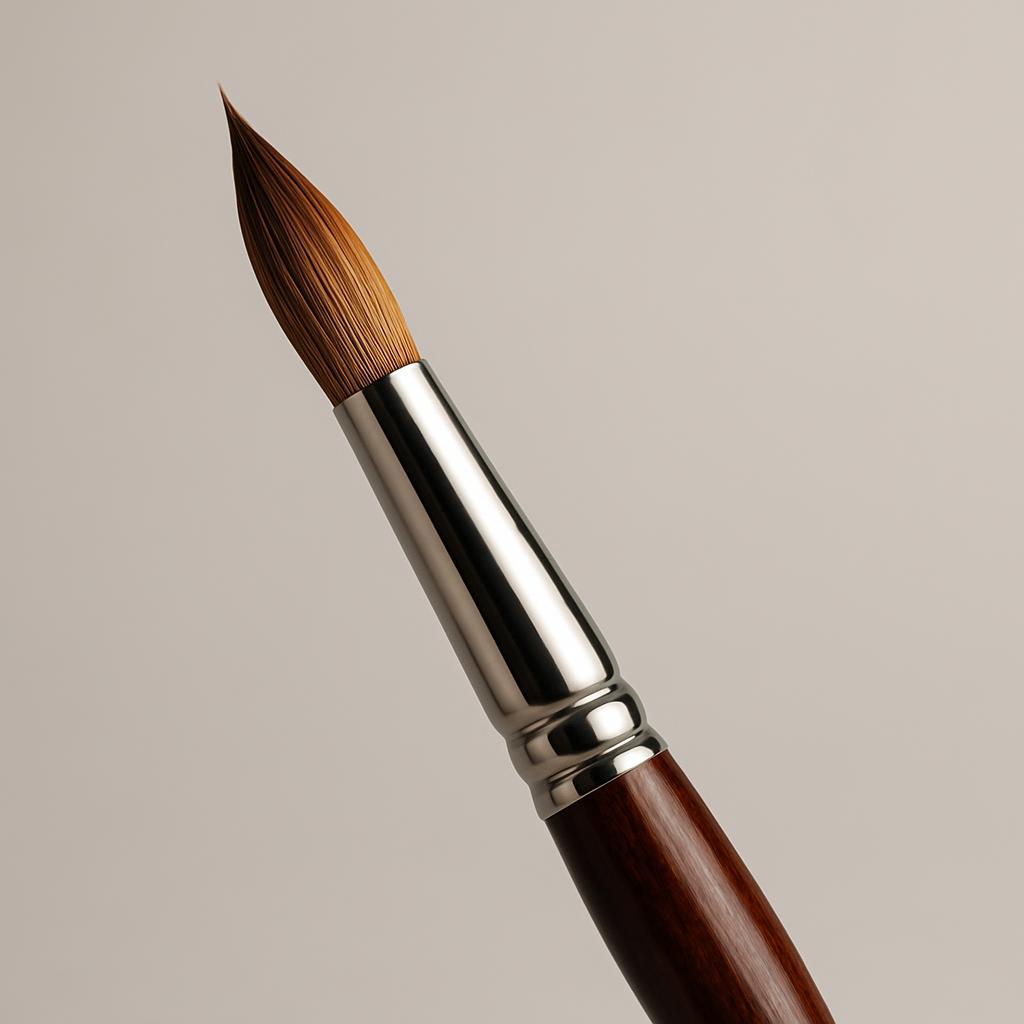
Raphael 8404 Kolinsky Pure Sable
$40–120 depending on size
French Kolinsky sable. Slightly stiffer than Da Vinci Maestro — better for oil's heavier body. Perfect snap, holds tons of paint, hand-cut hair tips.
View on Amazon
Austin Art Insider
Free weekly guide to galleries, exhibitions & collecting in Austin.
For oil rounds, the Raphael 8404 is the brush. Slightly stiffer than the Maestro because oil paint is heavier than watercolor — the extra spring lets you push thick paint without the brush collapsing. Hand-cut tips mean the point is genuinely a point.
Filberts (slightly flat-tipped rounds) are also excellent in this line. We use a 6 round and a 4 filbert as our daily oil brushes.
Why it wins for oil: Best snap-to-stiffness ratio in any oil round we've used.
Best All-Round Synthetic: Escoda Versatil
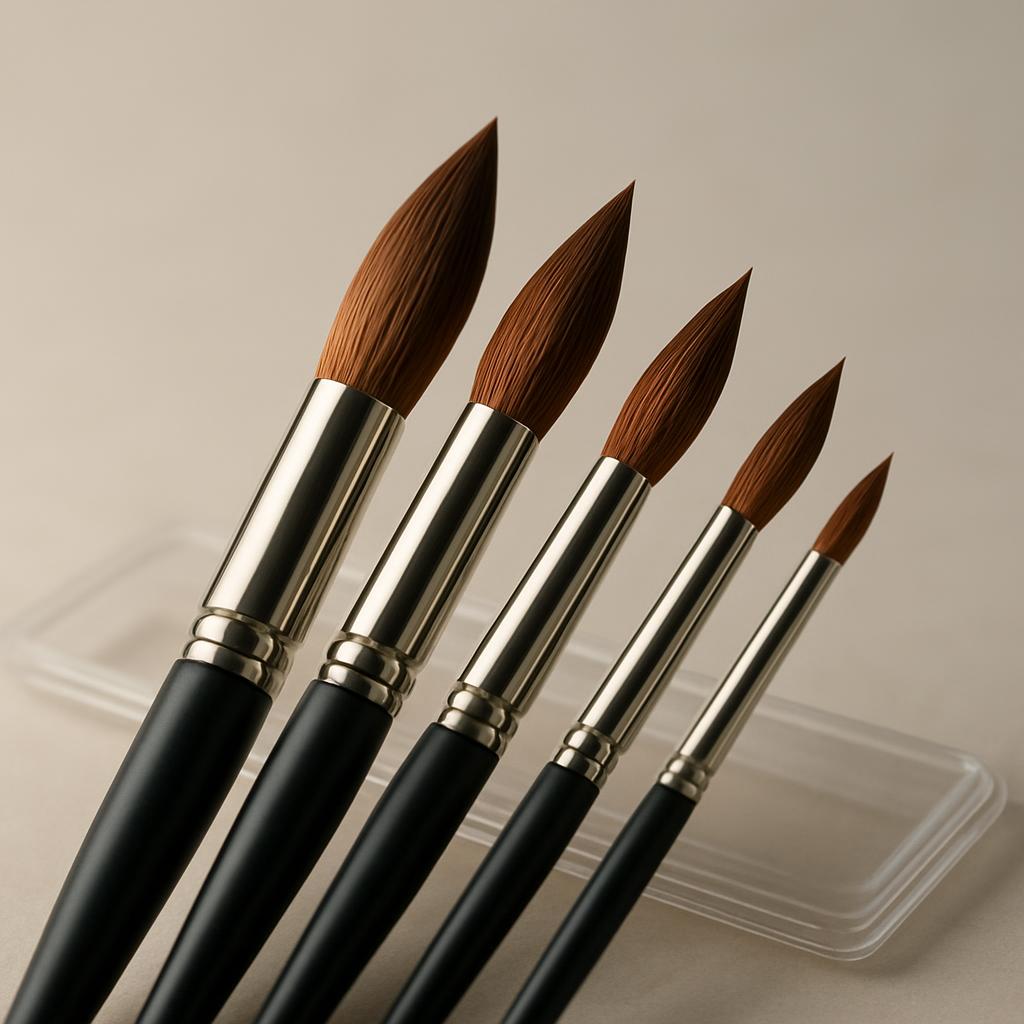
Escoda Versatil Synthetic Brush Set
$90 (4-piece set)
Spanish-made synthetic that genuinely competes with sable in watercolor work. Excellent for travel — survives the abuse a Maestro can't take.
View on Amazon
Check Current PriceEscoda's Versatil line is the synthetic that watercolor pros use when they don't want to risk a $200 Maestro. Travel kit, plein air, urban sketching — Versatil. The carrying capacity isn't quite Kolinsky-level, but it's close, and the point retention over time is better than real sable (synthetic doesn't shed).
Premium Watercolor: Winsor & Newton Series 7
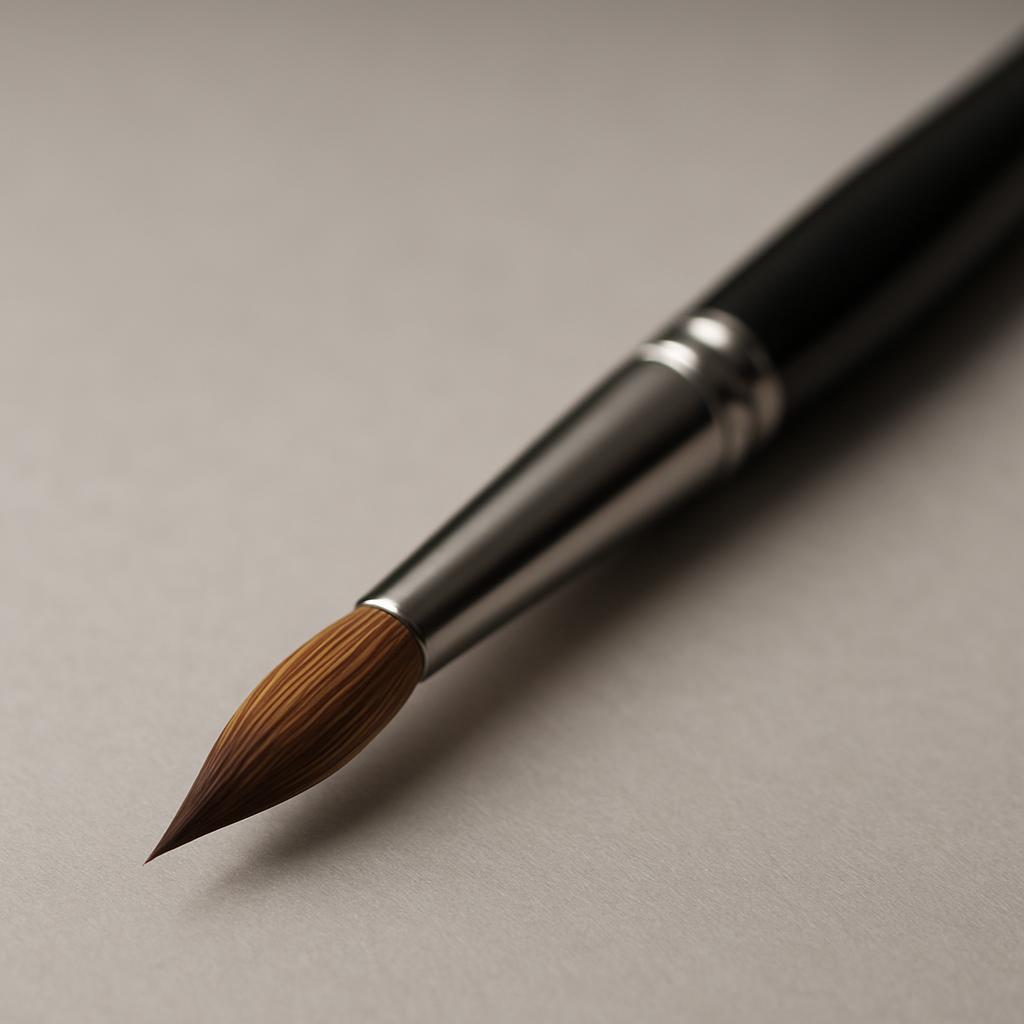
Winsor & Newton Series 7 Sable Brushes
$60–250
The other gold-standard watercolor brush. Slightly different feel than Maestro — Series 7 has a fractionally finer point. Many pros own both lines.
View on Amazon
Check Current PriceSeries 7 is the British equivalent to the German Maestro. Both are pure Kolinsky; both are excellent. The Series 7 has slightly more snap and a slightly finer point on smaller sizes; the Maestro has slightly more carrying capacity. Pick by feel — most pros eventually own both lines.
Plein Air / Travel: Rosemary & Co Eclipse
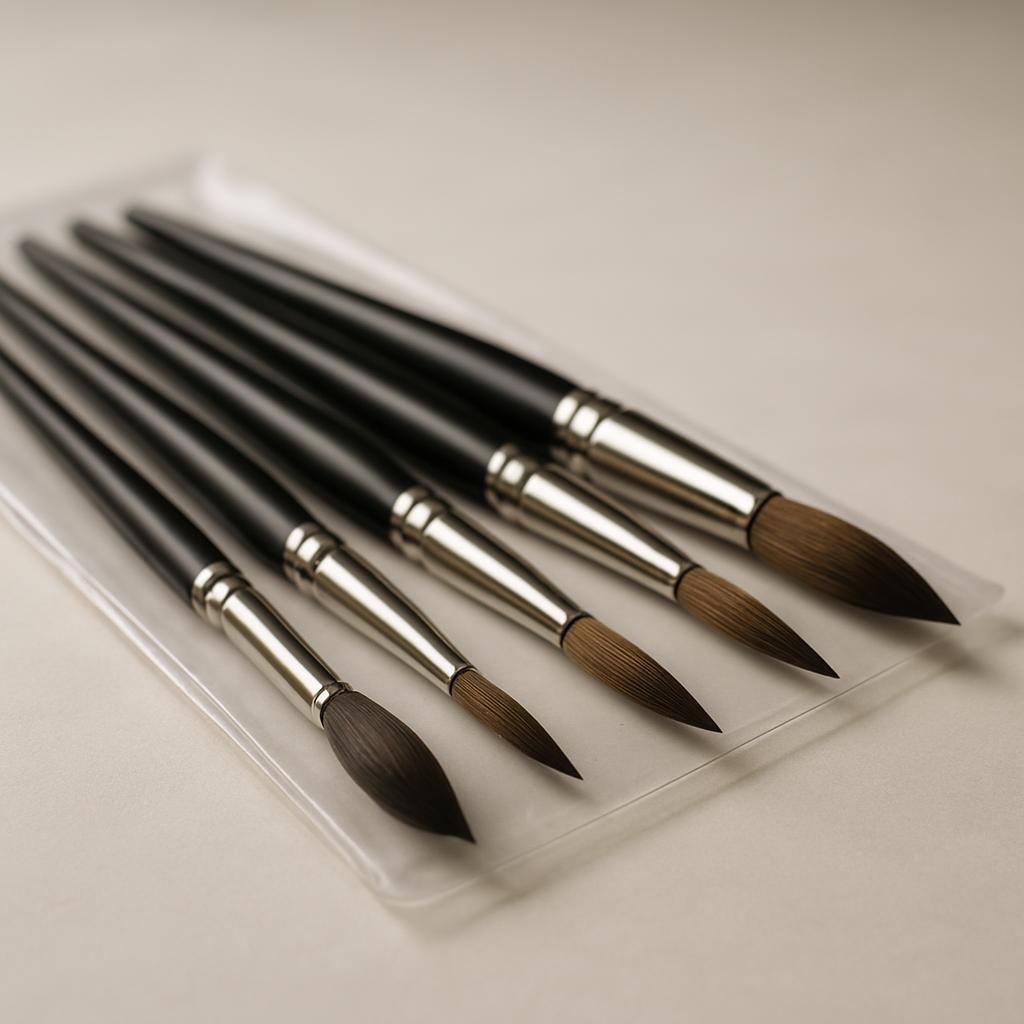
Rosemary & Co Eclipse Brush Set
$80 (5-piece set)
UK-made synthetic that's developed a cult following in plein air watercolor circles. Pocketable handle, excellent point.
View on Amazon
Check Current PriceFor plein air work, Rosemary & Co's Eclipse line is what you take outdoors. The handles are short enough for a travel kit, the synthetic is durable enough to survive hot car interiors and field abuse, and the performance is genuinely high. A different feel from Princeton or Escoda — slightly stiffer, more "drawing" than "painting."
Watercolor Synthetic (Da Vinci): Cosmotop Spin
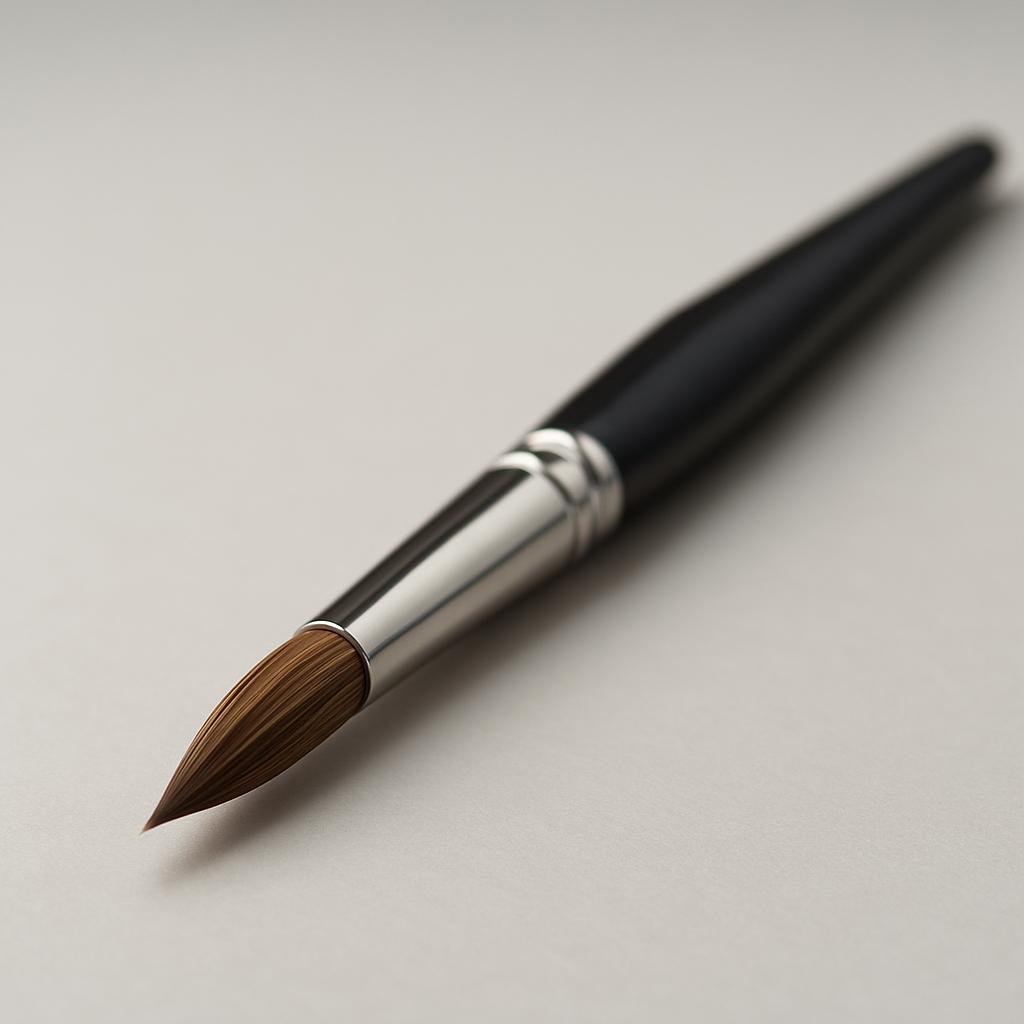
Da Vinci Cosmotop Spin Round Brush
$25–45
Da Vinci's premium synthetic. Holds water and pigment surprisingly well — the synthetic alternative if you can't justify Maestro.
View on Amazon
Check Current PriceCosmotop Spin is Da Vinci's answer to "I want a synthetic that performs like Maestro." It mostly succeeds. Carrying capacity is about 70% of pure Kolinsky; point retention is excellent. Cheaper, more durable, more travel-friendly. A defensible alternative to the Aqua Elite.
Budget / Student: Grumbacher Goldenedge + Loew-Cornell
For watercolor classes and beginners painting volume:
Grumbacher Goldenedge Set — $30 for six brushes. Real brand reputation. Synthetic blend that's enough to learn on. The right student watercolor set.
Loew-Cornell Soft Comfort — $25 for six brushes, larger sizes. Great for big acrylic work where you don't need fine point control. Decorative painting, kids' classes, big abstract canvases.
Acrylic Workhorse: Trekell Golden Taklon
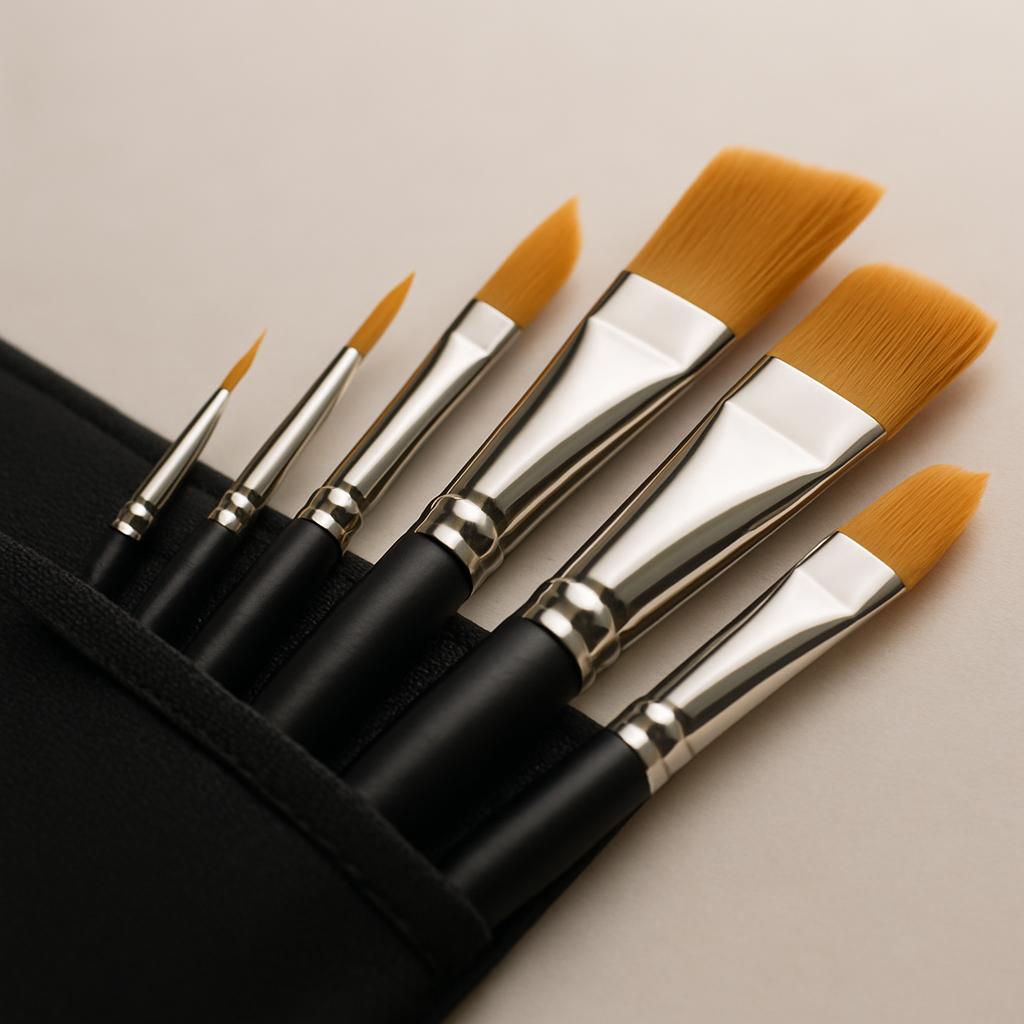
Trekell Golden Taklon Synthetic Brush Set
$45 (7-piece set)
American-made synthetic taklon. Tough enough for thick acrylic and oil. The set every painter ends up using as their daily workhorse.
View on Amazon
Check Current PriceTrekell makes brushes for sign painters and pinstripers — people who beat their brushes harder than fine artists. Their Golden Taklon line is what you grab when you don't want to risk a Velvetouch on something rough. Excellent for under-painting, blocking in, and any technique that involves dragging or scraping.
How to Care for Brushes (So They Last 100+ Paintings)
Most brushes don't fail — they get destroyed by bad care. Three rules:
- Never let paint dry in the brush. Acrylic dries fast; oil takes hours but eventually sets. Rinse immediately, use brush soap (Master's Brush Cleaner is the standard), reshape with fingers, store bristles up.
- Never store wet brushes bristles-down. Water/solvent migrates into the ferrule, dissolves the glue, and the bristles fall out within weeks. Always store bristles-up or flat.
- For sable / Kolinsky: condition with hair conditioner monthly. Yes, real human hair conditioner — sable is hair, after all. It keeps the bristles soft and the point sharp.
For paints to use with these brushes, see our 12 best acrylic paints 2026 and best watercolor paper.
Frequently Asked Questions
Should I buy synthetic or natural hair brushes?
For acrylic: synthetic, every time. Acrylic destroys natural hair (the paint dries fast and bonds with the hair). For watercolor: natural Kolinsky is the best, but high-end synthetics (Aqua Elite, Cosmotop Spin, Versatil) are 80%+ as good. For oil: real Kolinsky has more snap and is worth the cost for finishing brushes.
For watercolor: natural Kolinsky is the best, but high-end synthetics (Aqua Elite, Cosmotop Spin, Versatil) are 80%+ as good.
What sizes should I start with?
A sensible 4-brush starter kit: round size 4, round size 8, flat ½", filbert size 6. That covers detail work, mid-range, washes, and blending. Add specialty brushes (mops, fan, rigger) only when you have a specific use for them.
Can I use the same brushes for acrylic and watercolor?
Yes, but watch the wear. Acrylic is harder on bristles than watercolor. Most painters who do both keep separate sets — synthetic for acrylic, sable or premium synthetic for watercolor. If you use one set for both, expect to replace them faster.
How do I know when to retire a brush?
When the bristles no longer come back to a clean point or edge after rinsing and reshaping, the brush is done for fine work. It can still be used for under-painting, scrubbing, or texture. Don't try to bring back a splayed brush with conditioner — it's a one-way trip.
Are gel pens (water brushes, refillable brushes) good for travel?
Water brushes (Pentel Aquash, Pilot Parallel) are fine for sketches and travel watercolor. They're not full replacements for real brushes — the carrying capacity is limited, the point isn't true, and the controlled flow is fine for studies but bad for finished work. Use them as a complement, not a replacement.
What about hog bristle (oil)?
Hog bristle brushes are the traditional oil brush — stiff, scratchy, designed for thick paint and impasto. We didn't include them in this guide because they're a different category (used alongside Kolinsky rounds, not instead of). Trekell, Robert Simmons, and Winsor & Newton Artists' Hog all make excellent ones. Pick one up for impasto work.
Trekell, Robert Simmons, and Winsor & Newton Artists' Hog all make excellent ones.
The Bottom Line
For acrylic: Princeton Velvetouch as your daily, Trekell Golden Taklon as your workhorse.
For watercolor pro: Da Vinci Maestro in size 8.
For watercolor starter: Princeton Aqua Elite set.
For oil: Raphael 8404 in 4 round and 6 filbert.
For paints to pair with these brushes, see 12 best acrylic paints 2026.


