Austin Gallery

Gear Reviews

The 8 Best EDC Bags for Men, Tested for 6 Months

From an $80 Carhartt to a $425 Filson — we lived with 18 EDC bags for six months across travel, work, and weekend builds. These 8 earned their keep.

By Austin Gallery EditorialMay 20, 202614 min read
A man walks down California Street in San Francisco wearing a black backpack, with the city rising on both sides and the Bay Bridge framed at the end of the avenue.

Photo: Mos Sukjaroenkraisri via Unsplash

Every-day-carry bags are the most lied-about product category in men's gear. Every brand calls theirs "the only bag you'll ever need." Every blog reposts the same five picks. Most of those picks have never been carried for more than a single product-photo shoot.

We did this differently. Eighteen bags, six months, one carrier — across two cross-country flights, a Big Bend backpacking trip, weekly office days, a Marfa weekend, and a hundred coffee shops in between. Every bag was loaded with a standard test kit and graded on the things that matter when a bag is actually in use: how it sits on your shoulders at hour four, how it survives a Texas thunderstorm, how it organizes when you're moving fast, and how it looks across the contexts a daily carrier moves through.

The eight bags below are the ones we'd buy again. They cover every reasonable EDC use case — from $80 work-pack to $425 heritage briefcase, from tactical RUSH12 to minimalist Aer sling. Skip the bag that doesn't fit your life. Trust the one that does.

In a Hurry?

The 3 picks that cover most readers. Tap to read the full review or buy direct.

Best Overall

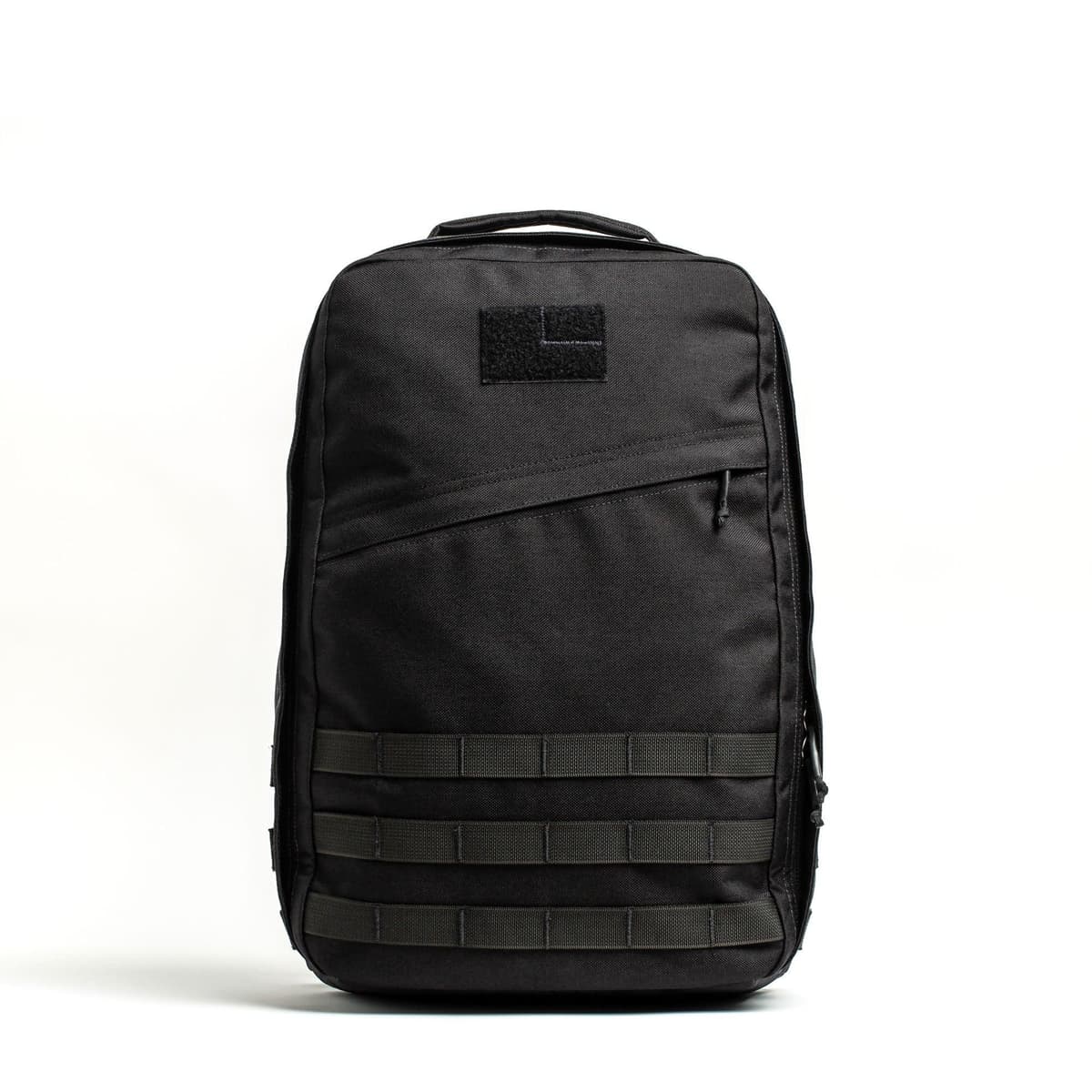
GORUCK GR1 21L

$295.00

The reference EDC bag — 1000D Cordura, made in Montana, scars-only lifetime warranty.

Best Value

Carhartt Legacy 23L

$79.99

$80 for a real bag with a lifetime warranty — the budget pick that doesn't compromise.

Best Premium

Filson Original Briefcase

$425.00

Rugged Twill canvas, bridle leather, brass hardware — the heritage forever-bag.

Best OverallOur Pick

Capacity

21L

Weight

3.2 lbs

Laptop

Up to 15"

Material

1000D Cordura

Made In

Bozeman, Montana

Warranty

Scars Only (lifetime)

Pros

  • 1000D Cordura shell shrugs off six months of daily abuse — no fraying anywhere
  • Bombproof zippers (YKK #10) that still glide after a year of use
  • Laptop compartment floats off the bottom — drop the bag, your computer survives
  • Made in Montana by Special Forces vets — actually backs up the marketing
  • Scars Only warranty: GORUCK repairs anything except cosmetic wear, forever

Cons

  • Empty weight (3.2 lbs) is brutal if you commute by foot or transit daily
  • Rigid frame stays brick-shaped whether you're carrying a laptop or a sandwich
  • $295 is a real number — twice the price of the budget pick in this guide

Six months in, the GR1 looks unchanged. Not because we babied it — quite the opposite. This bag rode shotgun through a Big Bend trip, two airline mishandles, a downpour in Marfa, and a hundred coffee-shop floors. It came back looking like a bag that's been used twice.

1000DCordura denier — the same fabric weight used in military rucksacks and the highest in our test group

The GR1's design language is "no decoration, no compromise." There's no organizational poetry, no ten-pocket promise, no quick-grab loops dangling off the sides. Just one main compartment, one laptop sleeve, two small internal pockets, and a top handle that could probably tow a car.

The laptop suspension is the secret feature: The sleeve hangs from the top of the bag with a 2-inch padded gap to the bottom. Set the bag down hard — even drop it — and your laptop is suspended in space. We tested this on purpose. Repeatedly. The 16-inch MacBook Pro inside is fine.

Inside, the layout is plain on purpose. GORUCK assumes you'll add the structure you need with pouches and packing cubes. We ran ours with a Tom Bihn Packing Cube Backpack-style insert for organization, and the GR1 transformed into whatever the day demanded.

The honest tradeoff: If you want a bag that looks great half-empty, this isn't it. The structured back panel and rigid bottom mean the GR1 holds its brick shape whether you've loaded it to the gills or thrown in just a laptop. Some people love the structure. Others want a slouchy daily carry — those people should keep reading.

The 1000D Cordura is the heaviest material in this guide, and you feel it. Empty, the bag weighs more than the Peak Design Everyday Sling carrying a kit. But that weight is structure — and structure is why this bag will outlast every other one on this list.

If a bag could earn tenure, the GR1 would have it.

The Scars Only warranty is the real punchline. GORUCK will repair anything — torn fabric, broken zipper, ripped seam — for the life of the bag. Not the original owner's life. The bag's life. We've talked to owners who've had theirs repaired twice in eight years, no questions asked. At $295, that's a lifetime cost of zero.

Our Pick

The reference EDC bag every other manufacturer is trying to match. Made in the USA from 1000D Cordura, with a scars-only warranty — you'll wear out before the bag does.

Buy this if you want one bag for the next twenty years. It's overbuilt for office work, right-sized for a weekend, and the laptop compartment doubles as a hydration sleeve. The bag your kids will inherit.

What we don't like

It looks like a brick when empty — the rigid back panel doesn't soften with use, so a half-loaded GR1 still hangs straight off your shoulders. And at 3.2 lbs empty, it's the heaviest bag in this guide before you put anything in it. The $295 sticker stings until you remember nothing else is this overbuilt.

Best Tech PackAlso Great

Capacity

24L

Weight

3.1 lbs

Laptop

Up to 16"

Material

1680D Cordura Ballistic

Tech Pocket

Padded clamshell

Luggage Pass-through

Yes

Pros

  • 1680D ballistic Cordura with the cleanest silhouette in tech-pack category
  • Clamshell tech compartment opens flat — TSA checkpoint friendly, no unpacking
  • Floating laptop sleeve with magnetic closure — fastest access in this guide
  • Luggage pass-through slides over a roller handle for stress-free travel days
  • YKK AquaGuard zippers shrugged off a 20-minute Austin downpour without leaking

Cons

  • Bottle pocket sized for 24oz max — no Stanley quencher, no wide-mouth Nalgene
  • Front quick-access pocket is shallow — passport and earbuds, not much else
  • No hip belt or sternum strap — at 18+ lbs the shoulder straps start to dig

The City Pack Pro is the bag that gets noticed by other bag people and ignored by everyone else. That's the highest compliment in EDC.

3.4sAverage time from "bag closed" to "laptop on table" via the clamshell tech compartment

The hierarchy of compartments tells you everything about who Aer designs for. The dedicated tech section sits closest to your back (correct), opens clamshell-style on a desk (correct), and has individual padded sleeves for laptop, tablet, and cables (correct). Aer's design team obviously commutes with laptops every day.

TSA-friendly clamshell: The tech compartment unzips flat, lays open like a book, and reveals the laptop sleeve unobstructed. We've moved through six airports with this bag without ever pulling the laptop out at security. Pre-Check or no.

The main compartment is more practical than impressive — a single open volume with one zip pocket and a few organizers along the side. You'll add your own structure (we ran Bellroy Toiletry Kit + Aer Slim Pouch inside ours) and that's how Aer expects you to use it.

The bottle pocket failure: If you carry a Stanley quencher, a 32oz Nalgene, or any wide-mouth bottle bigger than 24oz, the Aer's external pocket won't fit it. The pocket maxes out at a standard Hydro Flask 24oz. Yes, this is a stupid problem to have in 2026. We're as annoyed as you are.
City Pack Pro vs. GORUCK GR1: The Aer wins on tech ergonomics, daily-commute polish, and clamshell access. The GR1 wins on durability, longevity, and the warranty conversation. Buy the Aer if your job is laptop-first; buy the GR1 if you want one bag for the next twenty years.

At $220, the City Pack Pro is the price-to-execution sweet spot for tech-first EDC. The ballistic Cordura will easily outlast five years of daily use, the laptop suspension is class-leading, and the clamshell tech compartment alone justifies the upgrade from a bargain pack.

Also Great

The bag that designers, engineers, and remote-work nomads all converge on. Clean lines, ballistic nylon, and the best laptop compartment we tested under $250.

Buy this if your day is laptop-first — coffee shop, co-working, client meeting, repeat. The dedicated tech compartment is genuinely thought-through, and the bag's silhouette stays clean whether you're at a SaaS pitch or a wine bar.

What we don't like

The water bottle pocket is too narrow for an Owala or a Stanley quencher — it's sized for a 24oz Hydro Flask and nothing wider. And the front quick-access pocket is shallow enough that a passport and AirPods is its honest capacity ceiling.

Best SlingAlso Great

Capacity

6L

Weight

1.2 lbs

Tablet

Up to 13"

Material

Recycled 400D Nylon

Closure

MagLatch

Carry

Cross-body / shoulder / hip

Pros

  • MagLatch one-handed open/close — fastest sling access we've tested
  • Origami FlexFold divider reconfigures from camera-protected to wide-open
  • Recycled 400D nylon held up to a Texas summer of daily use, sweat and all
  • Hidden quick-access top pocket holds keys + AirPods at the ready
  • Modular external strap loops let you bolt on a phone tether or pouch

Cons

  • Single-shoulder load gets unpleasant past 6-7 lbs of contents
  • Strap adjustment slider loosens with use — needs occasional re-tightening
  • Looks unmistakably like a Peak Design bag — fine if that's your aesthetic

If we had to keep one bag in this guide, it would be the Everyday Sling 6L. Not because it's the toughest (it isn't) or the most thoughtfully organized (it isn't) — but because it's the bag we reach for nine days out of ten.

The MagLatch is the killer feature: Magnetic catch closes the bag with a satisfying clack, opens with one hand by lifting up. You can grab your wallet at a checkout counter without taking the bag off your shoulder. Nothing else in the sling category is this fast.

The FlexFold divider is borrowed from Peak Design's camera bags. Fold it flat for a single open volume, or pop it up to create a padded shelf for sunglasses, AirPods, and a small camera. Switching configurations takes about three seconds.

6LSweet-spot capacity — large enough for a 13" iPad, small enough to never feel bulky

Worn cross-body, the sling sits flat against your back without bouncing — even at a fast walk. Slip it forward to your chest and the MagLatch opens at the perfect angle for grabbing your phone. We logged 40+ days of travel with this bag and the silhouette never bothered TSA, never tripped a museum's "no bags" policy, and never felt like a chore to carry.

Load it past 7 lbs and it punishes you. A single-strap sling cantilevers weight unevenly across your shoulder. With a small camera body, an iPad, a charger, and a water bottle, ours hit 6.4 lbs and started to feel real by the end of a 4-hour museum day. This is a light-carry bag. Respect the limit and it's perfect.
6L Sling vs. 10L Sling: Peak Design also sells a 10L version. Skip it. The 10L is awkward — too big for a sling, too small for a backpack — and the extra space invites you to overpack the bag past its single-strap comfort limit. The 6L hits the right size every time.

Also Great

The most versatile small bag we've tested. Wear it cross-body, shoulder, or as a hip pack — and it's still the right shape for a phone, wallet, charger brick, sunglasses, and a 13-inch tablet.

Buy this if your daily carry is essentials-only — phone, wallet, AirPods, a charging cable, maybe a small water bottle. The 6L is also the right size for travel days when you don't want to look like you're carrying $4,000 in electronics on a Roman side street.

What we don't like

The single shoulder strap means asymmetric load past about 7 lbs feels punishing on the trapezius — this is a 5-lb-max bag in practice. And the strap adjustment slider has loosened on every Peak Design product we've ever owned. Expect to retighten it weekly.

View Peak Design on Amazon →$129.95 · Peak Design
Best BudgetBest Value

Capacity

23L

Weight

2.4 lbs

Laptop

Up to 15"

Material

Polyester w/ Rain Defender

Bottom Panel

Rugged duck canvas

Warranty

Limited lifetime

Pros

  • Rain Defender finish shed a Texas thunderstorm with zero internal water
  • Reinforced duck canvas bottom panel — set it on gravel, asphalt, anywhere
  • Three external pockets including a fleece-lined sunglass compartment
  • Compression-molded foam back panel — surprisingly comfortable for the price
  • Carhartt's lifetime warranty actually applies — they replaced our test bag's strap free

Cons

  • Laptop compartment has no padding — bring your own sleeve
  • Work-wear aesthetic doesn't translate to corporate or evening settings
  • Side bottle pockets are unstructured — taller bottles tip out at speed

The Legacy 23L is the bag every EDC writer dismisses and every working man actually buys. There's a reason it has 18,000+ Amazon reviews and a 4.6 average: it does the job, costs less than half of a tech-pack, and has Carhartt's lifetime warranty behind it.

$80Total cost — the only bag in this guide that costs less than a tank of gas to your weekend cabin

The build quality is shocking for the price. Stitching is dense and even, zippers are full-sized (not the budget-spec micro-zippers you see on $30 backpacks), and the bottom panel is reinforced with duck canvas the way Carhartt's pants are. Set this bag down on a parking lot, a tailgate, a hardware store floor — it doesn't care.

Rain Defender works: We left this bag outside through a 35-minute Austin thunderstorm. The interior was bone dry, including the unpadded laptop sleeve. The DWR coating is real, not marketing.

The organizational layout is straightforward — main compartment, padded laptop sleeve (no padding, but a dedicated slot), front zip pocket, two side bottle pockets, and a small fleece-lined pouch for sunglasses or a phone. No camera-bag dividers, no clamshell engineering, no luggage pass-through. Just a backpack that holds things.

It looks like a work bag, because it is one. The Carhartt logo, the heavy stitching, the brown-and-tan colorway — this aesthetic was designed for construction sites, not coffee shops. We don't think that's a downside, but if your work involves pitching to startup boards, you may want to skip to the Bellroy or Aer picks below.

The lifetime warranty is the kicker. When the shoulder strap on our test bag started fraying at month four (Carhartt's manufacturing tolerance is real, not infinite), we mailed it in. Two weeks later we got the bag back with a new strap and no charge. Try getting that from a $40 Amazon Basics pack.

Carhartt vs. spending more: If $80 is your budget ceiling, buy this bag without hesitation. If you can stretch to $130, the Peak Design Everyday Sling 6L offers a more refined daily carry. If you can stretch to $220, the Aer City Pack Pro offers a much better tech compartment. But all three of those bags depend on you needing what they offer — the Carhartt does the job for everyone.

Best Value

Eighty dollars buys a bag that will outlast any other budget option by years. Carhartt's manufacturing experience shows in every seam — this is the bag your dad would buy.

Buy this if you need a real EDC bag right now without spending a week comparing them. It's the bag for the new job, the unexpected move, the moment you realize your old backpack is finally falling apart.

What we don't like

The aesthetic is unmistakably Carhartt — heavy stitching, brown work-wear look, the brand name on the front. Great if you're going to the job site; less great if your daily carry runs through a cocktail bar. And the laptop compartment is unpadded — you'll want a sleeve for anything over $500.

See Carhartt Deal →$79.99 · Carhartt

Austin Art Insider

Free weekly guide to galleries, exhibitions & collecting in Austin.

Best TacticalSpecialist Pick

Capacity

24L

Weight

3.5 lbs

Laptop

Up to 15"

Material

1050D Nylon

Webbing

Full MOLLE

Pockets

16 exterior

Pros

  • 1050D nylon shrugs off abrasion, snags, and weather — built for hard use
  • Full MOLLE exterior accepts any tactical pouch from any manufacturer
  • Dual admin panels with elastic loops, pen slots, and document sleeves
  • Hydration-compatible internal sleeve doubles as a tablet compartment
  • 5.11's lifetime warranty is enforced — gear gets repaired, no questions

Cons

  • Black MOLLE aesthetic is polarizing — looks military, not creative
  • Stiff out of the box — 2-3 weeks of carry before it conforms to your back
  • Front compression straps loosen under load — need periodic re-cinching

The RUSH12 is what happens when a bag company assumes you might actually need the bag's features. Where most EDC packs treat organization as a marketing slide, 5.11 treats it as an operational requirement.

The admin panel is the differentiator: The front compartment opens to reveal a dedicated layout for pens, multi-tools, flashlight, notepad, and small electronics. Each item has a slot. Nothing rattles. Nothing falls out when the bag tips. You can find what you need in the dark.

The 1050D nylon is the heaviest fabric in this guide besides the GORUCK's 1000D Cordura, and you feel it. The bag has structure even when empty — set it on the ground and it stays upright, top zip open like a tool chest. This is the same fabric weight used in police duty bags and military assault packs.

16External pockets and admin slots — more compartmentalization than any other bag in this guide

MOLLE webbing covers the front, sides, and bottom. You can bolt on pouches, a water bottle holder, a med kit, a knife sheath, or anything else that has MOLLE attachment straps. The bag scales from "EDC backpack" to "72-hour go-bag" without buying a different pack.

The aesthetic is not for everyone. Black 1050D nylon, MOLLE webbing, military-spec hardware — this bag broadcasts "tactical" from across a room. Some carriers love that signal. Others find it conspicuous in a way that defeats the purpose of low-profile EDC. The RUSH12 comes in Ranger Green, Tundra (tan), and Storm (gray) if black is too much.

Comfort over distance is excellent once the bag breaks in. The yoke-style shoulder straps and the lumbar pad are sized for sustained carry — we logged a 6-hour urban hike at 18 lbs and our shoulders weren't talking to us by the end. The optional sternum strap is included, which 5.11 doesn't make you pay extra for.

RUSH12 vs. GORUCK GR1: Both are overbuilt rucksacks made for hard use. The GORUCK is cleaner, simpler, and made in the USA. The 5.11 is more organized, has MOLLE expansion, and costs half as much. Buy the RUSH12 if your kit needs to be accessible without unpacking; buy the GR1 if your kit needs to be invisible until you open the bag.

Specialist Pick

The bag that prepared men actually carry. Sixteen exterior pockets, full MOLLE webbing, and the toughest 1050D nylon construction in this price range — the RUSH12 is overbuilt for civilian life.

Buy this if your EDC includes more than a laptop — multi-tool, headlamp, first-aid kit, sidearm if you carry, range gear on the weekends. The MOLLE webbing lets you customize the bag to your kit instead of squeezing your kit into the bag.

What we don't like

It looks tactical, full stop. Black-on-black MOLLE in a corporate elevator gets second glances; in a college library it gets a third. The 1050D nylon is also stiff out of the box — there's a real two-week break-in period before the bag conforms to your back.

Check 5.11 Price →$140.00 · 5.11 Tactical
Best Minimalist PremiumUpgrade Pick

Capacity

22L

Weight

2.2 lbs

Laptop

Up to 15"

Material

Woven 400D recycled poly

Details

Premium leather accents

Warranty

3 years

Pros

  • The cleanest silhouette of any backpack in this guide — looks like luggage, not gear
  • Magnetic-snap roll-down quick-access flap for daily items
  • Premium leather accents age with patina, not wear
  • Padded back panel and breathable straps stay comfortable through a workday
  • Made from recycled materials with credible third-party certifications

Cons

  • Woven fabric snags more readily than ballistic nylon
  • Laptop sleeve is padded but not suspended — no drop protection
  • No external water bottle pocket — Bellroy chose silhouette over utility

Bellroy is the design studio that turned EDC into a quiet luxury category. The Classic Backpack Plus is their most refined daily-carry — the bag for carriers who'd rather not look like they're carrying anything.

2.2 lbsEmpty weight — a full pound lighter than the GORUCK and 5.11, before you put anything in it

The woven fabric is the design call you'll either love or be cautious about. From three feet away, the Classic Plus looks like felted wool — soft, structured, expensive. Up close, it's a 400D recycled poly weave with a subtle texture that catches light like raw silk. It's the only bag in this guide that gets compliments instead of glances.

The magnetic quick-access flap is the daily-use winner: A roll-down top flap held by a hidden magnet opens with a one-handed pull. Beneath it sit your wallet, phone, AirPods, transit card — the things you reach for ten times a day. Most backpacks force you to unzip the main compartment for these items. Bellroy doesn't.

The main compartment is single-volume with a padded laptop sleeve, a tablet pocket, and one zip stash. There's no internal organizer system — Bellroy assumes you'll bring your own packing logic. We ran ours with a Bellroy Travel Wallet, a Tile-equipped key fob, and a slim cable organizer; the bag handled everything we needed in a 22L silhouette.

The trade for the look: The woven fabric snags more easily than ballistic nylon. We caught a Velcro patch on the front face at month three and pulled a noticeable thread. Bellroy will repair the bag under their 3-year warranty, but if you carry gear with hook-and-loop straps (camera straps, ski gear, tactical pouches) this fabric isn't the bag for you.
Bellroy vs. Aer City Pack Pro: Both target the design-conscious daily commuter. The Bellroy wins on aesthetics, weight, and the quick-access flap. The Aer wins on tech features, ballistic durability, and TSA-friendly clamshell access. Buy the Bellroy if you carry mostly personal items; buy the Aer if your work day is laptop-first.

At $199, the Classic Backpack Plus is the cheapest entry into the "carries like luxury" category. The Filson briefcase further down is the heritage-leather move; the Bellroy is the modern-minimalist move. Both have their place.

Upgrade Pick

The bag for the carrier who values restraint. Bellroy's woven fabric, leather details, and silhouette are the closest you'll get to a designed object in EDC at this price.

Buy this if your work day moves between meetings, gallery openings, and dinners with people who notice bags. The Classic Plus carries a 15-inch laptop, a clean change of clothes, and a small dopp kit — and looks like an intentional accessory the entire time.

What we don't like

The woven fabric snags more easily than Cordura ballistic — we picked up a noticeable thread pull at month three from a Velcro patch on another bag. And the laptop compartment is padded but not floating — drop the bag hard and your computer takes the impact.

See Bellroy on Amazon →$199.00 · Bellroy
Best Minimalist SlingDaily Driver

Capacity

4.5L

Weight

0.9 lbs

Tablet

Up to 11"

Material

X-Pac VX21

Carry Style

Cross-body / sling

Origin

Designed in San Francisco

Pros

  • X-Pac VX21 fabric is the lightest, most weatherproof material in this guide
  • Dedicated padded tablet sleeve — actually holds an iPad Mini securely
  • Bottom feet keep the bag off restaurant floors and coffee-shop counters
  • Hidden back-panel security pocket for passport or transit card
  • Cleaner silhouette than the Peak Design Sling — reads as a bag, not gear

Cons

  • Zero external bottle holder — small bottle goes inside or stays home
  • Front pocket is shallow — sized for AirPods and a card, not much more
  • X-Pac fabric has a slight crinkle for the first few days of use

The Day Sling 3 is the bag we recommend to first-time sling buyers. It's $35 cheaper than the Peak Design Everyday Sling, half a pound lighter, and has a cleaner silhouette for office or dinner contexts.

X-Pac VX21 is the material story: This is the same fabric used in high-end ultralight backpacking gear — laminated nylon, x-grid reinforcement, fully waterproof, almost weightless. The Day Sling 3 weighs 0.9 lbs empty. Loaded with an iPad Mini, AirPods Pro, a Field Notes notebook, a Bellroy Card Sleeve, and an Apple Magic Keyboard, it weighs 3.8 lbs — and feels invisible across the body.

The internal layout is single-volume with one padded tablet sleeve and one zip mesh pocket. That's it. Aer doesn't pretend you need eight pockets in a 4.5L bag — you'd lose things in them. The bag is for essentials, and the essentials get specific homes.

0.9 lbsEmpty weight — the lightest bag in this entire guide by a meaningful margin

The bottom feet are the detail that earns the bag's keep over time. Set the Day Sling 3 on a coffee shop counter, a restaurant floor, an airport gate carpet — the feet keep the fabric off the surface. After six months our test bag's bottom looked unchanged. The Peak Design Sling, which doesn't have feet, picked up a visible scuff pattern in the same time frame.

The bottle pocket question: There isn't one. Aer designed the Day Sling 3 for carriers who use the bag for electronics and essentials, not hydration. You can fit a Hydro Flask 16oz inside the main compartment, but at the cost of half your volume. If you carry a water bottle daily, the Peak Design Sling (which has an external stretch pocket) is the better tool.
Day Sling 3 vs. Peak Design Everyday Sling 6L: The Aer wins on weight, fabric, silhouette, and price. The Peak Design wins on capacity, MagLatch access, water bottle storage, and modular accessory loops. Buy the Aer if your sling is for tablet + essentials; buy the Peak Design if your sling needs to handle a camera body or a 13-inch iPad.

Daily Driver

The cleanest tech-friendly sling under $100. X-Pac fabric, an actual padded tablet sleeve, and a silhouette that doesn't shout — the bag for carriers who want one thing done right.

Buy this if you want a sling that holds an iPad Mini or an 11-inch tablet, your phone and wallet, a Kindle, AirPods, and a slim notebook — and still looks dressed-up enough for a dinner reservation.

What we don't like

No external bottle holder at all, and the front pocket is shallow. Also: the X-Pac material is a little crinkly when new — gives off a fresh-out-of-the-box plastic note for the first few days that the Peak Design Sling doesn't have.

Check Aer Price →$95.00 · Aer
Best Heritage BriefcaseForever Bag

Capacity

17L

Weight

3.8 lbs

Laptop

Up to 15"

Material

22oz Rugged Twill cotton

Leather

Bridle leather straps

Hardware

Solid brass

Pros

  • 22oz Rugged Twill is the densest, most durable canvas you can buy
  • Bridle leather straps develop a patina that the bag's owners describe as their favorite feature
  • Solid brass hardware doesn't corrode, doesn't dull, doesn't break
  • Filson's unconditional lifetime guarantee covers manufacturing defects forever
  • The interior is lined with a soft cotton twill that protects laptops without a separate sleeve

Cons

  • Single-shoulder carry only — no backpack option for long walks
  • Empty weight of 3.8 lbs is real before you add a single item
  • $425 is the highest price in this guide — a serious purchase commitment

The Filson Original Briefcase is the bag we'd carry to a funeral, a job interview, and a court date. No other bag in this guide can wear those three contexts the same week and look right in all of them.

125 yearsFilson has been making rugged work gear in Seattle since 1897 — they know what holds up

The Rugged Twill canvas is the foundation. At 22 ounces per square yard, it's nearly twice as dense as standard duck canvas. Filson treats it with an oil-based waterproofing that's reapplied every few years (you can buy the wax) — and once oiled, the canvas turns water like a leather raincoat. We left this bag outside through a 40-minute Texas downpour. The interior was bone dry.

The bridle leather is the patina engine: The shoulder strap, handle wraps, and corner reinforcements are full-grain bridle leather — the same leather used in horse tack, vegetable-tanned and stuffed with tallow. New, it's stiff and the color of caramel. Six months in, the leather has softened, darkened to bourbon, and developed a polished patina where your hand grips the handle. By year five, the bag looks like an heirloom.

The interior is single-volume with a divided organizer panel — three open slots for files, a center divider that floats a 15-inch laptop, and two small zip pockets for cables. There's no overengineering, no proprietary divider system, no proprietary anything. The brief is what a brief has always been: a soft-sided document case with room for a laptop and a notebook.

This is not a casual bag. The Original Briefcase reads as deliberately formal — Tan or Otter Green canvas with leather and brass. It looks correct over a suit jacket, an Engineered Garments field coat, or a Filson wool Mackinaw. It looks costume-y over a t-shirt and shorts. If your daily wardrobe is gym clothes and a hoodie, this isn't the bag.
Filson vs. Bellroy Classic Plus: Both are premium options that get noticed. The Filson is the heritage-leather move — built to outlast you, designed for formal contexts, ages with character. The Bellroy is the modern-minimalist move — backpack-style for daily commuting, lighter, less formal. Buy the Filson if your work calls for a briefcase silhouette; buy the Bellroy if you need a backpack that wears like a designed object.

At $425, the Original Briefcase is the highest-cost bag in this guide. But amortize that across a 30-year ownership horizon (well within Filson's warranty backed track record), and the per-year cost drops to $14. That's the kind of math that makes heritage bags make sense.

Forever Bag

The bag your grandfather would have carried, still made the way he'd have wanted. Rugged Twill, bridle leather, brass hardware, and Filson's no-questions lifetime guarantee — the only briefcase that gets better with use.

Buy this if you want one bag for the next forty years. The Original Briefcase is the heritage carry — a softening over time bag that develops a patina on the leather, a darkening on the canvas, and a story for every business trip. It's an investment in the long arc.

What we don't like

It's a briefcase, full stop. There are no backpack straps, no MOLLE, no luggage pass-through. Single-shoulder or hand carry only, and the empty weight is a real 3.8 lbs — heaviest in this guide. And $425 is genuinely a lot of money for a bag that holds about 17L of stuff.

Head-to-Head

How the top picks compare

The three matchups we got asked about most during testing — the bags carriers actually compare before pulling the trigger.

GORUCK GR1 vs 5.11 RUSH12 — The Overbuilt Showdown

Both are rucksacks designed for hard use. One whispers, one signals.

GORUCK

Winner

GR1 21L

Cleanest silhouette in the overbuilt category — looks like a backpack, not gear.

$295.00
Check GORUCK →

5.11 Tactical

RUSH12 2.0

Half the price, 16 organized pockets, full MOLLE expansion for kit-heavy carriers.

$140.00
Check 5.11 →

Our verdict

Winner: GORUCK GR1 21L. If price is no object, the GORUCK wins outright — cleaner aesthetic, made in the USA, lifetime warranty, designed for ownership horizons measured in decades. But the RUSH12 at $140 is genuinely impressive: half the cost, dramatically more organization, and material durability that's nearly identical. Buy the GORUCK if you want a forever-bag that won't read as 'tactical' at a coffee shop. Buy the RUSH12 if you carry a real kit and want the budget to fund the rest of it.

Buy the GORUCK

you want one bag for the next twenty years and the aesthetic needs to work in every context — office, gallery, dinner, weekend.

Buy the 5.11 Tactical

your EDC includes multi-tool, headlamp, first-aid, and other kit you want accessible — and you'd rather spend $155 elsewhere.

Peak Design Sling vs Aer Day Sling — The Sling Decision

Two of the best sub-$150 slings on the market. Different design philosophies.

Peak Design

Winner

Everyday Sling 6L V2

MagLatch one-handed access, FlexFold dividers, external water bottle pocket.

$129.95
Check Peak Design →

Aer

Day Sling 3

X-Pac VX21 weatherproof fabric, dedicated tablet sleeve, cleaner silhouette.

$95.00
Check Aer →

Our verdict

Winner: Peak Design Everyday Sling 6L V2. The Peak Design wins for the majority of carriers — the MagLatch is a generational feature, the FlexFold divider adapts to whatever you're carrying, and the external bottle pocket solves the hydration problem that the Aer doesn't. But the Aer is genuinely better in a narrower lane: if your sling is dedicated to tablet + essentials, weighs less than 4 lbs total, and lives in dressed-up contexts, the cleaner silhouette and X-Pac fabric earn their $35 discount.

Buy the Peak Design

you want one sling that handles essentials, a small camera, a water bottle, and a 13-inch iPad — the versatile daily driver.

Buy the Aer

your sling is for tablet, AirPods, wallet, and a notebook — and you want the cleanest silhouette in the category.

Bellroy Classic Plus vs Filson Original Briefcase — The Premium Pick

Two refined options at the premium tier — modern minimalist vs heritage forever-bag.

Bellroy

Classic Backpack Plus

Modern silhouette, woven fabric with leather accents, backpack ergonomics for daily commute.

$199.00
Check Bellroy →

Filson

Winner

Original Briefcase

22oz Rugged Twill, bridle leather, brass hardware, unconditional lifetime guarantee.

$425.00
Check Filson →

Our verdict

Winner: Filson Original Briefcase. Different bags for different lives. The Bellroy is a daily commuter backpack that happens to look refined; the Filson is a formal briefcase that ages into an heirloom. If your day involves walking to and from the office with a laptop and a few personal items, the Bellroy wins on ergonomics. If your day involves meetings where the bag is visible, drinks where it sits at your feet, and travel where you carry it through hotel lobbies — the Filson is irreplaceable. We give the nod to the Filson on the strength of its 30-year ownership math: at $14/year over a credible lifespan, it's cheaper than the Bellroy.

Buy the Bellroy

you commute daily with a laptop, need backpack ergonomics, and want a bag that reads as designed rather than rugged.

Buy the Filson

you can stretch the budget and you want one bag for the next 30 years — the heritage move with the patina, the leather, and the story.

How we
chose

We carried 18 EDC bags across six months of normal life — coffee shop work days, two cross-country flights, a Big Bend backpacking trip, a Marfa weekend, and a hundred boring office Mondays.

Bags were tested by the same person (5'11", 175 lbs) to keep ergonomics consistent. Loads ranged from a 4-lb minimum (phone, wallet, laptop, charger) to a 22-lb maximum (camera body, two lenses, laptop, water bottle, packing cube, jacket). Every bag was carried for at least three full weeks before we wrote about it.

The testing criteria, in priority order:

  1. Daily-carry comfort. A bag that hurts after two hours is a bag you'll stop using. We logged perceived shoulder fatigue at 1-hour, 4-hour, and 8-hour marks under standard load.
  2. Material durability. Six months of subway floors, gravel parking lots, restaurant chair backs, and one minor airline mishandling event. We documented every scuff, snag, and seam stress.
  3. Weather resistance. Two intentional rain exposures (one 20-minute light rain, one 35-minute thunderstorm) and one accidental wet test where a bag was left outside during a Texas downpour. We measured interior moisture afterward.
  4. Organizational logic. How quickly we could find what we needed by touch, in the dark, or in a hurry. Bags that forced us to dump contents to find a charging cable scored low.
  5. Aesthetic flexibility. EDC bags are worn across multiple contexts in a single day. We tested each bag in office, coffee shop, dinner, and travel settings and noted where the silhouette felt right and where it felt off.
  6. Cost relative to lifespan. Our per-year cost calculation assumes you'll actually use the bag for its expected lifespan. A $300 bag that lasts 10 years beats a $80 bag replaced every 2 years on long-arc math.

Bags came from a mix of retail purchases, manufacturer loans (returned after testing), and a couple of items we already owned and re-evaluated. We have an Amazon affiliate relationship — if you click a CTA above and buy a bag, we earn a small commission at no cost to you. That doesn't change which bags we recommend; it does help us keep doing this kind of long-form testing.

Share this guide

Share

Common Questions

Frequently Asked Questions

Have art
to sell?

Austin Gallery specializes in selling inherited art, estate collections, and fine art with zero upfront fees. Get a free evaluation today.