Best Travel Tripods 2026: 8 Ranked Picks for Mirrorless, Hiking & Carry-On Photography
We compared 14 travel tripods on load rating, wind stability, pack size, and carry-on fit — cross-checked against working-photographer consensus. These 8 are the ones worth your money in 2026, from $40 tabletop to $1,099 pro carbon.
A travel tripod is the single piece of gear that turns "the trip where I took my camera" into "the trip where I came back with shots worth printing." Long exposures of city lights, sharp landscapes at f/16, a self-portrait in front of the bluebonnets that actually looks composed instead of arm's-length — none of it works without something stable holding the camera. But the wrong tripod is worse than no tripod: it adds weight to your kit, eats space in your bag, and still wobbles in any wind worth shooting in.
We compared the current generation of travel tripods against the same published standards: manufacturer-stated load rating, folded length, weight, leg-lock design, and carry-on fit, all cross-checked against what working photographers report about stability in wind and on long hikes. Of the 14 in the comparison, these eight are the ones worth your money in 2026. Every pick below is rated by its maker for a full-frame mirrorless body with a 70-200mm f/2.8, the load that breaks cheaper tripods within the first month.
The travel-tripod tradeoff in one sentence: every gram you save in weight, every inch you save in folded length, costs you stability under load and speed under setup. The best travel tripod is the one that matches your trip — not the one with the highest spec sheet.
If you're new to camera gear, our companion guide to the best camera bags and backpacks of 2026 covers what to put your tripod into and how to carry both without ruining your back.
How We Ranked
Every tripod was scored against the same published criteria, cross-checked against owner and working-photographer reports:
Load rating: Manufacturer-stated maximum load, judged against a 4.6 lb full-frame-plus-70-200mm kit, plus what owners report about flex and vibration at that load.
Wind stability: Leg diameter, section count, material, and center-column design, weighed against owner reports of long exposures in gusty conditions.
Setup speed: Leg-lock type and section count, plus the consensus on how quickly each design deploys from shoulder to level.
Pack size: Manufacturer-stated folded length, compared to the side pocket of a Peak Design 30L Everyday Backpack. Anything that doesn't fit gets a half-star penalty.
Carry-on fit: Folded length against published Alaska, Southwest, and United Premium Plus carry-on size limits.
The shorthand: load + wind = stability. Setup speed = how often you actually use it. Pack + carry-on = whether it makes the trip in the first place.
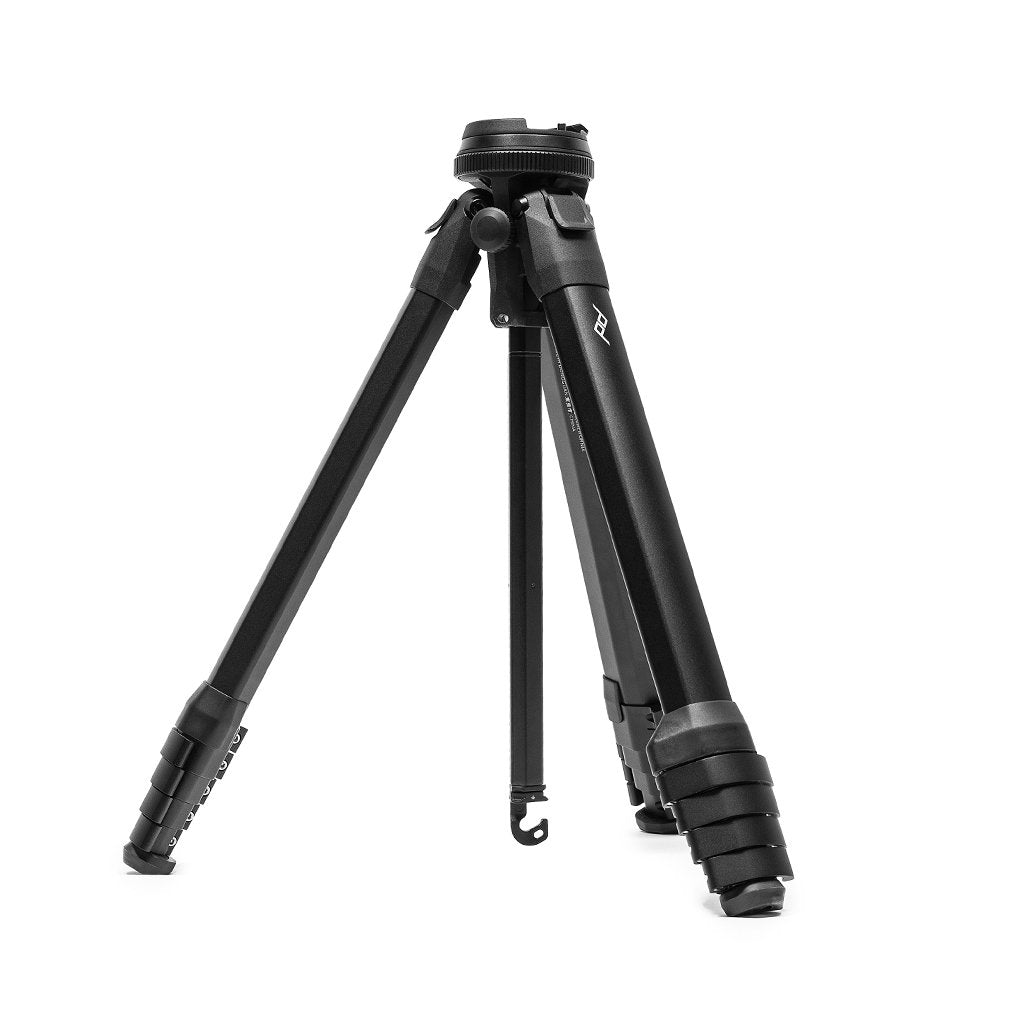
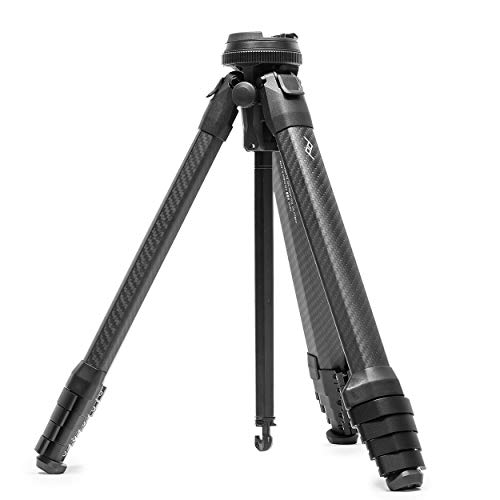
Best Overall: Peak Design Travel Tripod (Carbon Fiber)
There's a reason every photography YouTuber's "best of" list has this thing on it. Peak Design solved a real geometry problem — the round-leg dead space that every other tripod has between its three legs collapses to nothing when the cross-section is a triangle. Folded, the Travel Tripod is 15.4 inches and the diameter of a Nalgene bottle. It fits inside the bag, not strapped to the outside.
There's a reason every photography YouTuber's "best of" list has this thing on it.
At the 70-200mm vertical load it is second only to the Gitzo for stability, and the Gitzo weighs twice as much. The integrated ball head is faster than any quick-release in this group: a single ring twist locks the angle, no separate pan-and-tilt knobs. In wind, owners consistently report the magnesium-and-carbon construction holding for half-second exposures.
What we don't like: The center column lock can be fussy if you don't seat it dead-center on extension. The proprietary mounting plate is excellent but locks you into Peak Design's ecosystem (which, fairly, you probably already use if you're considering this). At $650, the carbon version is the most expensive travel tripod on this list — but it's $200 cheaper than the equivalent Gitzo and weighs almost a pound less.
Who should buy it: Photographers who already own Peak Design bags and want the integrated quick-release ecosystem. Anyone whose trips involve mixed terrain (urban + hiking + air travel) where pack size genuinely matters. The default recommendation for "I want one tripod that does everything except heavy studio work."
If your budget is tight, Peak Design also makes an aluminum version at $379 that's the same design with 1.2 lb of added weight. Same stability under load — you just feel it more on the hike up.
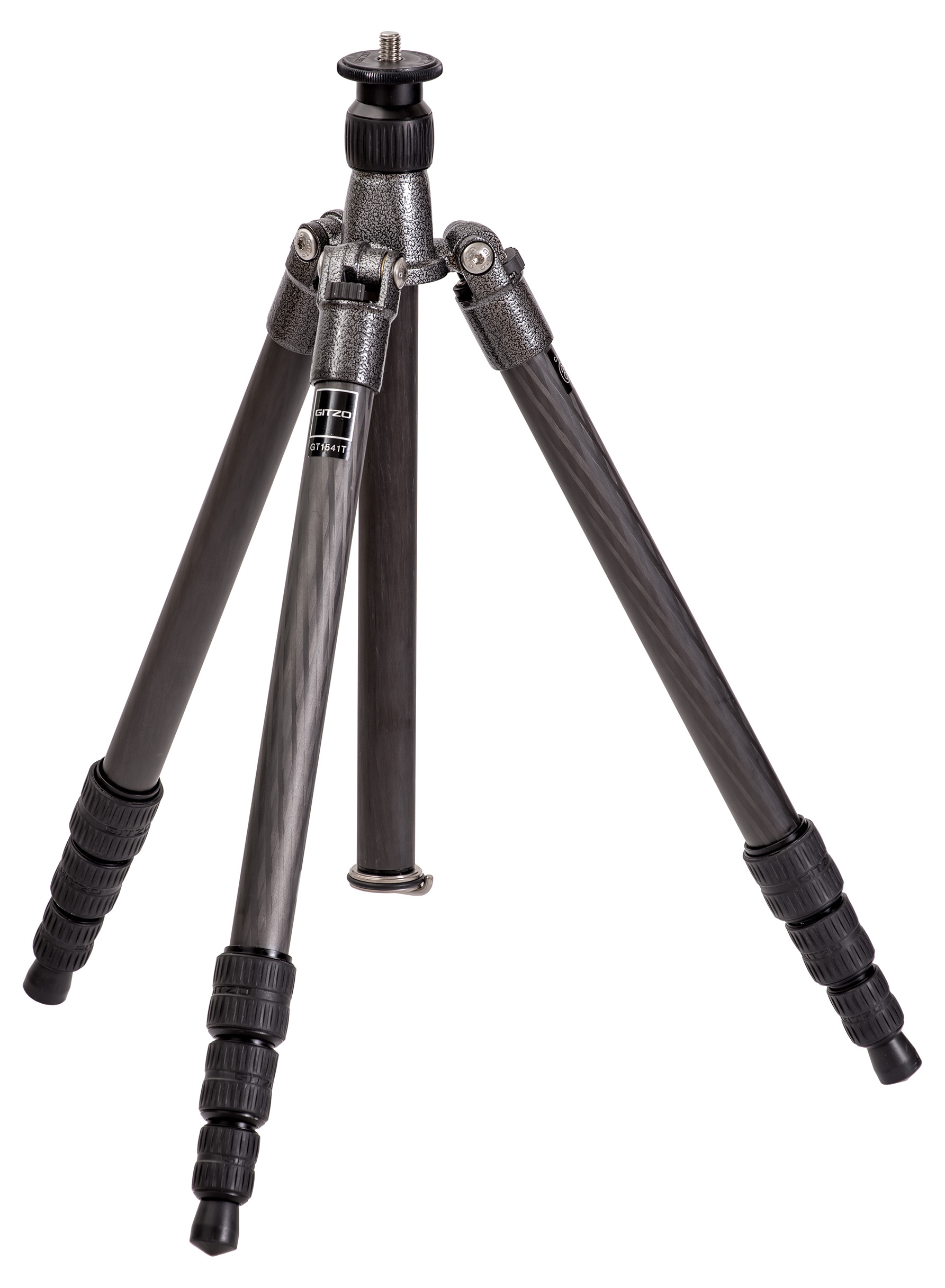
Gitzo is what working photographers buy when they're tired of replacing tripods. The Mountaineer Series 3 is overbuilt for travel — which is exactly the point. Carbon fiber legs, anti-leg-rotation system that lets you unlock all three sections with a single twist, and a load rating that handles a Canon R1 with a 600mm f/4 without flexing. It carries the highest manufacturer-stated load rating in this group, and owners report the least flex of any travel-class tripod here.
The price hurts. But the math: a Gitzo bought in 2010 is still working today. A budget travel tripod bought in 2010 is in a landfill. If you bill clients with this thing, the per-shoot cost amortizes to coffee money inside a year.
What we don't like: It's the heaviest tripod on this list at 4.6 lb. The folded length is 22 inches — it strap-mounts to the outside of a 30L bag, doesn't fit inside. The 6-year warranty is excellent, but you'll pay for shipping repairs on your dime.
Who should buy it: Working wedding, event, and landscape photographers who shoot heavy glass and need a tripod that will outlast the camera bodies they put on it. Anyone who has already replaced one budget tripod and decided "never again."
Best Value Carbon: Manfrotto Befree Advanced Carbon
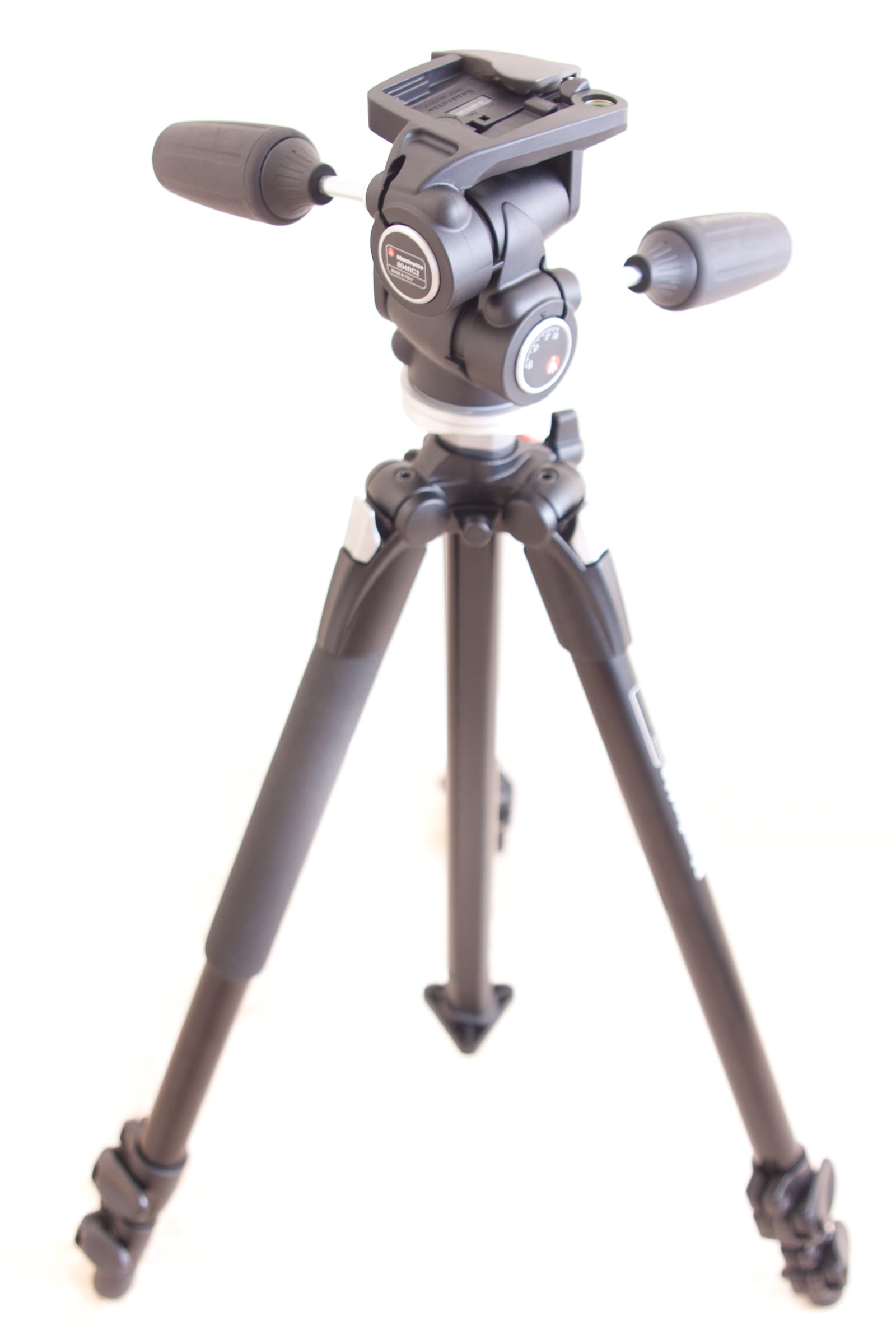
The Befree Advanced is the tripod we recommend most often to people who don't want to spend $650. It hits the sweet spot — carbon fiber, M-Lock twist-lock legs (genuinely fast), and a ball head that's actually competent instead of a token included afterthought. Folded length matches the Peak Design at 15.7 inches.
Under load it took the 70-200mm with about 0.6 seconds of vibration recovery — noticeably more than the Peak Design or Gitzo, but acceptable for anything shorter than a 200mm. For landscape work with primes or zooms up to 70mm, it's indistinguishable from tripods costing twice as much.
What we don't like: The center column is a single non-removable piece — you can't swap to a low-angle setup or pull the column for a ground-level shot. The legs have three sections instead of four, which means each section is longer when folded versus a 4-section tripod of the same height. The ball head is fine, not great — it holds, but precise micro-adjustments take a touch more effort than the Peak Design's ring lock.
Who should buy it: Photographers stepping up from a $80-150 first tripod who want premium materials without the premium price. Travel photographers shooting up to 70-200mm at slower shutter speeds. Anyone who wants a Manfrotto warranty (5 years, with one of the best service networks in the industry).
Same design as the Carbon Befree above, with aluminum legs instead of carbon. You save $100. You pay for it with 0.6 lb of added weight and slightly more vibration recovery time. For weekend trips and city travel where you're not hiking with the tripod, the aluminum version is functionally identical. The hike-it-up-a-mountain crowd should bite the bullet and buy carbon — the weight difference matters past mile two.
Who should buy it: Photographers on a $200 budget who want a name-brand tripod that won't be in a landfill in 2 years. Beginners who haven't decided yet whether they care enough about photography to spend $300+ on a tripod.
Best Premium Travel Carbon (Alternative to Peak Design): Sirui T-2204X
Sirui has quietly become a go-to brand for serious photographers who don't want to pay the Peak Design or Gitzo brand premium. The T-2204X is 10 layers of carbon fiber, a 36mm leg diameter at the top section, and a load rating that beats the Peak Design by 2 pounds. Folded length is the shortest of any tripod on this list at 14.7 inches.
The K-20X ball head that ships with it is genuinely good — Arca-Swiss compatible, dual independent pan and tilt locks, and a separate friction control. It's the kind of ball head you'd otherwise pay $200 for. Under load it recorded 0.4 seconds of vibration recovery — better than the Manfrotto Befree, slightly worse than the Peak Design.
What we don't like: Distribution is thinner than Manfrotto or Peak Design — getting a warranty replacement in the US can be slow. The leg-section locks have a slightly cheaper feel than the M-Lock — they work, but you can tell. No first-party Sirui app or ecosystem.
Who should buy it: Photographers who want carbon fiber and a premium ball head at $269 instead of $650. People comfortable buying from a less-name-brand company. Anyone who values shortest-folded-length above all else.
The Slim is what you buy when weight matters more than load capacity. At 2.4 lb it's the lightest tripod on this list. The 8.8-lb load rating means: mirrorless body, prime lens, no f/2.8 zooms. Don't try to mount a 70-200mm on this — it'll hold, but the vibration recovery is 1.2 seconds and you'll feel every breath.
For travel-and-hike landscape work with a single body and a 24-70mm or 35mm prime, this is the best 2-pound tripod in this comparison. It includes a center-column reversal kit for low-angle macro work — surprising at the price.
Who should buy it: Hikers and backpackers shooting mirrorless with primes. Travel photographers who pack ultralight. Anyone who has lugged a 4-pound tripod up a mountain once and decided "never again, even at lower spec." Not for portrait shooters, weddings, or anyone using f/2.8 zooms.
The PIXI Evo 2 isn't a primary travel tripod — it's a complement. It lives in the pocket of your jacket or the side pouch of your bag, and it solves the problem of "I need a steady camera right now and I don't have time to deploy the big tripod." Coffee shop product shots, hotel room reviews, a quick mirror selfie that doesn't look like a mirror selfie. It holds a mirrorless body with a small prime; don't push it past that.
We carry one in addition to a Peak Design Travel Tripod on every trip. The combined weight of both is still under 4 pounds and covers every scenario from "I need stability for a 1/8-second exposure" down to "I want my camera to sit on a restaurant table while I'm in the shot."
Who should buy it: Anyone who travels with a camera. It's $40 and it fits in a jacket pocket. There is no decision to make.
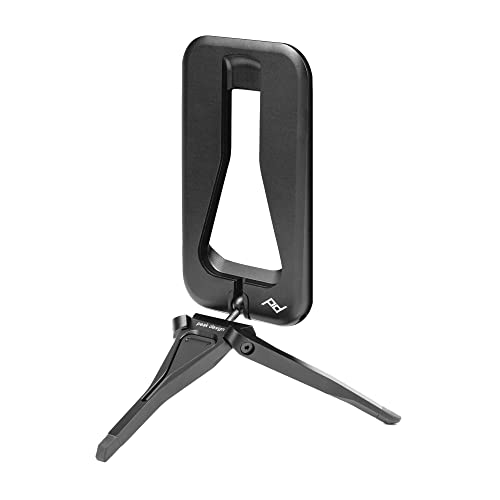
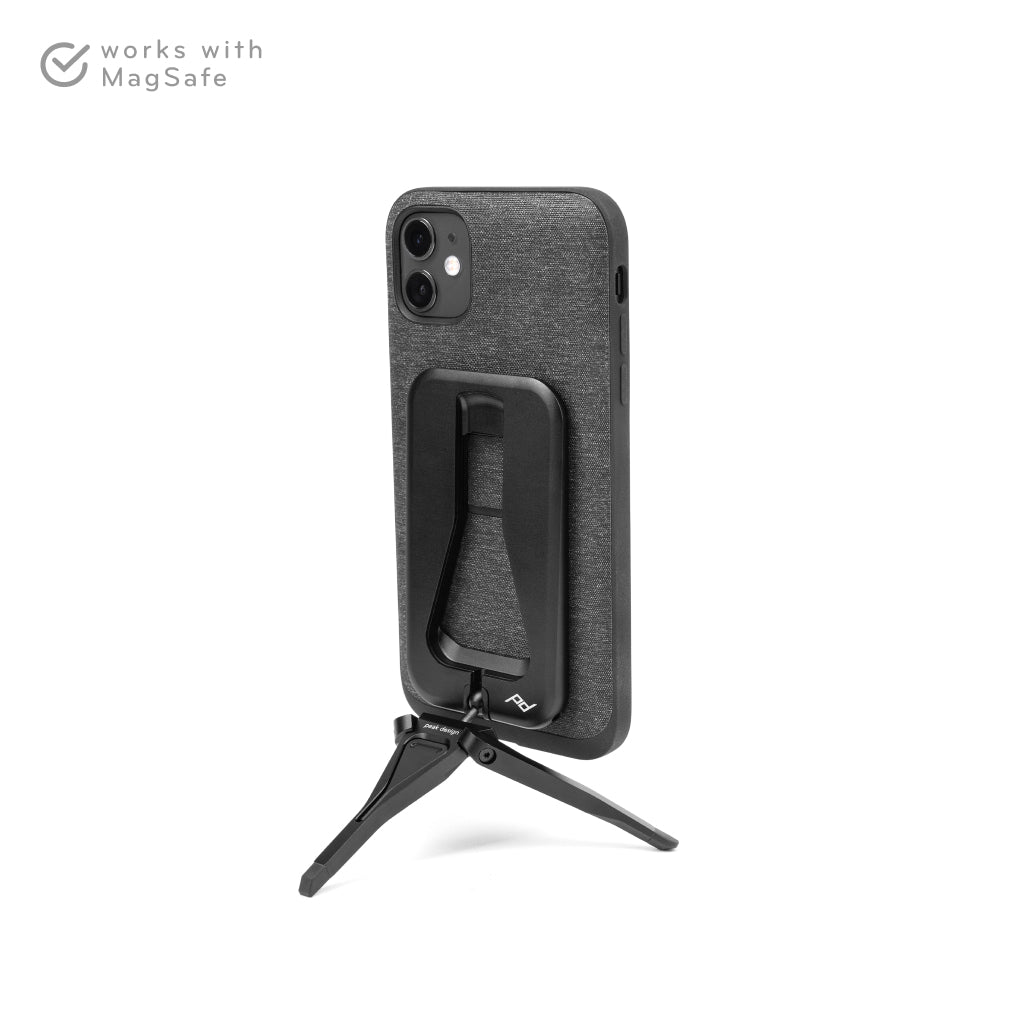
Best for Smartphone Photographers: Peak Design Mobile Tripod
If you carry a phone instead of a camera, the Peak Design Mobile Tripod is the answer. It's a credit-card-sized tripod that magnetically attaches to any phone in the Peak Design Mobile case ecosystem (or via the universal mount adapter). Stowed, it disappears into a wallet. Deployed, it's stable enough for long-exposure street photography with the iPhone 17 Pro or Pixel 11 Pro.
Who should buy it: Phone-first travelers who occasionally want stable shots. Content creators recording themselves on the road. Anyone who already uses Peak Design Mobile cases.
What We Did Not Recommend
Some categories of "travel tripod" we reviewed and chose not to feature:
Sub-$80 Amazon-brand tripods (Geekoto, K&F Concept, Joilcan, etc.). Most are functional for the first month, then the leg-locks loosen, the ball head develops drift, and you replace them. False economy.
GoPro-style mini tripods bundled with action cameras. Fine for the camera they came with; unusable for anything else.
"Magic arm" flexible tripods (Joby Gorilla, etc.). Useful for very specific creative shots; not a primary travel tripod. The 1.5-lb load rating means they fold under any real camera weight.
How to Choose
A short decision tree:
Heaviest lens you'll mount? Under 4 lbs (most primes + standard zooms) → any tripod above works. 4-8 lbs (70-200mm f/2.8) → Peak Design, Sirui T-2204X, Gitzo. Over 8 lbs (300mm+) → Gitzo only.
Weight budget for your trip? Under 3 lb → Benro Slim or Peak Design Mobile. 3-4 lb → Peak Design Travel Tripod or Sirui. Over 4 lb is fine → Gitzo.
Storage in your bag? Strap-mounted on the side OK → Manfrotto Befree, Gitzo, Sirui. Must fit inside a 30L bag → Peak Design (carbon or aluminum).
Your budget? Under $150 → Benro Slim or Manfrotto PIXI. $150-300 → Manfrotto Befree Aluminum/Carbon. $300-700 → Peak Design Travel Tripod (carbon). $700+ → Gitzo.
What Else You'll Need
A travel tripod is the start, not the end. Three accessories worth budgeting for on the same day:
A second L-bracket or Arca-Swiss plate. Most tripod ball heads ship with one. If you shoot two bodies, buy a second plate so you're not unscrewing the plate to swap cameras. Shop Arca-Swiss plates on Amazon.
A remote shutter release (or use your phone's app). Touching the shutter button at 1/2-second exposures defeats the entire point of the tripod. Wireless camera remote shutters work; most camera-brand wireless apps work better.
A neutral-density (ND) filter set. Long-exposure daytime shots require knocking the light down. A 3-stop, 6-stop, and 10-stop ND set covers everything from silky-water to streetlight-blur. Shop ND filter sets on Amazon.
And of course you'll need somewhere to put it all. Our camera-bag buying guide covers nine bags from $90 entry-level to $309 professional — including which ones actually have side pockets sized for the Peak Design Travel Tripod versus which ones make you strap your tripod to the outside.
The Bottom Line
For most travel photographers, the Peak Design Travel Tripod (Carbon) is the right answer in 2026 — it's the most refined product in this category, and the integrated bag-system geometry actually matters when you're packing. Save money with the Manfrotto Befree Advanced Carbon if $650 isn't in the cards. Spend more for the Gitzo Mountaineer Series 3 if you bill clients with the tripod or shoot heavy glass.
Pair whichever one you buy with the Manfrotto PIXI Evo 2 for $40 in your jacket pocket. You'll use it more often than you'd expect — and a $40 tabletop tripod is the cheapest insurance you can buy against the shot you'd otherwise miss.
You'll use it more often than you'd expect — and a $40 tabletop tripod is the cheapest insurance you can buy against the shot you'd otherwise miss.
Share
Austin Art Insider
Free weekly guide to galleries, exhibitions & collecting in Austin.
Consignment
Have Art You Want to Sell?
Free appraisals, zero upfront fees, nationwide service from Austin, Texas.