Austin Gallery
Home & KitchenJuly 22, 202614 min read

Best Chef Knives 2026: 12 Picks From $21 to $190

One knife does 90 percent of the cutting in your kitchen, so this is the highest-leverage tool money you will spend. We sorted the field by what actually decides it: German toughness versus Japanese sharpness, your cutting motion, and honest prices from the $21 culinary school standard to the $190 Seki City flagship.

By Justin Park · How we research

Which Chef Knife Should You Buy?

You areBuy thisPrice
Most cooks, wanting one great knifeMAC Chef Series 8"$114.95
Spending under $50, wiselyVictorinox Fibrox Pro$44.99
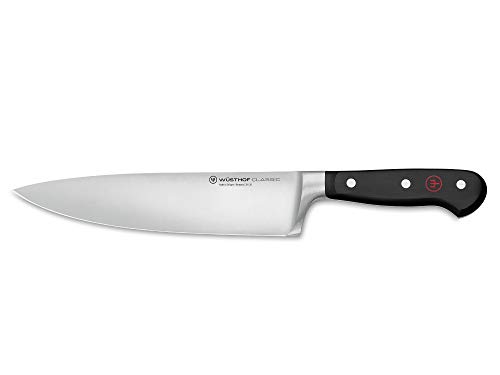
A German-steel loyalistWusthof Classic 8"$170.00
Chasing the sharpest edgeShun Classic 8"$189.95
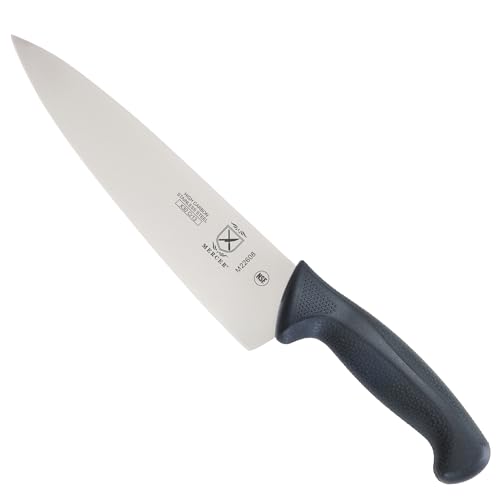
On a $25 budgetMercer Millennia 8"$21.00
An up-and-down chopperVictorinox Santoku 7"$45.88

One knife does 90 percent of the cutting in a kitchen, which makes the chef's knife the highest-leverage $21 to $190 you can spend on cooking. The bad news is that the category is a swamp of Damascus-patterned marketing and "military grade" nonsense. The good news: the genuinely great knives are well known, most cost less than a nice dinner out, and every pick below was verified in stock at a live price with real product data before we listed it.

The whole market splits along one line. German knives (Wusthof, Zwilling, Henckels) are heavier, tougher, and forgiving: softer steel that bends instead of chipping, made for rock-chopping and the occasional crime against a chicken carcass. Japanese knives (Shun, MAC, Global) are lighter and harder: thinner blades, more acute edges, longer edge retention, and less tolerance for abuse. We explain the steel science in the first editorial break below, and our top pick, the $114.95 MAC, wins precisely because it refuses to fully join either camp.

A great knife deserves a board that will not wreck it, so read our cutting board guide next; the wood-versus-plastic call matters more for your edge than most upgrades. If you would rather buy the whole station at once, our knife set guide covers blocks and the smarter a-la-carte route, and the cast iron guide completes the buy-once kitchen. Every link goes to Amazon with our affiliate tag; we earn a small commission, at no cost to you, when you buy through us.

In a Hurry?

The 4 picks that cover most readers. Tap to read the full review or buy direct.

Best Overall

MAC Chef Series 8"

MAC Chef Series 8"

$114.95

Japanese sharpness with Western belly: the knife that refuses the trade-off.

Best Value

Victorinox Fibrox Pro

Victorinox Fibrox Pro

$44.99

The pro-kitchen standard that embarrasses knives at three times the price.

Best Japanese

Shun Classic 8"

Shun Classic 8"

$189.95

A 16 degree Seki City edge wrapped in 68 layers of Damascus steel.

Best Budget

Mercer Millennia 8"

Mercer Millennia 8"

$21.00

The culinary school standard issue: sharp, safe, and $21.

Best OverallOur Pick

Blade

8 inch, thin-ground Japanese high carbon steel

Style

Hybrid profile (Japanese blade, Western belly)

Edge

Hollow-edge dimples reduce food sticking

Handle

Pakkawood, riveted

Made in

Japan

Pros

  • Thin, hard blade takes and holds a scary edge
  • Hybrid profile suits both rock and push cutting
  • Light and nimble through long prep sessions

Cons

  • Hard steel wants care: no bones, no dishwasher
  • Plain looks for the price; the money is in the blade

Ask people who cook for a living what knife they actually reach for and the MAC comes up over and over. The reason is geometry. The blade is ground far thinner than a German knife, so it does not wedge through carrots, it falls through them. The steel is harder, so the edge lasts longer between sharpenings. But unlike a pure Japanese gyuto, the MAC keeps enough curve in the belly that the rock-chop motion most home cooks learned still works.

Why it wins overall: every other knife on this list makes you choose a side, German toughness or Japanese sharpness. The MAC is the one blade that refuses the trade, and at $114.95 it costs less than the flagship from either camp.

The care requirements are real but light: hand wash, hone regularly, do not pry apart frozen chicken. Do that and this is plausibly the last chef's knife you buy. If your budget stops short of three figures, the Victorinox below is the honest answer instead.

Our Pick

The knife that splits the difference between German heft and Japanese sharpness, and wins by doing both. MAC's thin, hard Japanese blade takes a wicked edge, but the profile has enough belly for Western rock chopping and the hollow-edge dimples release food cleanly. Test kitchens have crowned MAC for years, and at $114.95 this is the sweet spot of the whole category.

Buy this if you cook most nights and want one knife that does everything well: thin enough to fall through an onion, curved enough to rock through herbs, light enough that an hour of prep does not wear out your wrist. This is the knife to buy once and sharpen for a decade.

What we don't like

The thin, hard edge wants a little care: no frozen food, no bones, no dishwasher, and a hone every few sessions. If you want a knife you can abuse, the German picks below tolerate more neglect.

Best ValueThe Smart Default

Blade

8 inch stamped high carbon stainless

Style

European workhorse

Handle

Textured non-slip Fibrox, NSF certified

Care

Tolerates real-kitchen abuse

Made in

Switzerland

Pros

  • Pro-kitchen standard sharpness for $44.99
  • Non-slip handle is the safest here when wet
  • Light, nimble, and nearly maintenance-proof

Cons

  • No bolster or forged heft
  • Edge wants regular honing to stay keen

The Fibrox Pro is the knife that ended the argument about how much you need to spend. Culinary students buy it because instructors tell them to. Line cooks buy it because it survives a restaurant shift. Test kitchens keep re-crowning it because in blind cutting tests it hangs with knives costing three times as much. The blade comes sharp, sharpens easily, and the balance point sits right where your pinch grip lands.

What you give up against the MAC is edge retention and that falling-through-food thinness; what you give up against the Wusthof is forged weight and a lifetime-piece feel. What you keep is $70 to $145 in your pocket. If you are outfitting a first kitchen, pair it with a proper cutting board and you have a better setup than most homes ever assemble.

The Smart Default

The most recommended kitchen knife in America, and the recommendation is correct. The Fibrox Pro is what professional kitchens buy by the case: a sharp, well-balanced Swiss blade with a grippy non-slip handle, for $44.99. It beats knives at twice the price and embarrasses every $30 hardware store knife ever sold.

Buy this if you want the best cooking-per-dollar purchase in the entire kitchen. It is the right first serious knife, the right knife for a vacation rental, and the right knife for anyone who refuses to hand wash anything delicate. The textured Fibrox handle stays grippy with wet or greasy hands, which is worth more than most premium features.

What we don't like

The stamped blade is thinner and lighter than forged knives, with no bolster, and the edge needs more frequent honing than the hard Japanese steels. It is a tool, not an heirloom, and it looks like one.

Best GermanThe Heirloom Workhorse

Blade

8 inch forged high carbon stainless

Style

Classic German, full bolster

Hardness

58 HRC, tough and forgiving

Handle

Triple-riveted polymer, full tang

Made in

Solingen, Germany

Pros

  • Forged Solingen build made to outlive its owner
  • Weight and belly power through dense produce
  • Forgiving steel is easy to sharpen at home

Cons

  • Heavier and less acute than the Japanese picks
  • Full bolster makes sharpening the heel awkward

The Wusthof Classic is what most people picture when they picture a serious knife. It has been made in Solingen, Germany for generations, and the formula has not changed because it works: a single forged billet of high carbon stainless, a full tang, a bolster that puts weight over your grip, and a 58 HRC edge that bends rather than chips when you hit something hard.

German vs Japanese in one sentence: German knives like this one are axes that shave, Japanese knives are scalpels that chop. The Wusthof will still be cutting in thirty years of real-world abuse that would send a thin gyuto to the repair bench.

We cover the full steel debate in the editorial break below, and this knife is the German side's best argument. It is also the natural upgrade path from the Henckels Classic, which delivers a similar philosophy at a third of the price. Pair either with a cast iron skillet and you have the two most durable tools a kitchen can own.

The Heirloom Workhorse

The definitive German chef's knife, forged in Solingen since the century before last. Full tang, substantial bolster, a blade with enough weight to fall through a butternut squash, and steel soft enough to shrug off contact with bones and board abuse that would chip a Japanese edge. This is the buy-it-for-life pick of the German school.

Buy this if you cook with force and want a knife that meets you there: breaking down whole chickens, halving winter squash, rock-chopping piles of vegetables. The weight does part of the work, and the forgiving steel means a home sharpener can maintain it forever without special skills.

What we don't like

At $170 it costs more than the MAC while holding a less acute edge. The heft that powers through squash also makes it more tiring for long, delicate prep than the thin Japanese blades.

Best JapaneseThe Precision Flagship

Blade

8 inch VG-MAX core, 68-layer Damascus cladding

Edge

16 degrees per side, exceptionally acute

Hardness

Approximately 61 HRC

Handle

D-shaped ebony pakkawood

Made in

Seki City, Japan

Pros

  • The sharpest out-of-box edge in this guide
  • Hard VG-MAX core holds that edge for months
  • Damascus cladding and pakkawood are genuinely beautiful

Cons

  • Chip-prone if abused; demands careful habits
  • D-shaped handle favors right-handed users

The first cut with a Shun Classic is a small ceremony. The 16 degree edge, noticeably more acute than the 20-plus degrees of the German school, does not push through food so much as pass through it. Tomatoes slice under the blade's own weight. The VG-MAX core runs around 61 HRC, hard enough to hold that edge for months of home cooking, and the rippled Damascus cladding is doing structural work, not just posing for photos.

The cost of that performance is fragility at the margins: this steel chips where the Wusthof's would dent, so the Shun stays away from bones, frozen food, and hard boards. Treat it like the precision instrument it is, give it an end-grain wood board to land on, and it will make every dinner feel slightly luxurious. If $189.95 stretches the budget, the Shun Sora delivers the same edge geometry for $80 less.

The Precision Flagship

The gateway drug of Japanese cutlery. A VG-MAX core clad in 68 layers of Damascus steel, a 16 degree edge that makes tomatoes surrender, and a D-shaped pakkawood handle, handcrafted in Seki City. It is the sharpest thing most kitchens will ever hold, and it looks like it.

Buy this if precision is the joy of cooking for you: paper-thin onion slices, clean herb chiffonade, sashimi-grade fish work. Also the pick if the knife is a gift, because nothing on this list opens to more delight. Lighter than every German knife here, it rewards a careful, gliding technique.

What we don't like

The hard, acute edge is the most chip-prone on this list: no bones, no frozen food, no glass cutting boards, no dishwasher, ever. The D-shaped handle is designed for right-handed grips, so committed lefties should look at the Global instead.

Best for Rock ChoppersAlso Great

Blade

8 inch Friodur ice-hardened forged steel

Style

German, exaggerated curved belly

Bolster

Half bolster, full edge sharpenable

Handle

Triple-riveted polymer, full tang

Made in

Solingen, Germany

Pros

  • Best rocking geometry of any knife here
  • Half bolster means the full edge sharpens easily
  • Ice-hardened steel holds an edge longer than classic German

Cons

  • Wrong profile for push-cut technique
  • Priced against the Wusthof with no clear winner

The Zwilling Pro is what happens when a 300-year-old Solingen house rethinks its own classic. The signature move is the blade profile: a longer, more continuous curve than the Wusthof Classic, so the rock-chop motion never hits a flat spot, plus a slightly broader blade that gives knuckles more clearance over the board.

The second smart decision is the half bolster. Traditional full bolsters, like the Wusthof's, block the heel of the edge from sharpening, so decades of maintenance slowly create a useless unsharpened notch. The Pro's bolster stops short of the edge, so every millimeter of blade stays workable for life. Between this and the Wusthof, pick by motion: relentless rockers take the Zwilling, everyone else flips a coin between two superb German knives.

Also Great

Zwilling's flagship, designed by architect Matteo Thun with the most pronounced curved belly in the German camp and a half bolster that finally lets you sharpen the whole edge. If your knife motion is a rhythmic rock, this blade was drawn for exactly that arc.

Buy this if you learned the rock-chop and love it: the exaggerated curve keeps the tip on the board while the heel does the work, and the half bolster lets your pinch grip choke all the way up for control. Ice-hardened Friodur steel splits the difference between German toughness and better edge retention.

What we don't like

It is $170 territory alongside the Wusthof, and choosing between them is taste rather than performance. The pronounced belly is wrong for cooks who prefer Japanese-style push cutting.

Austin Art Insider

Free weekly guide to galleries, exhibitions & collecting in Austin.

Best German ValueUnder $60

Blade

8 inch high carbon stainless

Style

Classic German curved profile

Handle

Triple-riveted, full tang

Care

Very forgiving, easy home sharpening

Line

Henckels International Classic

Pros

  • The German knife experience for $55.99
  • Full tang and real bolster at this price
  • Shrugs off abuse that would chip Japanese steel

Cons

  • Softer steel needs more frequent honing
  • Finishing is functional rather than fine

The Henckels Classic answers a specific question: how much of the Wusthof experience can $56 buy? The honest answer is most of it. The profile is the same classic German curve, the handle is the same triple-riveted full-tang architecture, and in the hand it delivers that planted, substantial feel that makes the German school so confidence-inspiring for newer cooks.

The compromises live in the metallurgy and the polish. The steel runs softer, so the edge folds a little sooner and the honing rod earns its counter space. But here is the framing that matters: this knife plus the right two companions costs less than one premium German blade, and covers a whole kitchen. For most households that is the smarter ledger.

Under $60

The German formula at a third of the Wusthof's price. Full tang, triple rivets, a proper bolster, and the classic curved profile, from the sister brand of Zwilling. The steel and finishing are a step below Solingen's best, but for $55.99 the gap is far smaller than the price suggests.

Buy this if you want forged-style German heft without the three-figure spend, or you are equipping a kitchen that gets shared, loaned, and occasionally mistreated. It takes the same abuse the premium Germans do and sharpens just as easily.

What we don't like

The steel is softer than the Solingen flagships, so it needs honing more often, and the fit and finish are visibly a tier down. Satin-finished, not a showpiece.

Best All-MetalThe Modernist

Blade

8 inch CROMOVA 18 stainless

Construction

Seamless one-piece steel

Balance

Hollow handle, sand-filled for balance

Grip

Dimpled steel, ambidextrous

Made in

Japan

Pros

  • Seamless build is the most hygienic here
  • Light and fast through long prep
  • Ambidextrous grip, unlike the D-handled Shun

Cons

  • Steel handle gets slick with greasy hands
  • Light weight will not do the work on dense produce

Forty years on, the Global silhouette still looks like the future. The Model X modernizes the classic: the same seamless CROMOVA 18 steel body and dimpled grip, with a slightly taller blade and revised edge. Because the knife is one continuous piece of metal, there is no rivet line to trap moisture, no tang-to-scale joint to loosen, and cleanup is a ten-second wipe.

In the hand it is the lightest serious knife on this list, and that is the real decision point. Fans say the low mass means speed and zero fatigue; skeptics miss the momentum a forged German blade brings to a butternut squash. Try holding a friend's Global before committing if you can. If you already know you love the feel, the Model X is the best expression of it yet.

The Modernist

The iconic one-piece steel knife, updated. Global's Model X takes the design that changed knife aesthetics in 1985, seamless stainless from tip to pommel with a dimpled grip, and refines the blade geometry and balance. No rivets to loosen, no handle scales to harbor bacteria, no wood to baby.

Buy this if hygiene and low maintenance rank high: the seamless body has nowhere for gunk to hide and wipes truly clean, which is why Globals fill so many professional kitchens. Also the pick for cooks who love a light, fast knife with a neutral grip that suits either hand.

What we don't like

The all-steel handle divides people: some find the dimpled grip perfect, others find it cold and slick with greasy hands. Notably lighter than German forged knives, which reads as agile to some and insubstantial to others.

Best Japanese Under $110Smart Splurge

Blade

8 inch, VG10 cutting core, stainless upper

Edge

16 degrees per side, hand-finished

Construction

Composite (premium steel where it cuts)

Handle

Textured polymer blend

Made in

Seki City, Japan

Pros

  • True VG10 16 degree edge for $109.95
  • Composite build puts cost where the cutting happens
  • Lightest path into genuine Japanese cutlery

Cons

  • Visible weld line and plainer handle
  • Identical fragility rules to pricier Japanese steel

The Sora is the smartest piece of engineering in Shun's lineup. The insight: 90 percent of a chef knife's cutting happens along the bottom third of the blade, so the Sora welds a band of premium VG10 steel along the edge and builds the rest of the blade from tougher, cheaper stainless. You get the Classic's celebrated 16 degree Seki City edge where food meets steel, and save $80 on the parts that never touch a tomato.

Side by side with the Classic, the differences are cosmetic more than functional: a weld line instead of Damascus ripples, polymer instead of pakkawood. The cut feels remarkably similar. If the Shun experience is the goal and the budget has a ceiling, this is the answer, and it makes a genuinely impressive gift alongside our coffee lover picks for the person who owns their kitchen.

Smart Splurge

Shun's clever budget play: a VG10 super-steel edge welded to a tough stainless upper blade, so your money goes into the two inches that actually cut. Same 16 degree Seki City edge geometry as the Classic, same handmade sharpness, $80 less.

Buy this if you want real Japanese performance, the acute edge, the hard steel, the featherweight feel, without crossing $110. It is the rational pick for a first Japanese knife, since learning the care habits on a $110 blade beats learning them on a $190 one.

What we don't like

The composite construction shows a visible weld line, and the handle is molded polymer rather than the Classic's pakkawood. Same care rules as every hard Japanese edge: no bones, no frozen, no dishwasher.

Best Hand-Forged Under $60The Looker

Blade

8 inch, 3-layer 9Cr18MoV high carbon

Style

Traditional gyuto, hammered tsuchime finish

Handle

Hardwood, Japanese octagonal style

Care

Hand wash, hone often

Presentation

Ships in a gift box

Pros

  • Hand-forged looks far above its price
  • Real gyuto geometry for push-cut technique
  • Arrives properly sharp, in a gift box

Cons

  • Edge retention below the premium Japanese steels
  • QC is good for the price, not Seki City grade

This is the knife that makes dinner guests ask where you got it. The hammered tsuchime finish, the layered steel line along the edge, the octagonal wood handle: the Mitsumoto Sakari borrows the visual language of $300 hand-forged gyutos and sells it for $58.79. Crucially, the blade underneath is real: 9Cr18MoV is a proven high carbon stainless that takes a genuinely sharp edge.

The honest framing is that you are getting 80 percent of the premium gyuto experience with the remaining 20 percent, elite edge retention and flawless finishing, being exactly what the Shuns charge for. As a first Japanese knife, a gift, or a second blade for the cook who already owns a German workhorse, it overdelivers. Sharpen it a touch more often and enjoy the compliments.

The Looker

The most knife-per-dollar drama on this list: a three-layer 9Cr18MoV blade with a hammered finish and a rosewood-tone handle that looks like it cost three times its $58.79 price. A legitimate gyuto profile for push-cutters on a budget.

Buy this if you want the Japanese knife experience, the flatter profile, the light swing, the looks, at a price where a first sharpening mistake is not a tragedy. It is also the best-looking gift under $60 in this guide.

What we don't like

9Cr18MoV is good steel, not VG10: it arrives sharp but gives up its edge sooner than the Shuns, so plan on more frequent touch-ups. Quality control at this price is good rather than flawless.

Best Sharpness Per DollarAlso Great

Blade

8 inch high carbon Japanese-style steel

Grind

Thin, acute edge geometry

Handle

Ergonomic hardwood composite

Care

Hand wash only, avoid bones and frozen food

Value

Performance bracket above its price

Pros

  • Out-of-box sharpness that rivals $150 blades
  • Thin grind glides through dense vegetables
  • No-frills spend: all money in the blade

Cons

  • No heritage brand backing or storied warranty
  • Thin hard edge demands careful technique

Strip away brand heritage and a chef's knife is steel, geometry, and grind, and the Hoshanho spends its entire $64.99 on exactly those three. The blade is ground noticeably thinner than anything German at this price, the steel runs hard, and the factory edge arrives at an angle that makes supermarket tomatoes feel like an unfair fight.

What separates it from the Mitsumoto Sakari one slot up is temperament: the Hoshanho is the plainer, slightly better cutter, while the Mitsumoto is the better-dressed near-equal. Push-cut purists take this one; gift-givers take the hammered finish. Either way, the sub-$70 Japanese-style tier has never been this good, and it is the reason mid-tier legacy brands are nervous.

Also Great

The internet's favorite direct-from-factory Japanese-style blade, and the hype holds up at $64.99: hard high carbon steel ground thin, a comfortable pakkawood-style handle, and out-of-box sharpness that competes far above its bracket.

Buy this if you push-cut and want maximum keenness for minimum spend, and you do not care whether the name on the blade impresses anyone. It is the enthusiast's budget pick: thin grind, acute edge, no brand tax.

What we don't like

The brand carries no heritage and no storied warranty; you are buying the blade, not the name. Thin, hard grinds at this price chip if treated like a German knife, so the care rules apply in full.

Best BudgetBest Under $25

Blade

8 inch stamped Japanese steel

Handle

Santoprene grip, NSF certified

Role

Culinary school standard issue

Care

Hand wash recommended, hone often

Weight

Very light

Pros

  • Culinary school standard for $21
  • Comes genuinely sharp and rehones easily
  • Grippy handle safe with wet hands

Cons

  • Thin stamped blade flexes on dense produce
  • Needs honing more often than any pick above

Every culinary program in America has a knife kit, and this is the chef's knife inside most of them. That fact does the reviewing for us: instructors who watch hundreds of students prep thousands of pounds of food chose the Millennia because it is sharp, safe, nearly indestructible at its job, and cheap enough to replace without a meeting.

The decisive version: under $25 there is the Mercer and there is everything else. If the budget allows $45, the Victorinox buys a real step up in blade quality. Below that line, buy the Mercer and never look back.

It will not flatter your technique or your countertop, but it will fall through an onion the day it arrives, and with a $10 honing rod it will keep doing so for years.

Best Under $25

The knife culinary schools hand their students on day one, for $21. Japanese steel, a grippy Santoprene handle, NSF certification, and a factory edge sharper than knives at four times the price. The floor of acceptable knife quality, and it is remarkably high.

Buy this if the budget is $25 and not a dollar more: first apartment, college kitchen, camp kit, or the backup blade that saves your good knife from houseguests. Thousands of culinary students learn on this exact knife every year, which is the strongest endorsement a cheap blade can have.

What we don't like

The stamped blade is thin and flexy compared to everything above it, and the edge needs honing frequently. The handle is pure function; nothing about it will spark joy beyond the receipt.

Best Santoku AlternativeThe Different Shape

Blade

7 inch santoku, Granton hollow edge

Style

Japanese-inspired, Swiss made

Handle

Ergonomic polypropylene

Motion

Push and chop cutting

Care

Famously low maintenance

Pros

  • Ideal geometry for up-and-down choppers
  • Granton dimples release wet slices cleanly
  • Victorinox care-free ownership at $45.88

Cons

  • Flat edge cannot rock-chop herbs well
  • Shorter reach on large produce and roasts

Watch an untrained cook chop and most of them move the knife straight up and down, which is exactly the motion the santoku was designed for. The flatter edge meets the board along its whole length, the wide blade scoops what it cuts, and the Granton dimples keep zucchini coins from riding the steel. For a lot of home cooks, this shape simply fits better than the Western chef's knife they defaulted to.

Victorinox's version brings the same virtues as our value-pick Fibrox: honest Swiss steel, a grippy handle, zero preciousness. At $45.88 it is a superb second blade for a household where two people prep together, one on the Fibrox chef's knife, one on this. Round out the station with a full set or keep it minimalist; either way this shape earns its slot.

The Different Shape

The best answer to a question many shoppers should ask: do I even want a chef's knife shape? The santoku's flatter edge and shorter blade suit up-and-down choppers, and Victorinox's version adds Granton dimples and the brand's famous ease of care at $45.88.

Buy this if the classic chef's knife has always felt long or unwieldy to you, or your natural motion is straight up-and-down chopping rather than rocking. Smaller hands and smaller cutting boards both favor the 7 inch santoku format.

What we don't like

The flat profile is genuinely bad at rock chopping, and the shorter blade means more strokes through large melons and roasts. It complements a chef's knife more than it replaces one for every task.

Head-to-Head

How the top picks compare

The two matchups knife shoppers actually agonize over: the flagship German against the flagship Japanese, and the two budget legends against each other.

Wusthof Classic vs Shun Classic: The Flagship Fight

The Solingen tank against the Seki City scalpel, $170 versus $189.95.

Wusthof Classic 8 Inch

Wusthof

Wusthof Classic 8 Inch

Forged toughness that forgives every kitchen sin

$170.00
Check Price →
Shun Classic 8 Inch

Shun

Winner

Shun Classic 8 Inch

A 16 degree edge that makes produce surrender

$189.95
Check Price →

Our verdict

Winner: Shun Shun Classic 8 Inch. The Shun wins for the cook who will actually maintain it, because sharpness is the point of a knife and the Shun is simply sharper, month after month, thanks to steel the Wusthof cannot match at 58 HRC. Slicing tomatoes, breaking down herbs, prepping fish: the 16 degree edge turns work into pleasure. But this is the closest verdict in the guide, because the Wusthof wins every durability event: it laughs at chicken bones, tolerates the occasional lazy dishwasher run it should never get, and will outlive its owner with basic care. Choose by honesty about your habits. Careful cook who hand washes: Shun. Busy family kitchen where the knife leads a hard life: Wusthof, and it is not close.

Buy the Wusthof

your kitchen is busy, shared, and occasionally careless with tools.

Buy the Shun

you hand wash, hone, and want the sharpest daily driver made.

Victorinox Fibrox Pro vs Mercer Millennia: The Budget Legends

The $44.99 pro-kitchen darling against the $21 culinary school issue.

Victorinox Fibrox Pro 8 Inch

Victorinox

Winner

Victorinox Fibrox Pro 8 Inch

Swiss blade quality that outcuts its whole price class

$44.99
Check Price →
Mercer Culinary Millennia 8 Inch

Mercer Culinary

Mercer Culinary Millennia 8 Inch

Culinary school performance for a fast-food price

$21.00
Check Price →

Our verdict

Winner: Victorinox Victorinox Fibrox Pro 8 Inch. The Victorinox wins because the $24 difference buys real blade: better steel that holds its edge noticeably longer, a stiffer blade that tracks straight through dense produce, and Swiss fit and finish that makes the knife feel like a keeper rather than a placeholder. Spread over a decade of dinners, $24 is nothing. The Mercer's case is narrow but legitimate: if the budget truly stops at $25, if the knife is destined for a dorm, a campsite, or loaner duty, or if you are buying three knives for the price of one, it delivers 85 percent of the Victorinox experience. But when someone asks for one budget knife recommendation, the Fibrox Pro is the answer, full stop.

Buy the Victorinox

you want the best knife under $50 and plan to keep it for years.

Buy the Mercer Culinary

the cap is $25, or the knife is for a dorm, camp kit, or loaner drawer.

How we
chose

We ranked these chef knives the way a working kitchen would, not the way a spec sheet reads:

  • Cutting performance for the technique. A knife is only as good as its match to your motion. We classified every pick by rock-chop, push-cut, or hybrid suitability and said plainly which camp it serves.
  • Steel honesty. Hardness, edge angle, and edge retention were weighed against fragility and care burden. We flagged every hard Japanese edge's real-world rules rather than pretending sharpness is free.
  • Verified live prices and stock. Every knife was checked against Amazon's live catalog data at publish time: real price, in stock, real product images. No list-price fiction.
  • Value within tier. A $21 knife and a $190 knife are judged against their own money. We required each pick to beat its own price bracket, and we say when spending less is the smarter call.
  • Longevity and maintainability. We favored knives a home cook can actually keep sharp: forgiving steels for beginners, standard bevels, and construction that survives a decade of real use.

Share this guide

Share

Common Questions

Frequently Asked Questions

Have art
to sell?

Austin Gallery specializes in selling inherited art, estate collections, and fine art with zero upfront fees. Get a free evaluation today.