Austin Gallery
Studio & ToolsJuly 22, 202614 min read

Best Chairs for Sewing Rooms 2026: Top 10 Picks

Ten verified picks built around how sewists actually sit: armless chairs that pull under the machine table, ergonomic options whose armrests get out of the way, saddle stools that fix posture without a backrest, and the counter-height seating your cutting table has been missing.

By Justin Park · How we research

What Chair Is Best for a Sewing Room?

Your situationBuy thisPrice
The correct chair for a sewing machine tableBoss B315 Armless$79.99
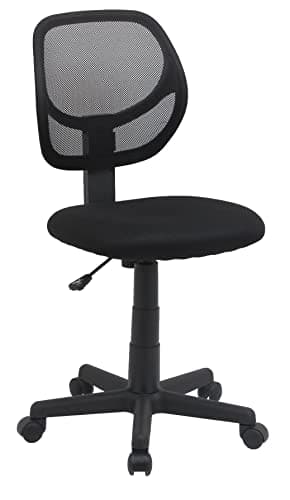
Same geometry, tightest budgetSweetcrispy Armless Mesh$31.99
Plushest seat among the armless picksSerta Essential Armless$89.99
All-day quilting marathons, tired backSIHOO M57$189.97
The daily-studio splurgeFlexiSpot ErgoX$279.99
Upright posture without a backrestYEEZEE Saddle Stool$62.99
Counter-height cutting tableBestOffice Drafting Chair$61.98
Rolling between machine, iron, and matBrick Attic Rolling Stool$79.99

Sewists sit differently from everyone else the furniture industry designs for, and most sewing-room back pain traces to exactly that mismatch. Machine work is a forward-leaning, elbows-free, low-table activity: your torso pitches toward the needle, your forearms work at fabric height, and armrests, the flagship feature of every office chair, become obstacles that bang the table apron and hold you inches too far from your seam. Add the second station most rooms grow (a counter-height cutting table) and the standard office chair fails twice in one room.

This guide is built around those specifics. Our top pick, the Boss B315 Perfect Posture armless task chair ($79.99), is the classic correct answer at the machine, and around it we cover the whole real map: armless picks from $31.99 up, true ergonomic chairs whose armrests adjust out of the sewing equation for marathon quilters, the saddle stools that fix posture without a backrest, and the counter-height seating your cutting table has been missing. Every product verified in stock at a real price at publish time. Every link goes to Amazon with our affiliate tag; we earn a small commission, at no cost to you, when you buy through us.

Outfitting the rest of the room? Our sewing machine guide covers the main event, and artists and makers with a drawing or craft desk in the same space should see the artists' chair guide, this guide's sibling for the studio side.

In a Hurry?

The 3 picks that cover most readers. Tap to read the full review or buy direct.

Best Overall

Boss B315 Armless

Boss B315 Armless

$79.99

The correct sewing-table chair: armless, lumbar-curved, decades proven.

The Marathon Chair

SIHOO M57

SIHOO M57

$189.97

Full ergonomics with armrests that drop and rotate clear of the table.

Best Under $35

Sweetcrispy Armless Mesh

Sweetcrispy Armless Mesh

$31.99

The whole ergonomic argument for the price of two spools of thread.

Best Overall Sewing ChairOur Pick

Arms

None (the sewing-specific feature)

Back

Contoured lumbar support

Height

Pneumatic adjustment, sewing-table range

Base

5-star with casters

Pros

  • Armless design pulls fully under the machine table
  • Lumbar contour supports the forward sewing lean
  • Decades-proven commercial build at $79.99

Cons

  • Working-grade upholstery, not lounge comfort
  • No recline or headrest by design

Sewists figure out the arms problem within one evening: office chair armrests hit the sewing table's apron, hold you four inches too far from the needle, and pin your elbows just where they need to float. The B315 is the classic answer, an armless task chair with a properly contoured back, built by a company that has supplied sewing and work rooms since before ergonomics was a marketing word.

Why armless is the sewing feature: feeding fabric is an elbows-out, forearms-forward activity, and control comes from your hands resting on the table bed. Armrests interfere twice, blocking the chair from pulling in and bumping your elbows mid-seam. Every hour at the machine argues for armless; the exceptions are covered in the picks below.

The height range matters too: sewing tables run lower than desks (more on this in the height note further down), and the B315's pneumatic range covers that band where many office chairs bottom out too high. Pair it with a machine from our sewing machine guide and the ergonomic foundation of the room is set for under $80.

Our Pick

The sewing chair archetype done right: armless so you slide fully under the machine table, a contoured lumbar back for the forward-leaning posture sewing forces, and simple height adjustment that hits the low-table range sewing desks actually use. Boss has built this exact chair for decades.

Buy this if you sew at a standard sewing table or desk and want the correct tool, not an office chair pressed into service. Armless is not a budget compromise here, it is the feature: your elbows need to travel freely at fabric-feeding height, and the chair needs to pull all the way in so the machine, not your reach, sets your distance.

What we don't like

The fabric is commercial-grade rather than plush, and there is no headrest or recline; this is a work posture chair by design. Taller sewists at high tables should check the height range against their setup.

Check the Boss B315 on Amazon →$79.99 · Boss Office Products
Best for Long Quilting SessionsThe Marathon Chair

Armrests

3D adjustable (drop low, rotate clear)

Lumbar

Adjustable support + headrest

Back

High mesh

Capacity

330 lbs

Pros

  • Real ergonomics for marathon sewing days
  • Armrests adjust low and away for table clearance
  • Serves the desk half of a modern sewing practice

Cons

  • Still bulkier at the table than true armless
  • Physically large in small rooms

The strongest argument against armless chairs comes from marathon quilters: eight hours of piecing on a low-back chair is its own back injury. The M57 is our answer to that argument. It is a genuine ergonomic chair (adjustable lumbar, headrest, breathable mesh) whose 3D armrests solve the sewing conflict by dropping and rotating out of the elbow path, close enough to armless when it counts.

It also acknowledges what sewing rooms have become: half machine station, half desk, with pattern PDFs, cutting software, and an embroidery queue on a laptop. One chair that does both jobs properly is a fair trade for the extra pull-in care at the machine. It shares DNA with the chairs in our artists' chair guide, where SIHOO's ergonomic range earns its place at studio tables too.

The Marathon Chair

The full-ergonomic option for the sewing room: adjustable lumbar, headrest, and crucially 3D armrests that drop low and swing out of the way, which lets an ergonomic chair coexist with a sewing table. For all-day quilters with back history, this is the health spend.

Buy this if sewing sessions run three-plus hours and your back has opinions afterward. The M57 is the rare chair that serves both postures of the craft: armrests lowered and rotated away for machine work, raised again for the hand-stitching, planning, and computer time (pattern software, embroidery files) that modern sewing involves.

What we don't like

Even adjusted, armrests demand more care pulling in than a true armless chair, and the tall back makes it a big object in a small craft room. Check your table's apron height against the lowered-armrest position.

Best Premium ErgonomicThe Splurge

Lumbar

Dynamic, tracks your posture

Armrests

3D adjustable

Extras

Recline + pull-out footrest

Seat

Breathable mesh

Pros

  • Dynamic lumbar supports the forward sewing lean
  • Recline-plus-footrest resets between sessions
  • Furniture-grade build for a daily workspace

Cons

  • The most expensive chair in this guide
  • Footprint demands a real room, not a nook

Here is the posture nobody designs for: the sewing lean, torso pitched forward over the needle, back abandoned by every backrest built for reclining office workers. The ErgoX's dynamic lumbar is the feature that finally addresses it, tracking forward with your spine instead of waiting behind you. For sewists logging serious weekly hours, that one behavior justifies the tier jump.

The rest of the package is quality-of-studio-life: a recline with footrest for pattern-reading and hand-finishing breaks, armrests that adjust clear of the table, and materials that hold up to daily use. Between this and the M57, the head to head below draws the line; short version, the M57 is the sensible ergonomic buy and this is the one your back writes thank-you notes about.

The Splurge

The premium tier for the serious home studio: dynamic lumbar that follows your lean, 3D armrests that clear the table, recline with a pull-out footrest for the between-marathons rest, and build quality that reads as furniture rather than equipment.

Buy this if the sewing room is a daily workplace, the sessions are long, and the recline-and-footrest break between them sounds less like luxury and more like how you already wish you could work. The dynamic lumbar genuinely tracks the forward sewing lean instead of abandoning you the moment you leave the backrest.

What we don't like

$279.99 is real money, and the footrest and recline are session-break features, not sewing features. Big footprint; measure the room before falling in love.

Best Budget ArmlessBest Under $50

Arms

None

Back

Low, contoured lumbar

Footprint

Compact, tucks fully under tables

Material

PU leather cushion

Pros

  • Correct armless geometry at the lowest price here
  • Disappears under the table in small rooms
  • Easy assembly and light enough to shift anywhere

Cons

  • Low back caps long-session comfort
  • PU upholstery runs warm

The most common sewing setup in America is a machine on a table in the corner of a room that does three other jobs, and this is the chair for that reality. The DUMOS gives the two things that matter (armless clearance and adjustable height with lumbar shape) in a package small enough to vanish under the table when the room converts back to guest bedroom or office.

The trade is stamina: a low back is fine for the hour-a-night sewist and insufficient for all-day quilting binges, which is what the SIHOO and FlexiSpot picks below exist for. As a first real sewing chair or a second-machine chair, it is the easiest $47 in this guide.

Best Under $50

The right shape for less: armless, low-back with real lumbar curve, height adjustable, and compact enough for the closet-corner sewing nooks where many machines actually live. At $46.99 it makes correct sewing ergonomics nearly an impulse buy.

Buy this if the sewing space is small, the budget is smaller, and you still refuse to sew from a dining chair. The small footprint tucks entirely under most sewing tables between sessions, which in a shared room or bedroom corner is half the appeal.

What we don't like

The low back supports the lumbar region and nothing above it; marathon quilting days want the taller-backed picks. PU leather runs warm in un-air-conditioned sewing rooms.

Best Comfort ArmlessThe Plush Option

Arms

None

Back

Breathable mesh, mid-back

Seat

Serta plush sculpted cushion

Base

5-star with casters

Pros

  • The most comfortable seat among the armless picks
  • Mesh back for warm sewing rooms
  • Same correct under-table geometry

Cons

  • Costs more than the equally correct Boss
  • Mid-back, not a marathon chair either

There is a moment about ninety minutes into a bind-the-quilt session when every chair tells you the truth about its cushion, and Serta built this one for that moment. The Essential Armless takes the correct sewing-chair shape and adds what the category's commercial roots usually skip: a genuinely plush, sculpted seat and a mesh back that keeps the warm side of a long session tolerable.

Between this and our top pick, the $10 difference buys cushion over commercial durability heritage; both geometries are right. Pick by your sessions: frequent long sits favor the Serta, daily short ones the Boss.

The Plush Option

The armless chair for sewists who found the category's commercial builds too spartan: Serta's mattress-brand cushioning in a breathable mesh-back task chair with the same slide-under-the-table geometry as our top pick.

Buy this if seat comfort is the deciding factor and the budget stretches past the Boss. The thicker sculpted cushion earns its keep in two-hour-plus sessions, and the mesh back breathes better than fully upholstered options in warm craft rooms.

What we don't like

Slightly larger footprint than the DUMOS in tight nooks. Mid-back support lands between the low-back budget picks and the tall ergonomic chairs without fully replacing either.

Austin Art Insider

Free weekly guide to galleries, exhibitions & collecting in Austin.

Best Ultra-BudgetThe $32 Correct Answer

Arms

None

Back

Low mesh with lumbar curve

Weight

Light, easy to move between rooms

Price

$31.99

Pros

  • Full correct geometry for $31.99
  • Mesh stays cool, frame stays light
  • Perfect learner and second-station chair

Cons

  • Thin cushion, light-duty mechanism
  • A stepping stone, not a destination

Every sewing teacher has watched a student fight a dining chair: wrong height, no roll, arms pinned, back complaining before the bobbin runs out. The Sweetcrispy is the $32 end of that fight. It is not a chair anyone brags about, and it does not need to be; it needs to put the sewist at the right height with free elbows and a bit of lumbar curve, and it does.

The honest lifespan framing: sew daily and this chair is a two-year bridge to the Boss or Serta; sew weekly and it may quietly serve for many. Either way the dining chair goes back to the dining room, where it belongs.

The $32 Correct Answer

The cheapest chair we can honestly recommend for a sewing table: armless, mesh-backed, height adjustable, rolling. It is light-duty in every sense, and it is still transformatively better at the machine than the dining chair it replaces.

Buy this for the starter setup, the kid learning to sew, or the second machine at the retreat house. At $31.99 it delivers the entire ergonomic argument of this guide (armless, adjustable, lumbar-curved) at the price of two spools of good thread.

What we don't like

Build is honest for the price, which means light: the cushion is thin, the mechanism basic, and heavy daily use will age it in a couple of years. Treat it as the gateway chair it is.

Best Saddle StoolThe Posture Reset

Seat

Wide contoured saddle, thick cushion

Posture

Forward pelvis tilt, upright spine

Height

Gas lift, runs taller than task chairs

Base

Rolling, 360 swivel

Pros

  • Upright spine without any backrest at all
  • Fastest chair-to-standing transitions in the guide
  • Doubles at cutting table and craft counter heights

Cons

  • One-week adjustment period is real
  • Runs tall for the lowest sewing desks

Watch a dental hygienist work eight precise hours and you have seen the saddle stool's argument. The seat shape rolls your pelvis forward, which stacks the vertebrae into their natural curve without a backrest doing the propping; posture becomes the default rather than the discipline. Sewing, another lean-in precision craft, borrows the tool perfectly.

The honest onboarding: the first sessions feel like a workout for muscles chairs let atrophy, and the height range suits standard-to-tall tables better than the lowest machine desks. Sewists who convert tend to convert completely, and the ones who do not still keep it at the cutting table, where its half-standing height is exactly right.

The Posture Reset

The sewing world's open secret, borrowed from dental and salon work: a saddle seat tilts the pelvis forward and stacks the spine naturally upright, which for the lean-in posture of machine sewing beats most backrests at their own game. No arms, no back, total freedom of movement.

Buy this if sitting upright takes effort by hour two, or if you constantly pivot between machine, ironing board, and cutting mat: the saddle keeps you half-standing, so every transition is a glide instead of a hoist. Many sewists run one alongside a conventional chair and alternate.

What we don't like

The saddle posture works muscles a chair lets sleep; the first week involves genuine adjustment and inner-thigh commentary. Sitting height runs higher than a chair, which suits counter-height cutting tables better than very low machine desks.

Best Saddle with Back SupportThe Supported Saddle

Build

Professional grade (medical/salon market)

Seat

Dense contoured saddle cushion

Lift

Smooth commercial gas cylinder

Base

Heavy stable five-caster

Pros

  • Pro-duty build for daily saddle sitters
  • Denser cushion holds shape over years
  • Stable heavy base for lean-and-reach work

Cons

  • Pricey for a first saddle experiment
  • Standard saddle height and adjustment caveats

Every seating category has its buy-once tier, and in saddle stools this is what it looks like. FRNIAMC sells mainly to people who sit in saddles for their entire working day, and the engineering shows where budget saddles wear: cushion density that does not pancake in year one, a cylinder that stays smooth, and a base heavy enough to stay planted when you lean and reach across a cutting table.

The buying logic is sequential: prove the saddle posture suits you (the YEEZEE is the affordable proof), then upgrade here if the stool becomes your primary seat. Sewists who skip straight to this tier on a professional's recommendation rarely regret it.

The Supported Saddle

The saddle concept with a professional-grade build: heavier base, denser cushion, and smoother height action than budget saddles, from a brand that primarily serves medical and salon buyers who sit this way for a living.

Buy this over the YEEZEE if the saddle experiment is already won and you want the version that survives daily professional-length use, or if your weight or height sat at the edge of the budget stool's comfort. The build difference is where the extra $36 lives.

What we don't like

Same adjustment period and same height caveat as every saddle. At $99 it is close enough to good task chairs that saddle-skeptics should trial the concept cheaper first.

Best for Cutting TablesThe Counter-Height Answer

Height

Extended drafting range for counters

Foot ring

Adjustable leg support at height

Back

Mesh with lumbar curve

Base

5-star with casters

Pros

  • Reaches counter-height cutting tables properly
  • Foot ring makes tall sitting sustainable
  • Cheap enough to be the second chair

Cons

  • Budget mechanism and mesh
  • No advantage at standard machine height

Cutting is the forgotten half of sewing ergonomics: hours of standing at a counter-height table, hips complaining, when the actual work is precision that a supported perch improves. A drafting chair fixes it, and the BestOffice is the value pick of the type: extended-height cylinder, adjustable foot ring, breathable mesh back, $61.98.

The two-chair sewing room (armless at the machine, drafting at the cutting table) is the setup most serious sewists converge on eventually, and at this price the second chair stops being a someday plan. The Brick Attic below offers the same height mission in stool form for tighter corners.

The Counter-Height Answer

The chair for the other table in the sewing room: a drafting-height mesh chair with a foot ring that puts you at counter-height cutting tables and raised craft benches, where every standard chair in this guide is a foot too short.

Buy this if your room has a counter-height cutting table (or an IKEA-hack island) and you have been perching on a bar stool or standing through every cutting session. The foot ring is the feature: it supports your legs at height, which is what separates a drafting chair from a stool with ambitions.

What we don't like

Budget-tier build honesty applies: the mesh and mechanism are serviceable, not luxurious. At machine-table height it works but offers no advantage over the armless picks.

Best Rolling Stool with BackThe Nimble One

Type

Rolling stool + small backrest + foot rest

Range

Adjustable through desk and counter bands

Footprint

Smallest seat in this guide

Mobility

Five smooth casters, light frame

Pros

  • Glides between stations like nothing else here
  • Backrest beats bare stools for real sessions
  • Vanishes under tables in shared rooms

Cons

  • Not a long-session support system
  • Compact seat is a preference, not a given

Serious sewing is a circuit: machine to iron to mat and back, dozens of times a project, and the seat either joins the circuit or interrupts it. The Brick Attic is the seat that joins: light enough to tow with one hand, small enough to park anywhere, tall enough for the cutting mat, and just enough backrest to keep the machine stretches honest.

It completes this guide's set of answers. Single-station sewists want the armless chairs; marathoners want the ergonomics; posture experimenters want the saddle; and the multi-station room wants this, possibly alongside any of the others.

The Nimble One

The room-roamer: a compact rolling stool with a small backrest and foot rest that moves fluidly between machine, serger, ironing station, and cutting mat. Smaller than any chair here, taller-ranged than most, and happiest in multi-station rooms.

Buy this if your sewing happens across three stations and dragging a full chair between them is the friction you have stopped noticing. The small backrest earns its keep over a bare stool in hour two, and the footprint slides under everything when guests appear.

What we don't like

A small backrest is posture insurance, not lumbar support; it will not carry marathon sessions alone. The compact seat suits movement better than settling in.

Head-to-Head

How the top picks compare

The two real decision points: how much ergonomic chair a marathon sewist needs, and which philosophy wins at the machine table.

SIHOO M57 vs FlexiSpot ErgoX: The Marathon Money Question

The $189.97 sensible ergonomic against the $279.99 dynamic-lumbar splurge.

SIHOO M57

SIHOO

Winner

SIHOO M57

Full adjustability at the sensible price

$189.97
Check Price →
FlexiSpot ErgoX

FLEXISPOT

FlexiSpot ErgoX

Dynamic lumbar that tracks the sewing lean, plus footrest

$279.99
Check Price →

Our verdict

Winner: SIHOO SIHOO M57. The M57 wins for most sewing rooms because it covers every requirement that produced the ergonomic-chair question in the first place: adjustable lumbar for the machine lean, headrest for the desk half of modern sewing, and the 3D armrests that drop and rotate clear, all at $90 less. The ErgoX's advantages are real but specific: its dynamic lumbar genuinely follows a forward-pitched spine where the M57's adjustable support is set-and-stay, and the recline-plus-footrest is a legitimate between-sessions reset for daily long-haul quilters. Weekly sewists and mixed-use rooms: the SIHOO answers everything. Daily professional-hours sewists with back history: the ErgoX's tracking lumbar is the feature worth the difference.

Buy the SIHOO

you want full ergonomics at the sensible price for regular sewing.

Buy the FLEXISPOT

the room is a daily workplace and your back deserves the tracking lumbar.

Boss B315 vs YEEZEE Saddle: Chair or Stool at the Machine?

The classic armless task chair against the posture-first saddle, $17 apart.

Boss B315 Armless Chair

Boss Office Products

Winner

Boss B315 Armless Chair

Backrest support with correct armless geometry

$79.99
Check Price →
YEEZEE Saddle Stool

YEEZEE

YEEZEE Saddle Stool

Self-supporting upright posture, ultimate mobility

$62.99
Check Price →

Our verdict

Winner: Boss Office Products Boss B315 Armless Chair. The Boss wins as the default because it asks nothing of you: sit down, adjust once, sew, with a lumbar-curved backrest catching every moment your posture flags. It is the pick for anyone who wants the seating question answered rather than explored. The saddle's case is genuinely compelling for the right sewist: posture that becomes automatic instead of effortful, frictionless movement around a multi-station room, and a height range that moonlights at the cutting table, all for $17 less. But it charges an adjustment week up front and offers no backrest to fall back on, ever. Buy the Boss if sewing time is precious and experimentation is not; buy the YEEZEE if the posture project excites you or your room is a three-station circuit.

Buy the Boss Office Products

you want a proven, zero-adjustment answer with back support.

Buy the YEEZEE

upright-without-a-backrest appeals and you roam between stations.

How we
chose

How we picked these ten, and why you can trust the list:

  • Sewing-specific criteria first. We ranked for the postures and heights of actual sewing: armless or arm-clearing designs for machine work, lumbar behavior in the forward lean, height ranges matched to sewing tables (lower) and cutting tables (higher), and mobility between stations. Generic office-chair virtues counted only where they serve those jobs.
  • The whole room, not one seat. Machine chairs, saddle stools, and counter-height seating each answer a different station, because that is how sewing rooms actually work; the editorial breaks map the combinations.
  • Verified live prices and stock. Every product was checked against Amazon's live catalog data at publish time: real price, in stock, real product images. No list-price fiction.
  • Honest tiers. The $31.99 chair is called a stepping stone, the $279.99 chair is called a splurge, and each mid-tier pick names the sewist it serves; nobody gets upsold past their sessions.
  • Adjustment costs disclosed. Saddle stools involve a real onboarding week and drafting chairs a build-quality trade; we say so rather than letting the category's enthusiasm write the copy.

Share this guide

Share

Common Questions

Frequently Asked Questions

Have art
to sell?

Austin Gallery specializes in selling inherited art, estate collections, and fine art with zero upfront fees. Get a free evaluation today.