Austin Gallery

Logistics

Art Shipping & Packing Masterclass: The Complete Guide

How galleries pack art for transit: the 7 shipping materials that help work survive ground freight, air shipping, and international transport.

By Austin GalleryOctober 7, 202611 min readHow we research

★ Our Top Pick

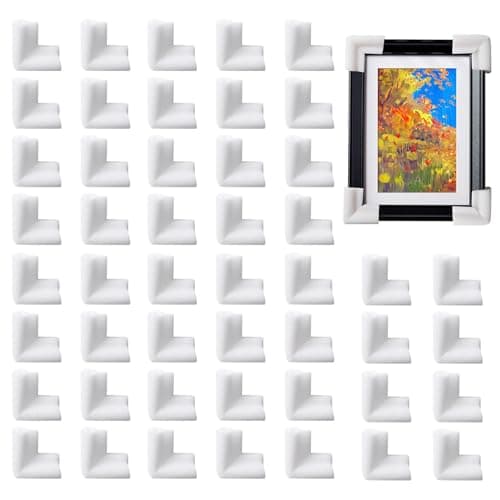
FBFTNY Thickened Foam Corner Protectors (48 pcs)

FBFTNY Thickened Foam Corner Protectors (48 pcs)

Thick foam corners that slip over frame corners and absorb the hit when a box is dropped on its edge, the most common way framed work gets damaged in transit.

about $35 / 48 piecesrated 4.7/5 in our review

Not sure yet? Compare all 7 picks below ↓

Most shipping damage to art is preventable with the right materials. The packing supplies sold for general shipping are designed for objects that do not break easily: books, boxed electronics, durable goods. Art needs different materials, and the right ones are inexpensive and prevent the kind of damage that makes one bad shipment cost more than years of careful ones.

The pattern is consistent in carrier guidance and in owner reports: shipments packed with consumer-grade materials arrive damaged far more often than shipments packed with gallery-grade materials. The cost difference per shipment is roughly $20 to $40; restoring one damaged piece costs hundreds to thousands.

Seven materials, about $235 for the complete kit and about $90 for a basic kit (corners, bubble wrap, glassine). Most of them cover many shipments before you reorder. Prices checked on Amazon in October 2026 and shown as approximations, since they change. If you want the numbers scenario by scenario, from a flat mailer to a custom crate, our step-by-step art packing guide prices out every case.

How we chose: From a gallery's point of view, using carrier packing guidance, published material specs, and owner reports from real shipments. Every product link goes to Amazon; as an Amazon Associate, Austin Gallery earns from qualifying purchases at no extra cost to you. Editorial picks are independent of the program.
Best Foam Corner ProtectorsOur Pick

Material

Foam

Quantity

48 pieces (12 frames)

Use

Frames, mirrors, canvases, TVs

Best For

Framed work shipping and moving

Pros

  • Thick foam absorbs edge drops that crush thin corners
  • 48 pieces cover a dozen frames
  • Slip-on fit, no tape on the frame itself
  • Works for mirrors and canvases as well as frames
  • Reusable for low-stakes moves

Cons

  • Check fit against very thin or very deep frames
  • Compresses with repeated use
  • Costs more than thin bargain corners

Corners are where framed art gets hurt in transit. They stick out past the bubble wrap, take the impact when a box is set down hard, and dent or chip even when the rest of the packing is good. Foam corners spread that impact out. For any shipment of framed work, they are the first thing to buy.

About $3Per frame for a full set of four corners from this pack, cheap insurance on every shipment

Our Pick

Thick foam corners that slip over frame corners and absorb the hit when a box is dropped on its edge, the most common way framed work gets damaged in transit.

Buy these for every framed piece you ship or move. Frame corners take the impact when a box lands on an edge, and an unprotected wood or gilt corner dents or chips easily. Foam corners spread that impact over a much larger area.

What we don't like

Corners are sized for a range of frame depths, so very thin or very deep frames may fit loosely; check the listing's dimensions against your frames. Foam compresses with reuse, so use fresh corners for valuable shipments. And about $35 is more than bargain packs, which is the price of the thicker foam.
Check the Foam Corners on Amazon →about $35 / 48 pieces · FBFTNY
Best Large-Bubble WrapAlso Great

Bubble Size

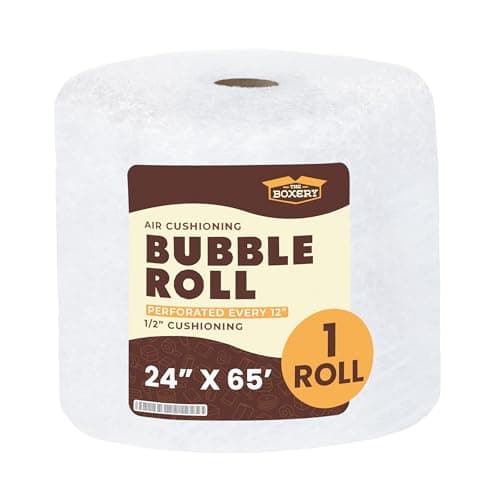
1/2 inch (large)

Width

24 inches

Length

65 feet

Perforated

Yes, every 12 inches

Best For

Framed art and canvases

Pros

  • Large bubbles cushion better than small consumer wrap
  • 24-inch width wraps most frames in one pass
  • Perforations tear cleanly without scissors
  • Works for shipping, moving, and storage padding
  • About $22 for a 65-foot roll

Cons

  • Bulky to store
  • Must never touch the artwork directly
  • Not biodegradable

Thin small-bubble wrap is for books, not artwork. Small bubbles flatten under the weight of a framed piece and the protection disappears. Large half-inch bubbles keep their cushion under load. Wrap the work in glassine, then two layers of large-bubble wrap, bubbles facing out, and tape the wrap to itself, never to the frame.

Also Great

Large half-inch bubbles on a 24-inch perforated roll. The cushioning layer for framed work, where small consumer bubble wrap compresses too easily.

Buy this for packing framed work, canvases, and anything breakable. Once you pack with large-bubble wrap you will not go back to the thin small-bubble rolls sold for packing books.

What we don't like

Large bubbles are bulky, so a roll takes real storage space. Never put bubble wrap directly against artwork, especially paper or a fresh paint surface; wrap in glassine first. And plastic wrap is not biodegradable, so reuse it where you can.

Check The Boxery Bubble Roll on Amazon →about $22 / roll · The Boxery
Best Shipping Tube for Rolled WorkAlso Great

Diameter

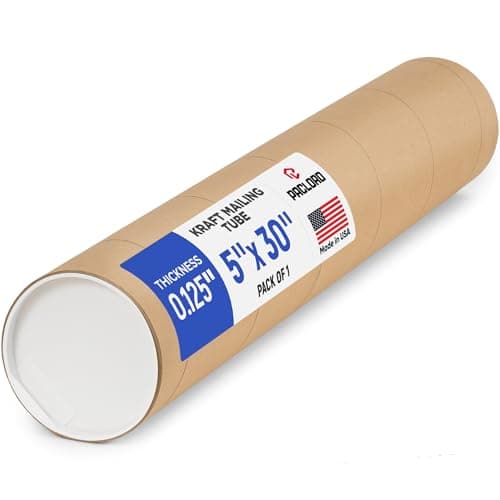
5 inches

Length

30 inches

Material

Kraft paper tube

End Caps

2 included

Origin

Made in USA (per listing)

Best For

Rolled posters and prints

Pros

  • Wide 5-inch diameter for a gentler roll
  • Rigid kraft walls resist crushing in transit
  • Caps included
  • Made in USA per the listing
  • Fits standard poster widths

Cons

  • Not archival; line with glassine or tissue
  • Tape the caps for shipping
  • 30-inch length limits sheet width

Thin mailing tubes are made for documents, not artwork. Narrow tubes force a tight roll that leaves a hard curl, and thin walls crush under other packages. A wide, rigid tube solves both. Roll the work loosely in glassine, slide it in, fill any end gap with crumpled paper so it cannot slide, and tape the caps.

Also Great

A wide 5-inch kraft mailing tube with caps for posters, large prints, and unstretched canvas. The wide diameter means a gentler roll than skinny 2 or 3 inch tubes.

Buy this when oversized work has to ship rolled (posters over 24 inches, unstretched canvas, scroll-format work). The 5-inch diameter is the key spec: the wider the tube, the less stress on the paper or paint.

What we don't like

Kraft board is not archival, so the work should never touch the tube; roll it in glassine or acid-free tissue first. Caps are press-fit, so tape them for shipping. And 30 inches fits work up to about 28 inches wide; longer pieces need a longer tube.

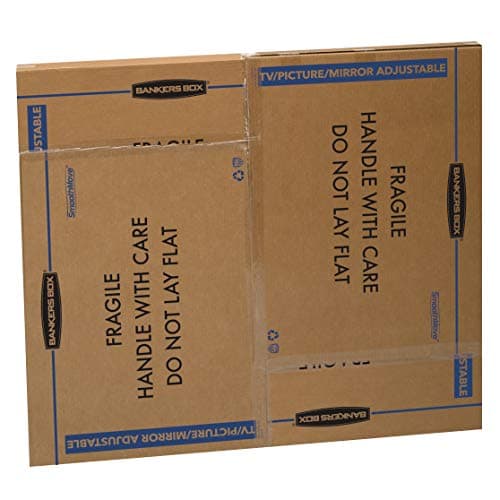
Best Art Shipping BoxUpgrade Pick

Quantity

3 boxes

Type

Adjustable telescoping picture and mirror box

Material

Corrugated cardboard

Best For

Framed art, mirrors, and flat-screen TVs

Pros

  • Shaped for frames and mirrors, not general goods
  • Adjustable to the size of the piece
  • Snug fit keeps the wrapped frame from shifting
  • From a well-known moving and storage brand
  • Three boxes for a multi-piece move

Cons

  • Costs more than plain cartons
  • Adjustable range does not cover every frame size
  • Not waterproof on its own

Generic shipping boxes were not designed for art. A frame in an oversized carton slides and bangs with every turn of the truck. An adjustable picture box closes down around the wrapped frame, so the padding stays where you put it and the corners stay protected.

Upgrade Pick

Adjustable telescoping boxes made for pictures and mirrors. They size to the frame, so the wrapped piece does not rattle around in a box that is too big.

Buy these for shipping or moving framed work. A general-purpose carton is the wrong shape for a frame; a picture box is flat, deep enough for a wrapped frame, and adjustable to the size of the piece.

What we don't like

About $87 for three is more than plain cartons, though still trivial next to the value of the work inside. Very large or very small frames may fall outside the adjustable range. And corrugated board is not waterproof, so wrap the piece in plastic for wet weather or long trips.

Check the Bankers Box Set on Amazon →about $87 / 3-pack · Bankers Box

Austin Art Insider

Free weekly guide to galleries, exhibitions & collecting in Austin.

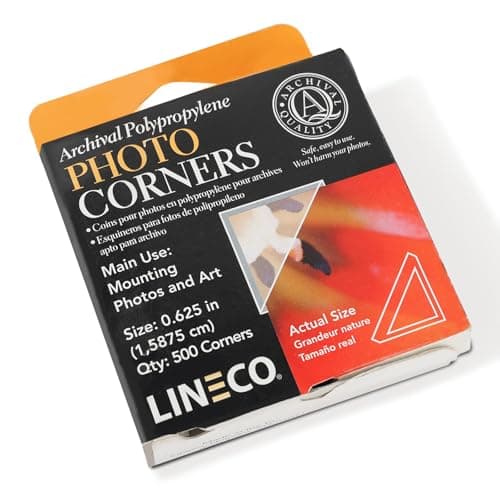
Best Archival Photo CornersAlso Great

Size

0.625 inch

Quantity

500 pieces

Color

Clear

Self-Adhesive

Yes (to the backing board)

Best For

Mounting unframed work for shipping

Pros

  • Adhesive touches only the backing board, never the art
  • Clear corners are nearly invisible
  • Work lifts out cleanly when it arrives
  • 500 corners for well under $10
  • From a conservation materials brand

Cons

  • Needs a clean backing board
  • Too small for large sheets
  • Clear plastic shows dust over time

Shipping unframed work flat means holding it in place without gluing or taping the work itself. Photo corners stick to the backing board and simply hold the corners of the sheet. When the recipient opens the package, the work slides out cleanly with nothing to peel off.

Also Great

Clear archival photo corners that hold unframed work to a backing board for shipping without putting any adhesive on the work itself.

Buy these for shipping unframed work on paper (prints, photographs, drawings) that needs to stay flat against a backing board in transit. They also work for storage and display, where corners replace tape.

What we don't like

The adhesive needs a clean, smooth backing board to stick well. Small corners suit small and medium work; large sheets need bigger corners or extra pairs. And clear plastic shows dust and static over time.

Check Lineco Photo Corners on Amazon →about $9 / 500-pack · Lineco
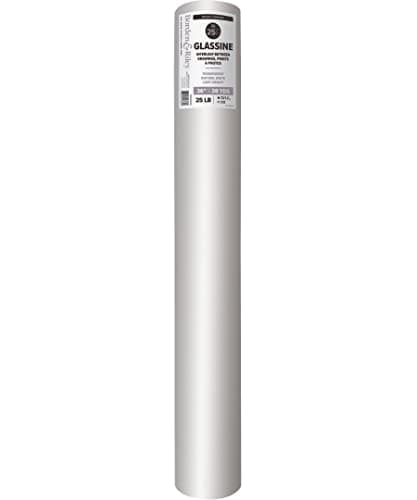
Best Surface Protection (Glassine)Budget Pick

Width

36 inches

Length

20 yards

Weight

25 lb (#25G)

Material

Glassine

Best For

First wrap layer for shipping and storage

Pros

  • Smooth surface will not imprint the artwork
  • Translucent, so the recipient can see what is inside
  • Wide roll covers large frames and canvases
  • 20 yards lasts many shipments
  • Also useful as storage interleaving

Cons

  • Tears more easily than tissue
  • Barrier only, does not neutralize acid
  • Bulky roll to store

The layer between artwork and bubble wrap is the layer most people skip, and it prevents subtle surface damage. Bubble wrap pressed against artwork for days in a hot truck can transfer texture and marks. Glassine puts a smooth, clean barrier in between, and it costs pennies per package.

Budget Pick

Smooth, translucent glassine on a wide 36-inch roll for the first layer of every package. It keeps bubble wrap, tape, and cardboard off the surface of the work.

Buy this for every shipment: wrap the art in glassine first, then bubble wrap. Bubble wrap pressed against artwork for days can leave marks on paper and soft paint surfaces.

What we don't like

Glassine tears more easily than tissue, so handle it with care while packing. It is a barrier, not an acid neutralizer. And a 36-inch roll is bulky to store, though it lasts many shipments.

Check the Glassine Roll on Amazon →about $31 / roll · Borden & Riley
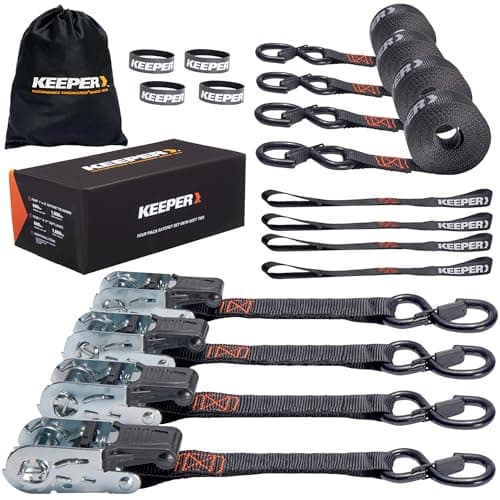
Best Frame Securing StrapAlso Great

Quantity

4 straps

Width

1 inch

Length

15 feet

Type

Ratchet tie-down

Best For

Securing boxed art in a vehicle

Pros

  • Holds boxed art upright and stops sliding
  • Ratchet makes it easy to get a firm, even hold
  • Four straps cover a multi-piece load
  • 15-foot length fits vans and trucks
  • Reusable for years

Cons

  • Easy to overtighten and crush a box
  • Strap against boxes, never against the art
  • More strap than a single small box needs

Much of the damage art takes in transit comes from movement, not drops. A boxed frame that tips over or slides across a cargo floor at every stop takes repeated impacts. Stand boxes upright against a wall of the vehicle, pad between them, and strap them snugly in place.

Also Great

Ratchet straps that hold boxed or crated art upright and in place inside a van or truck, so the box cannot tip or slide when you brake or turn.

Buy these if you move or deliver work yourself, by car, van, or rental truck. Strapping boxed pieces upright against a wall of the cargo area prevents the shifting that causes most in-transit damage.

What we don't like

Ratchets can crush a box if overtightened; snug is enough. Never strap directly against a frame or canvas, only against the box or a padded crate. And four 15-foot straps are more than a single small box needs.

Check Keeper Ratchet Straps on Amazon →about $23 / 4-pack · Keeper

How we
chose

We selected these seven materials from a much larger packaging field using four criteria specific to art shipping.

Impact Resistance: Shipping involves drops, vibration, and stacking. Materials have to spread impact across the package, not concentrate it at corners or single points. We passed on products that look protective but flatten under sustained weight.

Safe Contact With the Work: Anything touching the artwork should be smooth, clean, and archival, which is why glassine goes on first and plastic, tape, and kraft never touch the surface.

Real-World Reliability: Some packaging works on paper and fails in a real truck. We favored products with strong owner reports from actual UPS, FedEx, and USPS shipments across a range of package weights.

Storage Practicality: Shipping supplies sit in a closet between uses. We chose products that store reasonably and do not degrade over months between shipments.

Share this guide

Share

Common Questions

Frequently Asked Questions

Explore Our Collection

View All

Have art
to sell?

Austin Gallery specializes in selling inherited art, estate collections, and fine art with zero upfront fees. Get a free evaluation today.