
Key Takeaways
- The Tate Modern is one of the world's most visited contemporary art museums — and the permanent collection is free
- The converted Bankside Power Station building is itself a masterpiece of adaptive architecture
- Must-see works include pieces by Rothko, Picasso, Warhol, and Louise Bourgeois
Standing on the south bank of the Thames, the Tate Modern is not merely a museum—it is a cathedral of contemporary art, a testament to human creativity, and one of the most important cultural institutions in the world. During our recent visit from Austin Gallery, we were reminded why this former power station has become an essential pilgrimage for anyone serious about understanding modern and contemporary art.
In This Article
- From Power Station to Powerhouse of Art
- The Turbine Hall: Where Scale Meets Spectacle
- Pop Art's Enduring Power
- Chinese Political Pop: East Meets West
- Conceptual Provocations: Yoko Ono
- Contemporary Photography: Deana Lawson
- Abstract Investigations
- A Legacy of Excellence
- Practical Information for Visitors
- Final Thoughts
The view from Tate Modern's viewing platform offers a stunning panorama of London, including St Paul's Cathedral and the Millennium Bridge. The museum was originally Bankside Power Station, designed by Sir Giles Gilbert Scott.
From Power Station to Powerhouse of Art
The Tate Modern opened in May 2000, transforming the decommissioned Bankside Power Station into a world-class art museum. Swiss architects Herzog & de Meuron preserved the building's industrial character while creating a space that allows art to breathe. The result is architecture that serves rather than competes with the art it houses.
The Tate Modern opened in May 2000, transforming the decommissioned Bankside Power Station into a world-class art museum.
The building's history adds layers of meaning to the experience. Designed by Sir Giles Gilbert Scott—the architect behind the iconic red telephone box—the power station operated from 1947 to 1981. Its massive Turbine Hall, once home to electricity generators, now serves as one of the world's largest exhibition spaces for contemporary art installations.
The Turbine Hall: Where Scale Meets Spectacle
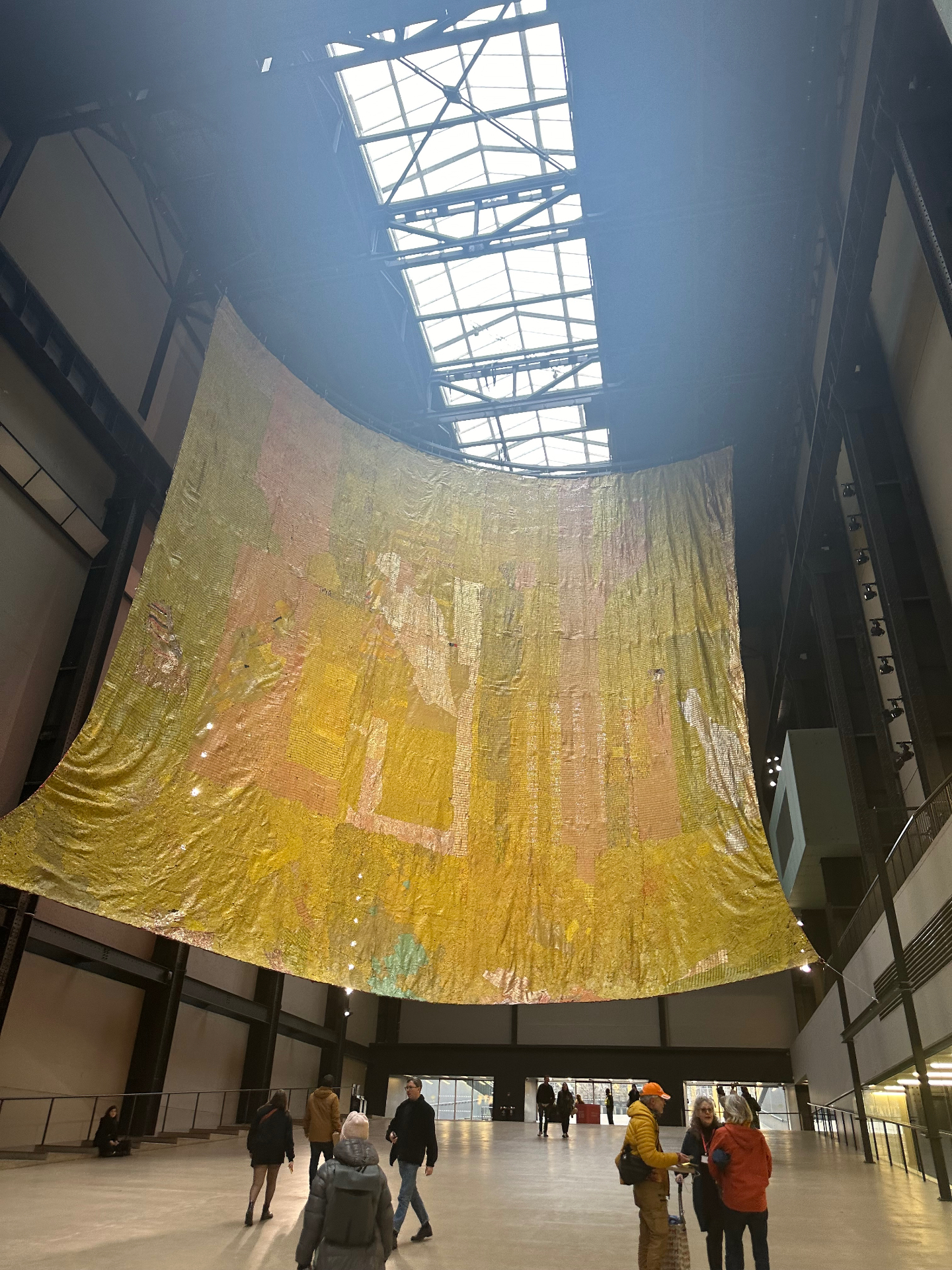 The Turbine Hall's current installation demonstrates the museum's commitment to commissioning monumental works that challenge our perceptions of space and material.
Nothing prepares you for the Turbine Hall. Walking in from the sloped entrance, the sheer scale of the space takes your breath away. The hall stretches 152 meters long and rises 35 meters high—dimensions that dwarf most churches and many cathedrals. Over the years, it has hosted some of the most ambitious art installations ever created.
The current installation, a massive golden textile work, exemplifies why the Tate Modern commissions are so extraordinary. Created from thousands of recycled materials meticulously woven together, the piece cascades from the ceiling like a golden waterfall frozen in time. The play of natural light through the skylight transforms the work throughout the day, creating an ever-changing dialogue between material and illumination.
Pop Art's Enduring Power
The Tate Modern houses one of the world's finest collections of Pop Art, and experiencing these works in person reveals dimensions that reproductions simply cannot capture.
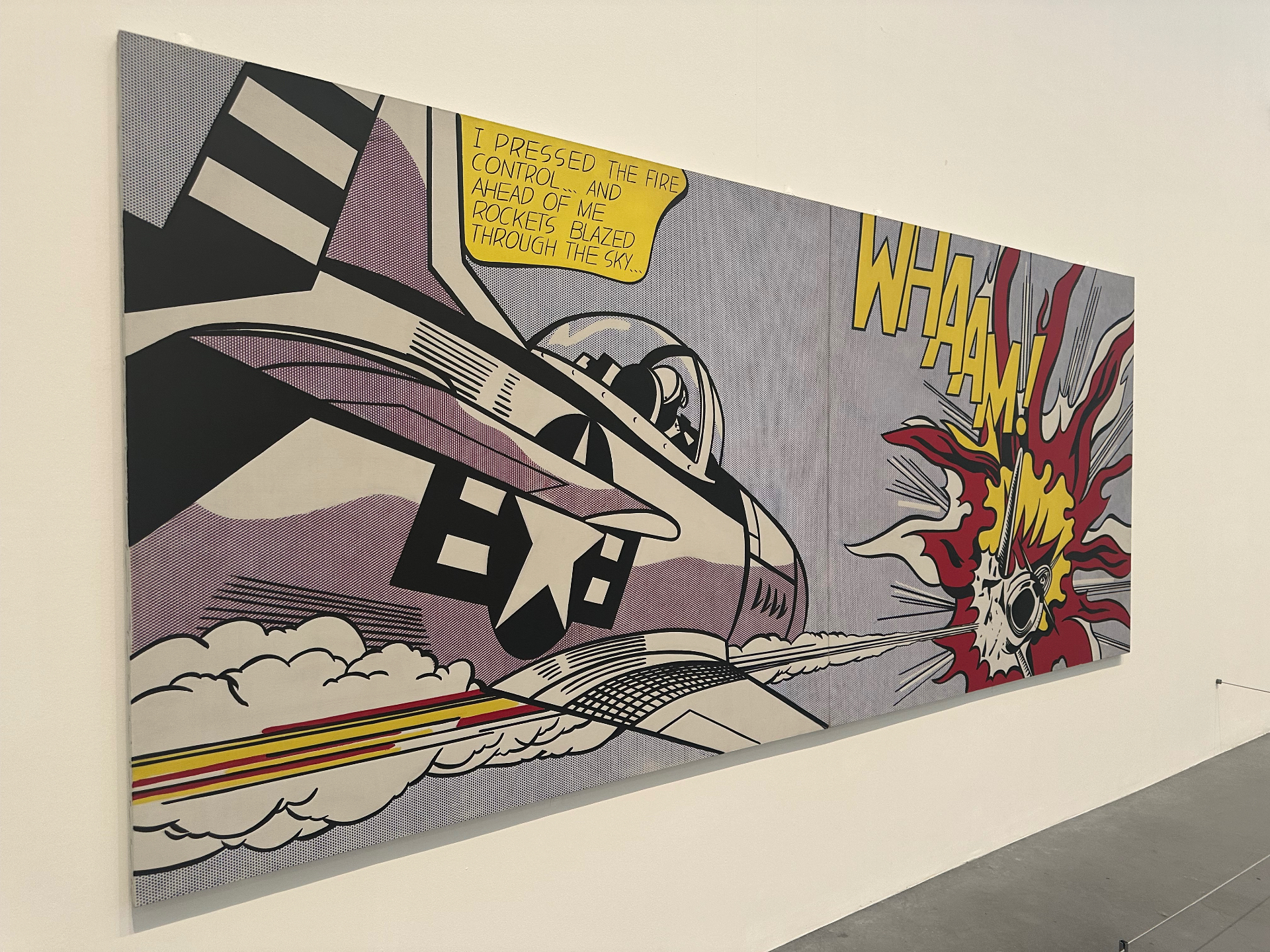 Roy Lichtenstein's "Whaam!" (1963) remains one of the most iconic works of American Pop Art. The diptych measures an impressive 172.7 x 406.4 cm.
Roy Lichtenstein's "Whaam!" demands attention not through subtlety but through the sheer audacity of its execution. Based on a panel from the DC Comics series "All-American Men of War," the work appropriates the visual language of mass media and elevates it to the scale of history painting. Standing before it, you understand why Lichtenstein's work was so revolutionary—it collapsed the distinction between high and low culture with wit and technical precision.
The text reads: "I pressed the fire control... and ahead of me rockets blazed through the sky..." This fragment of melodrama, enlarged to monumental scale, becomes a meditation on war, heroism, and the way American culture processes violence through the sanitized lens of entertainment.
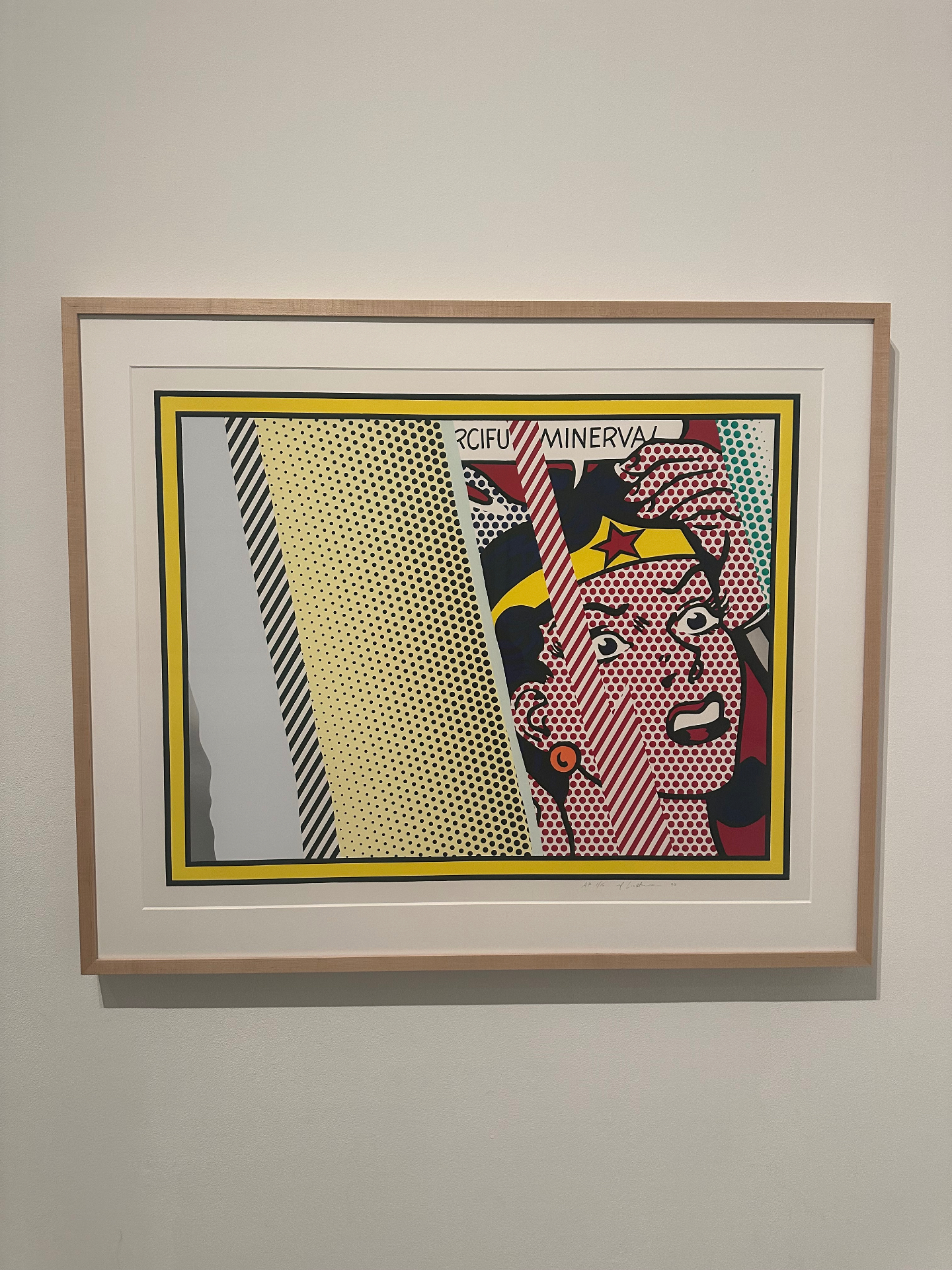 Lichtenstein's "Reflections on Minerva" showcases his later work exploring classical themes through his signature Ben-Day dot technique.
The museum also displays Lichtenstein's later work, including pieces from his "Reflections" series. These works demonstrate the artist's evolution, incorporating abstract elements while maintaining his distinctive visual vocabulary. The Ben-Day dots that became his signature remain hypnotic—industrial printing techniques transformed into something almost meditative when examined up close.
Chinese Political Pop: East Meets West
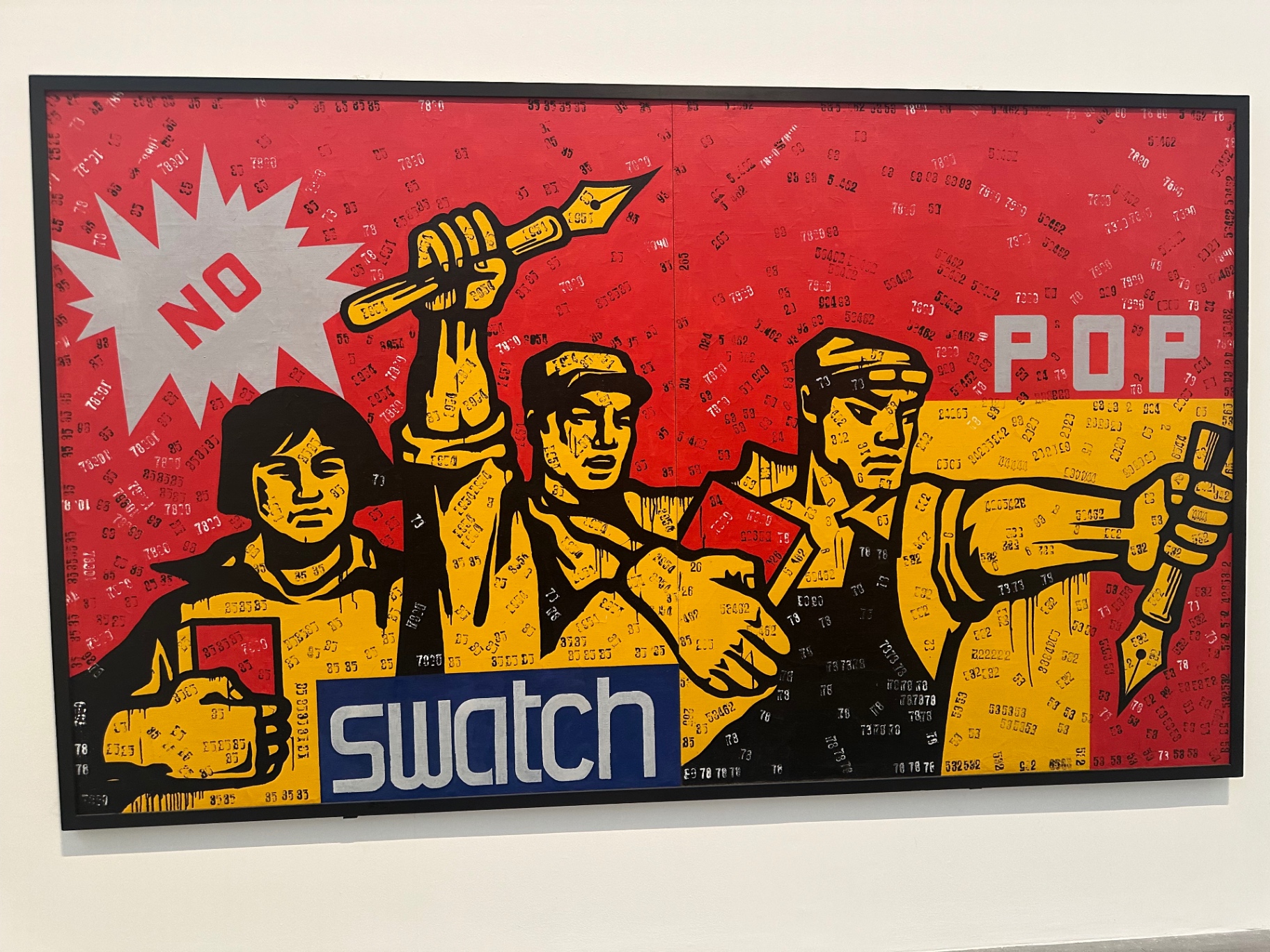 Wang Guangyi's "Great Criticism" series juxtaposes Chinese Cultural Revolution imagery with Western brand logos, creating a powerful commentary on global capitalism.
One of the most intellectually stimulating galleries features Chinese Political Pop, a movement that emerged in the late 1980s as artists began processing China's complex relationship with capitalism and its revolutionary past.
Wang Guangyi's "Great Criticism - Swatch" exemplifies this genre brilliantly. The work appropriates the visual language of Cultural Revolution propaganda—heroic workers brandishing tools, their faces set with revolutionary determination—and overlays it with the Swatch logo. Numbers scattered across the canvas reference the bureaucratic cataloging systems of the Mao era. The result is a work that raises uncomfortable questions about ideology, consumerism, and the seamless transition from revolutionary fervor to brand loyalty.
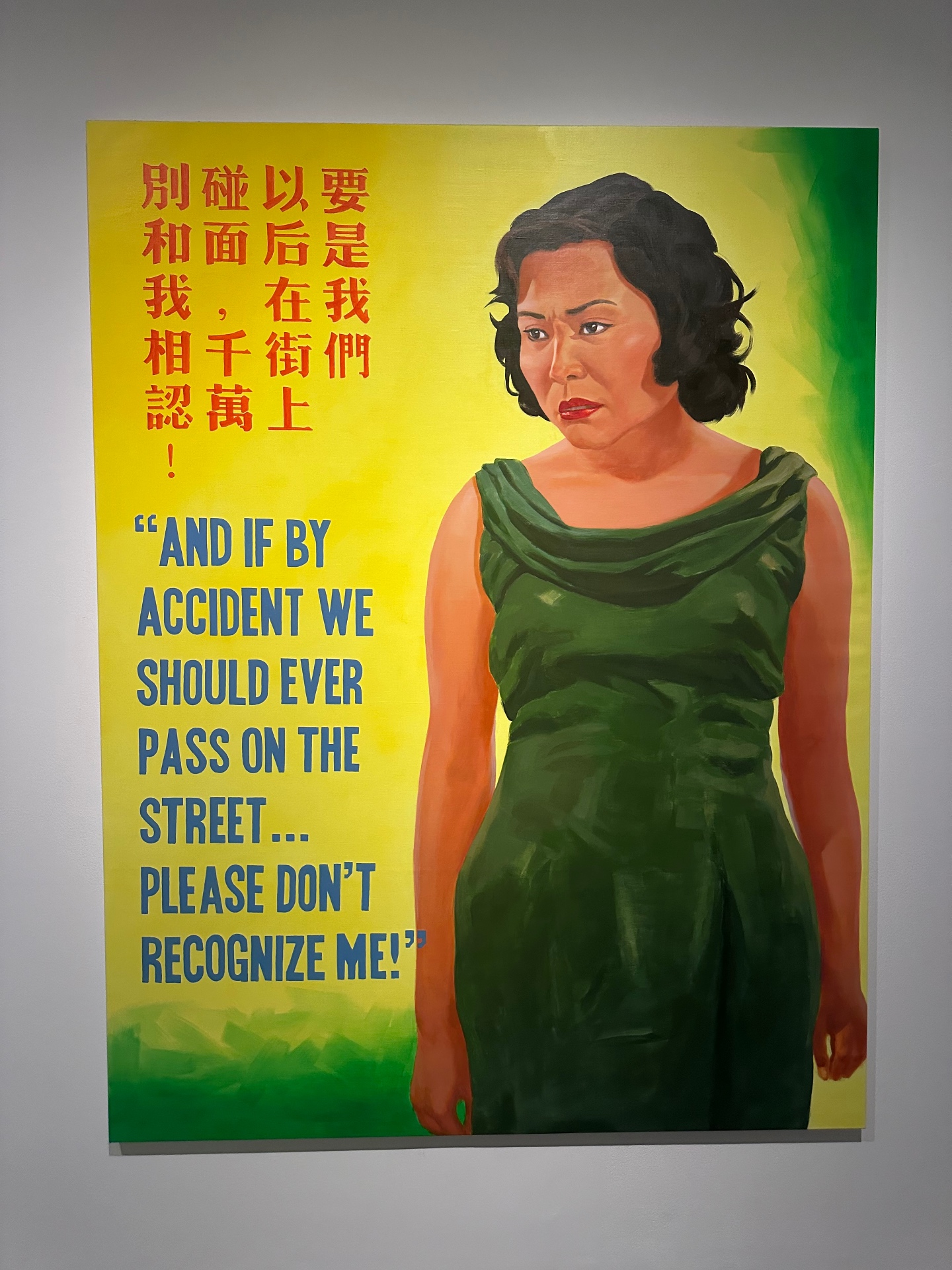 Contemporary Chinese artists continue to explore themes of identity, displacement, and cultural collision through the lens of Political Pop.
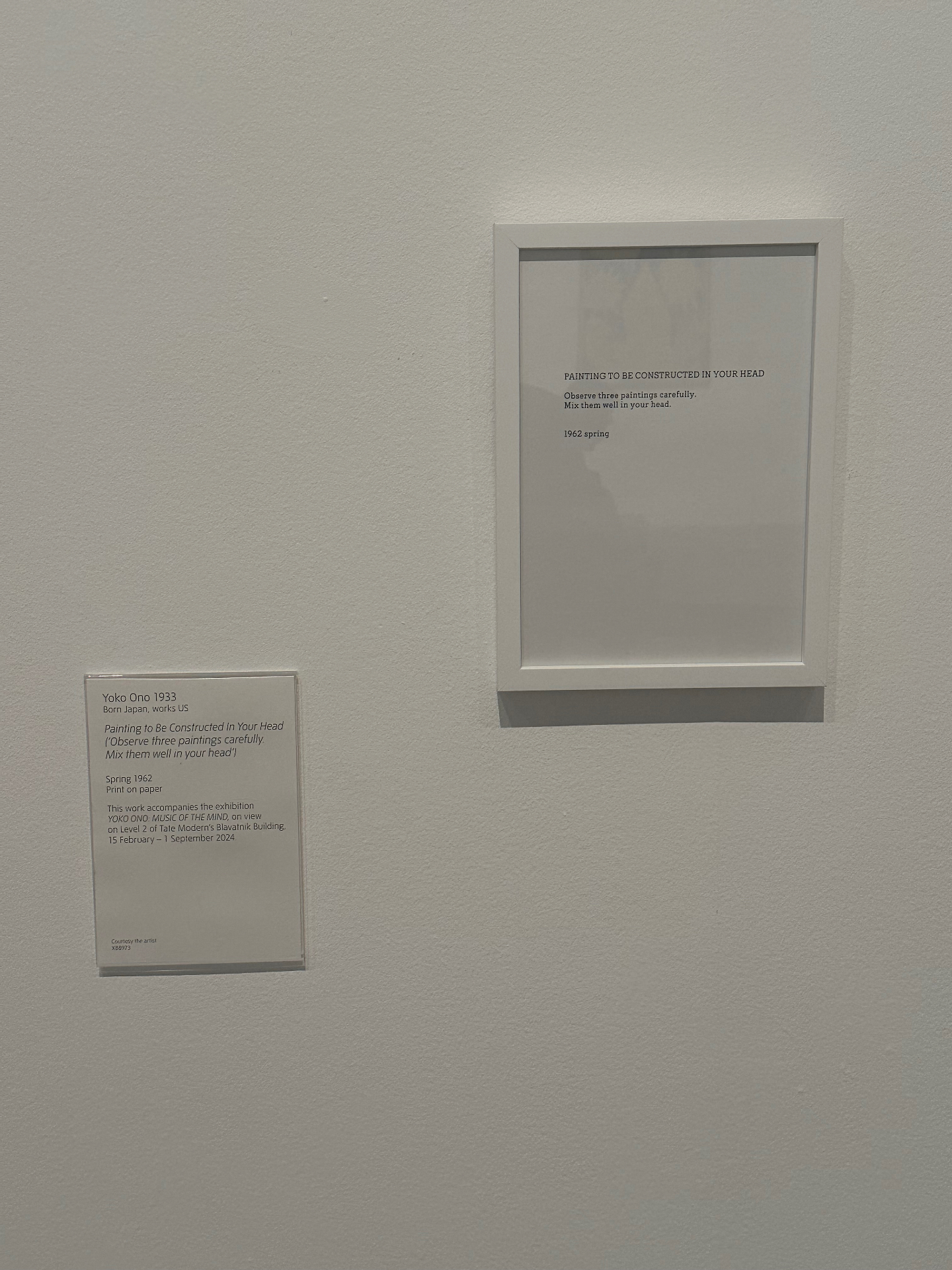 Yoko Ono's "Painting to Be Constructed in Your Head" (1962) invites viewers to become co-creators of the artwork through imagination.
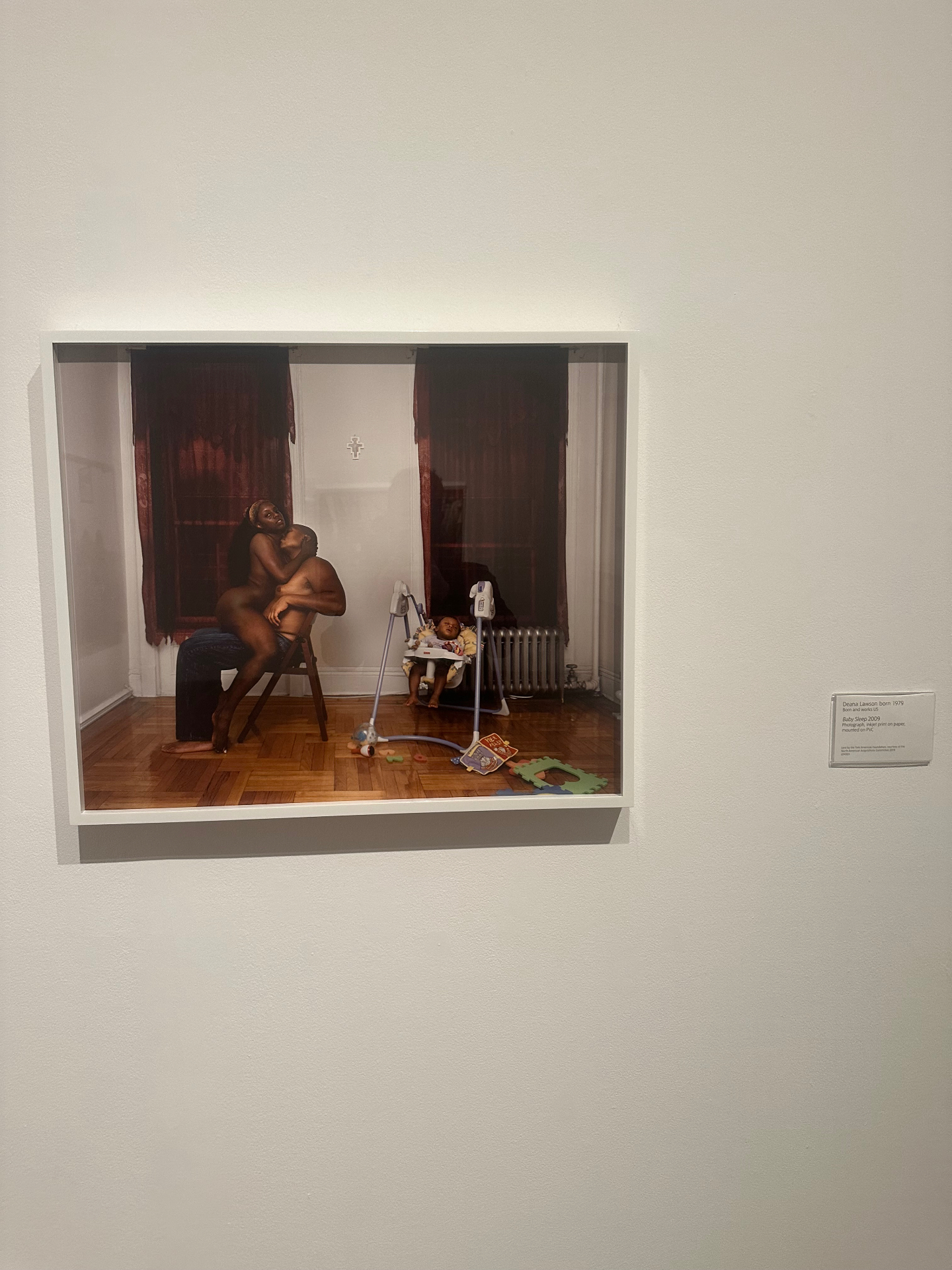 Deana Lawson's intimate photography explores themes of family, sexuality, and Black identity with extraordinary technical precision and emotional depth.
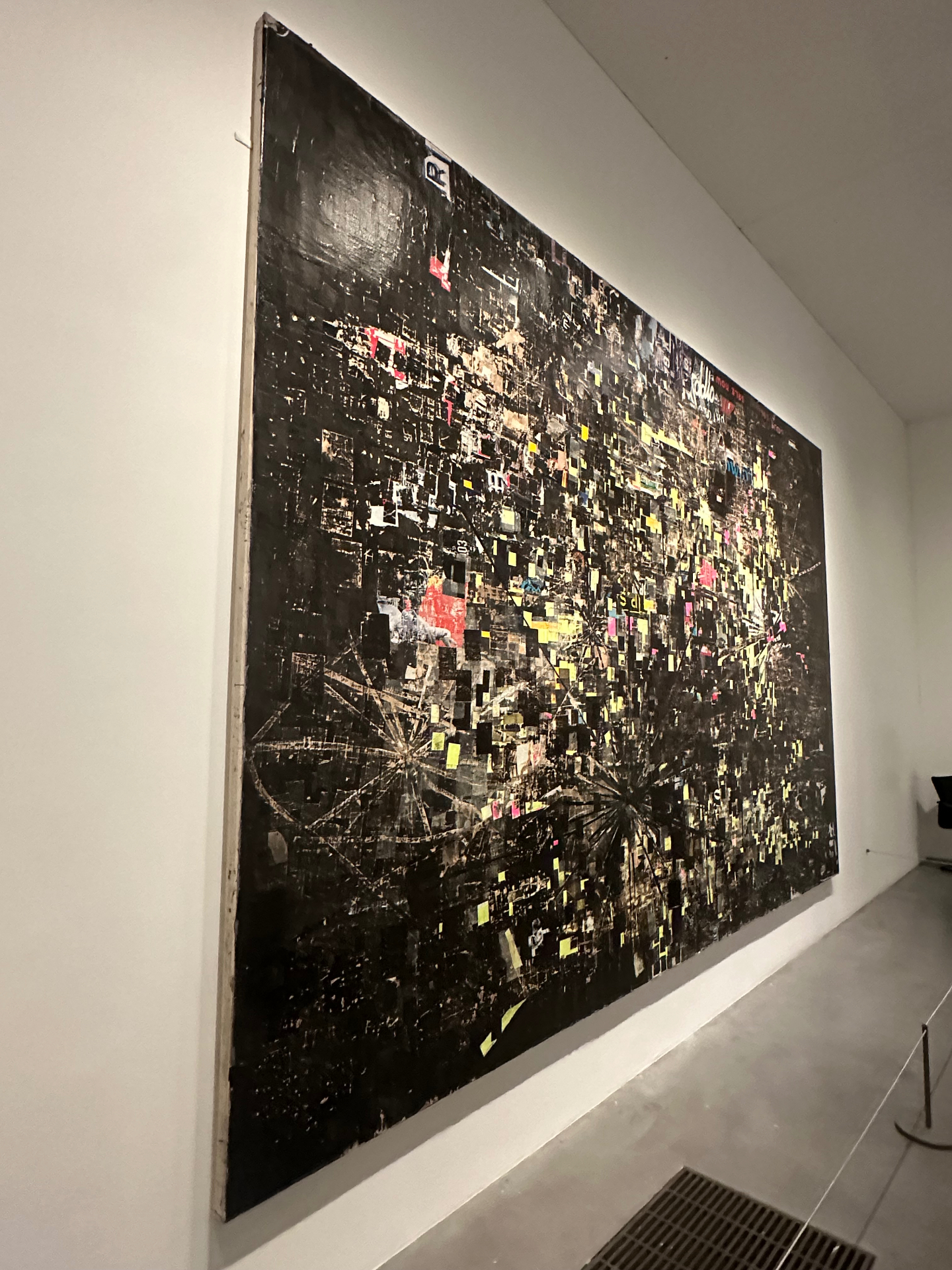 The museum's collection includes major works exploring abstraction, material investigation, and the boundaries of painting.
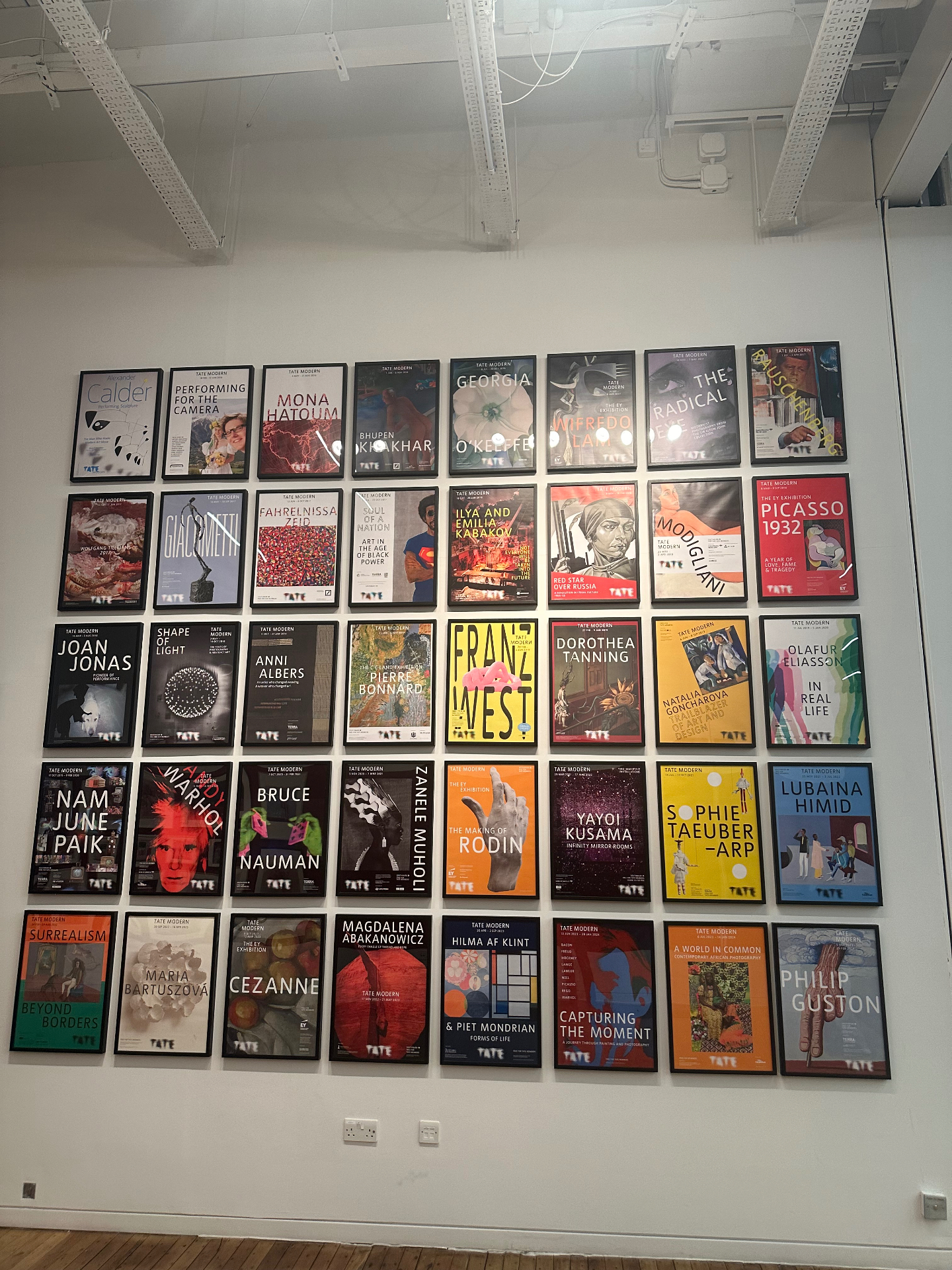 This wall of past exhibition posters in the museum shop demonstrates the extraordinary range of artists the Tate Modern has showcased—from Picasso to Kusama, from Cézanne to contemporary voices.

