Austin Gallery
12 min read

Picture Rail Moulding Install Guide 2026: A Complete Walkthrough

The hanging system museums use, scaled down for your apartment. STAS Cliprail vs Hangman, install on drywall vs plaster vs brick, the negotiating script that gets renters' landlords to approve it, and the 8-step walkthrough.

By Austin Gallery

Picture Rail Moulding Install Guide 2026: A Complete Walkthrough
This article contains affiliate links. Austin Gallery may earn a commission at no cost to you.

Key Takeaways

  • Picture rail systems let you hang and rearrange unlimited art without ever drilling another hole — install once, hang forever.
  • The two dominant systems in 2026 are STAS Cliprail (museum-grade aluminum) and Hangman Aluminum Hanging System (residential value pick).
  • Renters love picture rail because most landlords accept it as a single permanent install (one set of 4–6 screws) in exchange for unlimited art rearranging.
  • Best installation surface: plaster (the original Victorian use case). Drywall works fine with anchors or studs. Brick/tile needs masonry hardware.
  • Expect 60–90 minutes for a single 8-foot rail install with two people; first-timer solo install is ~2 hours.
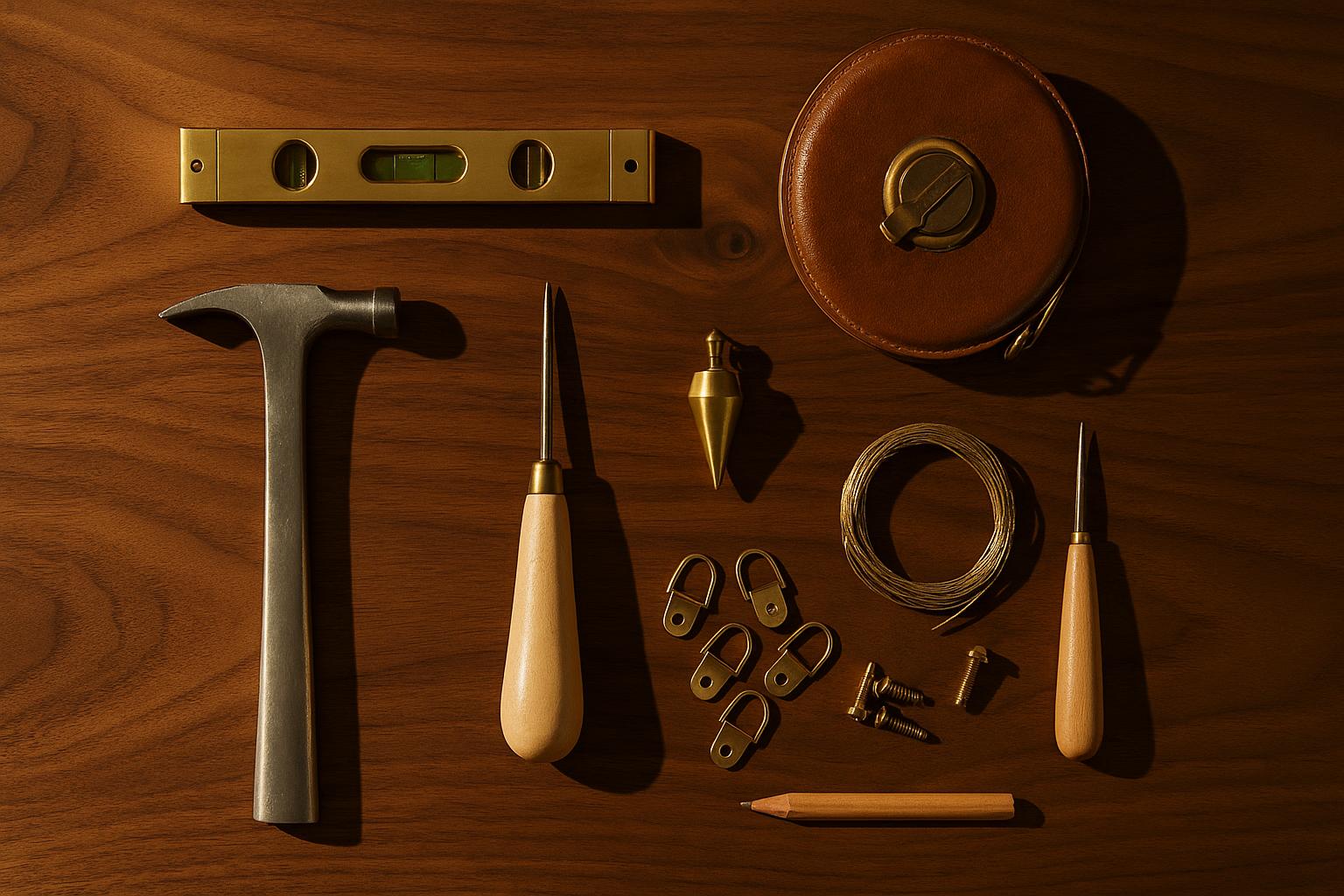
A picture rail is the installation that pays off every time you rearrange. One set of holes in the wall, near the ceiling, supports a horizontal track. From that track you hang any picture, anywhere along the wall, at any height — using thin nylon cords and adjustable hooks. Move a frame: just slide the hook along the rail.

It's the system every museum uses. It's also the only hanging system that completely eliminates the "I want to swap this print but I'll have to patch and repaint the wall" problem.

This guide walks through every step of a picture rail install — from choosing the system to driving the last screw — based on the installs we've done on real walls in Austin homes, art studios, and rented apartments.

If you're not sure picture rail is right for your situation, our companion guide on the best picture hanging tools covers when to use rail vs. anchors vs. French cleats.

If you're not sure picture rail is right for your situation, our companion guide on the best picture hanging tools covers when to use rail vs.

When Picture Rail Is the Right Choice

Pick picture rail when:

  • You rearrange art often. Seasonal rotations, evolving collections, ongoing gallery experiments — picture rail makes every swap a 30-second job.
  • You rent. Most landlords allow a one-time picture rail install (6 small screws, near the ceiling, out of obvious sight) in exchange for not making 40 individual holes for individual frames. Always check the lease, but this is usually the path of least friction.
  • You own a pre-1950 home with plaster walls. Drilling plaster for each frame is risky; one careful rail install with brass screws and pre-drilled anchor holes minimizes total wall damage.
  • You're building a gallery wall that will evolve. Salon-style layouts get added to over years. Picture rail accommodates without re-drilling.
  • You want a clean, museum-grade aesthetic. The thin clear drop cords are barely visible from 6 feet away.

Skip picture rail when:

  • You hang only 1–3 pieces and never rearrange (a single OOK hook is faster)
  • The pieces are over 50 lb each (use stud-mounted French cleats — rail systems max out around 22 lb per hook)
  • The wall is tile, glass, or other surfaces incompatible with mounting

The Two Picture Rail Systems Worth Buying

STAS Cliprail (museum-grade)

STAS Cliprail (8 ft section) is the system you'll see in actual museums and high-end galleries. Aluminum extrusion, near-invisible profile (about 1/2" tall when mounted), perlon (clear nylon) drop cords, hooks rated 22 lb each.

  • Cost: ~$60–$80 per 8-foot section + ~$8 per hook + ~$4 per drop cord
  • Weight per hook: 22 lb
  • Total system weight: 200+ lb per 8 ft rail (with 8 hooks at 25 lb each = aggregate distributed load)
  • Visibility: Near-invisible from across the room
  • Install time: 60 minutes per 8 ft section

The STAS Cliprail is what we install for clients who want the install to last forever. It's been the industry standard for 20+ years.

Hangman Aluminum Hanging System (residential value)

Hangman 4ft Aluminum Hanging System is the residential-grade alternative at about 60% the cost. Slightly thicker profile, lower per-hook rating (~10 lb), but solid for prints and small-to-medium canvases.

60%

Hangman 4ft Aluminum Hanging System is the residential-grade alternative at about the cost

  • Cost: ~$30–$50 per 4-foot section + ~$5 per hook
  • Weight per hook: 10 lb
  • Visibility: Visible if you look closely but unobtrusive
  • Install time: 30–45 minutes per 4 ft section

Pick Hangman when most of your art is in the 5–10 lb range (typical prints, photographs, small framed pieces). If you're hanging 15+ lb pieces, step up to STAS.

Other systems we considered

  • AS Hanging Systems (Click Rail) — comparable to STAS at similar price. Slightly different cord-attachment mechanism. Either works.
  • Walker Display — overbuilt for residential, designed for galleries and museums. Skip unless you literally run a gallery.
  • DIY Pine Picture Rail — wood moulding installed at picture-rail height with cup-hooks. Period-correct for Victorian homes but visually heavier and hooks have lower weight ratings. Romantic but functionally worse than aluminum.

Step-by-Step Install (STAS Cliprail, 8 ft section)

Tools You'll Need

  • The rail kit (rail, end caps, mounting clips)
  • 4-foot level — laser level works too
  • Stud finder if mounting into drywall — Franklin ProSensor 710
  • Cordless drill + 3/16" bit (drywall) or carbide masonry bit (plaster/brick)
  • Pencil and painter's tape
  • Step ladder (rail mounts near the ceiling)
  • Helper if you have one — makes the level-and-mark step much easier

Step 1: Decide the Rail Height

Standard installation height: 3–8 inches below the ceiling. Closer to the ceiling = more discreet. Lower = more art real-estate per drop cord.

Mark the proposed line with a single piece of painter's tape running the full rail length. Step back to the opposite wall. Does it look right? Adjust before drilling.

In rooms with crown moulding, install the rail just below the moulding's bottom edge — the trim hides it visually.

Step 2: Locate Mounting Points

Picture rail mounts via small clips (or screws through the rail itself, depending on system) spaced every 16–24 inches.

Drywall: Find studs with a stud finder. Mark their centers along your tape line. Your mounting clips should land in studs whenever possible. For sections between studs, use TOGGLER SnapToggle 1/4" anchors — overkill for the load, but stops any sag concern permanently.

Austin Art Insider

Free weekly guide to galleries, exhibitions & collecting in Austin.

Plaster: No stud-finding needed in older plaster homes where lath is continuous. Pre-drill 1/8" holes with a carbide masonry bit (yes, masonry — plaster is brittle and a wood bit will crack it). Use brass screws.

Brick: Pre-drill with a carbide masonry bit at 1/4" diameter. Use plastic concrete anchors + matching screws.

Step 3: Mark Mount Points

With the rail held against the wall at target height:

  1. Have your helper hold the rail level (or use a laser level to project the line).
  2. Through each mounting hole or clip slot, mark the wall with a pencil.
  3. Lower the rail. Verify all marks fall on your level line.

Step 4: Pre-Drill

For each mark:

  • Drywall in stud: 3/16" pilot hole
  • Drywall in anchor zone: 1/2" hole for SnapToggle
  • Plaster: 1/8" pilot hole with masonry bit
  • Brick: 1/4" hole with masonry bit, hammer-drill mode

Drill slowly. The "pop" you'd hear from a normal drill suggests excess force — back off.

Step 5: Install Anchors (Drywall in Anchor Zones Only)

For SnapToggle anchors:

  1. Fold the metal channel parallel to the plastic strap.
  2. Push the folded channel through the 1/2" hole.
  3. Pull the strap toward you until the channel snaps flat against the back of the drywall.
  4. Slide the plastic cap along the strap until it's flush with the wall.
  5. Snap the strap break-line. The cap stays in place.

Repeat for each non-stud mount point.

Step 6: Mount the Rail

Holding the rail at the marks:

  1. Drive the first screw partially (3–4 turns) to hold the rail in position.
  2. Verify level with a 4-foot level placed on top of the rail.
  3. Adjust as needed.
  4. Drive remaining screws.
  5. Final tightening: snug but not crushing. Most rails want a quarter-turn past snug.

Step 7: Attach End Caps

Slide end caps onto each end of the rail. Most systems use friction-fit or a small screw. End caps finish the look and prevent hooks from sliding off the ends.

Step 8: Hang Your First Piece

For each piece of art:

  1. Slide a hook onto the rail at the right horizontal position.
  2. Attach a perlon drop cord to the hook (most clip-on with a small thumb mechanism).
  3. Determine the drop length — measure from the rail down to where the top of the frame should be, then add the distance from the top of the frame to the wire attachment.
  4. Hook the bottom of the drop cord into the picture wire on the frame.
  5. Adjust the drop cord length using its sliding mechanism until the frame is at the right height.

The first piece takes 5 minutes. Every subsequent piece is under 2 minutes.


Common Mistakes

"I installed the rail too high to actually use." 2 inches below the ceiling looks discreet but limits maximum frame size. Even a 24" tall painting hanging 6" below the rail puts the bottom of the painting at 30" below the ceiling — which on a 9-foot ceiling means the frame center is at 5 feet from the floor. Plan for 6–8 inches below the ceiling for residential ceilings.

"I only used one mount point in a stud." Picture rail load is distributed along the rail length. A single stud-mounted screw with 4 anchor-mounted screws is fine; relying on one stud screw alone overloads that single point.

"I hung a 30-lb frame from one hook." Hooks have weight ratings (10 lb Hangman, 22 lb STAS). Heavier frames need two hooks + two drop cords spaced at the frame's wire-attachment width.

"The drop cord is sliding." Each system has a different cord-locking mechanism — make sure it's fully engaged. STAS Cliprail's cords have a small metal slider; squeeze it firmly until it clicks.


Troubleshooting

The rail is sagging in the middle. You need an additional mount point between the original screws. Add an anchor or hit a stud at the sag location.

Hooks won't slide along the rail. Some rails have a directional channel — hooks insert from one end only. Check the system instructions. Don't force.

A drop cord came loose at the hook. Re-insert with the cord's metal end fully seated in the hook's gripper. Test with a small downward tug before adding weight.

The frame is tilting forward. Add rubber bumpers to the bottom corners of the frame, or shorten the drop cord by 1/2 inch and use a longer drop cord on the other side to add slight wall-tilt.


Picture Rail in Renters' Apartments

The negotiating script we've watched work with Austin landlords:

"I'd like to install a single horizontal picture rail near the ceiling. It's a 30-minute install requiring 4–6 small screw holes — all within 4 inches of the ceiling line, hidden by crown moulding if present. In exchange, I won't make any additional holes elsewhere in the unit. When I move out, I'll patch the 4–6 holes (a $20 spackle job) and the wall will be in better condition than 40 individual frame-hole patches."

Most landlords accept this. Some specify a particular install height. A few say no. Worth asking before you spend $80 on the rail system.


What About Plaster Walls Specifically?

Picture rail was invented for Victorian plaster walls — they have the chair-rail or picture-rail height built in as a moulding line, and the rail clips onto that moulding.

If you have a pre-1950 home with original picture-rail moulding, you might not need to install anything new — buy traditional brass picture rail hooks that simply clip onto the existing moulding. No drilling required, period-correct, and the hooks slide along the moulding the same way modern picture rail hooks slide along aluminum rail.


Pro Tip

Install picture rail 2 inches above the tallest piece of art you currently own — not at a fixed height from the ceiling. This way, your tallest piece sits with proper visual breathing room and shorter pieces have flexibility to hang higher or lower. If your tallest piece is 36" tall, install rail at ceiling height minus 38" (or so).

If your tallest piece is 36" tall, install rail at ceiling height minus 38" (or so).

The first picture rail install you do takes 90 minutes. The second one takes 60. After that, picture rail becomes the way you mount art forever.

Share

Consignment

Have Art You Want to Sell?

Free appraisals, zero upfront fees, nationwide service from Austin, Texas.

Explore Our Collection

View All

Discussion

Comments are moderated. Be respectful. Do not post defamatory statements, personal information, or threats.

No comments yet. Be the first to share your thoughts.