Selling Art · Collections & Estates
How to Sell a Whole Collection or Estate
Downsizing, settling an estate, or breaking up a lifetime collection? How to sell a whole houseful without letting the valuable pieces get buried in a bulk lowball.
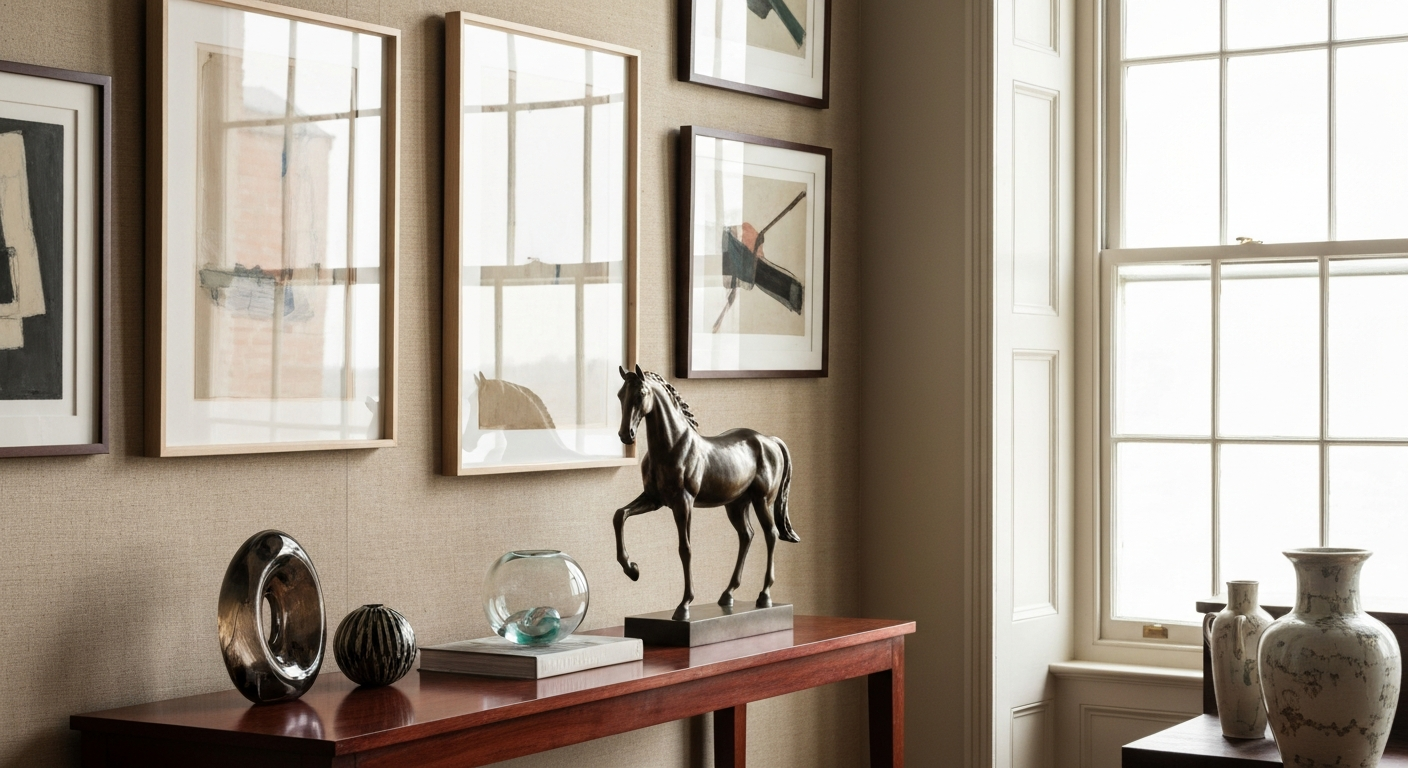
You are not selling one piece, you are facing a whole houseful: downsizing to something smaller, settling a parent's estate, or breaking up a collection built over a lifetime. This is where the most value quietly disappears, because the path of least resistance, one estate-sale company or one buyer's flat offer for everything, prices a signed bronze and a table lamp the same way. The value in almost every collection is concentrated in a handful of pieces, and the entire job is making sure those get valued instead of dumped with the rest. Here is how to sell a whole collection without leaving the best of it on the table.
At a Glance
- The core mistake
- Selling everything as one bulk lot
- Where value hides
- A few pieces, not the whole houseful
- Worst move
- One flat cash offer for the lot
- Best approach
- Triage, then value the good pieces individually
- Start here
- A free walk-through valuation
The one mistake that costs the most: lumping it all together
The value in a collection is almost never spread evenly. Ninety percent of a houseful might be ordinary furniture, decor, and household goods, and ten percent, a few paintings, a designer chair, a piece of sculpture, a marked object, can be worth more than everything else combined. An estate-sale company or a single "I'll take the lot" buyer is optimized for volume and speed, which is perfectly fine for the ordinary ninety percent and quietly disastrous for the valuable ten. Sold as one bulk lot, your best pieces subsidize the buyer's profit. The first move is simply to stop treating it all the same.
A curator's tip
Before you call anyone to 'clear the house,' walk it once and pull aside anything that makes you wonder if it is worth something. That instinct is usually right, and those are the pieces that should never go into a bulk deal.
Triage: sort before you sell
Sort the collection into three rough tiers. Tier one, the genuinely valuable few: original art, anything signed or marked, designer and mid-century furniture, sculpture and bronzes, and unusual objects with maker's labels or editions. Tier two, the mid-market: decent furniture, decorative pieces, and usable goods with resale value but no collector premium. Tier three, donate or dispose: everyday household items.
Spotting tier one is mostly about looking for the tells covered across our guides: signatures, foundry marks, maker's labels, edition numbers, solid hardwoods, and quality materials. Photograph every tier-one piece individually. Those are the ones whose value you want established before anything is sold.
Ten percent of a houseful is often worth more than the other ninety. The whole job is making sure that ten percent gets valued, not dumped.
Value the good pieces individually
Every tier-one piece should get a real, individual valuation, not vanish into a single bulk number. This is exactly where a consignment house or appraiser earns its keep: identifying the artists, makers, and editions, checking recent comparable sales, and telling you honestly which pieces carry real market value and which do not. You do not need a formal written appraisal on everything to sell it. A knowledgeable walk-through valuation is usually enough to price the good pieces correctly and route the rest sensibly. We offer that as a free, no-obligation valuation.
The lowball trap, collection edition
Whole collections attract two flavors of the same trap. The first is the buyer who offers one friendly flat price for "everything," then quietly cherry-picks the three pieces that were worth more than the entire offer. The second is the operator who takes a percentage of fast, low prices on the whole lot, since their incentive is speed and turnover, not maximizing what your best pieces bring.
Neither is villainous, they are just optimized for their convenience rather than your return. The protection is the same as always: know what the valuable pieces are worth before you agree to anything that sweeps them in with the ordinary.
Your options, and the hybrid that usually wins
There are a few ways to move a whole collection.
Estate sale company. Fast and hands-off, good for clearing the ordinary bulk, but priced for volume, so valuable pieces routinely undersell.
Auction. Good for the standout pieces with a sales record, with seller's fees and some unpredictability.
Consignment. The best price for the genuinely valuable pieces, marketed to real collectors, commission only on a sale.
Dealer buyout. Fast and certain, at wholesale numbers.
For most collections, the move that nets the most is a hybrid: consign the valuable tier-one pieces for real money, and run an estate sale, donation, or dealer clearance for the rest. You get top dollar where it matters and speed where it does not. A good consignment house can handle the valuable pieces and point you to the right channels for everything else.
Logistics, timing, and insurance
A whole collection is a logistics project as much as a sale. It needs cataloging, careful moving, sometimes short-term storage, insurance while the process plays out, and coordination across more than one sale channel. Fragile art, heavy furniture, and awkward objects each move differently, and things get damaged when a collection is cleared in a rush. A good partner manages the assessment, transport, insurance, and sequencing so the valuable pieces are protected and placed properly rather than swept out with the rest.
Timeline: estates have deadlines, value takes time
Settling an estate or downsizing usually comes with a clock: probate steps, a house to sell, family timelines, and the simple pressure to be done. That is exactly the pressure that leads to fire-selling the good pieces. The way through is to split the timeline the way you split the collection: the valuable tier-one pieces reward patience and belong on a consignment or auction track that finds the right buyer, while the ordinary bulk can move fast through an estate sale or donation. Do not let the deadline on the house force a giveaway of the pieces that actually carry the value.
How a consignment house helps with a whole collection
The most useful thing a consignment house does for a collection is bring one expert eye to the whole thing before anything is sold. We can walk a collection (in person locally, or from photos anywhere), triage it, identify and value the pieces with real market value, consign those for the best price, and point you to the right channels for the rest. That triage is what keeps a signed painting or a designer piece from being swept into a bulk lot for a fraction of its worth.
This is the heart of what we do at Austin Gallery: not just paintings, but the art, sculpture, designer furniture, and rare objects across a whole collection, treated with the care each piece deserves. Send photos of the collection for a free, honest read on what you have and how to sell it.
How to start, in five steps
- 1
Do not sell or discard anything yet
Photograph the rooms and every standout piece before anyone comes to clear the house.
- 2
Triage into three tiers
Genuinely valuable, mid-market resale, and donate or dispose.
- 3
Value the good pieces individually
Get a real read on the tier-one items before they can be swept into a bulk deal.
- 4
Use a hybrid
Consign the valuable pieces for top price, and estate-sale or donate the rest.
- 5
Keep it insured and cataloged
Protect the collection and keep records through the whole process.
The short version
Do
- ✓Separate the valuable few from the ordinary many
- ✓Get individual valuations on standout pieces
- ✓Consider a hybrid: consign the gems, estate-sale the rest
- ✓Keep the collection insured during the process
- ✓Photograph and catalog before anything moves
Don't
- ✕Sell the whole collection as one bulk lot
- ✕Take a single flat cash offer for 'everything'
- ✕Let a deadline force a fire-sale of the valuable pieces
- ✕Assume the obvious pieces are the valuable ones
- ✕Discard anything before an expert has looked
Questions, answered
What is the best way to sell an entire art collection?
Should I use an estate sale company to sell a collection?
How do I know which pieces in a collection are actually valuable?
Can I sell part of a collection on consignment and the rest another way?
How do I sell a collection when I'm settling an estate on a deadline?
How much does it cost to have a collection valued or consigned?
Can you handle a whole estate, not just the art?
Sell With Austin Gallery
Sell Your Collection or Estate
Downsizing or settling an estate? Send us photos of the collection for a free, honest read on what's valuable and how to sell it. No obligation, and we handle the valuable pieces end to end.
Get a Free Quote →Free appraisal · Zero upfront fees · Fully insured · Nationwide from Austin, Texas
Keep Reading
Consignment
Consign Your Art & Objects
Fine art, sculpture, designer furniture, and rare collectibles. Zero upfront fees, insured, nationwide. Send photos for a free quote.
Appraisal
Free Art Appraisal
Get the valuable pieces in a collection valued individually, with no obligation.
Selling Art
Selling Inherited Art
Inherited a piece or a whole collection and not sure where to start? A full walkthrough.