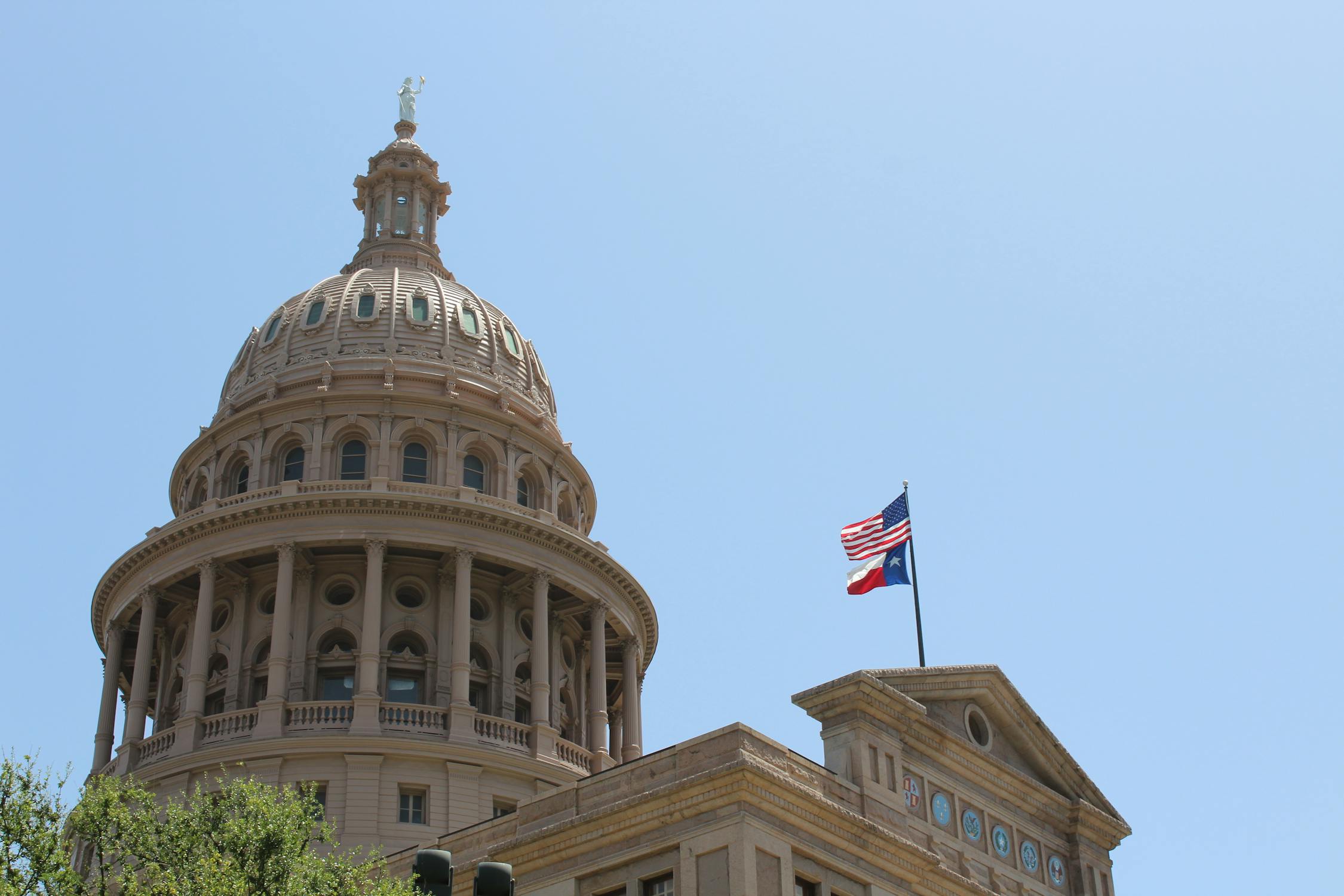
The H-1B visa program imports 85,000 foreign workers per year — 72% from India — into U.S. tech jobs. Austin is ground zero. This sourced editorial names the companies, explains the mechanics, and shows why the system hurts American workers and H-1B workers alike.
Drive through Cedar Park and count the temple spires. Walk through the Domain and listen to the languages in the food court. Pull up the employee directory at Oracle, Dell, Apple, Amazon, or Tesla and look at the names. Browse apartment listings in Round Rock and notice who's posting in the roommate groups. Eat at the new restaurants on North Lamar — the dosas are excellent, the chai is better than anything Starbucks has ever made, and the butter chicken at Clay Pit is a legitimate Austin institution.
Austin looks different than it did ten years ago. Everyone notices. Nobody in local media will explain why.
We will.
The short answer is the H-1B visa program — a federal guest worker system that imports approximately 85,000 foreign workers per year into "specialty occupations," overwhelmingly in tech. Seventy-two percent of those workers come from India. Texas is the second-largest H-1B state in the country. Austin is the fastest-growing H-1B metro in Texas. And the companies headquartered here — Oracle, Dell, Tesla, Apple, Amazon, Samsung — are among the largest H-1B sponsors on Earth.
This isn't an article about immigrants. Immigrants built Austin. Immigrants built America. This is an article about a corporate labor importation system that suppresses American wages, displaces American workers, traps foreign workers in a decade-long green card purgatory that functions as indentured servitude, and enriches the companies that exploit both sides. The system is broken. The companies know it's broken. They lobby to keep it broken because the broken version is profitable.
If you lost your tech job in Austin and you're wondering why the company that fired you is simultaneously filing hundreds of visa petitions to bring in foreign workers at lower wages — this article explains the mechanics. If you're an H-1B worker stuck in a 134-year green card queue, unable to change employers without risking deportation — this article explains why. If you're an Austinite watching your city transform and wondering what's driving it — this is the piece nobody else will write.
We welcome responses from any company or organization named in this editorial and will publish them in full. Contact us at t@austingallery.org.
Key Takeaways
The H-1B visa program imports approximately 85,000 foreign workers per year — 72% from India — into U.S. "specialty occupations," overwhelmingly in tech. Texas is the second-largest H-1B state, with 45,000+ active H-1B workers. Austin is the fastest-growing H-1B metro in the state
Sixty percent of H-1B jobs are certified at wages below the local median. The prevailing wage system has four tiers — Level 1 pays at the 17th percentile, meaning companies can legally hire H-1B workers at wages lower than 83% of American workers in the same role and city
Indian IT outsourcing firms — Infosys, TCS, Wipro, Cognizant, HCL — dominate H-1B filings using a "body-shopping" model. They've paid $34 million (Infosys, visa fraud), $29.75 million (TCS, wage theft), and face ongoing lawsuits for paying workers 13–64% less than Americans (HCL). All have operations in Austin
Major Austin employers filed thousands of H-1B petitions while simultaneously laying off American workers: Oracle (3,100+ petitions, 30,000 layoffs), Dell (355 petitions, 36,000 layoffs), Tesla (2,000+ petitions, 6,000 layoffs — now facing a federal class-action alleging "H-1B only" hiring)
An estimated 1.8 million people are stuck in the employment-based green card backlog — 1.1 million from India. The estimated wait time for an Indian EB-2 applicant is 134 years. More than 400,000 Indian applicants are expected to die before receiving a green card. This system traps H-1B workers in a form of indentured servitude — unable to change employers without risking their place in line
Austin's Asian population grew 97% between 2010 and 2020. The Indian-American population in the Austin MSA is approximately 63,500 and concentrated in Cedar Park (6.88%), Round Rock, Pflugerville, and North Austin — along the I-35/US-183 corridor near tech campuses
85,000H-1B visas issued annually (65K regular + 20K advanced degree)
72%Of H-1B approvals go to Indian nationals
60%Of H-1B jobs certified below the local median wage
134 yearsEstimated green card wait for Indian EB-2 applicants
Editorial Disclosure
This is an editorial — our opinion, informed by publicly available sources. Every factual claim is sourced from USCIS data, Department of Labor records, SEC filings, court documents, congressional testimony, academic research, and published news reports. This is protected speech under the First Amendment and the Texas Citizens Participation Act. We are not attorneys. Nothing in this article constitutes legal or immigration advice.
How the H-1B Actually Works
Before we talk about who's exploiting the system, you need to understand the system.
The Basics
The H-1B is a non-immigrant work visa that allows U.S. employers to temporarily hire foreign workers in "specialty occupations" — jobs that require at least a bachelor's degree in a specific field. In practice, this means tech jobs: software engineers, data scientists, systems architects, IT consultants, and related roles.
Congress caps the program at 85,000 new visas per year — 65,000 for the regular cap and 20,000 for workers with U.S. master's degrees or higher. Universities, nonprofit research organizations, and government research entities are exempt from the cap.
The Lottery
Demand massively exceeds supply. For fiscal year 2026, 343,981 eligible registrations competed for approximately 85,000 slots — a 35% selection rate. In peak years, the odds have been as low as 14%. Workers who aren't selected can try again the following year, and many do — for years.
Until 2024, USCIS used a random lottery to select which petitions would be processed. This created a massive gaming opportunity: a single worker could be registered by multiple employers, dramatically increasing their odds. In FY2024, there were 408,891 duplicate registrations — nearly half a million extra entries from the same people being submitted by different companies. USCIS implemented a "beneficiary-centric" reform that counted each worker only once, dropping duplicates to 7,828 by FY2026.
This is a significant reform — it means companies trying to bring in cheap labor at Level I wages will face four times worse odds than companies paying experienced-level wages. Whether it survives legal challenges remains to be seen.
Why 72% From India
This is the question everyone asks but few will answer directly. Here's why:
India has the world's largest English-speaking tech workforce. India's higher education system produces approximately 1.5 million engineering graduates per year. Many attend U.S. universities for master's degrees, then enter the H-1B pipeline through OPT (Optional Practical Training) before converting to H-1B status.
Indian IT outsourcing firms dominate the H-1B program. Companies like Infosys, TCS, Wipro, Cognizant, and HCL — all Indian-headquartered — are among the top H-1B filers globally. Their entire business model depends on the visa. More than half of the top 30 H-1B employers use an outsourcing business model, and these 13 outsourcing firms account for 21% of the annual cap.
Network effects compound. Once a critical mass of Indian workers exists at a company or in a city, referral networks, recruiting pipelines, and community infrastructure accelerate further hiring from the same talent pool. This isn't conspiracy — it's how labor markets work. The same dynamic drove Irish immigration to Boston, Italian immigration to New York, and Mexican immigration to Texas.
The per-country green card cap creates a unique bottleneck for Indians. Every country gets the same 7% cap on employment-based green cards — whether the country sends 10 workers or 100,000. This means India, which sends the most H-1B workers by far, has the longest green card wait (134 years). Workers stay on H-1B status indefinitely, growing the visible H-1B population even as the annual inflow stays roughly constant.
Austin isn't just affected by the H-1B program. Austin is one of the epicenters.
Seventy-two percent of H-1B visa approvals go to Indian nationals. More than half of the top 30 H-1B employers are outsourcing firms. Sixty percent of H-1B jobs are certified below the local median wage.
Texas: Second-Largest H-1B State
More than 45,000 people are authorized to work in Texas under H-1B visas — making Texas the second-largest H-1B state behind California. Texas approved 27,244 H-1B petitions in the most recent full fiscal year, trailing only California's 61,841.
Who's Filing in Austin
The companies you drive past on your commute are the ones filing:
Company
Austin H-1B Activity
While Also...
Amazon
1,196 LCAs filed in Austin (FY2025), avg salary $145,715
—
Oracle
3,100+ H-1B petitions (FY2025–26)
Laid off 30,000 employees globally
Apple
Top Austin filer; 6,952 LCAs nationwide (FY2025)
Laid off 735 workers, added 864 H-1B workers (2024)
Dell
355 petitions (FY2025)
Cut 36,000 jobs over three years
Tesla
2,000+ H-1B applications
Laid off 6,000+ workers; facing federal class-action
TCS (Tata)
Significant Austin presence
$29.75M wage theft settlement
Infosys
Significant Austin presence
$34M visa fraud settlement (in East Texas)
Wipro
Austin office
—
Samsung
51 LCAs (FY2025) in Austin
—
UT Austin
361 LCAs, 165 current H-1B holders
Cap-exempt (university)
The Information industry alone filed 2,374 H-1B petitions in the Austin area in 2024 — 34.7% of all Austin-area submissions — with a 99.6% approval rate.
The H-1B program was designed to let American companies hire foreign talent they genuinely can't find domestically. In practice, it's been captured by a handful of Indian IT outsourcing firms whose entire business model is labor arbitrage.
How Body-Shopping Works
The model is straightforward:
An outsourcing firm (Infosys, TCS, Wipro, Cognizant, HCL) recruits workers in India
The firm files H-1B petitions to bring workers to the U.S. — sometimes with fabricated client letters from shell companies
Workers arrive and are placed at American client companies (banks, insurance companies, tech firms) as contractors
The outsourcing firm bills the client $100,000–$150,000 per year for the worker
The worker is paid $50,000–$80,000 — the firm pockets the margin
Between placements, workers sit "on the bench" — technically illegal under H-1B rules, but widespread
The Economic Policy Institute found that the top 30 H-1B employers sponsor 40% of the annual cap, with outsourcing firms accounting for 21% of all H-1B visas issued annually. EPI identified three purposes for outsourcing-model H-1B workers: facilitate offshoring, coordinate offshore teams, and serve as a lower-cost alternative to hiring Americans.
The Record: Fraud, Wage Theft, and Discrimination
These aren't allegations. These are settlements and verdicts.
Company
Year
Amount
What Happened
Infosys
2013
$34 million
Systematic B-1 visa fraud — brought workers on business visitor visas to perform skilled IT labor, avoiding H-1B costs. Over 80% of I-9 forms had violations. Settled in Eastern District of Texas. Largest immigration fine in U.S. history at the time
Jury found a pattern of intentional discrimination against non-Indian, non-South Asian employees. Class of ≈2,200 workers. Non-Indian workers were 8.4 times more likely to be terminated
Cognizant
2009
$509,607
DOL found wage theft from 67 workers
HCL
Ongoing
Est. $95M/year underpayment
Whistleblower lawsuit revealed internal documents showing HCL pays H-1B workers 13–64% less than U.S. citizen workers in the same roles
The Cognizant discrimination verdict deserves special attention. A federal jury in New Jersey found that Cognizant maintained a pattern of favoring Indian and South Asian employees over non-Indian workers in hiring, assignments, and terminations. Non-Indian workers weren't just disadvantaged — they were 8.4 times more likely to be fired. This is the opposite of what the H-1B program is supposed to do: instead of filling gaps that American workers can't fill, the company was building a workforce that systematically excluded non-Indian Americans.
The Senate Is Watching
In October 2025, the U.S. Senate Judiciary Committee sent formal inquiries to TCS and Cognizant questioning their U.S. hiring and layoff practices. The committee wanted to know: how many American workers were laid off, how many H-1B petitions were filed in the same period, and what efforts were made to hire domestically before turning to foreign labor.
$34 million — what Infosys paid for visa fraud. In Eastern District of Texas. The largest immigration fine in U.S. history at the time. The scheme: bring workers on tourist visas and have them do tech work.
This is the part that makes people's blood boil. Not just losing your job — but being told to train your replacement before you go.
Disney — 250 Workers, National Outrage (2015)
Approximately 250 IT workers at Walt Disney World in Florida were laid off and replaced by H-1B workers hired through outsourcing firms HCL and Cognizant. The workers were required to train their replacements as a condition of receiving severance. Leo Perrero, one of the affected workers, testified before the Senate Judiciary Committee in February 2016, describing the experience of training the person who would take his job.
Southern California Edison — 400 Workers (2015)
Approximately 400 IT workers were laid off and replaced by workers from Infosys and TCS. The American workers earned approximately $110,000 per year. The H-1B replacements earned $65,000–$75,000 — a 35–40% discount. Workers were required to perform "knowledge transfer" before their last day.
Tesla — Austin's Own (2024–2026)
Tesla, headquartered in Austin, laid off 6,000+ U.S. workers in April 2024 while filing approximately 2,000 H-1B visa applications. In February 2026, a federal judge ruled that Tesla must face a class-action lawsuit alleging the company systematically prefers H-1B workers over Americans. The plaintiff alleges a Tesla recruiter told him an engineering position was "H-1B only." Tesla denies the allegations, calling them "preposterous."
The case is active.
Oracle — Austin's Former Headquarters (2026)
We covered this in our Oracle editorial: Oracle filed 3,100+ H-1B petitions in FY2025–FY2026 while simultaneously laying off up to 30,000 employees via a 6 AM email. An anonymous Oracle employee called the H-1B filings "a slap in our face."
Dell — Round Rock (2023–2026)
Dell filed 355 H-1B petitions in FY2025 while cutting 36,000 jobs — 27% of its workforce — over three years. Dell employs 15,000+ workers in India and has filed thousands of H-1B petitions since the 2016 EMC merger. Former employees have described the "knowledge transfer" playbook: document your processes, train your colleagues in Bangalore, then receive your severance package.
The Industry Pattern
The Economic Policy Institute documented the industry-wide pattern: the top 30 H-1B employers hired 34,000 new H-1B workers in 2022 while laying off at least 85,000 workers in 2022–early 2023. Specific examples from their data:
Austin Art Insider
Free weekly guide to galleries, exhibitions & collecting in Austin.
Google: Laid off 951 U.S. employees in 2024, hired 1,058 new H-1B workers
Apple: Laid off 735 in 2024, added 864 H-1B workers
Microsoft: Laid off 3,426 workers (2022–2024), hired 3,259 H-1B workers in the same period
The H-1B program isn't just about importing workers. It's about importing them at a discount.
The top 30 H-1B employers hired 34,000 new H-1B workers in 2022 while laying off at least 85,000 workers in the same period. This isn't a skills gap. It's a wage gap.
The Four-Tier System
The Department of Labor's prevailing wage system has four levels, set at different percentiles of local wages for each occupation:
Level
Name
Percentile
What It Means
Level I
Entry
17th percentile
Lower than 83% of Americans in same role/city
Level II
Qualified
34th percentile
Lower than 66% of Americans
Level III
Experienced
50th percentile
Median — the middle
Level IV
Fully Competent
67th percentile
Lower than 33% of Americans
The employer chooses the level. The government does not verify the selection unless a complaint is filed.
The Result
In FY2019, 60% of H-1B positions certified by DOL were assigned wage levels below the local median: 14% at Level I and 46% at Level II. In computer and math occupations specifically — the heart of Austin's tech economy — 83% of H-1B registrations (271,000 of 315,000) fall at Levels I and II.
Department of Homeland Security data from 2019–2020 show that 85% of H-1B visas were awarded to entry-level and junior workers paid 20–40% below market wage rates.
The DOL found a $19,000 average gap between U.S. worker wages and H-1B prevailing wages in the same occupations and locations.
What This Looks Like in Austin
The median H-1B salary in Austin is approximately $129,000 (FY2025 LCA data). That sounds high until you realize two things: first, it's skewed upward by large companies like Amazon paying $145,000+. Second, the outsourcing firms filling roles at Level I and II are paying significantly less — sometimes $65,000–$80,000 for work that an American with the same experience would command $110,000–$130,000.
The Fix (Maybe)
In March 2026, the DOL published a proposed rule that would increase average certified wages by approximately $14,000 per year per worker, with entry-level salary requirements potentially increasing by more than 30%. This would be one of the most significant changes to H-1B wage requirements in over two decades. Whether it survives industry lobbying is another question.
You can look up any company's H-1B filings — including job titles, wages, and work locations — at H1BGrader.com, MyVisaJobs.com, or the USCIS H-1B Employer Data Hub. Search by company name and filter by Austin. Compare the offered wages to market rates on Levels.fyi or Glassdoor. The gaps will speak for themselves.
The Other Doors
H-1B gets the headlines. But companies have other ways to import labor — some with even fewer protections.
L-1: The Visa With No Wage Floor
The L-1 intracompany transfer visa allows companies to move employees from overseas offices to U.S. offices. Unlike H-1B, the L-1 has:
No prevailing wage requirement — the company must only pay enough that the worker doesn't need public assistance
No annual cap — unlimited visas
No lottery — guaranteed issuance if requirements are met
Requires only that the U.S. and foreign entity share at least 50% common ownership
This means any company with an overseas subsidiary can transfer workers to the U.S. at any wage, with no limit on numbers. For outsourcing firms with massive Indian operations, the L-1 is a backdoor when H-1B gets too competitive.
OPT: 418,000 Workers, No Cap, Tax-Subsidized
Optional Practical Training (OPT) allows international students on F-1 visas to work in the U.S. for 12 months after graduation. STEM degree holders get an additional 24-month extension — 36 months total of work authorization with:
No employer wage requirements
No annual cap
No lottery
Both worker and employer are exempt from FICA taxes (≈7.65% each), creating a direct 15.3% hiring subsidy for foreign workers over Americans
Senator Tom Cotton has introduced the OPT Fair Tax Act to close the FICA exemption, arguing it creates an unfair subsidy that incentivizes hiring foreign graduates over American graduates.
B-1: The Tourist Visa Loophole
The B-1 business visitor visa costs $160, has no cap, and legally permits only business meetings and training — not employment. Infosys was caught systematically bringing workers on B-1 visas to perform skilled IT labor at client sites, coaching workers to describe their activities as "business meetings" to consular officers. The $34 million settlement was prosecuted in Eastern District of Texas.
For Austin Employers
If your company uses contract workers from outsourcing firms like Infosys, TCS, Wipro, Cognizant, or HCL, understand that your company may be benefiting from a system that pays those workers below market wages and that has been found liable for fraud, wage theft, and discrimination in federal court. The companies providing those contractors have paid over $60 million in settlements. You're not off the hook just because the workers aren't your direct employees.
The Green Card Trap — Why H-1B Workers Are Victims Too
Here's the part that complicates the narrative: the H-1B workers aren't the villains either. Many of them are trapped in a system as broken for them as it is for the Americans they're displacing.
134 Years in Line
The employment-based green card backlog contains approximately 1.8 million cases. Of those, 1.1 million are Indian nationals — 63% of the total backlog.
The reason: every country gets the same 7% cap on employment-based green cards, regardless of demand. India, which sends more H-1B workers than any other country, gets the same allocation as countries that send a handful. The estimated wait time for an Indian EB-2 applicant — the category most H-1B tech workers fall into — is 134 years.
A Cato Institute study estimated that more than 400,000 Indian applicants will die before receiving a green card.
Indentured Servitude
Immigration attorneys and policy researchers describe this system as creating a form of indentured servitude. Here's why: an H-1B worker who has been waiting years for a green card generally cannot change employers without risking their place in the queue. The PERM labor certification process — which establishes the worker's priority date for a green card — is tied to a specific employer. Switching jobs can mean restarting the entire process.
This means:
Workers can't negotiate wages — their employer knows they can't leave
Workers can't report abuse — retaliation could cost them their visa status
Workers accept below-market pay — because the alternative is deportation
Employers benefit from captive labor — a workforce that literally can't quit
The companies exploiting the H-1B wage gap are also exploiting the green card backlog. They get workers who are locked in — paid at Level I or II wages, unable to negotiate or leave, waiting decades for permanent residency. The system creates a two-tier workforce: American workers who can quit and H-1B workers who can't.
The Fix Nobody Wants
The most straightforward fix — eliminating the per-country cap on employment-based green cards — has been proposed in Congress multiple times (the Fairness for High-Skilled Immigrants Act). It would clear the Indian backlog within a few years. It's been blocked repeatedly, partly because it would dramatically increase the total number of green cards processed and partly because other countries' applicants would see their wait times increase.
What Austin Looks Like Now
The H-1B program — combined with L-1, OPT, and the green card backlog that keeps workers in the U.S. indefinitely — has physically reshaped Austin.
More than 400,000 Indian H-1B applicants are expected to die before receiving a green card. The system traps them in a form of indentured servitude — unable to change employers, unable to negotiate wages, unable to leave.
The Numbers
Austin's Asian population grew 97% between 2010 and 2020 — from approximately 80,000 to 158,000 in the metro area. The Indian-American population in the Austin MSA is approximately 63,500, making it one of the fastest-growing Indian communities in the United States.
Where they live follows the tech campuses:
Area
Indian Population
Nearby Employers
Cedar Park
≈6.88% (highest concentration)
Apple, Oracle
Round Rock
≈4.13%
Dell, Samsung
Pflugerville
Growing rapidly
Amazon, Apple corridor
North Austin
Significant
Domain tech corridor
Avery Ranch
Informally called "mini India"
Dell, Apple, Samsung corridor
The pattern is the same in every tech hub: H-1B workers cluster near their employers, build community infrastructure (temples, grocery stores, restaurants), and create the network effects that attract more workers from the same background. It happened in San Jose. It happened in Seattle. It's happening in Austin.
Housing
A 2025 study published in the Journal of Real Estate Research found that greater inflow of highly skilled immigrants is associated with higher local housing price appreciation — and the effect is stronger in areas with rapid population growth and limited land supply. Both describe Austin.
Austin's median home price rose from $236,000 in January 2015 to a peak of approximately $550,000 in 2022 before correcting to $412,000 in February 2026. Immigration is one factor among many (low interest rates, domestic migration from California, remote work) — but it's a factor that the data supports and that few are willing to name.
If we're going to be honest about the costs of the system, we have to be honest about what immigrants — including Indian immigrants — have contributed to Austin and to America.
Indian Americans own approximately 90% of all hotels in Texas. Nationally, Indian-owned hotels contribute $368 billion to GDP and employ 800,000 people
Medicine
1 in 20 U.S.-based physicians is of Indian heritage
Austin startups
Austin ranks #1 in the U.S. for starting a new business (2026). International entrepreneurs, many from India, are part of that ecosystem
Cultural institutions
Radha Madhav Dham — the largest Hindu temple in North America (35,000 sq ft, 90-foot golden dome, 50,000 visitors at Janmashtami). Sri Venkateswara Temple. Multiple cultural organizations
Businesses
Gandhi Bazar, India Bazar, Clay Pit, Sangam Chettinad, G'Raj Mahal, Masala Dhaba, and dozens more. The Telugu Cultural Association, Gujarati Samaj of Austin, and other community organizations
Tax revenue
H-1B workers pay federal, state, and local taxes at the same rate as citizens. Their consumption supports Austin businesses
This isn't a hit piece on Indian immigrants. Many H-1B workers are talented, hardworking people who came to America through legal channels, pay their taxes, raise their families, and contribute to their communities. The problem isn't the people. The problem is a corporate labor system that uses those people as tools for wage suppression while trapping them in a green card queue that lasts longer than a human lifetime.
The system hurts everyone except the companies that exploit it.
Both Things Are True
Indian immigrants have built businesses, institutions, and communities that make Austin richer. And the corporate visa system that brings many of them here suppresses American wages, displaces American workers, and traps the immigrants themselves in a form of indentured servitude. Acknowledging both doesn't make you anti-immigrant. It makes you honest.
Texas Is Fighting Back
For the first time in decades, both federal and state governments are pushing back on H-1B exploitation.
Governor Abbott's H-1B Freeze (January 2026)
On January 27, 2026, Governor Abbott directed all Texas state agencies and public universities to freeze new H-1B visa petitions without written permission from the Texas Workforce Commission. The freeze lasts through the end of the 2027 legislative session (May 31, 2027).
State agencies must now report: number of H-1B petitions filed, current H-1B employees, job classifications, countries of origin, and documentation of U.S. recruitment efforts before sponsoring foreign workers. Abbott cited "evidence that bad actors have exploited this program by failing to make good-faith efforts to recruit qualified U.S. workers."
AG Paxton's Ghost Office Investigation (January 2026)
Attorney General Ken Paxton launched an investigation into H-1B visa abuse by private Texas businesses, issuing Civil Investigative Demands to three North Texas companies. The allegations: companies set up "ghost offices" — sham businesses with fake websites advertising nonexistent products — to fraudulently sponsor H-1B visas. Some used single-family homes as registered office addresses.
The investigation is ongoing. No companies have been publicly named.
Federal Reforms
Reform
Status
Impact
$100,000 petition fee
Active (Sept 2025)
100x the previous cost for overseas H-1B beneficiaries
Wage-weighted lottery
Effective FY2027
Higher-paid positions get 4x better odds than entry-level
DOL wage floor increase
Proposed (March 2026)
Would raise average certified wage by ≈$14,000/year
Beneficiary-centric lottery
Active (FY2025+)
Eliminated mass duplicate registrations (408K → 7.8K)
Grassley-Durbin Reform Act
Proposed (Sept 2025)
Bans companies with 50%+ H-1B/L-1 employees from hiring more
Protect American Jobs Act
Proposed
Raises salary threshold to $135K, bans replacement of Americans
DOL Project Firewall
Active (Sept 2025)
New enforcement initiative targeting underpayment and fraud
File a complaint with the DOL: If your employer replaced you with H-1B workers and you believe the H-1B wages are below prevailing rates, file at dol.gov/agencies/whd/contact/complaints
File with the EEOC: If you believe the displacement was discriminatory (age, race, national origin), file within 300 days at publicportal.eeoc.gov or call 800-669-4000
Document everything: Save your offer letter, salary history, layoff notice, and any communications about "knowledge transfer" or training replacements. Screenshot job postings for similar roles at your former employer — especially in India or other offshore locations
Consult an employment attorney: The Tesla class-action shows these cases can be fought. Many attorneys offer free initial consultations
Get back to work on better terms:FlexJobs screens for vetted remote roles that won't be re-replaced. Coursera Plus and MasterClass carry the kind of credentials that move you from "replaceable IC" to "domain expert." Our full post-layoff playbook walks through the 90-day reset.
Handle the severance + RSU + COBRA tax math:TurboTax Premier handles RSU cost basis cleanly; TaxAct Premier is the same feature set at a $30-50 discount.
If You're a Current Tech Worker
Know your market value: Check your role and level on Levels.fyi and compare to H-1B salaries at your company on H1BGrader.com
Watch for replacement patterns: If your team is being asked to "document processes" or "train colleagues" overseas, start networking immediately
Negotiate from strength: Unlike H-1B workers, you can leave. That's your leverage
If You're an H-1B Worker
Know your rights: Your employer cannot pay you less than the prevailing wage listed on your LCA. You can verify your LCA at flag.dol.gov
You can change employers: H-1B portability allows you to switch jobs. Your new employer files a new petition, and you can start working as soon as it's filed (no need to wait for approval)
Report wage theft: If you're being paid less than your LCA states, file a complaint with the DOL Wage and Hour Division. Your immigration status is protected during the investigation
Support local workers: When you have a choice, support Austin businesses that hire locally
Frequently Asked Questions
What is the H-1B visa?
The H-1B is a non-immigrant work visa that allows U.S. employers to temporarily hire foreign workers in "specialty occupations" requiring at least a bachelor's degree. Congress caps the program at 85,000 new visas per year (65,000 regular + 20,000 for U.S. master's degree holders). The visa is valid for up to 6 years but can be extended indefinitely while a green card application is pending. The program is dominated by tech companies and IT outsourcing firms.
Why are so many H-1B workers from India?
India accounts for 72% of all H-1B approvals for several reasons: India produces approximately 1.5 million engineering graduates per year with English proficiency; Indian IT outsourcing firms (Infosys, TCS, Wipro, Cognizant, HCL) dominate H-1B filings and their business model depends on the visa; network effects in U.S. tech companies create self-reinforcing hiring pipelines from the same talent pool; and the 134-year green card backlog means Indian H-1B workers stay in the U.S. far longer than workers from other countries, growing the visible population.
Are H-1B workers paid less than Americans?
On average, yes. Sixty percent of H-1B positions are certified at wages below the local median. The prevailing wage system allows employers to pay H-1B workers at the 17th percentile of local wages (Level I) — lower than 83% of American workers in the same role and city. DHS data shows 85% of H-1B visas went to workers paid 20–40% below market rates. The DOL found a $19,000 average gap between U.S. worker wages and H-1B prevailing wages. Individual cases are more extreme — HCL's internal documents showed workers paid 13–64% less than American counterparts.
How many H-1B workers are in Austin?
Texas has approximately 45,000 active H-1B workers — the second-most of any state. Austin is the fastest-growing H-1B metro in Texas. The Information industry alone filed 2,374 H-1B petitions in the Austin area in 2024, with a 99.6% approval rate. Major Austin-area H-1B filers include Amazon (1,196 LCAs), Oracle (3,100+), Apple, Dell, Tesla, TCS, Infosys, Wipro, Samsung, and UT Austin.
What is body-shopping?
Body-shopping is a practice where outsourcing firms (primarily Indian IT companies like Infosys, TCS, Wipro, Cognizant, HCL) recruit workers, file H-1B petitions to bring them to the U.S., and then place them at American client companies as contractors. The outsourcing firm bills the client $100K–$150K per year while paying the worker $50K–$80K, pocketing the margin. More than half of the top 30 H-1B employers use this outsourcing model.
Can companies legally replace American workers with H-1B workers?
In most cases, yes. The H-1B program does not require employers to prove they tried to hire Americans first (unlike the PERM green card process). "H-1B dependent" employers — where more than 15% of the workforce is H-1B — face additional requirements, including attestations that they didn't displace U.S. workers. But most major tech companies fall below this threshold. The Protect and Grow American Jobs Act would close this loophole if enacted.
What is the green card backlog?
Approximately 1.8 million people are waiting for employment-based green cards, with 1.1 million from India. The estimated wait for Indian EB-2 applicants is 134 years because every country gets the same 7% cap regardless of demand. This traps H-1B workers at their sponsoring employer for decades — they can't easily change jobs without risking their place in line, creating what immigration attorneys call "indentured servitude."
What is OPT and why does it matter?
Optional Practical Training (OPT) allows international students to work in the U.S. for 12 months after graduation (36 months for STEM degrees). In 2024, 418,781 foreign students were authorized to work via OPT — with no cap, no lottery, no wage requirements, and both worker and employer exempt from FICA taxes (≈15.3% combined). This costs Social Security and Medicare approximately $4 billion per year and creates a direct hiring subsidy for foreign graduates over American graduates.
What has Texas done about H-1B abuse?
Governor Abbott froze new H-1B petitions at all Texas state agencies and public universities in January 2026, requiring documented U.S. recruitment efforts before any foreign worker sponsorship. AG Paxton launched an investigation into "ghost offices" — sham companies fraudulently sponsoring H-1B visas in North Texas. At the federal level, the Trump administration added a $100,000 petition fee, implemented a wage-weighted lottery (effective FY2027), and proposed raising prevailing wage floors by approximately $14,000 per year.
Is this about being anti-immigrant?
No. This is about a corporate labor system that exploits both American workers and foreign workers. American workers lose jobs and see wages suppressed. H-1B workers are underpaid, trapped in a decade-long green card queue, and unable to change employers without risking deportation. The beneficiaries are the companies — and the outsourcing firms — that profit from the wage gap and the captive workforce. Reforming the system to pay fair wages, eliminate fraud, and clear the green card backlog would benefit everyone except the companies currently exploiting it.
How does this affect Austin specifically?
Austin's Asian population grew 97% between 2010 and 2020, driven largely by tech industry immigration. The Indian-American population in the Austin MSA is approximately 63,500, concentrated in Cedar Park, Round Rock, Pflugerville, and North Austin near tech campuses. Major Austin employers — Oracle, Dell, Tesla, Apple, Amazon — have simultaneously filed thousands of H-1B petitions and laid off thousands of American workers. Academic research links skilled immigration inflow to housing price appreciation in cities with Austin's growth profile.
Where can I look up H-1B data for my company?
Search any company's H-1B filings at H1BGrader.com, MyVisaJobs.com, or the USCIS H-1B Employer Data Hub. You can see job titles, offered wages, work locations, and approval rates. Filter by Austin to see local filings. Compare offered wages to market rates on Levels.fyi to see the gap.
The H-1B program isn't going away. Neither is immigration. Austin will continue to attract talented people from around the world — and that's not a bad thing. What needs to change is the system that allows corporations to use visa programs as a tool for wage suppression, workforce displacement, and captive labor.
The reforms moving through Congress and the executive branch — wage-weighted lotteries, higher wage floors, the $100,000 petition fee, Governor Abbott's state-level freeze — are a start. Whether they're enough depends on enforcement, on whether the outsourcing firms find new loopholes, and on whether Americans pay enough attention to demand accountability from the companies that employ them.
We wrote this article because nobody else in Austin media would. The demographic transformation of this city is visible to everyone — and the forces driving it are hiding in plain sight in DOL databases, USCIS filings, and corporate earnings calls. The data is public. The settlements are on the record. The pattern is clear.
If you're an Austin tech worker who's been displaced, the resources in this article and in our Dell and Oracle editorials can help you navigate what comes next. If you're an H-1B worker trapped in the green card backlog, we see you too — and we believe the system that exploits you is the same system that exploits the Americans you're working alongside.
The companies are the ones who should be answering for this. Not the workers on either side.
If you have a story to share — whether you're an American worker who was displaced, an H-1B worker who's been exploited, or a hiring manager who's seen the system from the inside — email us at t@austingallery.org. We'll keep your identity confidential unless you choose otherwise.
This letter represents the views of the editor and does not constitute legal or immigration advice. All factual claims are sourced from USCIS data, Department of Labor records, court documents, congressional testimony, academic research, and published news reports. For legal guidance, consult a licensed attorney. For more on Austin's community, see our Dell editorial, our Oracle editorial, and our Austin homeschool guide.
Know a Local Alternative?
Tell us about your favorite Austin food maker, farmers market, co-op, or local grocery spot. We'll add the best recommendations to this guide.
Share
Austin Art Insider
Free weekly guide to galleries, exhibitions & collecting in Austin.
Consignment
Have Art You Want to Sell?
Free appraisals, zero upfront fees, nationwide service from Austin, Texas.