Austin Gallery

Framing & Display

The Complete DIY Framing & Matting Starter Kit

At the gallery we frame constantly, and the honest truth is that the craft is real but not out of reach. Here is the entire process the way we run it, every pro trick left in, plus the exact kit it takes to frame your own art at home for the cost of materials.

By Justin ParkUpdated July 1, 202616 min readHow we research
A DIY picture-framing workbench with a mat cutter, v-nail joiner, mitered molding, mat board, and hanging hardware

Walk into a frame shop with a print you love and you will walk out lighter by $150, sometimes $300, for a single piece. It can feel like paying for a secret, and in a way you are. Framing looks like a specialized craft because it is one. There is a real order to it, a handful of purpose-built tools, and a set of small tricks nobody hands you unless you have stood at the bench and done it a few hundred times.

We have. At the gallery we frame constantly, everything from a delicate paper print to a client's inherited oil, and the thing we end up telling people most often is this: the craft is real, but it is not out of reach. Once you own the tools, every frame after the first costs only its materials, usually $15 to $40. The bench pays for itself in a handful of pieces, and then it just keeps saving you money for the rest of your life.

So here is the entire process, exactly the way we run it, with every one of those little tricks left in. Follow it start to finish and you can frame anything: a poster, a photograph, a watercolor, a diploma, a record cover you finally want off the shelf and onto the wall. And the best part, the part that surprises almost everyone the first time they hear it, is that the professional look does not come from a flawless cut. It comes from knowing how to hide the imperfect one. Hold onto that. It is the whole secret.

Step 1: Start with the art and measure backward

Everything begins with the piece itself, not the frame. Lay the art down and decide how much of its edge you want the mat to cover. We leave about a quarter inch, so the mat laps gently over the border of the print instead of meeting it exactly. That small overlap is what actually holds the art in place, and it keeps a sliver of bare paper from peeking out if anything ever shifts.

Then choose your mat margin, the open band of mat between the art and the frame. Wider reads more like a gallery; two to three inches is a safe, elegant default. Add those numbers together, and remember the one detail almost everyone forgets: the frame's rabbet, the little lip on the back of the molding that laps over the front of your glazing. The frame opening has to account for it or the whole package will not seat correctly. Measure once here, and measure slowly. Every cut that follows depends on getting these few numbers right.

Step 2: Cut the corners, and dry-fit before you commit

A picture frame is four 45-degree miters meeting at the corners, and miters are honest joints: they show every mistake. A fraction of a degree off at the saw turns into a visible wedge of daylight at the seam. A miter saw fitted with a fine, high-tooth finish blade cuts them cleanly with no tear-out, and a digital angle gauge lets you confirm the blade is sitting at a true 45 before you commit a single piece of molding.

Cut your two long legs and two short legs, then dry-fit the whole frame on the bench before a drop of glue comes out. This is your last free look. If a corner gaps, you want to find out now, while you can still shave it, not after it is glued shut.

One honest word, because we would rather you hear it from us than be surprised: a home saw with a hobby blade flexes a hair, and your corners will not be quite as tight as a professional shop's. That is completely fine. We close those gaps invisibly at the very end, and you will not believe how well it works. Cut to the best of your tool's ability and keep moving.

Step 3: Join the corners so the seam disappears

Glue first, always. A good wood glue soaks into the open grain of a fresh miter and forms a bond stronger than the wood around it, so let the glue do the real holding. Bring the corner together, hold it square with a corner clamp or a band clamp cinched around all four sides at once, and if you are impatient by nature you can add a small dab of super glue to grab while the wood glue cures.

Here is a trick worth its weight. If your molding is stained or finished, the fresh cut exposes pale raw wood right at the seam. Before you close the joint, color that cut edge with a matching wood touch-up marker. Now, even if the miter is not perfect, there is no bright line of bare wood to give it away. It is a ten-second habit that quietly saves a lot of corners.

Glue holds for a while; it does not hold forever. To make the corner permanent and invisible, you drive a v-nail, a small fastener shaped like a V, up into the back of the joint. It works like a staple pulling the two halves together, and it never shows from the front. Frame shops fire these in with a pneumatic underpinner the size of a small appliance, a machine that costs thousands and needs its own air compressor. You do not need any of that. A manual joiner presses the same v-nail home with a single pull of a lever, quietly, on your bench, for a tiny fraction of the price.

Step 4: Cut the mat, and why acid-free is never optional

The mat is what makes a framed piece look considered instead of shrink-wrapped. It gives the art room to breathe, and it quietly does a structural job too: it holds the glazing up off the surface of the art. That little gap matters far more than it sounds. Press glass straight onto a photograph and, in any humidity, the emulsion can bond to the glass and destroy the print. The mat is the spacer that prevents it.

The detail that separates a homemade mat from a professional one is the bevel, the clean angled cut around the window that reveals a crisp white edge. You cannot get that with a craft knife and a steady hand; it takes a mat cutter with an angled blade riding a guide. It is the single most transformative tool in this whole kit, and if you want to see how the tabletop and handheld options stack up we lay it all out in our guide to the best mat cutters.

And use acid-free, archival board. This is the one place we will not bend. Ordinary matboard carries acid and lignin, and over the years it yellows and burns a brown halo into whatever it touches. We see it all the time: an older print comes across the bench and there is a stained rectangle exactly where a cheap mat once sat. It can take a decade to show, but it is permanent, and if a piece is worth framing, it is worth protecting with proper acid-free mat board.

Step 5: Build the sandwich, and win the war on dust

Now you assemble what we call the sandwich: a backing board on the bottom, the art resting on it, the mat over the art, and the glazing on top. Mount the art to the backing with archival corner pockets, never with glue or tape on the art itself, so the piece is held securely but can always slide right back out untouched years from now.

For glazing, acrylic is the home framer's best friend: lighter than glass, shatterproof, and easy to cut to size yourself (if you are torn between the two, we weigh it out in acrylic versus glass). It does have one quirk. The instant you peel off its protective film it throws a static charge and reaches out for every speck of dust and stray hair in the room. Work clean, keep your fingers off the face of it, and clear the surfaces with a few puffs from a rubber air blower. Do not reach for canned air up close, which can spit propellant onto the art, and never, ever hit archival materials with glass cleaner. You would be pumping the exact chemicals back in that you just paid to keep out.

Here is our favorite secret in the entire process. You will seal everything up and then spot one stubborn fleck of dust trapped under the glazing, right in the open mat. Do not open the whole thing back up and invite ten new specks in. Instead, take a small piece of tape, hold it sticky side up, and slide it under just that corner until it touches the fleck and lifts it out. The first time it works, it feels like a magic trick.

Step 6: Secure it, then seal the back like a shop

Set the frame face-down over the sandwich and drive framing points into the inside edge of the molding to press everything tight toward the front. Rigid points are permanent; flexible points bend out of the way if you ever want to reopen the frame, which is exactly what you want for a diploma or anything you might reframe someday. It is a genuinely satisfying step, each point seating with a soft click.

Then finish the back the way a shop does. Stretch a sheet of kraft dust-cover paper across it, tack it down with acid-free ATG tape, and trim it flush. That sealed brown back does two jobs. It keeps dust out for good, and it is the quiet detail that tells anyone who ever flips the piece over that it was framed by someone who cared.

Step 7: Hang it, then work the real magic

Screw a pair of D-ring hangers into the back a few inches down from the top, string coated wire between them with a little slack, and press a rubber bumper onto each bottom corner so the frame hangs flat, level, and just off the wall. Pull the wire taut, measure from it to the top of the frame, and you will know exactly where your nail needs to land.

And then comes the payoff we promised you at the very start. Remember those imperfect corners? Take a small tin of nail-hole and corner filler wax, a soft wax that never fully hardens and comes in every wood tone and metal finish, and rub a touch into each gap. Wipe the excess away and the seam simply vanishes. This is the moment. A corner that looked homemade a second ago now looks like it walked out of a shop, and it is the honest reason we can tell you not to spend $600 on a saw. You are not buying a perfect cut. You are buying the wax that forgives an imperfect one.

That is the whole craft, from the first measurement to the last swipe of wax. Below is every tool and material it takes, grouped from the core machines you buy once to the consumables and small finishing touches you will restock. Set the bench up a single time, and the next frame, and every frame after it, is yours to make.

A quick, honest note: some links in this guide are affiliate links, so if you buy through them the gallery may earn a small commission at no extra cost to you. It never changes what we recommend. See our full disclosure.

In a Hurry?

The 3 picks that cover most readers. Tap to read the full review or buy direct.

Start Here

Logan 350-1 Mat Cutter

Logan 350-1 Mat Cutter

$170

The single biggest jump from homemade to professional: a crisp beveled mat around your art.

The $24 Secret

Amaco Corner Filler Wax

Amaco Corner Filler Wax

$24

Rub it into imperfect miters and they vanish. The reason you do not need an expensive saw.

Frame on a Budget

Logan 4000 Pull Cutter

Logan 4000 Pull Cutter

$43

Cut clean, professional bevels by hand for a quarter of the tabletop cutter's price.

The single biggest upgrade from homemade to professionalThe mat cutter

Cut length

24 in

Bevel

45-degree beveled window

Type

Board-mounted straight + bevel

Brand

Logan (the framing standard)

Pros

  • Cuts the crisp 45-degree bevel that defines a pro mat
  • Guided rail keeps long cuts straight and repeatable
  • Handles both the outer edge and the beveled window

Cons

  • The priciest single item in the kit
  • A short learning curve to nail the corner stops
If you buy one thing on this page, make it this. The beveled window a mat cutter carves is the exact detail your eye reads as professional, that crisp angled reveal of white around the art, and there is simply no way to get it with a straightedge and a blade. Logan is the name that has sat on frame-shop benches for decades, and this tabletop model rides the blade along a guide so your straight outer edges and your bevels come out clean and repeatable, mat after mat after mat. It is the priciest single item here and the one that earns its keep fastest, because a single custom mat runs $30 to $60 at a shop and you will end up cutting dozens.

The mat cutter

The one non-negotiable. A mat cutter is the difference between home framing that looks homemade and home framing that looks finished.

Invisible, gallery-strong frame cornersThe corner joiner

Drives

V-nails into the back of a miter

Power

Manual lever (no compressor)

Replaces

A pneumatic underpinner

V-nail range

Soft + hard, stacked

Pros

  • Drives v-nails for hidden, permanent corners
  • Lever-powered, so no air compressor or shop wiring
  • A fraction of the cost of a pneumatic underpinner

Cons

  • Still a real investment for occasional framers
  • You set the depth and position by feel
A dab of glue holds a corner for a season. A v-nail holds it for a lifetime, and it never shows. This is the tool that drives them: you seat the glued corner, pull the lever, and it presses a wedge-shaped nail up into the back of the joint using pure leverage, no compressor, no pneumatics, no shop wiring to run. The frame trade does this with an underpinner that costs as much as a used car and eats bench space; this manual Logan does the same work quietly on a corner of your table. If you plan to build more than a couple of frames, it is the tool that turns your corners from held-together into shop-made.

The corner joiner

The professional corner without the professional machine. Pairs with any v-nails and a little glue.

Cutting your own frame molding to sizeThe saw

Blade

10 in

Bevel

Single-bevel compound

Motor

15 amp

Use

45-degree frame miters

Pros

  • Cuts clean, repeatable 45-degree miters
  • Doubles as a general home-shop saw
  • Fitted with a fine finish blade, corners come out crisp

Cons

  • Only needed if you cut your own molding
  • Budget for a fine-tooth finish blade separately
This is the step that intimidates people, and the one a good saw quietly makes easy. Frame corners are four 45-degree miters, and a degree of drift becomes a visible gap. A compound miter saw wearing a sharp, high-tooth finish blade slices them cleanly and, more to the point, identically, so all four corners actually meet. You only need it if you are cutting your own molding, which is exactly where the real savings live: a length of decorative frame stock, or even plain hardware-store hardwood with a channel run into it, costs a fraction of a finished frame. Pair it with a fine finish blade and the digital angle gauge below.

The saw

Only needed if you cut your own molding, but if you do, this is the workhorse. Rather skip it? Start with pre-cut frame kits and just cut mats.

Check Price on Amazon →$148.42 · Metabo HPT
Locking the art and glass into the frameSecures the art

Drives

Flexible + rigid points

Where

Into the inside of the frame

Use

Holds the sandwich in place

Points

Rigid (permanent) or flexible (removable)

Pros

  • Locks the whole package in with hidden points
  • Handles both flexible and rigid points
  • Flexible points let you swap art later

Cons

  • A dedicated tool for one step
  • Points sold separately
Once the art, mat, and glazing are stacked in the frame, something has to hold the whole sandwich tight against the front, and that is this tool's one job. It drives thin metal points into the inside edge of the molding, completely hidden from the front of the piece. Load it with rigid points for a permanent seal, or flexible ones that bend aside so you can reopen the frame later, which is ideal for a diploma or anything you expect to swap. Each point seats with a small, satisfying click, and just like that the piece is locked in and going nowhere.

Secures the art

The clean, permanent way to close a frame. Use flexible points for anything you might reopen.

Making imperfect miters disappearThe magic fix

Type

Soft filler wax

Dries

Never fully hardens

Finishes

Wood tones, metallics, mixable

Use

Fill and blend miter gaps

Pros

  • Hides gaps in less-than-perfect corners instantly
  • Comes in wood, gold, silver, and mixable shades
  • Cheap insurance against an imperfect saw

Cons

  • Apply only after the frame is sealed (it is waxy)
  • Match or mix the color to your molding
This little tin is the honest reason we can tell you to skip the expensive saw. It is a soft filler wax, sold in every wood tone and metal finish, that you rub into a miter gap and wipe flush until the seam disappears. It never hardens, you can blend colors to match any molding, and it is the single most satisfying moment in the whole build, the one where a corner that looked homemade a breath ago suddenly reads as professional. Save it for the very end, after the frame is fully sealed, so no stray wax ever finds its way onto your glazing or art.

The magic fix

A few dollars of wax that erases the one flaw beginners worry about most. Buy it with your very first frame.

How we
chose

Every tool here is one we actually keep on our own framing bench, chosen the way we would outfit one from scratch: the piece that gives a true shop result without the shop price. That means a manual v-nail joiner instead of a multi-thousand-dollar pneumatic underpinner, a tabletop bevel cutter instead of a wall-mounted rig, and the same acid-free, archival materials a conservation studio reaches for, because that is the one part you cannot fake. We grouped everything by its job in the process, from the core machines you buy once to the consumables you will restock. Prices are pulled live from Amazon and drift over time, so treat them as a guide rather than gospel.

Quick Shop

All Products at a Glance

Every product in this guide, with direct links to current prices.

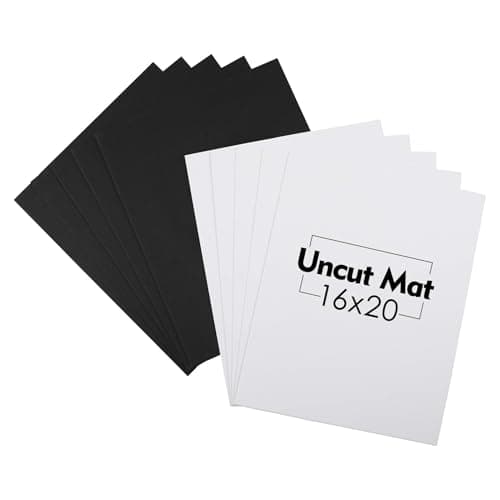
1Logan 350-1 Compact Elite Mat CutterThe single biggest upgrade from homemade to professional · Logan$169.53Shop on Amazon →2Logan F300-1 Studio Joiner (V-Nail)Invisible, gallery-strong frame corners · Logan$177.99Shop on Amazon →3Metabo HPT 10-Inch Compound Miter SawCutting your own frame molding to size · Metabo HPT$148.42Shop on Amazon →4Logan F500-2 Dual Point DriverLocking the art and glass into the frame · Logan$60.00Shop on Amazon →5Amaco Nail-Hole & Corner Filler WaxMaking imperfect miters disappear · Amaco$23.82Shop on Amazon →6Logan 4000 Pull-Style Mat CutterCutting bevels on a budget · Logan$42.99Shop on Amazon →7Meite V-Nails (Hardwood, 1/2 in)Feeding the joiner · meite$33.98Shop on Amazon →8Klein Tools Digital Angle GaugeConfirming a true 45 · Klein Tools$32.97Shop on Amazon →9Housolution 90-Degree Corner Clamps (4-Pack)Holding miters while glue grabs · Housolution$35.99Shop on Amazon →10HORUSDY Band / Strap Frame ClampSqueezing all four corners at once · HORUSDY$11.99Shop on Amazon →11Titebond III Wood GlueThe bond under every corner · Titebond$9.58Shop on Amazon →12Mat Board Center Acid-Free Board (16x20, 10-Pack)Archival mats that protect the art · Mat Board Center$31.95Shop on Amazon →13Acid-Free Foam Backing Board (11x14, 10-Pack)The backing behind the art · WEMUZA$14.99Shop on Amazon →14Clear Acrylic Glazing Sheets (11x14, 2-Pack)Glazing you can cut at home · CHENYAOAI$11.99Shop on Amazon →15Rocket Air BlowerGetting the dust out before you seal · FocusFoto$8.98Shop on Amazon →16Lineco Archival Mounting CornersMounting art without glue · Lineco$17.70Shop on Amazon →17Acid-Free ATG TapeSealing the dust cover · T.R.U.$20.99Shop on Amazon →18Kraft Dust-Cover Paper RollThe finished dust cover · TapeManBlue$24.99Shop on Amazon →19D-Ring Picture Hangers (100-Pack)Anchoring the hanging wire · Picture Hang Solutions$14.05Shop on Amazon →20Coated Picture Hanging WireStringing the frame to hang · Cerpourt$8.99Shop on Amazon →21Scotch Clear Rubber BumpersKeeping the frame flat and level · Scotch$4.95Shop on Amazon →22Wood Touch-Up Marker SetHiding raw grain at the miter · DAIXISM$9.99Shop on Amazon →

Common Questions

Frequently Asked Questions

Have art
to sell?

Austin Gallery specializes in selling inherited art, estate collections, and fine art with zero upfront fees. Get a free evaluation today.