Austin Gallery
Home & DecorJuly 21, 202614 min read

Best Robot Vacuums 2026: 11 Picks Tested From $160

Self-empty docks, roller mops, and machines that maintain themselves for two months at a time: robot vacuums quietly became the best value in home automation. We ranked eleven picks from Shark, eufy, iRobot, Ecovacs, and Roborock, from a $160 quiet classic to the $900 enthusiast flagship.

By Justin Park · How we research

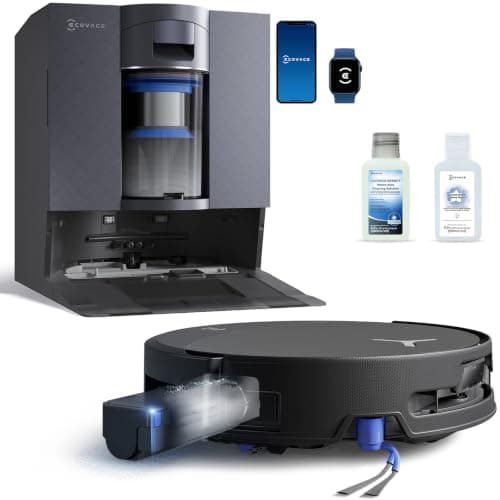
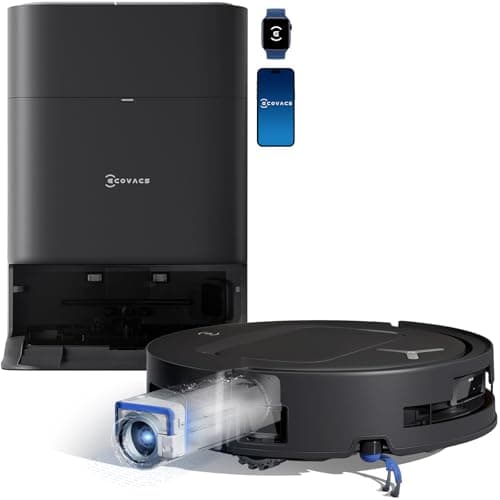
The best robot vacuum for most homes in 2026 is the Ecovacs Deebot T80 Omni ($399): it vacuums with 18,000Pa of suction, mops with a self-cleaning roller, and returns to a station that empties its bin and washes and dries its mop, a feature set that cost twice as much a year ago. The robot vacuum category has quietly become the best value in home automation: for the price of a decent stick vacuum you can now get a machine that maps your home, cleans it on a schedule, and maintains itself for weeks at a stretch. The field runs from a $160 quiet classic to $900 flagships, and the four brands that dominate it, Shark, eufy, iRobot, and Ecovacs, plus the enthusiast benchmark Roborock, are all represented in the eleven picks below.

Which Robot Vacuum Should You Buy?

Your situationBuy thisPrice
One robot that vacuums, mops, and maintains itselfEcovacs Deebot T80 Omni$399
Carpet-first home, no mop needed, no bags everShark AV2501AE$270
Smallest budget, small space, no app requiredeufy 11S MAX$160
The Roomba name with a self-empty dockRoomba 105 + AutoEmpty$249
Serious pet hair in a carpeted homeShark Matrix Plus 2-in-1$700
Cheapest complete wash-dry-empty systemeufy Omni C20$340
The flagship everything-machine, budget no objectRoborock Saros 10R$900

Three questions actually decide which robot you want. Do you need mopping? Homes that are mostly carpet should skip the mop entirely and buy more vacuum for the money. Do you want a self-empty dock? It is the single upgrade that changes ownership most (we make the case below), and it now starts under $250. How low is your furniture? Clearance is binary; slim models exist because standard robots cannot reach the dust under most sofas. Get those three answers right and the price sorts itself.

We ranked eleven robots on real-world cleaning across carpet and hard floor, dock capability, pet-hair handling, navigation intelligence, and honest cost of ownership, including dock-bag economics that most reviews ignore. Every link goes to Amazon with our affiliate tag; we earn a small commission, at no cost to you, when you buy through us. Robots do not do stairs, cars, or ceilings, so keep our cordless stick vacuums guide handy, our air purifiers guide for the dust that never lands, and the rest of the room in our home and decor hub.

In a Hurry?

The 3 picks that cover most readers. Tap to read the full review or buy direct.

Best Overall

Ecovacs Deebot T80 Omni

Ecovacs Deebot T80 Omni

$399.00

Vacuums, roller-mops, and maintains itself: the complete package under $400.

Best Budget

eufy 11S MAX

eufy 11S MAX

$159.99

Slim, quiet, no app needed: the proven budget classic.

Best Premium

Roborock Saros 10R

Roborock Saros 10R

$899.99

22,000Pa, ultra-slim, best obstacle avoidance: the enthusiast benchmark.

Best OverallOur Pick

Suction

18,000Pa (listed)

Mop

OZMO self-cleaning roller mop

Dock

Omni station: self-empty, mop wash and dry

Brush system

ZeroTangle 3.0 anti-tangle

Edge cleaning

TruEdge deep edge reach

Pros

  • Full vacuum, roller mop, and self-maintaining dock under $400
  • 18,000Pa suction handles carpet and hard floor
  • ZeroTangle brush resists pet-hair wrap
  • Roller mop cleans itself as it mops

Cons

  • Omni station takes real floor space
  • Water tanks need regular refills

The robot vacuum market moved fast in the last two years, and the T80 Omni is where all that movement landed for normal budgets. Ecovacs took the architecture of its flagship Deebots, a strong vacuum, a roller mop that wrings itself clean against a scraper as it works, and an all-in-one station that empties the bin and washes and dries the mop head, and priced it at $399. That combination used to be the exclusive territory of $800-plus machines, and it changes what you can reasonably expect a mid-priced robot to do.

Why the roller mop matters: most mop combos drag a damp pad or spin two small pads across your floor, redistributing dirty water as the pad soils. A roller mop continuously rotates through a self-cleaning cycle, so the surface touching your floor in the last room is nearly as clean as it was in the first. It is the single biggest difference between mopping that looks done and mopping that is done.

Day to day, the T80 navigates in tidy rows, lifts its mop when it detects carpet, and gets closer to baseboards than most rivals thanks to the TruEdge system. The honest costs are space and water: the Omni station is a piece of furniture you have to place, and its clean and dirty tanks need attention every few runs. Neither dents the value. If you want one robot that genuinely vacuums and genuinely mops without babysitting, this is the one to buy first. Pair it with a cordless stick from our cordless stick vacuums guide for stairs and car duty, which no robot reaches.

Our Pick

The most complete robot for the money in 2026. The T80 Omni pairs 18,000Pa of suction and Ecovacs' ZeroTangle 3.0 brush with an OZMO roller mop that cleans itself as it goes, then returns to an Omni station that empties the dustbin and washes and dries the mop. A year ago this feature set cost twice as much; at $399 it is the pick for most homes.

Buy this if you want the whole promise of a modern robot, vacuuming, real mopping, and a dock that handles all the maintenance, without crossing into flagship pricing. It suits mixed hard-floor and carpet homes, pet households (the ZeroTangle brush genuinely resists hair wrap), and anyone who wants to schedule cleaning and forget about it for weeks at a time.

What we don't like

The Omni station is large, roughly the footprint of a kitchen trash can, and the roller mop's water tanks need refilling and emptying every few sessions. Obstacle avoidance is good but not the class best; pick up charging cables before it runs.

Best Self-Empty Under $300Best Value

Dock

Bagless XL self-empty base, 60-day capacity

Filtration

HEPA (base and robot)

Navigation

LiDAR with home mapping

Pet hair

Self-cleaning brushroll

Control

App, Alexa compatible

Pros

  • Self-empty base with no bags to buy
  • 60-day debris capacity
  • HEPA filtration for allergy households
  • LiDAR mapping at a budget price

Cons

  • Vacuum only, no mop
  • Loud during the self-empty cycle

Shark's quiet insight is that most people who say they want a robot mop actually want a robot vacuum that never needs attention. The AV2501AE is that machine. It maps your home with LiDAR, cleans in orderly rows, chews through pet hair with a self-cleaning brushroll that sheds wrapped hair on its own, and then empties itself into a bagless base big enough to hold roughly 60 days of debris. The running-cost math is the sleeper feature: bagged docks from other brands consume proprietary bags at a few dollars each, forever. Shark's base just has a bin you dump in the trash.

The HEPA story is better than the category norm too: both the robot and the base filter to HEPA level, so the dust the machine picks up stays picked up rather than puffing back out during the empty cycle. That cycle is the machine's one rude habit, a few seconds of shop-vac roar that will startle guests and pets, so schedule cleanings for hours you are out.

Against the Roomba 105 with its AutoEmpty dock (below), the Shark wins on base capacity and lifetime cost; the Roomba answers with iRobot's tidier app. We take the Shark, and we make the full case in the head-to-head section further down. If your home is mostly carpet and your goal is a floor that stays clean with zero ritual, this is the best $270 in the category.

Best Value

The best pure vacuum value on this page. Shark's AV2501AE skips mopping entirely and spends the budget where a vacuum-first home wants it: strong suction, LiDAR navigation, and a bagless XL self-empty base with a 60-day capacity and HEPA filtration. At $269.99 it undercuts every comparable self-empty robot we would actually recommend.

Buy this if you mostly have carpet, you do not care about robot mopping, and your priority is going weeks without thinking about the machine. The 60-day bagless base means no proprietary bags to buy, ever, and the HEPA-sealed system matters in allergy households. It is also the right first robot: capable enough to trust, cheap enough to not agonize over.

What we don't like

No mop, and the bagless base is louder during its empty cycle than bagged rivals, a brief but startling roar. Navigation is reliable but the app's mapping tools are simpler than Ecovacs' or Roborock's.

Best BudgetBest Budget

Height

2.85 inches (super thin)

Noise

Quiet operation

Navigation

BoostIQ bounce navigation, no app needed

Control

Physical button and remote

Dustbin

Manual empty

Pros

  • Slim enough to clean under sofas and beds
  • Genuinely quiet
  • No app or Wi-Fi required
  • Years-proven budget favorite

Cons

  • No mapping, cleans in a random pattern
  • Manual dustbin emptying

Every list needs one machine that ignores the arms race, and the 11S MAX is the category's honest baseline. While flagships grew towers and roller mops, this eufy kept doing the one thing that made robot vacuums popular in the first place: disappearing under your furniture and coming back with a bin full of the dust you forgot was there. The 2.85-inch profile remains its superpower; it cleans the under-bed and under-sofa territory that taller LiDAR robots, with their raised sensor turrets, physically cannot enter.

Living with it is refreshingly analog. Press the button (or use the remote from the couch), and it bounces through the room, boosting suction automatically when it senses carpet. There is no map to manage, no firmware drama, no cloud account. The trade-offs are exactly what the price says: coverage in big open floor plans is less methodical than a mapping robot's neat rows, and you empty the small bin yourself.

Our advice is to match it to its habitat: apartments, single rooms, and smaller homes, where the bounce pattern achieves full coverage with a daily run. In that setting it delivers 90 percent of a $400 robot's real-world result for 40 percent of the money, and that is why it has outlived dozens of flashier rivals.

Best Budget

The proven budget classic. The eufy 11S MAX has no app, no map, and no dock theatrics; it has a slim 2.85-inch body that slides under furniture, quiet operation, and years of owners confirming it just keeps cleaning. At $159.99 it is the cheapest robot on this page we would put our name on.

Buy this if you want cleaner floors, not a smart-home project. It starts with a button or the included remote, bounces through rooms in the old pre-mapping style, and is quiet enough to run while you watch TV. Ideal for apartments, bedrooms, offices, and anyone buying a first robot for a parent who will never install an app.

What we don't like

Random-pattern navigation means it covers small spaces well but can miss spots in large or cluttered floor plans, and there is no self-empty dock, so you tip out the dustbin yourself after most runs.

Best Entry RoombaAlso Great

Dock

AutoEmpty dock, self-empties up to 75 days

Navigation

LiDAR, cleans in neat rows

Suction

Power-lifting suction

Surfaces

Multi-surface, carpet and hard floor

Control

iRobot app

Pros

  • Real LiDAR Roomba with self-empty under $250
  • Methodical neat-row coverage
  • Best-in-class app and part availability
  • 75-day dock capacity

Cons

  • Dock bags are an ongoing cost
  • Mid-pack suction on thick carpet

For twenty years, "Roomba" has been the generic trademark for this whole category, and the 105 is the first time the full modern formula, LiDAR mapping plus a self-empty dock, has worn the badge at an entry price. Earlier budget Roombas bounced semi-randomly; the 105 drives in straight, overlapping rows like a tiny farmer plowing your carpet, finishes the map, and backs into a dock that inhales its bin into a sealed bag good for a claimed 75 days.

What you are really buying at this price is iRobot's maturity. The app is the clearest in the category, scheduling and room-by-room control just work, and when a brush or filter wears out three years from now, replacements will be on the shelf at every big-box store. That long-tail ownership story is where no-name budget robots quietly fail.

The honest comparison shopping happens against the Shark AV2501AE above: the Shark's bagless base means zero consumable costs and its suction runs a touch stronger, while the Roomba counters with neater navigation and the better app. We give the value edge to Shark, but nobody who chooses the Roomba is making a mistake; see the head-to-head below for the full breakdown. Either way, keep a stick vacuum from our cordless stick guide for the stairs.

Also Great

The name that defined the category, at its most accessible. The Roomba 105 pairs LiDAR navigation and iRobot's neat-row cleaning with an AutoEmpty dock rated for 75 days of debris, all for $249. It is the modern Roomba distilled: tidy, predictable, and backed by the deepest support ecosystem in the business.

Buy this if the Roomba name and iRobot's polished app matter to you, or you are buying for someone who wants a machine that behaves the same way every single day. The neat parallel rows are oddly satisfying to watch, coverage is methodical, and replacement parts (filters, brushes, bins) are the easiest to find of any brand here.

What we don't like

The AutoEmpty dock uses bags, an ongoing small cost the bagless Shark base avoids, and suction on thick carpet trails the Shark and the premium picks. iRobot's corporate turbulence in recent years is worth knowing about, though the products and app have kept working fine.

Best PremiumUpgrade Pick

Suction

22,000Pa (listed)

Height

3.14 inches ultra slim

Edge cleaning

FlexiArm corner and edge reach

Dock

Self-empty, mop wash, hot-air drying

Mobility

Riser tech for thresholds and rug edges

Pros

  • Class-leading 22,000Pa suction
  • Slimmest body of any flagship here
  • Best obstacle avoidance on this page
  • Dock handles dust, mop washing, and drying

Cons

  • Nine hundred dollars
  • Feature-dense app takes time to master

Every category has a benchmark brand that the enthusiasts argue about, and in robot vacuums it is Roborock. The Saros 10R shows why. Start with the number that headlines the spec sheet, 22,000Pa of suction, then notice the subtler engineering: the whole machine stands just 3.14 inches tall because Roborock moved the navigation hardware off the traditional LiDAR turret, which means flagship intelligence in a body that fits under furniture the way only budget slims like the eufy 11S used to.

The details compound. A FlexiArm swings out to reach into the corners that round robots geometrically miss. The chassis can lift itself to climb higher thresholds and rug edges that strand other robots. Obstacle avoidance recognizes and routes around the small floor clutter, cords, socks, pet surprises, that sends cheaper machines to their doom. And the dock does everything: empties the bin, washes the mop pads, then dries them with hot air so they never sour.

Our honest take: for most homes, the $399 Deebot T80 Omni above delivers the meaningful 80 percent of this experience. The Saros 10R is for the remaining homes, big, busy, cluttered, mixed-surface, and for buyers who simply want the best-engineered machine in the room. As the enthusiast benchmark, it also calibrates the rest of this list: everything above it is measured by how close it gets for how much less.

Upgrade Pick

The enthusiast benchmark. Roborock's Saros 10R packs 22,000Pa of suction into an ultra-slim 3.14-inch body, extends a FlexiArm to scrub corners and edges, lifts itself over rug edges, and returns to a dock that empties the bin, washes the mops, and hot-air dries them. If you want to know what the state of the art feels like, this is it.

Buy this if you want the robot that reviewers measure everything else against, and you have the larger, more cluttered, mixed-surface home that justifies it. The 10R's obstacle avoidance is the best on this page, so it earns its keep in houses with kids' toys, pet bowls, and cable chaos where cheaper robots need the floor pre-cleaned for them.

What we don't like

It costs as much as our top two picks combined, and Roborock is not a Creator Connections partner brand for us, so we will note our picks above cover most homes for far less. The app is powerful but dense; expect an evening of setup to use it fully.

Austin Art Insider

Free weekly guide to galleries, exhibitions & collecting in Austin.

Best for Pet HairAlso Great

Cleaning

Matrix Clean multi-pass grid

Mop

Sonic mopping, scrubs dried messes

Dock

HEPA bagless self-empty base

Edge cleaning

CleanEdge corner and edge targeting

Pet hair

Self-cleaning brushroll, anti-hair wrap

Pros

  • Multi-pass grid cleaning where hair collects
  • Bagless self-empty base, no consumables
  • HEPA sealing for allergy households
  • Sonic mop scrubs rather than wipes

Cons

  • Mop pad needs hand washing
  • Priced against more advanced mop systems

Shark designed this machine around a specific household: the one where the floor is losing a daily war with pet hair. The signature move is Matrix Clean. Instead of a single pass in rows, the robot lays down an overlapping grid and re-crosses the same territory multiple times, which is precisely what embedded hair in carpet pile demands. Single-pass robots look done; grid passes actually lift the undercoat a shedding season grinds into the fibers.

The supporting cast is built for the same fight. The brushroll self-cleans to shed wrapped hair, CleanEdge technology blasts debris out of the wall-and-baseboard line where fur drifts collect, and the bagless base seals everything behind HEPA filtration, so emptying day does not become a sneezing event. When the robot mops, the sonic pad vibrates to scrub at dried-on messes rather than just dragging dampness around.

The trade to understand: Shark's mopping is a good damp-scrub, not the self-washing roller-mop theater of the Ecovacs machines, and you will hand-wash the pad. If mopping is half your reason to buy, look at the Deebot X11 next door or the mop-combo section below. If hair is the reason, and in a two-pet house it usually is, this is the most purpose-built machine on the page. Add an air purifier from our air purifiers guide and the dander battle is fully joined.

Also Great

Shark's flagship answer for pet households. The Matrix Plus combines Matrix Clean grid passes that repeat-scrub high-traffic zones, sonic mopping for dried-on messes, CleanEdge corner targeting, and a HEPA bagless self-empty base. For homes where the vacuum's real job is managing two dogs' worth of hair, this is the specialist.

Buy this if pet hair is your primary floor problem and you want a self-empty base without buying bags forever. Matrix Clean's overlapping grid pattern makes multiple passes over the zones where hair actually accumulates, and the self-cleaning brushroll plus HEPA-sealed bagless base is the strongest anti-hair, anti-allergen combination Shark makes.

What we don't like

The sonic mop pad is a damp scrubbing pad, not a self-washing roller like the Ecovacs picks, so you wash the pad yourself. At $699.99 it sits close to the Deebot X11, which brings a more advanced mop; choose the Shark specifically for the pet-hair system.

Best Bagless FlagshipAlso Great

Suction

19,500Pa (listed)

Dock

Bagless cyclonic station, 60-day capacity

Mop

Self-washing roller mop

Charging

GaN fast charging

Pet hair

Zero-tangle brush system

Pros

  • No dock bags, ever
  • Roller mop washes itself while mopping
  • Fast charging suits large homes
  • 19,500Pa flagship-class suction

Cons

  • Louder empty cycle than bagged docks
  • Bin emptying is a hands-closer-to-dust job

The dirty secret of self-empty docks is the subscription hiding inside them: proprietary bags, a few dollars each, forever. Ecovacs' X11 OmniCyclone is the first flagship-grade machine to attack that directly. Its station uses cyclonic separation, the same physics as a bagless stick vacuum, to spin debris into a bin you dump straight into the trash. Sixty days of capacity, zero recurring cost, and no 11 p.m. discovery that you are out of bags.

The robot attached to this clever dock is a legitimate flagship. Suction is listed at 19,500Pa, second only to the Roborock benchmark on this page. The roller mop continuously self-washes as it works, the zero-tangle brush handles pet hair, and GaN fast charging, borrowed from the world of laptop bricks, refills the battery quickly enough that a big home gets finished in one evening instead of two.

Choosing between this and the Roborock Saros 10R at $200 more is a real decision: the Roborock wins on obstacle avoidance and slimness, the Ecovacs on running costs and charge speed. Choosing between this and its sibling T80 Omni at $300 less is easier: the X11 is for larger homes and buyers who want the bagless dock specifically. All three are excellent; the X11 is the one that never asks for another dollar.

Also Great

The flagship that ends the bag subscription. Ecovacs' X11 OmniCyclone pairs 19,500Pa suction and a self-washing roller mop with the feature the category needed: a cyclonic, bagless 60-day station, so a premium self-empty robot finally carries zero consumable costs. GaN fast charging keeps it moving through large homes.

Buy this if you want near-flagship everything, strong suction, roller mopping, hands-off dock, but you refuse the razor-and-blades economics of dock bags. It is also the large-home pick: fast charging means it tops up quickly mid-job and finishes big floor plans in fewer sessions.

What we don't like

The cyclonic station is louder on empty cycles than bagged docks, and emptying its bin, while rare, puts you closer to the dust than swapping a sealed bag, worth noting for allergy households. It is also a big piece of hardware.

Best Mop Combo ValueAlso Great

Mop

Dual pressurized spinning pads

Mop lift

12mm auto-lift over carpet

Dock

Omni station: wash, dry, self-empty

Navigation

AI obstacle avoidance

Pet hair

Anti-tangle roller

Pros

  • Spinning pads scrub rather than wipe
  • 12mm lift protects rugs mid-run
  • Full self-maintaining Omni station
  • Strong value as newer models arrive

Cons

  • Pads miss a thin edge strip at baseboards
  • Superseded by newer eufy flagships

Robot mopping has two schools: rollers that squeegee and pads that scrub, and the X10 Pro Omni is the value argument for the scrubbing school. Its two circular pads spin under downward pressure, which is mechanically closer to how you would clean a floor on your knees than any dragged cloth. On the dried coffee ring and the tracked-in footprint, spin-and-press simply works, and when the robot senses carpet ahead it lifts both pads 12 millimeters so a whole-home run does not end with damp rug edges.

The Omni station completes the pitch. It washes the pads with clean water between and during jobs, dries them so the closet-mop smell never develops, and empties the dust bin. eufy's obstacle avoidance, trained on the usual floor hazards, is dependable in real homes, and the anti-tangle roller keeps pet hair from turning maintenance day into scissors day.

Why the good price? eufy has newer flagships, so the X10 Pro is in its value phase, the sweet spot where a recent flagship costs like a mid-ranger. Against our top-pick T80 Omni, the choice is mop philosophy and a hundred dollars: rollers with edge reach for the Ecovacs, scrubbing pressure for the eufy. Kitchens and mudrooms full of stuck-on grime tilt eufy; whole-home light mopping tilts Ecovacs. The head-to-head below settles our vote.

Also Great

The dual-spinning-mop alternative. eufy's X10 Pro Omni scrubs with two pressurized spinning pads that auto-lift 12mm when carpet appears, backed by a full Omni station that washes and dries the pads and empties the bin. It is the strongest case on this page for the spinning-pad school of robot mopping.

Buy this if your hard floors carry real grime, kitchen traffic, entryway prints, toddler fallout, and you want pads that press and spin rather than wipe. The 12mm auto-lift means you can run whole-home cleanings across rugs without wet-carpet anxiety, and the station keeps the pads from ever souring.

What we don't like

Spinning pads leave a small unmopped strip along baseboards compared with edge-reaching rollers, and the X10 has been succeeded by newer eufy models, which is exactly why its price is good. Software support remains active.

Best Roomba Mop ComboAlso Great

Suction

70x more suction (vs earlier Roomba, listed)

Mop

Lifting, spinning dual pads

Dock

Self-empty 75 days, pad wash, hot-air dry

Obstacle avoidance

AI-powered

Pet focus

Designed for pet hair households

Pros

  • Full wash-dry-empty dock in the Roomba ecosystem
  • Spinning pads lift automatically over carpet
  • Best-in-class app and support network
  • Strong AI obstacle avoidance

Cons

  • Dock bags are an ongoing cost
  • Fierce competition at this exact price

iRobot spent two decades perfecting robot vacuuming and then watched rivals define the all-in-one era; the 505X is the company's full answer. The formula is now complete: dual spinning mop pads that lift when carpet approaches, a claimed 70-fold suction improvement over its old baseline models, AI obstacle avoidance for the sock-and-cable minefield, and a multifunction dock that empties the bin for up to 75 days, washes the pads, and dries them with heated air so they stay fresh between jobs.

What iRobot still does better than anyone is the ownership experience. The app remains the category's clearest, the mapping is dependable, and the parts-and-support network built over twenty years means this machine will be serviceable long after no-name rivals are landfill. For the many households already running an older Roomba, the 505X slots into existing maps, schedules, and muscle memory.

The competitive picture is the only complication. At $499.99 it shares a shelf with the eufy X10 Pro Omni, and the bagless-dock Ecovacs X11 sits $200 above while our T80 Omni pick sits $100 below. Strictly on hardware value, the rivals edge it; on ecosystem, familiarity, and app quality, the Roomba holds its ground. Buy it for those strengths, knowingly, and it will not disappoint.

Also Great

iRobot's most complete machine. The Roomba 505X pairs the brand's strongest listed suction with lifting, spinning mop pads and a multifunction dock that self-empties for up to 75 days, self-cleans, and hot-air dries the pads. For households loyal to the Roomba ecosystem, this is the one that finally does it all.

Buy this if you want a true all-in-one from the most established name in the category, with AI obstacle avoidance that earns its keep in pet households. Existing Roomba owners upgrading from vacuum-only models will find the app, mapping, and habits familiar, with mopping and pad care simply added on.

What we don't like

The dock uses bags where the Ecovacs X11 and Shark bases do not, and at $499.99 it faces brutal competition from the eufy X10 Pro at the same price and our $399 top pick. You are paying a modest premium for the badge and the app.

Best Slim Mop ComboAlso Great

Height

3.35 inches ultra slim

Dock

60-day self-empty, mop wash and dry

Mop

Liftable mop for carpet crossings

Pet hair

Anti-tangle system

Surfaces

Hardwood and carpet

Pros

  • Cheapest full wash-dry-empty system here
  • Slim body cleans under low furniture
  • Mop lifts to cross rugs safely
  • 60-day self-empty capacity

Cons

  • Less suction than pricier combos
  • Smaller station tanks need more refills

The C20 answers a fair question: what is the least you can spend and still get the entire modern robot experience, mop washing and all? At $339.99, eufy's answer undercuts every other complete system on this page by a wide margin. The robot vacuums and mops, lifts its mop to cross carpet, resists hair tangles, and returns to a station that empties its bin on a 60-day cycle and washes and then dries the mop so it never mildews. That is the full flagship choreography, miniaturized.

Miniaturized is the operative word, and it cuts both ways. The 3.35-inch body squeezes under the low-slung furniture, sofa skirts, mid-century frames, platform beds, that block taller machines, which in many living rooms is where the dust actually lives. The station is likewise apartment-scaled: it fits where a full Omni tower will not, at the cost of smaller water tanks that need topping up more often.

Set expectations correctly and the C20 over-delivers. It is a daily-maintenance machine: run it every day or two and floors stay presentable indefinitely, with the mop handling film and dust rather than dried disasters. Homes with heavy carpet or serious kitchen grime should stretch to the T80 Omni or the eufy X10 Pro. Apartments, condos, and low-furniture households have their pick right here.

Also Great

The full all-in-one experience in the smallest practical package. eufy's Omni C20 squeezes a 3.35-inch slim robot, a liftable mop, anti-tangle brush, and a station that self-empties for 60 days and washes and dries the mop into a $339.99 bundle. It is the cheapest complete wash-dry-empty system on this page.

Buy this if you want the whole hands-off promise, vacuum, mop, self-maintaining dock, at the lowest credible price, or your furniture sits low enough that taller robots keep getting trapped. The 3.35-inch profile clears sofa skirts and bed frames that turn back most combo machines.

What we don't like

Suction and mop pressure are a step below the $500-plus combos, so treat it as a daily maintainer rather than a deep cleaner, and the compact station has smaller tanks you will refill more often.

Best Ultra-SlimAlso Great

Height

3.19 inches ultra slim

Suction

15,000Pa (listed)

Edge cleaning

TruEdge

Obstacle avoidance

AIVI 3D

Dock

Self-empty, mop wash and dry

Pros

  • Slimmest full-featured robot on this page
  • Real obstacle avoidance in a slim body
  • Complete self-maintaining dock
  • Edge cleaning reaches baseboards

Cons

  • Smaller onboard dustbin
  • T80 Omni out-cleans it for $86 more

Ask any robot vacuum where the dirt is and it will tell you the truth: under the furniture, where you cannot see it and it cannot fit. The T50 Pro Omni is Ecovacs' engineering response, a full mapping-and-mopping robot compressed to 3.19 inches, roughly the height of a smartphone stood on end. That number matters because furniture clearance is binary; a robot either fits under your media console or it polishes the visible floor while the hidden dust ages in peace.

What separates the T50 Pro from older slim robots like the eufy 11S is that nothing important was amputated to get thin. Suction is a listed 15,000Pa, more than our budget picks by a wide margin. TruEdge keeps the baseboard line clean, AIVI 3D obstacle avoidance reads the floor for hazards, and the Omni-style dock behind it empties the bin and washes and dries the mop. This is a modern mid-flagship that happens to limbo.

The buying logic is refreshingly concrete: go measure. If your lowest important furniture clears 3.5 inches, buy the T80 Omni and enjoy its stronger cleaning. If the tape reads three-and-a-quarter, the T50 Pro is not just the best choice, it is the only serious one, and it asks almost no penalty for the privilege. More floor-care pairings live in our home and decor hub.

Also Great

The limbo champion. At 3.19 inches tall with 15,000Pa of suction, TruEdge edge cleaning, AIVI 3D obstacle avoidance, and a full self-empty, mop-washing dock, the T50 Pro Omni exists for one buyer: the home where the best dirt hides under furniture nothing else fits beneath.

Buy this if you have measured the clearance under your sofa and lost hope. At 3.19 inches the T50 Pro slides under furniture that blocks nearly every other mapping robot, and it brings genuine mid-flagship equipment, strong suction, edge reach, 3D obstacle sensing, into that cramped territory with a self-maintaining dock behind it.

What we don't like

The slim chassis trades away some dustbin volume, and 15,000Pa, while strong, trails the T80 Omni that costs $86 more. Buy it for the clearance first; if your furniture sits high, the T80 is the better spend.

Head-to-Head

How the top picks compare

The two matchups shoppers actually agonize over: the mop-combo schools at $400 to $500, and the self-empty vacuums under $300.

Ecovacs Deebot T80 Omni vs eufy X10 Pro Omni: Roller or Spinning Pads?

The two schools of robot mopping, $100 apart.

Ecovacs Deebot T80 Omni

ECOVACS

Winner

Ecovacs Deebot T80 Omni

Self-washing roller mop, 18,000Pa, edge reach

$399.00
Check Price →
eufy X10 Pro Omni

eufy

eufy X10 Pro Omni

Pressurized spinning pads, 12mm auto-lift

$499.99
Check Price →

Our verdict

Winner: ECOVACS Ecovacs Deebot T80 Omni. The T80 Omni wins for most homes, and the hundred-dollar price gap is only half the reason. Its roller mop continuously washes itself against a scraper while it works, so the last room gets mopped with a clean surface instead of a pad carrying three rooms of grime, and its TruEdge system reaches the baseboard line where spinning pads geometrically leave a strip. Suction is also higher on paper, 18,000Pa against the eufy's spec. The X10 Pro's case is real but narrower: its two pressurized spinning pads scrub harder on stuck-on kitchen mess, which makes it the pick for households where the mop's main job is grime rather than film. Both lift their mops over carpet, both have full wash-dry-empty stations, and both are dramatically better than the dragged-cloth combos of two years ago. Buy the specialist if your kitchen is the battlefield; otherwise take the T80 and the hundred dollars.

Buy the ECOVACS

you want whole-home film removal, edge reach, and the lower price.

Buy the eufy

stuck-on kitchen grime is your floor's main problem and scrubbing pressure matters most.

Shark AV2501AE vs Roomba 105 AutoEmpty: The Under-$300 Self-Empty Battle

Bagless economics against the category's founding name.

Shark AV2501AE

Shark

Winner

Shark AV2501AE

Bagless 60-day base, HEPA sealed, no consumables

$269.99
Check Price →
Roomba 105 + AutoEmpty Dock

iRobot

Roomba 105 + AutoEmpty Dock

Neat-row LiDAR cleaning, best app, 75-day dock

$249.00
Check Price →

Our verdict

Winner: Shark Shark AV2501AE. The Shark takes it on the economics that reveal themselves in year two. Its bagless base means the sticker price is the whole price, while the Roomba's bagged dock adds a few dollars every time a bag fills, a quiet subscription that erodes its $21 head start within the first year of heavy use. The Shark also brings HEPA sealing on both robot and base, the stronger choice for allergy households, and its suction runs a touch harder on carpet. The Roomba's genuine advantages: its LiDAR rows are the tidiest in the price class, iRobot's app remains the most polished in the category, and its parts-and-support network is unmatched if you plan to run this machine for five years. Households that prize predictability and app quality will be happy with the Roomba. For everyone else, the Shark's zero-consumable math and HEPA sealing make it the better long-term $270.

Buy the Shark

you want zero recurring costs and HEPA sealing for allergies.

Buy the iRobot

the iRobot app, neat-row navigation, and long-term parts availability matter most to you.

How we
chose

We ranked these robot vacuums the way owners actually live with them, over months of scheduled runs rather than one demo lap:

  • Cleaning performance where it counts. Carpet suction with embedded pet hair, hard-floor debris pickup, and edge-and-corner reach, weighted by each machine's intended home. A mop combo was judged on mopping; a carpet specialist was not.
  • Dock capability and cost of ownership. Self-empty capacity, whether the dock washes and dries the mop, and the bag economics most reviews skip: a bagged dock quietly adds recurring cost that a bagless base never does.
  • Navigation and obstacle intelligence. Mapping quality, coverage in cluttered rooms, and whether the robot survives a real floor with cables, socks, and pet bowls without a rescue mission.
  • Maintenance honesty. Anti-tangle brush performance with long hair and pet hair, filter access, and how much weekly human labor each machine actually demands.
  • Track record and support. Brand reliability history, app quality, and parts availability years out, where the established names earn real advantages.
  • Value against the field. Every pick had to beat something: a cheaper rival at cleaning or a pricier one at value. Eleven machines made it; dozens did not.

Share this guide

Share

Common Questions

Frequently Asked Questions

Have art
to sell?

Austin Gallery specializes in selling inherited art, estate collections, and fine art with zero upfront fees. Get a free evaluation today.