Austin Gallery
Gear ReviewsJuly 11, 202613 min read

Best Portable Power Stations 2026: 9 Picks from $196 to $3,299

Silent power for blackouts, art fair booths, and off-grid weekends. We ranked nine LiFePO4 power stations, from a $196 booth battery to a $3,299 solar-refilling whole-home kit, by capacity, output, charge speed, and price per watt-hour.

By Justin Park · How we research

If you just want the answer: the Jackery Explorer 1000 v2 ($429.00) is the best portable power station for most people in 2026. A listed 1,070Wh of long-life LiFePO4 battery and 1,500W of output covers the real jobs (fridge in a blackout, CPAP for nights, a full day of booth power at an art fair) in a box one person carries. The EcoFlow River 3 ($196.32) is the budget pick that gets artists and apartment dwellers into silent power, and at the top, the EcoFlow Delta Pro 3 solar bundle ($3,299.00) is whole-home backup that refills itself from the sun.

Three specs sort this category. Capacity (watt-hours) is how long you can run things: 250Wh runs a booth's electronics for a day; 1,000Wh runs a fridge for hours; 3,600Wh runs a household's essentials for days. Output (watts) is the biggest thing you can plug in: 300W covers electronics, 1,800W covers most kitchen appliances, 6,000W with 240V covers well pumps and EV chargers. And battery chemistry matters more than brands admit: every pick here uses LiFePO4 cells, listed for thousands of charge cycles, instead of the older lithium-ion packs that faded after a few hundred.

We built the list as a ladder from $196.32 to $3,299.00, with a special eye on two Austin Gallery audiences: artists who need silent booth power at fairs and markets (see our full art fair gear guide), and Texas households that have learned the hard way what a multi-day grid failure costs. Prices shown are Amazon listings at the time of writing and move often. Every link below goes to Amazon with our affiliate tag; we earn a small commission, at no cost to you, when you buy through us.

In a Hurry?

The 4 picks that cover most readers. Tap to read the full review or buy direct.

Best Overall

Jackery Explorer 1000 v2

Jackery Explorer 1000 v2

$429.00

1,070Wh of proven LiFePO4 power: the do-everything default.

Best Under $200

EcoFlow River 3

EcoFlow River 3

$196.32

Silent all-day booth and outage power, under 8 pounds.

Best 2kWh Value

BLUETTI Elite 200 V2

BLUETTI Elite 200 V2

$798.99

Multi-day fridge backup at the best price per watt-hour here.

Best Money-No-Object

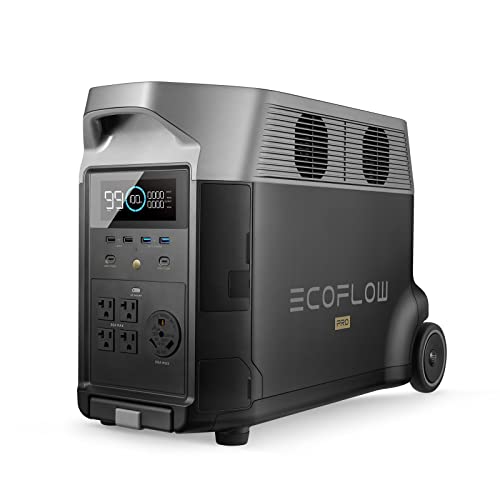
EcoFlow Delta Pro 3 Solar Kit

EcoFlow Delta Pro 3 Solar Kit

$3,299.00

4,096Wh flagship plus 800W of solar: backup with no countdown.

Best OverallOur Pick

Capacity

1,070Wh LiFePO4 (listed)

AC output

1,500W continuous (listed)

Weight

~23.8 lb (listed)

Recharge

~1 hr fast wall charge (listed)

Solar input

Up to 400W (panels sold separately)

Pros

  • Best-known brand in the category, huge track record
  • 1kWh class covers fridge, CPAP, booth, and camping duty
  • LiFePO4 chemistry rated for thousands of cycles

Cons

  • No expandable battery option
  • Delta 2 charges faster and expands for the same money

If you want to read one recommendation and stop, buy the Jackery Explorer 1000 v2. Jackery is the brand that turned the portable power station from an RV curiosity into a household product, and the Explorer 1000 v2 is its volume seller for a reason: a listed 1,070 watt-hours of capacity and 1,500 watts of AC output, in a carry-handle box under 24 pounds. That combination covers the jobs people actually buy these for: keeping a fridge cold through an outage, running a CPAP for several nights, powering a projector movie night, or quietly running an art fair booth all day.

Watt-hours are the spec that matters. A power station's capacity (Wh) is the size of the tank; its output (W) is the size of the tap. A 60W fan runs roughly 15 hours on 1,000Wh; a 600W fridge compressor that cycles on and off can stretch a day or more. Buy capacity for how long you need to run things, and output for the biggest single appliance you will plug in. Every pick on this page lists both.

The v2 generation also moved to LiFePO4 cells, listed at thousands of charge cycles, so this is a buy-once battery rather than a three-year one. What you give up against the EcoFlow Delta 2 below is expandability and a bit of charge speed. If you know your needs will grow, read that review next. If you just want the reliable default, this is it.

Our Pick

The one most people should buy. A listed 1,070Wh of LiFePO4 capacity and 1,500W of AC output in a box light enough to carry one-handed, from the brand that made this category mainstream. Enough battery for a weekend of fridge duty, a full day of booth power, or a serious blackout kit, at a price that undercuts most rivals per watt-hour.

Buy this if you want one do-everything power station and do not want to study spec sheets. The 1kWh class is the sweet spot: big enough to run a fridge for hours, a CPAP for several nights, or lights, fans, a card reader, and phone charging all day at a market booth, but still small enough to lift into a trunk without help. The v2 update moved to LiFePO4 chemistry, which is rated for thousands of charge cycles instead of hundreds.

What we don't like

It is not expandable, so if your needs grow you buy a bigger unit rather than adding batteries. Rivals like the EcoFlow Delta 2 recharge somewhat faster from the wall and accept add-on packs.

Best Budget / Booth PowerBest Under $200

Capacity

245Wh LiFePO4 (listed)

AC output

300W continuous, 600W X-Boost (listed)

Weight

~7.8 lb (listed)

Recharge

~1 hr wall charge (listed)

Solar input

Supported (panel sold separately)

Pros

  • Real LiFePO4 power station under $200
  • Light enough to carry to a booth in one hand
  • Fast wall recharge between uses

Cons

  • 245Wh will not run big appliances for long
  • One unit per job: no expansion path

The River 3 is the power station we recommend to artists first. If you sell at fairs and markets, power is the quiet problem: outdoor booths rarely include it, generators are loud, smelly, and often banned, and a dead card reader is dead revenue. A listed 245Wh unit like this one runs a phone, tablet card reader, LED lighting, and a small fan through a full selling day, weighs under 8 pounds in the load-out, and makes no noise at all next to your work. It pairs naturally with the rest of our art fair booth kit.

At home it is the outage companion for the essentials: router, laptop, lamp, phones. The honest limits are in the numbers: 300W of continuous output (with a listed 600W boost mode for simple resistive loads) rules out most kitchen appliances, and the small tank drains fast if you push it. But at this price it is not competing with the 1kWh class; it is competing with doing nothing, and it wins that easily.

Best Under $200

The cheapest real power station worth owning. A listed 245Wh of LiFePO4 capacity in a lunchbox-sized unit that recharges fast and runs silent. It will not run a fridge for long, but for a market booth, a desk through an outage, or a weekend of phones, lights, and a fan, it is all the battery many people need.

Buy this if your loads are small and your budget is real. Artists running a fair booth are the perfect case: a card reader, phone, LED booth lights, and a small fan sip power, and a listed 245Wh covers that for a full selling day with silence a generator can never offer. It is also the right first power station for renters and apartment dwellers who mostly fear losing Wi-Fi, phones, and a lamp in an outage.

What we don't like

Capacity is the whole compromise: heavier loads like coffee makers and space heaters will drain it in minutes or trip its output limit. If a mini fridge or CPAP is in your plans, start at the 1kWh class instead.

Best 1kWh AlternativeThe Expandable Rival

Capacity

1,024Wh LiFePO4, expandable (listed)

AC output

1,800W continuous (listed)

Weight

~27 lb (listed)

Recharge

~80 min wall charge (listed)

Solar input

Up to 500W (listed)

Pros

  • Expansion battery can double capacity later
  • 1,800W output clears more appliances
  • Very fast wall recharging

Cons

  • Fan noise under fast charge and heavy load
  • Slightly heavier and boxier than the Jackery

The Delta 2 is the engineering-first answer to the Jackery's brand-first pitch, and at the same $429.00 the choice is genuinely close. EcoFlow's case rests on three numbers: 1,800 watts of AC output (enough for most microwaves, coffee makers, and power tools that the 1,500W Jackery has to decline), a wall recharge listed at roughly 80 minutes to full, and an expansion port that accepts a second battery to take the system to 2kWh when your needs outgrow the base unit.

That last one is the real differentiator. Power station buyers consistently report wishing they had bought bigger; the Delta 2 is the only unit in this class that lets you fix that later for the price of a battery instead of a whole new machine. The trade-offs are modest: audible fans when it is working hard, a little more weight, and a brand with a shorter track record than Jackery's. We give the overall nod to the Jackery for simplicity, but if you read the expandability paragraph twice, you are a Delta 2 buyer. The head-to-head below breaks the tie in detail.

The Expandable Rival

The same money as the Jackery, with a different bet. A listed 1,024Wh LiFePO4 pack with a higher 1,800W AC output, very fast wall charging, and the feature the Jackery lacks: an expansion port that accepts an extra battery to double capacity later. Buy it if you think your needs will grow.

Buy this if you want the 1kWh class but hate dead ends. The Delta 2 recharges from a wall outlet at a listed rate that gets it most of the way full in under an hour, its 1,800W output clears more kitchen appliances than the Jackery's 1,500W, and when a bigger outage kit calls, you add the extra battery instead of replacing the unit.

What we don't like

Its fans are audible when charging fast or under heavy load, and it is a bit boxier and heavier in the hand than the Jackery. Brand reliability chatter online is noisier for EcoFlow than for Jackery, which is worth knowing even if most owners report no issues.

Best Mid-Size Step UpThe 1,800W Workhorse

Capacity

~1kWh class LiFePO4 (listed)

AC output

2,000W peak class (listed)

Weight

~28 lb class (listed)

Recharge

Under 1 hr fastest listed mode

Solar input

Supported (panel sold separately)

Pros

  • Highest output headroom in the 1kWh class here
  • Very fast listed wall recharge
  • Anker build and app polish

Cons

  • Premium price over the Jackery and Delta 2
  • No real expansion path

Anker came to power stations the way it came to wall chargers: late, then suddenly everywhere, on the strength of just building the thing well. The SOLIX C1000 Gen 2 is its refined second take on the 1kWh class, and its pitch is headroom. With a listed 2,000W-class AC output, the appliances that make smaller units flinch (kettles, microwaves, circular saws, hair dryers) mostly just run, which in a blackout is the difference between camping in your kitchen and using it.

The second Anker signature is charge speed: its fastest listed mode refills the pack from a wall outlet in under an hour, so a single unit can plausibly cover a morning market shift, recharge over a long lunch, and work the evening too. At $549.99 you are paying about a hundred dollars over the Jackery and Delta 2 for that output and speed, without gaining expandability. For tool users and heavy-appliance households, that trade reads as fair; for lights-and-fridge buyers, the $429 pair above covers it.

The 1,800W Workhorse

Anker's charging pedigree in a power station. The C1000 Gen 2 lists 2,000W of peak-class output from a 1kWh-class LiFePO4 pack, recharges from the wall in under an hour on its fastest listed mode, and brings the app polish and build quality Anker is known for from its charger empire.

Buy this if you want the 1kWh class with maximum output headroom and you trust Anker from a decade of its chargers and batteries. The listed 2,000W class output means kettles, microwaves, and job-site tools mostly just work, and the fast recharge makes it practical to top up over lunch between a morning and evening of booth or campsite duty.

What we don't like

It costs about $120 more than the Jackery and EcoFlow 1kWh units, and like the Jackery it is not meaningfully expandable, so the premium buys output and speed rather than a growth path.

Austin Art Insider

Free weekly guide to galleries, exhibitions & collecting in Austin.

Best 2kWh ValueWeekend-Scale Battery

Capacity

2,073.6Wh LiFePO4 (listed)

AC output

2,600W class (listed)

Weight

~53 lb class (listed)

Recharge

Fast wall charge (listed ~1.5 hr class)

Solar input

Supported (panels sold separately)

Pros

  • Best price per watt-hour on this page
  • True multi-day fridge backup capacity
  • Output class clears nearly any single appliance

Cons

  • Heavy: transporting it is a deliberate act
  • Software polish trails EcoFlow and Anker

Somewhere between the 1kWh carry-along and the whole-home monsters is the size most storm-country households actually need, and the BLUETTI Elite 200 V2 owns that middle. A listed 2,073.6 watt-hours is a different kind of number: a fridge for a day or more, a CPAP for a week of nights, or a booth, a fan, and a phone-charging table for an entire festival weekend. And at $798.99 it delivers that for less per watt-hour than anything else on this page.

The 2kWh class is the sweet spot for real outages. One-hour blackouts are an inconvenience any unit here handles. The outages that cost you money (a freezer of food, a work-from-home day, refrigerated medication) run 12 to 72 hours, and that is 2kWh territory. If you are buying for genuine emergency backup rather than convenience, start your math at this size.

The costs are physical and cosmetic: at over 50 listed pounds it lives where you put it, and BLUETTI's software is functional rather than slick. Neither dents the core case. This is the most battery per dollar here, from a brand that has been building big LiFePO4 packs longer than most.

Weekend-Scale Battery

Two kilowatt-hours for well under a thousand dollars. The Elite 200 V2 packs a listed 2,073Wh of LiFePO4 into a single carryable unit with 2,600W-class output, which is genuine multi-day blackout capacity or a full weekend off-grid without rationing. The per-watt-hour math is the best on this page.

Buy this if the 1kWh class feels tight: households that lose power for days rather than hours, campers who run a fridge and induction plate, or anyone backing up a chest freezer full of food. At a listed 2,073Wh it will hold a typical fridge up for a day or more per charge, and its output class handles nearly any single household appliance.

What we don't like

At roughly 53 listed pounds this is a two-hands, plan-your-path object, not a grab-and-go one. BLUETTI's app and interface polish trails EcoFlow and Anker a step, though the hardware value is hard to argue with.

Best Premium OutdoorThe Expedition Pick

Capacity

~1.5kWh class LiFePO4 (listed)

AC output

High-output class (listed)

Recharge

Fast-charging 6th-gen platform (listed)

Ecosystem

Nomad/Boulder solar, mounts, expansion tanks

Heritage

Outdoor/overland flagship line

Pros

  • The outdoor and overland ecosystem standard
  • Modern fast-charge LiFePO4 in its 6th generation
  • Strong support and accessory network

Cons

  • Poor watt-hours per dollar next to BLUETTI and EcoFlow
  • Overkill branding if it never leaves the garage

Goal Zero is the Patagonia of this category: you are buying the ecosystem and the ethos as much as the battery. The Yeti line has powered basecamps and van builds since before most rivals existed, and this 6th-generation Yeti 1500 modernizes it properly: LiFePO4 chemistry, fast charging, and the 1.5kWh capacity class that covers a serious weekend rig. Around it sits the deepest accessory catalog in the business: Nomad folding panels, Boulder rigid panels, vehicle mounts, and expansion options sold through the same outdoor retailers that sell your tent.

The honest math: at $1,499.95 you can see from this very page that raw capacity is cheaper elsewhere; the BLUETTI above offers more watt-hours for roughly half the price. What the Yeti buys is integration and trust in places where failure is expensive: a shoot day, a remote camp, a rooftop rig wired into a vehicle. If that describes your use, the premium is rational. If the unit will live in a hall closet waiting for a storm, buy capacity instead.

The Expedition Pick

The outdoor brand's flagship, rebuilt. Goal Zero has equipped basecamps, overlanders, and film crews for years, and the 6th-generation Yeti 1500 brings that pedigree to a modern fast-charging LiFePO4 platform in the 1.5kWh class, with the ecosystem of panels, tanks, and mounts the outdoor world already runs on.

Buy this if the power station lives outdoors more than in a closet: overlanding rigs, basecamps, van builds, and photo or film shoots where Goal Zero's panel and accessory ecosystem, dealer network, and reputation for standing behind gear matter more than winning a spec-per-dollar table.

What we don't like

You pay a real brand premium: raw watt-hours per dollar trail BLUETTI and EcoFlow badly. That is the deal with Goal Zero, and buyers who just want maximum battery for a blackout should put the same money toward the Delta Pro below.

Best Home Backup WorkhorseBig-Ticket Pick

Capacity

3,600Wh LiFePO4, expandable (listed)

AC output

3,600W continuous (listed)

Weight

~99 lb, wheeled (listed)

Expansion

Extra batteries, transfer switch support

Solar input

High-wattage solar input (listed)

Pros

  • 3.6kWh and 3,600W covers real multi-day outages
  • Expandable, and integrates with a transfer switch
  • Previous-gen pricing makes it a per-Wh bargain

Cons

  • Nearly 100 lb: wheeled, not carried
  • Superseded by the Delta Pro 3 platform

The Delta Pro is where a power station stops being camping gear and starts being home infrastructure. A listed 3,600 watt-hours and 3,600 watts means it does not negotiate with your appliances: fridge, freezer, sump pump, microwave, a window AC taking turns, all at once within its output budget, for a day or more per charge. Add extra batteries or a compatible transfer switch and it graduates from powering devices to powering circuits, which is the practical definition of whole-home backup without a permanent installation.

Buy the outgoing flagship: it is the value play. With the Delta Pro 3 now on the market, the original Delta Pro sits at $1,599.00 for a listed 3,600Wh, which is the kind of price per watt-hour the new generation cannot match. Unless you specifically need the Pro 3's higher output and 240V tricks, the original is the smarter blackout buy.

Physically it is an appliance: about 99 listed pounds, moved on its wheels and telescoping handle like airline luggage. That is the correct shape for what it does. This is the pick for households that have sat through a multi-day outage and decided: never again.

Big-Ticket Pick

The unit that made whole-home backup a consumer product. A listed 3,600Wh tank with 3,600W of output on wheels, expandable with extra batteries, and wirable into a transfer switch so it backs up circuits, not just plugged-in devices. Per watt-hour, one of the best serious-backup buys on Amazon.

Buy this if outages at your house are measured in days and you want one machine that runs the fridge, the freezer, the Wi-Fi, a window AC or space heater in shifts, and everyone's devices without rationing. The wheels matter: 3.6kWh of LiFePO4 is not a carry item, and the Delta Pro rolls like a checked suitcase.

What we don't like

It is around 99 listed pounds and firmly a garage-and-hallway machine; nobody is taking this to a campsite on foot. This is also the previous generation now that the Delta Pro 3 exists, which is exactly why its price per watt-hour is so good.

Best for 240V & ExpansionThe System Builder

Capacity

3,840Wh LiFePO4, expandable (listed)

AC output

6,000W with 120V/240V (listed)

Weight

Wheeled, ~132 lb class (listed)

Expansion

Extra batteries, parallel and home panel options

Solar input

High-wattage solar input (listed)

Pros

  • Native 240V output: well pumps, dryers, EV charging
  • 6,000W output headroom
  • Expands into a true home energy system

Cons

  • Ecosystem add-ons are their own big purchases
  • Overkill if all your critical loads are 120V

The F3800's party trick is the outlet the others do not have: 240 volts. Most American critical loads run on 120V, but the exceptions are brutal in an outage: well pumps (no water), central HVAC and mini-splits, some sump systems, and EV charging. The F3800's listed 6,000W of output with native 240V handles that class of problem out of the box, which is why it has become the default recommendation for rural and well-water households.

Anker also designed it as a system seed rather than a sealed box: listed expansion batteries stack capacity, two units can pair for more output, and a home power panel kit integrates it into your electrical panel properly. That roadmap costs real money at each step, and a household with ordinary 120V needs should save $100 and buy the Delta Pro. But if any load in your backup plan has a 240V plug on it, this is the one machine on this page that answers it, at $1,699.99.

The System Builder

The most future-proof box here. A listed 3,840Wh with 6,000W of output including a 240V outlet, so it can run well pumps, dryers, and EV chargers that every 120V-only rival must refuse. Expandable with batteries into a bank measured in tens of kilowatt-hours, and wired for home-panel integration.

Buy this if your backup plan includes a 240V load: a well pump, a mini-split, an EV that needs a top-up during an outage. The F3800 is the rare wheeled unit that speaks 240V natively, and its listed expansion path (extra batteries, parallel units, home panel kits) means the box you buy today can grow into a genuine home energy system.

What we don't like

It is big, heavy, and the ecosystem pieces that make it shine (expansion batteries, home panel) are each their own significant purchase. For pure 120V blackout duty the Delta Pro does the job for $100 less with a similar tank.

Best Money-No-Object KitThe Whole-Home Ceiling

Capacity

4,096Wh LiFePO4, expandable (listed)

AC output

4,000W class, 120V/240V (listed)

Solar

2x 400W portable panels included

Expansion

Extra batteries up to 12kWh (listed)

Form

Wheeled unit + folding panels

Pros

  • Battery plus 800W of solar: backup with no countdown
  • Current-gen 120V/240V platform, expandable to 12kWh listed
  • One order covers the whole disaster plan

Cons

  • Serious money and serious storage space
  • Short-outage households should buy half as much

Every battery on this page is ultimately a countdown timer. This kit is the one that resets itself. The Delta Pro 3 is EcoFlow's current flagship: a listed 4,096Wh, 4,000W-class output with both 120V and 240V, expansion up to a listed 12kWh with extra batteries, and quieter, smarter power delivery than the original Pro. Bundled with two 400W folding panels, it becomes something categorically different from a big battery: a small power plant. In decent sun, the listed 800W of input returns thousands of watt-hours a day, which is fridge-and-freezer duty sustained indefinitely.

Who should actually spend $3,299? Fewer people than the spec sheet tempts. If your outages are rare and short, the $1,599 Delta Pro alone is the rational buy and this kit is insurance you will never claim. The math flips for hurricane and ice-storm regions, well-water homes, and off-grid buildings, where outages are measured in days and refilling the battery is the whole problem. There, this is the cheapest reliable answer short of a standby generator install, with no fuel, noise, or permits.

It arrives as a system and lives like one: a wheeled unit near the panel, folding panels in the garage, an app that orchestrates it. As the ceiling of this guide, it earns the spot honestly. This is what solved-problem looks like in 2026.

The Whole-Home Ceiling

The complete off-grid answer in one order: EcoFlow's current-generation Delta Pro 3 with a listed 4,096Wh tank and 120V/240V output, bundled with two 400W portable solar panels so the battery refills itself. This is multi-day, indefinitely-extendable home backup, delivered on wheels.

Buy this if you want the endgame in one purchase: hurricane-country and ice-storm households, off-grid cabins and studios, or anyone whose outage plan must survive longer than any battery alone can. The panels are the point. A battery without solar is a countdown; with a listed 800W of panels, a sunny day puts thousands of watt-hours back in the tank.

What we don't like

It is a four-figure system and a physical commitment: a heavy wheeled unit plus two large folding panels to store and deploy. Households with rare, short outages get 90% of the protection from the $1,599 Delta Pro and can skip the panels entirely.

Head-to-Head

How the top picks compare

The two matchups buyers actually agonize over: the $429 twins, and the two wheeled home-backup heavyweights.

Jackery Explorer 1000 v2 vs EcoFlow Delta 2: Which $429 Power Station Wins?

The proven brand, or the expandable spec sheet, at the identical price.

Jackery Explorer 1000 v2

Jackery

Winner

Jackery Explorer 1000 v2

Lighter, simpler, most proven brand in the category

$429.00
Check Price →
EcoFlow Delta 2

EF ECOFLOW

EcoFlow Delta 2

1,800W output, faster charging, expandable capacity

$429.00
Check Price →

Our verdict

Winner: Jackery Jackery Explorer 1000 v2. At the same $429.00 this is the closest call on the page, and we give it to the Jackery for the buyer who asks no follow-up questions. It is lighter, its interface is simpler, its listed 1,070Wh tank is marginally larger, and Jackery's decade-long track record in exactly this product is the strongest reliability signal in the category. The Delta 2 wins the spec sheet: 1,800W of output clears appliances the Jackery refuses, its wall charging is faster, and it is the only one of the pair that accepts an expansion battery, which converts the most common buyer regret (bought too small) into a solvable problem. Both are LiFePO4 and both will serve for years, so the tie-break is temperament: default and forget, or invest in a platform.

Buy the Jackery

you want the simple, proven default and your needs are stable.

Buy the EF ECOFLOW

you may grow into more capacity, or need 1,800W appliance headroom.

EcoFlow Delta Pro vs Anker SOLIX F3800: Which Home-Backup Flagship?

Bargain 3.6kWh workhorse, or the 240V system builder for $100 more.

EcoFlow Delta Pro

EF ECOFLOW

EcoFlow Delta Pro

3,600Wh at outgoing-flagship pricing: best serious-backup value

$1,599.00
Check Price →
Anker SOLIX F3800

Anker

Winner

Anker SOLIX F3800

6,000W and native 240V: runs well pumps and EV chargers

$1,699.99
Check Price →

Our verdict

Winner: Anker Anker SOLIX F3800. The F3800 takes it on capability that cannot be added later. Its listed 6,000W output and native 240V outlet answer the loads that end backup plans: well pumps, mini-splits, dryers, EV top-ups, and its expansion roadmap (stacked batteries, paired units, a home panel kit) scales further than the Delta Pro's. The Delta Pro's counterargument is pure value: a listed 3,600Wh for $100 less, wheeled, expandable, and transfer-switch capable, which is every capability a 120V-only household will ever invoke. So the decision is one question: does anything in your outage plan have a 240V plug? If yes, the Anker is the only right answer here. If no, save the $100 and buy the Delta Pro without a second thought.

Buy the EF ECOFLOW

all your critical loads are 120V and value per watt-hour rules.

Buy the Anker

you have a well pump, mini-split, or EV in the backup plan.

How we
chose

We ranked portable power stations on the numbers that decide whether the lights stay on, based on listed manufacturer specifications, category research, and owner feedback rather than box-front marketing:

  • LiFePO4 chemistry, no exceptions. Every pick uses lithium iron phosphate cells, listed for roughly 3,000 or more charge cycles versus around 500 for the older lithium-ion packs still sold at the low end. A power station is a ten-year purchase only if its battery is.
  • Capacity and output matched to real jobs. We sized picks to actual use cases (booth electronics, fridge duty, multi-day outage, 240V loads) instead of ranking by raw watt-hours, and we say plainly which jobs each unit cannot do.
  • Price per watt-hour. The honest value metric in this category. It is why the BLUETTI Elite 200 V2 and the outgoing Delta Pro rank so well, and why we flag the premium you pay for the Goal Zero badge.
  • Charge speed, both directions. Fast wall recharging turns one battery into an all-day tool with a lunch break; meaningful solar input turns a countdown into a system. We favored units that refill fast and accept serious panel wattage.
  • Expandability and dead ends. The most common regret in this category is buying too small. We noted which units accept expansion batteries (Delta 2, Delta Pro, F3800, Delta Pro 3) and which are sealed boxes, so you can buy the growth path if you need one.

Share this guide

Share

Common Questions

Frequently Asked Questions

Have art
to sell?

Austin Gallery specializes in selling inherited art, estate collections, and fine art with zero upfront fees. Get a free evaluation today.