Austin Gallery
Framing & DisplayJune 10, 2026Updated June 10, 202614 min read

7 Best Picture Hanging Systems for Heavy Art & Gallery Walls (2026)

Hanging heavy, valuable framed art is a different problem from tacking up a poster — and the wrong hardware is how good pieces hit the floor. We tested the four real systems: gallery rails, French cleats, heavy-duty D-rings, and damage-free strips.

By Justin Park · How we research

The sound nobody who owns real art ever wants to hear is a frame hitting the floor. Hanging a poster is easy; hanging heavy, valuable, or irreplaceable framed work — and building a gallery wall you'll rearrange — is a different problem, and the wrong hardware is how good pieces get damaged. The fix isn't a sturdier nail; it's choosing the right type of system for the weight and how often you'll move things.

There are four real choices, and they sort by weight and permanence. A gallery rail system mounts once and lets you slide and re-height every frame with no new holes — the right call for valuable art and walls you re-curate. A French cleat is the strongest way to hang one heavy piece dead flat. Heavy-duty D-ring kits and pro hook assortments cover the everyday majority. And damage-free adhesive strips handle lighter frames in rentals where holes aren't allowed. Match the system to the job and the specific product almost picks itself.

Before you drill anything, plan the layout: our free Picture Hanging Calculator works out exact hook heights and frame spacing so a gallery wall lands level the first time. Every link below goes to Amazon with our affiliate tag — we earn a small commission, at no cost to you, when you buy through us.

In a Hurry?

The 3 picks that cover most readers. Tap to read the full review or buy direct.

Best Gallery Rail System

STAS Cliprail Pro

$129

Mount once, then slide and re-height any frame with no new holes.

Best for Very Heavy Art

CFOFT French Cleat

$15

Interlocking cleats spread the load — heavy pieces sit flush and can't tilt.

Best Damage-Free

Command Strips

$13

No holes, comes off clean — the renter's pick for lighter frames.

Best Gallery Rail SystemOur Pick

Type

Wall-mounted track + cables + hooks

Capacity

Heavy — multiple frames per rail

Install

Track screws to wall (studs/anchors)

Adjustable

Slide + re-height with no new holes

Best

Gallery walls, valuable art you rearrange

Pros

  • Rearrange and re-height frames with zero new holes
  • Carries heavy art safely on each cable
  • The system professional galleries actually use
  • One clean install handles a whole wall

Cons

  • Most expensive option here
  • Install is a leveling/drilling project
  • Rail is visible along the top of the wall

Walk into any real gallery and look at the top of the wall — that thin track is a rail system, and the STAS Cliprail Pro is the one to bring home. You screw the track into the wall once (into studs or solid anchors), then every piece hangs from a cable with a sliding hook. Want to move a frame six inches left, or swap the whole wall around for a new arrangement? You slide and re-height by hand. No new holes, no spackle, no re-leveling.

Why this matters for valuable art: the failure mode that ruins a piece is a single hook pulling out of drywall. A rail system spreads the load to a track anchored across the wall and carries each frame on a dedicated cable — far more forgiving than one nail in plaster. For art you actually care about, that's the whole point.

It's the most expensive and most involved option on this page, and the rail is faintly visible up high. But if you're hanging multiple pieces, anything heavy or valuable, or a gallery wall you know you'll re-curate, this is the buy-once system. Pair it with our free Picture Hanging Calculator to lay out frame spacing before you mount the track.

Our Pick

The system real galleries use. A track screws into the wall once, then frames hang from cables and hooks you can slide and re-height anywhere along the rail — no more nail holes every time you rearrange. For a wall of valuable art you'll re-curate, nothing else compares.

Buy this if you have multiple pieces, expensive work, or a gallery wall you'll rearrange over time. The rail anchors into studs once and carries serious weight on each cable; after that you reposition and re-height every frame by hand, with zero new holes. It's the grown-up answer to hanging art.

What we don't like

It's the priciest option here and the install is a real project — you're leveling and screwing a track across the wall. Overkill for a single light frame, and the rail is visible at the top of the wall (most people stop noticing it within a day).

Best for Heavy FramesHeavy-Duty Pick

Type

Heavy-duty D-rings + wall bracket

Capacity

Heavy frames, mirrors, canvases

Install

Two-point mount, built-in level

Adjustable

Per-piece (new holes to move)

Best

A single heavy frame done right

Pros

  • Two contact points — frame sits flat, can't pivot
  • Built-in level takes the guesswork out
  • Handles real weight for a few dollars
  • Includes hardware for several frames

Cons

  • Per-piece hardware, not a repositionable system
  • Hit a stud for the heaviest pieces
  • Moving a frame means new holes

If a rail system is more than you need but you've got a heavy frame, this is the fix. A single sawtooth or wire over one hook is how heavy pieces end up on the floor — they pivot, the hook tears out, and gravity wins. The Hangman HDK uses heavy-duty D-rings on the frame that engage a wall bracket at two points, so the frame sits flat against the wall and the load is shared, not hung off a single weak point.

The built-in level is the underrated part — it gets the bracket straight the first time, so you're not nudging the frame and reopening holes. For the heaviest work, drive the bracket into a stud. It's hardware rather than a system (move the piece and you're patching holes), but for a few dollars it's the difference between a frame that stays where you put it and one that doesn't.

Heavy-Duty Pick

The cheap upgrade that stops heavy frames falling. Heavy-duty D-rings on the frame mate with a wall bracket and a built-in level — two contact points instead of one wire, so the frame sits flat, stays put, and can't pivot off a single hook.

Buy this if you have a heavy framed piece, mirror, or canvas and you're tired of single-hook hangers that tilt or pull out. The two-point D-ring-and-bracket design distributes weight and locks the frame flat against the wall — the right hardware for anything with real heft, for the price of lunch.

What we don't like

It's frame hardware, not a system — you mount it per piece, so rearranging means new holes. The included anchors are fine for drywall but you'll want to hit a stud for the heaviest work. No rail-style repositioning.

Best for Very Heavy ArtAlso Great

Type

Interlocking aluminum French cleat

Capacity

~30 lb per pair (use multiple/studs)

Install

One cleat on wall, one on frame

Adjustable

Self-leveling along the strip

Best

Heavy canvases, mirrors, panels — flush

Pros

  • Spreads load along the full cleat — very secure
  • Sits perfectly flush and self-levels
  • Can't tilt or be knocked off the wall
  • Cheap and near-invisible once mounted

Cons

  • Must attach a bracket to the frame back
  • Respect the per-pair weight rating — use studs
  • Per-piece, not repositionable

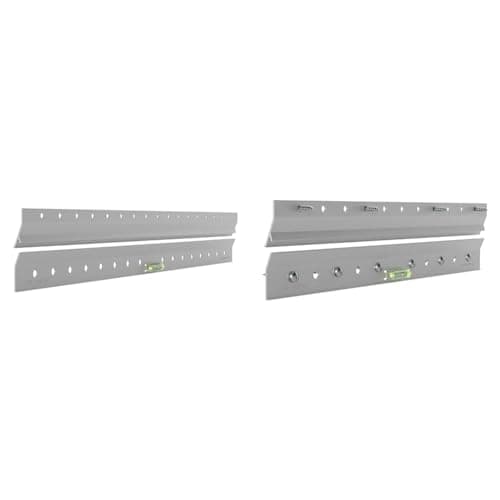
When a piece is genuinely heavy, woodworkers and installers reach for a French cleat — and the principle is borrowed straight from how cabinets are hung. You mount one angled aluminum bracket to the wall and a matching one to the back of the frame; they interlock and the weight is carried along the entire length of the cleat rather than at a single point. The result sits flush, self-levels as it seats, and physically cannot be knocked off — it has to be lifted straight up to release.

Cleat vs D-ring: a D-ring kit is faster and needs no frame modification, ideal for normal-weight frames. A French cleat is the move when the piece is heavy enough that you want load spread across a bracket and the frame locked dead flat — large canvases, framed mirrors, solid panels. Use enough rated pairs and anchor into studs for the heaviest work.

The trade-off is that you're screwing a bracket onto the frame back, so it's not for pieces you can't touch, and it's per-piece hardware. But for sheer holding strength and a flush, can't-tilt result on heavy art, nothing here beats a cleat for the money.

Also Great

The strongest way to hang one heavy piece flat. A French cleat is two interlocking aluminum Z-brackets — one on the wall, one on the frame — that hook together and spread the load across the whole strip. It's how heavy mirrors and large canvases are mounted to sit perfectly flush.

Buy this if you're hanging something genuinely heavy and want it dead flat against the wall — a large canvas, a heavy framed mirror, a wood panel. The interlocking cleats distribute weight along their full length and self-level as they seat, so the piece can't tilt and won't lift off without being raised straight up.

What we don't like

You attach one bracket to the back of the frame, so it's not for pieces you can't modify. Each rated pair has a specific weight limit (use enough, into studs). And like all per-piece hardware, repositioning means re-mounting.

Best All-Around KitAlso Great

Type

Brass hooks + steel nails (assorted)

Capacity

10–100 lb (per-hook rating)

Install

Angled nail through hook into wall

Surfaces

Drywall, wood, plaster

Best

Everyday frames, whole-house standby

Pros

  • Covers 10–100 lb with the right hook
  • Works on drywall, wood, and plaster
  • Cheap, huge user base, proven
  • One kit handles most of the house

Cons

  • Single-point hooks — not for the heaviest art
  • Parts assortment, not a system
  • You restock as you use the right sizes

Every home should have one of these in a drawer. The OOK Professional kit is the unglamorous workhorse of picture hanging — an assortment of brass hooks and hardened steel nails rated from 10 to 100 pounds. You read the weight on the back of the frame (or the hook), pick the matching hook, and drive the angled nail through it into the wall. The angle is what gives these their bite in drywall and plaster.

This isn't the system for your heaviest or most valuable pieces — those want a French cleat or a rail, where the load is spread rather than hung off one nail. But for the everyday majority of frames, on whatever wall you've got, this is the reliable, dirt-cheap answer that's been hanging pictures for decades. Buy it once and you'll reach for it constantly.

Also Great

The one kit to keep in a drawer. An assortment of brass hooks and steel nails rated from 10 to 100 lb that hangs almost any normal frame on drywall, wood, or plaster. Not glamorous, just the reliable, grab-the-right-hook standby for the whole house.

Buy this if you want a single, inexpensive kit that handles most of your hanging — pick the hook rated for the frame's weight and go. It covers the everyday majority of pieces (the ones that aren't heavy enough to need a cleat or rail) across every common wall type.

What we don't like

The angled-nail hooks are single-point hangers, so they suit normal-weight frames, not your heaviest pieces (use a cleat or rail there). It's a parts assortment, not a system — and once you've used the right hooks, you restock.

Austin Art Insider

Free weekly guide to galleries, exhibitions & collecting in Austin.

Best No-Tools Quick HangAlso Great

Type

Self-anchoring drywall hook

Capacity

Light–medium frames (per hook)

Install

Push through by hand — no tools

Surfaces

Drywall only (not plaster/stud)

Best

Fast, no-tool, rental-friendly hangs

Pros

  • No hammer, drill, or anchor needed
  • Hangs a frame in seconds
  • Tiny leave-behind hole
  • Great for placing before you commit

Cons

  • Drywall only — not plaster or studs
  • Single-point — not for heavy art
  • Light-to-medium frames only

Sometimes you just need a frame on the wall in the next thirty seconds, and Monkey Hooks are built for exactly that. The curved steel hook pushes through drywall by hand — no hammer, no drill, no wall anchor — and the body self-anchors behind the board as you seat it. For how little effort is involved, the holding strength is genuinely surprising, and the hole it leaves is small enough to dab with filler later.

The catch is in the name: they need hollow drywall behind the surface, so they won't bite into plaster or a stud, and they're not the hanger for heavy or precious pieces. Treat them as the fast, low-commitment option — perfect for rentals, for getting normal-weight frames up quickly, or for trial-placing pieces on a wall before you commit to a rail system or cleat. A 30-pack costs almost nothing and lives in the same drawer as your OOK kit.

Also Great

Hang a frame in seconds with no tools. You push the curved steel hook through drywall by hand — no hammer, no drill, no anchor — and it self-anchors behind the board. Surprisingly strong for the speed, and the leave-behind hole is tiny.

Buy these if you want to hang normal-weight frames fast, in a rental, or while you're still figuring out a layout. No tools, no measuring drama, no big holes — just push the hook in and hang. The perfect low-commitment hanger for placing pieces before you commit to a rail or cleat.

What we don't like

Drywall only — they rely on hollow board behind the surface, so they won't work on plaster or studs, and they're not for heavy art. They're a single-point hanger, so they suit lighter frames, not your valuable heavyweight pieces.

Best Damage-FreeRenter's Pick

Type

Interlocking adhesive strips

Capacity

Up to ~15 lb (use enough pairs)

Install

Peel and stick — no holes

Removal

Stretch-release, leaves no mark

Best

Rentals, dorms, no-damage hanging

Pros

  • No holes and no wall damage
  • Removes cleanly with a stretch-and-pull
  • Holds frames flat to the wall
  • Ideal for rentals and changing layouts

Cons

  • Hard weight limit — not for heavy art
  • Dislikes textured/fresh-painted walls
  • Must follow press-and-cure instructions

For anyone who can't put a hole in the wall, Command's hanging strips are the genuinely good answer — as long as you respect what they're for. The interlocking strips work like hook-and-loop: one side on the frame, one on the wall, pressed together so the frame sits flat. When you move out or rearrange, you stretch the tab straight down and they release with no hole and no paint damage. That clean removal is the whole appeal.

Follow the directions, honestly: most Command failures trace to skipped steps — dirty walls, too few strips for the weight, or not letting the adhesive cure. Clean the wall, use enough pairs for the frame's weight, and press firmly. Do that and they hold; ignore it and a frame comes down.

The non-negotiable rule: these are for lighter framed pieces within the weight rating, never for heavy or valuable art — that work belongs on a cleat or rail. But for rentals, dorms, plaster you'd rather not crack, or a gallery layout you're still testing, damage-free strips are the right tool, and Command is the brand that actually works.

Renter's Pick

Zero holes, zero damage, comes off clean. Interlocking adhesive strips hold frames flat to the wall and release with a stretch-and-pull that leaves no mark — the renter's and dorm-dweller's answer for lighter framed art, with no nails at all.

Buy these if you can't (or won't) put holes in the wall — rentals, dorms, plaster you don't want to crack, or a layout you expect to change. The hook-and-loop-style strips hold frames flat, and the whole thing peels off cleanly when you stretch the tab. Best for lighter frames where holding power is within rating.

What we don't like

Adhesive has real weight limits — respect them or a frame will let go (use enough pairs, on clean walls). They don't love textured or freshly painted surfaces, and they're emphatically not for heavy or valuable art. Removal takes a careful straight-down pull.

How we
chose

We ranked picture hanging systems by what actually protects your art and your wall, not by box claims:

  • Type before product. Rail system, French cleat, D-ring kit, hook assortment, or adhesive strip is the first and biggest decision — it's set by the weight of the piece and whether you'll rearrange. We matched each pick to a type and were explicit about the trade-offs (repositionable vs per-piece, holes vs damage-free, light vs heavy).
  • Load spreading on heavy art. The failure that ruins a piece is a single hook tearing out. Systems that distribute weight — a rail's cables, a cleat's full-length bracket, a D-ring's two points — are far safer than one nail. We weighted holding strategy heavily for anything valuable.
  • Honest weight ratings. Every hanger has a real limit. We flagged where each pick stops being appropriate (and where to step up to studs, more strips, or a cleat) instead of pretending one product does everything.
  • Wall type and install reality. Drywall, plaster, and studs behave differently — Monkey Hooks need hollow drywall, adhesive strips dislike texture, the heaviest work wants studs. We said what each system needs and how involved the install really is.
  • Reposition without damage. For gallery walls you'll re-curate, the ability to move a frame without a new hole is the feature that matters. Rail systems win it outright; everything else is per-piece. We pair every layout with our hanging calculator to get it level the first time.

Share this guide

Share

Common Questions

Frequently Asked Questions

Have art
to sell?

Austin Gallery specializes in selling inherited art, estate collections, and fine art with zero upfront fees. Get a free evaluation today.