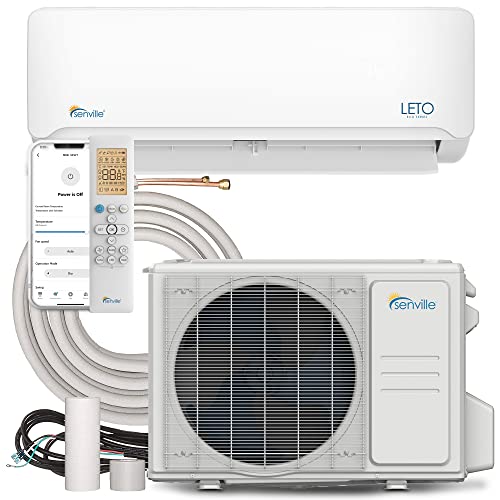
Verified price
$1,799.99 (Aug 4, 2026)
Capacity
12,000 BTU heating and cooling
Power
115V household circuit
Install
DIY line: pre-charged quick-connect design
Generation
5th Gen, current DIY series
Pros
- The one line on this page truly designed for self-install
- Runs on 115V, no 230V circuit required
- Heat pump covers winter and summer in one unit
- Eliminates the four-figure installation quote
Cons
- Highest 12K sticker price in this guide
- Electrical hookup still needs an electrician
- Overkill if you were paying a pro to install anyway
Every mini split conversation eventually arrives at the same unhappy number: the installation quote. The equipment might be $800, but the refrigerant line flaring, vacuum pull, and commissioning traditionally require an HVAC technician, and that visit routinely costs more than the hardware. MRCOOL's DIY line exists to delete that visit. The line sets ship pre-charged with quick-connect fittings, so there is no gauge set, no vacuum pump, and no certification required to make the refrigerant side work.
The 5th Gen 12,000 BTU unit is the sweet spot of the line: enough capacity for most bedrooms, offices, and garage conversions, on a plain 115V circuit. Be honest about what DIY covers, though. The refrigerant connection is homeowner territory; the dedicated circuit, breaker, and outdoor disconnect are electrician territory, full stop. Budget for that visit and the total still lands far below an installed Senville. If the room runs bigger, the same design scales in the 24K DIY unit below.
Our Pick
The machine that changed what a mini split costs to own. MRCOOL's DIY line is the one ductless system on Amazon genuinely engineered for homeowner installation, with pre-charged quick-connect line sets that eliminate the refrigerant work an HVAC tech normally charges four figures for. The current 5th Gen 12,000 BTU unit runs on ordinary 115V power, heats and cools, and turns the biggest hidden cost of ductless comfort into a weekend project.
Anyone whose mini split quotes came back with more installation than equipment. If the room needs year-round heating and cooling and you can handle a ladder, a drill, and a wiring hookup done by an electrician, the DIY line deletes the line item that makes pro-install rivals cost more in total, even when their sticker is half as much.
What we don't like
The sticker is roughly double a comparable pro-install unit like the Senville LETO, so the math only wins once you price out professional installation. And DIY does not mean no trades at all: the electrical circuit and disconnect still belong to a licensed electrician.