Austin Gallery
Home & KitchenAugust 4, 202616 min read

Best Microwaves 2026: Why Inverter Power Wins, From $85 to $500

One technology separates microwaves that scorch the edges of your leftovers from microwaves that heat them evenly, and it is finally affordable. We ranked 12 machines across countertop, over-the-range, and convection-combo classes, from $84.99 to $499.95, with every price verified live.

By Justin Park · How we research

★ Our Top Pick

Panasonic NN-SN686S 1.2 Cu Ft Inverter Microwave

Panasonic NN-SN686S 1.2 Cu Ft Inverter Microwave

True continuous inverter power and sensor cooking: the reference machine.

$259.95rated 4.6/5 in our review

Not sure yet? Compare all 12 picks below ↓

Which Microwave Should You Actually Buy?

The best microwave in 2026 is the Panasonic NN-SN686S, verified in stock at $259.95. Its inverter power system delivers true continuous heat at every power level instead of the full-blast-and-rest pulsing every conventional microwave uses, and that single difference is why leftovers come out evenly warm instead of scorched at the edges and cold in the middle. If your microwave life is popcorn and coffee, the Toshiba 1.2 cubic foot ($133.97) does that job for far less, and the $84.99 Commercial Chef holds down the honest budget floor.

We verified every price and stock status on this page through Amazon's live catalog data on August 4, 2026, and we ranked across all three ways this category is bought: countertop machines, over-the-range replacements, and the combination ovens that add air fry and convection. The whole field at a glance:

PickMicrowaveVerified PriceWhy
Best OverallPanasonic NN-SN686S 1.2$259.95The inverter reference: even heat, Genius Sensor, 1200W
Best ValueToshiba 1.2 Cu Ft 1000W$133.97The mainstream workhorse at the benchmark price
Cheapest InverterToshiba 1.6 Inverter$179.99Inverter heating plus a bigger cavity for $80 less
Large CapacityPanasonic NN-SN97JS 2.2$439.95Cyclonic inverter power in a full-size cavity
Big-Capacity ValueToshiba 2.2 Inverter$276.99Family-size inverter cooking, $163 under the flagship
Compact Name BrandGE 1.1 Compact$114.99Near-full capability, small footprint, GE badge
Best BudgetCommercial Chef 0.7$84.99The decade-proven floor of the category
Over-the-RangeGE JVM3160 1.6$229.00The default 30-inch OTR replacement
Low-Profile OTRGE Profile UVM9125$474.00The slim designer OTR with a 400 CFM fan
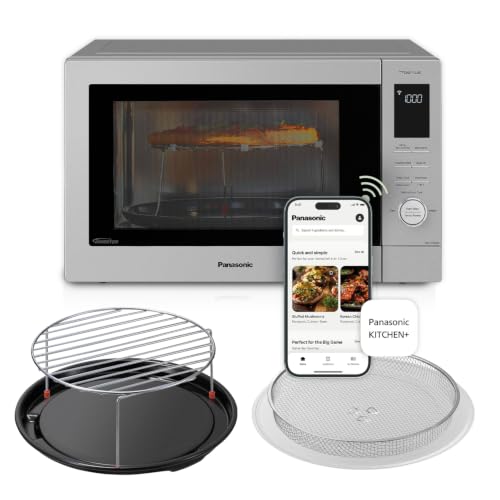
Convection ComboPanasonic HomeChef 4-in-1$499.04Inverter microwave, air fryer, convection, and broil in one
Premium 3-in-1Breville Combi Wave$499.95The combo concept in Breville's best clothes
Budget ComboToshiba 4-in-1 1.5$229.85Combination cooking proven at half the price

The microwave handles speed; texture belongs to its counter-mates. Our air fryer guide and toaster oven rankings cover the crisping side of the equation.

Best OverallOur Pick

Verified price

$259.95 (Aug 4, 2026)

Capacity

1.2 cu ft, countertop or built-in

Power

1200W with inverter technology

Sensor

Genius Sensor cooking and reheating

Model

NN-SN686S, stainless steel

Pros

  • True continuous power at every level, not on-off pulsing
  • Sensor reheating that actually judges doneness
  • 1200W means faster cooking than the 1000W field
  • Countertop or built-in installation flexibility

Cons

  • Costs about twice what conventional rivals charge
  • Understated design, ordinary keypad

Most microwaves lie about their power levels, and the NN-SN686S is the affordable machine that does not. Set a conventional microwave to 50 percent and it blasts 100 percent power half the time, resting the other half; that duty-cycle trick is why leftovers come out lava at the edges and cold in the middle. Panasonic's inverter actually delivers a continuous 50 percent, and the difference is not marketing, it is physics you can taste in anything delicate: fish, rice, cheese sauces, defrosted ground beef that is not gray at the edges.

This specific model has been the category's reference for years, and the formula holds: 1200 watts, the Genius Sensor that reads steam and stops when the food is ready rather than when the timer runs out, and a cavity that can go built-in if your kitchen prefers it. The Toshiba below is the right call for buyers who will not use any of that. For everyone else, the extra $126 buys the single biggest quality upgrade the category offers. It pairs with our air fryer picks as the reheat-and-crisp counter duo.

Our Pick

The machine that defines what a good microwave is. Panasonic's inverter technology delivers genuinely continuous partial power instead of pulsing full blast on and off, which is the difference between salmon that reheats moist and salmon with cooked-hard edges. Add the Genius Sensor, 1200 watts, and a 1.2 cubic foot cavity that also installs built-in, and this is the default recommendation.

Anyone who reheats real food rather than just popcorn and coffee. Leftovers, defrosting, delicate dairy and eggs: everything a standard microwave does crudely, an inverter does gently, and this is the most proven inverter machine on the market.

What we don't like

It costs roughly double the price of a good conventional 1.2 cubic foot microwave, and the sleek flat door hides a fairly ordinary keypad. If your microwave diet truly is popcorn and mugs of water, the Toshiba below does that for $126 less.

Best ValueValue Pick

Verified price

$133.97 (Aug 4, 2026)

Capacity

1.2 cu ft

Power

1000W, conventional

Finish

Black (stainless variant verified at $148.99)

Pros

  • The most microwave per dollar in the mainstream size
  • Right capacity for a full dinner plate
  • Proven, hugely popular design

Cons

  • Conventional pulsed power, not inverter
  • Nothing here for delicate-food perfectionists

If the inverter argument above did not move you, this is your machine, and there is no shame in it. The Toshiba 1.2 cubic foot has become one of the standard microwaves of American counters because it nails the fundamentals: a cavity that fits a real dinner plate, 1000 watts that reheats a mug of coffee before you find a spoon, and controls that require no manual. At $133.97 verified, it is the value benchmark every other machine on this page has to justify itself against.

Our advice is honest self-assessment. Popcorn, frozen burritos, coffee, leftovers you will stir anyway: buy this and keep the change. If you regularly reheat plated dinners, defrost meat, or cook anything where texture matters, read the inverter section of this guide once more before deciding; that is the one upgrade with a difference you can taste. Either way, size the wattage to your habits with our matching guide further down.

Value Pick

The best-selling shape of the modern microwave market for a reason. Toshiba's 1.2 cubic foot, 1000-watt countertop unit does the everyday job cleanly at a price that undercuts the inverter tier by nearly half. It is the sensible default for kitchens that want a good, honest microwave and nothing fancier.

The household whose microwave workload is reheating, beverages, frozen meals, and popcorn. For that job description, spending more than this buys refinement you may never notice.

What we don't like

It is a conventional magnetron, so partial power levels are on-off pulsing, with everything that means for delicate reheating. The stainless steel version of the same machine verified at $148.99 if the black finish does not suit your kitchen.

Cheapest Inverter

Verified price

$179.99 (Aug 4, 2026)

Capacity

1.6 cu ft

Power

Inverter technology

Size

Family-scale cavity

Pros

  • Inverter power at the lowest verified price here
  • Larger 1.6 cu ft cavity than the Panasonic flagship
  • Real answer to the value-vs-quality dilemma

Cons

  • Shorter inverter track record than Panasonic
  • Bigger footprint than 1.2 cu ft units

For years the inverter decision was really a Panasonic decision, and Toshiba's job here is to end that. At $179.99 verified you get the continuous-power architecture that defines the premium tier, a $79.96 saving against the NN-SN686S, and a 1.6 cubic foot cavity that swallows casserole dishes the 1.2 class cannot. On pure specification per dollar, this is the inverter bargain of the page.

What the Panasonic still owns is pedigree: it has been running this technology at scale longer than anyone, and its Genius Sensor remains the better-judged automatic reheat. Our take: households upgrading from a dead $90 microwave who want the inverter difference at the smallest premium should buy this Toshiba; buyers who keep appliances for a decade should spend the extra $80 on the reference machine.

The budget door into inverter cooking. Toshiba undercuts Panasonic's inverter pricing by $80 while adding four tenths of a cubic foot of capacity. If the even-heating argument sold you but the Panasonic price did not, this is the machine the argument leads to.

Value shoppers who reheat real food. This is the cheapest way on the page to stop cooking your leftovers' edges while their centers stay cold, and the bigger cavity suits family-size dishes.

What we don't like

Toshiba's inverter implementation has a shorter track record than Panasonic's decades of it, and the larger footprint wants more counter depth. The control layout is busier than the Panasonic's.

Best Large Capacity

Verified price

$439.95 (Aug 4, 2026)

Capacity

2.2 cu ft, countertop or built-in

Power

1250W, Cyclonic Wave inverter

Sensor

Genius Sensor

Model

NN-SN97JS, stainless steel

Pros

  • Cavernous 2.2 cu ft cavity fits full casserole dishes
  • Cyclonic Wave spreads inverter power in a circular pattern
  • 1250W is the fastest pure microwave here

Cons

  • Premium price for the category
  • Serious footprint, overkill for small households

Everything the NN-SN686S does, bigger, faster, and with Panasonic's most sophisticated energy distribution. The Cyclonic Wave system circulates the inverter's continuous power through the cavity in a three-dimensional pattern, attacking the fixed hot-and-cold-spot geography that plagues big cavities, and 2.2 cubic feet means the lasagna pan goes in flat instead of diagonally with prayers.

The buying question is purely scale. A one-or-two-person kitchen gains almost nothing here over the 1.2 cubic foot flagship except a $180 lighter wallet and a lost square foot of counter. A six-person household reheating by the casserole dish gains everything this machine charges for. Cross-shop the Toshiba 2.2 below if the price stings; that is this cavity size at a $163 discount with a less refined power system.

The full-size flagship. Panasonic's 2.2 cubic foot machine pairs 1250 watts with Cyclonic Wave inverter distribution, which sweeps the energy through the cavity in a circular pattern rather than a fixed beam, plus the Genius Sensor and built-in capability. For big families reheating big dishes, this is the ceiling of the pure-microwave category.

Large households, batch cooks, and anyone regularly microwaving 9x13 dishes that rotate poorly or not at all in smaller cavities. Also the natural built-in choice for kitchen remodels that want the best.

What we don't like

It is a lot of money and a lot of counter for a microwave, and smaller households will never touch its advantages. Measure your counter depth before ordering.

Best Big-Capacity Value

Verified price

$276.99 (Aug 4, 2026)

Capacity

2.2 cu ft

Power

1200W with inverter

Pros

  • Full 2.2 cu ft capacity with inverter power under $280
  • $163 cheaper than the Panasonic 2.2 flagship
  • 1200W is quick for the size

Cons

  • No cyclonic-style distribution refinement
  • Big footprint, same as every 2.2 cu ft unit

This machine exists at the exact intersection of two upgrades most families want, more space and better heating, priced below where either usually lives alone. At $276.99 verified you clear the two thresholds that matter: a cavity that takes full baking dishes flat, and inverter power that reheats them evenly instead of scorching a ring around a cold middle.

Against the Panasonic NN-SN97JS, the honest scorecard reads: same capacity, slightly less wattage, simpler power distribution, $163 saved. For most families that is a comfortable win on value. The Panasonic remains the pick for buyers who keep appliances until they die and want the most polished version of the technology; this Toshiba is the pick for everyone who read that sentence and thought about what else $163 buys.

The family-size inverter machine for Panasonic-averse budgets. Toshiba delivers the same 2.2 cubic foot capacity and inverter architecture as the Panasonic flagship at $163 less, giving up the Cyclonic Wave distribution and some brand pedigree in the trade.

Big households that want even inverter heating in a full-size cavity without paying flagship money. The capacity-plus-inverter combination at this price is unique on the page.

What we don't like

Standard inverter distribution rather than Panasonic's cyclonic system, 1200 watts against the Panasonic's 1250, and the same footprint caveat: measure your counter first.

Best Compact Name Brand

Verified price

$114.99 (Aug 4, 2026)

Capacity

1.1 cu ft, compact footprint

Power

950W

Features

6 auto-cook settings, child lock

Pros

  • GE badge and build at a budget-adjacent price
  • Near-mainstream capacity in a compact body
  • Child lock for young households

Cons

  • 950W runs slightly behind the 1000W standard
  • No sensor cooking

Most microwave purchases are replacements bought in a hurry, and the GE 1.1 is engineered for exactly that buyer. It costs barely more than the no-name 0.7 cubic foot boxes, fits nearly anywhere they fit, and yet holds a standard dinner plate and carries the brand your last three appliances probably wore. The 950-watt rating is the only concession, and it is a small one: a few extra seconds against a 1000W machine, invisible unless you time it.

The decision against the Toshiba 1.2 is $19 and a size class: the Toshiba's bigger cavity and full 1000 watts for slightly more money, this GE's smaller footprint and badge for slightly less. Tight counters take the GE; everyone else is better served one shelf up. And if even $114.99 is more than the job deserves, the Commercial Chef below holds the true budget floor.

The tidy middle path. GE squeezes near-full-size capability, 1.1 cubic feet and 950 watts, into a compact footprint with six auto-cook settings and child lock, wearing the most trusted appliance badge in America at a $114.99 price.

Small kitchens, apartments, and anyone replacing a dead microwave who wants a known brand without studying the category. It splits the difference between the 0.7 budget boxes and the 1.2 mainstream perfectly.

What we don't like

950 watts is a touch slower than the 1000W mainstream, and there is no sensor cooking at this price. Recipe times calibrated for 1000W ovens need a few extra seconds here.

Austin Art Insider

Free weekly guide to galleries, exhibitions & collecting in Austin.

Best BudgetBudget Pick

Verified price

$84.99 (Aug 4, 2026)

Capacity

0.7 cu ft

Model

CHM770S, stainless front

Track record

Listing live for over a decade

Pros

  • Cheapest live-verified microwave on this page
  • Compact enough for dorms, offices, and RVs
  • Decade-plus of the same model selling steadily

Cons

  • Tight cavity for full-size dinner plates
  • Slow next to 1000W mainstream machines

There is a version of the microwave question where every machine above this one is the wrong answer, and it is asked in every dorm and break room in the country. When the workload is coffee, instant noodles, and the occasional frozen entree, capacity and inverter refinement are wasted money, and the Commercial Chef's $84.99 price is the entire specification that matters. The stainless front even lets it pass in a real kitchen.

Know what you are buying: small cavity, patient wattage, no frills. The step up to the GE 1.1 costs $30 and buys a plate-friendly cavity plus a major brand badge, which is the right move the moment this machine's home is a kitchen rather than a countertop corner. For the corner, this is the price-performance king, and its decade of continuous sales says the market agrees.

Budget Pick

The honest floor of the category. A 0.7 cubic foot stainless-front box that reheats, defrosts, and pops popcorn for $84.99, from a listing that has been live and selling for over a decade. Dorms, offices, break rooms, and garage fridges, this is your machine.

Anyone whose microwave needs are measured in mugs and single plates: students, offices, RVs, guest suites. Also the rational choice when the microwave is a backup appliance rather than a daily tool.

What we don't like

A 0.7 cubic foot cavity means large dinner plates scrape the walls, 700-watt-class boxes are slow by mainstream standards, and partial power is crude on-off pulsing. It does little, but the little it does costs almost nothing.

Best Over-the-Range

Verified price

$229.00 (Aug 4, 2026)

Capacity

1.6 cu ft

Power

1000W

Vent

300 CFM hood vent with LED lighting

Fit

Standard 30-inch OTR cutout, easy-mount install

Pros

  • Fits the standard 30-inch opening most kitchens have
  • 1.6 cu ft cavity and 1000W at a modest price
  • Vent fan and LED cooktop lighting included

Cons

  • 300 CFM venting is modest, as is typical for OTR
  • Installation is a project, not an unboxing

Over-the-range microwaves are bought differently: the hole in the cabinetry chooses the category, and the JVM3160RFSS exists to fill that hole with the least drama possible. It is sized for the standard 30-inch cutout, GE's mounting system is the one installers know by heart, and at $229.00 verified it costs less than several countertop machines on this page while including a vent hood and cooktop lighting in the deal.

The honest context is that OTR microwaves trade cooking refinement for the reclaimed counter: you will not find inverter power here, and the 300 CFM fan handles steam and light smoke rather than serious searing exhaust. If your kitchen has the cutout, this is the sensible fill. If you want the vented look with real style ambition, the GE Profile low-profile below is the designer version of the same decision.

The default over-the-range replacement in America. The JVM3160RFSS matches the standard 30-inch cutout, brings 1000 watts, a 1.6 cubic foot cavity, a 300 CFM vent with LED cooktop lighting, and GE's easy-mount installation system, all at a price that undercuts most countertop premium machines.

Anyone replacing a dead over-the-range unit in a standard 30-inch opening. This is the straightforward, correct answer: right size, right brand, right price, familiar controls.

What we don't like

A 300 CFM recirculating-style vent is a grease filter more than a true exhaust, as with most OTR units, and installation is inherently a two-person, hard-wired-or-outlet-above-cabinet project. Conventional power, no inverter.

Best Low-Profile OTR

Verified price

$474.00 (Aug 4, 2026)

Capacity

1.2 cu ft, low-profile cavity

Power

1000W

Vent

400 CFM hood vent

Fit

Standard 30-inch OTR width, installer-friendly design

Pros

  • Slim silhouette solves the boxy-OTR problem
  • Stronger 400 CFM venting than the standard OTR here
  • Opens up sightlines and headroom over the cooktop

Cons

  • Short cavity rules out tall containers
  • Costs about twice the standard GE OTR

The low-profile OTR is what happened when designers finally won an argument with engineers, and the UVM9125 is the argument's best-known result. By flattening the microwave into something closer to a vent hood's proportions, GE Profile gives back the visual space above the range that standard OTR boxes eat, and the 400 CFM fan is a genuine upgrade over the 300 CFM norm of the category, not just a styling exercise.

The cost is stated plainly on the spec sheet: 1.2 cubic feet arranged wide and shallow, so the tall soup container goes to the countertop machine or does not go at all. Against the standard JVM3160 this is purely a values question, $245 for the look and the better fan. Remodels where the range wall is the showpiece will consider it money well spent; rental-grade replacements should take the standard unit and not look back.

The over-the-range microwave for kitchens where the standard boxy OTR look was the dealbreaker. GE Profile's low-profile design sits dramatically slimmer above the cooktop while upgrading the fan to 400 CFM, trading interior height (1.2 cubic feet) for sightlines and headroom.

Remodelers and design-driven kitchens that want the range wall to look like a hood, not a microwave. Also taller cooks tired of leaning around a full-depth OTR box to see back burners.

What we don't like

The slim cavity means tall items are out, you pay roughly double the standard OTR for the aesthetics, and the verified colorway is black, so match your appliance suite before ordering.

Best Convection Combo

Verified price

$499.04 (Aug 4, 2026)

Capacity

1.2 cu ft

Modes

Inverter microwave, air fry, convection bake, broil

Power

1000W microwave section

Extras

20 presets, app-linked recipes

Pros

  • Four appliances in one footprint, inverter microwave included
  • Crisped finishes a plain microwave can never produce
  • 20 presets and app recipes flatten the learning curve

Cons

  • Premium price for the category
  • Each mode trails the best dedicated appliance slightly

The classic microwave failure is texture: it heats fast but leaves everything steamed and soft, and the HomeChef is Panasonic's full answer to that complaint. Start a dish on inverter microwave power for speed, finish it with convection or air fry heat for surface crispness, and reheated pizza stops being a compromise. The 20 presets choreograph those handoffs so the four-mode complexity mostly stays under the hood.

Whether it is worth $499.04 depends on your square footage. A big kitchen with a good standalone air fryer and a capable toaster oven already covers this ground with better versions of each mode. A small kitchen that can host exactly one premium appliance gets the strongest all-in-one argument on the market, with a true inverter microwave, the thing the Breville below also brings at a nearly identical price, as its foundation.

The most complete cooking machine in this guide. The HomeChef stacks four appliances in one 1.2 cubic foot cavity: an inverter microwave, an air fryer, a convection oven, and broiling, with 20 presets and app-linked recipes tying it together. For small kitchens, it can genuinely replace the appliance shelf.

Apartments, ADUs, RVs with residential power, and minimalist kitchens where one premium machine beats three mediocre ones. Also anyone who wants microwave-speed plus crisped-finish results, reheated fries that come out actually crisp, from a single box.

What we don't like

Combination machines cost combination money, the extra modes mean a real learning curve, and each individual function gives up a little to the best dedicated machine: the air fry mode will not dethrone a top standalone basket fryer.

Premium 3-in-1

Verified price

$499.95 (Aug 4, 2026)

Modes

Microwave, air fry, convection oven

Design

Brushed stainless steel

Model

BMO870BSS

Pros

  • Breville build quality and interface polish
  • Microwave, air fryer, and oven in one footprint
  • The best-looking machine in this guide

Cons

  • Costs HomeChef money with one fewer mode
  • No app-linked recipe layer

Breville does not really sell appliances; it sells the experience of using them, and the Combi Wave is that philosophy applied to the microwave. The brushed stainless body, the damped controls, the thoughtful interface: everything about the machine says premium in a category that usually says beige plastic. Underneath, the 3-in-1 architecture, microwave, air fry, convection, covers the same reheat-then-crisp workflow that makes combination machines genuinely useful.

The head-to-head with the HomeChef is settled by what you value: Panasonic stacks more capability, inverter pedigree, broil, app recipes, at effectively the same price, while Breville builds the more beautiful instrument. We rank the Panasonic first on capability per dollar, but no one who chooses the Breville for its design will feel cheated by what it cooks; we compare them fully in the head-to-head section below.

The luxury take on the combination microwave. Breville's Combi Wave folds a microwave, air fryer, and convection oven into the brand's signature brushed stainless design language, with the fit, finish, and interface polish Breville built its reputation on. It is the combo machine for kitchens where the appliances are part of the decor.

Design-first kitchens already stocked with Breville gear, and buyers who handle their appliances every day and care how the dials feel when they do. Functionally it plays the same 3-in-1 game as the Panasonic; experientially it is the nicer object.

What we don't like

At $499.95 it costs 91 cents more than the HomeChef while offering one fewer headline mode and no app layer. You are paying for industrial design and the Breville badge, knowingly.

Best Budget Combo

Verified price

$229.85 (Aug 4, 2026)

Capacity

1.5 cu ft, largest combo cavity here

Modes

Microwave, air fry, convection, combination cooking

Power

1000W microwave section

Pros

  • Full combo capability for less than half the premium tier
  • Biggest cavity of the three combination machines
  • Cheap enough to be a first combo experiment

Cons

  • Crisping modes trail the premium combos
  • Utilitarian controls and finish

Every technology gets its value round, and this is the combination microwave's. Toshiba takes the 4-in-1 template, microwave, air fry, convection, combined modes, and executes it at $229.85, which is $269 under the HomeChef and less than many plain premium microwaves. The 1.5 cubic foot cavity is quietly the biggest of any combo here, a real advantage for family-scale dishes headed for a crisped finish.

Set expectations to the price: the convection and air fry sections do their jobs at a its-a-microwave-that-also-crisps level rather than a replaces-your-oven level, and the premium machines are noticeably better at browning. But as the affordable answer to whether combination cooking would actually change how your kitchen works, it is the lowest-stakes experiment on the page. If the modes earn their keep, your next machine can be the HomeChef; if they gather dust, you saved $269 finding out.

The combination concept at half the combination price. Toshiba's 4-in-1 delivers microwave, air fry, and convection modes in a 1.5 cubic foot cavity, larger than either premium combo, for $229.85. The execution is more workmanlike than the $500 machines, and the price forgives it.

Combo-curious buyers who want the reheat-then-crisp capability without a $500 commitment, and bigger households that noticed this cavity outsizes both premium combos by a quarter cubic foot.

What we don't like

The air fry and convection modes are more modest performers than the Panasonic's or Breville's, and the control experience is standard Toshiba rather than premium anything. It is the concept proven at a price, not perfected.

Head-to-Head

How the top picks compare

The two matchups microwave shoppers actually agonize over: whether the inverter premium is worth it, and which $500 combination machine deserves the counter.

Panasonic NN-SN686S vs Toshiba 1.2: The $126 Question

The inverter reference against the conventional best-seller.

Panasonic NN-SN686S

Panasonic

Winner

Panasonic NN-SN686S

Continuous inverter power, Genius Sensor, 1200W

$259.95
Check Price →
Toshiba 1.2 Cu Ft 1000W

Toshiba

Toshiba 1.2 Cu Ft 1000W

The everyday job done well for $126 less

$133.97
Check Price →

Our verdict

Winner: Panasonic Panasonic NN-SN686S. The Panasonic wins because the $126 buys the only difference in this category your food can taste. At full power the two machines are near twins; the gap opens on every job below full power, which is most of the jobs that matter: reheating plated leftovers, defrosting without gray edges, softening butter without a puddle. The Toshiba's case is that plenty of households run their microwave at 100 percent for 100 percent of tasks, and for them the Panasonic premium buys nothing. Audit your last week of microwave use and the right machine picks itself.

Buy the Panasonic

you reheat real meals and defrost real ingredients and want them treated gently.

Buy the Toshiba

your microwave runs at full power for popcorn, drinks, and frozen meals, full stop.

Panasonic HomeChef vs Breville Combi Wave: The $500 Combo Fight

Two premium combination machines, 91 cents apart.

Panasonic HomeChef 4-in-1

Panasonic

Winner

Panasonic HomeChef 4-in-1

Four modes on an inverter foundation, app recipes

$499.04
Check Price →
Breville Combi Wave 3-in-1

Breville

Breville Combi Wave 3-in-1

Breville design, build, and interface polish

$499.95
Check Price →

Our verdict

Winner: Panasonic Panasonic HomeChef 4-in-1. The HomeChef takes it on capability per dollar at a price gap of under a dollar. Panasonic stacks a fourth cooking mode, its decades-deep inverter pedigree in the microwave section, 20 presets, and app-linked recipes against Breville's three modes and famously lovely hardware. The Breville is the machine you would rather touch; the Panasonic is the machine that does more cooking. Since combos earn their keep through the handoffs between modes, we give the win to the deeper feature stack, while conceding that Breville loyalists buying on design will be perfectly happy.

Buy the Panasonic

you want maximum cooking capability from the single premium appliance on the counter.

Buy the Breville

design and tactile quality matter as much as the extra mode you may not use.

How we
chose

How we picked twelve machines from a category where most listings are the same box with different badges:

  • Live verification first. Every price, image, and stock status was pulled through Amazon's live catalog data on August 4, 2026. Machines without a live, buyable Amazon listing at a real price were excluded regardless of reputation. Nothing here is estimated or remembered.
  • Inverter treated as the dividing line. Continuous power delivery is the one technology in this category with a difference you can taste, so we ranked inverter and conventional machines as the separate tiers they are and priced the upgrade honestly at each size.
  • All three purchase paths covered. Countertop, over-the-range, and combination machines are bought for different reasons by different kitchens; we ranked the best of each rather than pretending one list fits all.
  • Listing facts and physics only. Specs cited here come from the live product listings and from universal microwave facts, like how duty-cycle power pulsing works. We do not repeat manufacturer performance claims we cannot ground.
  • Brand accountability weighed. A microwave is a decade appliance. Established brands with parts, support, and long-selling listings ranked ahead of marketplace labels at similar specs, and renewed or refurbished listings were excluded entirely.

Share this guide

Share

Common Questions

Frequently Asked Questions

Have art
to sell?

Austin Gallery specializes in selling inherited art, estate collections, and fine art with zero upfront fees. Get a free evaluation today.