Austin Gallery
Home & DecorJuly 4, 2026Updated July 4, 202612 min read

The Best Gifts for Artists in 2026 (Chosen by an Art Gallery)

We spend our days around working artists — hanging their shows, visiting their studios, hearing what they actually covet. These are the ten gifts they genuinely want: good light, great paper, artist-grade tools, and the upgrades they never buy themselves.

By Justin Park · How we research

We run an art gallery. We spend our days around working artists — hanging their shows, visiting their studios, hearing exactly what they grumble about and what they covet. So take this guide as inside information: these are the gifts artists actually want, not the novelty paint-splatter mugs the algorithm thinks they want.

Here is the pattern we see over and over: artists spend their money on whatever ends up inside the work — paint, canvas, clay — and never on the things around it. Good light. Nice paper. A way to store finished pieces so they stop curling under the bed. That is your opening as a gift-giver, and it is why our top pick is a lamp. The best artist gifts are the upgrades they would never buy themselves but will use every single day.

This guide covers artists across every medium — drawing, painting, digital, watercolor — with picks from a genuine $8 stocking stuffer to a grand-gesture pencil set. If your artist is a specialist, we go deeper elsewhere: see our dedicated guides to the best gifts for painters and the best gifts for ceramicists. Shopping early for the holidays is the right instinct, by the way — the good art supplies sell through every December. Every link below goes to Amazon with our affiliate tag — we earn a small commission, at no cost to you, when you buy through us.

In a Hurry?

The 3 picks that cover most readers. Tap to read the full review or buy direct.

Best Overall Gift

Daylight Artist Studio Lamp

Daylight Artist Studio Lamp

~$120

95+ CRI true-color light — the upgrade every artist needs and none of them buy.

Best for Drawing

Prismacolor Premier 150

Prismacolor Premier 150

~$100

The benchmark artist pencil — soft cores that blend like paint.

Best Under $15

PAPERAGE Hardcover Sketchbook

PAPERAGE Hardcover Sketchbook

~$12

Thick 100 GSM paper in a hardcover — the stocking gift that never misses.

Best Overall GiftOur Pick

Light quality

95+ CRI LED (true color rendering)

Brightness

Up to 6,000 lux, dimmable

Shade

24 cm wide, even spread

Type

Desk / table lamp

Best for

Any artist working indoors

Pros

  • 95+ CRI — colors read true under it
  • Bright enough for detail work, fully dimmable
  • The upgrade artists never buy themselves
  • Works for every medium, from oils to embroidery

Cons

  • Priciest pick on this list
  • Wide shade needs real desk space

We spend our days around working artists, and here is the open secret: almost none of them light their studios properly. They paint under warm household bulbs that shift every color they mix, then wonder why the piece looks different in daylight. A high-CRI lamp fixes that quietly and permanently — CRI (color rendering index) measures how faithfully a light shows color, and at 95+ this Daylight lamp is in the range galleries and conservators actually use.

Why it is our top gift: artists spend their money on materials that end up in the work — paint, canvas, clay. Infrastructure like proper light never makes the cut. That is exactly what makes it the perfect gift: genuinely transformative, never self-purchased.

It is dimmable up to a very bright 6,000 lux with a wide 24 cm shade that throws even, shadow-softening light across a work surface. It is not a cheap gift, and it will not look exciting under the tree — but six months from now it will be the one they mention. If you buy one thing from this list, buy the light.

Our Pick

Ask any working artist what they wish they had and 'better light' comes up before almost anything else — and yet nobody buys themselves a proper studio lamp. This one renders color at 95+ CRI, so what they mix at midnight looks the same at noon. It is the single most useful gift on this list.

Buy this for any artist who works indoors — painter, illustrator, ceramicist glazing at a bench, anyone. High-CRI light means colors read true while they work, which is the difference between a painting that looks right in the studio and one that looks right everywhere.

What we don't like

It is the priciest pick here, and a lamp is admittedly not a romantic-looking gift until they plug it in. The wide shade also wants a decent chunk of desk space.

Best for Drawing

Count

150 pencils (full range)

Core

Soft wax core — blends and layers

Grade

Artist quality

Lightfastness

Rated per pencil

Best for

Illustration, drawing, serious coloring

Pros

  • The benchmark artist colored pencil
  • Soft core blends like paint
  • Full 150-color range — no gaps
  • A genuinely thrilling box to open

Cons

  • Soft cores wear faster and want careful sharpening
  • Overkill for fine technical linework

There are colored pencils, and there are Prismacolors. Artists have been loyal to these for decades for one reason: the soft wax core. It lays pigment down thick and creamy, layers color over color without going waxy-slick too early, and blends into gradients that look airbrushed. Student-grade pencils cannot do this, which is why upgrading someone to Prismacolor is one of the most reliable gasps in art gifting.

The 150-count set is the full range — every skin tone, every muted gray, every saturated hue, so there is no mid-drawing dead end. Two honest notes: soft cores wear down faster than hard student pencils and prefer a good sharpener, and an artist who works only in crisp technical detail may prefer a harder pencil. For everyone else who draws, this is the box they have been eyeing for years.

The colored pencil that artists actually mean when they say 'colored pencils.' Prismacolor's soft wax core lays down like paint and blends like nothing else in the category. The full 150-count set is the grand-gesture version of a gift every drawing artist will use for years.

Buy this for anyone who draws — illustrators, sketchers, adult-coloring devotees ready for the real thing. The soft core is the signature: it blends and layers the way student pencils simply don't, and the 150 range means they will never hit a color wall mid-piece.

What we don't like

Soft cores wear down faster than harder pencils and want a gentle sharpener. If your artist works exclusively in fine technical detail, a harder pencil suits that style better.

Best Under $15

Pages

160 blank pages

Paper

100 GSM (thick, minimal ghosting)

Cover

Hardcover with elastic closure

Size

5.6 x 8 in (carry-everywhere)

Best for

Pencil, ink, light washes

Pros

  • Thick 100 GSM paper takes ink without bleed
  • Hardcover survives a bag
  • The consumable gift every artist burns through
  • Priced for stockings and add-ons

Cons

  • Not built for heavy wet media
  • Blank-only — dot-grid fans look elsewhere

Here is a rule we would put on the gallery wall: artists never buy themselves nice paper. They will drop real money on paint and then sketch on whatever is nearest. A well-made hardcover sketchbook — thick 100 GSM pages, a spine that opens flat, a cover that survives being thrown in a tote — is a small luxury they will use daily and rebuy never, because someone thoughtful keeps gifting it.

PAPERAGE's blank hardcover is our favorite at the price: the paper is noticeably heavier than the big-name student books, ink sits on it without bleeding through, and the size is right for carrying everywhere, which is where sketchbooks actually live. The one limit is wet media — 100 GSM will buckle under a soaked watercolor wash. As a standalone stocking gift or paired with the Prismacolors above, it is the safest bet on this page.

The stocking-level gift that never misses. A clean hardcover, 160 pages of thick 100 GSM blank paper, and a lay-flat binding that takes ink, pencil, and light washes without complaint. No artist in history has ever said 'no thanks, I have enough sketchbooks.'

Buy this for literally any artist, at any level, in any medium. Sketchbooks are consumables — they fill up — and a well-made blank book is the rare gift that is both thoughtful and guaranteed to be used to its last page.

What we don't like

100 GSM paper handles pencil and pen beautifully but will buckle under heavy wet media — watercolorists who work wet will want a dedicated watercolor block alongside it.

Best for Painters on the Go

Type

Plein air / travel easel

Setup

Folds compact, quick setup

Adjustment

Height and angle adjustable

Weight

Light enough to backpack

Best for

Outdoor painting, classes, workshops

Pros

  • Packs down small enough to actually carry
  • Fast setup — no fiddling in the field
  • Works for oils, acrylics, and watercolor

Cons

  • Less rigid than a studio easel
  • Wants weighting in wind

Every painter has a plein air fantasy. Golden hour, a hillside, paint from life like Monet did it. What stands between them and that scene is usually forty minutes of gear logistics — which is why a genuinely portable easel makes such a good gift. MEEDEN's travel easel folds to backpack size, stands up in about a minute, and adjusts for height and canvas angle without tools.

It is the enabling kind of gift: not another tube of paint, but the thing that unlocks a way of working they have been talking about. Expectations should be calibrated — a two-pound folding easel is not a studio H-frame, and a gusty day will ask you to hang a bag off it for ballast. But for workshops, park sessions, and that hillside, it is exactly right. Pair it with a note that says "pick a Saturday."

The gift that gets a painter out of the house. MEEDEN's plein air easel folds down to backpack size, sets up in a minute, and holds steady outdoors — the whole point of painting from life instead of from a phone photo. For a painter who keeps saying they want to paint outside, this is the nudge.

Buy this for painters — oil, acrylic, watercolor — who romanticize painting outdoors but never invested in the kit for it. Also great for artists who work at classes, workshops, or figure sessions and haul gear around town.

What we don't like

A lightweight travel easel will never be as rock-solid as a studio H-frame, and in real wind you will want to weight it. Painters who never leave the studio won't use it.

Austin Art Insider

Free weekly guide to galleries, exhibitions & collecting in Austin.

Most Practical

Type

Low-tack white artist tape

Removal

Peels clean off paper

Use

Masking borders, securing sheets, hanging work

Surface

Paper, boards, drafting film

Best for

Bundling with paper or paint gifts

Pros

  • Peels off without tearing paper
  • Masks the crisp white borders artists love
  • Constantly used, constantly running out

Cons

  • A supporting gift, not a headline one
  • Corner-test on very delicate papers

Watch a watercolorist peel the tape off a finished piece — that crisp white border is the most satisfying ten seconds in art. It only works with proper low-tack artist tape. Hardware-store masking tape grabs paper fibers and tears the surface on removal; artist tape is engineered to hold firm and then let go clean. Which makes this one of those categories where the specific product genuinely matters.

TSSART's white tape is the studio staple version: it secures paper to boards, masks edges for clean borders, labels palettes, and hangs studies on the wall without damaging either wall or work. As a gift it is pure supporting cast — tuck it in with the sketchbook or the watercolor set below and you have built a small kit that says you actually understand how the work gets made. Practical is its own kind of thoughtful.

The unglamorous hero of every studio. Proper low-tack artist tape holds paper to a board, masks crisp borders on a watercolor, and peels off without tearing the surface — which regular masking tape absolutely will. A boring gift that gets used weekly for years.

Buy this as the practical layer of an artist gift bundle — with the sketchbook, the watercolors, or the pencils. Anyone who works on paper uses artist tape constantly: securing sheets, masking edges, hanging studies on the wall without damage.

What we don't like

It is tape. Nobody's eyes light up at tape — this is a supporting act in a bundle, not the headliner. Very delicate papers still want a corner-test first.

Best Stocking Stuffer

Size

2.5 oz cake

Cleans

Oil, acrylic, watercolor residue

Bonus

Conditions and reshapes bristles

Non-toxic

Yes

Best for

Every painter's sink

Pros

  • Rescues brushes that look ruined
  • Conditions bristles back to a point
  • Non-toxic and lasts months of regular use

Cons

  • Fully fossilized brushes are beyond saving
  • Heavy users burn through the small tub

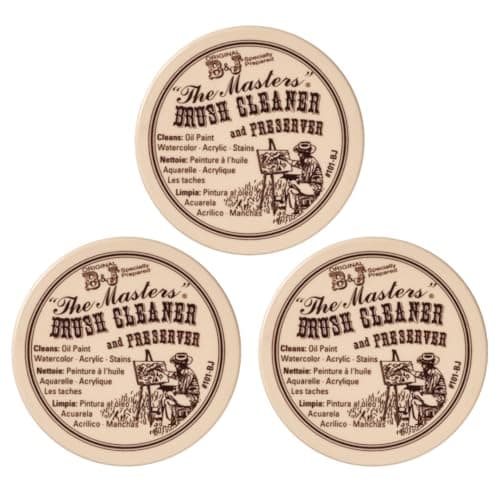
Every painter owns a jar of brushes they feel guilty about. Stiff with old acrylic, splayed from sitting in water, retired but not discarded because good brushes cost real money. The Masters Brush Cleaner is the fix — a cake of soap you swirl a wet brush across, and it lifts out paint that normal rinsing left behind, including paint that dried weeks ago. Then it conditions the bristles so they reshape to a working point.

It has been a studio standard for decades because it simply works, and at around ten dollars it is the definition of a perfect stocking stuffer: cheap, consumable, and genuinely appreciated. Fair warning that it is not sorcery — a brush entombed in month-old oil paint is a lost cause — but for the everyday sins painters commit against their tools, this is absolution in a tub.

The little cake of soap that resurrects dead brushes. The Masters is a studio legend — it pulls dried acrylic and oil out of bristles that looked ready for the trash and conditions them back to a point. Ten dollars, lasts a year, beloved by everyone who has ever ruined a good brush.

Buy this for any painter, full stop. Brushes are expensive, artists are hard on them, and this is the product that extends their life by years. It is the single most reliable art-world stocking stuffer we know.

What we don't like

It cannot fully un-cake a brush that has sat in dried oil paint for a month — miracles have limits. The small tub also disappears fast in a busy studio, so consider the larger size for heavy painters.

Best for Protecting Their Work

Size

18 x 24 in

Capacity

30 clear sleeves (60 viewable sides)

Cover

Heavy-duty with handle

Use

Storage, presentation, transport

Best for

Works on paper, prints, drawings

Pros

  • Protects finished work from the fate of the pile
  • Doubles as a client-ready presentation book
  • Sleeves make flipping through work a pleasure

Cons

  • Too small for oversized works
  • Bulky on a small shelf

We have seen it a hundred times: an artist finishes a beautiful drawing, and it goes onto The Pile. The Pile lives on a shelf or under a bed, it curls at the corners, it collects a coffee ring, and eventually something wonderful gets ruined. Print storage is the least romantic category in art supplies and one of the most important — which, as with the lamp, is exactly why nobody buys it for themselves.

This Sooez binder is the practical answer for anyone working at 18x24 or smaller: thirty archival-style clear sleeves in a heavy cover with a handle, so finished pieces are flat, clean, and — crucially — showable. Hand it to a client, flip it at a market table, carry it to a portfolio review. The size won't fit oversized work, but for the standard formats most artists live in, this is where the good stuff should be living too.

The gift that says their work is worth keeping. A heavy-duty 18x24 binder with 30 clear sleeves turns the perilous pile of finished drawings on top of the flat file — or worse, under the bed — into an organized, protected, showable archive. Deeply unsexy, quietly essential.

Buy this for any artist who works on paper and has a growing stack of finished pieces with nowhere safe to live. Also ideal for artists who show work to clients, apply to fairs and galleries, or sell prints at markets.

What we don't like

18x24 is a sweet spot but not universal — artists working very large will need a bigger case, and it is bulky to store on a small shelf.

Best for Digital Artists

Type

Two-finger artist glove

Fits

Right or left hand, free size

Use

Drawing tablets, iPad, tracing light pads

Benefit

Smooth glide, no smudges

Best for

Digital illustrators

Pros

  • Frictionless glide for the drawing hand
  • Keeps screens free of smudges and sweat
  • Costs less than a fancy coffee

Cons

  • Free-size fit isn't perfect for every hand
  • Stocking stuffer scale, not centerpiece

Digital artists have their own version of never buying the nice paper: they draw for six hours a day with their palm dragging across glass and never spend eight dollars to fix it. An artist glove covers the pinky-edge of the drawing hand so it glides over the tablet surface instead of sticking, keeps skin oils off the screen, and on touch-enabled devices cuts down phantom palm marks.

HUION's is the standard-issue version — simple lycra, fits either hand, survives the wash. It is not going to be the gift they tell stories about, but it will be on their hand every single working day, which is its own kind of gifting victory. Slip it into a card, or pair it with something from the analog side of this list for the artist who works both ways.

The eight-dollar quality-of-life upgrade every tablet artist means to buy and doesn't. A two-finger glove that lets the drawing hand glide over an iPad or tablet surface without friction, smudges, or phantom palm touches. Small gift, daily use.

Buy this for anyone who draws on an iPad, Wacom, HUION, or any drawing tablet. It reduces palm friction and screen smudging, and on touch devices it helps prevent stray palm inputs. The digital artist's equivalent of the brush soap: cheap, consumable, essential.

What we don't like

One size fits most, not all — very large or small hands may find the fit imperfect. It is also decidedly a stocking stuffer, not a centerpiece gift.

Best Art Book

Author

E.H. Gombrich

Publisher

Phaidon Press

Scope

Cave painting to the modern era

Illustrations

Hundreds, full color

Best for

Artists and art lovers alike

Pros

  • The classic — over 8 million copies for a reason
  • Genuinely pleasurable prose, zero jargon
  • Works for artists and beginners equally

Cons

  • Canon skews Western and male
  • A hefty volume — shelf book, not bag book

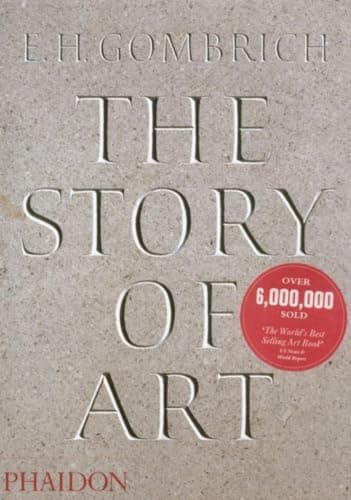
Every gallery has a copy of Gombrich somewhere, usually within arm's reach. The Story of Art has been continuously in print since 1950 because it does something almost no art history book manages: it tells the whole sweep — caves to Cézanne and beyond — in prose that is warm, clear, and completely unpretentious. Gombrich famously wrote it to be readable by a teenager, and the result is a book artists reread their whole lives.

As a gift it flatters the recipient twice: it is beautiful on a shelf, and it assumes they are a person of substance. Two notes from the floor: the canon Gombrich tells is the traditional Western one, so if your artist leans contemporary, Katy Hessel's The Story of Art Without Men makes a pointed and excellent companion or alternative. And check their shelf first — this is a book serious artists often already own, which is itself the endorsement.

The most beloved art book ever written, and still the one we hand people first. Gombrich walks from cave paintings to modernism in prose so clear it reads like a friend talking, with hundreds of full illustrations. For an artist or an art lover, it is the shelf cornerstone.

Buy this for artists, art lovers, and the art-curious alike — it is the rare title that works for a practicing painter and for someone who just started visiting museums. If they already own it (many artists do), the sister pick is The Story of Art Without Men, a brilliant modern companion.

What we don't like

It is a canon book, and the canon it tells skews heavily Western and male — worth knowing, and worth pairing with newer correctives. It is also physically hefty, more shelf than shoulder bag.

Best Gift-Worthy Watercolors

Colors

48 full-size pans

Style

Traditional Japanese (GANSAI)

Character

Creamy, rich, semi-opaque

Quality

Professional

Best for

Watercolor, illustration, calligraphy

Pros

  • Gorgeous presentation — the giftable paint set
  • Large pans welcome real brushes
  • Rich, velvety color unlike Western sets
  • Professional quality at a fair price

Cons

  • Handles differently than Western watercolor
  • Cardboard box wants careful transport

Some gifts do half their work before anyone makes a mark, and this is one of them. Open the GANSAI TAMBI box and 48 oversized pans of Japanese watercolor sit in neat rows like confectionery — it is, honestly, the best unboxing in art supplies. Then the paint backs it up: GANSAI colors are creamier and more velvety than Western watercolors, laying down rich, slightly opaque washes that make sketchbook work glow.

Why this over a Western set: a Winsor & Newton field set is a superb tool, but it looks like a tool. The Kuretake is professional paint that presents like a gift — and the large pans mean no fiddly quarter-inch squares, just room to load a real brush.

The character difference is worth knowing — a strict traditionalist may notice the paint behaves differently than their usual — but for illustrators, sketchers, and anyone who works in a journal, it is a joy. Pair it with the artist tape and the PAPERAGE sketchbook above and you have assembled a complete, coherent kit for under $80 total.

The most beautiful box on this list. Kuretake's GANSAI TAMBI are traditional Japanese watercolors — 48 large, creamy, richly pigmented pans laid out like a jewelry case. Professional quality that also happens to be the single most giftable presentation in the paint aisle.

Buy this for watercolorists, illustrators, urban sketchers, and calligraphers — GANSAI colors run more opaque and velvety than Western watercolors, and the oversized pans welcome big brushes. It is also the pick when you want the unboxing itself to feel like part of the gift.

What we don't like

GANSAI behaves differently from Western watercolor — more opaque, less granulating — which delights most people and mildly surprises traditionalists. The cardboard presentation box wants gentle handling in a bag.

How we
chose

We chose these gifts the way a gallery would — by watching what working artists actually use, wear out, and wish for:

  • Would a working artist genuinely want it? No novelty gifts, no "artsy" decor, no beret-adjacent kitsch. Every pick is a real tool or a real pleasure that we have seen in real studios.
  • The never-self-purchased test. The best gifts fill the gap artists leave in their own budgets: infrastructure (light, storage), consumable luxuries (great paper, brush soap), and upgrades one grade above what they would buy themselves.
  • Artist-grade over student-grade. Where quality tiers exist, we picked the artist tier — the difference between Prismacolor and a supermarket pencil set is the entire point of gifting.
  • Coverage across mediums. Drawing, painting, watercolor, digital, and works-on-paper care are all represented, so this list works whether you know their medium or not.
  • Giftability counts. Presentation matters on the day itself — we favored picks that open well (the Kuretake box, the Prismacolor tin) and noted which picks are bundle-builders versus headliners.

Share this guide

Share

Common Questions

Frequently Asked Questions

Have art
to sell?

Austin Gallery specializes in selling inherited art, estate collections, and fine art with zero upfront fees. Get a free evaluation today.