Austin Gallery
WoodworkingJune 28, 2026Updated June 28, 202616 min read

The Best Dust Collection for a Woodworking Shop

The least glamorous, most important shop upgrade — protect your lungs, tools, and finishes. Collectors, shop vacs, cyclone separators, and air filtration from a $77 cyclone to a $990 collector, built in layers.

By Justin Park · How we research

Dust collection is the least glamorous and most important upgrade in a woodworking shop. It's not just about a clean floor — the fine wood dust you can barely see is a genuine long-term health hazard, and it coats everything, gums up tools, and ruins finishes. Good dust control protects your lungs, your tools, and your work. The good news: a great system can be built in layers, starting cheap.

This guide covers the full dust-control toolkit — ducted dust collectors, shop vacuums, cyclone separators, and ambient air filtration — from a $77 cyclone to a $990 collector. We explain the three layers of dust control, why fine dust is the real danger, and how to build a system that fits your shop and budget. Every pick is verified and linked to Amazon.

In a Hurry?

The 4 picks that cover most readers. Tap to read the full review or buy direct.

Our Pick

WEN DC1300 Collector

WEN DC1300 Collector

$391.80

Real 1,300-CFM collection under $400.

Best Shop Vac

RIDGID 12-Gal Shop Vac

RIDGID 12-Gal Shop Vac

$233.91

The reliable wet/dry workhorse.

Best Upgrade

Oneida Dust Deputy

Oneida Dust Deputy

$76.98

Cyclone separator — saves your filter.

Clean the Air

WEN 3410 Air Filter

WEN 3410 Air Filter

$151.99

Scrubs the fine dust collectors miss.

Best Dust Collector (Value)Our Pick

Airflow

1,300 CFM

Power

14 amp

Filter

5-micron

Best for

Most home shops

Pros

  • Real ducted-collector airflow for under $400
  • Pulls chips from table saws, planers, jointers at the source
  • 50-gallon collection — empty less often
  • The value entry to true dust collection

Cons

  • 5-micron bag passes fine dust (upgrade the filter)
  • Single-stage (add a separator)
Power tools that make big chips — table saws, planers, jointers, bandsaws — overwhelm a shop vac. A ducted dust collector is the answer, and the WEN DC1300 brings real 1,300-CFM capture for under $400. It's the value pick that turns a chip-covered shop into a clean one. Upgrade the bag to a finer filter and add a separator, and it punches well above its price.

Our Pick

The best-value real dust collector — the upgrade that finally tames the big chip-makers.

Best Premium Collector

Power

1.5 HP

Feature

Vortex cone

Filter

2-micron canister

Best for

Serious shops

Pros

  • 1.5 HP and a vortex cone for sustained airflow
  • 2-micron canister filter (finer than bag collectors)
  • Packs more dust before clogging
  • JET build and support

Cons

  • A real investment
  • Needs floor space and ducting
When you're ducting a whole shop, the JET DC-1100VX is the one to build around. Its vortex cone keeps airflow strong as the bin fills, and the 2-micron canister filter captures far finer dust than budget bag collectors. It's the serious-shop dust collector — pair it with a cyclone separator and you've got a clean, healthy shop for years.
Best Shop VacuumWorkhorse

Capacity

12 gal

Type

Wet/dry

Use

Tool + cleanup

Best for

Hand tools & cleanup

Pros

  • The do-everything shop vac — cleanup and tool-side dust
  • Big 12-gallon capacity
  • Doubles as a blower
  • Pairs perfectly with a cyclone separator

Cons

  • Loud (most shop vacs are)
  • Filter clogs fast without a separator
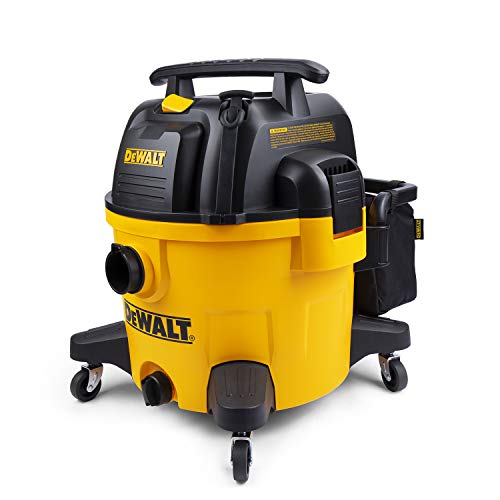
For sanders, routers, track saws, and general cleanup, a shop vac is the right tool — and the Ridgid VAC1200 is the reliable workhorse. Hook it to a power tool's dust port for at-the-source capture, or grab the hose for cleanup. The one upgrade it begs for: a cyclone separator (below) so chips drop into a bin instead of clogging the filter.
Check Price on Amazon →$233.91 · RIDGID
Best Upgrade (Cyclone)Game-Changer

Type

Cyclone separator

Captures

~99% before filter

Pairs

Any shop vac

Best for

Saving filters

Pros

  • Spins ~99% of debris into a bin before the vac
  • Your vac keeps full suction (no clogged filter)
  • Empty a bin, not a vac — far less mess
  • Cheap upgrade, transformative result

Cons

  • Needs a bucket/bin to mount on
  • Another piece to position
If you own a shop vac, the single best upgrade is a cyclone separator — and the Oneida Dust Deputy is the legend. It spins ~99% of chips and dust into a separate bin before they reach your vac, so suction stays strong, the filter stops clogging, and you empty a bin instead of wrestling a full vacuum. Under $80 and genuinely transformative; nearly every serious shop runs one.
Best Fine-Dust ExtractorHEPA Gold Standard

Filter

HEPA

Feature

Auto tool-start

Use

Tool-side fine dust

Best for

Health + clean work

Pros

  • True HEPA captures the fine, dangerous dust
  • Auto-start — turns on when you trigger the tool
  • Quiet and refined
  • The standard for fine-dust health

Cons

  • Premium price
  • Smaller capacity than a shop vac
The dust that hurts you isn't the chips you can see — it's the fine particles you can't. The Festool CT MIDI is the gold standard for capturing it: true HEPA filtration plus automatic tool-start (it powers on when you trigger your sander or saw). It's an investment, but for anyone serious about lung health and clean work, nothing else feels this good. The fine-dust answer.
Check Price on Amazon →$719.00 · Festool
Best Air FiltrationClean the Air

Airflow

300–400 CFM

Mount

Ceiling-hung

Control

Remote

Best for

Ambient fine dust

Pros

  • Scrubs the fine airborne dust collectors miss
  • Hangs from the ceiling — no floor space
  • Remote-controlled with a timer
  • Cheap insurance for your lungs

Cons

  • Doesn't capture at the source (it's the last line)
  • Replace filters periodically
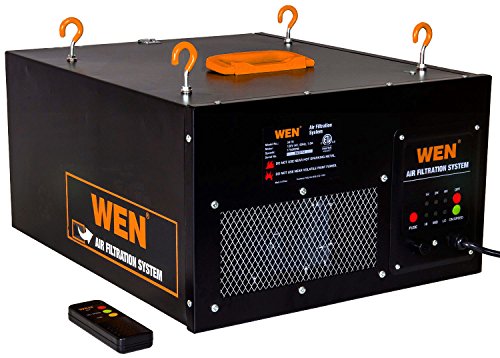
Even with good source capture, fine dust escapes into the air and lingers for hours. An ambient air filter is the third layer of defense — and the WEN 3410 hangs from the ceiling, runs on a remote and timer, and continuously scrubs the air. Run it during and after a session and the shop air clears dramatically. Cheap, set-and-forget lung protection.

Austin Art Insider

Free weekly guide to galleries, exhibitions & collecting in Austin.

Head-to-Head

How the top picks compare

The two questions that shape a dust-control setup.

Dust Collector vs. Shop Vac

High volume for big tools vs. high suction for small ones.

WEN DC1300 Collector

WEN

Winner

WEN DC1300 Collector

High CFM for big chip-makers

$391.80
Check Price →
Ridgid 12-Gal Shop Vac

RIDGID

Ridgid 12-Gal Shop Vac

High suction for small tools + cleanup

$233.91
Check Price →

Our verdict

Winner: WEN WEN DC1300 Collector. They solve different problems. A dust collector's high airflow is the only thing that keeps up with table saws, planers, and jointers — the big chip-makers. A shop vac's high suction suits small ports (sanders, routers, track saws) and cleanup. If your shop has stationary chip-makers, the collector is the bigger need; if you mostly use hand power tools, start with the shop vac (plus a separator). Most shops eventually want both.

Buy the WEN

Buy the collector if you run table saws, planers, or jointers (big chip volume).

Buy the RIDGID

Buy the shop vac if you mostly use sanders, routers, and need cleanup (add a separator).

Shop Vac + Separator vs. Festool HEPA Extractor

Budget layered setup vs. fine-dust gold standard.

Ridgid Vac + Dust Deputy

Ridgid + Oneida

Winner

Ridgid Vac + Dust Deputy

Strong, affordable, filter-saving

~$311 combined
Check Price →
CT MIDI HEPA Extractor

Festool

CT MIDI HEPA Extractor

True HEPA + auto tool-start

$719.00
Check Price →

Our verdict

Winner: Ridgid + Oneida Ridgid Vac + Dust Deputy. For most woodworkers, a shop vac plus a cyclone separator is the smart-money setup — strong suction, the filter stays clean, and you empty a bin, all for around $300. The Festool's edge is true HEPA capture of the finest, most dangerous dust plus automatic tool-start convenience — genuinely better for fine-dust health and clean work, at more than double the price. Start with the vac + separator; step up to the Festool if fine-dust health is a priority and budget allows.

Buy the Ridgid + Oneida

Buy the vac + separator for the best value, filter-saving everyday setup.

Buy the Festool

Buy the Festool if true HEPA fine-dust capture and auto-start are worth the premium.

How we
chose

Every collector, vac, separator, and filter here is genuinely available on Amazon with verified live pricing and real product imagery, chosen for airflow, filtration, and value. (Big 2HP+ cabinet collectors and full ducting are largely dealer-sold; we focused on the strong machines you can order: WEN, JET, Ridgid, DeWalt, Fein, Festool, and Oneida.)

  • The three layers — capture at the source (collector for big tools, vac for small), separate before the filter (cyclone), and scrub the air (ambient filter). We organize the picks this way.
  • Fine dust is the health issue — we weight true fine-dust capture (HEPA, finer filters, air filtration), not just chip collection.
  • Separators are the best-value upgrade — a cyclone keeps any vac/collector running at full suction and saves filters; we push it hard.
  • Match airflow to the tool — big chip-makers (table saw, planer) need a collector's CFM; sanders and routers suit a shop vac.

Austin Gallery may earn a commission from purchases made through links on this page, at no cost to you. It never changes our rankings.

Share this guide

Share

Common Questions

Frequently Asked Questions

The Full Guide

The Complete Shop Dust-Control Guide

Every collector, vac, separator, and filter we recommend — organized by the three layers of dust control. Build your system.

Have art
to sell?

Austin Gallery specializes in selling inherited art, estate collections, and fine art with zero upfront fees. Get a free evaluation today.