Austin Gallery
Home & DecorJuly 18, 202613 min read

Best Bookshelf Speakers 2026: 10 Picks for Vinyl and Desk

A great two-box stereo now costs less than a mediocre soundbar. We picked ten powered and passive pairs for turntables, desks, and living rooms, from a $99.99 studio monitor to $489.99 reference speakers, with the phono-input question answered on every one.

By Justin Park · How we research

The best bookshelf speakers for most people in 2026 are the Edifier R1280T ($149.98): a powered wood-cabinet pair that turns any preamp-equipped turntable into a complete vinyl system with one cable. Bookshelf speakers are having the same revival vinyl is, and for the same reason: a great two-box system now costs less than a mediocre soundbar. The decisions that matter are powered vs passive (is the amp inside the speaker or a separate box), whether the pair has a phono input for your turntable, and how big the room really is.

We picked ten pairs, every price and ASIN verified live on Amazon, from a $99.99 desk pair to $489.99 reference monitors. Most of them exist to plug into a deck from our best record players guide, which is where this system starts; the stand it sits on and the storage for the records complete it, and our home decor hub covers the rest of the room. Every link goes to Amazon with our affiliate tag: we earn a small commission, at no cost to you, when you buy through us.

Which Bookshelf Speakers Should You Buy? The 60-Second Decision

Find your situation below. "Turntable ready" means the pair accepts a turntable directly: line input for decks with built-in preamps, or a true phono input for decks without one. Every pick is reviewed in full further down.

Your situationBuy thisTurntable ready?Price
First real speakers for a turntableEdifier R1280TYes, if deck has a preamp$149.98
Small desk, tight budgetPreSonus Eris 3.5Yes, if deck has a preamp$99.99
Records plus Bluetooth streamingEdifier R1280DBsYes, if deck has a preamp$159.98
Bigger living room, under $200Edifier R1700BTsYes, if deck has a preamp$189.99
Premium desk setupAudioengine A2+Yes, if deck has a preamp$279.00
Any turntable, even without a preampKlipsch R-51PMYes, phono preamp built in$399.99
Flagship powered, design-first homeKanto YU6Yes, phono preamp built in$479.99
Starting a passive amp-and-speakers systemKlipsch R-41MNeeds amp with phono or preamp$149.00
Chasing imaging and detailKEF Q1 MetaNeeds amp with phono or preamp$399.99
Big room, maximum scaleKlipsch RP-600M IINeeds amp with phono or preamp$489.99

In a Hurry?

The 3 picks that cover most readers. Tap to read the full review or buy direct.

Best Overall

Edifier R1280T

Edifier R1280T

$149.98

The classic powered pair that completes any preamp-equipped turntable in one cable.

Best Budget

PreSonus Eris 3.5

PreSonus Eris 3.5

$99.99

Honest studio-monitor sound for a desk, with a front headphone jack, under $100.

Best Premium

Kanto YU6

Kanto YU6

$479.99

Flagship powered pair with a built-in phono preamp: any turntable, no receiver, superb sound.

Best Overall for TurntablesOur Pick

Type

Powered (amp built in)

Power

42W RMS total

Inputs

Dual RCA (line level)

Phono preamp

No, turntable needs its own

Bluetooth

No

Pros

  • Warm, natural sound that flatters vinyl
  • Powered: no receiver or amp to buy
  • Dual RCA inputs plus a remote
  • Classic wood-grain cabinets look right next to a turntable

Cons

  • No Bluetooth and no phono preamp
  • Bass is modest without a subwoofer

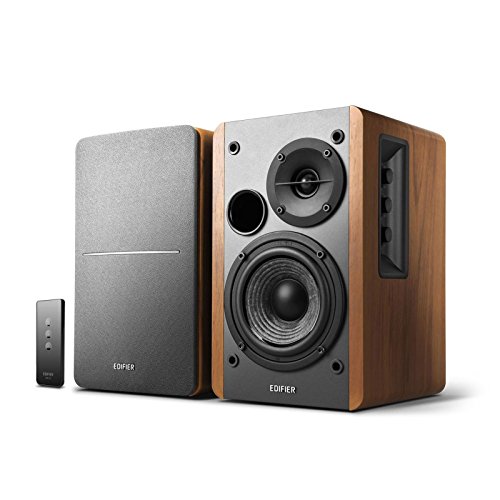
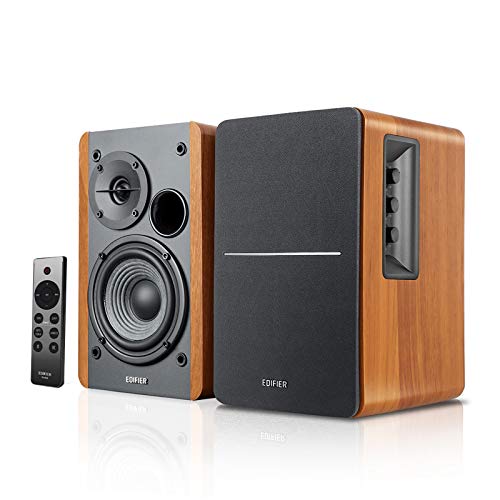
The vinyl revival runs on two products: an Audio-Technica turntable and a pair of Edifier R1280Ts. This is the powered bookshelf pair that turned "record player plus speakers" into a two-box hobby anyone can set up in ten minutes. The amplifier is built into the left cabinet, the right speaker connects with ordinary speaker wire, and your turntable plugs into one of two RCA inputs. Press play, drop the needle, done.

The one compatibility rule: the R1280T accepts line-level signal only. If your turntable has a built-in preamp (our record player guide's top picks from Audio-Technica, Sony, and Fluance all do), you are set. If it does not, you need an external phono preamp between the two, or pick the Klipsch R-51PM or Kanto YU6 below, which have phono stages built in.

The sound is the reason this pair has outlived a decade of challengers: a warm, slightly forgiving balance that makes worn pressings listenable and good pressings lovely, with a 4-inch woofer per side that fills a bedroom or office easily. Treble and bass knobs on the side panel let you tune it to the room. It is not the last word in detail, and the bass will not rattle anything, but at $149.98 it is the best sound per dollar in the category and the pair we recommend first, every time.

Our Pick

The default answer to "what speakers should I plug my record player into." A powered wood-cabinet pair with warm, room-filling sound, dual RCA inputs, and a remote, all for $149.98. Pair it with any turntable that has a built-in preamp and you have a complete vinyl system in two boxes.

Buy this if you own (or are buying) a turntable with a built-in preamp, like the Audio-Technica AT-LP60X, and want real stereo sound without a receiver. The amplifier lives inside the left speaker, so setup is one cable from the turntable and one power cord. Two RCA inputs mean the record player and a TV or phone dongle can stay connected at the same time.

What we don't like

No Bluetooth on this base model, and no phono preamp inside, so a turntable without its own preamp will sound whisper-quiet until you add one. Bass is polite rather than powerful; there is a subwoofer-ready sibling below if you want more.

Best Budget Desk PairBest Value

Type

Powered near-field monitors

Woofer

3.5 inch

Inputs

RCA, TRS, front aux

Phono preamp

No

Extras

Front headphone jack, tuning knobs

Pros

  • Accurate near-field sound for close listening
  • Front headphone jack and aux input
  • Acoustic tuning knobs adapt to desk placement
  • Legitimate studio brand at $99.99

Cons

  • Light bass from 3.5 inch woofers
  • No Bluetooth on this model

Most cheap desktop speakers are tuned to impress in a showroom; the Eris 3.5 is tuned to tell the truth. PreSonus builds studio gear, and this baby monitor pair inherits the family priorities: flat response, a focused stereo image at arm's length, and acoustic tuning switches on the back to tame a boomy desk corner. For editing photos of your art wall with music on, or just working eight hours next to good sound, that honesty wears far better than hyped bass.

Practicalities are all handled from the front panel: power and volume, a headphone jack that mutes the speakers when you plug in, and an aux input for a phone. At just under a hundred dollars the compromises are size-related, not quality-related. The 3.5 inch woofers get shockingly loud for the footprint but bass stays polite, and a turntable will need its own preamp. As the desk pair in a house where the R1280T handles the living room, it is the easy call.

Best Value

A real studio monitor pedigree at a hundred dollars. The Eris 3.5 is tuned flat and honest rather than flattering, which makes it the best small pair for a desk where you actually listen up close. Front headphone jack, front aux input, and acoustic tuning knobs round it out.

Buy this if the speakers will live on your desk, a few feet from your ears. Near-field tuning means the stereo image snaps into focus at close range in a way TV-style speakers never do. The front panel has a volume knob, headphone jack, and aux input, all exactly where a desk setup wants them.

What we don't like

The 3.5-inch woofers only reach so deep, so bass is present but light. Honest studio tuning also means it will not sugarcoat a bad recording. No Bluetooth at this price (the BT version exists for a little more), and no phono preamp.

Best Value with BluetoothBest Connected Value

Type

Powered (amp built in)

Power

42W RMS total

Inputs

Dual RCA, optical, coaxial, Bluetooth

Sub out

Yes

Phono preamp

No

Pros

  • Bluetooth, optical, and dual RCA in one pair
  • Subwoofer output for a future bass upgrade
  • Same warm Edifier sound as our top pick
  • Only about $10 over the wired version

Cons

  • Bass still modest without a sub
  • No phono preamp for preamp-less turntables

Ten dollars is the whole argument here. The R1280DBs is the same cabinet, same 42 watts, and same warm balance as our top pick, plus the three connections modern rooms keep asking for: Bluetooth for phones, optical for a TV, and a subwoofer output for the day polite bass stops being enough. If the R1280T is the purist's two-box vinyl system, this is the realist's whole-room system.

In practice the turntable lives on one RCA input, a spare cable or streamer on the other, and everyone in the house pairs over Bluetooth without touching the records. The sub out deserves special mention: most speakers at this price make you rebuy everything to add bass, while this pair lets a compact sub slide under the record player stand whenever the budget allows. Unless you are certain the speakers will only ever play vinyl, spend the extra ten.

Best Connected Value

The R1280T with the connectivity gaps filled in. Ten more dollars adds Bluetooth for your phone, an optical input for the TV, and a subwoofer output for later. If the speakers will pull double duty between a turntable and streaming, this is the smarter buy.

Buy this if your listening splits between records and Spotify. The turntable stays wired into RCA, your phone pairs over Bluetooth, and the TV can feed the optical jack, so one pair of speakers becomes the sound system for the whole room. The sub out means a bass upgrade later is one cable, not a new system.

What we don't like

Same polite bass as the R1280T until you add that subwoofer, and the remote is easy to lose in a couch. Like its sibling, there is no phono preamp inside.

Best Step-Up Powered PairAlso Great

Type

Powered (amp built in)

Power

66W RMS total

Inputs

Dual RCA, Bluetooth

Sub out

Yes

Design

Angled 10 degree front baffle

Pros

  • 66 watts fills a real living room
  • Angled cabinets aim sound at seated listeners
  • Fuller bass than the R1280 series
  • Bluetooth plus dual RCA and sub out

Cons

  • Bigger cabinets need deeper shelves
  • No phono preamp inside

Every R1280 owner who moves the speakers from the bedroom to the living room discovers the same thing: rooms eat watts. The R1700BTs is Edifier's answer, with a 66 watt amplifier, bigger drivers in bigger cabinets, and a front baffle tilted ten degrees upward so that speakers sitting on a low console fire at your ears instead of your knees. That tilt sounds like a gimmick and absolutely is not; on a sideboard or media cabinet the difference in clarity is immediate.

The character stays recognizably Edifier, warm and easygoing, but with genuine bass weight and headroom the smaller pairs cannot fake. Bluetooth and dual RCA cover the turntable-plus-phone household, and the sub out remains for bass completists. If your listening room is the main room of the house and the budget stops under $200, this is where it should stop.

Also Great

The bigger, bolder Edifier. A 66 watt amp and larger cabinets give the R1700BTs real authority in a living room where the R1280 line starts to sound small, and the angled front panels aim the sound up at seated ears. The step-up pick for medium rooms.

Buy this if the speakers will play to a couch across a living room rather than a chair beside a desk. The extra power and cabinet volume translate to fuller bass and effortless volume, and the ten-degree upward tilt is designed for placement on low furniture, exactly where a sideboard or record console puts them.

What we don't like

Noticeably larger than the R1280 series, so measure the shelf first. Still no phono preamp, and at this price the flagship powered pairs with phono stages built in start to appear one tier up.

Best Premium Desktop PairDesk Upgrade

Type

Powered with 24-bit USB DAC

Size

About 6 inches tall

Inputs

USB, Bluetooth, RCA

Sub out

Yes (variable RCA out)

Build

Hand-finished MDF cabinets

Pros

  • Astonishing clarity from tiny cabinets
  • Built-in DAC beats any laptop's audio out
  • USB, Bluetooth, and RCA inputs
  • Furniture-grade fit and finish

Cons

  • No headphone jack or remote
  • Physics limits deep bass at this size

The A2+ is the pair audio people buy when the desk deserves better and the desk is small. Audioengine builds these like furniture, with hand-finished cabinets and analog amplification inside the left speaker, then adds the feature that changes everything for computer listening: a 24-bit DAC fed straight over USB, so your music skips the noisy audio-out circuit every laptop maker cheaps out on. The result at arm's length is precision that $100 pairs simply do not have: separated instruments, real depth, treble without glare.

It is also quietly a fine tiny vinyl setup; a turntable with a built-in preamp plugs into the RCA input, and the variable output can feed a subwoofer later. The honest caveats are the missing conveniences (no remote, no headphone jack) and the physics of a six inch cabinet, which no DAC can repeal. But if the question is the best sound per square inch of desk, this is the answer.

Desk Upgrade

The best small speaker money can reasonably buy for a desk. Hand-built cabinets barely six inches tall, a 24-bit USB DAC that bypasses your computer's cheap audio chip, and sound so far beyond the size that first-time listeners assume a subwoofer is hidden somewhere.

Buy this if your desk is where music happens and space is tight. The A2+ connects over USB (with its own DAC doing the conversion), Bluetooth, or RCA, so a laptop, phone, and even a preamp-equipped turntable all have a clean path in. This is the pair that makes a small home office sound like a listening room.

What we don't like

At $279 you are paying a real premium over the PreSonus pair, and there is no headphone jack or remote. Deep bass has physical limits at this size; Audioengine sells a matching sub for a reason.

Austin Art Insider

Free weekly guide to galleries, exhibitions & collecting in Austin.

Best Powered with Phono InputPlug and Play Vinyl

Type

Powered (amp built in)

Phono preamp

Yes, switchable phono/line

Inputs

Phono/RCA, Bluetooth, optical, USB, aux

Sub out

Yes

Tweeter

Horn-loaded 1 inch

Pros

  • Built-in phono preamp works with any turntable
  • Dynamic, lively Klipsch horn sound
  • Every input a modern room needs, plus remote
  • Replaces both amp and speakers in one buy

Cons

  • Energetic treble is not for everyone
  • Bold styling; premium price

This is the shortest possible path from any turntable to serious sound. The R-51PM's party trick is the little phono/line switch on the back: flip it to phono and a real phono preamp inside the speaker boosts the signal from decks that lack their own, flip it to line for decks that have one. Either way the turntable connects with a single cable, and no other box exists in the system. For the reference-class manual turntables that deliberately omit preamps, this pair is the two-cabinet answer.

Why the horn matters: Klipsch mounts its tweeter in a Tractrix horn, which controls where treble goes and makes the speaker dramatically more efficient. The audible result is jump-out-of-the-cabinet dynamics at low volume, which suits vinyl beautifully; records sound alive at conversation-friendly levels where soft-dome speakers need volume to wake up.

Add Bluetooth, optical for the TV, USB for a computer, a subwoofer output, and a remote, and the R-51PM is less a pair of speakers than a full system wearing speaker clothes. The horn's energy is a flavor; audition your tolerance for sparkle if you can. But as the one-purchase vinyl endgame for people who refuse to own a receiver, it stands alone at this price.

Plug and Play Vinyl

The powered pair that works with every turntable, period. A switchable phono preamp lives inside, so even a preamp-less audiophile deck plugs straight in, and Klipsch's horn-loaded tweeter delivers the lively, dynamic sound the brand is famous for. A complete hi-fi in two cabinets.

Buy this if you want to pair speakers with a turntable that lacks a built-in preamp, like the Pro-Ject and Fluance reference decks in our record player guide, without adding a separate phono box. Phono/line switch, Bluetooth, optical, USB, analog, a sub out, and a remote: this is the whole receiver rack condensed into a pair of speakers.

What we don't like

The horn tweeter's lively character is a Klipsch signature; treble-sensitive listeners should consider the softer Kanto below. Copper-and-black styling is bold rather than subtle, and $399.99 is real money, though it replaces an amp too.

Best Flagship Powered PairPremium Powered

Type

Powered (200W peak)

Phono preamp

Yes, switchable

Drivers

5.25 inch Kevlar, 1 inch silk dome

Inputs

Phono/RCA, Bluetooth, optical x2, aux

Sub out

Yes

Pros

  • Smooth, refined sound with real bass weight
  • Phono preamp built in for any turntable
  • Remote handles inputs, tone, and standby
  • Minimalist design in genuinely nice finishes

Cons

  • Price overlaps passive setups with more headroom
  • Popular finishes go in and out of stock

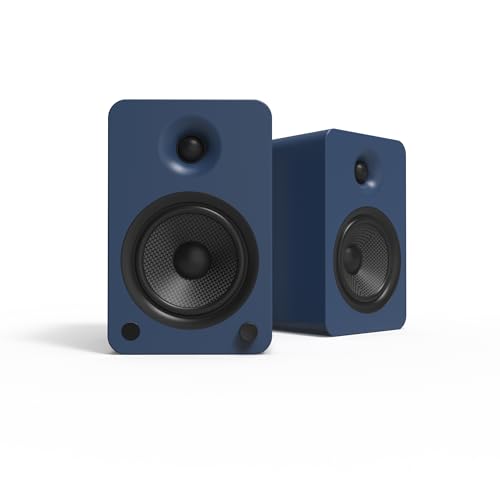
If the Klipsch is a powered speaker built by hi-fi people, the Kanto YU6 is one built by design people who take sound seriously, and the difference shows in every detail. The cabinets are clean rectangles in furniture-grade matte finishes, the remote actually controls everything (inputs, tone, standby, Bluetooth pairing), and the speaker disappears into a room the way good mid-century decor does. Under the restraint sits real engineering: Kevlar mid-woofers, silk dome tweeters, and 200 watts of peak power.

The sound is the smooth counterpoint to Klipsch's horn energy: rich mids, easy treble, and bass that a 5.25 inch driver has no right to produce, which suits long vinyl evenings where fatigue matters more than fireworks. The phono preamp handles preamp-less decks, and dual optical inputs quietly make it a superb TV speaker too. At $479.99 it is a considered purchase, but it is the powered pair we would live with longest.

Premium Powered

The most polished powered speaker experience in this guide. Kevlar drivers, silk dome tweeters, a built-in phono preamp, and a genuinely useful remote in a minimalist cabinet that looks as considered as it sounds. The powered flagship for design-conscious vinyl households.

Buy this if you want the no-receiver simplicity of a powered pair with a refined, smooth character rather than the Klipsch's fireworks. The phono stage accepts any turntable, the 5.25 inch Kevlar woofers carry real bass into a living room, and details like auto standby and a remote that switches inputs make it effortless to live with.

What we don't like

At $479.99 it overlaps with good passive-plus-amp setups that can outgrow it later. The matte finishes show fingerprints, and stock has been tight on popular colors.

Best Budget Passive PairPassive Value

Type

Passive (amp required)

Woofer

4 inch spun-copper IMG

Tweeter

1 inch horn-loaded

Sensitivity

High (easy to drive)

Use

Bookshelf, desk, or surrounds

Pros

  • Big, lively sound from an easy-to-drive design
  • Works well with budget amps and receivers
  • Compact enough for actual bookshelves
  • Grows into a surround or second-zone pair

Cons

  • Needs an amplifier you must buy separately
  • Light bass; energetic treble

Passive speakers are a commitment to a hobby, and the R-41M is the friendliest possible first step. Because the horn-loaded tweeter makes it unusually efficient, it does not demand an expensive amplifier; a used receiver or a $100 class-D mini amp will drive it convincingly, which keeps the total system cost near powered-pair territory while opening the upgrade path powered speakers close off. Amp today, better amp someday, bigger Klipsch after that, and the R-41Ms retire honorably to surround duty.

Sonically it is recognizably the R-51PM's little sibling: quick, dynamic, forward, with the same copper-woofer-and-horn look. Bass is honest for a 4 inch driver, meaning light, and the treble energy rewards careful positioning off-axis if you find it keen. As the starter passive pair for a system you intend to grow, it has few rivals at $149.

Passive Value

The classic first passive speaker. Klipsch's horn-loaded efficiency means the R-41M sings on even a modest receiver or mini amp, and the compact cabinets fit real bookshelves. The gateway to the amp-and-speakers hobby at $149 a pair.

Buy this if you already own a receiver or amplifier, or want to start the traditional separates path. High sensitivity means cheap amps drive it to satisfying volume, and it makes an excellent rear or second-room pair later if you upgrade, which is how passive systems politely grow.

What we don't like

Passive means nothing works until an amplifier joins the party, which is the real cost of entry. Bass from the 4 inch woofer is quick but light, and the lively Klipsch treble shows up here too.

Best Audiophile Passive PairThe Detail Pick

Type

Passive (amp required)

Driver

Uni-Q with Metamaterial Absorption

Design

Point source, closed box

Placement

Forgiving, wide sweet spot

Use

Serious two-channel listening

Pros

  • Class-leading imaging from the Uni-Q driver
  • Metamaterial tech audibly lowers distortion
  • Wide sweet spot suits real couches
  • True audiophile entry point

Cons

  • Deserves an amp that adds to the budget
  • Tuneful but not deep bass

Every speaker in this guide plays music; the Q1 Meta is the first that performs a magic trick with it. KEF's Uni-Q driver mounts the tweeter at the acoustic center of the midrange cone, so high and low frequencies leave from the same point in space the way they do from a live instrument. Behind it, a metamaterial disc absorbs the sound radiating backward from the tweeter that normally bounces around and smears detail. The audible payoff is imaging: close your eyes and the band arranges itself between and behind the cabinets with eerie precision.

This is the pick for the listener graduating from "speakers that sound good" to "a system that disappears." It asks for a real amplifier and rewards a quiet, well-placed setup on a proper stand or console. Paired with a reference turntable from our record player guide, it is the heart of a legitimate high-end system for around a thousand dollars all-in.

The Detail Pick

Genuine high-end engineering at the top of the affordable bracket. KEF's Uni-Q driver puts the tweeter in the center of the woofer so music arrives from one point in space, and the metamaterial absorber behind it soaks up distortion. Imaging that redraws what bookshelf speakers do.

Buy this if soundstage is the thing you chase: the way a good system places the singer here, the guitar there, in air. The Uni-Q point-source design images better than anything near this price and is forgiving of listening position, so the sweet spot is a couch, not a single chair. Feed it a decent amp and it will expose everything upstream.

What we don't like

Needs a quality amplifier to show what it can do, which adds real cost. Bass is tuneful rather than deep, and this generation sells fast enough that stock fluctuates.

Best Premium Passive PairThe Big Gun

Type

Passive (amp required)

Woofer

6.5 inch spun-copper Cerametallic

Tweeter

1 inch titanium in Tractrix horn

Character

Big, dynamic, high sensitivity

Use

Large rooms, high volume

Pros

  • Near-floorstander scale and bass
  • Effortless dynamics at any volume
  • High sensitivity suits many amps
  • Flagship build in a stand-mount box

Cons

  • Large cabinets need real space
  • Enthusiast price before the amp

Somewhere past $400 a pair, bookshelf speakers stop being furniture accessories and start being instruments, and the RP-600M II is the loudest argument for staying on the bookshelf side of that line. The 6.5 inch Cerametallic woofer moves serious air, the vented and refined Tractrix horn puts the titanium tweeter's energy exactly where it should go, and the whole package plays with the effortless, big-hearted scale most brands reserve for towers. Drum kits have weight. Horns have bite. Volume feels bottomless.

It is the pick for the biggest room in this guide and the listener who wants vinyl to sound like an event. It needs physical space, a capable amp, and a solid console or heavy stands underneath, and the Klipsch liveliness is still a house flavor. But if the goal is maximum music per dollar in the premium bracket, the RP-600M II simply delivers more of everything.

The Big Gun

The most speaker in this guide. A 6.5 inch woofer and refined Tractrix horn give the RP-600M II floorstander-grade dynamics and genuine bass from a stand-mount cabinet. For a big room and a listener who wants scale, this is where the bracket peaks.

Buy this if your listening room is large, your taste runs to rock, jazz, and full orchestras at realistic volume, and you have or will buy an amplifier worthy of it. This is the bookshelf speaker for people deciding between bookshelves and towers; it makes the case that you do not need the towers.

What we don't like

Physically large for a bookshelf, so plan stand or console space. The energetic Klipsch balance persists, and at $489.99 plus an amp you are firmly in enthusiast budget territory.

Head-to-Head

How the top picks compare

The two matchups that actually decide most purchases: the ten-dollar Bluetooth question, and the premium powered flavor war.

Edifier R1280T vs R1280DBs: Is Bluetooth Worth Ten Dollars?

The wired classic against its connected twin.

Edifier R1280T

Edifier

Edifier R1280T

The proven wired classic, warm sound, dual RCA

$149.98
Check Price →
Edifier R1280DBs

Edifier

Winner

Edifier R1280DBs

Same sound plus Bluetooth, optical, and sub out

$159.98
Check Price →

Our verdict

Winner: Edifier Edifier R1280DBs. The DBs wins for almost everyone, and the math is simple: ten dollars buys Bluetooth for every phone in the house, an optical input that lets the pair moonlight as TV speakers, and a subwoofer output that keeps a real bass upgrade on the table for later. The sound signature is the same warm, easygoing Edifier balance either way, so you are not trading audio quality for features. The R1280T remains the right buy for exactly one household: the purist vinyl-only setup where the speakers will never see a phone or a TV, and where the cleaner back panel and slightly lower price are worth more than options never used. If you hesitate even slightly on that description, buy the DBs; nobody has ever missed ten dollars, and plenty of people have missed a sub out.

Buy the Edifier

the pair will only ever play your turntable, wired, forever.

Buy the Edifier

records share the room with streaming, TV, or a future subwoofer.

Klipsch R-51PM vs Kanto YU6: The Premium Powered Flavor War

Both have phono preamps and take any turntable. The sound could not be more different.

Klipsch R-51PM

Klipsch

Klipsch R-51PM

Horn-loaded dynamics, lively and thrilling at low volume

$399.99
Check Price →
Kanto YU6

Kanto

Winner

Kanto YU6

Smooth, refined, fatigue-free, design-grade cabinets

$479.99
Check Price →

Our verdict

Winner: Kanto Kanto YU6. Both pairs solve the same problem brilliantly: a built-in phono preamp means any turntable in our record player guide, even the preamp-less audiophile decks, plugs straight in with no receiver and no extra boxes. The choice is purely about flavor and living room. The Klipsch is the thrill ride: horn-loaded efficiency makes records leap out of the cabinets at low, apartment-friendly volume, with dynamics that flatter rock, soul, and anything with drums. The Kanto is the long haul: smoother treble, richer mids, real bass from Kevlar woofers, and a restrained design that disappears into a considered room. We give the overall nod to the YU6 because fatigue-free is what you want three albums into a Sunday, and its remote and finish quality make it nicer to live with. But if your listening skews loud, energetic, and celebratory, the Klipsch is eighty dollars cheaper and more fun. Neither is a mistake.

Buy the Klipsch

you want excitement and dynamics, and save $80 doing it.

Buy the Kanto

you want refinement you can listen to all day in a design-conscious room.

How we
chose

We chose these speakers editorially, based on driver and amplifier design, turntable compatibility, connectivity, and brand track record, not lab testing or invented review counts. What drove the rankings:

  • Turntable compatibility first. This guide exists for vinyl setups, so we flagged on every pick whether it accepts a turntable directly, needs the deck to have its own preamp, or has a true phono stage built in. Nobody should discover the preamp problem after unboxing.
  • Powered and passive both represented. Powered pairs for the majority who want one purchase and no receiver; passive pairs for listeners building a system that grows. We were explicit about which is which and what each path costs in practice.
  • Sound character described honestly. Klipsch horns are lively, Edifiers are warm, studio monitors are flat, KEF images. We described flavors instead of pretending one balance is objectively best, because speaker preference is real.
  • Real rooms, real furniture. A speaker that needs a meter of free space behind it is the wrong recommendation for a console against a wall. We favored designs that work where people actually put them, on desks, shelves, and record stands.
  • Price spread with a premium tier. From $99.99 to $489.99, because the jump from television speakers to a $150 pair is life-changing and the jump to $480 is genuinely audible, and both deserve coverage.

Share this guide

Share

Common Questions

Frequently Asked Questions

Have art
to sell?

Austin Gallery specializes in selling inherited art, estate collections, and fine art with zero upfront fees. Get a free evaluation today.